Vol. 113
Latest Volume
All Volumes
PIERB 116 [2026] PIERB 115 [2025] PIERB 114 [2025] PIERB 113 [2025] PIERB 112 [2025] PIERB 111 [2025] PIERB 110 [2025] PIERB 109 [2024] PIERB 108 [2024] PIERB 107 [2024] PIERB 106 [2024] PIERB 105 [2024] PIERB 104 [2024] PIERB 103 [2023] PIERB 102 [2023] PIERB 101 [2023] PIERB 100 [2023] PIERB 99 [2023] PIERB 98 [2023] PIERB 97 [2022] PIERB 96 [2022] PIERB 95 [2022] PIERB 94 [2021] PIERB 93 [2021] PIERB 92 [2021] PIERB 91 [2021] PIERB 90 [2021] PIERB 89 [2020] PIERB 88 [2020] PIERB 87 [2020] PIERB 86 [2020] PIERB 85 [2019] PIERB 84 [2019] PIERB 83 [2019] PIERB 82 [2018] PIERB 81 [2018] PIERB 80 [2018] PIERB 79 [2017] PIERB 78 [2017] PIERB 77 [2017] PIERB 76 [2017] PIERB 75 [2017] PIERB 74 [2017] PIERB 73 [2017] PIERB 72 [2017] PIERB 71 [2016] PIERB 70 [2016] PIERB 69 [2016] PIERB 68 [2016] PIERB 67 [2016] PIERB 66 [2016] PIERB 65 [2016] PIERB 64 [2015] PIERB 63 [2015] PIERB 62 [2015] PIERB 61 [2014] PIERB 60 [2014] PIERB 59 [2014] PIERB 58 [2014] PIERB 57 [2014] PIERB 56 [2013] PIERB 55 [2013] PIERB 54 [2013] PIERB 53 [2013] PIERB 52 [2013] PIERB 51 [2013] PIERB 50 [2013] PIERB 49 [2013] PIERB 48 [2013] PIERB 47 [2013] PIERB 46 [2013] PIERB 45 [2012] PIERB 44 [2012] PIERB 43 [2012] PIERB 42 [2012] PIERB 41 [2012] PIERB 40 [2012] PIERB 39 [2012] PIERB 38 [2012] PIERB 37 [2012] PIERB 36 [2012] PIERB 35 [2011] PIERB 34 [2011] PIERB 33 [2011] PIERB 32 [2011] PIERB 31 [2011] PIERB 30 [2011] PIERB 29 [2011] PIERB 28 [2011] PIERB 27 [2011] PIERB 26 [2010] PIERB 25 [2010] PIERB 24 [2010] PIERB 23 [2010] PIERB 22 [2010] PIERB 21 [2010] PIERB 20 [2010] PIERB 19 [2010] PIERB 18 [2009] PIERB 17 [2009] PIERB 16 [2009] PIERB 15 [2009] PIERB 14 [2009] PIERB 13 [2009] PIERB 12 [2009] PIERB 11 [2009] PIERB 10 [2008] PIERB 9 [2008] PIERB 8 [2008] PIERB 7 [2008] PIERB 6 [2008] PIERB 5 [2008] PIERB 4 [2008] PIERB 3 [2008] PIERB 2 [2008] PIERB 1 [2008]
2025-07-22
PIER B
Vol. 113, 117-128, 2025
download: 334
Hyperspectral Image Denoising Based on Multiscale Spatial-Spectral Feature Fusion in Frequency Domain
Xiao-Zhen Ren, Jing Cui, Yi Hu, Xiaotian Zhang and Yingying Niu
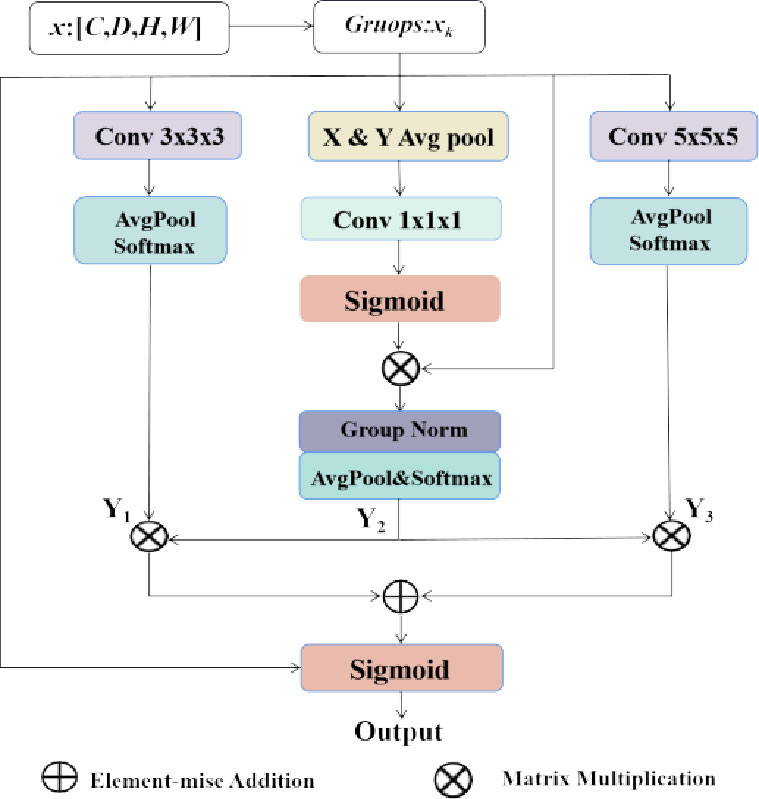
Hyperspectral images often suffer from various types of noise pollution during acquisition and processing, which can significantly affect their application. However, existing denoising methods have limitation in fully utilizing the spatial and spectral correlation of hyperspectral image. In order to take full advantage of the multiscale spatial features and global spectral correlation of hyperspectral image, a hyperspectral image denoising method based on multiscale spatial-spectral feature fusion in frequency domain is proposed in this paper. The proposed method utilizes the structural decomposition of multiscale wavelet transform to transfer the denoising of hyperspectral image to the frequency domain, not only minimizing information loss, but also decomposing noise into small scales, making it easier to remove in the frequency domain. Moreover, a cross-multiscale fusion attention is designed to improve the model performance by considering multiscale information and cross-space learning. A spectral position-aware self-attention module is proposed to more fully exploit the spectral correlation in hyperspectral image. And a multiscale fusion of spatial-spectral feature module is introduced to merge the different spatial and spectral features, thereby enhancing the denoising performance of the model. The experimental results demonstrate that the proposed method outperforms mainstream denoising methods in terms of performance. In addition, it exhibits better visual quality in texture details and edge protection.
Hyperspectral Image Denoising Based on Multiscale Spatial-spectral Feature Fusion in Frequency Domain
2025-07-22
PIER B
Vol. 113, 101-116, 2025
download: 186
The Electromagnetic Distribution and Intelligent Signal Extraction of ELF-EM in Hole-Ground Communication
Fukai Li, Yue Zhao, Wei Guo, Jian Wu, Zan Yin, Huaiyun Peng and Kai Liu
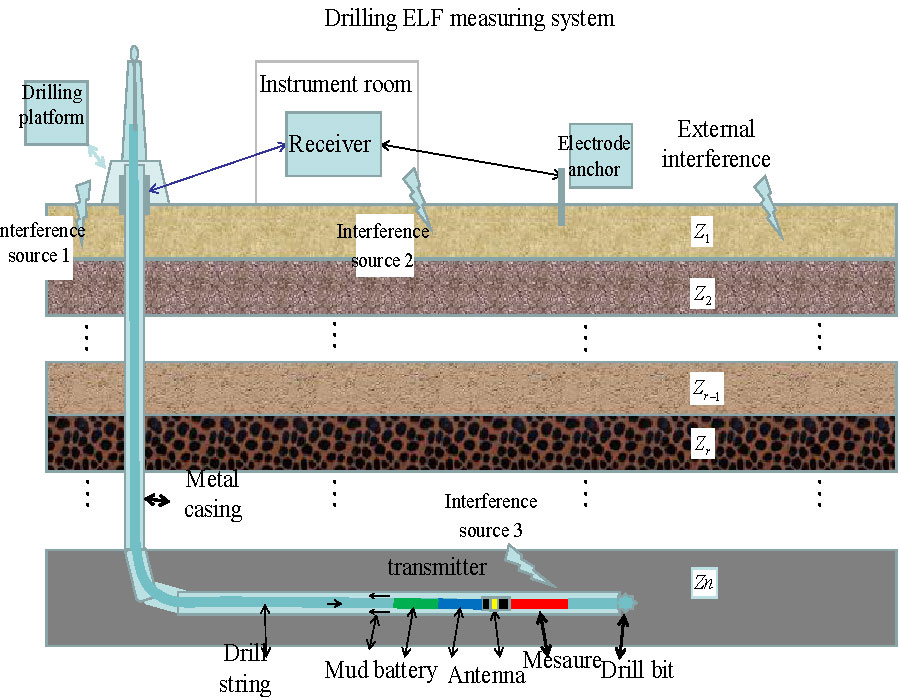
In the field of drilling engineering, innovations in drilling communication(also known as hole-ground communication while drilling) technology are crucial for enhancing exploration efficiency, ensuring operational safety, and optimizing data collection. Extremely Low Frequency electromagnetic (ELF-EM) wave communication transmission technology, with its exceptional penetration capability in formations and low attenuation characteristics, is emerging as a key technology in drilling communications. However, this technology faces challenges such as complex transmission model calculations and difficulty in extracting weak signals from the ground, which hinder its further development. Addressing issues like the inability of conventional models to accurately describe non-uniform media, low frequencies, and near-field open-space conditions in ELF-EM transmission under drilling conditions, as well as numerical dispersion, this paper innovatively conducts a comprehensive and systematic analysis of electromagnetic distribution in extended-reach horizontal wells using the finite element modeling and analysis method. Through software simulations and field tests, the following conclusions are drawn: The induced current on the drill pipe plays a major role in the ground field distribution and the signal received by the system terminal; the horizontal drill pipe in a horizontal well has a certain impact on the ground-received signal, mainly manifesting in that the orientation of the ground-receiving electrode should align with the direction of the horizontal well, and the larger the azimuth difference is from the drilling direction, the smaller the signal reception is; at the surface of the drilling platform, not only can multiple electrodes be used to receive signals, but magnetic sensors can also be employed to receive magnetic component signals. Addressing the issue of extracting communication signals in complex electromagnetic environments during electromagnetic measurement-while-drilling (EM-MWD) operations, a multi-channel intelligent signal extraction method has been designed. This method can improve the in-band signal-to-noise ratio (SNR) by more than 3 to 5 dB and further extend the communication transmission distance compared to single-channel models.
The Electromagnetic Distribution and Intelligent Signal Extraction of ELF-EM in Hole-ground Communication
2025-07-19
PIER B
Vol. 113, 87-99, 2025
download: 224
Dipole Antenna with U and L-Shaped Stubs on Multiple I-Shaped EBG for Digital Television Applications
Natchayathorn Wattikornsirikul, Suwat Sakulchat, Watcharaphon Naktong and Sommart Promput
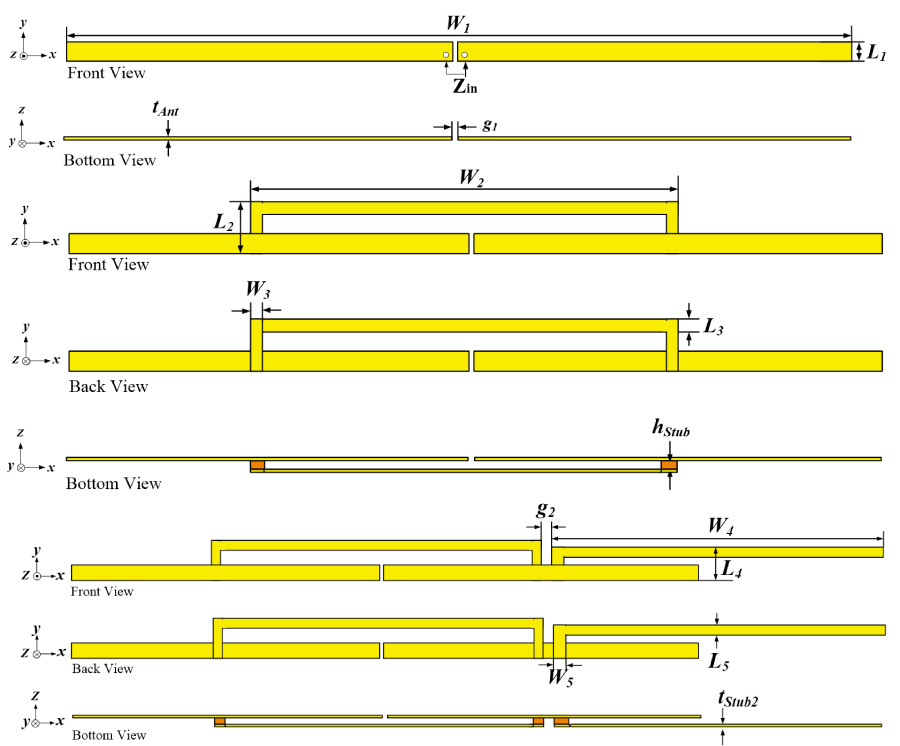
This article presents a dipole antenna with added U- and L-shaped stubs designed with copper plates to support frequencies according to the Digital Video Broadcasting (DVB) standard in the 510-790 MHz range. The dipole antenna was placed on a polyester mylar film substrate with a thickness of 0.3 mm and a dielectric constant of 3.2. The CST program was used for simulating the optimization parameters with a size of 270 × 15.5 × 0.59 mm for the use with a flat-screen television. This research uses the technique of reducing signal wave reflection with a 1 × 41 units I-shaped electromagnetic band gap (EBG) strip, which is made from copper plates, placed beneath the antenna with foam sheets as an intermediary. The distance between the EBG plate and the antenna is appropriately 2 mm, with an impedance bandwidth of 46.01% (502-802 MHz) and a unidirectional pattern, resulting in an average gain of 3.62 dBi. For applications with television structures, installing the antenna and EBG plate at the top position can cover the most suitable frequency range, which is 44.32% (504-791 MHz).
Dipole Antenna with U and L-shaped Stubs on Multiple I-shaped EBG for Digital Television Applications
2025-07-19
PIER B
Vol. 113, 77-86, 2025
download: 167
Vibration Suppression Control of PMa-BSynRM Based on Variable Step Size and Variable Angle Search Algorithm
Jing Lu, Tengfei Zhao and Huangqiu Zhu
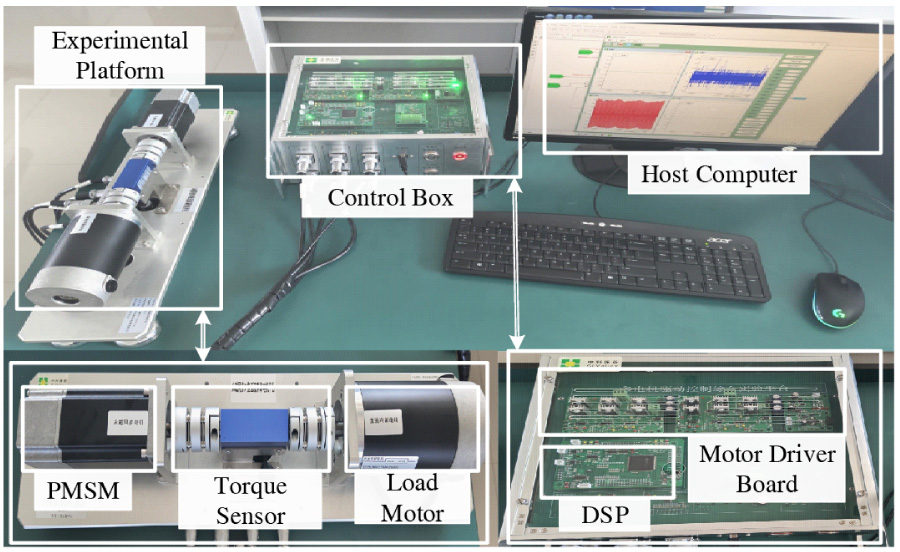
The unbalanced rotor mass of permanent magnet assisted bearingless synchronous reluctance motor (PMa-BSynRM) will cause rotor vibration at the same frequency, which has a great influence on its operating performance at high speed. To solve this problem, a control method of unbalance vibration suppression based on variable step size and variable angle search algorithm is proposed in this paper. Firstly, the causes of rotor vibration are analyzed, and the equations of motion of the rotor in the vibratory state are derived. Secondly, the improved Sigmoid function is used to change the step size and angle of the search algorithm, and a fuzzy inference machine is used to adjust the Sigmoid function weights. The vibration suppression control system is constructed, and vibration suppression simulation is performed. The vibration suppression control of the PMa-BSynRM is realized. Finally, the PMa-BSynRM experimental platform is established, and vibration suppression experiments are carried out under the conditions of equal speed and external interference. Experimental results show that the control algorithm can effectively suppress rotor vibration. The unbalanced vibration suppression control proposed in this paper can achieve stable levitation operation of the PMa-BSynRM.
Vibration Suppression Control of PMa-BSynRM Based on Variable Step Size and Variable Angle Search Algorithm
2025-07-19
PIER B
Vol. 113, 63-76, 2025
download: 155
No Weighting Factor PMSM Model Predictive Torque Control Based on Composite Sliding Mode Disturbance Observer
Yang Zhang, Chenhui Liu, Sicheng Li, Kun Cao, Yiping Yang and Zhun Cheng
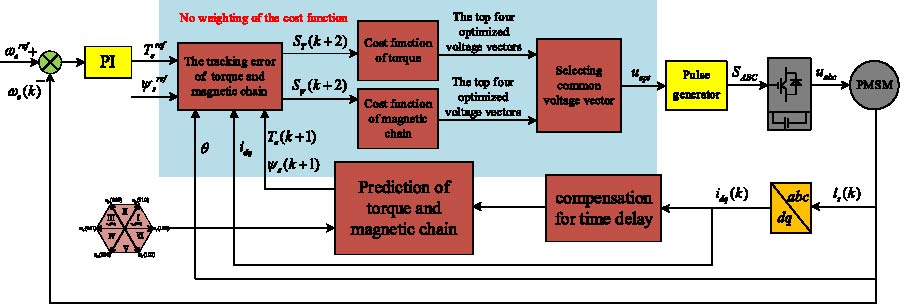
To address the problems of difficulty in adjusting weight coefficients in model predictive torque control of permanent magnet synchronous motors and the large influence of parameters on the motor control performance, a no weighing factor model predictive torque control based on a composite sliding mode disturbance observer is proposed. Firstly, the parallel structure of torque and magnetic chain is designed. The weighting factors are eliminated by choosing a common optimal voltage vector. Secondly, a composite sliding mode perturbation observer is designed to reduce the dependence on an accurate model of the motor. An improved variable gain approximation rate is introduced to eliminate observer jitter. A power exponential term is added to improve the exponential approximation term and to increase the convergence speed of the system state. Finally, the experimental results show that the proposed strategy not only eliminates the cumbersome tuning work of the weight coefficients but also improves the control performance of the motor under parameter mismatch.
No Weighting Factor PMSM Model Predictive Torque Control Based on Composite Sliding Mode Disturbance Observer
2025-07-18
PIER B
Vol. 113, 51-62, 2025
download: 264
A Low-Profile Implantable Antenna with Enhanced Performance for 2.45 GHz NFC-Based Healthcare Systems
Emtiaz Ahmed Mainul and Md. Faruque Hossain
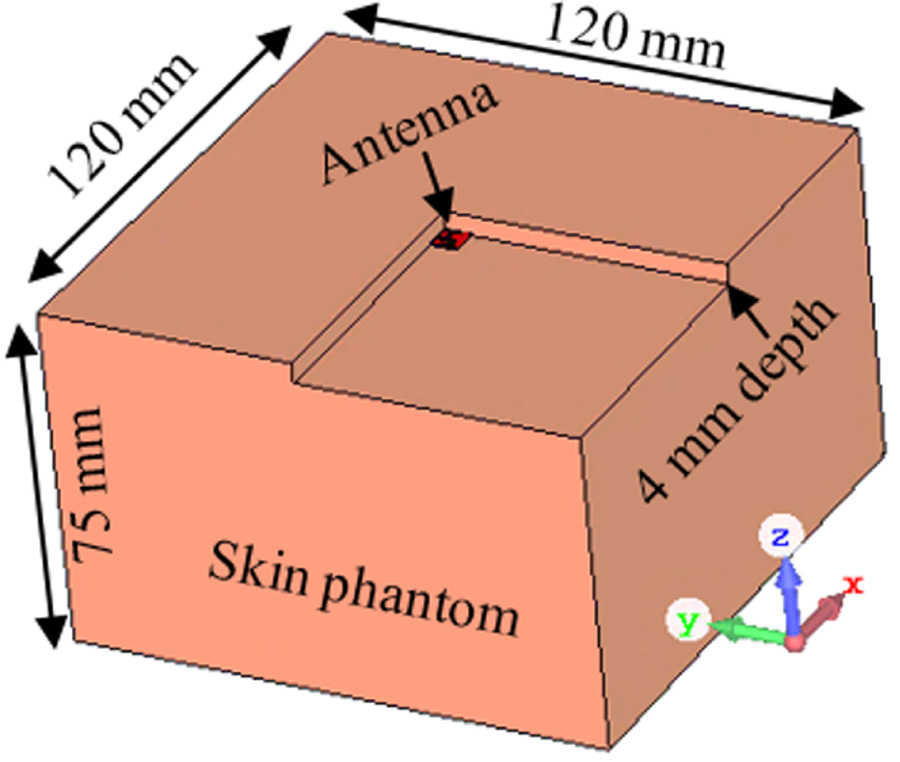
This work presents a compact single-band patch antenna designed for Near-Field Communication (NFC) based skin implant applications. The antenna features an inset-fed patch structure on FR-4 substrate and resonates at 2450 MHz. Three techniques are employed to miniaturize the antenna: a shorting pin between the patch and ground, defected ground structure (DGS), and utilization of tissue electrical properties. A polyamide insulator is used to cover the antenna for biocompatibility. Thus, the optimized antenna volume is found to be 6 × 6 × 0.46 mm3, with near-perfect impedance matching of 51.14 + j4.6 Ω. The antenna also offers enhanced impedance bandwidths of 52.24%. Compared to state-of-the-art designs, the proposed antenna exhibits significantly reduced specific absorption rate (SAR) values of 1.32 W/kg and 0.152 W/kg averaged over 1 g and 10 g of tissue, respectively, in compliance with international safety guidelines. The proposed antenna is effectively free from gain limitations due to the inherently short communication range of NFC technology. Finally, the antenna is measured for its return loss ex vivo, and it is found to be in close agreement with the simulation results. Thus, the balanced performance among the compact size, large bandwidth, and very low SAR makes the antenna a strong candidate for NFC based healthcare systems.
A Low-profile Implantable Antenna with Enhanced Performance for 2.45 GHz NFC-based Healthcare Systems
2025-07-15
PIER B
Vol. 113, 37-50, 2025
download: 460
Designing MIMO Antenna with High Isolation Decoupling Structure
Jyoti C. Kolte, Ashwini Kumar and Payal Bansal
This paper presents the design and development of a miniaturized Multiple-Input Multiple-Output (MIMO) antenna for sub-6 GHz 5G applications, featuring reduced cross polarization and enhanced isolation between antenna elements. Utilizing characteristics mode analysis, slots are introduced in the patch to achieve orthogonal mode separation, effectively minimizing cross polarization. Further bandwidth enhancement is achieved by incorporating slot loading in the ground plane. To improve isolation between antenna elements, spiral decoupling (SD) and aperture spiral decoupling (ASD) structures are employed. The proposed MIMO antenna, with dimensions 0.32λo*0.32λo*0.01λo where λo is the wavelength at the lower band frequency of 3.5 GHz, was fabricated and experimentally tested to validate its performance. Measurement results indicate significant compactness, low envelope correlation coefficient (ECC), high gain, minimal channel capacity loss, and very low mutual coupling between elements. The measured results are in good agreement with simulated results, confirming that the proposed antenna is a promising candidate for advanced MIMO applications in next-generation wireless communication systems.
Designing MIMO Antenna with High Isolation Decoupling Structure
2025-07-15
PIER B
Vol. 113, 23-36, 2025
download: 173
A Composite Sliding Mode Control for PMSM Drives Based on an Adaptive Reaching Law with Disturbance Compensation
Pengpeng Liu, Zhonggen Wang and Wenyan Nie
To address internal parameter ingress and external load perturbations in the speed loop of a permanent magnet synchronous motor (PMSM) and enhance the dynamic performance and robustness of its speed control system, this study proposes a novel adaptive sliding mode reaching law-based controller integrated with a global non-singular fast terminal sliding mode observer (GNFTSMO). The proposed reaching law incorporates system state variables as power functions, thereby minimizing steady-state errors and resolving the inherent trade-off between chatter suppression and rapid response. To further enhance the dynamic and steady-state performance of the PMSM control system, a GNFTSMO is designed. This observer reduces the switching gain of the convergence law while incorporating feed-forward compensation for perturbations, thereby improving the system's anti-disturbance capability. The feasibility and effectiveness of the proposed sliding mode control method are empirically validated through both simulation and experimental studies.
A Composite Sliding Mode Control for PMSM Drives Based on an Adaptive Reaching Law with Disturbance Compensation
2025-07-11
PIER B
Vol. 113, 13-22, 2025
download: 243
A Compact Parasitic Mushroom Patch Loaded Antenna for 5G mm-Wave Applications (28 GHz/38 GHz)
Tarik El-Arrouch, Abdelaaziz El Ansari, Najiba El Amrani El Idrissi, Mahadu Trimukhe, Shobhit Khandare, Zahriladha Zakaria and Ahmed Jamal Abdullah Al-Gburi
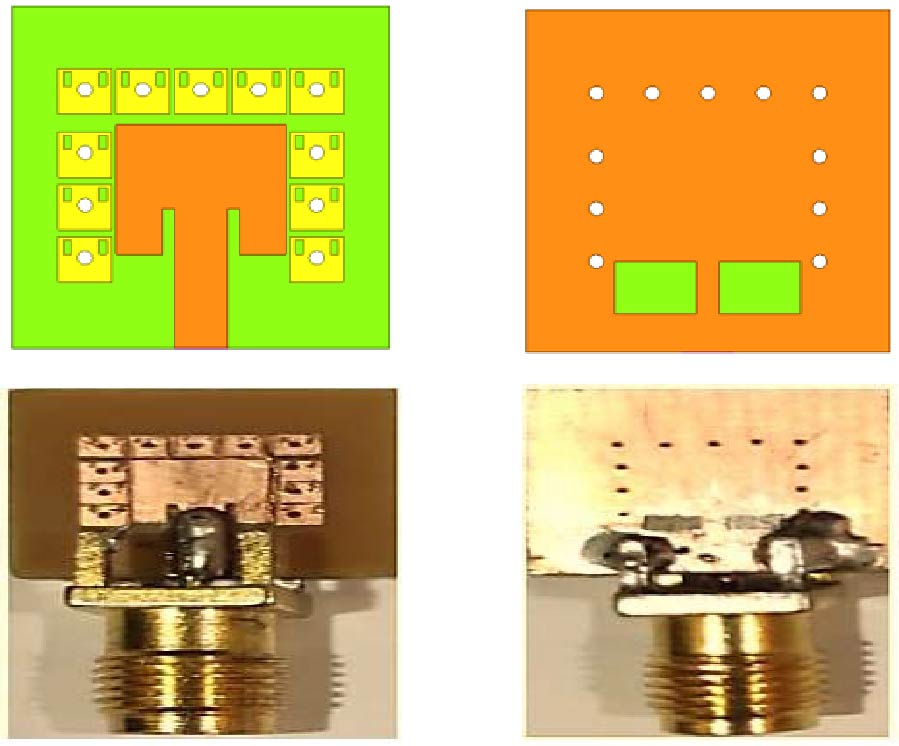
This study introduces and evaluates a smaller rectangular antenna featuring parasitic mushroom patches to achieve enhanced gain and wide impedance bandwidth (WIBW) for 5G millimeter-wave (mm-wave) applications (28 GHz/38 GHz). The antenna structure consists of a simple rectangular patch fed by an inset feed microstrip line operating at 50 Ω. To improve the antenna gain and impedance bandwidth, a parasitic mushroom structure is introduced around the edges of the main patch. Additionally, to further enhance operating bandwidth and matching, two rectangular Defected Ground Structures (DGSs) are incorporated in the bottom side. The antenna is fabricated on a low-cost substrate specifically FR4 (εr = 4.4 , tangδ = 0.02), with dimensions of (12 × 13 × 0.8) mm3. The results demonstrate a wide impedance bandwidth of 14.2 GHz (50.71% FBW) covering frequencies of 25.98 GHz to 40.18 GHz, and the antenna achieves a maximum gain of 7.20 dB at 28 GHz and maintains an efficiency more than 80% across the entire bandwidth. These outcomes make the antenna a good choice for 5G applications at 28 GHz and 38 GHz.
A Compact Parasitic Mushroom Patch Loaded Antenna for 5G MM-Wave Applications (28 GHz/38 GHz)
2025-07-08
PIER B
Vol. 113, 1-11, 2025
download: 171
Multi-Objective Optimization of an Asymmetric Segmented Less-Rare-Earth Permanent Magnet Motor
Lu Zhang, Jinbin Xu and Chen Qi
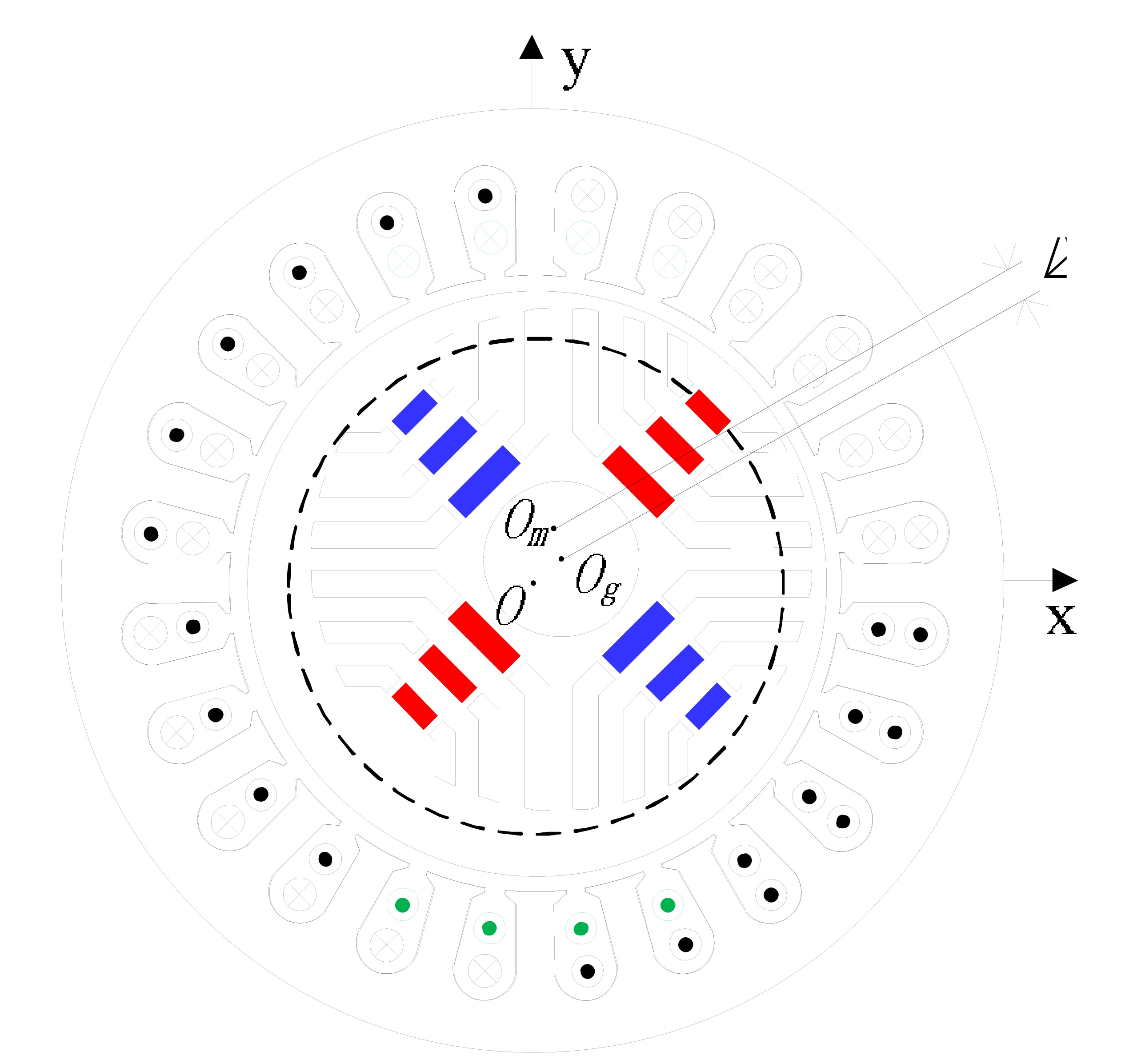
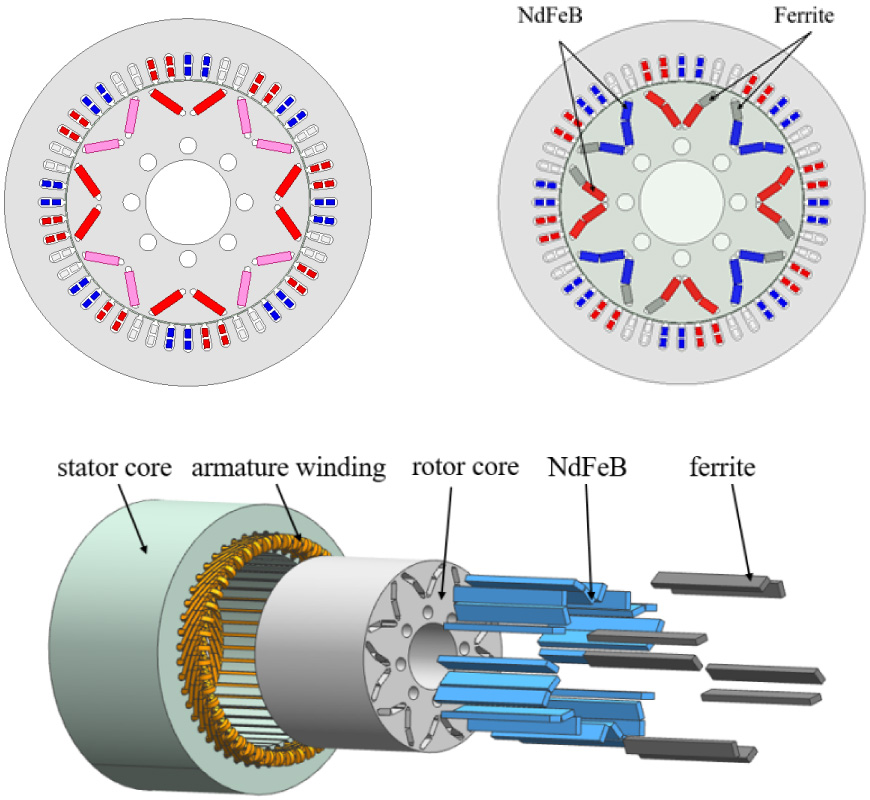
In order to reduce the use of rare-earth materials and solve the problem of rising manufacturing costs of permanent magnet motors due to higher rare-earth prices, this paper proposes an asymmetric segmented less-rare-earth permanent magnet motor (ASLREPMM), which combines NdFeB permanent magnets with ferrite permanent magnets to form a common excitation source. In order to efficiently design the parameters of this motor, an optimization strategy of sensitivity stratification and multi-objective optimization is proposed, with output torque, torque pulsation, cogging torque and peak air-gap magnet density as the optimization objectives, and multi-objective optimization is carried out on the optimization variables with high sensitivity. Compared with the V-type permanent magnet motor (V-type PMM), the cogging torque of the optimized ASLREPMM is decreased by 49.67%, torque pulsation decreased by 10.77%, peak air-gap magnetic density increased by 0.051 T, and the total amount of NdFeB material decreased by 2184 mm3. The reasonableness of the structural design and the effectiveness of the optimization of the ASLREPMM are verified through experiments.
Multi-objective Optimization of an Asymmetric Segmented Less-Rare-Earth Permanent Magnet Motor