Vol. 170
Latest Volume
All Volumes
PIERC 170 [2026] PIERC 169 [2026] PIERC 168 [2026] PIERC 167 [2026] PIERC 166 [2026] PIERC 165 [2026] PIERC 164 [2026] PIERC 163 [2026] PIERC 162 [2025] PIERC 161 [2025] PIERC 160 [2025] PIERC 159 [2025] PIERC 158 [2025] PIERC 157 [2025] PIERC 156 [2025] PIERC 155 [2025] PIERC 154 [2025] PIERC 153 [2025] PIERC 152 [2025] PIERC 151 [2025] PIERC 150 [2024] PIERC 149 [2024] PIERC 148 [2024] PIERC 147 [2024] PIERC 146 [2024] PIERC 145 [2024] PIERC 144 [2024] PIERC 143 [2024] PIERC 142 [2024] PIERC 141 [2024] PIERC 140 [2024] PIERC 139 [2024] PIERC 138 [2023] PIERC 137 [2023] PIERC 136 [2023] PIERC 135 [2023] PIERC 134 [2023] PIERC 133 [2023] PIERC 132 [2023] PIERC 131 [2023] PIERC 130 [2023] PIERC 129 [2023] PIERC 128 [2023] PIERC 127 [2022] PIERC 126 [2022] PIERC 125 [2022] PIERC 124 [2022] PIERC 123 [2022] PIERC 122 [2022] PIERC 121 [2022] PIERC 120 [2022] PIERC 119 [2022] PIERC 118 [2022] PIERC 117 [2021] PIERC 116 [2021] PIERC 115 [2021] PIERC 114 [2021] PIERC 113 [2021] PIERC 112 [2021] PIERC 111 [2021] PIERC 110 [2021] PIERC 109 [2021] PIERC 108 [2021] PIERC 107 [2021] PIERC 106 [2020] PIERC 105 [2020] PIERC 104 [2020] PIERC 103 [2020] PIERC 102 [2020] PIERC 101 [2020] PIERC 100 [2020] PIERC 99 [2020] PIERC 98 [2020] PIERC 97 [2019] PIERC 96 [2019] PIERC 95 [2019] PIERC 94 [2019] PIERC 93 [2019] PIERC 92 [2019] PIERC 91 [2019] PIERC 90 [2019] PIERC 89 [2019] PIERC 88 [2018] PIERC 87 [2018] PIERC 86 [2018] PIERC 85 [2018] PIERC 84 [2018] PIERC 83 [2018] PIERC 82 [2018] PIERC 81 [2018] PIERC 80 [2018] PIERC 79 [2017] PIERC 78 [2017] PIERC 77 [2017] PIERC 76 [2017] PIERC 75 [2017] PIERC 74 [2017] PIERC 73 [2017] PIERC 72 [2017] PIERC 71 [2017] PIERC 70 [2016] PIERC 69 [2016] PIERC 68 [2016] PIERC 67 [2016] PIERC 66 [2016] PIERC 65 [2016] PIERC 64 [2016] PIERC 63 [2016] PIERC 62 [2016] PIERC 61 [2016] PIERC 60 [2015] PIERC 59 [2015] PIERC 58 [2015] PIERC 57 [2015] PIERC 56 [2015] PIERC 55 [2014] PIERC 54 [2014] PIERC 53 [2014] PIERC 52 [2014] PIERC 51 [2014] PIERC 50 [2014] PIERC 49 [2014] PIERC 48 [2014] PIERC 47 [2014] PIERC 46 [2014] PIERC 45 [2013] PIERC 44 [2013] PIERC 43 [2013] PIERC 42 [2013] PIERC 41 [2013] PIERC 40 [2013] PIERC 39 [2013] PIERC 38 [2013] PIERC 37 [2013] PIERC 36 [2013] PIERC 35 [2013] PIERC 34 [2013] PIERC 33 [2012] PIERC 32 [2012] PIERC 31 [2012] PIERC 30 [2012] PIERC 29 [2012] PIERC 28 [2012] PIERC 27 [2012] PIERC 26 [2012] PIERC 25 [2012] PIERC 24 [2011] PIERC 23 [2011] PIERC 22 [2011] PIERC 21 [2011] PIERC 20 [2011] PIERC 19 [2011] PIERC 18 [2011] PIERC 17 [2010] PIERC 16 [2010] PIERC 15 [2010] PIERC 14 [2010] PIERC 13 [2010] PIERC 12 [2010] PIERC 11 [2009] PIERC 10 [2009] PIERC 9 [2009] PIERC 8 [2009] PIERC 7 [2009] PIERC 6 [2009] PIERC 5 [2008] PIERC 4 [2008] PIERC 3 [2008] PIERC 2 [2008] PIERC 1 [2008]
2026-05-04 Latest Published
By Kunming Chen Yanhong Li Caiyun Dai Guo-Qiang Liu Chao Zhang Guanchen Li
Progress In Electromagnetics Research C, Vol. 170, 28-37, 2026
Abstract
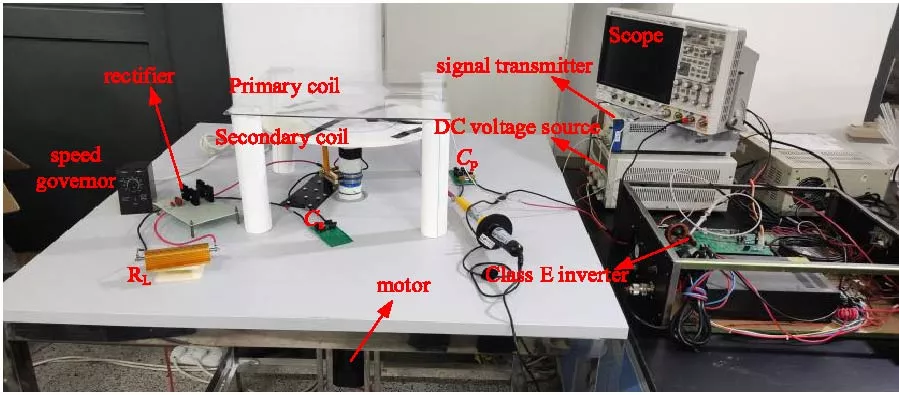
Aiming to meet the contactless power supply requirements of rotary equipment, this study investigates the coil design and performance of a small resonator for magnetically coupled resonant wireless power transfer (MCR-WPT) systems operating in the MHz band. Based on the series-series (S-S) WPT circuit topology, the influence of coil inductance on the transmission characteristics of the system was analyzed. By combining the inductance calculation formula for planar spiral coils, the geometric parameters of the coil were designed with the objectives of load power (PRL) > 40 W and transmission efficiency (ηT) > 90%. The rationality of the designed parameters was verified by field-circuit coupled simulation, and the influence laws of the driving frequency and transmission distance on transmission characteristics were also analyzed. The coils were wound according to the designed parameters, and both static and rotary dynamic power transfer experiments were conducted. The simulation results show that the designed coil achieves a transmission efficiency of 94.783% at a transmission distance of 50 mm in the 1 MHz, which meets the preset design objectives. The results of the static experiment and the dynamic rotation experiment show that the overall operating efficiency of the system (ηdc-dc) is 84%. This study demonstrates the feasibility of the proposed coil design method, and the designed small coil can realize high-efficiency and stable wireless power transfer under rotary working conditions. The research findings provide a reference for the coil design and engineering application of rotary MCR-WPT systems in the MHz band and possess practical value for the contactless power supply of sensors in rotary electrical equipment operating in confined spaces.
2026-05-04
PIER C
Vol. 170, 28-37, 2026
download: 11
Design and Experiment of Compact Rotary MCR-WPT Coils at MHz Band
Kunming Chen, Yanhong Li, Caiyun Dai, Guo-Qiang Liu, Chao Zhang and Guanchen Li
Aiming to meet the contactless power supply requirements of rotary equipment, this study investigates the coil design and performance of a small resonator for magnetically coupled resonant wireless power transfer (MCR-WPT) systems operating in the MHz band. Based on the series-series (S-S) WPT circuit topology, the influence of coil inductance on the transmission characteristics of the system was analyzed. By combining the inductance calculation formula for planar spiral coils, the geometric parameters of the coil were designed with the objectives of load power (PRL) > 40 W and transmission efficiency (ηT) > 90%. The rationality of the designed parameters was verified by field-circuit coupled simulation, and the influence laws of the driving frequency and transmission distance on transmission characteristics were also analyzed. The coils were wound according to the designed parameters, and both static and rotary dynamic power transfer experiments were conducted. The simulation results show that the designed coil achieves a transmission efficiency of 94.783% at a transmission distance of 50 mm in the 1 MHz, which meets the preset design objectives. The results of the static experiment and the dynamic rotation experiment show that the overall operating efficiency of the system (ηdc-dc) is 84%. This study demonstrates the feasibility of the proposed coil design method, and the designed small coil can realize high-efficiency and stable wireless power transfer under rotary working conditions. The research findings provide a reference for the coil design and engineering application of rotary MCR-WPT systems in the MHz band and possess practical value for the contactless power supply of sensors in rotary electrical equipment operating in confined spaces.
Design and Experiment of Compact Rotary MCR-WPT Coils at MHz Band
2026-05-04
PIER C
Vol. 170, 15-27, 2026
download: 10
A Deadbeat Fault-Tolerant Control Strategy for PMSM Demagnetization Faults Based on an Improved Flux Linkage Observer
Yang Zhang, Wancheng Xie, Yang Gao, Jiahao Zhang and Moutao Li
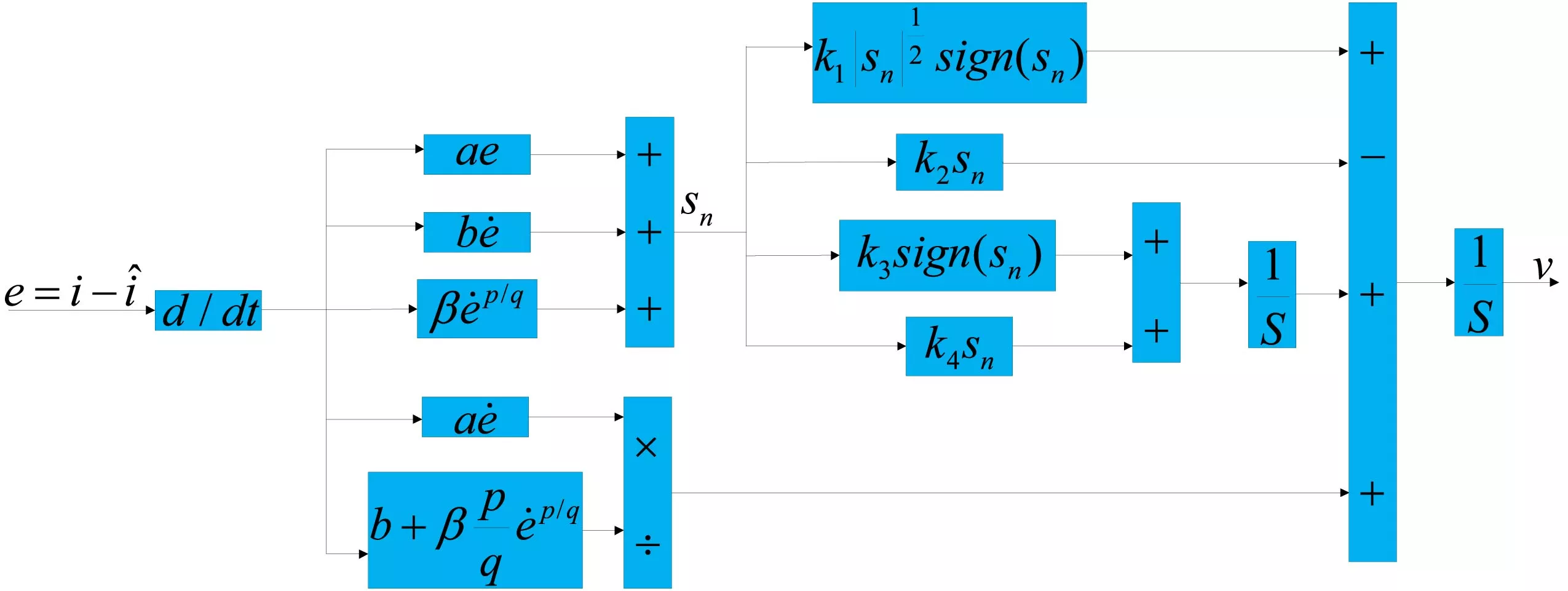
To address issues such as reduced motor output performance and diminished load capacity caused by permanent magnet demagnetization in Permanent Magnet Synchronous Motor (PMSM), a super-twisting algorithm-based fault-tolerant predictive control strategy for demagnetization faults in PMSM is proposed. First, the improved super-twisting non-singular fast terminal sliding mode observer (IST-NFTSMO) is constructed to accurately observe the flux linkage and predict the current at the next moment. Based on the observed values, a deadbeat fault-tolerant predictive control (DFTPC) algorithm is built to compensate for the torque loss due to permanent magnet demagnetization, thereby achieving fault-tolerant control of the system. Second, a sliding mode controller based on a novel reaching law is designed, thereby overcoming the shortcomings of traditional control strategies in PMSM vector control systems, such as poor anti-interference capability and slow response speed. Finally, experimental results demonstrate that after a demagnetization fault occurs in the PMSM, the proposed method effectively improves the fault tolerance capability of the PMSM system while ensuring the dynamic response speed of the control system, thereby endowing the system with enhanced stability and robustness.
A Deadbeat Fault-Tolerant Control Strategy for PMSM Demagnetization Faults Based on an Improved Flux Linkage Observer
2026-05-03
PIER C
Vol. 170, 1-14, 2026
download: 38
Design Optimization of a Permanent Magnet Biased Fault Current Limiter via Pattern Search for High Efficiency and Reduced Material Use
Tirtha Sankar Daphadar, Tapan Santra and Amalendu Bikash Choudhury
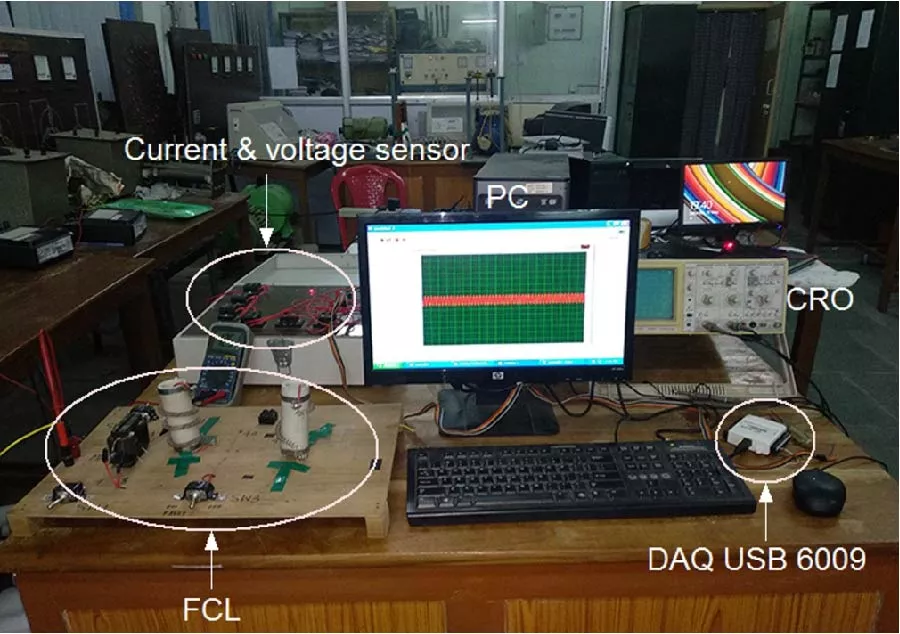
This paper presents a useful design optimization methodology for a permanent-magnet-biased fault current limiter (PMFCL), aiming to achieve good fault current limiting performance with small magnetic materials and their losses. A physics-based magnetic circuit modelling approach is developed to update the nonlinear core saturation and permanent magnet biasing, enabling fast and reliable analysis of candidate designs. Additionally, a weighted multi-objective formulation is adopted to balance fault current mitigation, material volume, and loss minimization. The resulting optimization problem is solved by means of a deterministic pattern search approach, which enables efficient design space exploration without access to gradient information. The optimized configurations are validated using the finite-element simulations, and the robustness of the configurations under practical operating conditions is analyzed. The obtained results show a significant reduction of the magnetic material volume with the optimized PMFCL without compromising and, in certain cases, with an improvement of the function of fault current limiting against a baseline design. The research identifies technical configurations of design that are practical for real-world deployment. The combination of reduced material usage, passive operation, and better energy efficiency means the proposed PMFCL represents a reliable and sustainable solution for better protection of modern power systems, especially in areas where power systems are cost-sensitive and infrastructure-limited.
Design Optimization of a Permanent Magnet Biased Fault Current Limiter via Pattern Search for High Efficiency and Reduced Material Use