Vol. 162
Latest Volume
All Volumes
PIERC 162 [2025] PIERC 161 [2025] PIERC 160 [2025] PIERC 159 [2025] PIERC 158 [2025] PIERC 157 [2025] PIERC 156 [2025] PIERC 155 [2025] PIERC 154 [2025] PIERC 153 [2025] PIERC 152 [2025] PIERC 151 [2025] PIERC 150 [2024] PIERC 149 [2024] PIERC 148 [2024] PIERC 147 [2024] PIERC 146 [2024] PIERC 145 [2024] PIERC 144 [2024] PIERC 143 [2024] PIERC 142 [2024] PIERC 141 [2024] PIERC 140 [2024] PIERC 139 [2024] PIERC 138 [2023] PIERC 137 [2023] PIERC 136 [2023] PIERC 135 [2023] PIERC 134 [2023] PIERC 133 [2023] PIERC 132 [2023] PIERC 131 [2023] PIERC 130 [2023] PIERC 129 [2023] PIERC 128 [2023] PIERC 127 [2022] PIERC 126 [2022] PIERC 125 [2022] PIERC 124 [2022] PIERC 123 [2022] PIERC 122 [2022] PIERC 121 [2022] PIERC 120 [2022] PIERC 119 [2022] PIERC 118 [2022] PIERC 117 [2021] PIERC 116 [2021] PIERC 115 [2021] PIERC 114 [2021] PIERC 113 [2021] PIERC 112 [2021] PIERC 111 [2021] PIERC 110 [2021] PIERC 109 [2021] PIERC 108 [2021] PIERC 107 [2021] PIERC 106 [2020] PIERC 105 [2020] PIERC 104 [2020] PIERC 103 [2020] PIERC 102 [2020] PIERC 101 [2020] PIERC 100 [2020] PIERC 99 [2020] PIERC 98 [2020] PIERC 97 [2019] PIERC 96 [2019] PIERC 95 [2019] PIERC 94 [2019] PIERC 93 [2019] PIERC 92 [2019] PIERC 91 [2019] PIERC 90 [2019] PIERC 89 [2019] PIERC 88 [2018] PIERC 87 [2018] PIERC 86 [2018] PIERC 85 [2018] PIERC 84 [2018] PIERC 83 [2018] PIERC 82 [2018] PIERC 81 [2018] PIERC 80 [2018] PIERC 79 [2017] PIERC 78 [2017] PIERC 77 [2017] PIERC 76 [2017] PIERC 75 [2017] PIERC 74 [2017] PIERC 73 [2017] PIERC 72 [2017] PIERC 71 [2017] PIERC 70 [2016] PIERC 69 [2016] PIERC 68 [2016] PIERC 67 [2016] PIERC 66 [2016] PIERC 65 [2016] PIERC 64 [2016] PIERC 63 [2016] PIERC 62 [2016] PIERC 61 [2016] PIERC 60 [2015] PIERC 59 [2015] PIERC 58 [2015] PIERC 57 [2015] PIERC 56 [2015] PIERC 55 [2014] PIERC 54 [2014] PIERC 53 [2014] PIERC 52 [2014] PIERC 51 [2014] PIERC 50 [2014] PIERC 49 [2014] PIERC 48 [2014] PIERC 47 [2014] PIERC 46 [2014] PIERC 45 [2013] PIERC 44 [2013] PIERC 43 [2013] PIERC 42 [2013] PIERC 41 [2013] PIERC 40 [2013] PIERC 39 [2013] PIERC 38 [2013] PIERC 37 [2013] PIERC 36 [2013] PIERC 35 [2013] PIERC 34 [2013] PIERC 33 [2012] PIERC 32 [2012] PIERC 31 [2012] PIERC 30 [2012] PIERC 29 [2012] PIERC 28 [2012] PIERC 27 [2012] PIERC 26 [2012] PIERC 25 [2012] PIERC 24 [2011] PIERC 23 [2011] PIERC 22 [2011] PIERC 21 [2011] PIERC 20 [2011] PIERC 19 [2011] PIERC 18 [2011] PIERC 17 [2010] PIERC 16 [2010] PIERC 15 [2010] PIERC 14 [2010] PIERC 13 [2010] PIERC 12 [2010] PIERC 11 [2009] PIERC 10 [2009] PIERC 9 [2009] PIERC 8 [2009] PIERC 7 [2009] PIERC 6 [2009] PIERC 5 [2008] PIERC 4 [2008] PIERC 3 [2008] PIERC 2 [2008] PIERC 1 [2008]
2025-12-04 Latest Published
By Yueh-Hsien Cheng Chun-Long Wang
Progress In Electromagnetics Research C, Vol. 162, 188-193, 2025
Abstract
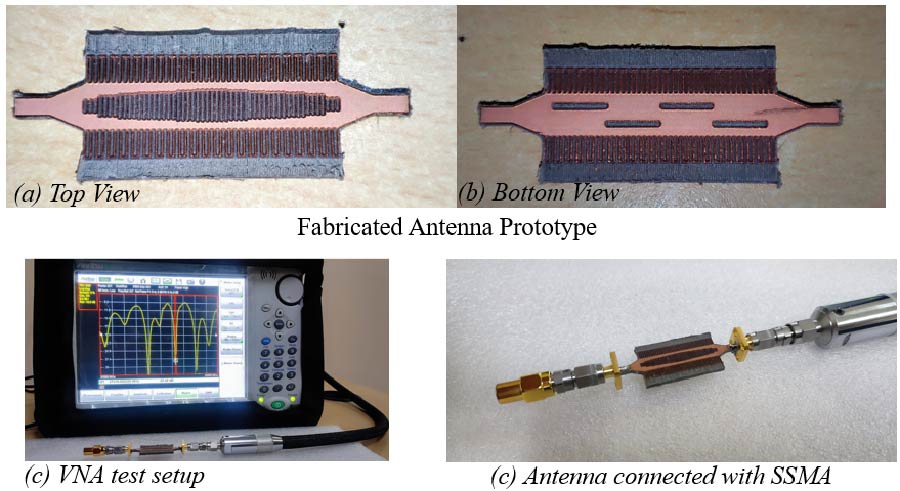
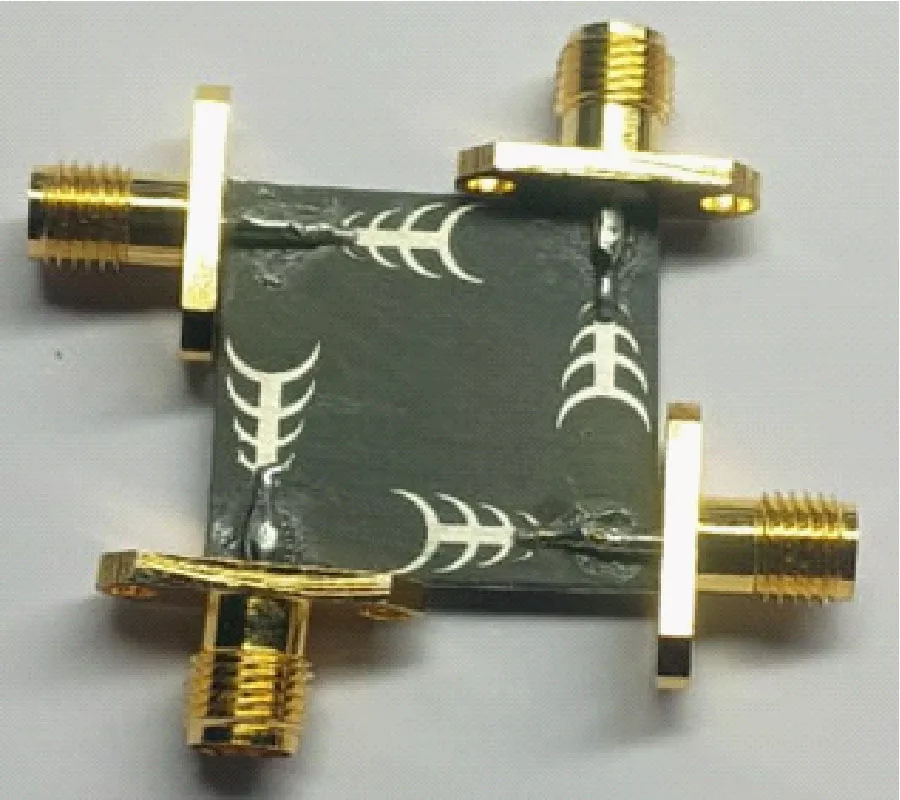
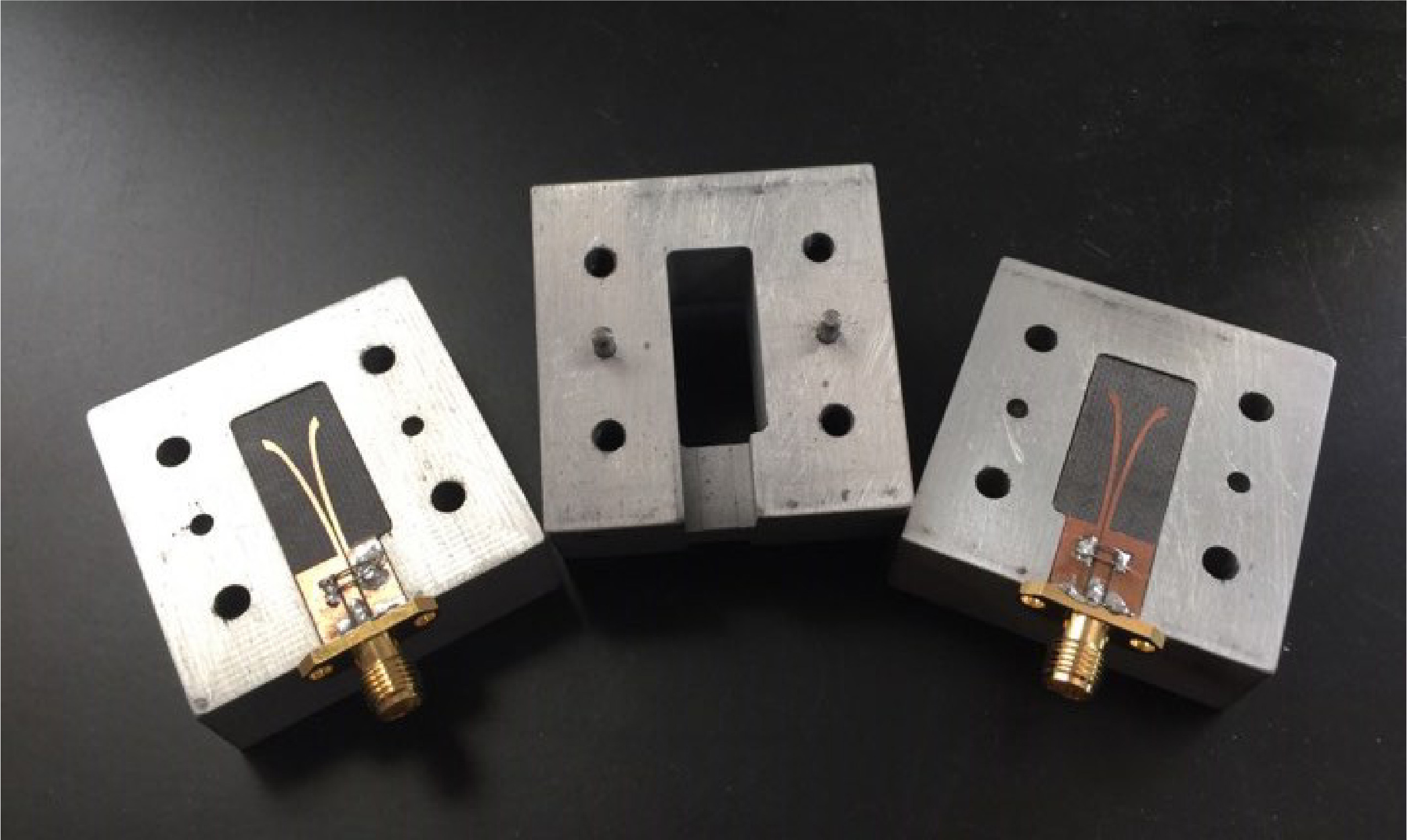
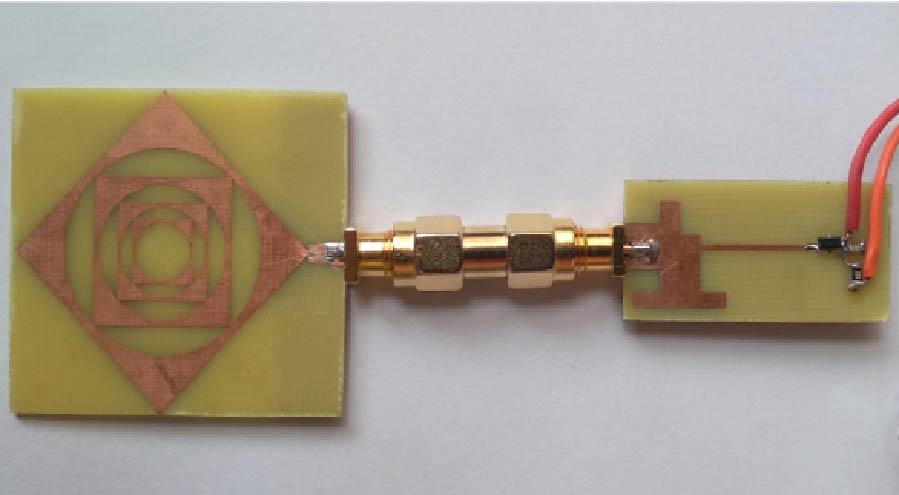
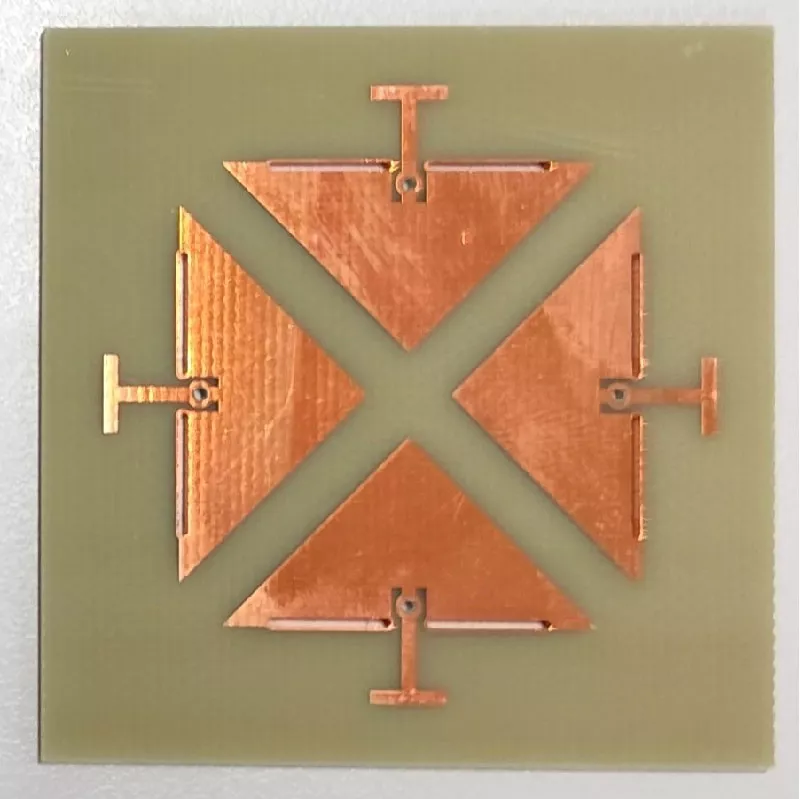
In this paper, a coplanar waveguide-to-rectangular waveguide TE20 mode transition using an antisymmetric tapered probe is proposed. The transmission coefficient of the TE20 mode is nearly 0 dB, and the reflection coefficient of the coplanar waveguide mode is smaller than -10 dB from 13.48 GHz to 14.7 GHz. In this frequency range, the transmission coefficient of the TE10 mode is smaller than -20 dB while the reflection coefficient of the coupled slotline mode is smaller than -19 dB. Besides, a microstrip line-to-rectangular waveguide TE20 mode transition using an antisymmetric fork is proposed. The transmission coefficient of the TE20 mode is nearly 0 dB, and the reflection coefficient of the microstrip line mode is smaller than -10 dB from 13.34 GHz to 15 GHz. In this frequency range, the transmission coefficient of the TE10 mode is smaller than -20 dB. To verify the simulation results, the coplanar waveguide-to-rectangular waveguide TE20 transition and the microstrip line-to-rectangular waveguide TE20 mode transition are back-to-back fabricated and measured, with the measurement results agreeing well with the simulation ones.
2025-12-02
PIER C
Vol. 162, 175-187, 2025
download: 65
Design and Analysis of a Six-Phase Hybrid-Excited Reverse-Salient Fault-Tolerant Permanent Magnet Motor for Electric Vehicles
Canwei Zhang, Zhangqi Liu, Xiping Liu and Ruipan Lu
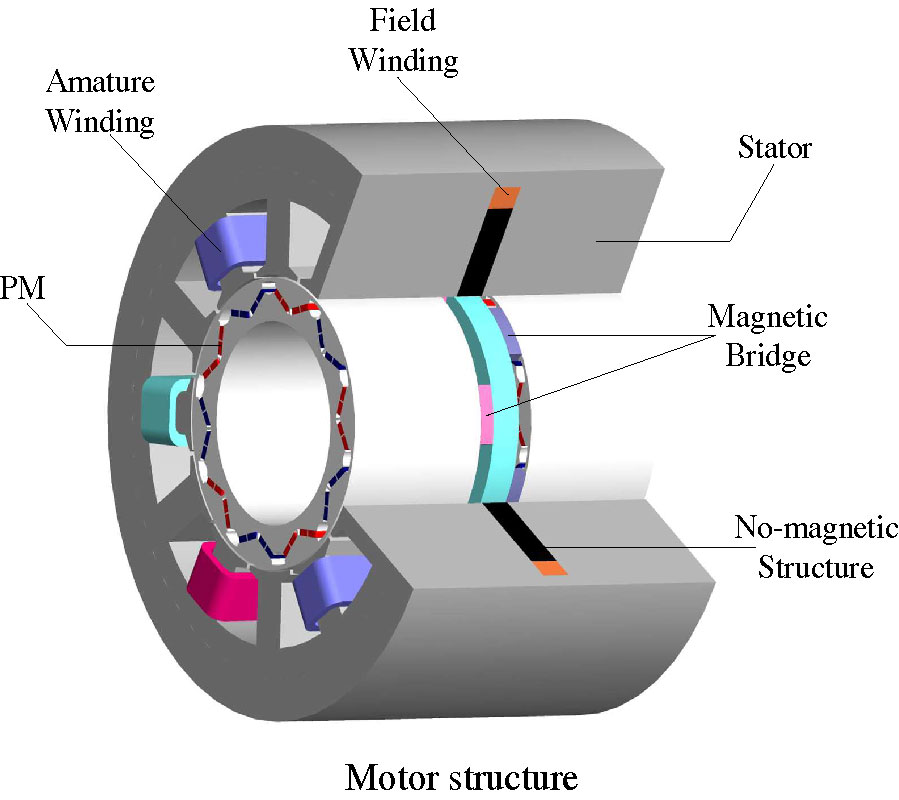
Conventional permanent magnet synchronous motors (PMSMs) suffer from limitations in speed regulation range, poor fault tolerance, and restricted torque output in electric vehicle drive applications. To address these limitations, this paper proposes a six-phase, 12-slot/10-pole hybrid-excited reverse-salient fault-tolerant motor (FT-HE-RSPM). To achieve reverse-salient characteristics and regulate the air-gap magnetic field, the rotor adopts segmented permanent magnets and a q-axis magnetic barrier. This design increases the d-axis inductance while reducing the q-axis inductance, achieving the reverse-salient characteristic Ld > Lq under rated conditions. Additionally, both the stator and rotor adopt segmented structures, forming axial magnetic paths via magnetic bridges. The excitation windings are embedded in the stator using non-magnetic materials, and the air-gap magnetic field is regulated by controlling the excitation current. The motor's magnetic field regulation mechanism was analyzed using the equivalent magnetic circuit method. Combined with three-dimensional finite element analysis (3D-FEA), the motor's electromagnetic performance and fault-tolerant characteristics were investigated, leading to the design of a current reconstruction fault-tolerant control strategy for single-phase open-circuit faults. Results demonstrate that this motor exhibits high torque output capability, excellent flux regulation characteristics, high efficiency, and outstanding fault tolerance, meeting the demands of complex operating conditions in electric vehicles.
Design and Analysis of a Six-phase Hybrid-excited Reverse-salient Fault-tolerant Permanent Magnet Motor for Electric Vehicles
2025-12-01
PIER C
Vol. 162, 166-174, 2025
download: 68
Broadband Sequential Load Modulation Power Amplifier for Expanding Design Space
Jiadong Yu, Jingchang Nan and Heyang Sun
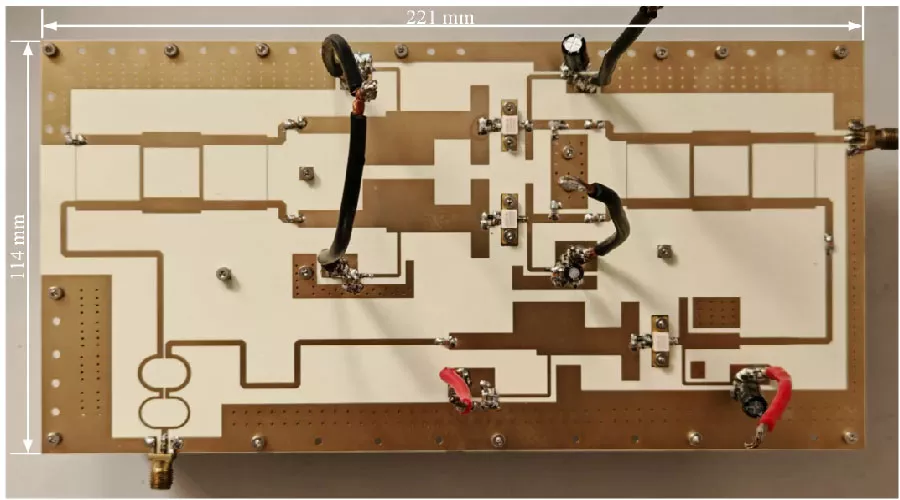
This study proposes an extended design methodology for sequential load-modulated balanced amplifiers (SLMBAs), centered on regulating the impedance characteristics of balanced amplifiers (BAs) through continuous F-1 class control amplifiers (CA). By expanding the load operating range of CAs at the second harmonic, the flexibility of high-efficiency designs is effectively enhanced. Theoretical analysis demonstrates that this load modulation mechanism overcomes the structural limitations of conventional LMBA, enabling high-efficiency power amplification across a wide frequency range and under conditions of large output power back-off (OPBO). Based on this architecture, an SLMBA prototype operating from 2.0 to 3.7 GHz was developed. Test results indicate that in saturated and 8 dB OPBO conditions, the drain efficiency (DE) reached 55.2%-68.7% and 46.8%-59.0%, respectively. When fed with an LTE signal featuring a 100 MHz bandwidth and 8 dB PAPR, the average DE across the entire bandwidth ranged from 49.2% to 58.3%, with an adjacent channel leakage power ratio (ACPR) exceeding -35 dBc.
Broadband Sequential Load Modulation Power Amplifier for Expanding Design Space
2025-11-29
PIER C
Vol. 162, 157-165, 2025
download: 45
Optimization of Multilayer Microwave Absorbers Using Hybrid Multi-Strategy Improved Enzyme Action Optimizer
Tongyu Liu, Wei-Bin Kong, Yiming Zong, Lei Wang, Yuanyuan Wang, Wenwen Yang and Yidong Wei
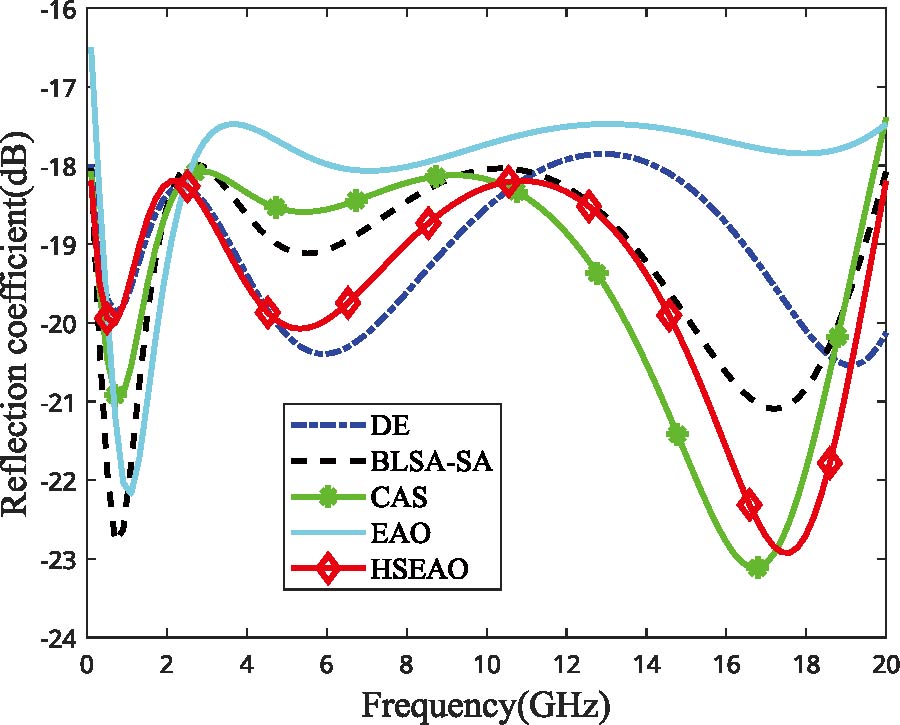
This paper proposes a Hybrid Multi-Strategy Enhanced Enzyme Action Optimizer (HSEAO) for designing multilayer broadband microwave absorbers under vertical irradiation conditions. The optimization objective is to minimize the absorber's reflection coefficient within a specified frequency range by selecting suitable material layers from a literature database. The performance of the Enzyme Action Optimizer (EAO) has been improved by introducing three enhancement strategies including Quasi-Opposition Based Learning (QOBL), adaptive coefficient, and leader follower. The effectiveness of these enhancement strategies is validated through simulation examples of five-layer and seven-layer microwave absorbers, achieving maximum reflection losses of -25.7975 dB and -18.1965 dB, respectively. Results demonstrate that HSEAO outperforms other heuristic algorithms in minimizing reflection coefficients for microwave absorber design. CST simulations further demonstrate that microwave absorbers designed by HSEAO achieve lower reflection losses.
Optimization of Multilayer Microwave Absorbers Using Hybrid Multi-strategy Improved Enzyme Action Optimizer
2025-11-29
PIER C
Vol. 162, 148-156, 2025
download: 69
A Compact Novel Fractal Based Rectenna for RF Energy Harvesting
Nipa Panchal Biswas, Puja Das, Anirban Karmakar and Tamasi Moyra Panua
With the advancement of wireless communication, Radio Frequency (RF) energy harvesting has gained significant attention over the past decade. RF energy harvesting is emerging as a sustainable alternative to conventional batteries, enabling self-powered operation in wireless sensor networks and Internet-of-Things (IoT) devices. This work presents a single band fractal based rectenna (Antenna with Rectifier) system for efficient RF energy harvesting. Here a single-diode shunt rectifier converts RF signals into usable DC power which will be usable to many self-powered wireless devices applications. The results show that the proposed antenna (41.03×37.24×1.6 mm3) features a bandwidth of 45.64% ranging from 2.08 GHz to 3.31 GHz and reflection coefficient of -60 dB at 2.45 GHz. The proposed antenna obtained maximum gain of 6.02 dBi with maximum radiation efficiency of 71.4% at 2.45 GHz. A diode rectifier with single stub matching network is used in which a HSMS2860 Schottky diode is connected in shunt for the rectification. The proposed rectifier obtains PCE of 70.07% and DC output voltage of 1.664 V at 5 dBm input power (Pin).
A Compact Novel Fractal based Rectenna for RF Energy Harvesting
2025-11-26
PIER C
Vol. 162, 140-147, 2025
download: 64
Multi-Scale Visibility Fusion Network for Super-Resolution Near-Field Imaging in Synthetic Aperture Interferometric Radiometer
Fuxin Cai, Jianfei Chen, Ziang Zheng and Leilei Liu
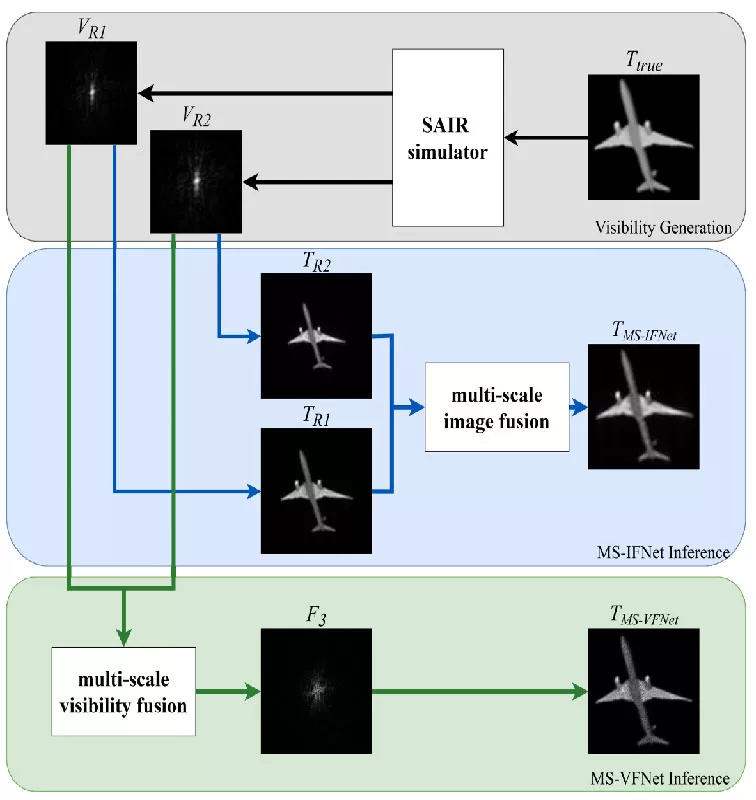
The Synthetic Aperture Interferometric Radiometer (SAIR) has demonstrated significant potential in Earth remote sensing and radio astronomy. However, most existing imaging methods rely on single-scale visibility function, while SAIR systems typically employ sparse arrays with insufficient sampling, which results in unsatisfactory imaging quality. In this paper, we propose a novel deep learning-based imaging method that addresses this limitation by leveraging multi-scale visibility function. The multi-scale visibility fusion network (MS-VFNet) introduces cross-attention mechanisms in the visibility domain for feature fusion across different scales, fully exploiting the implicit structural information, and subsequently reconstructs the brightness temperature images through a dedicated reconstruction module. The simulation results demonstrate that the proposed MS-VFNet achieves superior reconstruction accuracy and image quality compared to state-of-the-art methods, further validating the feasibility of multi-scale fusion in SAIR super-resolution imaging.
Multi-Scale Visibility Fusion Network for Super-Resolution Near-Field Imaging in Synthetic Aperture Interferometric Radiometer
2025-11-23
PIER C
Vol. 162, 130-139, 2025
download: 73
A Compact Wideband 4-Port MIMO Antenna with Novel C-Shaped Radiators and Enhanced Isolation Characteristics
Pandillapalli Janardhana Reddy and Gummadi Kameswari
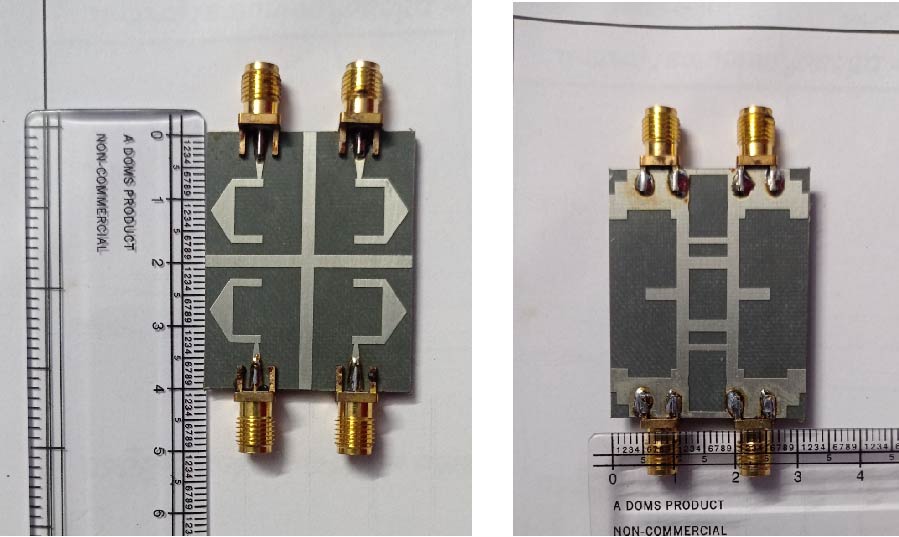
A compact four-element MIMO antenna with dimensions 40 × 32 × 1.2 mm3 is presented. The design employs stylized C-shaped radiators with slanted edges and a shared defected ground plane integrated with folded stubs to enhance impedance matching and bandwidth. Fabricated on an RT5880 substrate (εr = 2.2, tanδ = 0.0009), the antenna achieves an ultra-wide operating range of 4.24-19.70 GHz with inter-element isolation above 20 dB. Diversity metrics, including envelope correlation coefficient (< 0.02), diversity gain (≈10 dB), channel capacity loss (<0.0325 bits/s/Hz), and total active reflection coefficient (-12 to -24 dB), are verified through simulation and measurement, confirming robust MIMO characteristics. Owing to its wideband operation and high isolation, the antenna is suitable for sub-6 GHz 5G NR (n79: 4.4-5.0 GHz), WLAN/Wi-Fi (5.15-5.825 GHz), X-band navigation and radar (8-12 GHz), and Ku-band satellite communication (12-14.5 GHz).
A Compact Wideband 4-Port MIMO Antenna with Novel C-Shaped Radiators and Enhanced Isolation Characteristics
2025-11-23
PIER C
Vol. 162, 121-129, 2025
download: 59
New Super-Twisting Fast Integral Terminal Sliding Mode Control for PMSM Considering System Aggregate Disturbances
Junqin Liu, Tianle Li, Zhentong Wang, Lin Liu, Feng Deng, Xinchun Jiang, Kaihui Zhao, Xiangfei Li and Shiyin Gong
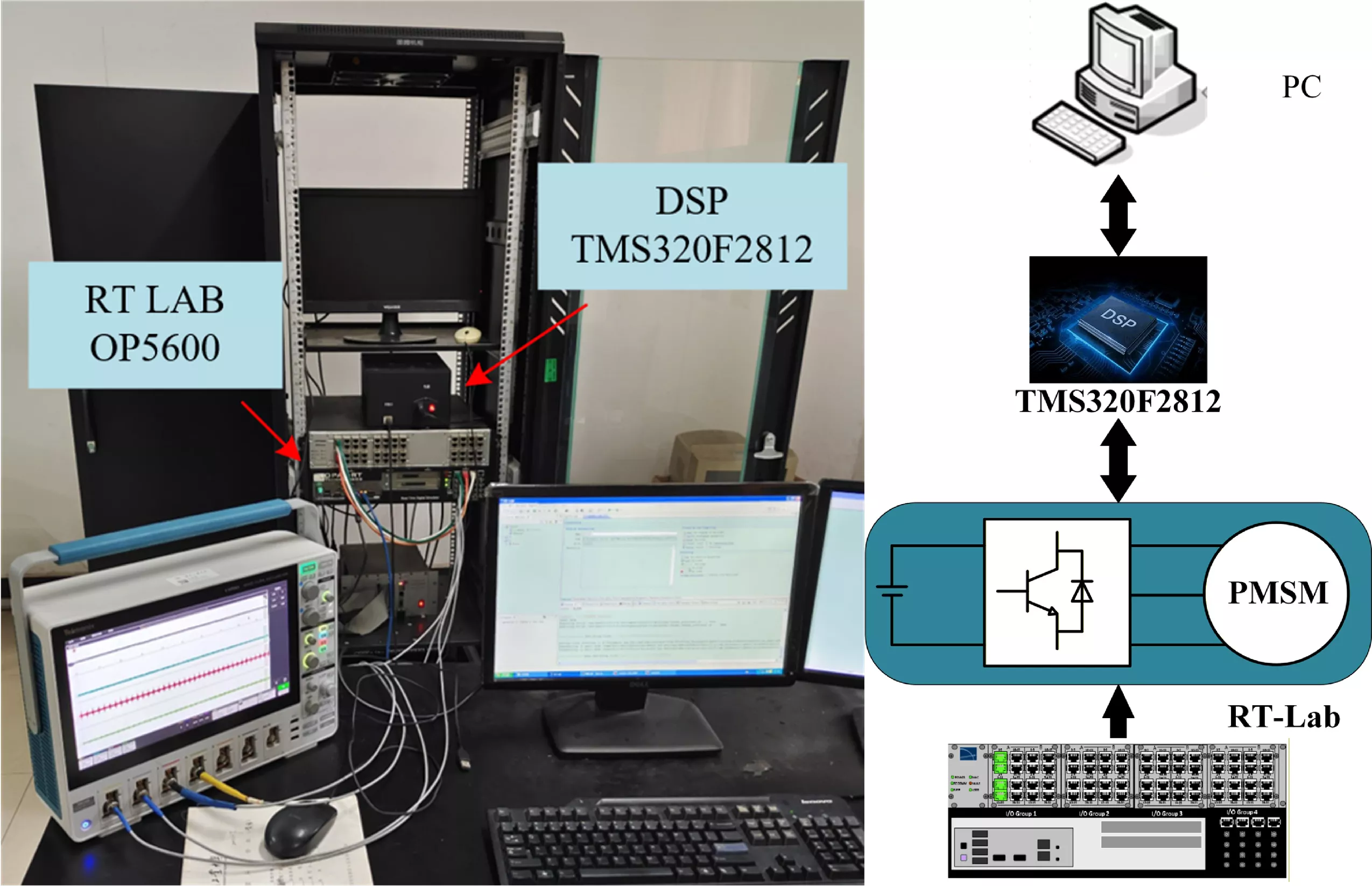
To effectively suppress parameter perturbations, external disturbances, and ensure the stability of the PMSM system under uncertain conditions, this paper proposes a novel fast integral terminal sliding mode composite controller (NFITSMC) for speed-loop of PMSM based on super-twisting integral terminal sliding mode disturbance observer (STITSMO). Firstly, the mathematical model of the PMSM with parameter perturbations and external disturbances is analyzed. Then, the NFITSMC speed-loop controller is designed, where the NFIT sliding mode surface combines proportional, integral, and nonlinear terms, enabling effective suppression of parameter perturbations and external disturbances to ensure system stability under uncertainties. Meanwhile, the adaptive exponential switching reaching law adjusts the convergence speed according to the distance between the system state and the sliding surface, thereby mitigating system chattering. Next, the STITSMO disturbance observer is designed, in which the IT sliding mode surface is combined with a second-order super-twisting control law, allowing dynamic gain adjustment based on error magnitude to achieve global fast convergence of the adaptive nonlinear system. Finally, simulations and experiments validate that the NFITSMC-STITSMO composite controller demonstrates superior performance in finite-time convergence, robustness, chattering suppression, and disturbance rejection, making it suitable for high-performance and high-order PMSM control systems.
New Super-Twisting Fast Integral Terminal Sliding Mode Control for PMSM Considering System Aggregate Disturbances
2025-11-23
PIER C
Vol. 162, 114-120, 2025
download: 31
Electrostatic Shielding of a Rectangular Conducting Enclosure: Influence of Aperture Position on the Penetrated Field
Xiaolin Zhao, Hanyu Wu and Chongqing Jiao
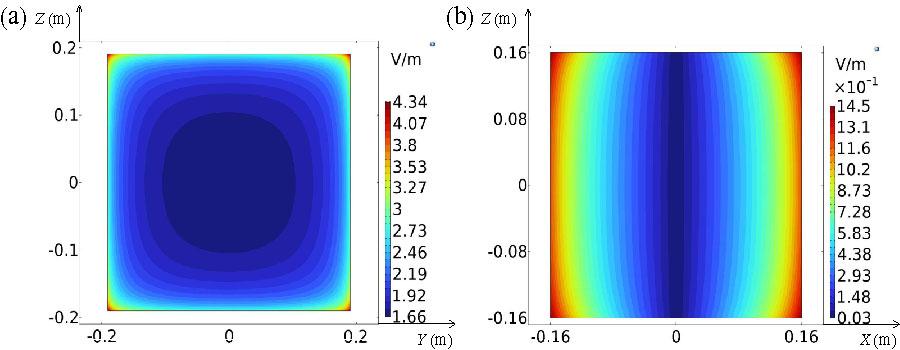
This paper investigates, by means of finite-element simulations, how the position of an aperture affects the electrostatic shielding effectiveness of a rectangular metallic enclosure. First, we compute the electric-field distribution on the surface of a completely closed enclosure placed in an external electric field. The results show that, for every wall, the field is weakest at the center, and that the field on walls parallel to the external field is far lower than that on walls perpendicular to it. Next, we determine the electric field that leaks into the enclosure after an aperture is introduced. We find that the field strength decreases with the distance from the aperture, that the field near the aperture is proportional to the surface field at the aperture's location when the aperture is covered. Also, its magnitude can be predicted by the classical model of the small aperture coupling. Finally, we investigate the coexistence effect and formulate guidelines for choosing the aperture position to achieve optimum shielding performance.
Electrostatic Shielding of a Rectangular Conducting Enclosure: Influence of Aperture Position on the Penetrated Field
2025-11-23
PIER C
Vol. 162, 106-113, 2025
download: 36
Electromagnetic-Thermal Coupling in Sliding Contacts: Modeling Dynamic Resistance and Heat Generation for Electromagnetic Launch Systems
Yikang Song, Pengyu Li, Junsheng Cheng and Heyang Wang
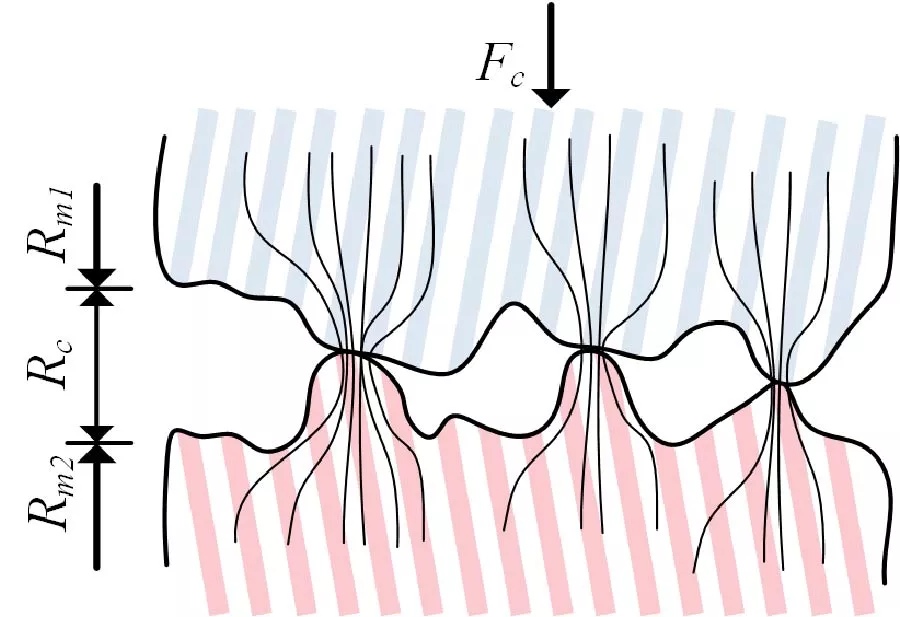
This study addresses multi-physics coupling challenges in high-speed sliding electrical contacts for Electromagnetic Launch Systems. A three-dimensional transient finite element model integrating electromagnetic-thermal interactions is established. By combining modified adhesion theory with Holm's contact resistance theory, we derive an analytical expression for dynamic contact resistance (DCR) that incorporates electromagnetic contact pressure, tangential friction, and temperature-dependent conductivity. The proposed localized modeling strategy with rail reverse motion technique efficiently resolves armature motion through coordinate transformation. Governing equations are discretized via the Galerkin method, with interfacial current continuity constraints and thermal partition coefficients enabling precise separation of Joule heating and frictional heat. Numerical results demonstrate robust current continuity compliance and reveal that DCR reaches its minimum during current peaks, exhibiting strong negative correlation with electromagnetic thrust. Tangential friction suppresses resistance rise by expanding the actual contact area, while electromagnetically dominated skin effects generate localized hotspots at contact trailing edges, armature limbs, and throat regions. This work elucidates the coupled frictional-Joule heating mechanisms governing multi-physics interactions, providing critical foundations for thermal management optimization in Electromagnetic Launch Systems.
Electromagnetic-thermal Coupling in Sliding Contacts: Modeling Dynamic Resistance and Heat Generation for Electromagnetic Launch Systems
2025-11-22
PIER C
Vol. 162, 94-105, 2025
download: 90
Wideband Low RCS Metasurface Conformal Sheet for Stealth Applications
Shimaa Ahmed Megahed Soliman, Sherine Ismail Abd El‑Rahman and Hany Mahmoud Zamel
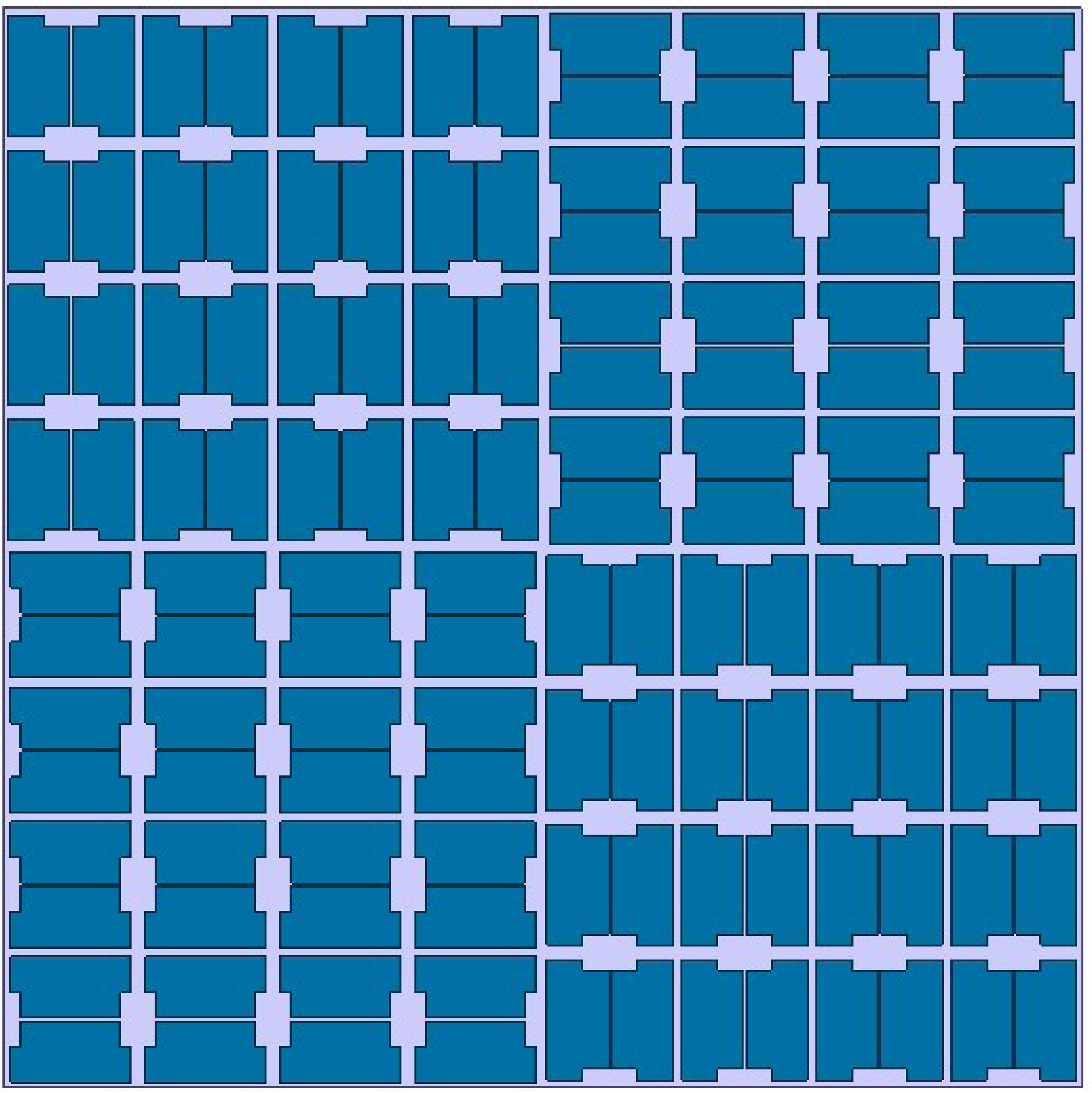
In this paper, a wideband design of a conformal metasurface for RCS reduction in the range of 6.3~8.3 GHz is introduced. The proposed unit cell has a reflection amplitude less than -0.5 dB. The methodology for reducing the radar cross section using metamaterial is introduced along with the evolution of the design of the proposed unit cell. The conformal array is modeled using this unit, and the performance of a metasurface when being attached to a conformal metallic object is investigated. When the proposed metasurface is attached to a 3D object, it can achieve more diffused scattering patterns and wide scattering angles, regardless of the polarization of the incident waves and across a wide range of incident angles. It can achieve more than 10 dB reduction RCS. The sheet operates well for incident wave angles up to 60°. Both simulated and measured results demonstrate that the conformal metasurface effectively achieves diffuse reflection and RCS reduction which holds significant potential for applications in the field of advanced stealth technology, and the sheet size is scalable to larger sizes.
Wideband Low RCS Metasurface Conformal Sheet for Stealth Applications
2025-11-22
PIER C
Vol. 162, 81-93, 2025
download: 69
An Adaptive DTC-SVM Control for Five-Phase Machines Under One Open-Phase Fault
Mohamed Chafaa Madaoui, Abdelfattah Hoggui, Ali Benachour, Lotfi Kerchich, Meriem Isra Bazzine, Mohand Oulhadj Mahmoudi and Mohamed Tadjine
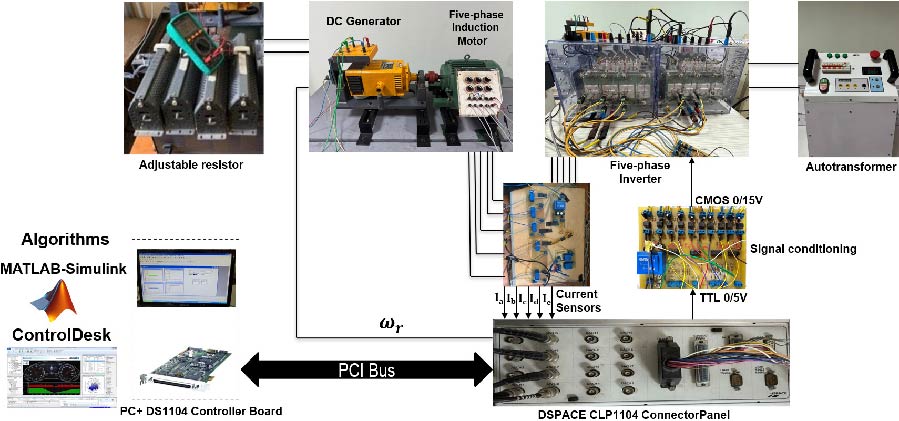
This paper presents an adaptive Direct Torque Control with Space Vector Modulation (DTC-SVM) strategy for a five-phase induction machine fed by a two-level inverter, designed to tolerate single open-phase faults. Under such fault conditions, the five-phase inverter generates only 16 voltage vectors distributed across 8 sectors, requiring a reconfiguration of the DTC-SVM control scheme. The proposed method introduces a modified vector selection and sector allocation approach tailored to faulted operation, enabling reliable performance without extensive controller redesign. Simulation studies in MATLAB/Simulink and experimental validation on a 3.5 kW five-phase induction motor confirm the effectiveness of the proposed approach. The results show that the adaptive DTC-SVM reduces torque ripple, maintains stable flux and current waveforms, and preserves fast dynamic response during sudden load changes. In addition, the method remains straightforward to implement, combining the simplicity of DTC with the improved voltage utilization of SVM.
An Adaptive DTC-SVM Control for Five-phase Machines under One Open-phase Fault
2025-11-21
PIER C
Vol. 162, 70-80, 2025
download: 91
A Dual-Band Four-Element MIMO Antenna with Triangular Slots and Hexagonal Rings for GSM, Wi-Fi, LTE, 5G and IoT Applications
Sachin S. Khade, Nikhil Mangrulkar, Chitra S. Khade, Sapana Dhanvijay and Prasanna L. Zade
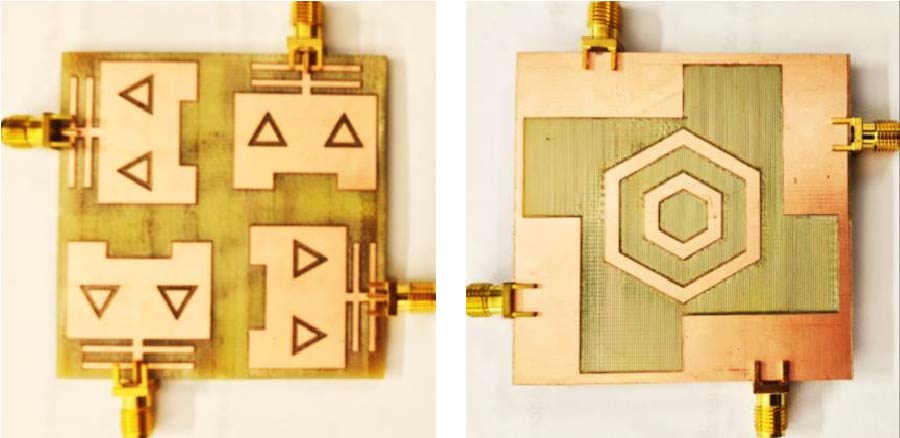
A novel compact four-element MIMO antenna system is developed, featuring a rectangular Microstrip patch structure integrated with dual vertical grooves. The projected antenna design incorporate slits, triangular slot, and DGS to realize dual-band resonance with simultaneously multiband response and mitigating mutual coupling effects. The antenna operates effectively at 0.9 GHz and 2.4-2.6 GHz bands, supporting multiple IoT and wireless communication standards such as GSM (0.9 GHz), Lora (2.4 to 2.5 GHz), Wi-Fi (2.4 GHz), Bluetooth (2.4 GHz), LTE (Band 8 , Band 7, Band 41 and Band 53), and 5G (n8, n41). The antenna demonstrates satisfactory impedance matching, achieving return losses of -16.16 dB at 0.94 GHz and -31.19 dB at 2.496 GHz, with isolation levels exceeding -15 dB. The antenna delivers stable far-field radiation with 2.8-3.6 dBi gain, and prototype validation demonstrates strong agreement with simulations, confirming its suitability for compact, high-performance IoT (2.4 GHz) and 5G Sub-6 GHz devices.
A Dual-band Four-element MIMO Antenna with Triangular Slots and Hexagonal Rings for GSM, Wi-Fi, LTE, 5G and IoT Applications
2025-11-20
PIER C
Vol. 162, 58-69, 2025
download: 85
A Compact Four-Port Axially Symmetric UWB-MIMO Antenna Array: Metamaterial-Integrated Coplanar Waveguide for Broadband Operation with High Isolation
Xuemei Zheng, Linfei Yue and Yunan Zhang
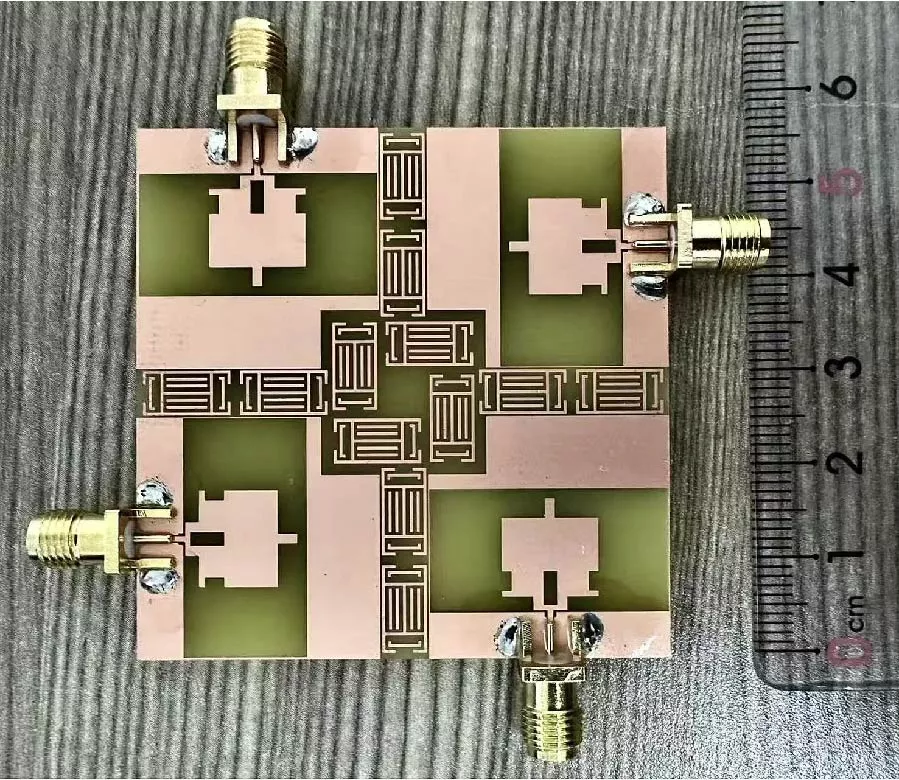
This paper presents a broadband MIMO antenna for miniaturized satellites and a novel metamaterial for decoupling. The proposed metamaterial exhibits single-negative characteristics (with only permittivity ε being negative) in the 4.66-6 GHz and 6.5-9 GHz frequency bands, and double-negative characteristics (with both permittivity ε and permeability μ being negative) in the 6-6.5 GHz and 9-15.97 GHz frequency bands. In MIMO antenna applications, it significantly improves isolation between antenna elements. Finally, we develop a 4-port ultra-wideband (UWB) MIMO array antenna operating from 4.66 to 15.97 GHz, covering C-band, X-band, and Ku-band. It achieves S11 < -10 dB with an operating bandwidth of 11.31 GHz. With the integrated metamaterial suppressing inter-unit coupling, the antenna demonstrates low-coupling performance (S12, S13, S14 < −20 dB and ECC < 0.035) across the entire operating band. The maximum gain reaches 7.83 dBi, providing both high-gain performance and ultra-wideband decoupling capabilities. This MIMO antenna measures 55 mm × 55 mm × 1.6 mm and uses an FR4 substrate.
A Compact Four-port Axially Symmetric UWB-MIMO Antenna Array: Metamaterial-integrated Coplanar Waveguide for Broadband Operation with High Isolation
2025-11-19
PIER C
Vol. 162, 50-57, 2025
download: 71
Adaptive Non-Singular Terminal Sliding Mode Control of PMSM Based on Non-Singular Fast Terminal Double Power Sliding Mode Disturbance Observer
Junqin Liu, Zhentong Wang, Tianle Li, Feng Deng, Xinchun Jiang, Kaihui Zhao and Xiangfei Li
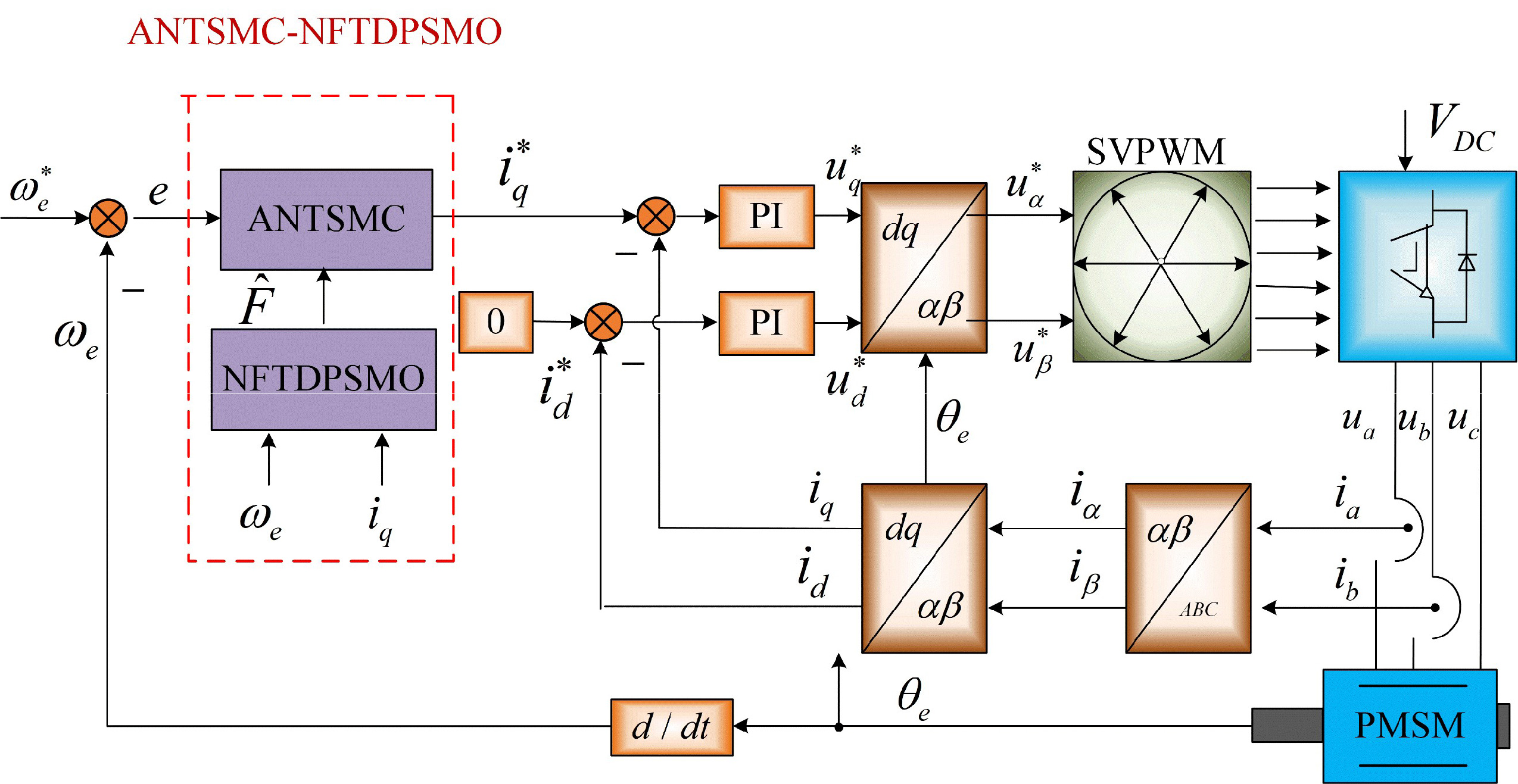
This paper proposes a composite control strategy integrating Adaptive Non-singular Terminal Sliding Mode Control (ANTSMC) with a Non-singular Fast Terminal Double-Power Sliding Mode Observer (NFTDPSMO) to achieve high-precision control of PMSM system. The strategy combines an adaptive non-singular terminal sliding mode controller with a novel sliding mode disturbance observer. The ANTSMC adaptively adjusts the convergence speed according to the distance between the system state and the sliding surface to suppress chattering, while the NFTDPSMO employs a triple-composite term with denominator modification to achieve singularity-free operation and global fast convergence. Simulated and experimental results demonstrate that under complex operating conditions including parameter perturbations, load variations, and external disturbances, the proposed composite controller achieves faster dynamic response, reduced current and torque pulsations, lower harmonic distortion (THD of only 7.1%), and significantly enhanced robustness and steady-state performance.
Adaptive Non-singular Terminal Sliding Mode Control of PMSM Based on Non-singular Fast Terminal Double Power Sliding Mode Disturbance Observer
2025-11-19
PIER C
Vol. 162, 44-49, 2025
download: 71
A Miniaturized 5G Microstrip Patch Antenna Element and MIMO Design
Xiao-Mei Ni and Xin-Hao Ding
This paper proposes a novel microstrip patch antenna element and MIMO design based on quarter-mode substrate integrated waveguide (QMSIW). This design not only achieves antenna miniaturization but also effectively reduces the mutual coupling between antenna elements. The antenna element employs a triangular patch as the main radiator, with its long side grounded via two metal cavities. For bandwidth enhancement, a T-shaped strip is positioned at the center of the triangular patch's long side, and a new mode is introduced. A pair of slots is etched at the junction between the strip and the patch; adjusting the slot size enables dual-mode operation and control coupling. Building on this element, a 2 × 2 MIMO system is developed, featuring a compact size and requiring only one dielectric substrate, thereby achieving high integration and low cost. The patch occupies an area of (0.22 × 0.22λ02)/2, while the strip occupies 0.066 × 0.068λ02 with high integration. The antenna achieves N78 band coverage with a total area of 0.0287λ02. Experimental results demonstrate an 8.9% -10 dB impedance bandwidth (3.30-3.61 GHz) and -16 dB isolation, ensuring excellent overall performance. The antenna offers an effective solution for future 5G wireless communication systems.
A Miniaturized 5G Microstrip Patch Antenna Element and MIMO Design
2025-11-19
PIER C
Vol. 162, 34-43, 2025
download: 60
Hyperspectral Image Denoising Using Spatial Spectral Attention Network Based on Transformer
Xiao-Zhen Ren, Jing Cui, Yi Hu, Zhipeng Guo and Yingying Niu
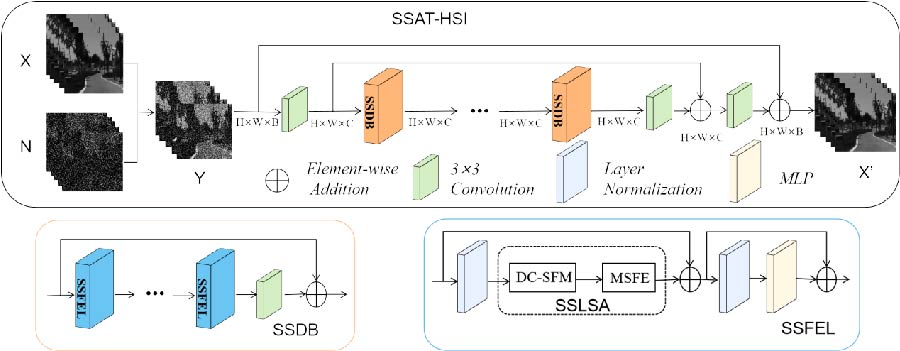
Although Transformer models have made significant progress in the field of hyperspectral image denoising, their original architecture still has limitations in processing the spatial and spectral correlations of images. It often results in the loss of details in spatial features and insufficient exploration of the uniqueness of different spectral bands. To overcome these challenges, this paper proposes a Transformer based spatial spectral attention network aimed at enhancing the utilization efficiency of spatial spectral correlations. In response to the common problem of over smoothing in spatial feature processing, a dual channel spatial feature fusion module is introduced, which effectively enhances the capture of spatial details and ensures clear reproduction of image textures and edges. Meanwhile, in the spectral dimension, a multi-scale spectral feature extraction with self-attention mechanism is applied, which can sensitively identify and utilize the differences between spectral bands, thereby achieving more accurate feature extraction at the spectral level. By integrating residual connections in the spatial spectral feature extraction layer, the model can efficiently fuse spatial and spectral information, ultimately achieving high-quality denoising. The experimental results have verified the excellent performance of this method on both the ICVL dataset and the Urban real dataset, achieving good denoising results and demonstrating significant advantages in maintaining image details and spectral fidelity.
Hyperspectral Image Denoising Using Spatial Spectral Attention Network Based on Transformer
2025-11-18
PIER C
Vol. 162, 26-33, 2025
download: 82
Wearable Multistatic Antenna Configuration on a Denim Substrate for Medical Imaging
Anju Maria, Thathamkulam A. Anjit and Palayyan Mythili
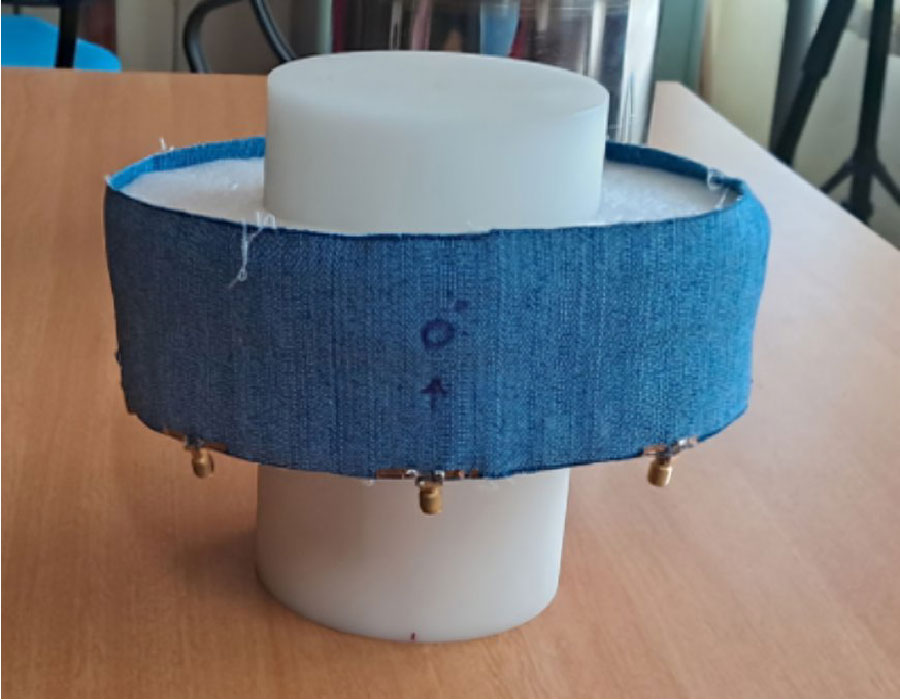
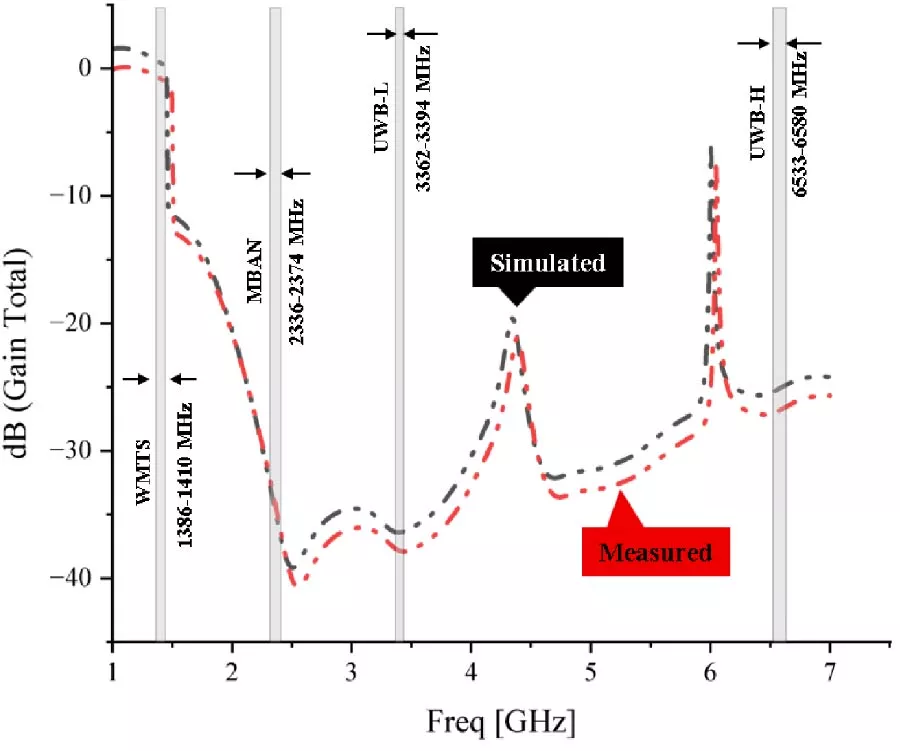
In this work, a multistatic antenna configuration with Compact Textile Wearable Antennas (CTWAs) is proposed for microwave imaging. The setup includes eight CTWA antennas printed on a denim jeans fabric wrapped around the phantom with a foam layer in between. The phantom is made of Delrin and is intended to replicate the breast tissue. It contains three PVC inclusions that mimic the tumors with sizes of 6 mm, 10 mm, and 3 mm. These inclusions are located at the center, near the outer surface, and between the center and the outer surface. The CTWA antennas surrounding the phantom collects the scattered data for further processing. Distorted Born Iterative Method (DBIM), along with the Reweighted Basis Pursuit (RWBP), a convex optimization algorithm, is used to reconstruct the object profile. RWBP is an iterative reconstruction algorithm in the sparse domain capable of extracting the size, shape, location, and dielectric distribution of the inclusions. The experiment is conducted using two different approaches. In one approach, multistatic without rotation, the receiver antenna is fixed at positions 0°, 45°, 90°, 135°, 180°, 225°, 270°, and 315°. In the other approach, multistatic with rotation, the receiver antenna is rotated in steps of 9° about the center of the phantom to achieve angles in between. In the multistatic configuration without rotation, the inclusions of 10 mm, 6 mm, and 3 mm were detected with errors of 0.125, 0.35, and 0.433, respectively, While in the case of multistatic configuration with rotation, the inclusions were detected with errors of 0.070, 0.066 and 0.03 respectively. The results obtained are compared with the previous studies available in the literature. These results demonstrate that the proposed wearable multistatic antenna configuration is suitable for medical imaging applications, enabling better target detection, localization, comfort, and flexibility.
Wearable Multistatic Antenna Configuration on a Denim Substrate for Medical Imaging
2025-11-18
PIER C
Vol. 162, 19-25, 2025
download: 52
Study on the Spatiotemporal Characteristics of Gics in Shandong Peninsula, China Under the Geomagnetic Storm of February 27, 2023
Xiaofeng Zhou, Xinwei Zhang, Xiaolong Li, Jia Cao, Tao Li and Yanling Wang
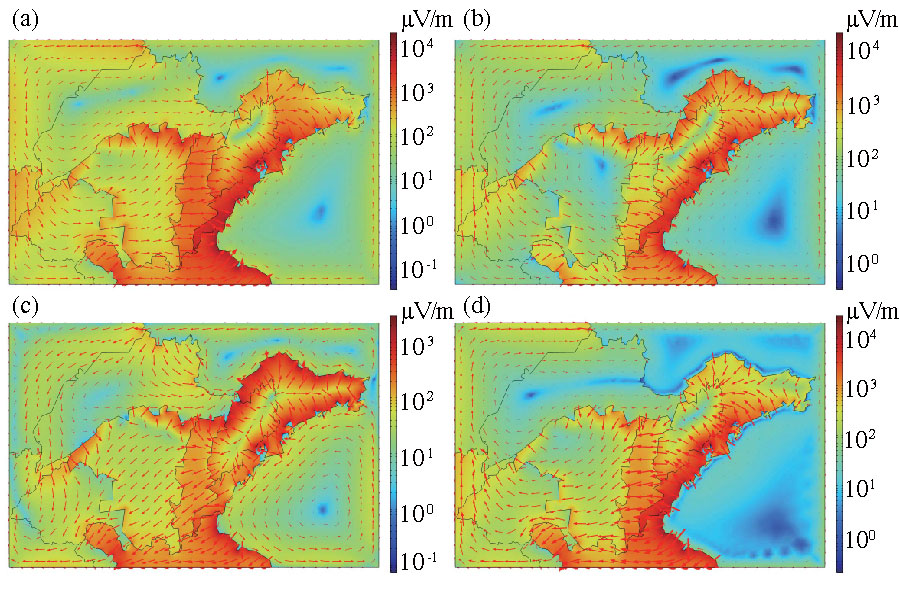
For assessing Geomagnetically Induced Currents (GICs) risks in mid-latitude coastal power grids, this study developed a three-dimensional Earth conductivity model that incorporates coastal effects. The model was constructed using geological cross-sectional data from the China Earthquake Administration and measured terrestrial conductivity data. Focusing on the strong geomagnetic storm of February 27, 2023, the spatiotemporal characteristics of GICs in Shandong Peninsula across 34 substations and 46 transmission lines were accurately computed. The GICs peak of the substation appears at Muping , and the GICs peak of the transmission line appears at Zouxian-Luzhou Line. Notably, two coastal substations exceeded the safety limit for GICs. Areas of highest risk are concentrated in the southeastern coastal region of Shandong, underscoring the significant impact of coastal effects and changes in Geological Structure. This method and its findings provide a global reference for predicting and issuing early warnings regarding GICs in long-distance mid-latitude coastal power grids.
Study on the Spatiotemporal Characteristics of GICs in Shandong Peninsula, China under the Geomagnetic Storm of February 27, 2023
2025-11-16
PIER C
Vol. 162, 9-18, 2025
download: 55
Wavelet-Based Time-Frequency Analysis of Ultrashort Laser Pulses
Mounir Khelladi and Djelloul Aissaoui
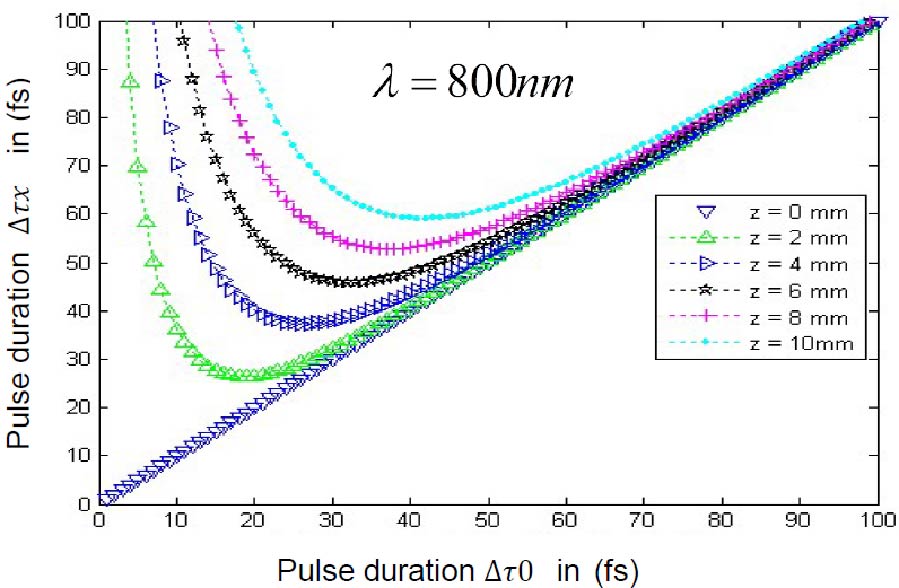
An original computational framework is developed to simulate the propagation of ultrashort laser pulses with arbitrary temporal and spectral profiles through uniform linear dielectric materials. The study investigates how spectral phase sampling during propagation affects computational efficiency and accuracy. The proposed approach enables a comprehensive analysis of ultrashort pulse evolution in both the time and frequency domains. To demonstrate its effectiveness, the algorithm is applied to various propagation phenomena, such as temporal and spectral shifts, pulse broadening, asymmetric distortions, and chirping in dispersive media, using a wavelet-based time-frequency decomposition.
Wavelet-Based Time-Frequency Analysis of Ultrashort Laser Pulses
2025-11-16
PIER C
Vol. 162, 1-8, 2025
download: 56
A Broadband Circularly Polarized Aperture-Coupled Magneto-Electric Dipole
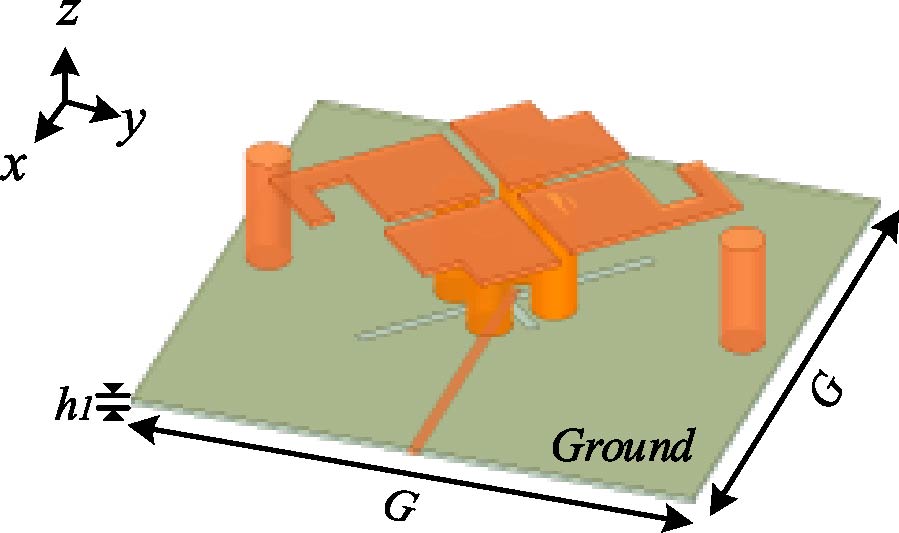
Yanhong Xu, Haoxiang Li, Weiwei Wang, Nanyue Li, Xuhui Fan and Jianqiang Hou
In this paper, a broadband circularly polarized (CP) magneto-electric (ME) dipole antenna based on microstrip line aperture-coupled feeding structure is proposed. The antenna is fed by the microstrip line, which is utilized to couple the energy to the antenna through the slot etched on the ground plane. Based on a linearly polarized (LP) ME dipole antenna, two centrosymmetric L-shaped strips are loaded to the patches located at the +45° diagonal position and the patches located at the -45° diagonal position are truncated. As a result, the current direction is changed to be parallel to the equivalent magnetic current to radiate CP wave. To improve the axial-ratio (AR) bandwidth of the antenna, the rectangular slot initially etched on the ground plane is modified to an asymmetric cross slot, which can generate a minimum AR point at high frequency. In this way, the AR bandwidth is increased from 32.4% to 51.7%. On this basis, to further extend the AR bandwidth, the metal columns are introduced at both ends of the antenna, and another additional AR minimum point is generated at the low frequency. The measured results indicate that the impedance bandwidth (|S11| ≤ -10 dB) is 57% (2.40-4.33 GHz) and the 3 dB AR bandwidth is 63% (2.39-4.57 GHz). Moreover, the proposed antenna exhibits flat gain and stable unidirectional radiation pattern across the operational frequency region.
A Broadband Circularly Polarized Aperture-coupled Magneto-electric Dipole