Vol. 163
Latest Volume
All Volumes
PIERC 163 [2025] PIERC 162 [2025] PIERC 161 [2025] PIERC 160 [2025] PIERC 159 [2025] PIERC 158 [2025] PIERC 157 [2025] PIERC 156 [2025] PIERC 155 [2025] PIERC 154 [2025] PIERC 153 [2025] PIERC 152 [2025] PIERC 151 [2025] PIERC 150 [2024] PIERC 149 [2024] PIERC 148 [2024] PIERC 147 [2024] PIERC 146 [2024] PIERC 145 [2024] PIERC 144 [2024] PIERC 143 [2024] PIERC 142 [2024] PIERC 141 [2024] PIERC 140 [2024] PIERC 139 [2024] PIERC 138 [2023] PIERC 137 [2023] PIERC 136 [2023] PIERC 135 [2023] PIERC 134 [2023] PIERC 133 [2023] PIERC 132 [2023] PIERC 131 [2023] PIERC 130 [2023] PIERC 129 [2023] PIERC 128 [2023] PIERC 127 [2022] PIERC 126 [2022] PIERC 125 [2022] PIERC 124 [2022] PIERC 123 [2022] PIERC 122 [2022] PIERC 121 [2022] PIERC 120 [2022] PIERC 119 [2022] PIERC 118 [2022] PIERC 117 [2021] PIERC 116 [2021] PIERC 115 [2021] PIERC 114 [2021] PIERC 113 [2021] PIERC 112 [2021] PIERC 111 [2021] PIERC 110 [2021] PIERC 109 [2021] PIERC 108 [2021] PIERC 107 [2021] PIERC 106 [2020] PIERC 105 [2020] PIERC 104 [2020] PIERC 103 [2020] PIERC 102 [2020] PIERC 101 [2020] PIERC 100 [2020] PIERC 99 [2020] PIERC 98 [2020] PIERC 97 [2019] PIERC 96 [2019] PIERC 95 [2019] PIERC 94 [2019] PIERC 93 [2019] PIERC 92 [2019] PIERC 91 [2019] PIERC 90 [2019] PIERC 89 [2019] PIERC 88 [2018] PIERC 87 [2018] PIERC 86 [2018] PIERC 85 [2018] PIERC 84 [2018] PIERC 83 [2018] PIERC 82 [2018] PIERC 81 [2018] PIERC 80 [2018] PIERC 79 [2017] PIERC 78 [2017] PIERC 77 [2017] PIERC 76 [2017] PIERC 75 [2017] PIERC 74 [2017] PIERC 73 [2017] PIERC 72 [2017] PIERC 71 [2017] PIERC 70 [2016] PIERC 69 [2016] PIERC 68 [2016] PIERC 67 [2016] PIERC 66 [2016] PIERC 65 [2016] PIERC 64 [2016] PIERC 63 [2016] PIERC 62 [2016] PIERC 61 [2016] PIERC 60 [2015] PIERC 59 [2015] PIERC 58 [2015] PIERC 57 [2015] PIERC 56 [2015] PIERC 55 [2014] PIERC 54 [2014] PIERC 53 [2014] PIERC 52 [2014] PIERC 51 [2014] PIERC 50 [2014] PIERC 49 [2014] PIERC 48 [2014] PIERC 47 [2014] PIERC 46 [2014] PIERC 45 [2013] PIERC 44 [2013] PIERC 43 [2013] PIERC 42 [2013] PIERC 41 [2013] PIERC 40 [2013] PIERC 39 [2013] PIERC 38 [2013] PIERC 37 [2013] PIERC 36 [2013] PIERC 35 [2013] PIERC 34 [2013] PIERC 33 [2012] PIERC 32 [2012] PIERC 31 [2012] PIERC 30 [2012] PIERC 29 [2012] PIERC 28 [2012] PIERC 27 [2012] PIERC 26 [2012] PIERC 25 [2012] PIERC 24 [2011] PIERC 23 [2011] PIERC 22 [2011] PIERC 21 [2011] PIERC 20 [2011] PIERC 19 [2011] PIERC 18 [2011] PIERC 17 [2010] PIERC 16 [2010] PIERC 15 [2010] PIERC 14 [2010] PIERC 13 [2010] PIERC 12 [2010] PIERC 11 [2009] PIERC 10 [2009] PIERC 9 [2009] PIERC 8 [2009] PIERC 7 [2009] PIERC 6 [2009] PIERC 5 [2008] PIERC 4 [2008] PIERC 3 [2008] PIERC 2 [2008] PIERC 1 [2008]
2025-12-11 Latest Published
By Ivan Eduardo Diaz Pardo Juan Domingo Baena Doello Carlos Arturo Suarez Fajardo Hector Guarnizo
Progress In Electromagnetics Research C, Vol. 163, 20-34, 2025
Abstract
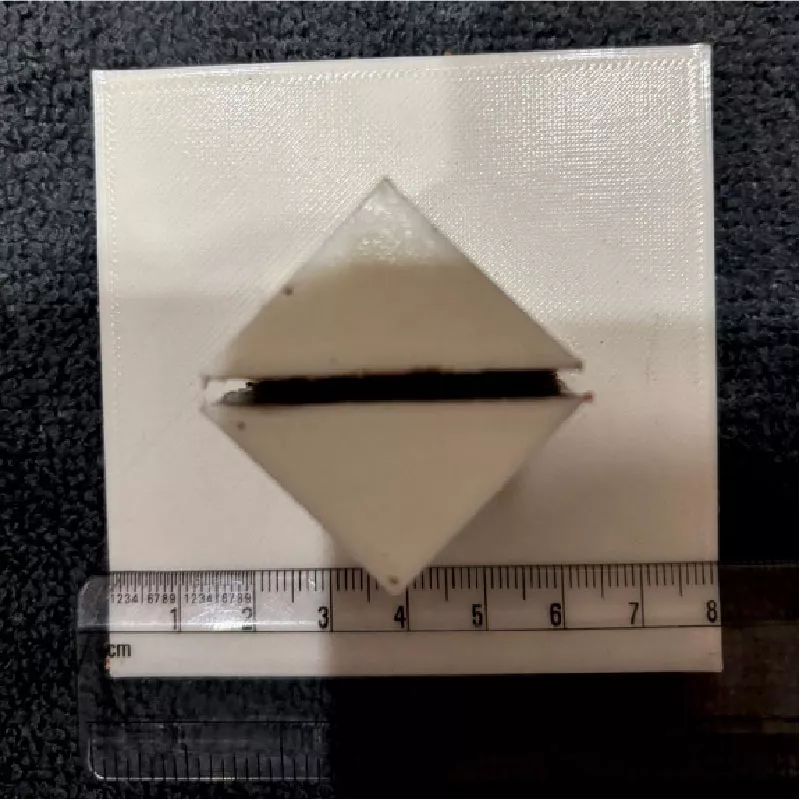
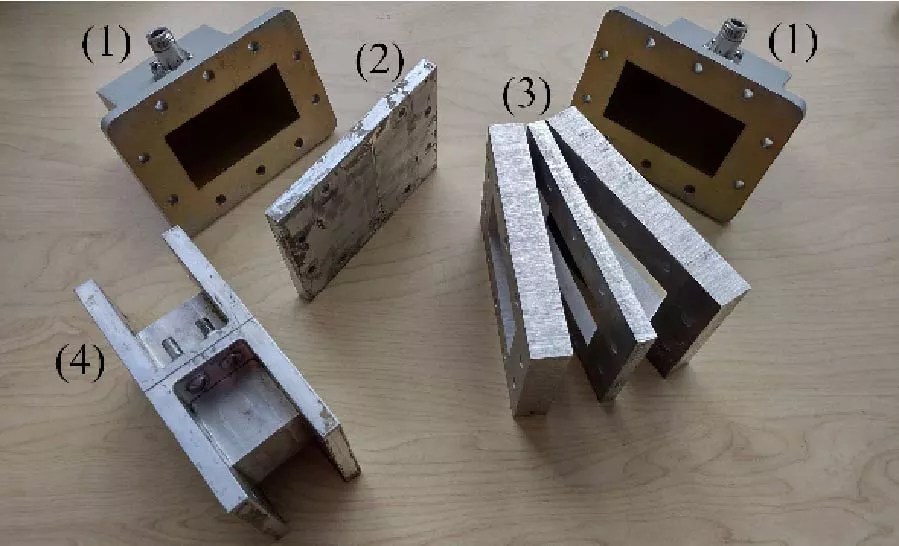
This paper presents the design, modeling, and experimental validation of multilayer waveguide bandpass filters employing two subwavelength resonator topologies: complementary split-ring resonators (CSRRs) and Ω-type cells. A hybrid methodology is adopted, combining equivalent circuit models, polarizability extraction from scattering parameters, and full-wave simulations. Mirrorsymmetric configurations are introduced to suppress frequency splitting and improve band uniformity. For both CSRR and Ω arrays, equivalent LC parameters are derived and incorporated into a transmission-matrix framework, enabling accurate prediction of resonant behavior in cascaded layers. Numerical simulations in WR340 waveguides demonstrate that CSRR arrays achieve narrowband responses with high selectivity, while Ω-cells provide wider passbands and improved tolerance to interlayer spacing. Prototypes fabricated on high-purity aluminum sheets were measured using a vector network analyzer, confirming the theoretical and simulation results. The experimental data show close agreement with the proposed model, validating the scalability of the approach to multilayer designs. Quantitatively, the mirror-symmetric CSRR filter exhibits a center frequency of 2.49 GHz, a fractional bandwidth of 1.8%, and an insertion loss of 1.26 dB, whereas the proposed Ω-based configuration achieves a 2.41 GHz center frequency, 5.6% fractional bandwidth, and only 0.27 dB insertion loss. These results show that the Ω topology attains a wider fractional bandwidth and the consequently lower insertion loss predicted by fractional-bandwidth theory, rather than a reduction of intrinsic resonator loss. The proposed framework thus provides a systematic and efficient route for metamaterial filter synthesis, bridging analytical models, numerical simulations, and experimental validation.
2025-12-11
PIER C
Vol. 163, 11-19, 2025
download: 23
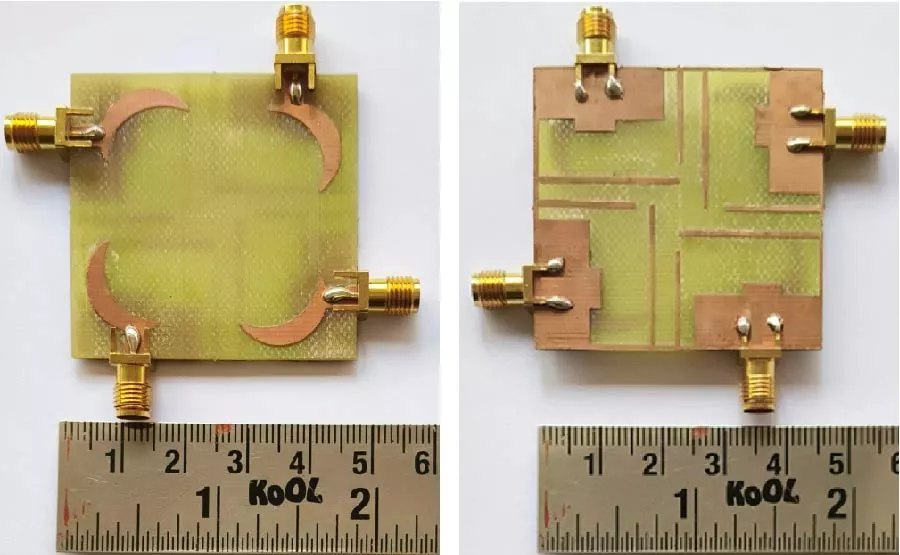
A Flexible Hexagonal Loop Monopole Antenna with Novel Embedded EBG for SAR Reduction in WBAN
Shital B. Gundre and Varsha R. Ratnaparkhe
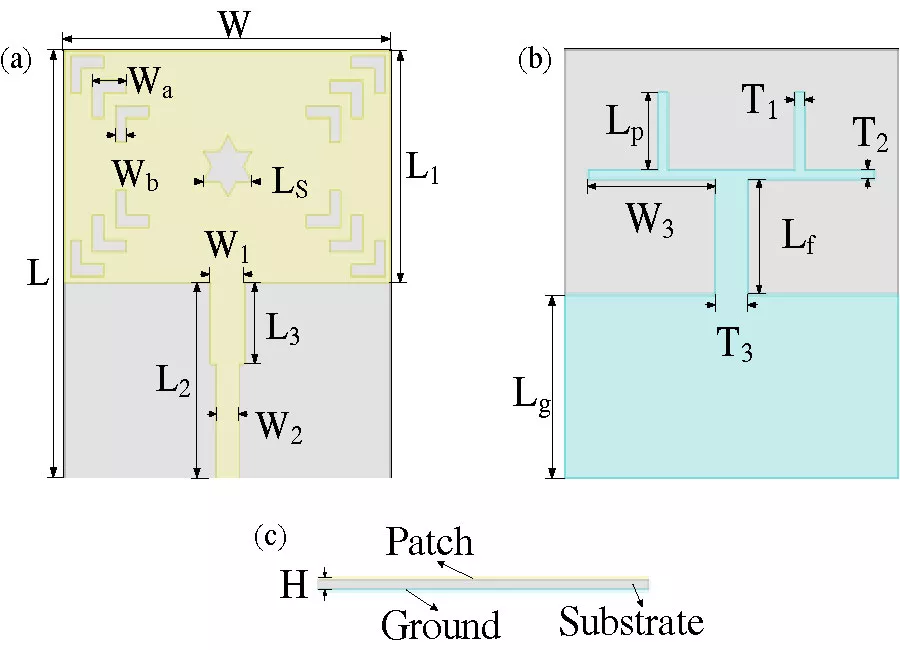
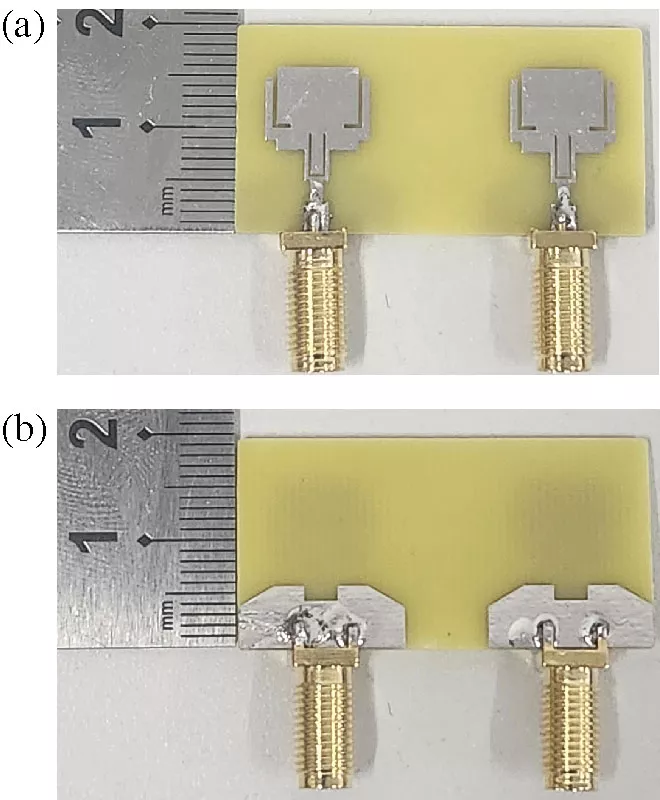
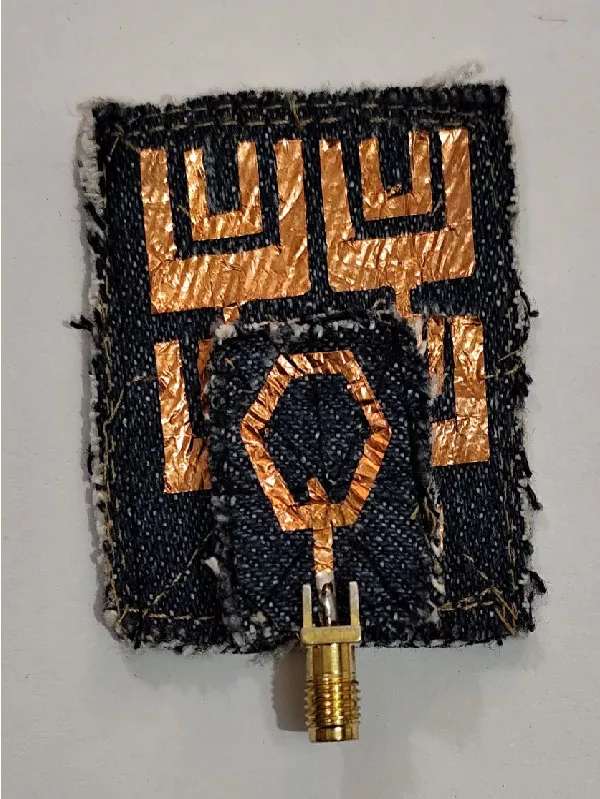
This paper introduces a novel compact, flexible hexagonal loop shaped patch antenna embedded with a novel electromagnetic bandgap (EBG) structure designed for ISM band operation, targeting 2.45 GHz wearable applications in close proximity to the human body. The EBG unit cell is formed using a rectangular patch which has nested U shaped slots with a stretched strip of inverted U shaped slot at bottom. Both hexagonal loop antenna and the 2 × 2 EBG array are simulated using Ansys HFSS (High Frequency Structure Simulator). A key aim of this research is to achieve the specific absorption rate (SAR) reduction. The effectiveness of the EBG array structure in reducing surface waves and dropping down the SAR is demonstrated using a multilayer human tissue equivalent phantom comprising skin, fat, muscle, bone layers, confirming obtained SAR values are within the safety limits set by regulatory authorities. The simulation results are verified and validated by the fabricated antenna experimental measurements. Furthermore, the antenna was experimentally assessed in terms of its performance under bending and in practical on-body conditions.
A Flexible Hexagonal Loop Monopole Antenna with Novel Embedded EBG for SAR Reduction in WBAN
2025-12-10
PIER C
Vol. 163, 1-10, 2025
download: 17
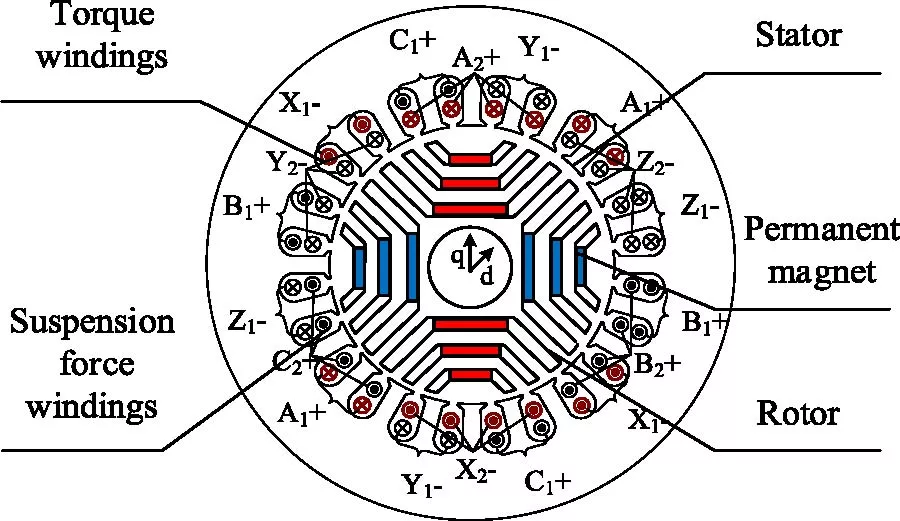
Multi-Mode Dual Five-Phase Hybrid Excitation Motor High Efficiency Control Based on Gradient Descent
Yu Nan, Ye Yuan, Zhenzhen Kong, Xiaozhou Yang, Dong Mu and Fan Yang
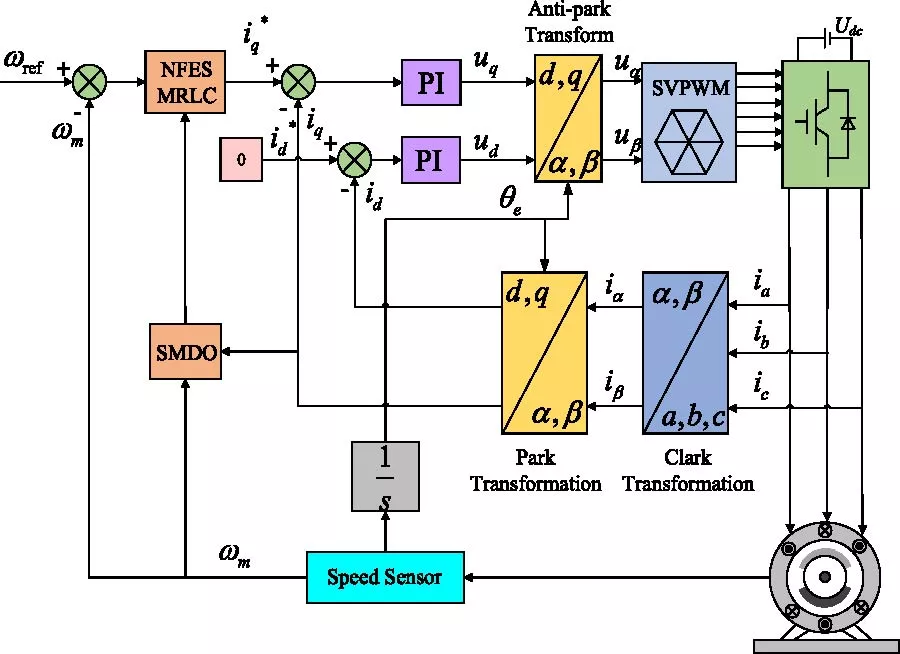
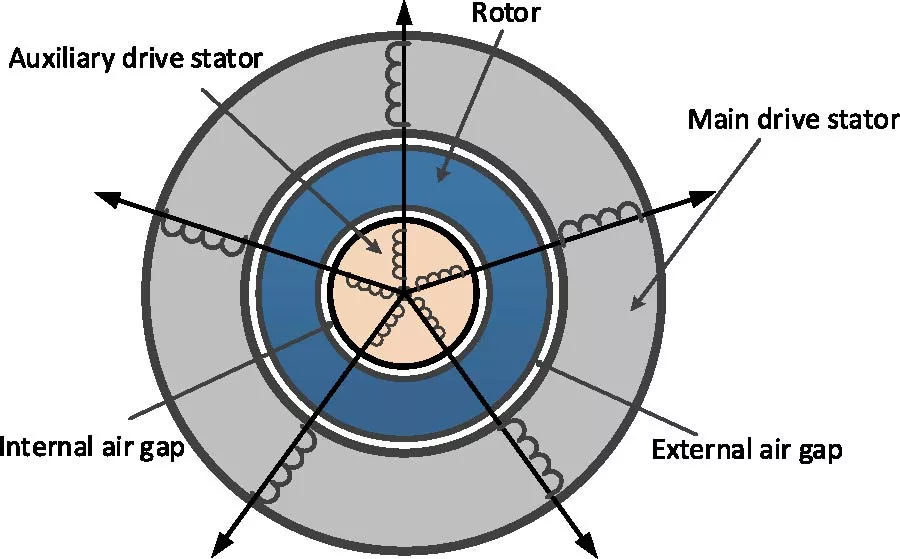
The multi-mode dual five-phase hybrid excitation (MM-DFHE) motor, owing to its unique dual-stator configuration, is capable of operating in four distinct modes, offering exceptional operational flexibility. However, this flexibility introduces a control challenge, particularly in Mode IV where the auxiliary stator acts as both an exciter and a torque producer. The additional current variables in this mode lead to suboptimal current distribution, compromising efficiency and dynamic response. To address this, this paper proposes a novel low-loss current optimization control strategy. The key contribution is a Gradient Descent (GD) based online optimization algorithm that dynamically distributes the auxiliary excitation current, specifically tailored for the improved Mode IV operation. This approach resolves the trade-off between loss minimization and dynamic performance prevalent in conventional methods. Simulated and experimental results demonstrate that the proposed strategy reduces total copper loss by up to 13% compared to conventional methods.
Multi-Mode Dual Five-Phase Hybrid Excitation Motor High Efficiency Control Based on Gradient Descent