2026-05-05 Latest Published
By İsmail Şişman
Emin Polat
Tugba Haykir Ergin
Progress In Electromagnetics Research C, Vol. 170, 38-48, 2026
Abstract
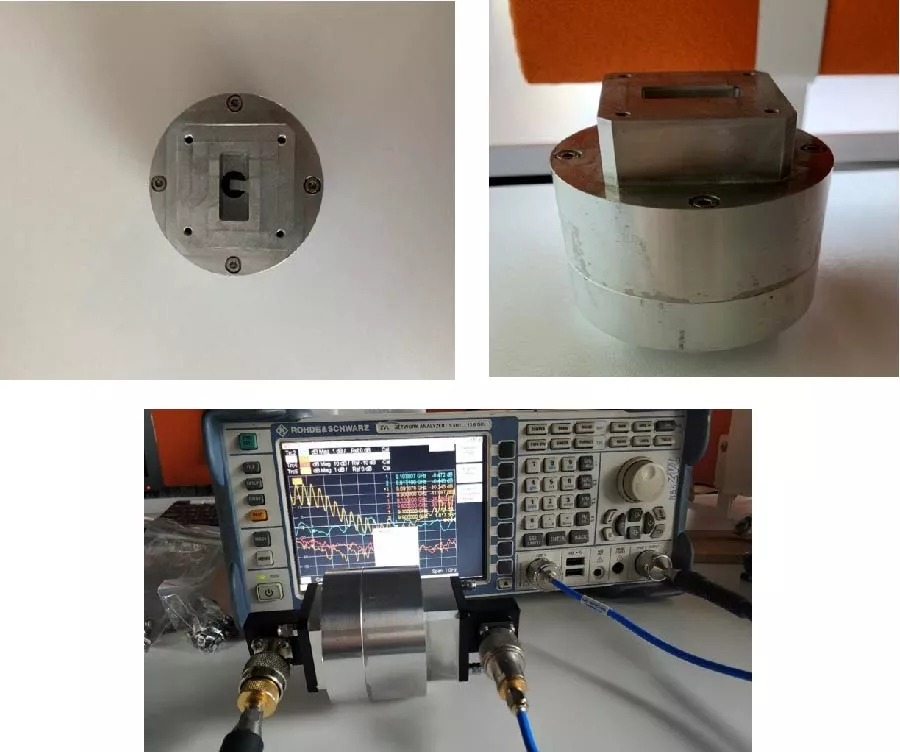
In this study, a high-performance wideband I-type rectangular waveguide rotary joint (RJ) has been meticulously designed, simulated, and experimentally verified for deployment in X-band radar systems operating within the 9-10 GHz frequency range. The proposed RJ achieves superior radio frequency (RF) characteristics, including an insertion loss of less than 0.1 dB and a return loss exceeding -30 dB, making it highly suitable for critical applications that require minimal signal degradation. Unlike conventional rigid waveguide systems that restrict mechanical movement, the developed RJ enables full 360° rotation with negligible variation in both amplitude and phase, thereby ensuring continuous, stable operation in dynamic environments such as mechanically rotating radar platforms. Notably, the design achieves an amplitude and phase wobble (WoW) of only 0.005 dB and a phase fluctuation within ±3.2°, meeting the stringent performance requirements of modern radar and satellite tracking systems. In addition to RF characterization, the rotary joint has been subjected to high-power RF breakdown analysis using particle-in-cell (PIC) simulations to evaluate its resilience under extreme operational stress. High-power robustness was numerically assessed using PIC simulations, indicating stable operation up to 2 kW CW and 30 kW pulsed under the simulated conditions, without breakdown signatures. This performance is further supported by optimized choke structures that minimize discontinuity-related mismatch at the mechanical interface between stationary and rotating sections. The results confirm that the developed rotary joint is not only electrically efficient and mechanically reliable but also capable of sustaining stable RF performance under high-power and rotational conditions, making it a promising candidate for next-generation radar front-ends and high-power satellite communication terminals.