Vol. 168
Latest Volume
All Volumes
PIERC 168 [2026] PIERC 167 [2026] PIERC 166 [2026] PIERC 165 [2026] PIERC 164 [2026] PIERC 163 [2026] PIERC 162 [2025] PIERC 161 [2025] PIERC 160 [2025] PIERC 159 [2025] PIERC 158 [2025] PIERC 157 [2025] PIERC 156 [2025] PIERC 155 [2025] PIERC 154 [2025] PIERC 153 [2025] PIERC 152 [2025] PIERC 151 [2025] PIERC 150 [2024] PIERC 149 [2024] PIERC 148 [2024] PIERC 147 [2024] PIERC 146 [2024] PIERC 145 [2024] PIERC 144 [2024] PIERC 143 [2024] PIERC 142 [2024] PIERC 141 [2024] PIERC 140 [2024] PIERC 139 [2024] PIERC 138 [2023] PIERC 137 [2023] PIERC 136 [2023] PIERC 135 [2023] PIERC 134 [2023] PIERC 133 [2023] PIERC 132 [2023] PIERC 131 [2023] PIERC 130 [2023] PIERC 129 [2023] PIERC 128 [2023] PIERC 127 [2022] PIERC 126 [2022] PIERC 125 [2022] PIERC 124 [2022] PIERC 123 [2022] PIERC 122 [2022] PIERC 121 [2022] PIERC 120 [2022] PIERC 119 [2022] PIERC 118 [2022] PIERC 117 [2021] PIERC 116 [2021] PIERC 115 [2021] PIERC 114 [2021] PIERC 113 [2021] PIERC 112 [2021] PIERC 111 [2021] PIERC 110 [2021] PIERC 109 [2021] PIERC 108 [2021] PIERC 107 [2021] PIERC 106 [2020] PIERC 105 [2020] PIERC 104 [2020] PIERC 103 [2020] PIERC 102 [2020] PIERC 101 [2020] PIERC 100 [2020] PIERC 99 [2020] PIERC 98 [2020] PIERC 97 [2019] PIERC 96 [2019] PIERC 95 [2019] PIERC 94 [2019] PIERC 93 [2019] PIERC 92 [2019] PIERC 91 [2019] PIERC 90 [2019] PIERC 89 [2019] PIERC 88 [2018] PIERC 87 [2018] PIERC 86 [2018] PIERC 85 [2018] PIERC 84 [2018] PIERC 83 [2018] PIERC 82 [2018] PIERC 81 [2018] PIERC 80 [2018] PIERC 79 [2017] PIERC 78 [2017] PIERC 77 [2017] PIERC 76 [2017] PIERC 75 [2017] PIERC 74 [2017] PIERC 73 [2017] PIERC 72 [2017] PIERC 71 [2017] PIERC 70 [2016] PIERC 69 [2016] PIERC 68 [2016] PIERC 67 [2016] PIERC 66 [2016] PIERC 65 [2016] PIERC 64 [2016] PIERC 63 [2016] PIERC 62 [2016] PIERC 61 [2016] PIERC 60 [2015] PIERC 59 [2015] PIERC 58 [2015] PIERC 57 [2015] PIERC 56 [2015] PIERC 55 [2014] PIERC 54 [2014] PIERC 53 [2014] PIERC 52 [2014] PIERC 51 [2014] PIERC 50 [2014] PIERC 49 [2014] PIERC 48 [2014] PIERC 47 [2014] PIERC 46 [2014] PIERC 45 [2013] PIERC 44 [2013] PIERC 43 [2013] PIERC 42 [2013] PIERC 41 [2013] PIERC 40 [2013] PIERC 39 [2013] PIERC 38 [2013] PIERC 37 [2013] PIERC 36 [2013] PIERC 35 [2013] PIERC 34 [2013] PIERC 33 [2012] PIERC 32 [2012] PIERC 31 [2012] PIERC 30 [2012] PIERC 29 [2012] PIERC 28 [2012] PIERC 27 [2012] PIERC 26 [2012] PIERC 25 [2012] PIERC 24 [2011] PIERC 23 [2011] PIERC 22 [2011] PIERC 21 [2011] PIERC 20 [2011] PIERC 19 [2011] PIERC 18 [2011] PIERC 17 [2010] PIERC 16 [2010] PIERC 15 [2010] PIERC 14 [2010] PIERC 13 [2010] PIERC 12 [2010] PIERC 11 [2009] PIERC 10 [2009] PIERC 9 [2009] PIERC 8 [2009] PIERC 7 [2009] PIERC 6 [2009] PIERC 5 [2008] PIERC 4 [2008] PIERC 3 [2008] PIERC 2 [2008] PIERC 1 [2008]
2026-04-01 Latest Published
By Zechen Li Zibin Weng Yahong Li Youqian Su Jingnan Guo
Progress In Electromagnetics Research C, Vol. 168, 56-63, 2026
Abstract
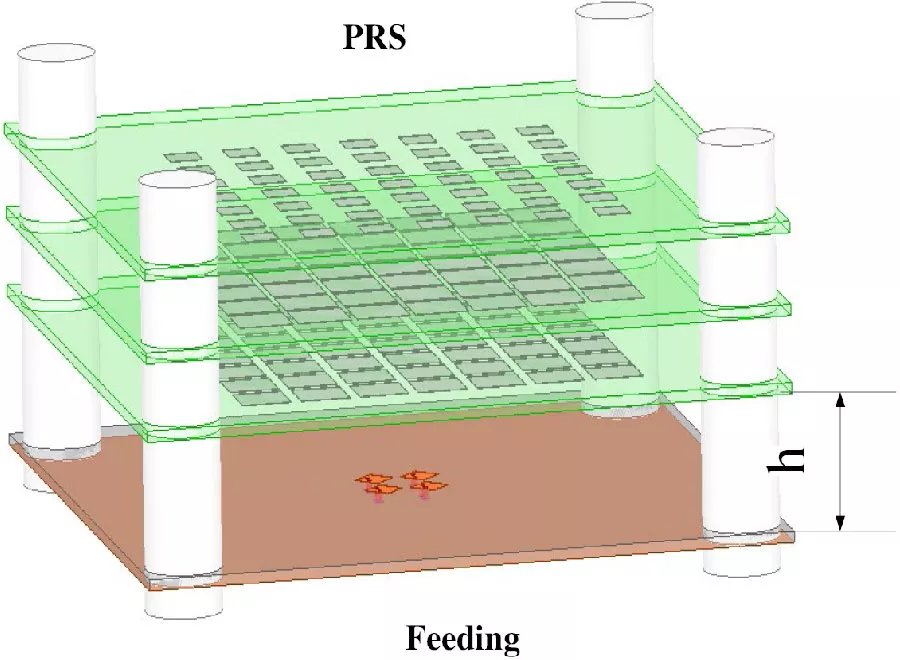
To address the issues of narrow gain bandwidth and severe element coupling faced by traditional Fabry-Perot resonant antennas in phased array feed systems, this paper proposes a decoupling design method based on highly optimized resonant mode height. By analyzing electric field distributions and coupling mechanisms under multi-feed conditions, an improved resonator height calculation formula suitable for phased array feeds is derived, achieving mutual suppression of energy between reflected wave coupling and inter-element coupling. A 2 × 2 microstrip antenna array was employed as the feed source. Combined with a multilayer positive phase gradient partially reflective surface, a Fabry-Perot antenna prototype operating at 28 GHz was designed and fabricated. Simulated and experimental results demonstrate that compared to conventional designs, this antenna achieves a maximum gain at 28 GHz increased from 21.80 dBi to 23.15 dBi, with the 3-dB gain bandwidth expanded from 1350 MHz to 1730 MHz. This study provides an effective approach for achieving a broadband high-gain design in phased array-fed Fabry-Perot resonant antennas.
2026-04-01
PIER C
Vol. 168, 56-63, 2026
download: 11
Fabry-Perot Resonator Antenna Design Based on Phased Array Feed
Zechen Li, Zibin Weng, Yahong Li, Youqian Su and Jingnan Guo
To address the issues of narrow gain bandwidth and severe element coupling faced by traditional Fabry-Perot resonant antennas in phased array feed systems, this paper proposes a decoupling design method based on highly optimized resonant mode height. By analyzing electric field distributions and coupling mechanisms under multi-feed conditions, an improved resonator height calculation formula suitable for phased array feeds is derived, achieving mutual suppression of energy between reflected wave coupling and inter-element coupling. A 2 × 2 microstrip antenna array was employed as the feed source. Combined with a multilayer positive phase gradient partially reflective surface, a Fabry-Perot antenna prototype operating at 28 GHz was designed and fabricated. Simulated and experimental results demonstrate that compared to conventional designs, this antenna achieves a maximum gain at 28 GHz increased from 21.80 dBi to 23.15 dBi, with the 3-dB gain bandwidth expanded from 1350 MHz to 1730 MHz. This study provides an effective approach for achieving a broadband high-gain design in phased array-fed Fabry-Perot resonant antennas.
Fabry-Perot Resonator Antenna Design Based on Phased Array Feed
2026-04-01
PIER C
Vol. 168, 45-55, 2026
download: 4
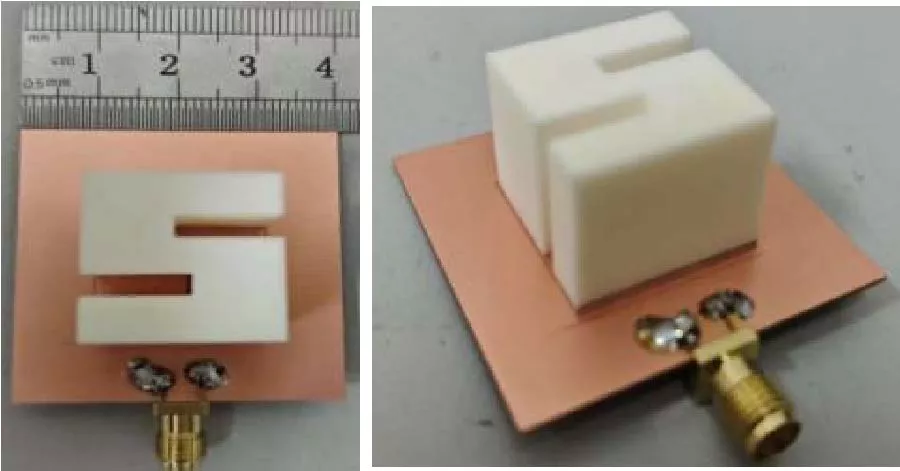
Wideband Circularly Polarized Dielectric Resonator Antenna with Wide Stopband Characteristics
Chuanyun Wang, Yi Ouyang, Pin Wen, Zhiyong Tan and Tianle Zheng
A wideband circularly polarized (CP) dielectric resonator antenna (DRA) with integrated harmonic suppression is proposed. The design transforms the original rectangular coupled slot into a branched configuration to perturb the electric field distribution within the dielectric resonator (DR) and ground plane, thereby obtaining wideband circular polarization characteristic. For harmonic suppression, a double-ended feeding structure integrated with a π-shaped stub and a transverse stub is introduced, generating four radiation nulls. Furthermore, a stepped-impedance feeding line is employed to extend the upper stopband bandwidth. A prototype is fabricated and measured; the experimental results and simulations are generally consistent. The antenna achieves a -10 dB impedance bandwidth of 40.2% (2.86-4.3 GHz), a 3 dB axial ratio bandwidth of 26.13% (3.06-3.98 GHz), an average gain of 5.3 dBi, and harmonic suppression of 2.7f0 (where f0 is the center frequency). The out-of-band suppression in both upper and lower stopbands exceeds 15 dB.
Wideband Circularly Polarized Dielectric Resonator Antenna with Wide Stopband Characteristics
2026-03-31
PIER C
Vol. 168, 39-44, 2026
download: 35
Printed Compact Monopole with Multiband Operation for Wi-Fi 8, 5G NR79, and 6G Upper Mid-Band Applications
Saou-Wen Su and Guan-Lin Chen
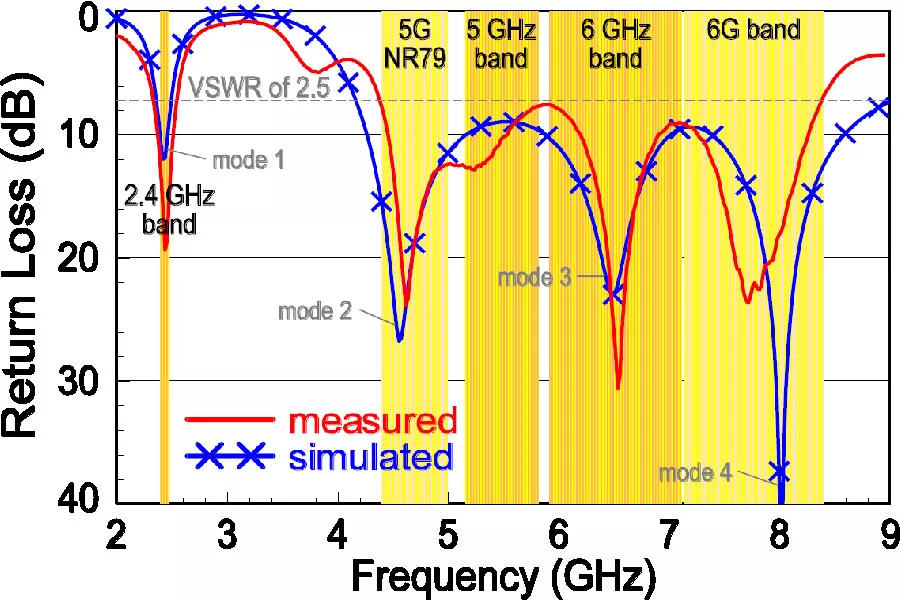
A compact yet simple, printed monopole design targeted at providing multiband operation in the 2.4/5/6 GHz Wi-Fi 8 (2400-2484/5150-7125 MHz) bands and also the 5G new radio (NR79) (4.4-5.0 GHz) band and 6G upper mid-band in the 7.125-8.4 GHz range is demonstrated. The antenna is composed of longer and shorter radiating arms, as well as a matching stub that protrudes from the longer arm around the antenna port and extends toward the shorter arm. The two arms and the stub are all printed on a low-cost single-layer substrate. Four resonant modes of the antenna are excited, with the lower mode covering the 2.4 GHz band and the three upper modes forming a wide 7.4-dB return-loss bandwidth of about 4.3-8.6 GHz, covering the 5G NR79 band, 5/6 GHz Wi-Fi bands, and 6G upper mid-band. Additionally, the design can be fed by a commercially available coaxial cable, allowing the antenna to have considerable flexibility in installation within wireless devices.
Printed Compact Monopole with Multiband Operation for Wi-Fi 8, 5G NR79, and 6G Upper Mid-Band Applications
2026-03-30
PIER C
Vol. 168, 26-38, 2026
download: 32
A Low-Current Pulsed Electric Field Treatment System for Fruit Juices: Air-Gap Optimisation and Assessment of Microbial Inactivation
Thomas Mohan, Aswini Sivadas Choolangal, Noorul Haque Mohamed Noor, Krishnan Jagada Suja, Karakkat Mana Sunitha and Tharamel Vasu Suchithra
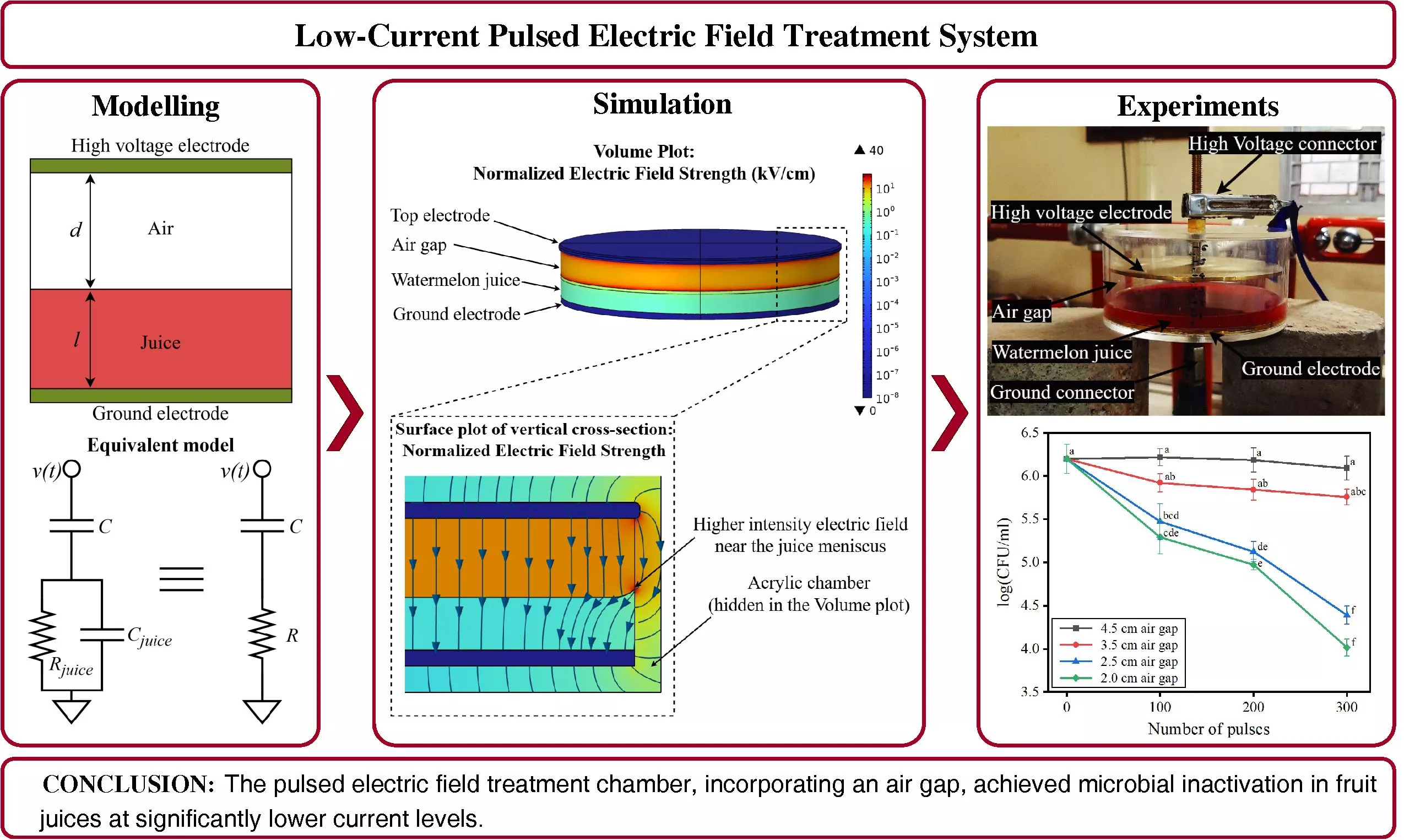
The use of electromagnetic fields to preserve food items by inactivating microorganisms is gaining increasing popularity. Among the different electromagnetic treatments used for fruit juice preservation, Pulsed Electric Field treatment is a prominent method. However, in the Pulsed Electric Field treatment chambers used today, the current flow and energy dissipation within the juice are very high. These high currents cause unwanted electrochemical reactions inside the juice and also raise its temperature. This work introduces a method to prevent these by reducing the current flow with the help of an air gap inside the Pulsed Electric Field treatment chamber. A mathematical model of the proposed system was created, and the reduced current values were calculated. Simulations using COMSOL Multiphysics software were conducted to analyse the electric field distribution and the increase in juice temperature. The optimum value of air gap that can be provided inside the chamber without the risk of electrical breakdown was determined through simulations of electric field intensities and later confirmed through experiments. The effectiveness of the proposed system in inactivating microbes was assessed through microbiological experiments using Escherichia coli bacteria in watermelon juice. According to the experimental results, the proposed system successfully achieved bacterial inactivation with a low current value and without any measurable increase in juice temperature. To the best of our knowledge, there are very limited studies addressing the reduction of current flow within a Pulsed Electric Field treatment chamber through the incorporation of air gaps. In the future, this novel method for preserving fruit juices could prove highly beneficial to the food processing industry.
A Low-Current Pulsed Electric Field Treatment System for Fruit Juices: Air-Gap Optimisation and Assessment of Microbial Inactivation
2026-03-29
PIER C
Vol. 168, 21-25, 2026
download: 24
Microstrip Dual-Frequency Voltage Doubling Rectifier Circuit
Jia-Feng Zhou, Yu-Li Yang and Jiu-Sheng Li
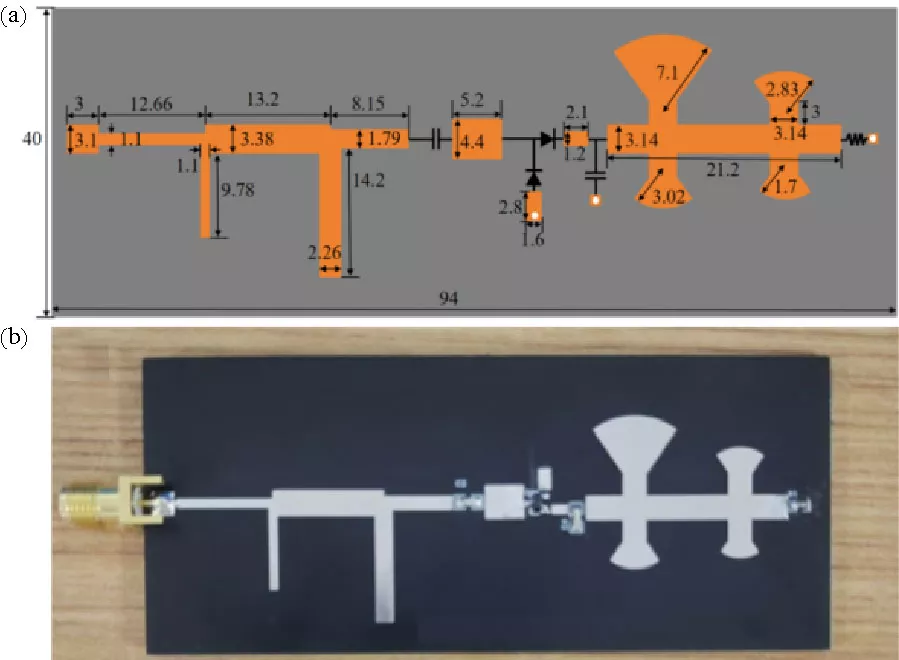
We present a microstrip dual-frequency rectifier circuit, which includes a voltage-doubling rectifier circuit, a sector-shaped dual-frequency harmonic suppression network, and a Π-shaped dual-frequency impedance matching network. Four fan-shaped microstrip stubs were utilized to suppress the fundamental and higher-order harmonics in the two frequency bands. A microstrip line is employed to form a Π-shaped impedance matching network to achieve impedance matching in both frequency bands. The measured results show that at input power of 15 dBm, the rectification efficiencies are 50% and 43% at frequencies of 2.45 GHz and 5.80 GHz, respectively. This dual-frequency rectifier circuit can be applied to scenarios such as powering passive RFID tags and IoT sensors.
Microstrip Dual-frequency Voltage Doubling Rectifier Circuit
2026-03-28
PIER C
Vol. 168, 11-20, 2026
download: 63
Intelligent RF Signal Monitoring and Threat Detection
Chinmay Kumar, Gourav Kumar, Sehejdeep Singh, Vritant Sood and Naveen Jaglan
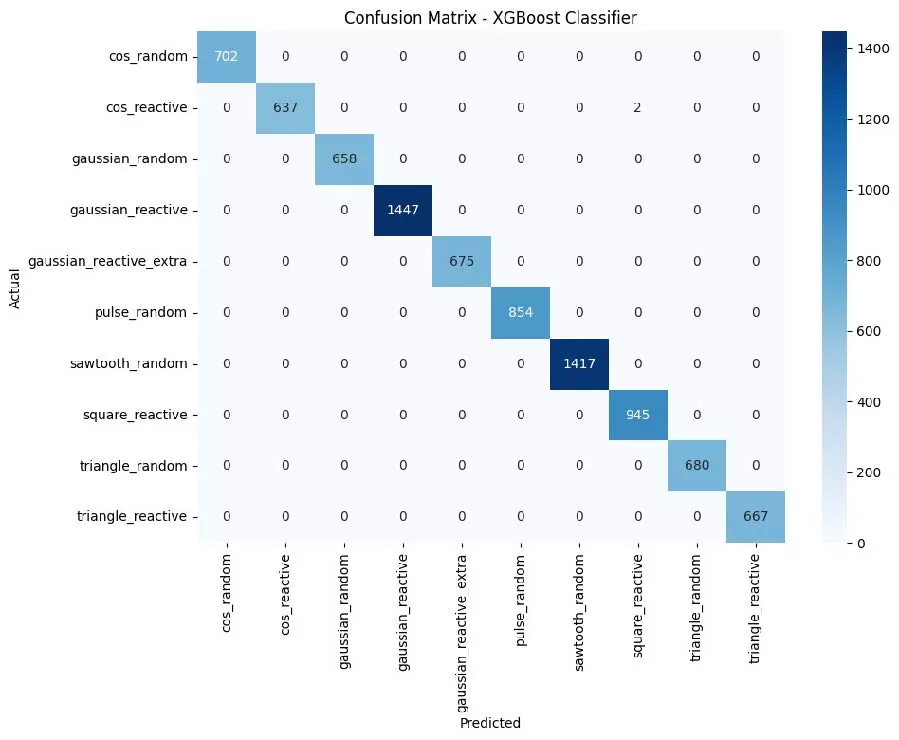
The problem of Radio Frequency (RF) jamming is a significant threat to any current wireless communication network, since a low-power source may seriously diminish or disrupt legitimate conditions of a transmission. Traditional methods of detection based generally on a fixed threshold or packet-level cues cannot be effectively sustained in the presence of adaptive and reactive jamming behavior as observed in real-world deployments. This paper introduces a system of RF signal monitoring and threat detection integrating frequency-domain feature extraction, supervised machine learning, and statistical signal characterization. Both time-domain (such as Received Signal Strength Indicator (RSSI) and Signal to Interference plus Noise Ratio (SINR) metrics and spectral quantities calculated with the Fast Fourier Transform (FFT) are being used to capture both temporary and persistent interference patterns. The hybrid ensemble approach in the form of Random Forest and XGBoost classifiers is implemented to achieve a balance among robustness, interpretability, and classification performance of various jammer types. Empirical testing with actual RF data demonstrates that the suggested method has an initial detection rate of 98 percent, and its performance does not degrade in the low signal-to-noise ratio regime. These findings imply that the combination of lightweight spectral analysis and ensemble learning is a feasible and scalable solution to real-time RF threat detection in dynamic wireless systems.
Intelligent RF Signal Monitoring and Threat Detection
2026-03-28
PIER C
Vol. 168, 1-10, 2026
download: 35
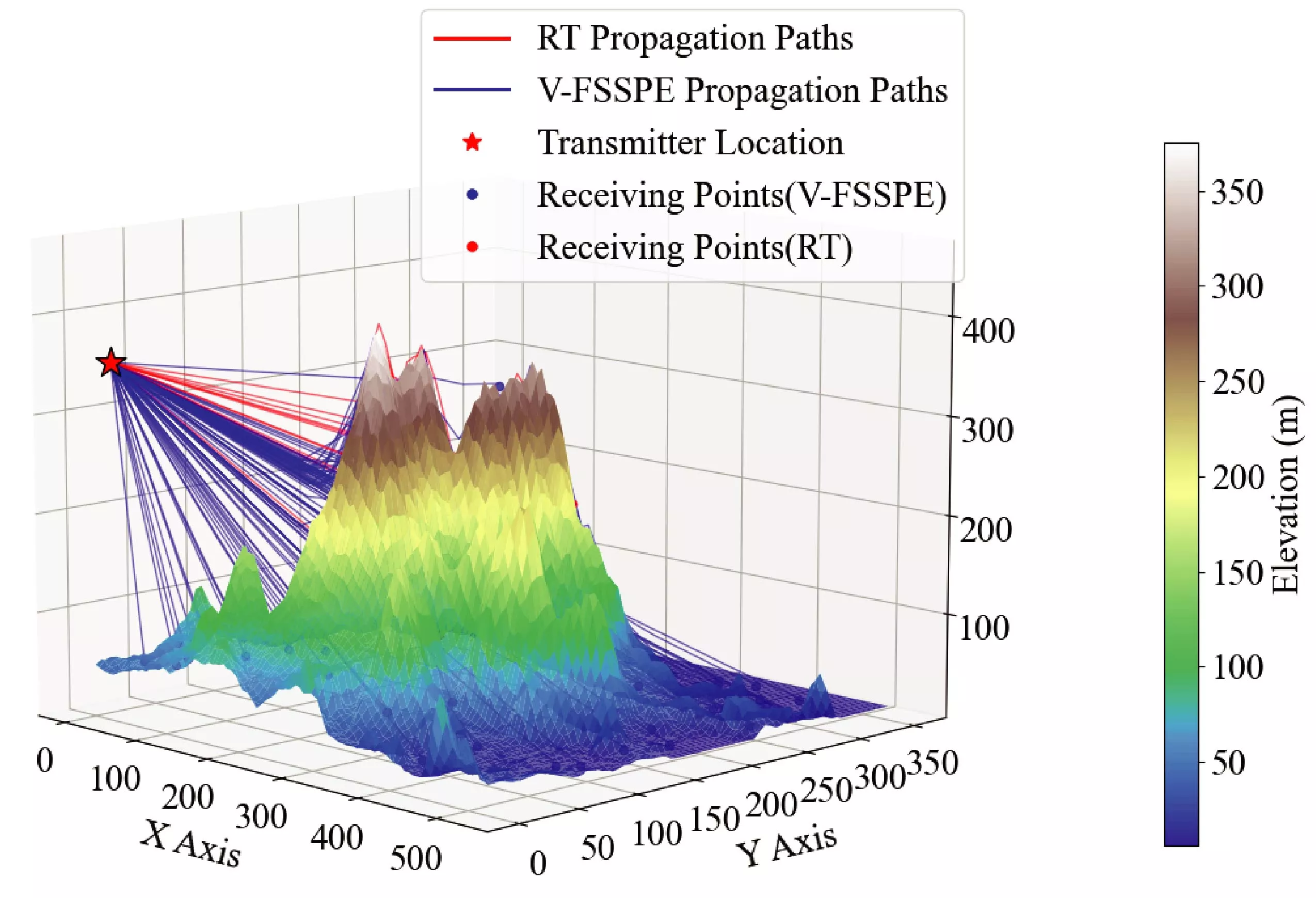
An Integrated Ray Tracing and Variable-Step Fourier Transform-Based Split-Step Parabolic Equation Modeling Approach for UAV-Assisted Channel Characterization in Mountainous Environments
Jihui Shi and Jian Song
To enhance communication performance in mountainous environments, unmanned aerial vehicle (UAV)-assisted communication systems have emerged as a mainstream solution. Channel modeling for UAV-assisted communication is a critical research focus, confronting prominent challenges, including balancing computational efficiency and modeling accuracy. This paper proposes a hybrid modeling approach that combines ray tracing (RT) and the variable-step Fourier transform-based Split-Step Parabolic Equation (V-FSSPE) to address the issue. The proposed method fully leverages the strengths of RT in accurately calculating direct, reflected, and diffracted propagation paths, as well as the advantages of V-FSSPE in efficiently modeling long-distance and large-scale areas. A hierarchical model suitable for low-altitude UAV communication is thereby established. Simulation results demonstrate that, compared with traditional modeling methods, the proposed method in this study effectively balances accuracy and efficiency in terrain-dominated air-to-ground channels, making it suitable for millimeter wave (mmWave) communication and emergency communication network planning in terrain-dominated propagation environments. Since factors such as vegetation and atmospheric effects have not yet been incorporated, practical deployment requires case-specific corrections based on the actual environment. Nonetheless, this framework is expected to provide important theoretical references and foundational support for the design and optimization of communication systems in related fields.
An Integrated Ray Tracing and Variable-Step Fourier Transform-Based Split-Step Parabolic Equation Modeling Approach for UAV-Assisted Channel Characterization in Mountainous Environments