Vol. 139
Latest Volume
All Volumes
PIERM 139 [2026] PIERM 138 [2026] PIERM 137 [2026] PIERM 136 [2025] PIERM 135 [2025] PIERM 134 [2025] PIERM 133 [2025] PIERM 132 [2025] PIERM 131 [2025] PIERM 130 [2024] PIERM 129 [2024] PIERM 128 [2024] PIERM 127 [2024] PIERM 126 [2024] PIERM 125 [2024] PIERM 124 [2024] PIERM 123 [2024] PIERM 122 [2023] PIERM 121 [2023] PIERM 120 [2023] PIERM 119 [2023] PIERM 118 [2023] PIERM 117 [2023] PIERM 116 [2023] PIERM 115 [2023] PIERM 114 [2022] PIERM 113 [2022] PIERM 112 [2022] PIERM 111 [2022] PIERM 110 [2022] PIERM 109 [2022] PIERM 108 [2022] PIERM 107 [2022] PIERM 106 [2021] PIERM 105 [2021] PIERM 104 [2021] PIERM 103 [2021] PIERM 102 [2021] PIERM 101 [2021] PIERM 100 [2021] PIERM 99 [2021] PIERM 98 [2020] PIERM 97 [2020] PIERM 96 [2020] PIERM 95 [2020] PIERM 94 [2020] PIERM 93 [2020] PIERM 92 [2020] PIERM 91 [2020] PIERM 90 [2020] PIERM 89 [2020] PIERM 88 [2020] PIERM 87 [2019] PIERM 86 [2019] PIERM 85 [2019] PIERM 84 [2019] PIERM 83 [2019] PIERM 82 [2019] PIERM 81 [2019] PIERM 80 [2019] PIERM 79 [2019] PIERM 78 [2019] PIERM 77 [2019] PIERM 76 [2018] PIERM 75 [2018] PIERM 74 [2018] PIERM 73 [2018] PIERM 72 [2018] PIERM 71 [2018] PIERM 70 [2018] PIERM 69 [2018] PIERM 68 [2018] PIERM 67 [2018] PIERM 66 [2018] PIERM 65 [2018] PIERM 64 [2018] PIERM 63 [2018] PIERM 62 [2017] PIERM 61 [2017] PIERM 60 [2017] PIERM 59 [2017] PIERM 58 [2017] PIERM 57 [2017] PIERM 56 [2017] PIERM 55 [2017] PIERM 54 [2017] PIERM 53 [2017] PIERM 52 [2016] PIERM 51 [2016] PIERM 50 [2016] PIERM 49 [2016] PIERM 48 [2016] PIERM 47 [2016] PIERM 46 [2016] PIERM 45 [2016] PIERM 44 [2015] PIERM 43 [2015] PIERM 42 [2015] PIERM 41 [2015] PIERM 40 [2014] PIERM 39 [2014] PIERM 38 [2014] PIERM 37 [2014] PIERM 36 [2014] PIERM 35 [2014] PIERM 34 [2014] PIERM 33 [2013] PIERM 32 [2013] PIERM 31 [2013] PIERM 30 [2013] PIERM 29 [2013] PIERM 28 [2013] PIERM 27 [2012] PIERM 26 [2012] PIERM 25 [2012] PIERM 24 [2012] PIERM 23 [2012] PIERM 22 [2012] PIERM 21 [2011] PIERM 20 [2011] PIERM 19 [2011] PIERM 18 [2011] PIERM 17 [2011] PIERM 16 [2011] PIERM 14 [2010] PIERM 13 [2010] PIERM 12 [2010] PIERM 11 [2010] PIERM 10 [2009] PIERM 9 [2009] PIERM 8 [2009] PIERM 7 [2009] PIERM 6 [2009] PIERM 5 [2008] PIERM 4 [2008] PIERM 3 [2008] PIERM 2 [2008] PIERM 1 [2008]
2026-07-09 Latest Published
By Xu Tan Han Lin Zhonggen Wang Wenyan Nie
Progress In Electromagnetics Research M, Vol. 139, 1-10, 2026
Abstract
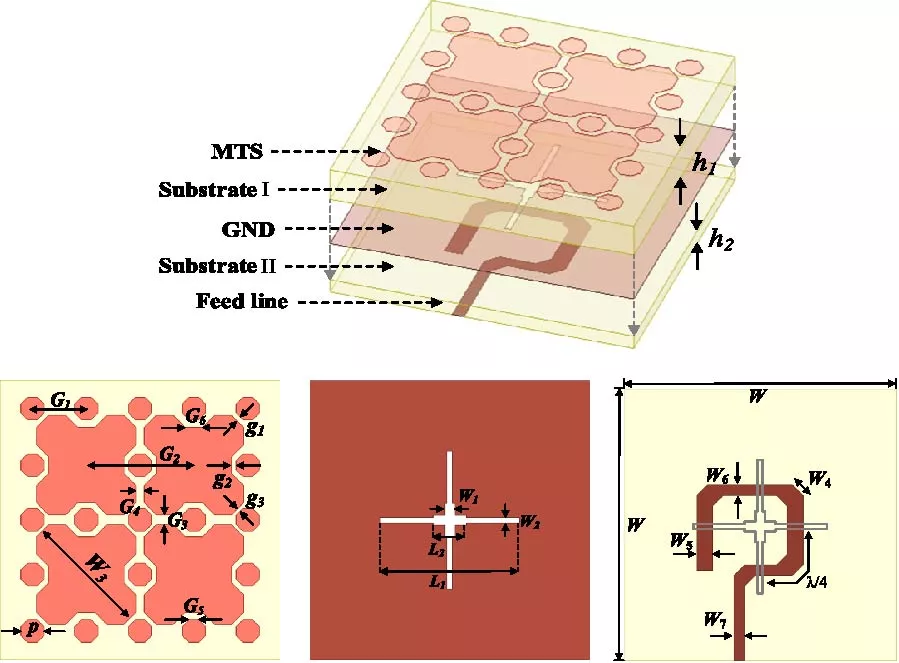
This study proposes a high-performance miniaturized wideband circularly polarized (CP) metasurface (MTS) antenna for WLAN and 5 GHz wireless communication systems. The design innovatively utilizes a hybrid embedded structure, where regular octagonal patches are incorporated into the gaps of modified X-shaped primary radiating elements to increase edge capacitance and lower resonant frequency, thereby achieving antenna miniaturization. To effectively excite the orthogonal degenerate modes required for CP radiation, a characteristic mode analysis (CMA) was employed to guide the design of the feed network. A feeding structure consisting of a hook-shaped microstrip line and a symmetrical stepped cross-slot is designed to achieve CP excitation via a 90˚ phase delay introduced by path length differences. Measured results demonstrate that the antenna achieves a -10 dB impedance bandwidth of 34.2% (4.38-6.19 GHz) and a 3 dB axial ratio (AR) bandwidth of 23.9% (4.68-5.95 GHz). Regarding radiation characteristics, the radiation efficiency remained stable above 75%, and the peak realized gain reached 5.26 dBic. The experimental results verified that the proposed design achieved stable CP and radiation performance within a miniaturized footprint.
2026-07-09
PIER M
Vol. 139, 1-10, 2026
download: 29
A Miniaturized Circularly Polarized Antenna with Embedded Metasurface Patches
Xu Tan, Han Lin, Zhonggen Wang and Wenyan Nie
This study proposes a high-performance miniaturized wideband circularly polarized (CP) metasurface (MTS) antenna for WLAN and 5 GHz wireless communication systems. The design innovatively utilizes a hybrid embedded structure, where regular octagonal patches are incorporated into the gaps of modified X-shaped primary radiating elements to increase edge capacitance and lower resonant frequency, thereby achieving antenna miniaturization. To effectively excite the orthogonal degenerate modes required for CP radiation, a characteristic mode analysis (CMA) was employed to guide the design of the feed network. A feeding structure consisting of a hook-shaped microstrip line and a symmetrical stepped cross-slot is designed to achieve CP excitation via a 90˚ phase delay introduced by path length differences. Measured results demonstrate that the antenna achieves a -10 dB impedance bandwidth of 34.2% (4.38-6.19 GHz) and a 3 dB axial ratio (AR) bandwidth of 23.9% (4.68-5.95 GHz). Regarding radiation characteristics, the radiation efficiency remained stable above 75%, and the peak realized gain reached 5.26 dBic. The experimental results verified that the proposed design achieved stable CP and radiation performance within a miniaturized footprint.
A Miniaturized Circularly Polarized Antenna with Embedded Metasurface Patches