Vol. 138
Latest Volume
All Volumes
PIERM 138 [2026] PIERM 137 [2026] PIERM 136 [2025] PIERM 135 [2025] PIERM 134 [2025] PIERM 133 [2025] PIERM 132 [2025] PIERM 131 [2025] PIERM 130 [2024] PIERM 129 [2024] PIERM 128 [2024] PIERM 127 [2024] PIERM 126 [2024] PIERM 125 [2024] PIERM 124 [2024] PIERM 123 [2024] PIERM 122 [2023] PIERM 121 [2023] PIERM 120 [2023] PIERM 119 [2023] PIERM 118 [2023] PIERM 117 [2023] PIERM 116 [2023] PIERM 115 [2023] PIERM 114 [2022] PIERM 113 [2022] PIERM 112 [2022] PIERM 111 [2022] PIERM 110 [2022] PIERM 109 [2022] PIERM 108 [2022] PIERM 107 [2022] PIERM 106 [2021] PIERM 105 [2021] PIERM 104 [2021] PIERM 103 [2021] PIERM 102 [2021] PIERM 101 [2021] PIERM 100 [2021] PIERM 99 [2021] PIERM 98 [2020] PIERM 97 [2020] PIERM 96 [2020] PIERM 95 [2020] PIERM 94 [2020] PIERM 93 [2020] PIERM 92 [2020] PIERM 91 [2020] PIERM 90 [2020] PIERM 89 [2020] PIERM 88 [2020] PIERM 87 [2019] PIERM 86 [2019] PIERM 85 [2019] PIERM 84 [2019] PIERM 83 [2019] PIERM 82 [2019] PIERM 81 [2019] PIERM 80 [2019] PIERM 79 [2019] PIERM 78 [2019] PIERM 77 [2019] PIERM 76 [2018] PIERM 75 [2018] PIERM 74 [2018] PIERM 73 [2018] PIERM 72 [2018] PIERM 71 [2018] PIERM 70 [2018] PIERM 69 [2018] PIERM 68 [2018] PIERM 67 [2018] PIERM 66 [2018] PIERM 65 [2018] PIERM 64 [2018] PIERM 63 [2018] PIERM 62 [2017] PIERM 61 [2017] PIERM 60 [2017] PIERM 59 [2017] PIERM 58 [2017] PIERM 57 [2017] PIERM 56 [2017] PIERM 55 [2017] PIERM 54 [2017] PIERM 53 [2017] PIERM 52 [2016] PIERM 51 [2016] PIERM 50 [2016] PIERM 49 [2016] PIERM 48 [2016] PIERM 47 [2016] PIERM 46 [2016] PIERM 45 [2016] PIERM 44 [2015] PIERM 43 [2015] PIERM 42 [2015] PIERM 41 [2015] PIERM 40 [2014] PIERM 39 [2014] PIERM 38 [2014] PIERM 37 [2014] PIERM 36 [2014] PIERM 35 [2014] PIERM 34 [2014] PIERM 33 [2013] PIERM 32 [2013] PIERM 31 [2013] PIERM 30 [2013] PIERM 29 [2013] PIERM 28 [2013] PIERM 27 [2012] PIERM 26 [2012] PIERM 25 [2012] PIERM 24 [2012] PIERM 23 [2012] PIERM 22 [2012] PIERM 21 [2011] PIERM 20 [2011] PIERM 19 [2011] PIERM 18 [2011] PIERM 17 [2011] PIERM 16 [2011] PIERM 14 [2010] PIERM 13 [2010] PIERM 12 [2010] PIERM 11 [2010] PIERM 10 [2009] PIERM 9 [2009] PIERM 8 [2009] PIERM 7 [2009] PIERM 6 [2009] PIERM 5 [2008] PIERM 4 [2008] PIERM 3 [2008] PIERM 2 [2008] PIERM 1 [2008]
2026-04-14 Latest Published
By Chaoyuan Guo Zhihan Liu Yufeng Liu
Progress In Electromagnetics Research M, Vol. 138, 1-9, 2026
Abstract
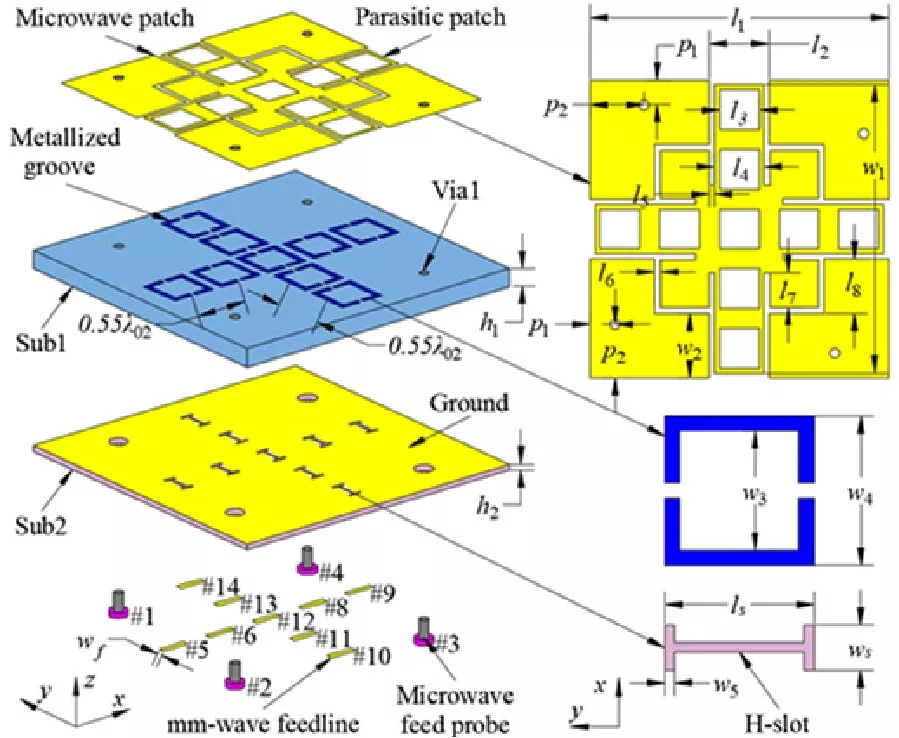
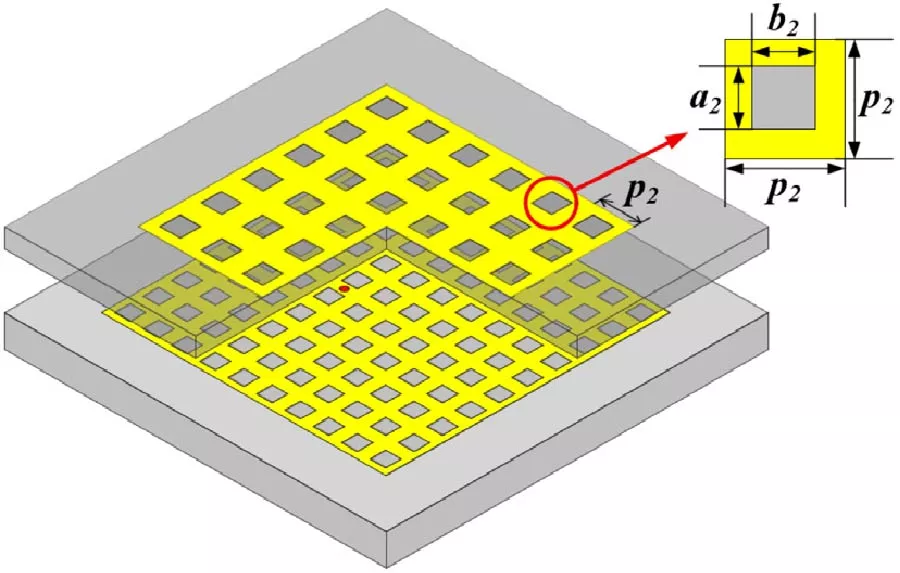
A low-profile, dual-band, shared-aperture antenna with a large frequency ratio is presented, based on a meshed patch and an AMC-backed Fabry-Perot (F-P) cavity. By taking advantage of the weak frequency sensitivity of grid slotting in meshed patches, the upper meshed patch is utilized as both the parasitic patch for the low-frequency antenna and the partially reflective surface (PRS) for the high-frequency F-P cavity, thereby simplifying the overall structure. Meanwhile, the AMC ground is employed to control the reflection phase and reduce the cavity height to λ/4, which enables both antennas to share the same aperture within an 8-mm profile. A prototype is fabricated and tested at 1.6 GHz and 15.14-15.46 GHz. Measured results demonstrate a frequency ratio of 1:9.6, a peak gain of 6.2 dBi at 1.6 GHz, a peak gain of 11.8 dBi in the high-frequency band, and a port isolation better than 17 dB. The proposed antenna features compact size, low profile, and efficient structural reuse, making it attractive for integrated multi-band communication systems.
2026-04-14
PIER M
Vol. 138, 1-9, 2026
download: 7
A Dual-Band Shared-Aperture Antenna Employing a Meshed Patch and AMC-Backed Fabry-Perot Cavity
Chaoyuan Guo, Zhihan Liu and Yufeng Liu
A low-profile, dual-band, shared-aperture antenna with a large frequency ratio is presented, based on a meshed patch and an AMC-backed Fabry-Perot (F-P) cavity. By taking advantage of the weak frequency sensitivity of grid slotting in meshed patches, the upper meshed patch is utilized as both the parasitic patch for the low-frequency antenna and the partially reflective surface (PRS) for the high-frequency F-P cavity, thereby simplifying the overall structure. Meanwhile, the AMC ground is employed to control the reflection phase and reduce the cavity height to λ/4, which enables both antennas to share the same aperture within an 8-mm profile. A prototype is fabricated and tested at 1.6 GHz and 15.14-15.46 GHz. Measured results demonstrate a frequency ratio of 1:9.6, a peak gain of 6.2 dBi at 1.6 GHz, a peak gain of 11.8 dBi in the high-frequency band, and a port isolation better than 17 dB. The proposed antenna features compact size, low profile, and efficient structural reuse, making it attractive for integrated multi-band communication systems.
A Dual-Band Shared-Aperture Antenna Employing a Meshed Patch and AMC-Backed Fabry-Perot Cavity