Vol. 171
Latest Volume
All Volumes
PIERC 171 [2026] PIERC 170 [2026] PIERC 169 [2026] PIERC 168 [2026] PIERC 167 [2026] PIERC 166 [2026] PIERC 165 [2026] PIERC 164 [2026] PIERC 163 [2026] PIERC 162 [2025] PIERC 161 [2025] PIERC 160 [2025] PIERC 159 [2025] PIERC 158 [2025] PIERC 157 [2025] PIERC 156 [2025] PIERC 155 [2025] PIERC 154 [2025] PIERC 153 [2025] PIERC 152 [2025] PIERC 151 [2025] PIERC 150 [2024] PIERC 149 [2024] PIERC 148 [2024] PIERC 147 [2024] PIERC 146 [2024] PIERC 145 [2024] PIERC 144 [2024] PIERC 143 [2024] PIERC 142 [2024] PIERC 141 [2024] PIERC 140 [2024] PIERC 139 [2024] PIERC 138 [2023] PIERC 137 [2023] PIERC 136 [2023] PIERC 135 [2023] PIERC 134 [2023] PIERC 133 [2023] PIERC 132 [2023] PIERC 131 [2023] PIERC 130 [2023] PIERC 129 [2023] PIERC 128 [2023] PIERC 127 [2022] PIERC 126 [2022] PIERC 125 [2022] PIERC 124 [2022] PIERC 123 [2022] PIERC 122 [2022] PIERC 121 [2022] PIERC 120 [2022] PIERC 119 [2022] PIERC 118 [2022] PIERC 117 [2021] PIERC 116 [2021] PIERC 115 [2021] PIERC 114 [2021] PIERC 113 [2021] PIERC 112 [2021] PIERC 111 [2021] PIERC 110 [2021] PIERC 109 [2021] PIERC 108 [2021] PIERC 107 [2021] PIERC 106 [2020] PIERC 105 [2020] PIERC 104 [2020] PIERC 103 [2020] PIERC 102 [2020] PIERC 101 [2020] PIERC 100 [2020] PIERC 99 [2020] PIERC 98 [2020] PIERC 97 [2019] PIERC 96 [2019] PIERC 95 [2019] PIERC 94 [2019] PIERC 93 [2019] PIERC 92 [2019] PIERC 91 [2019] PIERC 90 [2019] PIERC 89 [2019] PIERC 88 [2018] PIERC 87 [2018] PIERC 86 [2018] PIERC 85 [2018] PIERC 84 [2018] PIERC 83 [2018] PIERC 82 [2018] PIERC 81 [2018] PIERC 80 [2018] PIERC 79 [2017] PIERC 78 [2017] PIERC 77 [2017] PIERC 76 [2017] PIERC 75 [2017] PIERC 74 [2017] PIERC 73 [2017] PIERC 72 [2017] PIERC 71 [2017] PIERC 70 [2016] PIERC 69 [2016] PIERC 68 [2016] PIERC 67 [2016] PIERC 66 [2016] PIERC 65 [2016] PIERC 64 [2016] PIERC 63 [2016] PIERC 62 [2016] PIERC 61 [2016] PIERC 60 [2015] PIERC 59 [2015] PIERC 58 [2015] PIERC 57 [2015] PIERC 56 [2015] PIERC 55 [2014] PIERC 54 [2014] PIERC 53 [2014] PIERC 52 [2014] PIERC 51 [2014] PIERC 50 [2014] PIERC 49 [2014] PIERC 48 [2014] PIERC 47 [2014] PIERC 46 [2014] PIERC 45 [2013] PIERC 44 [2013] PIERC 43 [2013] PIERC 42 [2013] PIERC 41 [2013] PIERC 40 [2013] PIERC 39 [2013] PIERC 38 [2013] PIERC 37 [2013] PIERC 36 [2013] PIERC 35 [2013] PIERC 34 [2013] PIERC 33 [2012] PIERC 32 [2012] PIERC 31 [2012] PIERC 30 [2012] PIERC 29 [2012] PIERC 28 [2012] PIERC 27 [2012] PIERC 26 [2012] PIERC 25 [2012] PIERC 24 [2011] PIERC 23 [2011] PIERC 22 [2011] PIERC 21 [2011] PIERC 20 [2011] PIERC 19 [2011] PIERC 18 [2011] PIERC 17 [2010] PIERC 16 [2010] PIERC 15 [2010] PIERC 14 [2010] PIERC 13 [2010] PIERC 12 [2010] PIERC 11 [2009] PIERC 10 [2009] PIERC 9 [2009] PIERC 8 [2009] PIERC 7 [2009] PIERC 6 [2009] PIERC 5 [2008] PIERC 4 [2008] PIERC 3 [2008] PIERC 2 [2008] PIERC 1 [2008]
2026-06-03 Latest Published
By Lanka Padmalatha Satya Nagakishore Bhavanam Vasuja Devi Midasala
Progress In Electromagnetics Research C, Vol. 171, 125-133, 2026
Abstract
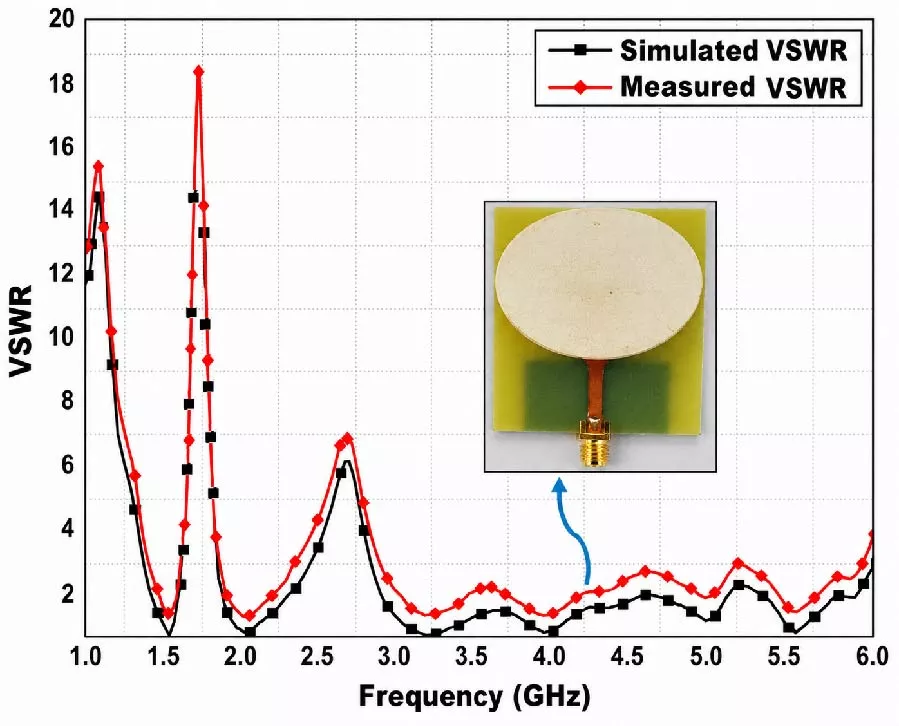
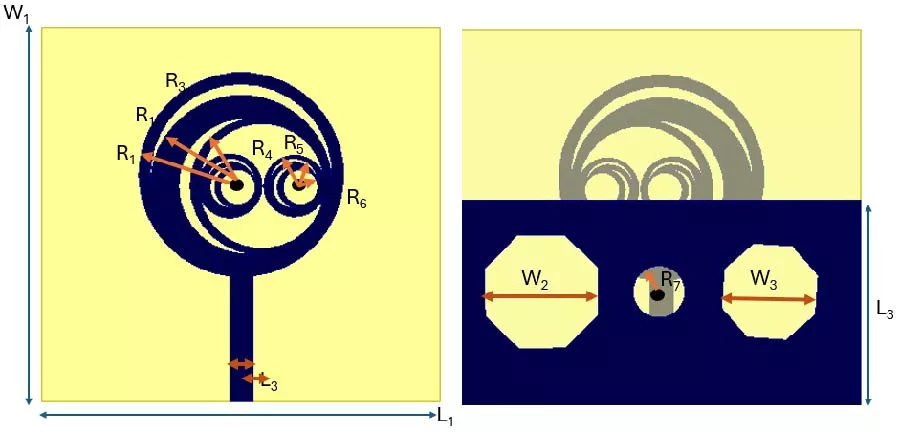
An owl-eye circular patch antenna with a polygonal defected ground structure (DGS) is presented in this paper for dual-band applications. The polygonal defected ground structure improves impedance matching and radiation characteristics, leading to a better gain and more efficient signal radiation. The design is fabricated on a FR-4 substrate measuring 35 × 33 × 1.6 mm3. This is a cheap way to make modern wireless devices. Adding circular fractal features resembling an owl-eye pattern to the radiating element improves the current flow and enables multiple resonant modes. It works at 3.68 GHz and 4.68 GHz, which make it suitable for 5G and WLAN applications. Antenna impedance matching is good, with reflection coefficient values of -24 dB at 3.68 GHz and -16 dB at 4.68\,GHz. As a result, very little signal is reflected. At the frequencies where it operates, it achieves gains of 6.2\,dBi and 5.68\,dBi. Additionally, the antenna has a high radiation efficiency of about 95{\%}, which means that it radiates well. Next-generation wireless communication systems will benefit from the proposed design.
2026-06-03
PIER C
Vol. 171, 125-133, 2026
download: 12
A Fractal-Inspired Owl-Eye Circular Patch Antenna with Polygonal Defected Ground Structure for 3.6 GHz /4.6 GHz 5G and WLAN Applications
Lanka Padmalatha, Satya Nagakishore Bhavanam and Vasuja Devi Midasala
An owl-eye circular patch antenna with a polygonal defected ground structure (DGS) is presented in this paper for dual-band applications. The polygonal defected ground structure improves impedance matching and radiation characteristics, leading to a better gain and more efficient signal radiation. The design is fabricated on a FR-4 substrate measuring 35 × 33 × 1.6 mm3. This is a cheap way to make modern wireless devices. Adding circular fractal features resembling an owl-eye pattern to the radiating element improves the current flow and enables multiple resonant modes. It works at 3.68 GHz and 4.68 GHz, which make it suitable for 5G and WLAN applications. Antenna impedance matching is good, with reflection coefficient values of -24 dB at 3.68 GHz and -16 dB at 4.68\,GHz. As a result, very little signal is reflected. At the frequencies where it operates, it achieves gains of 6.2\,dBi and 5.68\,dBi. Additionally, the antenna has a high radiation efficiency of about 95{\%}, which means that it radiates well. Next-generation wireless communication systems will benefit from the proposed design.
A Fractal-Inspired Owl-Eye Circular Patch Antenna with Polygonal Defected Ground Structure for 3.6 GHz/4.6 GHz 5G and WLAN Applications
2026-06-03
PIER C
Vol. 171, 117-124, 2026
download: 27
A Miniaturized Long-Read-Range Anti-Metal UHF RFID Tag Antenna for Full-Process Management of Bank Cash Transport Boxes
Bingqing Yao
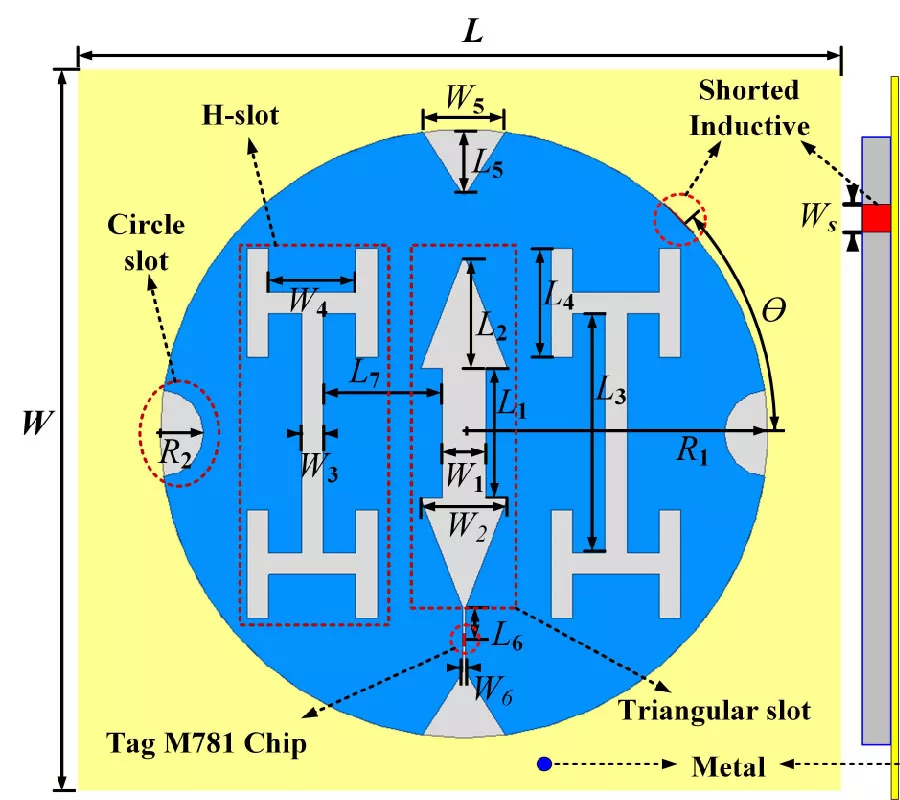
In this study, a miniaturized long-read-range anti-metal ultra-high frequency (UHF) RFID tag patch antenna for bank cash transport boxes is presented. Short-circuit inductors were loaded on the side of the antenna, and double H-shaped slots were etched on the patch surface. These structures extend the current path and increase the electrical length, which lowers the resonant frequency and enables antenna miniaturization. The antenna impedance can be flexibly tuned by adjusting the position and width of the short-circuit inductors and the length of the double H-shaped slots. Conjugate matching with the RFID chip is therefore achieved to ensure maximum power transfer. In addition, the short-circuit inductors reduce the influence of the metal plate and improve the current distribution. Consequently, the radiation efficiency is enhanced, and a long reading distance is obtained. The proposed antenna was fabricated and measured, and good agreement between the simulation and measurement results was observed. The measured results show that the antenna occupied an area of 615 mm2 and achieved a maximum reading distance of 12.4 m when mounted on a metal cash-in-transit box. The presented antenna is suitable for the full-process management of bank cash transport boxes in different application scenarios.
A Miniaturized Long-Read-Range Anti-Metal UHF RFID Tag Antenna for Full-Process Management of Bank Cash Transport Boxes
2026-06-03
PIER C
Vol. 171, 110-116, 2026
download: 19
A Preprocessing Dimensionality Reduction Framework for Improved Polynomial Chaos Expansion in EMC Uncertainty Quantification
Yitong Lu, Zhengyu Xue and Shenghang Huo
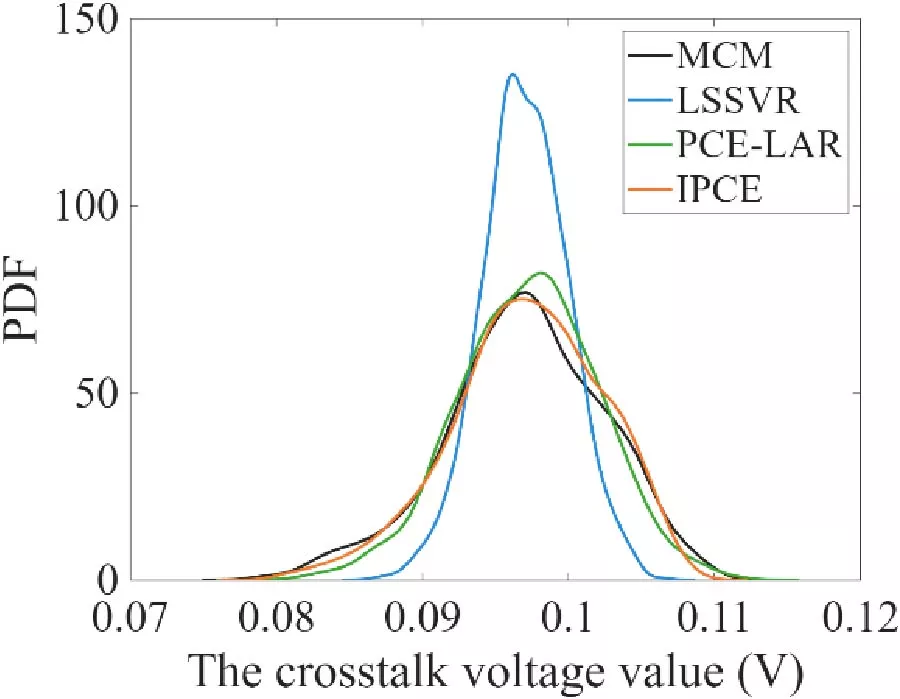
Polynomial Chaos Expansion (PCE) is widely utilized in uncertainty quantification (UQ) for electromagnetic compatibility (EMC) due to its robust global predictive capabilities. However, its computational overhead increases exponentially with stochastic dimensionality, leading to the notorious curse of dimensionality. To address this bottleneck, this paper proposes a generalized preprocessing dimensionality reduction framework designed to enhance the performance of PCE. By decoupling dimensional screening from predictive modeling, the proposed framework first employs low-cost estimators to identify significant random variables. Subsequently, an improved PCE model is constructed within the reduced feature space. Given the prohibitively high computational cost of acquiring EMC simulation samples, this study instantiates a screening module within the framework that integrates Least Squares Support Vector Regression (LSSVR) with Sobol indices. Finally, the proposed framework-based method is applied to a cable crosstalk case study to validate its effectiveness and engineering applicability.
A Preprocessing Dimensionality Reduction Framework for Improved Polynomial Chaos Expansion in EMC Uncertainty Quantification
2026-06-01
PIER C
Vol. 171, 97-109, 2026
download: 35
Compact Printed UWB Monopole Antenna Employing Coupling and Stub Structure
Nobuyasu Takemura
This paper presents a compact printed ultra-wideband (UWB) monopole antenna employing a coupling structure and a short stub for broadband impedance matching and antenna miniaturization. The proposed antenna is fabricated on an FR-4 substrate with dimensions of 24 × 14 × 1.6 mm3 and fully covers the FCC-defined UWB from 3.1 to 10.6 GHz, achieving a VSWR of ≤ 2. The coupling structure introduces additional capacitive loading, while the short stub provides effective inductive compensation. This enables stable, broadband operation despite significant size reduction. Experimental results demonstrate quasi-omnidirectional radiation characteristics over the entire operating band. In addition to frequency-domain evaluation, time-domain performance is investigated using two identical antennas arranged in face-to-face and side-by-side configurations. The measured correlation coefficients exceed 0.94 in both configurations, and the group delay remains nearly constant at approximately 0.3 ns across the UWB. This indicates high waveform fidelity. These results confirm that the proposed antenna is well-suited for compact UWB communication systems requiring both broadband and time-domain stability.
Compact Printed UWB Monopole Antenna Employing Coupling and Stub Structure
2026-06-01
PIER C
Vol. 171, 87-96, 2026
download: 23
Accurate Calculation of Mutual Inductance for Rounded Rectangular Coils in Arbitrary Orientations in Wireless Power Transfer Systems
Zhongjiu Zheng, Minghao Zhao, Zhuang Li, Xingfeng Cao and Anran Liu
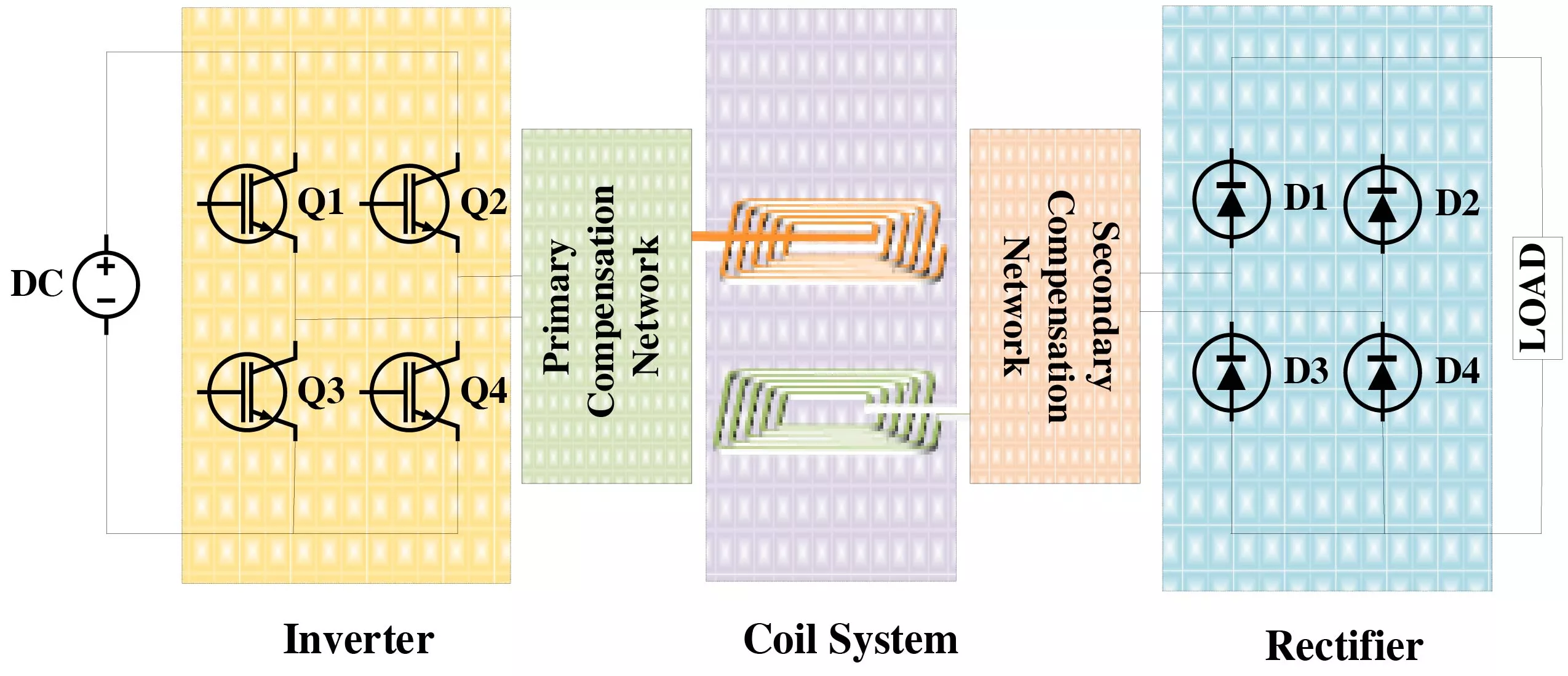
This paper proposes an analytical method for arbitrary spatial orientations that eliminates systematic errors arising from neglecting rounded corners in planar rectangular coils in wireless power transfer systems. The rounded rectangular coil is decomposed into straight and quarter-arc segments. Using Neumann's formula, mutual inductance expressions for straight-straight, straight-arc, and arc-arc interactions are derived. We establish a unified spatial model using Z-Y-X Euler angle transformations to describe arbitrary translations and rotations in 3D space. We obtain the total mutual inductance by superposition. Results show that neglecting rounded corners increases error as the corner radius grows. Under various conditions, including lateral and axial displacements and composite rotations, the method achieves average relative errors below 1.5% compared with finite element simulations (validated for corner radii up to 12 mm) and below 2.5% compared with experiments (validated for a corner radius of 5 mm), demonstrating high accuracy and robustness.
Accurate Calculation of Mutual Inductance for Rounded Rectangular Coils in Arbitrary Orientations in Wireless Power Transfer Systems
2026-05-31
PIER C
Vol. 171, 75-86, 2026
download: 43
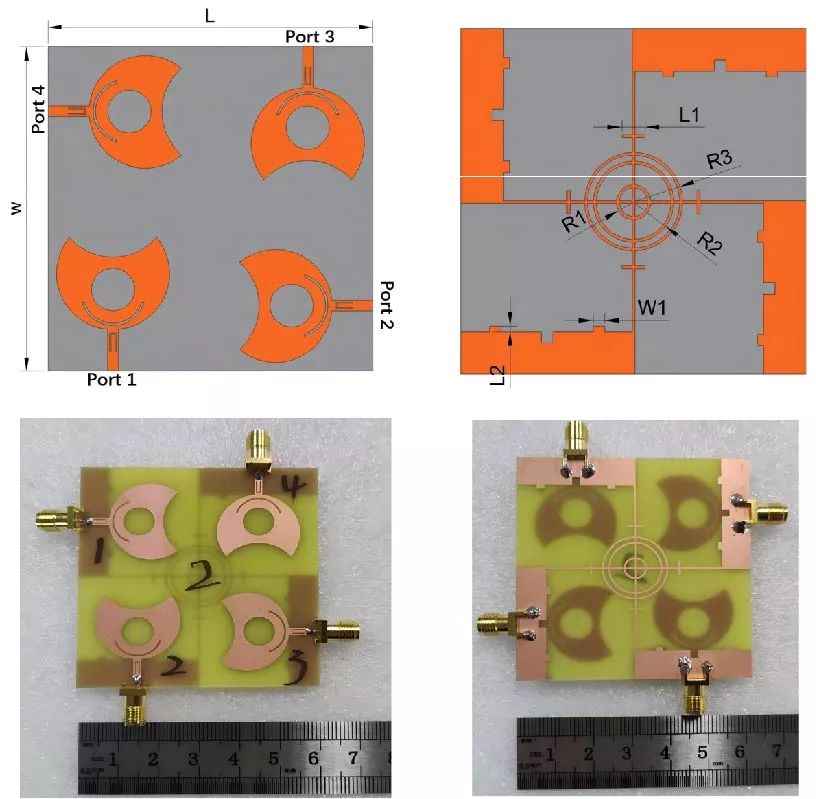
Characteristic Mode-Inspired Ultra-Wideband Dual-Band Notched Four-Port MIMO Antenna
Luyi Ji, Chengzhu Du, Yongkang Yang and Fangrui Zhang
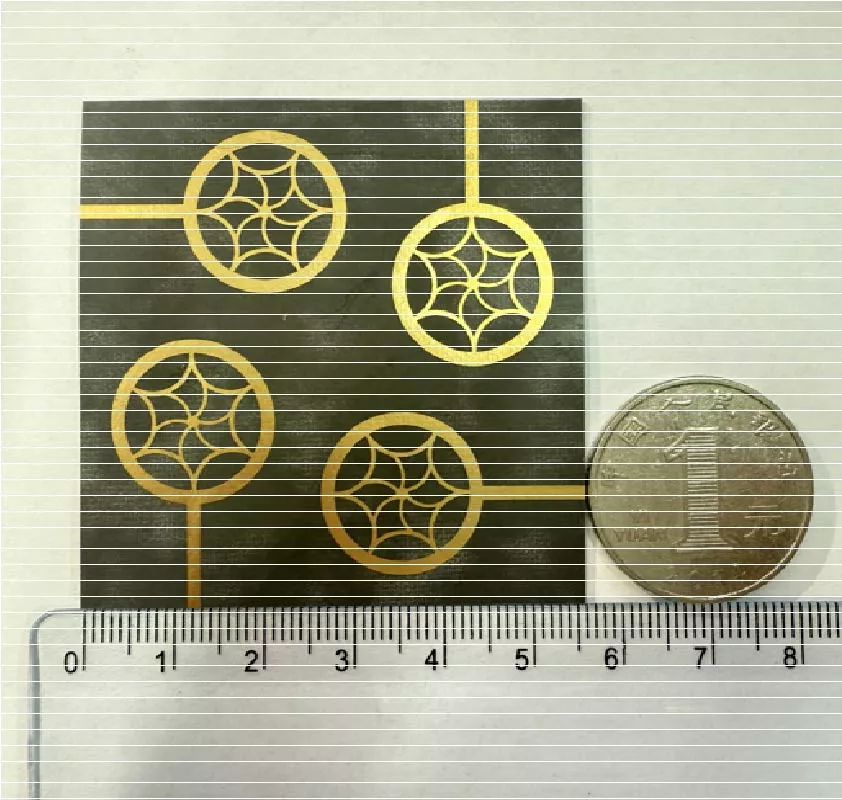
In this paper, a dual-band-notched ultra-wideband MIMO antenna fed by a microstrip line is designed. The ultra-wideband characteristics are obtained by etching a semi-elliptical notch on a circular radiation patch. For the achievement of dual-band-notched features, a U-shaped slot and an inverted U-shaped slot are employed. Additionally, the Characteristic Mode Analysis (CMA) is used to verify and analyze the notch-band and broadband characteristics. Each ground plate is connected by adding a cross-shaped branch, and a circular ring is loaded to further improve antenna isolation (|S21|). This antenna is implemented on an FR4 substrate, and its whole size is 60 mm × 60 mm × 0.8 mm. The measured findings verify that the antenna functions within a broad bandwidth ranging 3.12-21.2 GHz (relative bandwidth 148.6%) and two frequency band rejections of 5.94-7.17 GHz and 12.49-13.92 GHz, effectively suppressing the 6G band, which belongs to the international satellite mobile communication system and the Ku band downlink. The port isolation exceeds 20 dB, the ECC is below 0.04, and the diversity gain (DG) is in excess of 9.97, all of which demonstrate the antenna's excellent diversity performance and superior radiation characteristics. The antenna is a frontrunner for next-generation wireless communication applications.
Characteristic Mode-Inspired Ultra-Wideband Dual-Band Notched Four-Port MIMO Antenna
2026-05-30
PIER C
Vol. 171, 67-74, 2026
download: 57
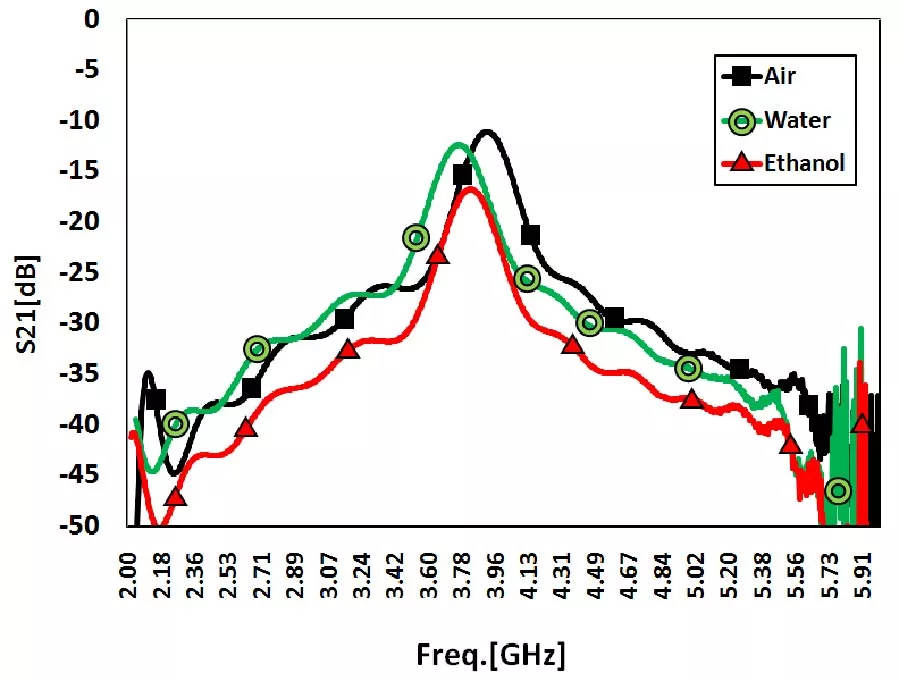
A Miniaturised Māra Cross-Inspired Fractal Microstrip Sensor for Edible Oil Sensing
Ahmed A. Al-Mudhafar and Sarah J. Ghazi
This work introduces an innovative fractal microstrip sensor, shaped like a Māra cross enclosed within a square, designed and fabricated on a Rogers RT5880 substrate for high-precision detection and characterization of edible oils. The proposed resonant shape enhances electric-field concentration and improves the interaction between the material under test and the electromagnetic field, resulting in improved sensitivity and resonant response. The sensor operates at a frequency of approximately 4 GHz within the S-band, with an area of 50 × 50 mm2, making it suitable for portable and low-cost applications. The results demonstrated clear frequency shifts for various oil types, including coconut oil, olive oil, sunflower oil, and sesame oil. A mathematical model was also developed to extract the complex electrical permittivity with a high coefficient of determination of 0.99, showing excellent agreement between the experimental and theoretical results. The fractal sensor exhibits a remarkable normalized sensitivity of 0.86% and 3.56% per unit dielectric variation and error of 0.03% and 0.13%, with frequency shifts of 163 MHz and 103 MHz for water and ethanol detection, respectively. Maximum sensitivities reached 15.23% for olive oil and 11.32% for sunflower oil, surpassing many previously published studies.
A Miniaturised Māra Cross-Inspired Fractal Microstrip Sensor for Edible Oil Sensing
2026-05-29
PIER C
Vol. 171, 59-66, 2026
download: 79
A Compact SRR Metamaterial and DGS-Based Dual-Bandpass Filter for Sub-6 GHz Wireless and IoT Applications
Youssef Khardioui, Younes Siraj, Kaoutar El Bakkar, Ali El Alami, Mohammed El Ghzaoui and Youssef Mejdoub
In modern wireless communication systems, it is essential to use a bandpass filter at the front end of the radio receiver to limit the bandwidth of the signal before it is passed to the rest of the receiver. This study presents the design, fabrication, and analysis of a compact dual-band metamaterial bandpass filter (BPF) for modern wireless communication systems. The proposed structure evolves from an initial open-loop resonator design and integrates metamaterial unit cells to significantly enhance frequency selectivity, reduce inser-tion loss, and improve impedance matching. To further enhance the performance, defected ground structures were incorporated, resulting in refined bandwidth control and supe-rior return-loss characteristics. The final filter operates at center frequencies of 2.4 and 3.95 GHz, achieving low insertion losses of 0.6 and 0.9 dB, along with return losses of 27.6 and 32.9 dB, respectively. Its compact size of 20 × 18.46 mm2 corresponds to an electrical size of (0.33 × 0.25)λg2. Owing to its excellent electrical performance and miniaturized form, the proposed filter is suitable for wireless communication applications, including GPS, Blue-tooth, Wi-Fi, WiMAX, 5G, and sub-6 GHz bands, making it ideal for modern systems, such as the Internet of Things (IoT).
A Compact SRR Metamaterial and DGS-Based Dual-Bandpass Filter for Sub-6 GHz Wireless and IoT Applications
2026-05-29
PIER C
Vol. 171, 49-58, 2026
download: 29
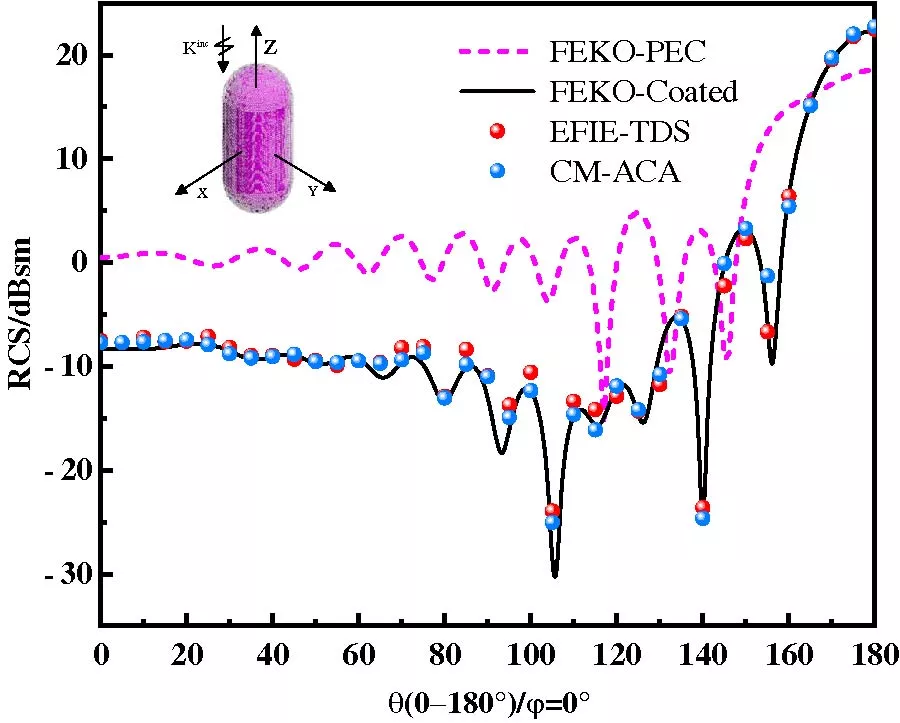
Electromagnetic Scattering Characteristics of Dielectric-Coated Targets Using the Characteristic Mode Basis Function Method
Jiayu Yan, Zhonggen Wang, Wenyan Nie and Han Lin
Analyzing the electromagnetic scattering of electrically large targets with complex coatings presents significant computational challenges. This paper proposes a highly efficient hybrid acceleration method within the Electric Field Integral Equation (EFIE) framework, combining the Thin Dielectric Sheet (TDS) approximation, Characteristic Mode Analysis (CMA), and Adaptive Cross Approximation (ACA). First, a generalized TDS formulation maps dual-layer equivalent currents onto a single-surface model, substantially reducing the initial unknowns while preserving physical consistency. Next, domain decomposition and CMA are utilized to construct a reduced-order matrix, enabling a direct, non-iterative solution that fundamentally bypasses traditional convergence bottlenecks. Finally, the ACA algorithm compresses well-separated far-field interactions to further minimize computational and memory costs. Comprehensive numerical experiments calculating the Radar Cross Section (RCS) of electrically large coated targets demonstrate that the proposed hybrid scheme offers superior accuracy and drastically reduces matrix storage and computation time compared to conventional full-wave direct solvers and traditional TDS-EFIE (electric and magnetic) formulations.
Electromagnetic Scattering Characteristics of Dielectric-Coated Targets Using the Characteristic Mode Basis Function Method
2026-05-29
PIER C
Vol. 171, 44-48, 2026
download: 46
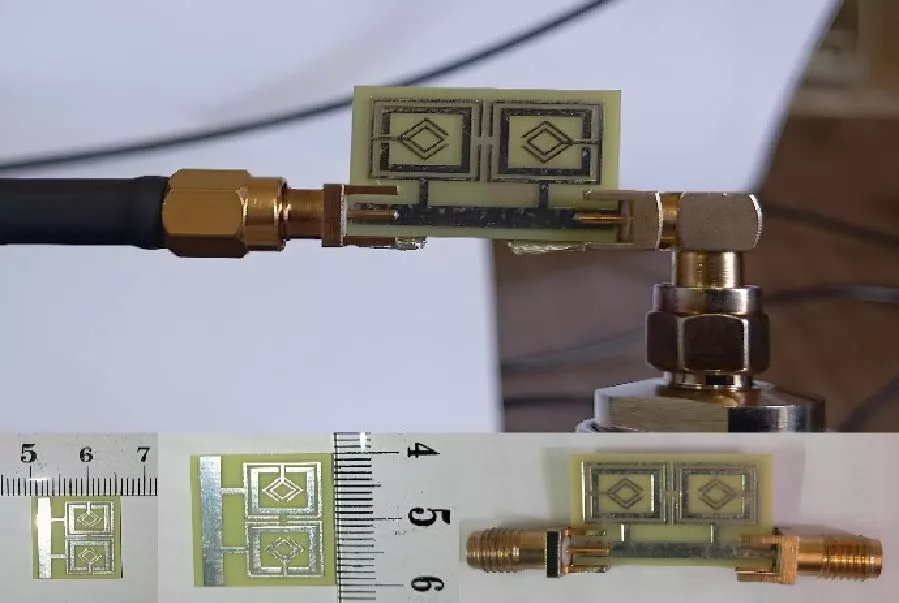
Compact Reflection-Type Phase Shifter Using an Impedance-Transforming Transdirectional Coupler Based on Double-Shielded Coupled Lines
Aleksandr N. Sychev, Sergey A. Artishchev, Natalia S. Ragimova and Evgeniy V. Shesterikov
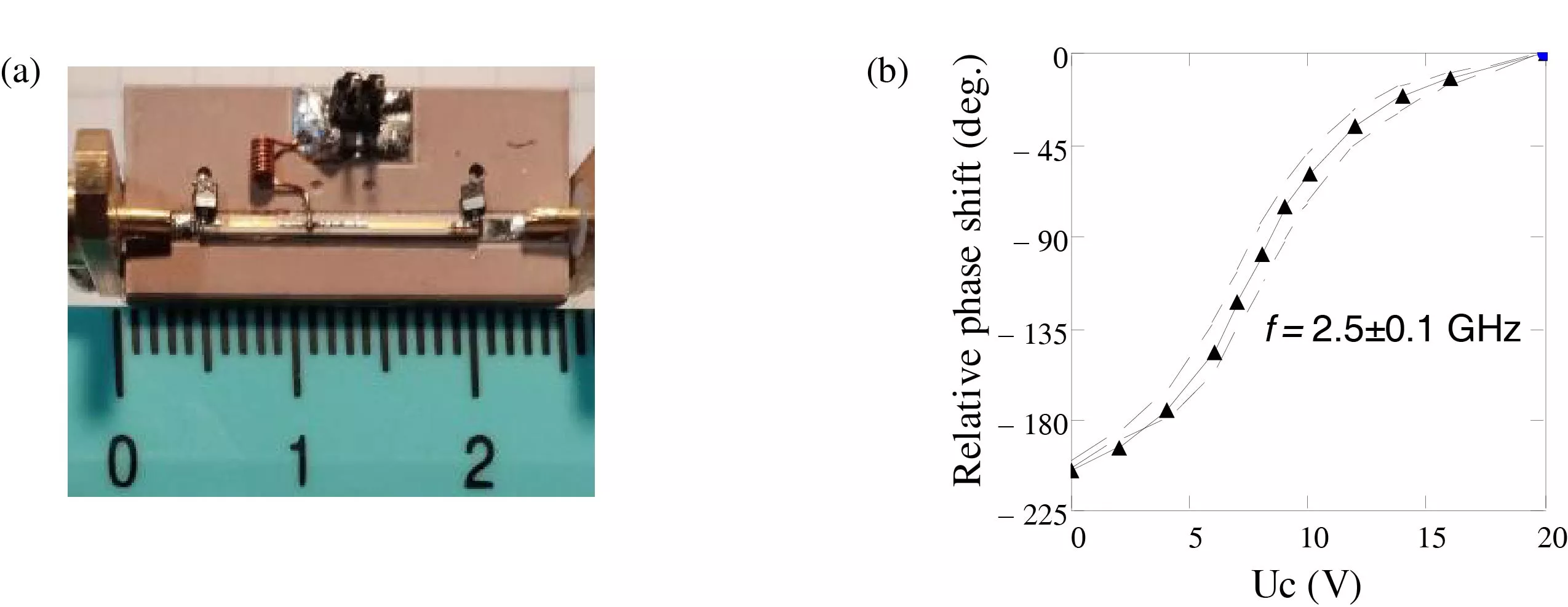
This paper presents a novel tunable reflection-type phase shifter (RTPS) employing an impedance-transforming transdirectional (IT TRD) coupler terminated by varactor-based reflective loads. The coupler is based on double-shielded coupled lines (DSCLs) and is implemented as a distributed surface-mount component, providing inherent impedance transformation for increasing the relative phase shift for given varactors. Fabricated using standard PCB technology, the prototype features intrinsic DC isolation between the RF path and control circuits, requiring only a single control voltage. Measured results show that the RTPS operates over a wide frequency band from 2.2 to 2.8 GHz (24%), achieving a tunable phase shift of up to 180˚ with an insertion loss of 1.3±0.7 dB and a return loss better than 11 dB. The proposed design is characterized by compact physical dimensions of 0.1 × 0.21λ at the center frequency.
Compact Reflection-Type Phase Shifter Using an Impedance-Transforming Transdirectional Coupler Based on Double-Shielded Coupled Lines
2026-05-28
PIER C
Vol. 171, 34-43, 2026
download: 49
Discrete Space Vector Modulation Model Predictive Flux Control with Reformulated Incremental Cost Function and Efficient Search Strategy for SPMSM
Yang Zhang, Jiahao Zhang, Ping Yang, Wancheng Xie and Shaoziyi Wu
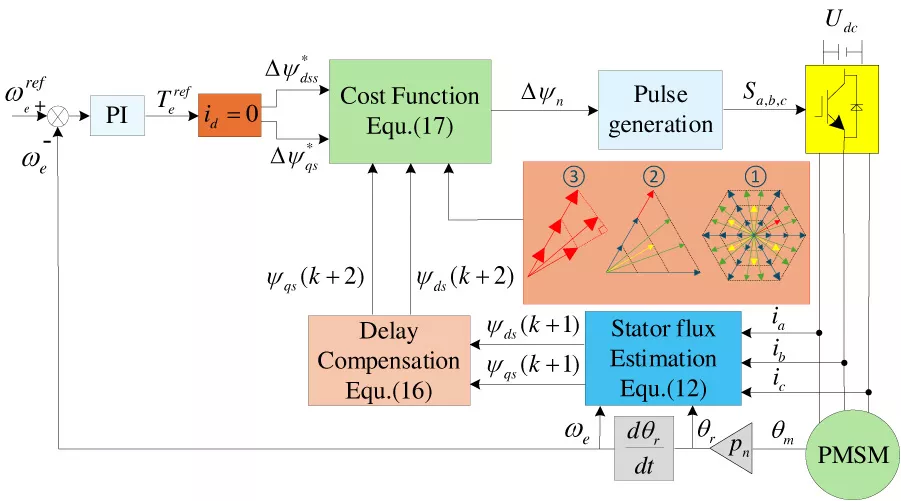
Conventional model predictive flux control (C-MPFC) generates large steady-state ripples, and the system reference values are heavily dependent on the permanent magnet (PM) flux This paper proposes a discrete space vector modulation model predictive flux control with a reformulated incremental cost function and efficient search strategy (RDSVM-MPFC) for surface-mounted permanent magnet synchronous motors (SPMSMs). First, a unified cost function based on flux increments is reconstructed by redefining the d-axis reference flux. Second, the candidate set is expanded via discrete space vector modulation (DSVM) in the spatial flux increment plane to generate a set of virtual flux increment vectors (VFIVs), thereby significantly suppressing steady-state errors. Furthermore, to manage the heavy computation burden associated with the expanded VFIVs, a three-stage hierarchical optimization strategy is designed. This approach achieves rapid identification of the optimal control vector, which preserves the high steady-state precision while largely reducing the computational complexity of the system. Finally, experimental studies demonstrate that the proposed RDSVM-MPFC strategy eliminates sensitivity to PM flux variations and markedly suppresses steady-state pulsations.
Discrete Space Vector Modulation Model Predictive Flux Control with Reformulated Incremental Cost Function and Efficient Search Strategy for SPMSM
2026-05-27
PIER C
Vol. 171, 25-33, 2026
download: 49
Structural Optimization of Short Primary Single-Sided Linear Induction Motor
Cheng Wen, Zilei Duan, Mingye Li and Aosai Li
This study focuses on a Short-Primary Single-Sided Linear Induction Motor (SSLIM), which is widely used in the rail transit sector due to its low operating noise and small turning radius. Therefore, designing linear induction motors with better performance is of great significance. This study aims to enhance electromagnetic thrust and reduce fluctuations in electromagnetic force by optimizing the motor's structural design. First, a motor model is established based on its operating principles, and a brief analysis of its electromagnetic characteristics is conducted. Second, two design schemes were selected for both the primary and secondary components. For the primary components, one scheme employs a chamfered structure to suppress fluctuations in electromagnetic force, while the other modifies the tooth tip shape from rectangle to trapezoid to increase thrust. For the secondary components, one scheme involves incorporating a material with higher electrical conductivity into specific areas of the aluminum plate, and the other involves slotting to optimize the magnetic field distribution and increase thrust. Finally, the performance of the optimized model was compared with that of the initial model. The results showed that the average thrust increased by 5.3%, while the fluctuations in thrust and normal force decreased by 13.6% and 30%, respectively, validating the effectiveness of the optimization approach.
Structural Optimization of Short Primary Single-Sided Linear Induction Motor
2026-05-27
PIER C
Vol. 171, 14-24, 2026
download: 97
Design and Analysis of a Novel Miniaturized Multiband Flowerpot-Shaped Patch-Based Dielectric Resonator Antenna for 5GNSS, UMTS, PCS, Wi-Fi5, WiMAX , and NR Sub-6 GHz 5G Applications
Kaushal Patel and Falgun Thakkar
In this study, a novel miniaturized multiband flowerpot-shaped patch-based cylindrical dielectric resonator antenna (FPSDRA) is proposed for 5G-enabled GNSS (GPS), UMTS, PCS, Wi-Fi5, WiMAX, and NR 77/78 sub-6 GHz 5G applications. The proposed antenna prototype operates at 1.54 GHz, 2.01 GHz, 3.23 GHz, 3.95 GHz, and 5.54 GHz for the mentioned applications. It employs a novel low-cost flowerpot-shaped radiating patch underneath a cylindrical dielectric resonator (CDR) made of alumina ceramic (Al2O3, ∈DR = 9.8) material and is fed by a combined microstrip-line-tapered trapezoidal feedline. Later, a reduced ground plane is used as a reflector on the rear side of the substrate to reduce antenna size. It is made up of a low cost 1.6 mm FR4 laminate sheet (∈r = 4.4, tanδ = 0.02) and miniaturized to a physical size of 65 × 45 mm2. The parametric analysis was carried out for reflection coefficients (S11-dB) by changing the ground plane width, CDRA radius, and flower petal radius to achieve adequate results. Likewise, this prototype has measured reflection coefficient of < -20 dB for 1.54 GHz (L1-band), < -25 dB for 2.01/3.23 GHz (S-band), < -20 dB for 3.95 GHz (S-band), and 5.54 GHz (C-band), peak gains of 2.01 dBi, 2.05 dBi, 3.02 dBi, 4.85 dBi, and 2.24 dBi for the respective bands along with adequate -10 dB impedance matching bandwidths and stable radiation features in a convincing agreement compared to earlier designs. The proposed prototype is simulated in CST software, assembled, and tested by VNA and an anechoic chamber setup for L1/S/C band applications.
Design and Analysis of a Novel Miniaturized Multiband Flowerpot-Shaped Patch-Based Dielectric Resonator Antenna for 5GNSS, UMTS, PCS, Wi-Fi5, WiMAX, and NR Sub-6 GHz 5G Applications
2026-05-26
PIER C
Vol. 171, 1-13, 2026
download: 105
CMA-Based Flexible Four-Element SWB MIMO Antenna with Enhanced Isolation for Wearable Applications
Xiaoyan Wei, Zhonggen Wang, Wenyan Nie, Chenlu Li and Zhengting Zhang
This paper proposes a flexible four-element super-wideband (SWB) multiple-input multiple-output (MIMO) antenna based on characteristic mode analysis (CMA) for wearable wireless communication, broadband sensing, and wireless body area network (WBAN) applications. The antenna employs a spiral mesh radiator combined with a defected ground plane incorporating triangular and T-shaped slots to form a multi-slot-coupled current path, enabling the cooperative excitation of multiple characteristic modes. The proposed antenna achieves an impedance bandwidth of 3.23-44.68 GHz, satisfying the SWB criterion. A four-port MIMO configuration is adopted to enhance diversity and isolation performance. Measured results agree well with simulations, with port isolation better than 20 dB across the operating band. In addition, the envelope correlation coefficient (ECC) is below 0.0015; the diversity gain (DG) is close to 10 dB; the total active reflection coefficient (TARC) is below -10 dB; and the channel capacity loss (CCL) is less than 0.12 bit/s/Hz. The antenna also maintains stable SWB impedance matching and radiation performance under bending conditions, making it suitable for flexible SWB wearable and WBAN systems.
CMA-Based Flexible Four-Element SWB MIMO Antenna with Enhanced Isolation for Wearable Applications