Vol. 158
Latest Volume
All Volumes
PIERC 162 [2025] PIERC 161 [2025] PIERC 160 [2025] PIERC 159 [2025] PIERC 158 [2025] PIERC 157 [2025] PIERC 156 [2025] PIERC 155 [2025] PIERC 154 [2025] PIERC 153 [2025] PIERC 152 [2025] PIERC 151 [2025] PIERC 150 [2024] PIERC 149 [2024] PIERC 148 [2024] PIERC 147 [2024] PIERC 146 [2024] PIERC 145 [2024] PIERC 144 [2024] PIERC 143 [2024] PIERC 142 [2024] PIERC 141 [2024] PIERC 140 [2024] PIERC 139 [2024] PIERC 138 [2023] PIERC 137 [2023] PIERC 136 [2023] PIERC 135 [2023] PIERC 134 [2023] PIERC 133 [2023] PIERC 132 [2023] PIERC 131 [2023] PIERC 130 [2023] PIERC 129 [2023] PIERC 128 [2023] PIERC 127 [2022] PIERC 126 [2022] PIERC 125 [2022] PIERC 124 [2022] PIERC 123 [2022] PIERC 122 [2022] PIERC 121 [2022] PIERC 120 [2022] PIERC 119 [2022] PIERC 118 [2022] PIERC 117 [2021] PIERC 116 [2021] PIERC 115 [2021] PIERC 114 [2021] PIERC 113 [2021] PIERC 112 [2021] PIERC 111 [2021] PIERC 110 [2021] PIERC 109 [2021] PIERC 108 [2021] PIERC 107 [2021] PIERC 106 [2020] PIERC 105 [2020] PIERC 104 [2020] PIERC 103 [2020] PIERC 102 [2020] PIERC 101 [2020] PIERC 100 [2020] PIERC 99 [2020] PIERC 98 [2020] PIERC 97 [2019] PIERC 96 [2019] PIERC 95 [2019] PIERC 94 [2019] PIERC 93 [2019] PIERC 92 [2019] PIERC 91 [2019] PIERC 90 [2019] PIERC 89 [2019] PIERC 88 [2018] PIERC 87 [2018] PIERC 86 [2018] PIERC 85 [2018] PIERC 84 [2018] PIERC 83 [2018] PIERC 82 [2018] PIERC 81 [2018] PIERC 80 [2018] PIERC 79 [2017] PIERC 78 [2017] PIERC 77 [2017] PIERC 76 [2017] PIERC 75 [2017] PIERC 74 [2017] PIERC 73 [2017] PIERC 72 [2017] PIERC 71 [2017] PIERC 70 [2016] PIERC 69 [2016] PIERC 68 [2016] PIERC 67 [2016] PIERC 66 [2016] PIERC 65 [2016] PIERC 64 [2016] PIERC 63 [2016] PIERC 62 [2016] PIERC 61 [2016] PIERC 60 [2015] PIERC 59 [2015] PIERC 58 [2015] PIERC 57 [2015] PIERC 56 [2015] PIERC 55 [2014] PIERC 54 [2014] PIERC 53 [2014] PIERC 52 [2014] PIERC 51 [2014] PIERC 50 [2014] PIERC 49 [2014] PIERC 48 [2014] PIERC 47 [2014] PIERC 46 [2014] PIERC 45 [2013] PIERC 44 [2013] PIERC 43 [2013] PIERC 42 [2013] PIERC 41 [2013] PIERC 40 [2013] PIERC 39 [2013] PIERC 38 [2013] PIERC 37 [2013] PIERC 36 [2013] PIERC 35 [2013] PIERC 34 [2013] PIERC 33 [2012] PIERC 32 [2012] PIERC 31 [2012] PIERC 30 [2012] PIERC 29 [2012] PIERC 28 [2012] PIERC 27 [2012] PIERC 26 [2012] PIERC 25 [2012] PIERC 24 [2011] PIERC 23 [2011] PIERC 22 [2011] PIERC 21 [2011] PIERC 20 [2011] PIERC 19 [2011] PIERC 18 [2011] PIERC 17 [2010] PIERC 16 [2010] PIERC 15 [2010] PIERC 14 [2010] PIERC 13 [2010] PIERC 12 [2010] PIERC 11 [2009] PIERC 10 [2009] PIERC 9 [2009] PIERC 8 [2009] PIERC 7 [2009] PIERC 6 [2009] PIERC 5 [2008] PIERC 4 [2008] PIERC 3 [2008] PIERC 2 [2008] PIERC 1 [2008]
2025-08-20
PIER C
Vol. 158, 269-276, 2025
download: 140
Imaging Radar Performance: A Comparative Analysis of Multistatic and Monostatic Configurations for Enhanced Detection
Hanane Taourite, Sidi Mohammed Chouiti and Lotfi Merad
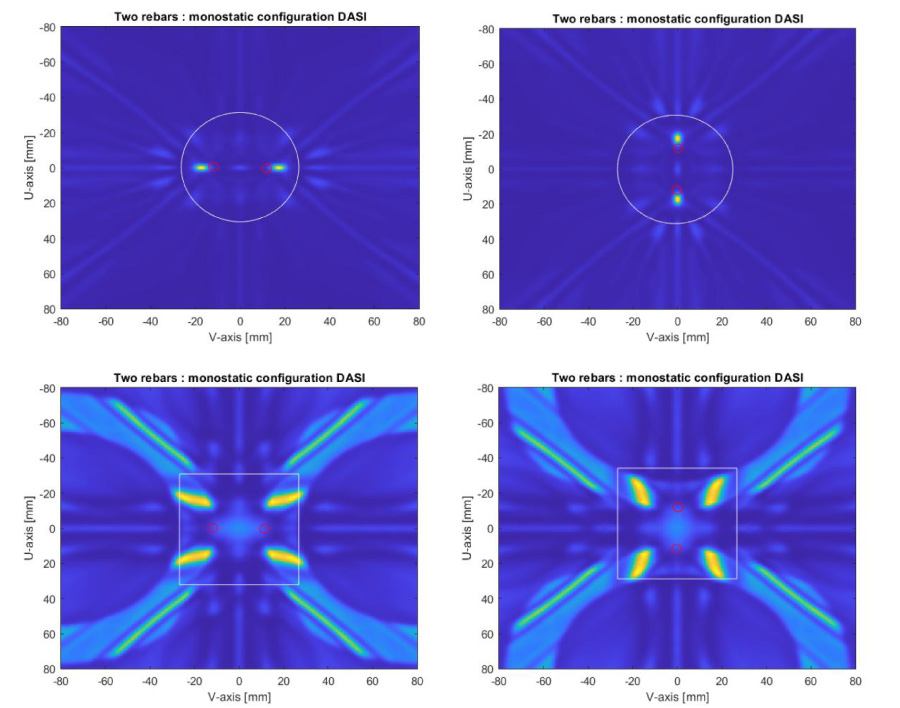
This paper presents a comparative study evaluating the influence of monostatic and multistatic microwave imaging (MWI) configurations on imaging performance. Localization accuracy and Signal-to-Noise Ratio (SNR) are evaluated as key performance metrics for both configurations. Numerical simulations are conducted using CST Studio Suite, considering various scenarios involving circular antenna arrays surrounding embedded metallic rebars of different sizes within concrete pillars of varying geometries. Image reconstruction is performed using the Delay-and-Sum Integration (DASI) algorithm, an enhanced version of the conventional Delay-and-Sum (DAS) technique. The simulation results show the performance of the proposed reconstruction technique in terms of localization accuracy.
Imaging Radar Performance: A Comparative Analysis of Multistatic and Monostatic Configurations for Enhanced Detection
2025-08-19
PIER C
Vol. 158, 261-268, 2025
download: 163
A Multiband Planar Antenna with Asymmetric CPW Feeding for WLAN, UAV Communications, and 5G
Wei Ding, Ziyi Su and Weina Liu
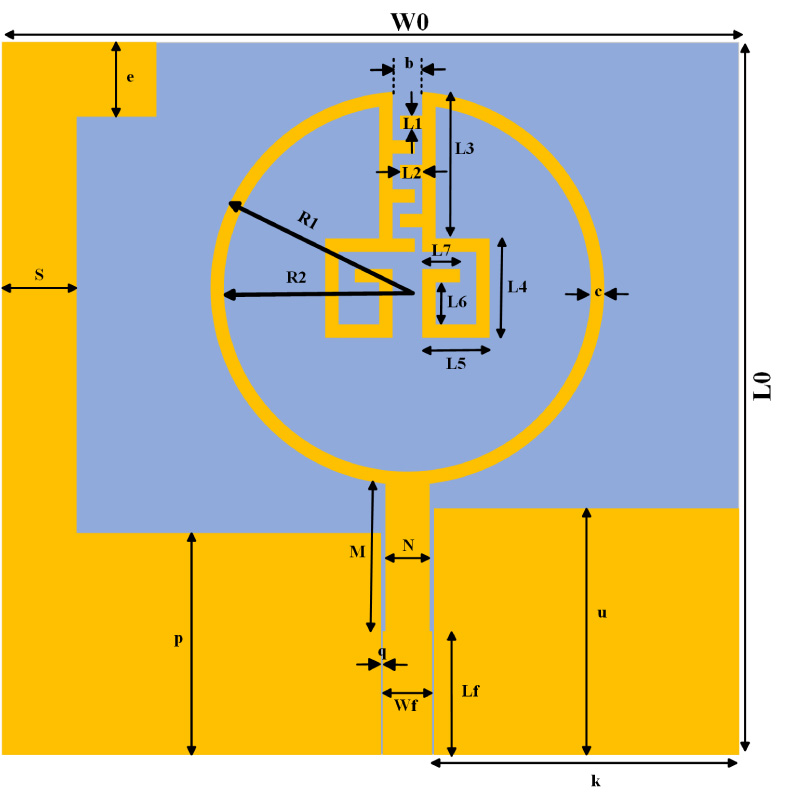
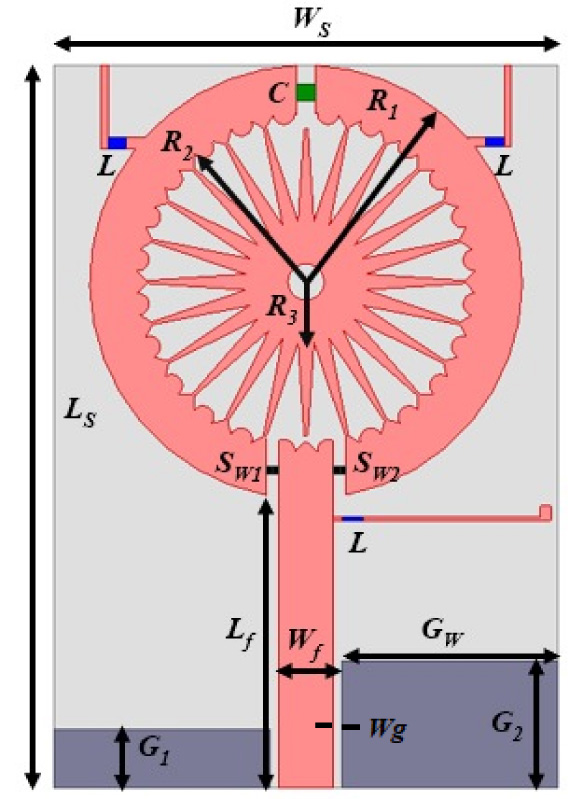
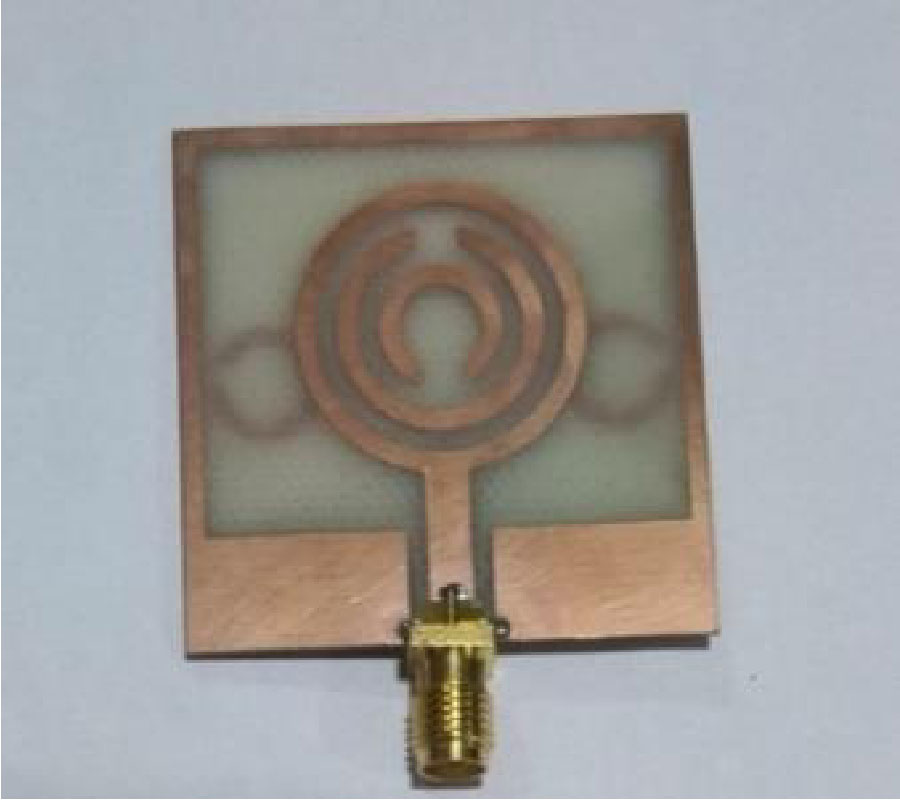
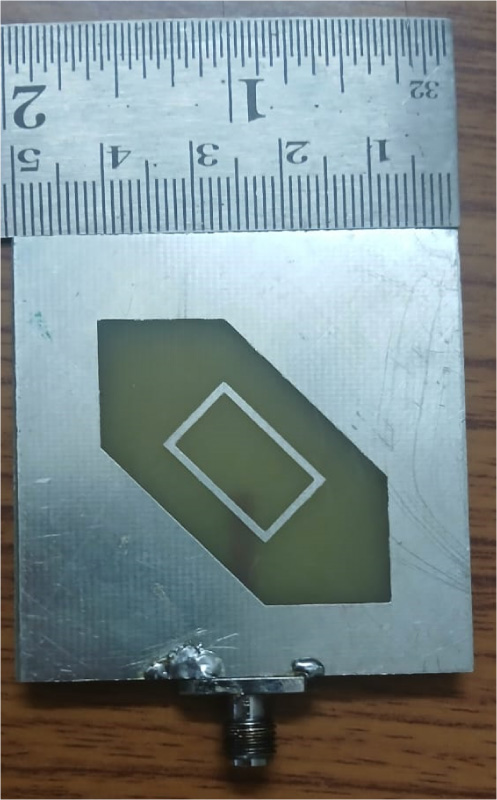
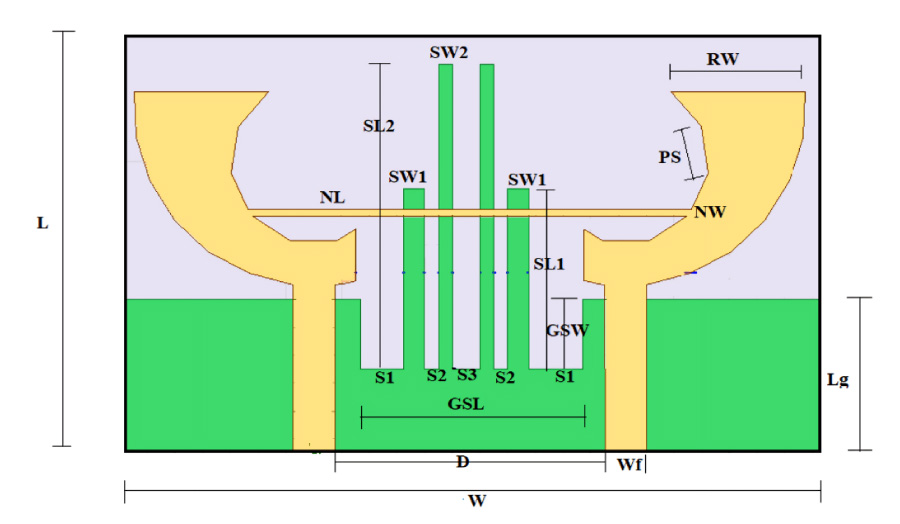
A multiband planar antenna fed by an asymmetric coplanar waveguide (ACPW) is proposed and fabricated. The design incorporates branched stubs within the split-ring resonator (SRR) and integrates this modified SRR with the ACPW structure, thereby expanding the antenna's operational bandwidth and improving gain performance. The antenna has dimensions of 60 mm × 58 mm × 0.813 mm, which are equivalent to 0.48λ0 × 0.46λ0 × 0.0065λ0 at 2.4 GHz. Simulation and measurement results demonstrate close agreement. The antenna exhibits |S11| < -10 dB in the frequency bands of 2.23-2.51 GHz, 3.54-4.47 GHz, and 5.01-6.29 GHz, with a maximum gain of 7.07 dBi at 5.1 GHz and over 2.5 dBi gain across all bands. This antenna meets the requirements for WLAN, UAV communications, and 5G applications.
A Multiband Planar Antenna with Asymmetric CPW Feeding for WLAN, UAV Communications, and 5G
2025-08-17
PIER C
Vol. 158, 253-260, 2025
download: 148
Ml-Based Hybrid Approach for Improved Indoor Source Localization
Soma Simritha Rao, Madhireddy Sumana, Achanta Dattatreya Sarma, Tunguturi Sridher and Kuruva Lakshmanna
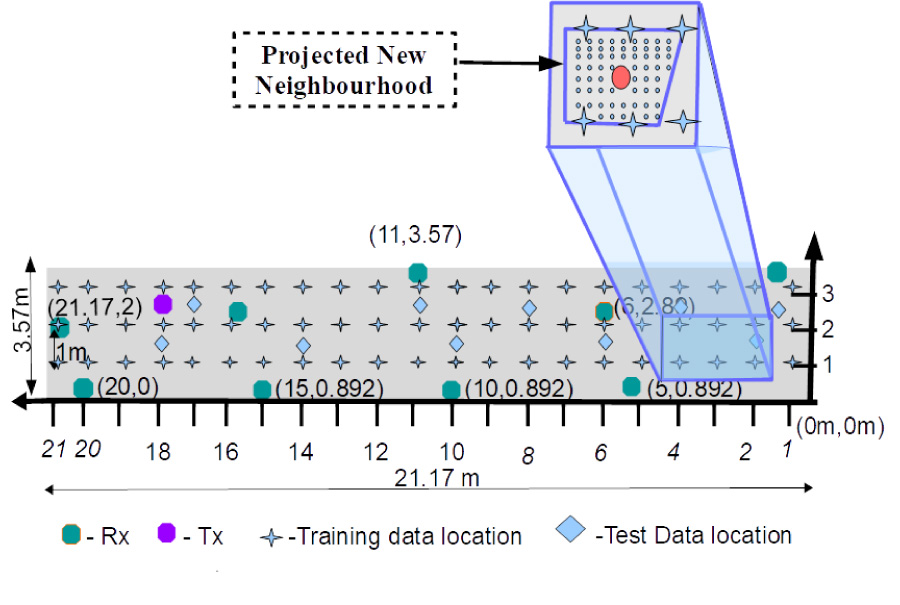
The field of navigation has been relentlessly evolving to fulfil its long-standing objective of building a highly accurate universal navigation system. However, in highly urban and indoor locations, line-of-sight signals cannot be guaranteed, and conventional terrestrial-based and satellite-based techniques cannot perform optimally. This paper strives to establish navigation via signals of opportunity (NAVSOP) by proposing a Wireless Fidelity (Wi-Fi)-based indoor localization method using the Received Signal Strength Indicator (RSSI) technique. This proposed method employs the fingerprinting along with the K-Nearest Neighbour (KNN) and again KNN with Inverse Distance Weighting (IDW) approach to offer superior position estimation accuracy. In this paper, we have developed a new neighbourhood dataset by expanding target neighbourhood locations by random point generator algorithm, thereby propounding the utility of NAVSOP for indoor environments to enable future navigation applications in real-world civilian and military domains. The results obtained via the novel IDW approach give a reduced uncertainty in position error estimation of 0.68 m as compared to the traditional approaches of fingerprinting with KNN (1.13 m) and trilateration (2.3 m).
ML-Based Hybrid Approach for Improved Indoor Source Localization
2025-08-14
PIER C
Vol. 158, 243-251, 2025
download: 176
A Quasi-Yagi Antenna with Low Sidelobe and High Gain for the X-Band
Zhian Wang, Yunqi Zhang, Jianxiao Wang, Shanzhe Wang, Wenjia Zhou, Xinwei Wang, Leiyuan Wang and Rong Zou
A compact quasi-Yagi antenna with ultra-wideband and high-gain characteristics is proposed. The design incorporates a conical dielectric cover, a horn reflector, and gradient-shaped Yagi elements. The conical dielectric cover and horn reflector work together to enable high-gain performance, while the arcuate gradient dipole provides a bandwidth of 62% (6.9-13.1 GHz). Measured results indicate a peak gain of 17.5 dBi and a maximum sidelobe level (SLL) of -13.5 dBi. Compared to conventional printed Yagi antennas of similar length, this integrated antenna offers wider bandwidth, higher gain, and lower SLL. It is particularly suitable for tunnel communication and radar detection systems.
A Quasi-Yagi Antenna with Low Sidelobe and High Gain for the X-band
2025-08-14
PIER C
Vol. 158, 235-242, 2025
download: 152
Reconfigurable Flexible Hybrid Antenna for Body Area Networks
Bendalam Alekhya and Lokam Anjaneyulu
This paper presents a simple Liquid Crystal Polymer (LCP) substrate material-based frequency and pattern reconfigurable antenna for body-centric communication applications. The designed antenna is circular in shape with multiple spars in the radiating element. PIN diodes are arranged on either side of the lower portion at the concentric circular arc of the feed line for external switching. The upper portion of the radiating structure is connected with inductor and capacitor for proper impedance matching to attain the desired band of frequency. The constructed LCP substrate-based antenna is flexible in nature and conformal to the congregation surface in body area network applications. Frequency reconfigurability with switching between PCS (1.8-1.9 GHz) to WLAN (5.1-5.3 GHz) and ISM band (5.7-5.8 GHz) makes the model more appropriate for wearable applications with low specific absorption rate (SAR) less than 1.6 w/kg, which is in the standards. Additionally, the projected design demonstrates pattern reconfigurability with a 30-degree tilt at different switching conditions.
Reconfigurable Flexible Hybrid Antenna for Body Area Networks
2025-08-14
PIER C
Vol. 158, 225-234, 2025
download: 240
Design of UWB Monopole Antenna with Ring Structure Based on Characteristic Mode Theory
Zhen Xiang, Zhonggen Wang, Chenlu Li and Rui You
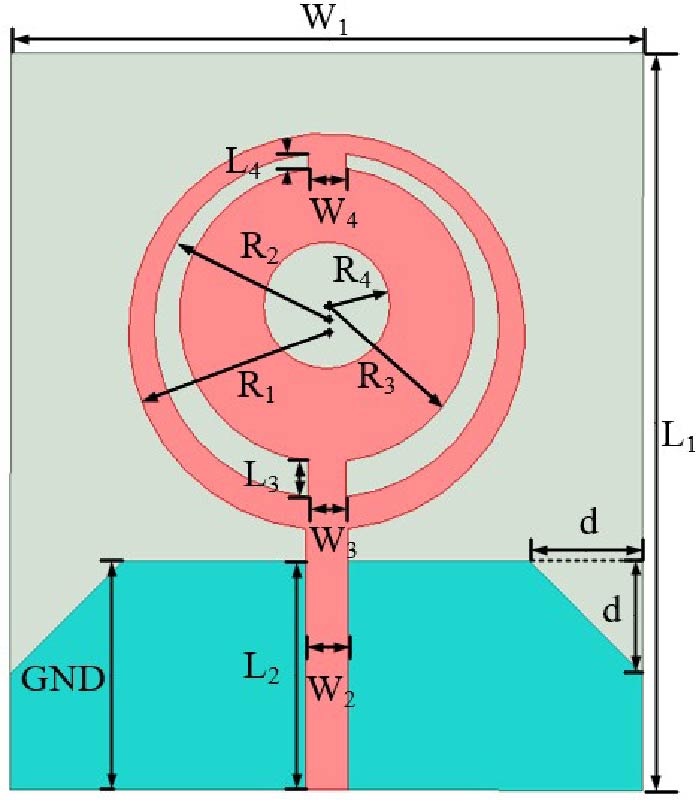
In this paper, an ultra-wideband monopole antenna for wireless communication is designed and fabricated based on characteristic mode theory. The antenna is mainly composed of a metal main body and a circular metal patch and the antenna dimensions are 35×30×1.6 mm3. In order to enhance its matching performance, a circular groove is made in the center of the circular metal patch, and an outer ring is added to the outside. In order to expand the covered bandwidth and reduce the reflection loss, an isosceles right triangle is cut off from each side of the ground plane. The length of the ground plane and the side length of the ground plane cut angle are optimized. The key modes are determined through the analysis of the characteristic mode theory. The simulation and measurement results show that this antenna covers the frequency band of 3.03-11.75 GHz, with a maximum return loss of -42.26 dB and excellent radiation performance.
Design of UWB Monopole Antenna with Ring Structure Based on Characteristic Mode Theory
2025-08-13
PIER C
Vol. 158, 215-223, 2025
download: 111
A Novel Broadband Cross-Loop Dipole Antenna with Coupling Slots
Yanzheng Chen
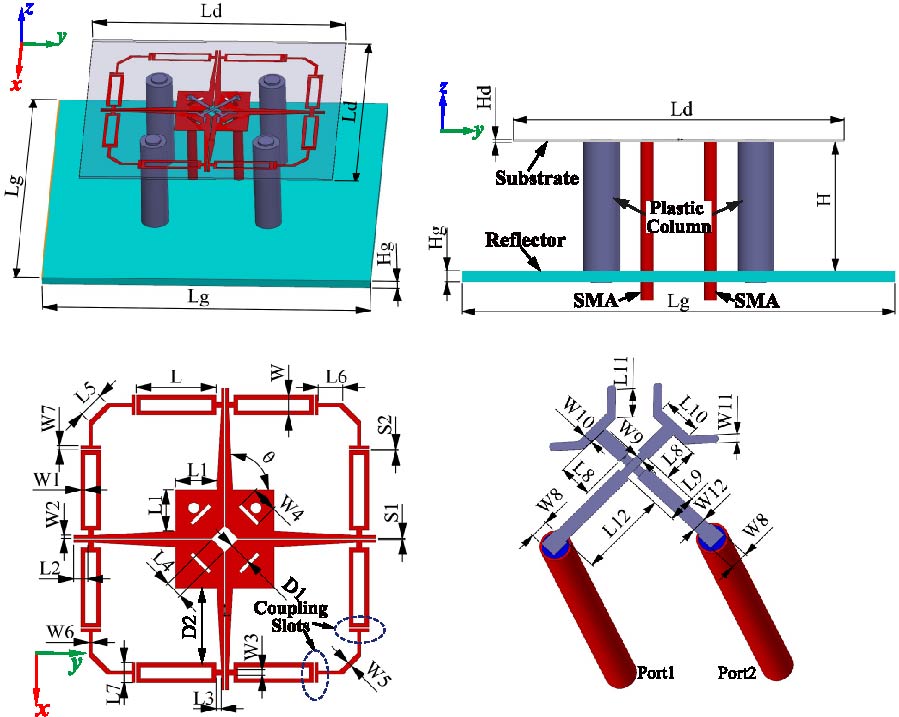
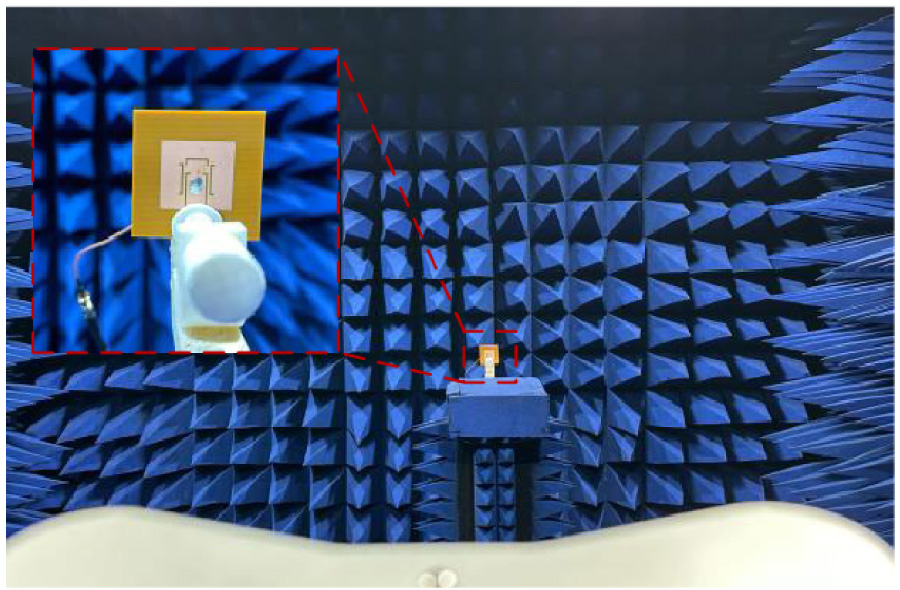
A novel broadband ±45˚ dual-polarization antenna is presented. By introducing coupling slots on the loop dipole arms of the antenna, multi-resonance performance occurs so that the impedance bandwidth is greatly widened. An enhanced impedance bandwidth about 92.5% with VSWR < 2 is obtained at two ports, corresponding to the frequency region of 1.61-4.38 GHz. In the frequency range of 1.61-3.8 GHz, a gain of 8.2 ± 2.2 dBi is obtained. For the frequencies beyond 3.8 GHz, the gain drops sharply and goes down to 1.1 dBi at 4 GHz. Within the operating frequencies, a port-to-port isolation > 22.5 dB is achieved. Especially, the proposed antenna has a very simple configuration and is easy to be fabricated. A mechanical prototype of the antenna has been manufactured and measured. The measurement results have good agreement with the simulations. The work principle and detailed descriptions of the antenna are presented in the paper.
A Novel Broadband Cross-loop Dipole Antenna with Coupling Slots
2025-08-12
PIER C
Vol. 158, 205-213, 2025
download: 190
Design of an Ultra-Miniaturized Meandered Patch Antenna for Scalp Applications
Marwah Malik Hassooni, Jabir S. Aziz and Ashwaq Q. Hameed
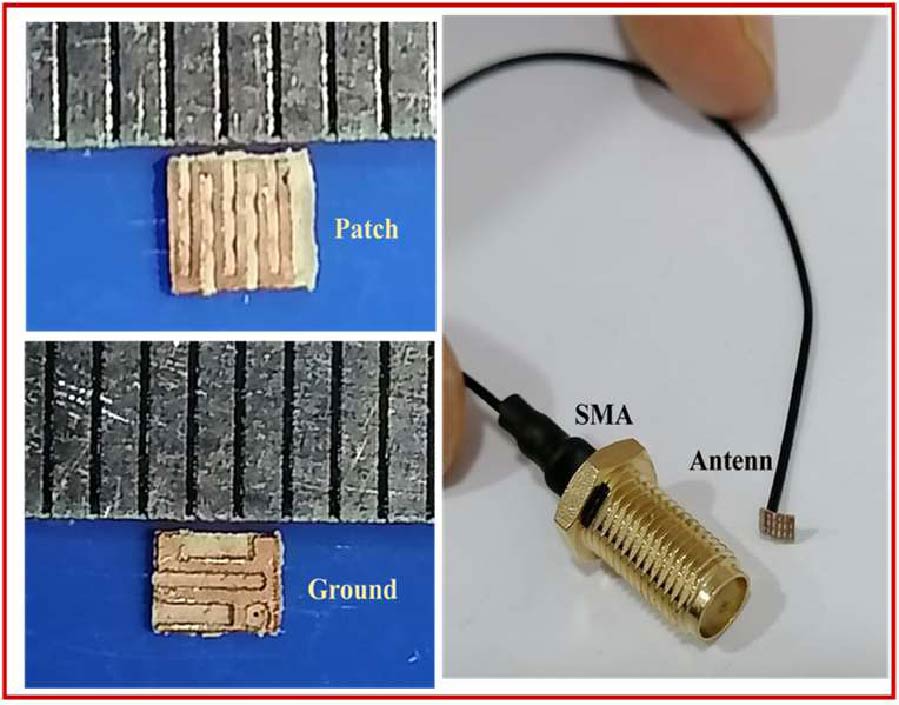
This paper introduces the development of an antenna model with a meandering shape in the industrial, scientific, and medical band (i.e., 2.4-2.48 GHz) proposed for biomedical applications. This design is specifically tailored for stimulation applications, where size and form factors are critical. The design of the meandering patch antenna seeks to optimize performance while ensuring compatibility with the unique requirements of stimulation devices. A Rogers RO3010 (loss tangent = 0.0022, relative permittivity = 10.2) is used in the design as a substrate. The miniaturized antenna (2.5 mm × 2 mm × 0.12 mm), featuring a 400 MHz bandwidth, was engineered to mitigate detuning effects caused by electronic interference and biological tissue heterogeneity. The smaller dimensions of this antenna not only facilitate easier integration within device structures but also aim to enhance characteristics such as impedance matching and bandwidth, addressing the challenges posed by the confined space within the human body. The proposed antenna also exhibits a -33 dB gain and a lower specific absorption rate (SAR) of 272 w/kg. These attributes position it as a promising solution for biomedical implantation.
Design of an Ultra-miniaturized Meandered Patch Antenna for Scalp Applications
2025-08-11
PIER C
Vol. 158, 197-203, 2025
download: 298
Wideband Circularly Polarized Dielectric Resonator Antenna Based on Double-Layer Metasurface
Wenhan Wan, Wu-Sheng Ji, Zhaoyi Wang and Xing-Yong Jiang
This paper presents a single-fed wideband circularly polarized high-gain dielectric resonator antenna (DRA) for KU-band applications. The proposed antenna consists of a cylindrical dielectric resonator on top, a double-layer metasurface structure in the middle, and a feeding substrate at the bottom. An asymmetric X-shaped slot coupling feed on the substrate enables the circular polarization characteristic. The DRA incorporates a double-layer metasurface to broaden the 3 dB axial ratio bandwidth and enhance gain. Simulation results show that the antenna achieves a -10 dB impedance bandwidth of 24.2% (13.69-17.46 GHz), a 3 dB axial ratio bandwidth of 20.01% (14.05-17.2 GHz), with a peak gain of 9.89 dBi. The designed antenna operates in the KU-band and is suitable for wireless communication applications including satellite communications and global positioning systems.
Wideband Circularly Polarized Dielectric Resonator Antenna Based on Double-layer Metasurface
2025-08-09
PIER C
Vol. 158, 187-196, 2025
download: 462
Engineering an Electronic Shark Deterrent System Based Acoustic and EM Waves
Hesham Abd El-Hakim, Abdelrhman Ehab Ayad, Mahmoud Fathy Mahmoud, Hesham Abd Elhady Mohamed and Mohamed Hussien Moharam
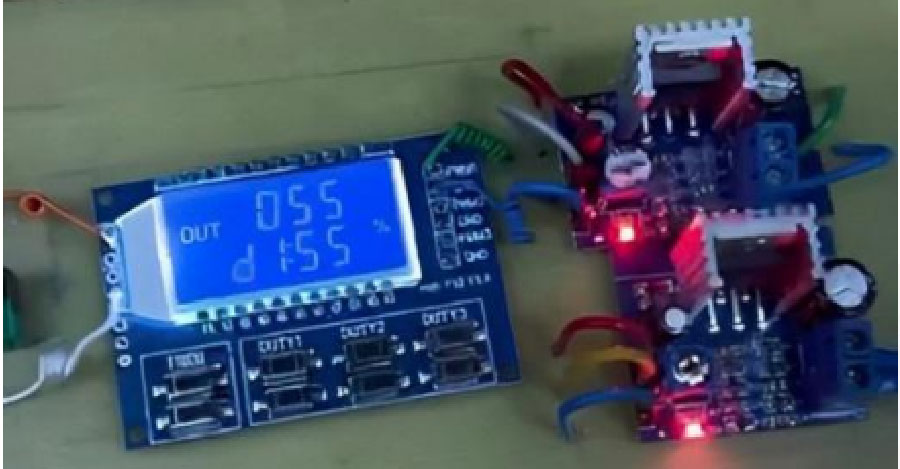
Acoustic/Electromagnetic (EM) waves are at the heart of numerous scientific tools and inventive technologies for plentiful state-of-the art applications. This study describes the design and implementation of a portable and effective acoustic/electromagnetic shark shield electronic system. In order to support the shark deterrent technologies, a double-layer printed circuit board (PCB) circuit that includes a signal generator, pulse width modulation, and power amplifier modules has been designed. The 4-ohm, 3-watts loudspeaker was used in the construction of the acoustic shark shield system as a radiation element, while the EM system uses two electrodes and a wire antenna to produce EM wave radiation. The suggested design has then been subjected to a numerical analysis using the Multisim live demonstration circuit simulator. Lastly, a comparison between the experimental and numerical results was made. According to the findings, maximum peak-to-peak pulse amplitude of nearly 100 V and 55 Hz frequency was attained in a zero-meter distance deterrent system. These values are reduced to 53.2 V at approximately 55 Hz in the case of an EM shark system and with an artificial saltwater tank at 2 m distance, while the obtained peak amplitude for the acoustic shark deterrent system achieved peak-to-peak pulse amplitude value of almost 120 V at 55 Hz.
Engineering an Electronic Shark Deterrent System Based Acoustic and EM Waves
2025-08-08
PIER C
Vol. 158, 179-186, 2025
download: 120
Research on the Improvement Strategy of Initial Sampling Point Selection in Bayesian Optimization-Based Uncertainty Analysis Method
Jinjun Bai, Xiangrui Ji, Qing Liu, Yujia Song and Zhongjiu Zheng
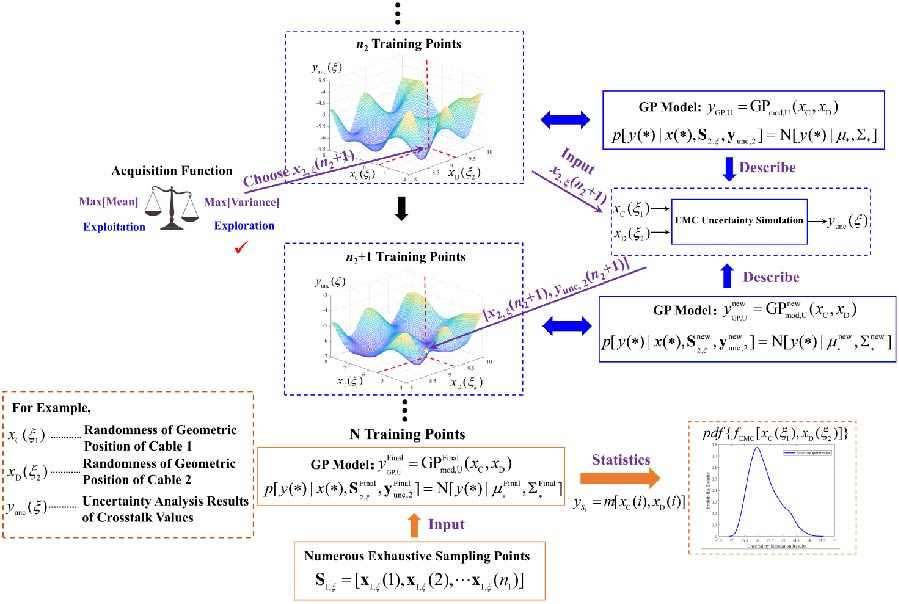
In recent years, uncertainty analysis methods have become a research hotspot in the field of Electromagnetic Compatibility (EMC), and non-intrusive uncertainty analysis methods are widely used in the field of EMC due to their advantages such as easy solver generalization and easy programming. The proposal of Bayesian optimization-based uncertainty analysis method further enhances the competitiveness of non-intrusive uncertainty analysis methods in solving complex EMC simulation problems. However, in traditional Bayesian optimization-based uncertainty analysis methods, Latin hypercube sampling strategy is used to construct the initial Gaussian process model, which lacks adaptive adjustment capability, and the quality of the initial Gaussian process model has a significant impact on the efficiency of subsequent calculations and the accuracy of the final results. This defect limits the computational efficiency and accuracy of Bayesian optimization methods in uncertainty analysis applications. In response to this issue, this paper proposes an active sampling strategy based on the Stochastic Reduced Order Model (SROM) method. This strategy improves the fitness function used by the SROM method in clustering to enhance the representativeness of the training set to the sampling space. By using this active sampling strategy instead of Latin hypercube sampling strategy, a higher quality initial Gaussian process model can be constructed, and the accuracy of Bayesian optimization method uncertainty analysis calculation is improved in the example, verifying the effectiveness of the proposed initial sampling point selection improvement strategy.
Research on the Improvement Strategy of Initial Sampling Point Selection in Bayesian Optimization-based Uncertainty Analysis Method
2025-08-06
PIER C
Vol. 158, 171-177, 2025
download: 273
X/Ku-Band Antenna with Integrated Back Cavity for Directional Radiation
Jiawei Wang, Tao Tang, Thamer S. Almoneef and Maged A. Aldhaeebi
This paper presents a dual-band antenna design for X/Ku bands, featuring asymmetrical feed ports, slot-loaded radiating patches, and a reconfigured defect ground structure (DGS) integrated with a back air cavity to achieve 32.11% reduced patch area and directional radiation. By coplanar waveguide (CPW) feeding and vertical interconnect accesses (VIAs) connecting all metal layers, the antenna miniaturizes via extended surface current paths and broadens bandwidth via DGS. Simulation and measurement show operating bands of 8.30-12.29 GHz (38.75% fractional bandwidth) and 12.91-14.21 GHz (9.58%), with measured gains aligning well with simulations. Compared to traditional dual-band designs, this work reduces physical size by over 30% while maintaining high gain, making it suitable for compact satellite communication, radar, and microwave energy systems.
X/Ku-band Antenna with Integrated Back Cavity for Directional Radiation
2025-08-06
PIER C
Vol. 158, 161-169, 2025
download: 164
Stackable Wearable Antenna for Sub-6 GHz Applications: Enhanced Gain and SAR Assessment
Muhammad Fitra Zambak, Ismahayati Adam, Mohd Najib Mohd Yasin, Safpbri Johari and Ping Jack Soh
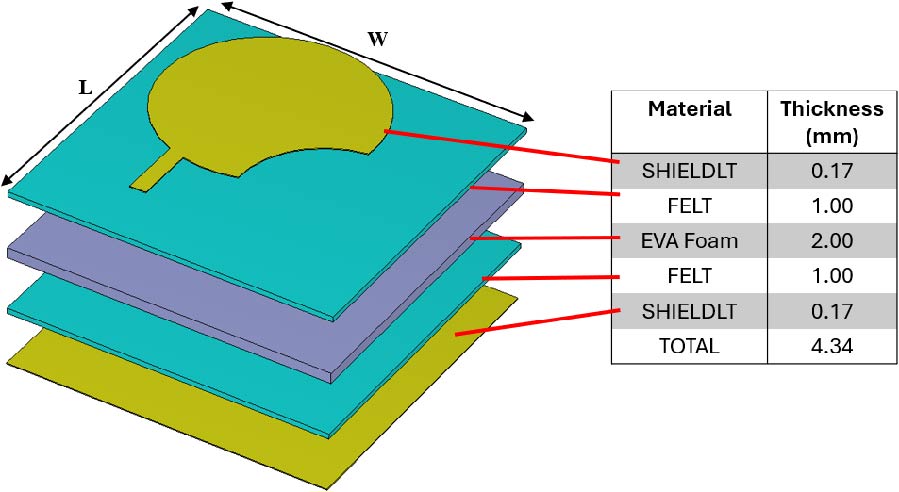
This paper presents the design and performance evaluation of a flexible, multilayer wearable antenna optimized for sub-6 GHz 5G applications at 3.5 GHz. The proposed antenna introduces a fabrication-ready stackable design using textile-compatible materials, including Felt, a 2 mm EVA foam layer, and Shieldit Super. A key innovation lies in the use of low-permittivity EVA foam as an intermediate spacer, which enhances gain and impedance matching without requiring additional structural elements, thus maintaining a compact and mechanically flexible profile. The antenna achieves a peak realized gain of 7.81 dBi and a wide impedance bandwidth of approximately 15.7%, within a total thickness of just 4.34 mm. The design remains robust under bending and close-body scenarios, with specific absorption rate (SAR) analysis confirming compliance with international safety standards. Experimental and simulated results validate the antenna's consistent performance, underscoring its suitability for wearable and Wireless Body Area Network (WBAN) applications in future 5G systems.
Stackable Wearable Antenna for Sub-6 GHz Applications: Enhanced Gain and SAR Assessment
2025-08-06
PIER C
Vol. 158, 151-159, 2025
download: 140
Energy-Based Adaptive Krylov Subspace Basis Functions Method for Solving Bistatic Scattering Problems
Jianhao Xiang, Zhonggen Wang, Haoran Yuan and Wenyan Nie
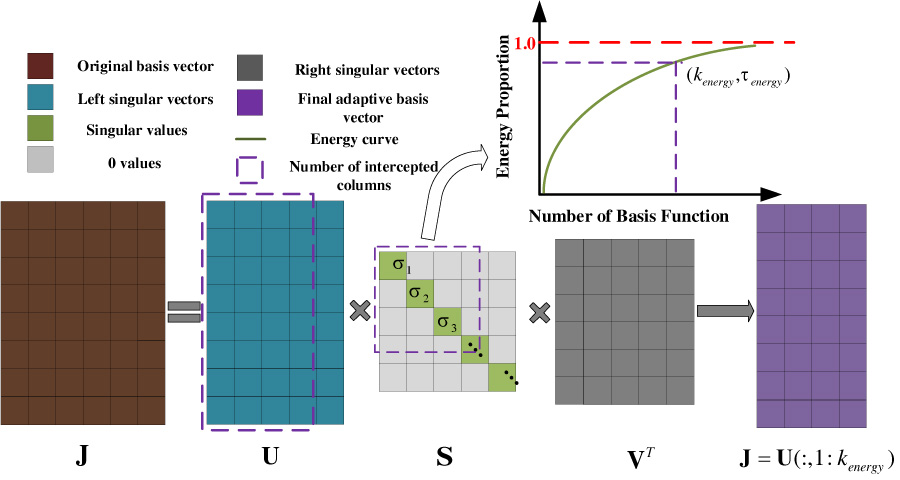
To address the convergence inefficiency of the conventional CS-Krylov-block method in solving electromagnetic scattering problems, this paper presents an adaptive Krylov subspace basis function method (AKSBFM) based on spectral energy thresholds. In this method, Krylov subspace basis functions (KSBFs) are first generated within each extended subdomain using localized self-impedance matrices. Singular value decomposition (SVD) is performed on the candidate basis set to evaluate energy contributions, and only the dominant components exceeding a predefined energy threshold are retained. As a result, the number of basis functions per subdomain is automatically adjusted, and a compact, well-conditioned reduced matrix system is constructed. This energy-guided truncation significantly eliminates redundant modes, yielding improved numerical stability and reducing the condition number by up to two orders of magnitude. Numerical experiments demonstrate that, compared with the traditional CS-Krylov-block method, AKSBFM improves computational efficiency while ensuring computational accuracy.
Energy-based Adaptive Krylov Subspace Basis Functions Method for Solving Bistatic Scattering Problems
2025-08-05
PIER C
Vol. 158, 139-149, 2025
download: 434
Single-Port Microwave Sensor Using Defected Ground Structure Complementary Split Ring Resonator for Solid Material Characterization
Rayan A. Ba Amer, Noor Azwan Shairi, Maizatul Alice Meor Said, Zahriladha Zakaria, Mohamad Harris Misran, Adib Othman, Syah Alam and Sharul Kamal Abdul Rahim
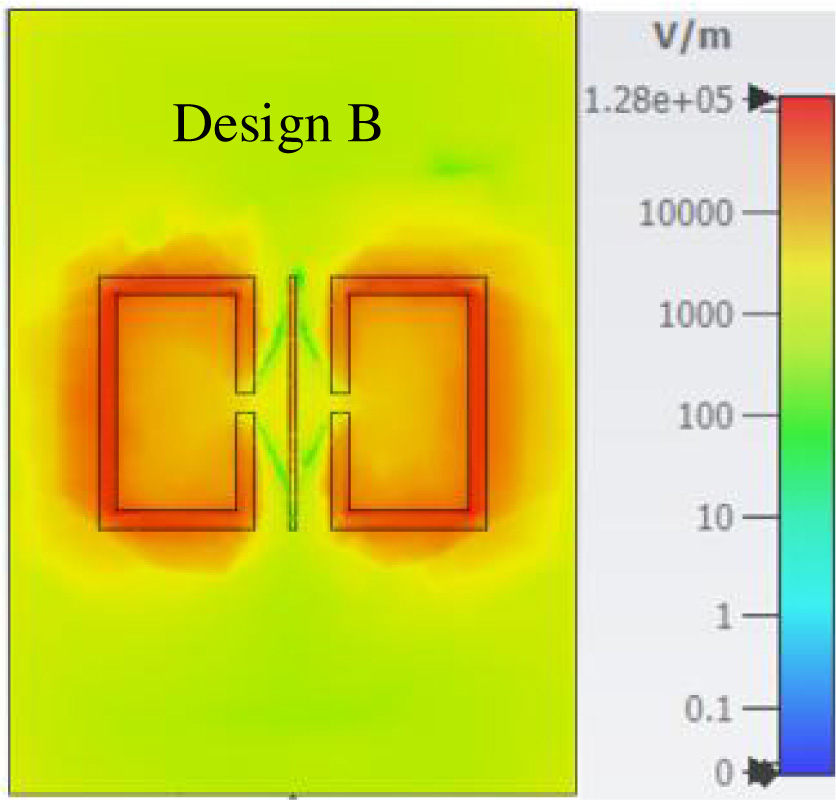
This paper proposes a single-port microwave sensor for solid material characterization, based on defected ground structures (DGSs) with complementary split-ring resonators (CSRRs). Fabricated on an RO5880 substrate, the sensor was analyzed through both simulation and experimental measurement. Electromagnetic simulation and optimization were conducted using CST Studio Suite within the 1.5-3.0 GHz frequency range. The sensor's performance was evaluated with three materials of known permittivity: RO5880, RO4350, and FR-4. Results show that the two proposed configurations, one with a DGS CSRR (Design A) and the other with an added slot on the DGS CSRR (Design B) yielding Q-factors of 332 and 357, respectively. The higher Q-factor in Design B indicates increased sensitivity across all tested materials compared to Design A. For example, Design B achieved the highest sensitivity of 4.71% for RO5880 material compared to Design A. Thus, the added slot enhanced field coupling, improving measurement sensitivity and confirming the sensor's suitability for microwave-based solid material characterization.
Single-port Microwave Sensor Using Defected Ground Structure Complementary Split Ring Resonator for Solid Material Characterization
2025-08-05
PIER C
Vol. 158, 131-137, 2025
download: 147
Analysis of Vertically Polarized Plane Wave Scattering by Multi-Story Buildings with Windows
Cuong Manh Bui and Hiroshi Shirai
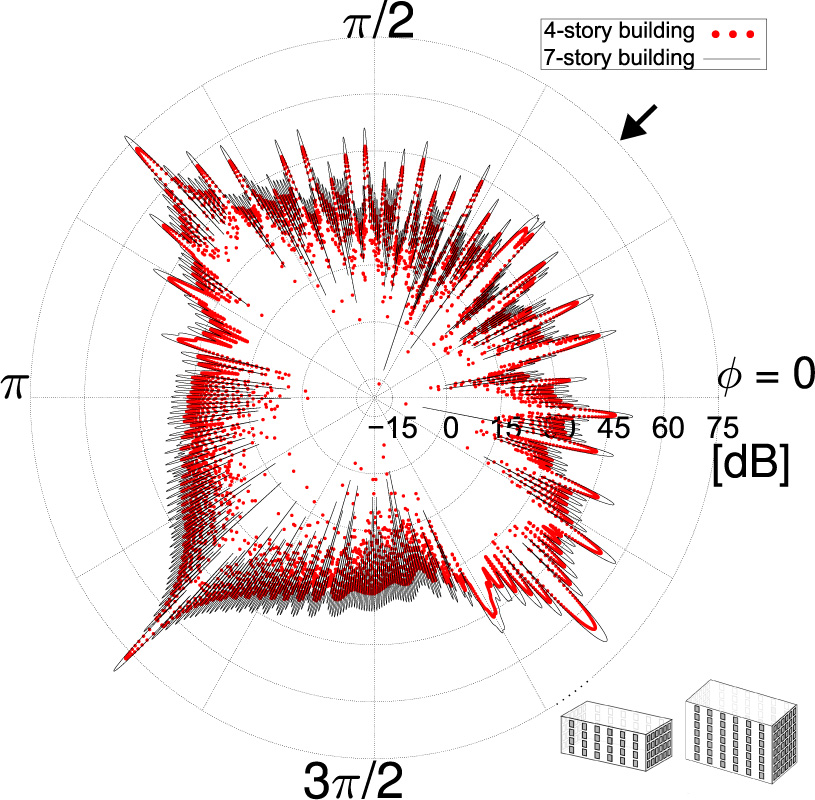
An analysis of electromagnetic scattering by multi-story, multi-window buildings is presented by utilizing the Kirchhoff Approximation method. This investigation specifically analyzes scattering characteristics for vertically polarized incident plane waves. Scattering fields are calculated via radiation integrals associated with equivalent current sources induced on the building's exterior and across virtually closed window apertures by the incident wave. Fields within window regions are represented using rectangular waveguide modes, enabling the conversion of reflected fields from window glass into equivalent currents. The formulation's validity is established through comparisons with the physical optics method and scale model measurements. Discussions address the influence of window glass and polarization on wave propagation in wireless communication scenarios like 4G LTE operating at 700 MHz.
Analysis of Vertically Polarized Plane Wave Scattering by Multi-story Buildings with Windows
2025-08-04
PIER C
Vol. 158, 123-129, 2025
download: 178
Limitations of Low-Frequency Magnetic Field Immunity Testing with Small Radiating Loop
Yasaman Ardeshirpour, Joshua Guag and Howard I. Bassen
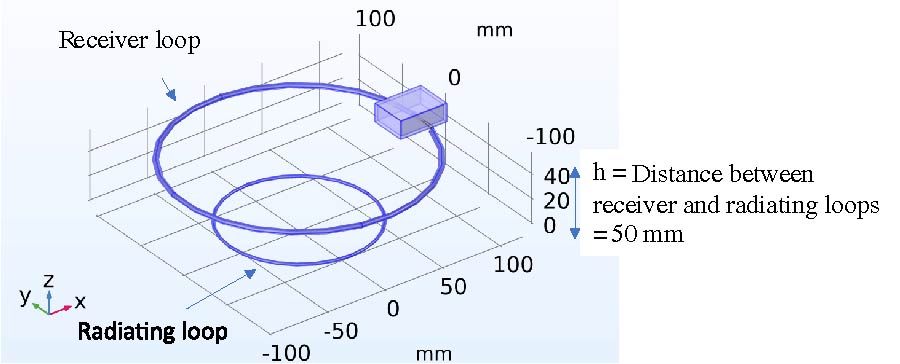
Use of a small radiating loop (12 cm diameter) is recommended in EMC standards (Mil-Std-461G:2015(RS101) and IEC 61000-4-39:2017) for immunity testing with low-frequency magnetic fields. We investigated the limitations of this method using finite-element simulations. We studied the effects of fields from radiating loops with different radii and their induced voltages in different diameter receiver loops that represented wiring of equipment under test (EUT). We also studied the windowing-method recommended in those standards. It involves positioning the loop successively over all locations on each face of the EUT. Our results show that this radiating loop can only simulate exposure to larger real-world EM fields when the EUT's wiring area is smaller than the radiating loop. Another limitation is that the magnetic field from the radiating loop drops significantly with distance perpendicular to the loop surface. Therefore, the windowing-method with a small radiating loop is only suitable for simulating exposures to real-world sources with fields that do not extend a large distance from the loop. In addition, the field distribution (width and depth) of the real-world EM source must be accounted for before deciding to use a small radiating loop for immunity testing of an EUT.
Limitations of Low-frequency Magnetic Field Immunity Testing with Small Radiating Loop
2025-08-04
PIER C
Vol. 158, 113-122, 2025
download: 165
Adding of Metacell Units for Efficient Performance of Circular Patch Antenna
Rusul Mohsin Hashim and Mohammed Taih Gatte
This work is motivated by the recently domination of mobile and wireless communications technologies, in addition to the fast evolution of the new generation of mobile and wireless communication that leads to the successive mobile generations XG 3G, 4G, 5G, and in near future 6G. Currently, the fifth generation (5G) technologies still need more development for a compact and efficient device. In this manuscript, Meta cells units (metamaterial and metasurface) are employed for improving the main parameters of antenna performance like gain (G), bandwidth (BW), reflection coefficient ($S_{11}$), and radiation efficiency. The proposed antenna design shows multiple resonant frequencies which means that the design is able to operate at multiband of frequencies, including 6\,GHz band that considers the main targeted band of 4G and 5G mobile communication technologies. The simulation results, for the different models via adding meta cells to the proposed design model, show excellent improvement for the performance parameters that are improved excellently in comparison with the conventional circular patch (CCP) and previous literature. In addition, the use of meta cells reduced the resonant frequency which means that it can serve a lower frequency with small size of substrate, and it is half size of CCP, making it suitable for many applications that require a compact antenna design.
Adding of Metacell Units for Efficient Performance of Circular Patch Antenna
2025-08-04
PIER C
Vol. 158, 103-111, 2025
download: 165
Quadband Octagon Patch Antenna to Broadband MIMO Antenna Conversion by Using Defective Ground Structure
Katari Manjunath and Sanam Narayana Reddy
In this paper, a Quadband Octagon Patch Antenna is designed whose operating frequencies are 20.22 GHz, 23.64 GHz, 27.35 GHz, 28 GHz, 28.37 GHz which achieved return losses of -19.67 dB, -19.14 dB, -19.66 dB, -19.04 dB, -19.04 dB, -20.41 dB and gain of 6.1 dB, respectively. The substrate employed in this antenna is FR4, which features a dielectric constant value 4.4 and a loss tangent value of 0.002. With a radiation efficiency of 90.85%. This antenna is small, measuring only 15 × 25 × 1.6 mm3 dimensions. Multiple slots of different lengths are inserted in an antenna to form a 5G Quadband Octagon Patch Antenna in order to accommodate more operating frequencies. Later, a 2*2 MIMO octagon patch antenna having a 3.6 mm radius, 50 × 30 × 1.6 mm3 of dimensions, 4.4 dielectric constant, and 1.6 mm thickness with defective ground structure is designed. Here this single quad band antenna was turned to a broadband MIMO antenna by means of a defective ground structure.
Quadband Octagon Patch Antenna to Broadband MIMO Antenna Conversion by Using Defective Ground Structure
2025-08-04
PIER C
Vol. 158, 93-101, 2025
download: 180
A Defected Ground Structure Design for Reducing Coupling in Dual-Band MIMO Antennas
Junhao Xu and Yafei Wang
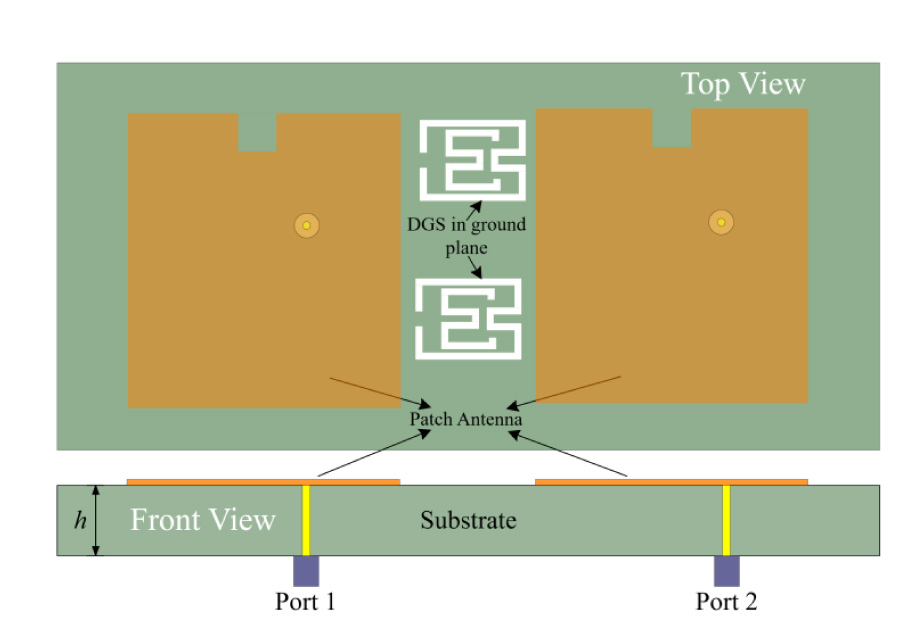
This paper presents a compact multiple-input multiple-output (MIMO) microstrip antenna system covering the 2.4 GHz and 5 GHz wireless local area network (WLAN) bands. By etching rectangular slots on the microstrip patch and adjusting the dimensions of both the antenna and the rectangular slots, the antenna system can radiate at the operating frequencies of 2.44 GHz and 5.3 GHz simultaneously. To achieve high port isolation across the two distinct WLAN bands, a ``WM''-shaped defected ground structure (DGS) is etched on the ground plane to reduce mutual coupling in the 2.44/5.3 GHz frequency bands. Simulation results demonstrate that within the frequency ranges of 2.41-2.49 GHz and 5.22-5.39 GHz, the isolation of the two dual-band antenna systems achieves maximum coupling suppression of 26.7 dB and 14 dB, respectively. This DGS can serve as a potential solution for decoupling in WLAN MIMO antennas.
A Defected Ground Structure Design for Reducing Coupling in Dual-band MIMO Antennas
2025-08-02
PIER C
Vol. 158, 85-91, 2025
download: 197
Compact Self-Decoupled MIMO Antenna Based on Current Cancellation for UAVs
Yangyang Guan, Peng Zhang, Xulong Wang and Jie Bai
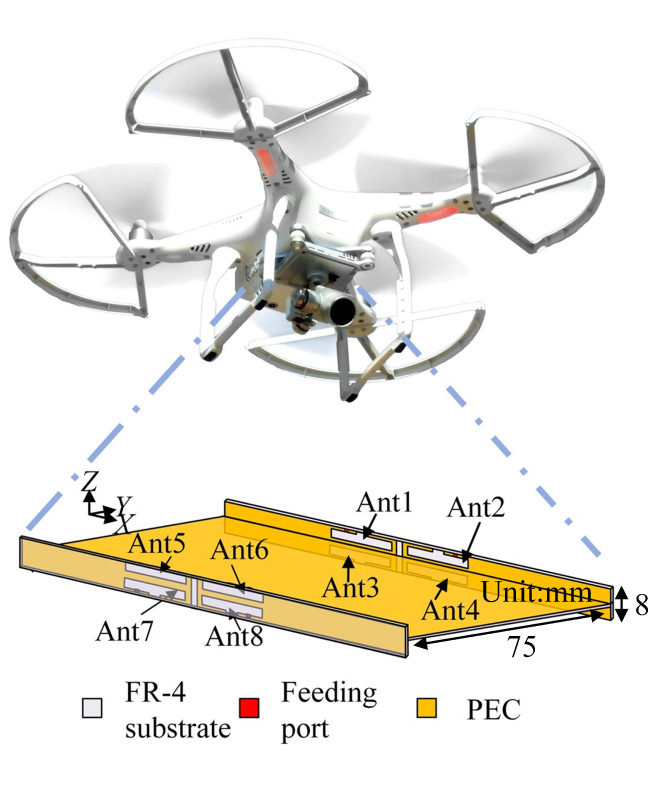
In this paper, a compact multiple-input multiple-output (MIMO) antenna is proposed for unmanned aerial vehicles (UAVs). By simultaneously exciting common mode (CM) and differential mode (DM) from a T-shaped slot, wideband coverage is achieved. Four such slot antennas are used to form a four-antenna module operating in the N79 band (4.4-5.0 GHz). The size of the four-antenna module is merely 43 × 8 mm2, demonstrating excellent miniaturization and integration. The dominant coupling between adjacent elements occurs through currents of the same mode. When CM and DM currents coexist, partial cancellation of coupled currents at the feed point enables high isolation without ex-ternal decoupling structures. Two modules are symmetrically positioned along the longer edges of the frame, forming an 8-element MIMO antenna. The antenna achieves isolation greater than 11 dB and an envelope correlation coefficient (ECC) below 0.04. The measured total efficiency is better than 52%, with an average of 56%. Featuring compact footprint, zero-clearance constraint and high isola-tion, the proposed antenna is a promising candidate for 5G UAVs.
Compact Self-decoupled MIMO Antenna Based on Current Cancellation for UAVs
2025-08-01
PIER C
Vol. 158, 73-83, 2025
download: 174
Switched Reluctance Motor Based on Expanded State Observer Lehuy Model Predictive Current Control
Xiong Su, Aide Xu and Shining Lin
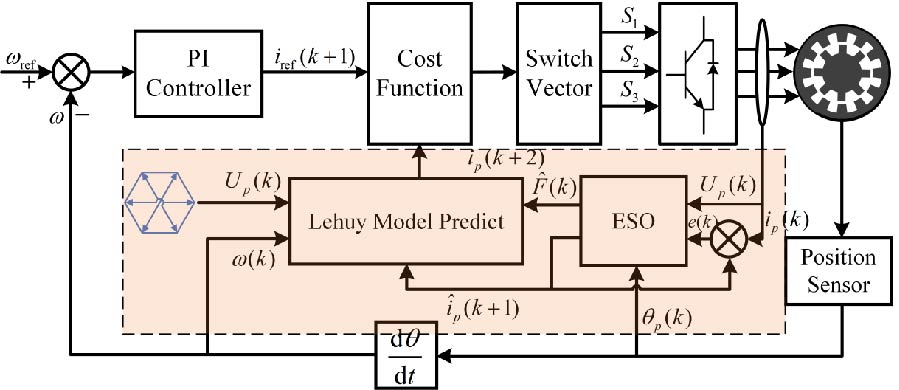
Aiming at the issues of large current ripple and significant torque pulsation in switched reluctance motor (SRM) model predictive current control (MPCC) under varying operating conditions, this paper innovatively proposes a novel SRM model predictive current control method integrating an Extended State Observer (ESO) and the Lehuy model. By constructing a nonlinear current prediction framework based on the Lehuy model, the data dependency on traditional Look-Up Table (LUT) methods is significantly reduced. Meanwhile, the real-time compensation of system disturbances is achieved by introducing the ESO, resolving parameter mismatch issues under dynamic operating conditions. Simulated and experimental results demonstrate that this method, implemented on a 12/8-pole SRM prototype, achieves a current ripple reduction of 41.5% and torque pulsation suppression of 32.7% compared to traditional LUT-MPCC. This research provides new insights into the robust control of SRMs in high-precision servo scenarios.
Switched Reluctance Motor Based on Expanded State Observer Lehuy Model Predictive Current Control
2025-08-01
PIER C
Vol. 158, 63-72, 2025
download: 169
Enhanced Spiral Antenna Performance by Multistep Ground Plane Reflector for 2-18 GHz Applications
Abhay Madhukar Morey, Avinash R. Vaidya and Sandeepak S. Kakatkar
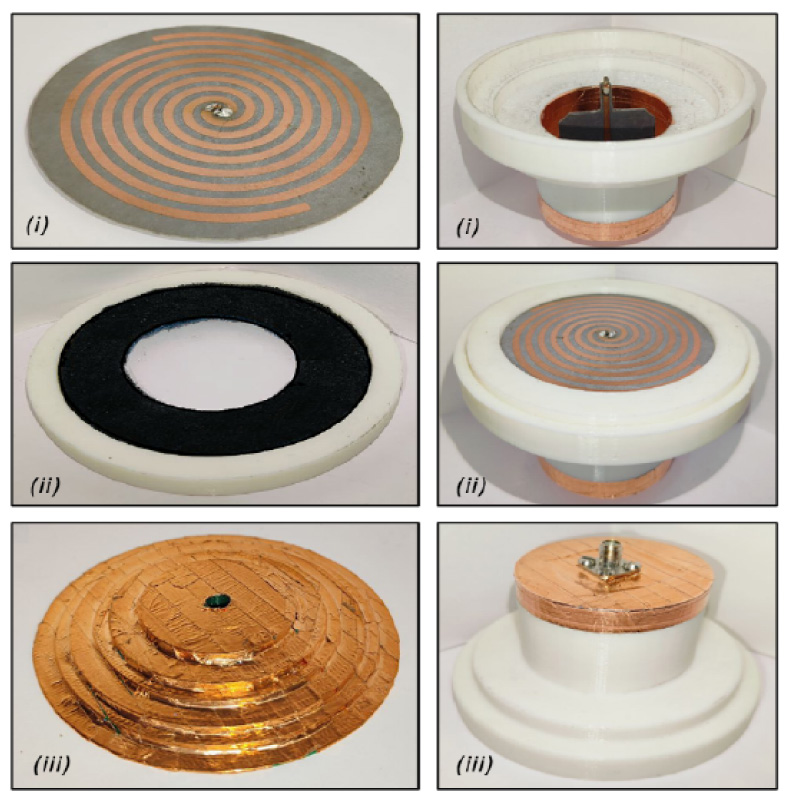
This paper proposes a multistep reflector backing for compact spiral antennas to provide a consistent unidirectional pattern over a wide frequency band with improved gain, Axial Ratio (AR), and efficiency for 2-18 GHz applications. The effect of the variation of step number and step sizes of the reflector on antenna parameters has also been studied in the proposed work. The fabricated prototype antenna provides good impedance matching and circular polarization over the entire frequency range and is compact in size with a height of 0.078 wavelengths (λm) at lowest frequency. The antenna exhibits a rotating radiation pattern with frequency in azimuth direction providing almost a constant beamwidth of 117° with the variation in gain limited to only 0.75 dBic above 8 GHz, yielding a flat gain response at higher frequencies. The compact size and improved parameters of the designed wideband antenna with a stepped reflector makes it a suitable candidate for electronic warfare applications.
Enhanced Spiral Antenna Performance by Multistep Ground Plane Reflector for 2-18 GHz Applications
2025-08-01
PIER C
Vol. 158, 57-61, 2025
download: 140
Design and Analysis of Wideband Circularly Polarized Antenna Loaded with Ring Structure
Nagidi Sivanagaraju and Manchikalapudi Satya Sai Ram
In this design, a wideband circularly polarized slot antenna loaded with square ring is designed and validated. The square slot antenna is etched on an FR4 substrate with the calculated dimensions at the resonant frequency of 5 GHz. The square slot antenna is truncated in its corners to obtain two degenerative modes which are orthogonal to each other, and they are required to produce circular polarization. The truncation is optimized to obtain the circular polarization. The wide CP bandwidth is achieved by selectively spacing the degenerative modes far in frequencies and loading the ring on the slot antenna. The ring and the truncated slot antenna dimensions are optimized to achieve broad axial ratio bandwidth. The design is fabricated and experimentally verified. The measured impedance bandwidth of 47.53% is achieved at the center frequency of 5.68 GHz. The measured axial ratio bandwidth of 39.27% is obtained at the center frequency of 5.55 GHz. The peak gain of the antenna is 3.8 dBi with variation of 1-2 dBi over the entire bandwidth. The simulated radiation efficiency of more than 80% is obtained in the entire bandwidth with a cross polarization level of -20 dB with respect to co-polarization. The proposed design is compact and best suitable for NR46, NR47, NR79, N102, and N104 bands of 5G and C band wireless applications.
Design and Analysis of Wideband Circularly Polarized Antenna Loaded with Ring Structure
2025-08-01
PIER C
Vol. 158, 47-55, 2025
download: 182
Design of a Single-Layer Filtering Patch Antenna with High Gain
Zhonggen Wang, Hao Gui, Wenyan Nie, Ming Yang and Chenlu Li
This paper presents a novel and compact single-layer patch filtering antenna with excellent out-of-band rejection performance. The antenna adopts a simple structure consisting of a single-layer substrate, a slot-loaded radiating patch, and a ground plane, and is fed by a coaxial probe. The rectangular radiating patch and the ground plane are loaded with Г-, anti-Г-, and U-shaped slots to form the final design. The introduction of these slots successfully generates two resonance points, which extend the operating bandwidth. It also produces two out-of-band radiation nulls that enhance the out-of-band rejection performance. To validate the proposed design, antenna prototypes were fabricated and measured. The simulation and measurement results are consistent. The antenna exhibits stable realized gain and excellent bandpass response. It achieves a peak realized gain of 8.82 dBi, an impedance bandwidth of 12.8%, and out-of-band rejection greater than 21.26 dB. These characteristics make the proposed patch antenna highly suitable for various wireless communication applications.
Design of a Single-layer Filtering Patch Antenna with High Gain
2025-07-30
PIER C
Vol. 158, 37-45, 2025
download: 171
Highly Isolated Self-Quadplexing Antenna Based on Quarter-Mode Substrate Integrated Waveguide Cavity
Shaik Mahaboob Subani, Satya Nagakishore Bhavanam, Vasujadevi Midasala and Mallarapu Gopi Krishna
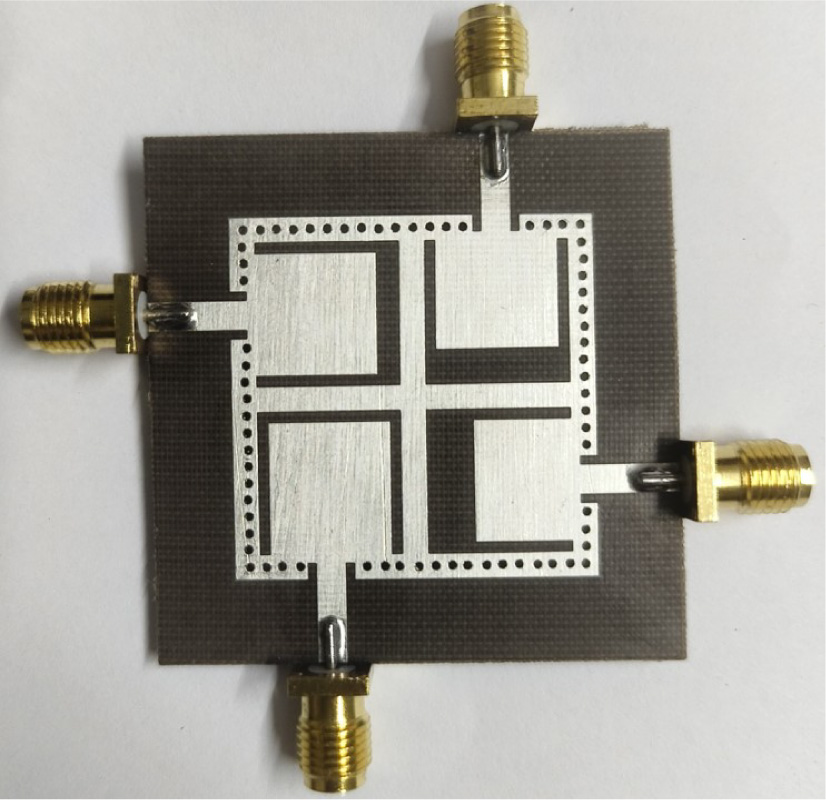
In this paper, a substrate integrated waveguide based self-quadplexing antenna with modified U-shaped slots is presented. The quadplexing antenna resonates at four distinct frequencies 4.02 GHz, 4.37 GHz, 4.78 GHz and 5.26 GHz by adjusting the length of U-shaped slots. The antenna shows a minimum port isolation of >34 dB between any two ports. The self-quadplexing antenna gives the frequency tunability and shows an unidirectional radiation pattern at the corresponding operating frequencies. The simulated (measured) gains of the antenna are 5.18 dBi (5.24 dBi), 5.51 dBi (5.57 dBi), 5.03 dBi (5.14 dBi), and 5.12 dBi (5.19 dBi). The proposed antenna is independent of frequency tunability by the excitation of four ports with an antenna size of 0.12 λ02, where λ0 is the free space wavelength at the lowest resonant frequency. These features make the proposed antenna suitable for WLAN, ISM, INSAT C, Wi-Fi applications.
Highly Isolated Self-Quadplexing Antenna Based on Quarter-Mode Substrate Integrated Waveguide Cavity
2025-07-30
PIER C
Vol. 158, 27-35, 2025
download: 244
Highly Isolated Compact Dual-Band MIMO Antenna Using Stubs, Slots and Neutralization Line for 5G Wi-MAX and WLAN Applications
Amit A. Deshmukh, Shankar D. Nawale, Vijay Ramesh Kapure, Shubhangi A. Deshmukh, Mahadu Trimukhe and Rajiv Kumar Gupta
A highly isolated MIMO antenna is designed using a neutralization line (NL), stubs, and slots for 5G, Wi-MAX, and WLAN operations. A quarter circular ring monopole is modified to have a circular outer shape and a polygon inner shape. Thickness of the monopole is reduced to decrease the electromagnetic (EM) coupling between the higher order modes and to obtain dual band characteristics. A two-element MIMO antenna is designed. High isolation is achieved by combining isolation techniques of neutralization line with stubs and slots. Isolation >20 dB is achieved with stubs and slots in ground plane. Without altering the overall dimensions, isolation is improved from 20 dB to 30 dB by using an NL in the MIMO structure that uses slots and stubs in the ground plane as isolation techniques. S11 < -10 dB over 2.9-3.9 GHz and 5.6-6.2 GHz and S12 < -30 dB over 3.3-3.9 GHz, and S12 < -40 dB over 5.6-6.2 GHz covering 5G, Wi-MAX, V2X, and WLAN bands are obtained. The antenna has stable radiation patterns. ECC (Envelope Correlation Coefficient) < 0.002, DG (Diversity Gain) close to 10 dB, and MEG (Mean Effective Gain) about 0 dB satisfy MIMO specifications. The compact, low-cost antenna on a 30 × 50 mm FR4 substrate is simple to design and fabricate. These features make it a suitable candidate for 5G, Wi-MAX, and WLAN applications.
Highly Isolated Compact Dual-band MIMO Antenna Using Stubs, Slots and Neutralization Line for 5G Wi-MAX and WLAN Applications
2025-07-29
PIER C
Vol. 158, 19-25, 2025
download: 206
Parameters Optimization of the Chemical Reaction Hysteresis Model Using Genetic Algorithms and the Artificial Bee Colony Method
Yasmine Gabi, Kevin Jacob and Klaus Szielasko
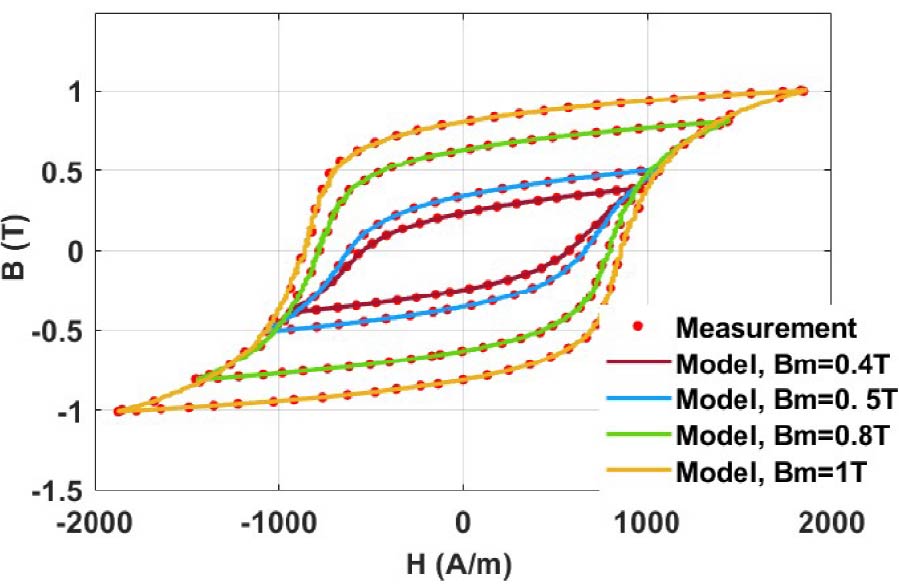
This paper presents the application of both genetic algorithm (GA) and artificial bee colony (ABC) method for parameter identification for the chemical hysteresis model. This model is known to be based on physics approaches, and it is characterized by nine parameters, which describe the reversible and irreversible magnetization mechanisms. Splitting the parameter optimization in two parts using hysteresis curves at various amplitudes offers a more efficient way of solving the optimization problem. Based on the root mean squared error between modeled and experimental B-H loops, it has been shown that GA delivers lower errors in shorter time.
Parameters Optimization of the Chemical Reaction Hysteresis Model Using Genetic Algorithms and the Artificial Bee Colony Method
2025-07-26
PIER C
Vol. 158, 9-18, 2025
download: 298
Permanent Magnet Assisted Switched Reluctance Motor DITC Control Based on Current-Torque Synergy
Junjie Zhang, Junxin Xu, Chaozhi Huang, Ziyang Liu, Yiqiang Yu and Pengpeng Wei
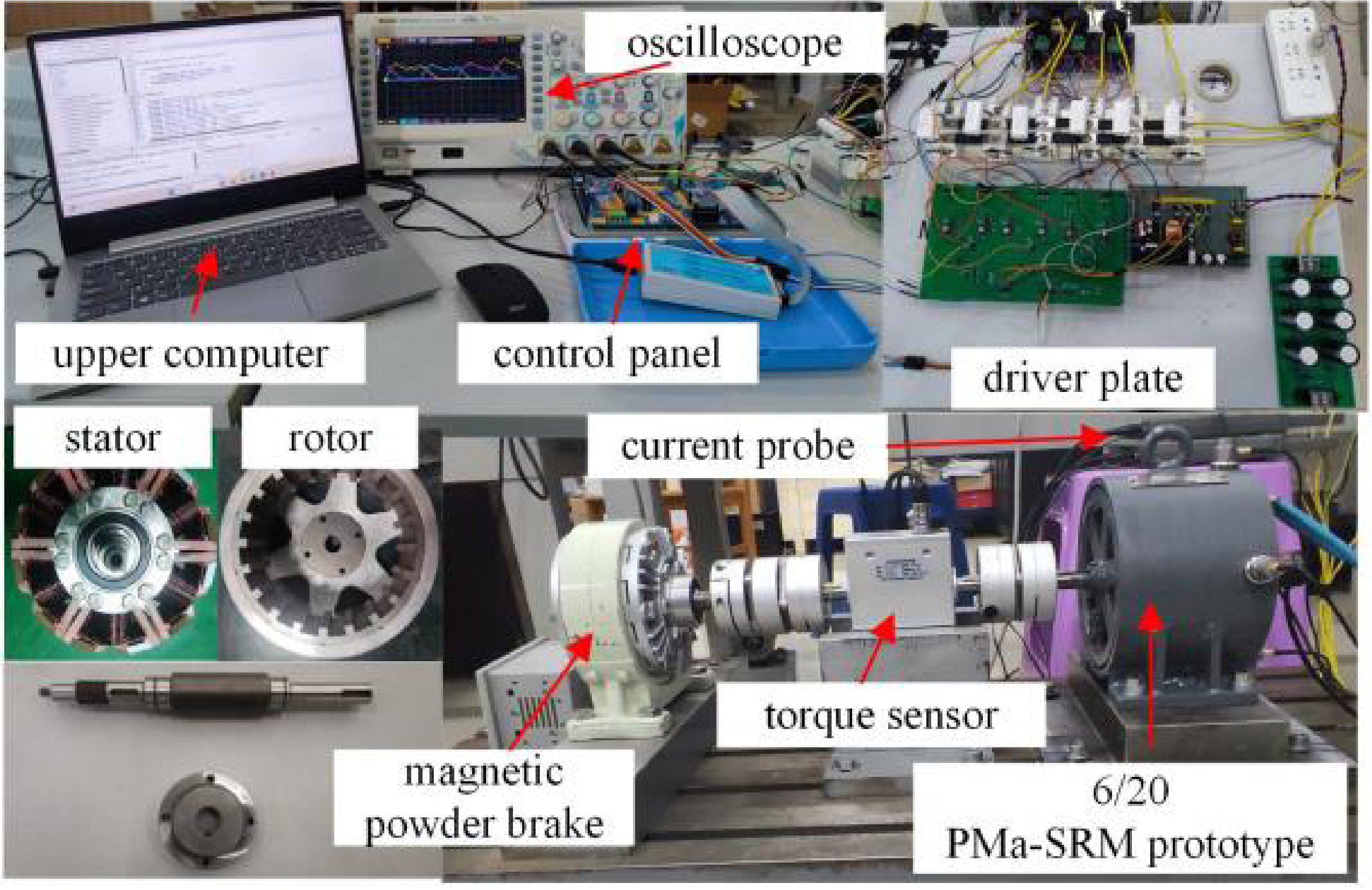
Permanent magnet-assisted reluctance motors (PMa-SRM) feature high energy efficiency, high power density, and a wide speed regulation range. However, traditional direct instantaneous torque control (DITC) strategies for these motors are limited by issues such as high exciting phase current peaks and large torque ripple, which hinder their development and application. To address this, this paper proposes a novel DITC strategy based on current-torque collaborative control. First, commutation intervals are divided according to inductor curve characteristics, with adaptive hysteresis methods applied in different intervals. Then, to tackle high exciting current peaks, current chopping control is introduced, and an adaptive reference current adjustment algorithm is designed to control exciting phase current at the initial commutation stage based on motor speed and load, suppressing current peaks during commutation. Finally, simulations and prototype experiments are conducted on a three-phase 6/20 PMa-SRM. Results show that the proposed strategy effectively reduces current peaks and enhances torque output capability and dynamic response during commutation.
Permanent Magnet Assisted Switched Reluctance Motor DITC Control Based on Current-torque Synergy
2025-07-23
PIER C
Vol. 158, 1-8, 2025
download: 181
Wideband Antenna Design with Notched Flower Shaped Patch for Wireless Applications
Bharat D. Prajapati, Bhavesh Jaiswal and Pravin J. Dalvadi
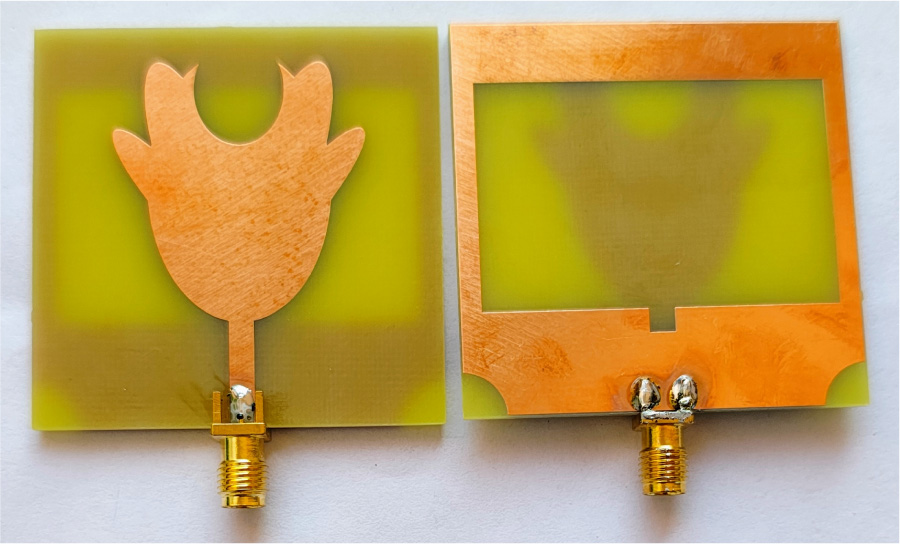
A notched flower-shaped patch wideband MPA antenna is designed with defected ground (DGS) to realize magnified performance for the various wireless application. The several modes effectively excited in antenna and also higher order modes merging efficiently to enable wider impedance bandwidth. The current distribution is improved with notched flower-shaped patch and efficient stimulation of multiple modes, while the enhanced impedance matching and extension of bandwidth are contributed with defective ground. The antenna has overall size measuring length of 1.14λ, width of 1.14λ and height of 0.04λ. The result exhibits a return loss lower than -10 dB across 5.12 GHz to 8.58 GHz, with 5.58 dB peak gain. This range supports wide range of wireless application, such as Wi-Fi 6/6E, Sub-6 GHz 5G NR, short range automative radar and C-band satellite communication. The compact size makes it appropriate for integration on space constrained device.
Wideband Antenna Design with Notched Flower Shaped Patch for Wireless Applications