Design and Performance Evaluation of a Flexible Four-Element MIMO Antenna for Biomedical Applications
Immanuel Prabaharan Soundararajan,
Subramoniam Muthurajan,
Arul Kulandaivel and
Rajeshkumar Dhandapani
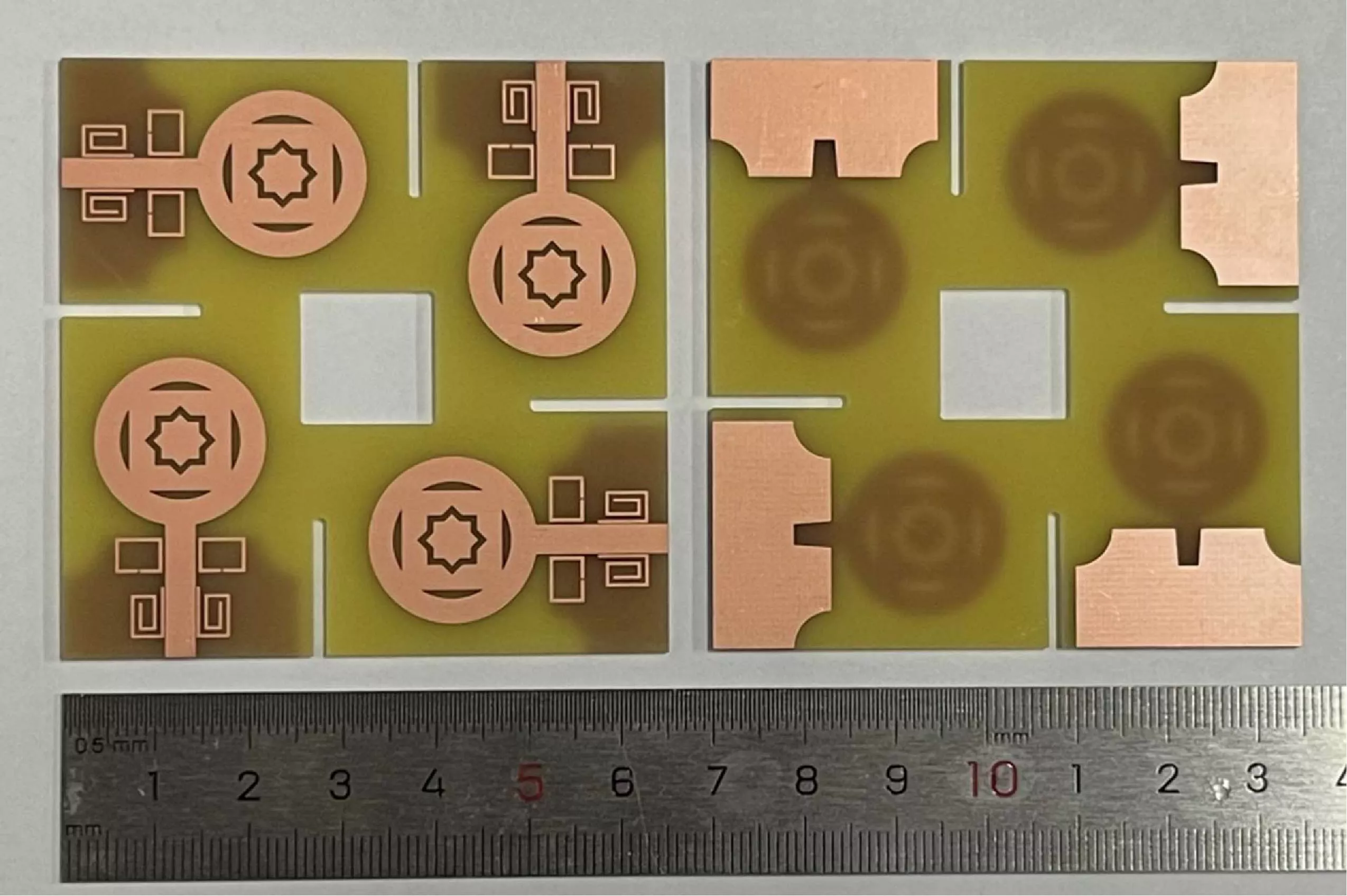
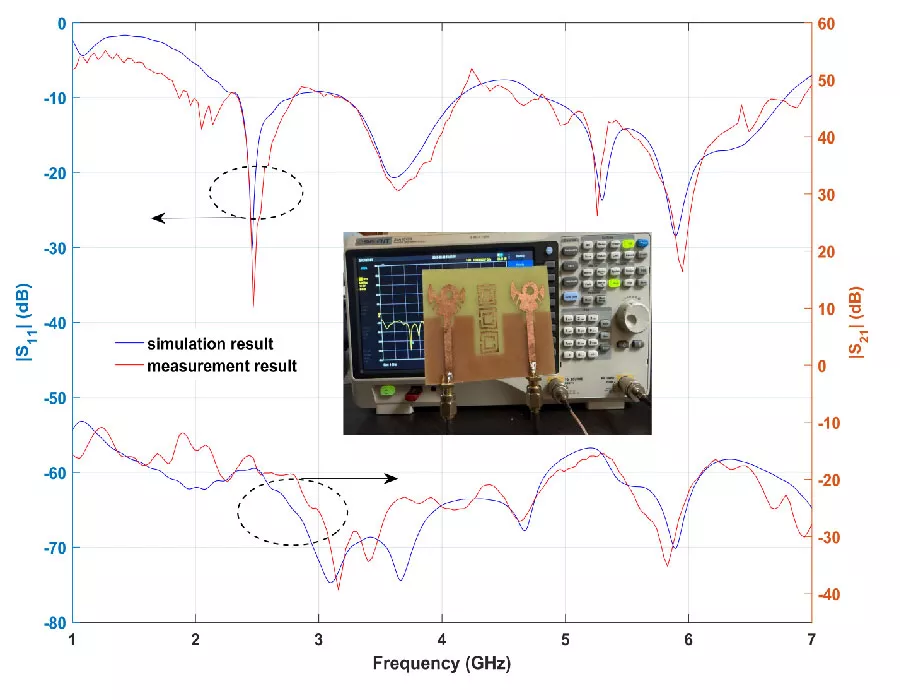
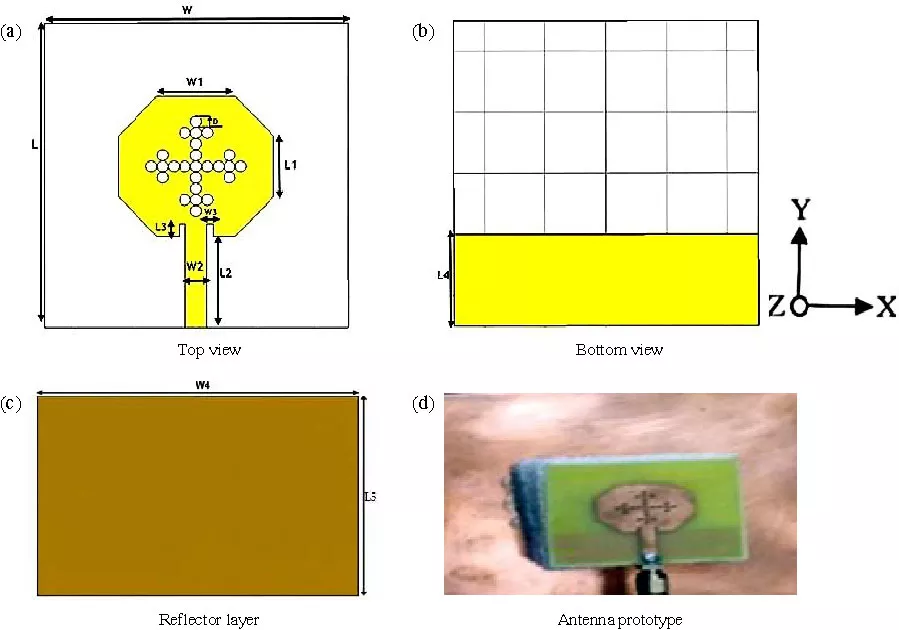
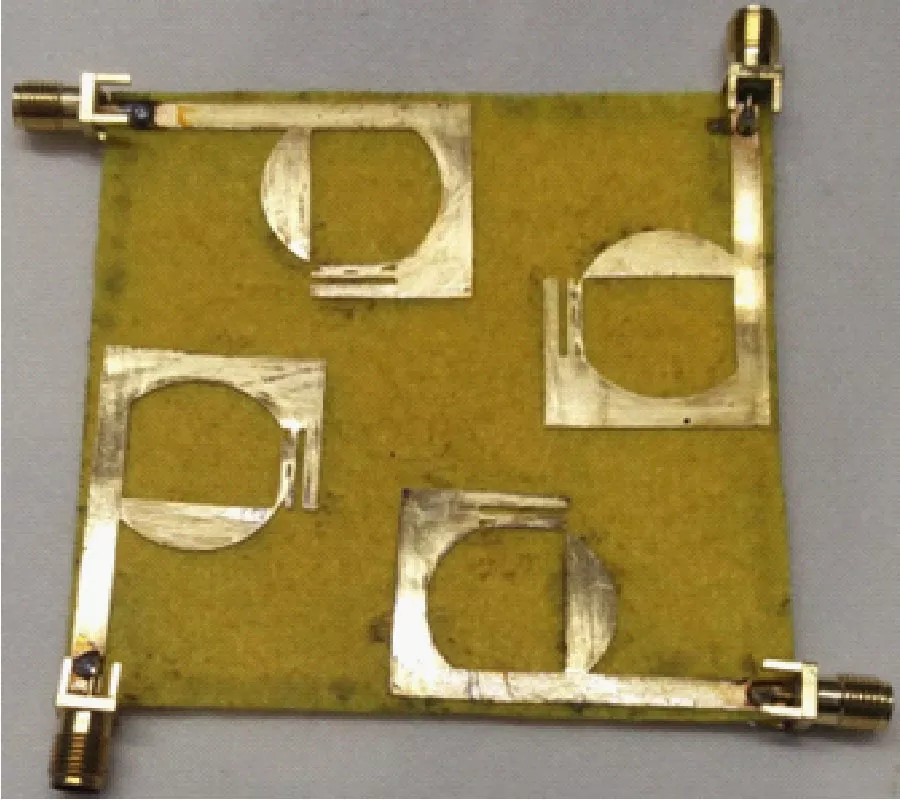
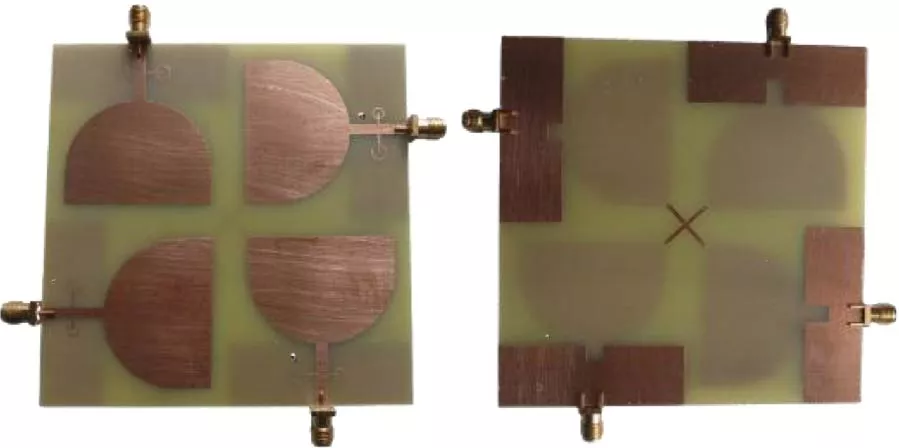
A compact, low-profile, and highly isolated four-element flexible MIMO antenna for biomedical body-centric wireless applications is proposed and experimentally validated. The antenna is realized on a 75 × 75 × 1 mm3 ultra-low permittivity felt substrate (εr = 1.2, tanδ = 0.0013) and incorporates a perturbed circular slot with rectangular defected ground stubs to simultaneously enhance impedance bandwidth and inter-element isolation. The proposed design achieves a measured -10 dB impedance bandwidth of 320 MHz (2.20-2.52 GHz), corresponding to a fractional bandwidth of 13.3% centered at 2.4 GHz ISM band. The four-element MIMO configuration exhibits isolation better than 25 dB despite an edge-to-edge spacing of only 1 mm, demonstrating strong mutual coupling suppression without additional decoupling structures. The antenna provides a peak gain of 2.8 dBi and achieves a peak radiation efficiency of 95%, with an efficiency of 92.5% under flat conditions (R = 0 mm). Envelope correlation coefficient (ECC) remains below 0.01, ensuring excellent diversity performance. Under conformal bending conditions (R = 10-60 mm), the antenna maintains stable resonance with only 1.6% frequency deviation, while gain and efficiency remain above 2.21 dBi and 84.58%, respectively, demonstrating robust mechanical resilience. On-body evaluations over arm, leg, and chest phantoms indicate stable operation within 2.35-2.49 GHz, with gain varying between 1.87-2.01 dBi and efficiency above 87.15%. The maximum measured SAR is 5.98 W/kg (1 g tissue), confirming acceptable safety compliance for wearable biomedical applications. Measured S-parameters and radiation patterns show strong agreement with simulations, validating the proposed slot-ground co-engineering methodology. Compared to existing wearable ISM antennas, the proposed design offers isolation >25 dB, high efficiency (95%), mechanical flexibility, and compact form factor without requiring complex EBG or AMC structures. The antenna is therefore a strong candidate for next-generation flexible biomedical MIMO systems.