Vol. 161
Latest Volume
All Volumes
PIERC 162 [2025] PIERC 161 [2025] PIERC 160 [2025] PIERC 159 [2025] PIERC 158 [2025] PIERC 157 [2025] PIERC 156 [2025] PIERC 155 [2025] PIERC 154 [2025] PIERC 153 [2025] PIERC 152 [2025] PIERC 151 [2025] PIERC 150 [2024] PIERC 149 [2024] PIERC 148 [2024] PIERC 147 [2024] PIERC 146 [2024] PIERC 145 [2024] PIERC 144 [2024] PIERC 143 [2024] PIERC 142 [2024] PIERC 141 [2024] PIERC 140 [2024] PIERC 139 [2024] PIERC 138 [2023] PIERC 137 [2023] PIERC 136 [2023] PIERC 135 [2023] PIERC 134 [2023] PIERC 133 [2023] PIERC 132 [2023] PIERC 131 [2023] PIERC 130 [2023] PIERC 129 [2023] PIERC 128 [2023] PIERC 127 [2022] PIERC 126 [2022] PIERC 125 [2022] PIERC 124 [2022] PIERC 123 [2022] PIERC 122 [2022] PIERC 121 [2022] PIERC 120 [2022] PIERC 119 [2022] PIERC 118 [2022] PIERC 117 [2021] PIERC 116 [2021] PIERC 115 [2021] PIERC 114 [2021] PIERC 113 [2021] PIERC 112 [2021] PIERC 111 [2021] PIERC 110 [2021] PIERC 109 [2021] PIERC 108 [2021] PIERC 107 [2021] PIERC 106 [2020] PIERC 105 [2020] PIERC 104 [2020] PIERC 103 [2020] PIERC 102 [2020] PIERC 101 [2020] PIERC 100 [2020] PIERC 99 [2020] PIERC 98 [2020] PIERC 97 [2019] PIERC 96 [2019] PIERC 95 [2019] PIERC 94 [2019] PIERC 93 [2019] PIERC 92 [2019] PIERC 91 [2019] PIERC 90 [2019] PIERC 89 [2019] PIERC 88 [2018] PIERC 87 [2018] PIERC 86 [2018] PIERC 85 [2018] PIERC 84 [2018] PIERC 83 [2018] PIERC 82 [2018] PIERC 81 [2018] PIERC 80 [2018] PIERC 79 [2017] PIERC 78 [2017] PIERC 77 [2017] PIERC 76 [2017] PIERC 75 [2017] PIERC 74 [2017] PIERC 73 [2017] PIERC 72 [2017] PIERC 71 [2017] PIERC 70 [2016] PIERC 69 [2016] PIERC 68 [2016] PIERC 67 [2016] PIERC 66 [2016] PIERC 65 [2016] PIERC 64 [2016] PIERC 63 [2016] PIERC 62 [2016] PIERC 61 [2016] PIERC 60 [2015] PIERC 59 [2015] PIERC 58 [2015] PIERC 57 [2015] PIERC 56 [2015] PIERC 55 [2014] PIERC 54 [2014] PIERC 53 [2014] PIERC 52 [2014] PIERC 51 [2014] PIERC 50 [2014] PIERC 49 [2014] PIERC 48 [2014] PIERC 47 [2014] PIERC 46 [2014] PIERC 45 [2013] PIERC 44 [2013] PIERC 43 [2013] PIERC 42 [2013] PIERC 41 [2013] PIERC 40 [2013] PIERC 39 [2013] PIERC 38 [2013] PIERC 37 [2013] PIERC 36 [2013] PIERC 35 [2013] PIERC 34 [2013] PIERC 33 [2012] PIERC 32 [2012] PIERC 31 [2012] PIERC 30 [2012] PIERC 29 [2012] PIERC 28 [2012] PIERC 27 [2012] PIERC 26 [2012] PIERC 25 [2012] PIERC 24 [2011] PIERC 23 [2011] PIERC 22 [2011] PIERC 21 [2011] PIERC 20 [2011] PIERC 19 [2011] PIERC 18 [2011] PIERC 17 [2010] PIERC 16 [2010] PIERC 15 [2010] PIERC 14 [2010] PIERC 13 [2010] PIERC 12 [2010] PIERC 11 [2009] PIERC 10 [2009] PIERC 9 [2009] PIERC 8 [2009] PIERC 7 [2009] PIERC 6 [2009] PIERC 5 [2008] PIERC 4 [2008] PIERC 3 [2008] PIERC 2 [2008] PIERC 1 [2008]
2025-11-15
PIER C
Vol. 161, 285-290, 2025
download: 74
A Compact, Circularly Polarized Truncated-Corner Patch Antenna with a Stable Phase Center for GPS Applications
Mohamed El Seddik Saf, Samir Dahmani, Djalal Ziani-Kerarti and Nail Alaoui
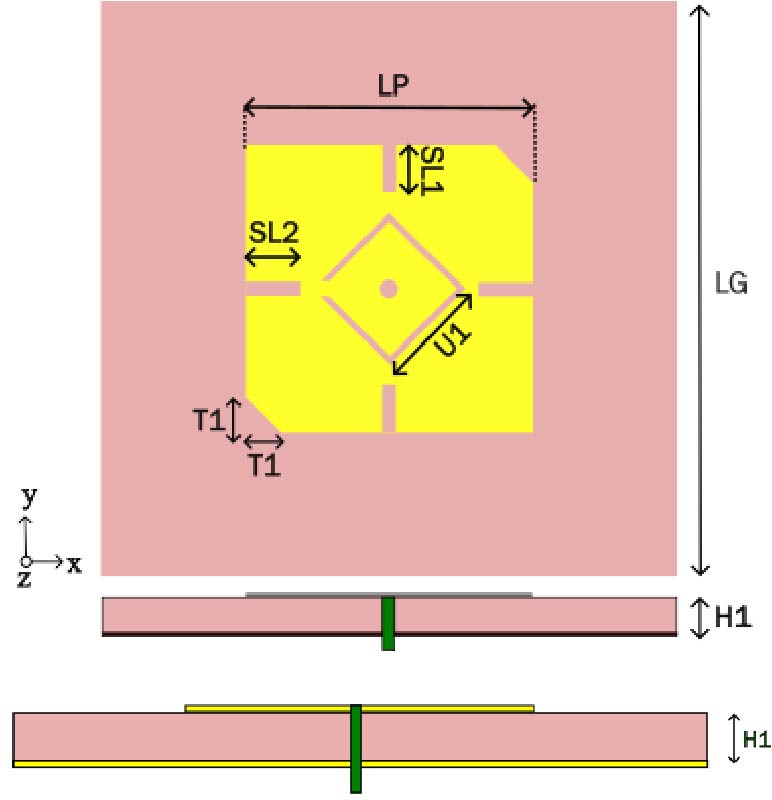
This paper introduces a compact, circularly polarized (CP) truncated-corners patch antenna with a highly stable phase center for Global Positioning System (GPS) L1 applications. The antenna is excited by a central coaxial feed and features two corner truncations and a square-shaped slot with an integrated tab to generate CP. Designed for the GPS L1 band (1.563-1.587 GHz), the antenna achieves a -10 dB impedance matching bandwidth of 100 MHz (1.52-1.62 GHz), covering the target frequency range. Key performance metrics include a wide 3-dB axial ratio (AR) beamwidth of 190° and a fractional AR bandwidth of 1.5%. A prototype was fabricated and tested, and the measured results show reasonable agreement with simulations, confirming the design's effectiveness.
A Compact, Circularly Polarized Truncated-corner Patch Antenna with a Stable Phase Center for GPS Applications
2025-11-15
PIER C
Vol. 161, 275-284, 2025
download: 60
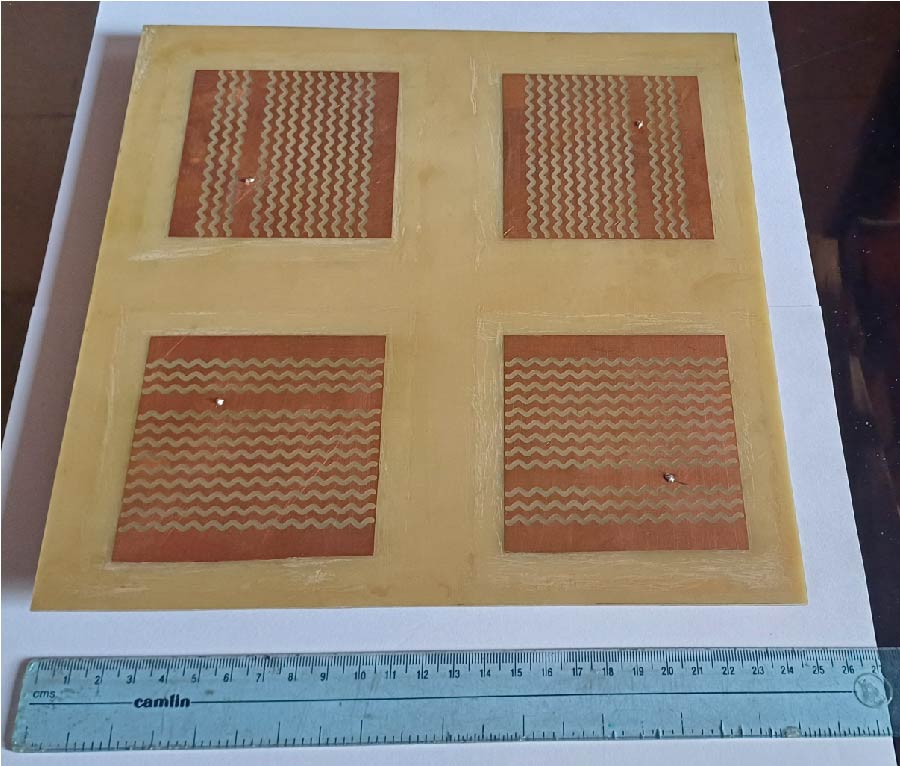
A Dual-Band Frequency-Dependent Beam Scanning Antenna System for RFID and WLAN Applications
Anweya Das, Atrisha Biswas, Ahana Gupta, Soham Bhattacharya and Sayan Sarkar
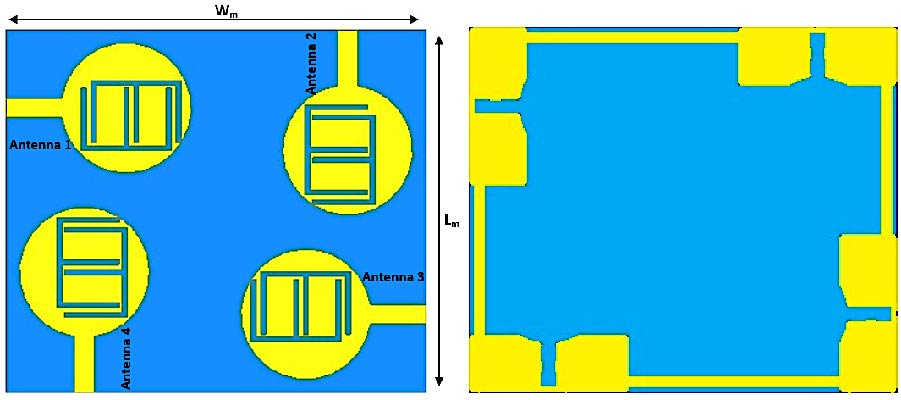
This paper presents a single-layered dual-band microstrip patch antenna with periodic sinusoidal slots. The antenna operates within 860-930 MHz and 2400-2500 MHz. The first band encompasses both the European as well as North American UHF-RFID bands while the second band covers the 2.45 GHz Microwave-RFID/WLAN band. Moreover, the presence of the sinusoidal slots helps the antenna exhibit frequency-dependent beam scanning within the 2.45 GHz band. Four such antenna units are placed close to each other with different orientations to create a 2 × 2 antenna system. This system can detect UHF-RFID tags using both horizontal and vertical polarizations. It can also perform frequency-dependent beam scanning with horizontal polarization in the yz-plane and vertical polarization in the xz-plane. The beam maximum scans from -300 to 310 in the yz-plane and -320 to 290 in the xz-plane.
A Dual-band Frequency-dependent Beam Scanning Antenna System for RFID and WLAN Applications
2025-11-15
PIER C
Vol. 161, 261-274, 2025
download: 167
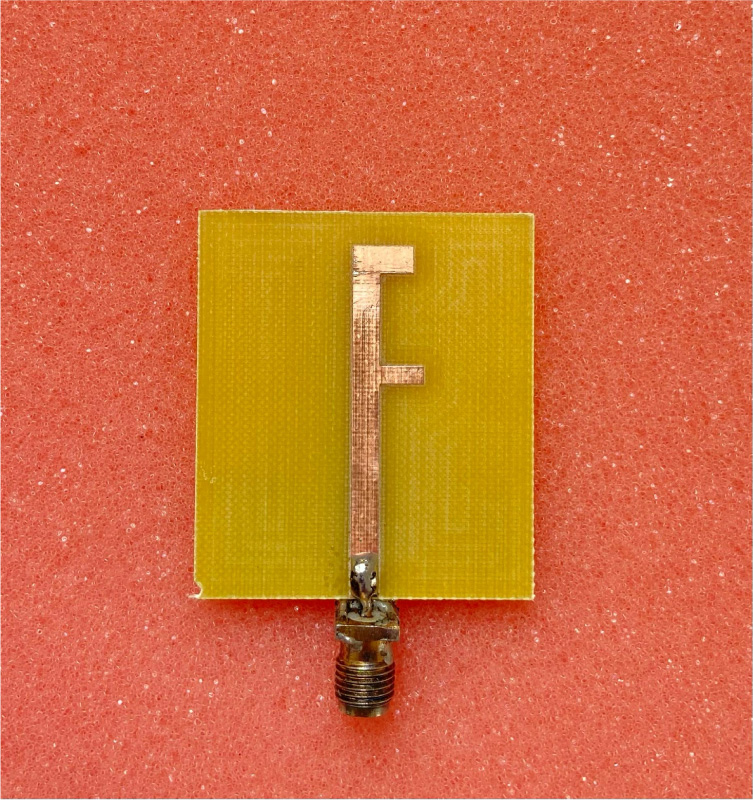
Design and Optimization of a Dual-Band F-Shaped Monopole Antenna for 2.45/5.8 GHz ISM Medical Applications Using ANN and PSO
Rania Ibtissam Ben Melouka, Yamina Tighilt, Chemseddine Zebiri, Issa Tamer Elfergani, Rami Zegadi, Mohamed Lamine Bouknia, Abdelhak Ferhat Hamida, Merih Palandoken, Fatih Özkan Alkurt, Muharrem Karaaslan, Nail Alaoui and Jonathan Rodriguez
The article presents the geometry and optimization of a small-sized dual-band F-shaped monopole antenna for medical applications in the 2.45/5.8 GHz ISM bands. The antenna is printed on a partial ground FR4 substrate, and its geometrical parameters are optimized by a hybrid procedure based on Artificial Neural Networks (ANNs) and Particle Swarm Optimization (PSO).Two ANN architectures, Feedforward Backpropagation Neural Network (FFBPN) and Generalized Regression Neural Network (GRNN), are trained on a dataset of 121 samples generated using varying patch sizes. The FFBPN model is better with a mean squared error of 3.9506 × 10⁻⁵ at epoch 21. The optimized antenna has resonances at 2.448 GHz and 5.8 GHz with S11 < -10 dB, bandwidths of 610 MHz (2.21-2.82 GHz) and 400 MHz (5.61-6.01 GHz), and peak gains of 2.262 dBi and 3.861 dBi, respectively. Measurements on a prototype are in agreement with simulations to confirm the appropriateness of the design for wireless medical devices, such as wearable sensors and telemedicine systems.
Design and Optimization of a Dual-band F-Shaped Monopole Antenna for 2.45/5.8 GHz ISM Medical Applications Using ANN and PSO
2025-11-14
PIER C
Vol. 161, 255-260, 2025
download: 114
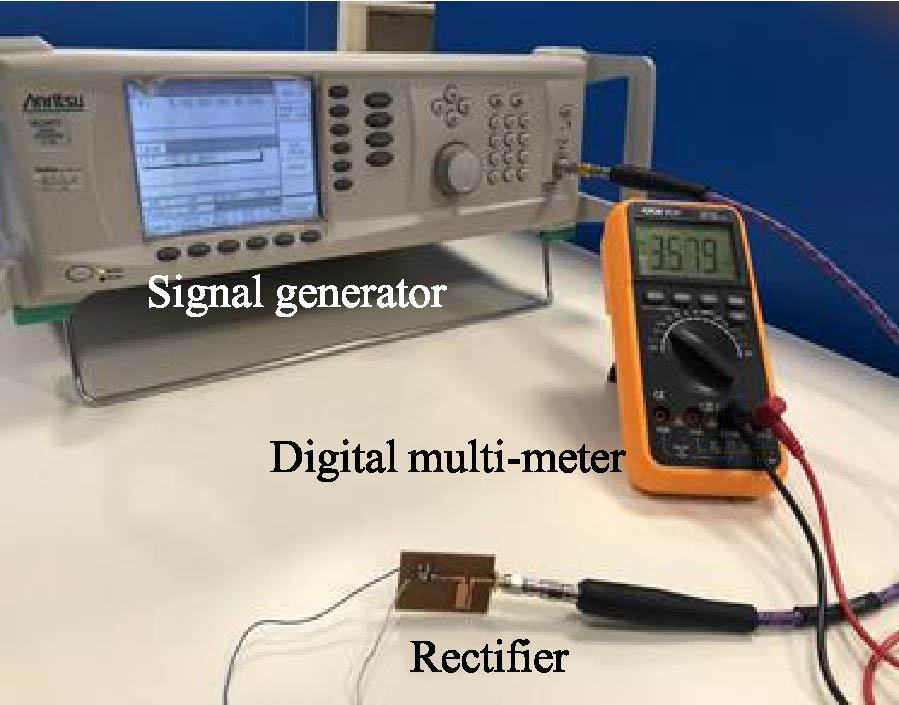
High-Efficiency Dual-Band Rectifier Using Coupled-Line Matching for RF Energy Harvesting Applications
Yassmeen Mohammed Afify, Ahmed Allam, Haruichi Kanaya and Adel Bedair Abdel-Rahman
This paper presents a compact dual-band RF energy harvesting rectifier designed for operation at 2.45 GHz and 5.2 GHz Industrial, Scientific, and Medical (ISM) bands. The rectifier employs a voltage-doubler topology integrated with a dual-band impedance matching network (MN) composed of a coupled-line section and a microstrip transmission line. The analytical design of the MN is established using the ABCD-matrix formulation to determine the initial modal impedances and electrical lengths, which are subsequently refined through full-wave electromagnetic optimization in ADS. The proposed approach achieves accurate dual-frequency impedance transformation using only two matching segments, significantly simplifying the structure compared with conventional multi-section designs. The prototype, fabricated on a low-cost FR-4 substrate, occupies a compact area of 34×25 mm2. Measurements show high power conversion efficiencies of 75% and 55% at 2.45 GHz and 5.2 GHz, respectively, under a 0 dBm input power and a 1 kΩ load, in close agreement with simulations. The results confirm that the proposed design provides an effective and low-cost solution for ambient RF energy harvesting and low-power IoT applications.
High-Efficiency Dual-Band Rectifier Using Coupled-Line Matching for RF Energy Harvesting Applications
2025-11-13
PIER C
Vol. 161, 246-254, 2025
download: 47
Research on the Anti-Electromagnetic Interference Performance of Motor Position Encoder by Cable Grounding Method
Chuan Xiang, Yunxiang Nan, Huimin Shi, Yusen Zhang and Shukuan Zhang
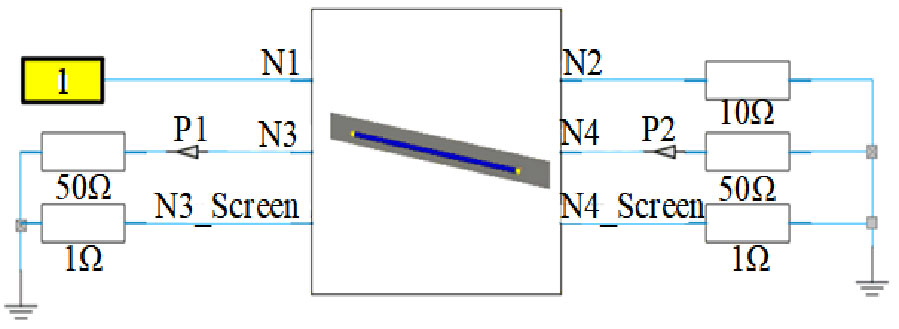
Cables are the main coupling path of electromagnetic interference, and the electromagnetic interference generated by cable conduction and radiation can interfere with the motor position encoder signal. Cable grounding can reduce the impact of this interference on the encoder signal. Therefore, this article first obtains the shielding mechanism of single end grounding and double end grounding of cables through theoretical analysis. Then, under two interference modes of plane wave radiation and adjacent cable radiation, the voltage frequency response and interference voltage peak and amplitude of single end grounding and double end grounding of the cable were compared. The results showed that the double end grounding of the cable shielding layer had better anti-electromagnetic interference effect. In addition, based on the double end grounding, comparing the interference voltages of different grounding resistances, cable lengths, shield thicknesses, and load conditions, some conclusions about the changes in interference voltage have been obtained.
Research on the Anti-Electromagnetic Interference Performance of Motor Position Encoder by Cable Grounding Method
2025-11-12
PIER C
Vol. 161, 239-245, 2025
download: 77
Sub-6 GHz Dual-Polarized Dual-Mode OAM Antenna
Abdulkadir Uzun and İbrahim Tekin
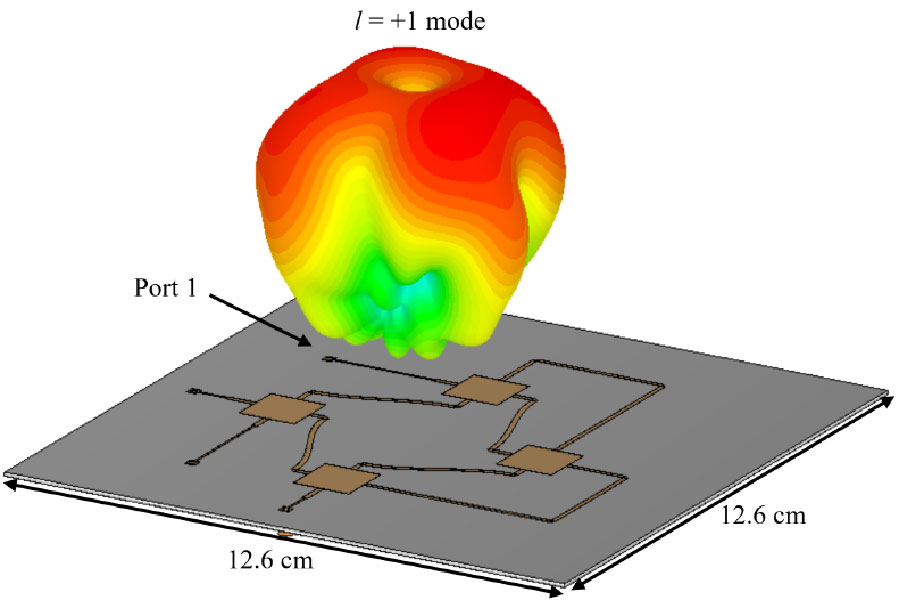
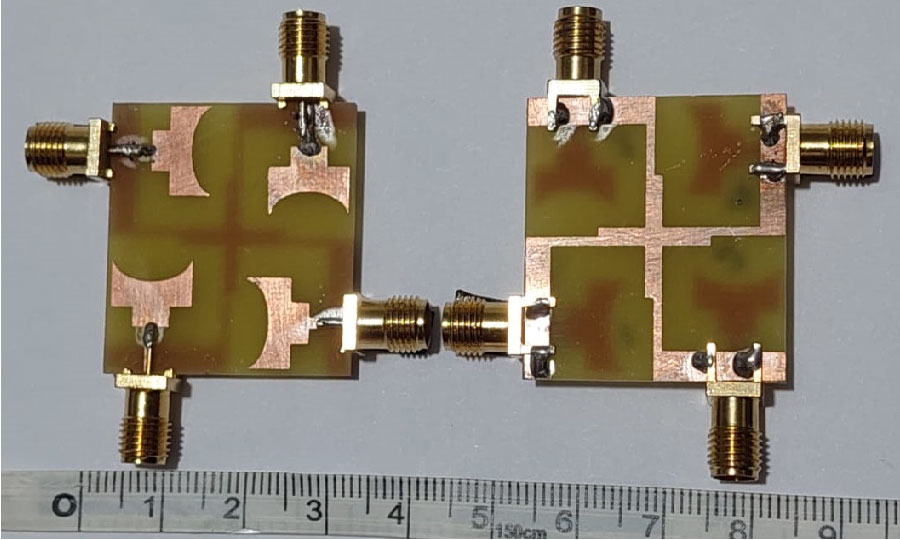
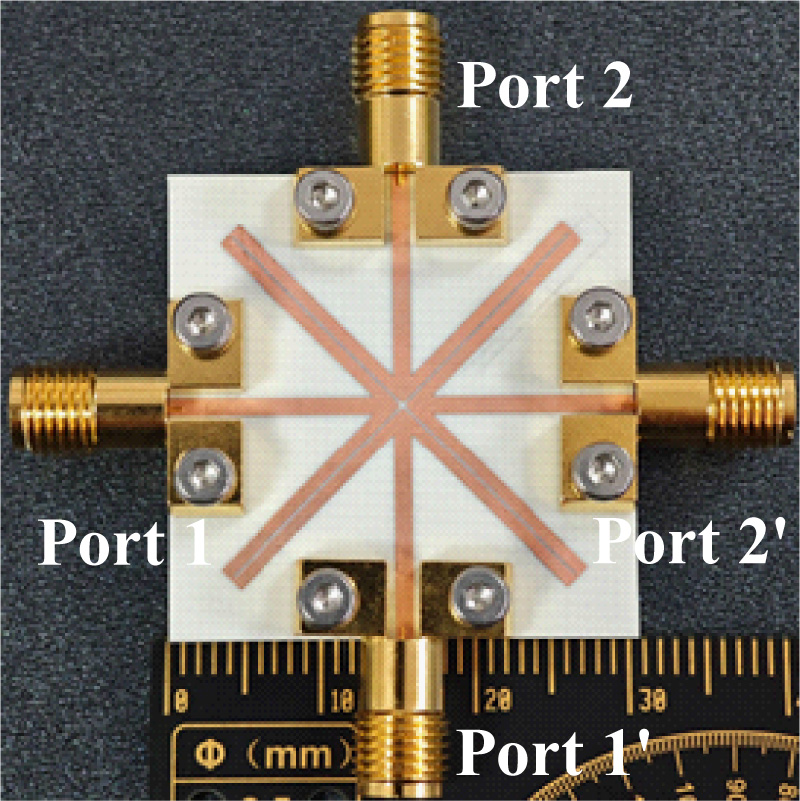
In this paper, we present a dual-mode, dual-polarized orbital angular momentum (OAM) antenna, implemented as a four-element uniform circular array (UCA) with a series-fed network on a single-layer substrate. The novelty of the antenna lies in its ability to generate four orthogonal states simultaneously in a single transmission channel - two from l = ±1 OAM states and two from vertical/horizontal polarizations - without requiring multilayer feeds or complex phase-shifting networks. Full-wave simulations and experimental measurements have been used to validate the antenna's performance within the 5.85-6.1 GHz band. Far-field radiation patterns exhibit the characteristic vortex-beam profile, featuring a conical shape with a central null, while phase distributions reconstructed via FFT-based holography confirm the generation of distinct OAM modes. The antenna has four feed ports; of these, activating Ports 1 and 4 yields the highest OAM modal purity at 6 and 6.1 GHz, while Ports 2 and 3 peak in purity at 6.1 GHz. Owing to its compact, reconfigurable architecture, the designed and tested antenna is well-suited for integration into space- and power-constrained platforms such as UAVs, IoT devices, and full-duplex MIMO systems.
Sub-6 GHz Dual-polarized Dual-mode OAM Antenna
2025-11-13
PIER C
Vol. 161, 226-238, 2025
download: 67
A Compact Dual-Polarized Hexagonal Loop Antenna for Underwater Communication with Experimental Validation of Polarization Diversity
Joko Suryana, Ali Rhomadoni and Ahmad Izzuddin
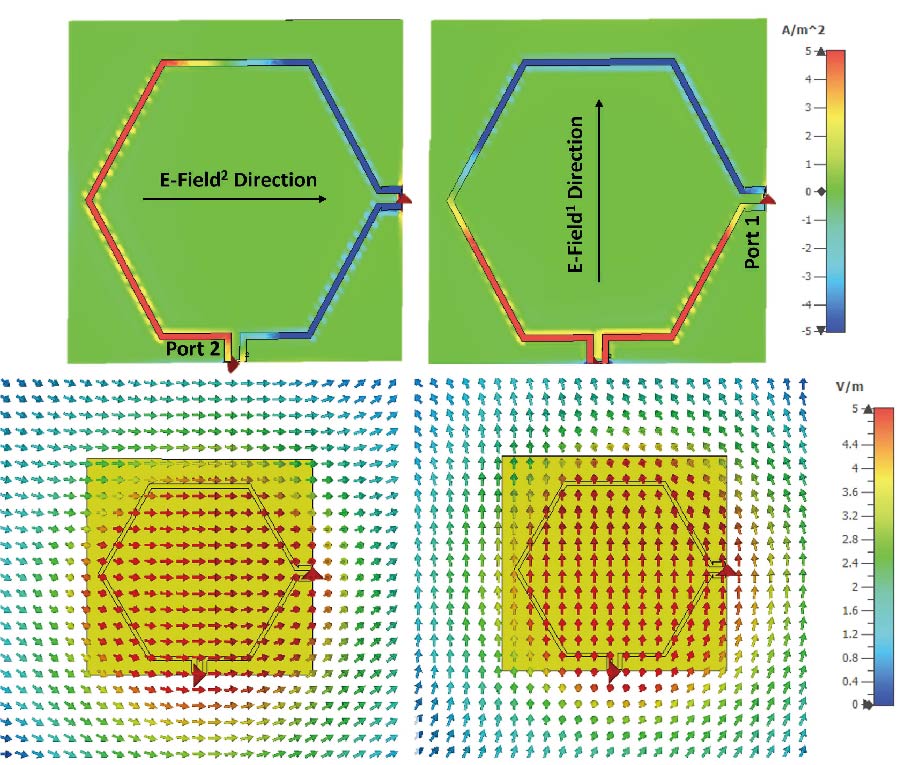
Underwater electromagnetic communication is severely limited by the high permittivity and conductivity of water, which cause strong attenuation at higher frequencies. To overcome this challenge, a compact dual-polarized hexagonal loop antenna is proposed and experimentally validated for low-frequency underwater communication at 40-45 MHz. The antenna, fabricated on FR-4 and sealed with epoxy resin, eliminates bulky waterproof housings while ensuring stable impedance performance with a measured return loss better than -10 dB. Experiments conducted in freshwater confirm the effectiveness of polarization diversity, achieving an average received-power improvement of 4.59 dB under maximal-ratio combining. These results demonstrate, for the first time, the feasibility of a practical dual-polarized hexagonal loop design for robust, low-frequency underwater communication systems and future MIMO-like implementations.
A Compact Dual-Polarized Hexagonal Loop Antenna for Underwater Communication with Experimental Validation of Polarization Diversity
2025-11-11
PIER C
Vol. 161, 212-225, 2025
download: 105
Enhanced Vibration Compensation for CCR-BIM: RA-SOGI Observer with Variable Step-Size Adaptive LMS and Residual-Feedforward Adaptive PID
Chengling Lu, Ziqing Liu, Wenxin Fang, Qifeng Ding and Yanxue Zhang
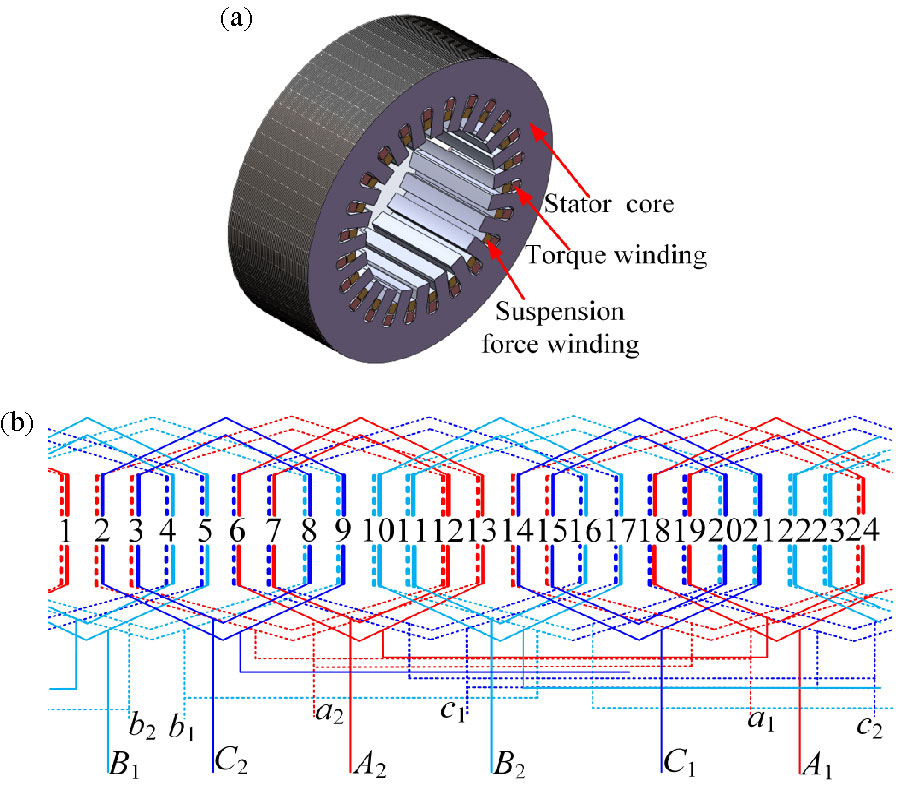
To mitigate unbalanced vibration caused by rotor eccentricity in composite cage rotor bearingless induction motors (CCR-BIM), this paper proposes an enhanced hybrid control strategy integrating a rotor-speed adaptive second-order generalized integrator (RA-SOGI) harmonic observer with dual-channel compensation. A variable step-size adaptive LMS (VSS-ALMS) algorithm is introduced to optimize RA-SOGI, enabling real-time extraction of fundamental vibration components with reduced computational burden and improved convergence. In the feedback channel, an adaptive PID controller with variable learning rates and residual feedforward correction is designed, achieving a superior balance between transient response and steady-state precision. Lyapunov-based analysis establishes the global asymptotic stability of the proposed scheme under practical step-size constraints. Experimental validations demonstrate that the proposed method significantly outperforms conventional PID and feedforward control, achieving faster convergence, higher vibration attenuation, and enhanced trajectory stability in high-speed CCR-BIM operation.
Enhanced Vibration Compensation for CCR-BIM: RA-SOGI Observer with Variable Step-Size Adaptive LMS and Residual-Feedforward Adaptive PID
2025-11-10
PIER C
Vol. 161, 205-211, 2025
download: 93
Non-Contact Microwave Sensor for High-Sensitivity Medical Ethanol Concentration Detection Using Coupled Microstrip Coupler
Run-Lin Zhang, Shujiang Zhang and Tao Tang
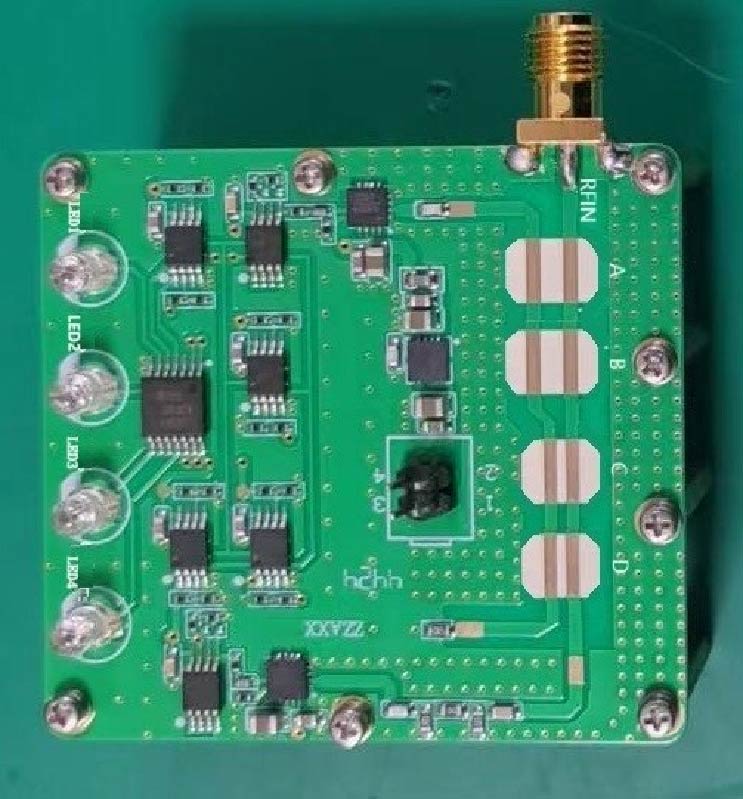
This paper presents a medical ethanol concentration sensor based on the principles of liquid-coupling loss, which enables rapid and accurate measurement and classification of medical ethanol concentrations. The sensor system consists of integrated circuits for liquid-coupling loss, amplitude detection, signal processing, and visualization. It utilizes variations in RF signal amplitude to determine the concentration. Theoretical analysis, grounded in the Bruggeman model, quantitatively correlates the dielectric constant of medical ethanol with its concentration, thereby establishing a robust theoretical foundation for the sensor design. Experimental validation demonstrates the sensor's ability to precisely differentiate among medical ethanol concentrations of 95%, 75%, and 50% at test frequencies of 1 GHz, 2 GHz, and 3 GHz. The agreement between empirical data and theoretical predictions confirms the sensor's efficacy and reliability. Key advantages include user-friendly operation, cost efficiency, and intuitively presented results, rendering the sensor highly suitable for broad medical applications.
Non-Contact Microwave Sensor for High-Sensitivity Medical Ethanol Concentration Detection Using Coupled Microstrip Coupler
2025-11-09
PIER C
Vol. 161, 195-204, 2025
download: 53
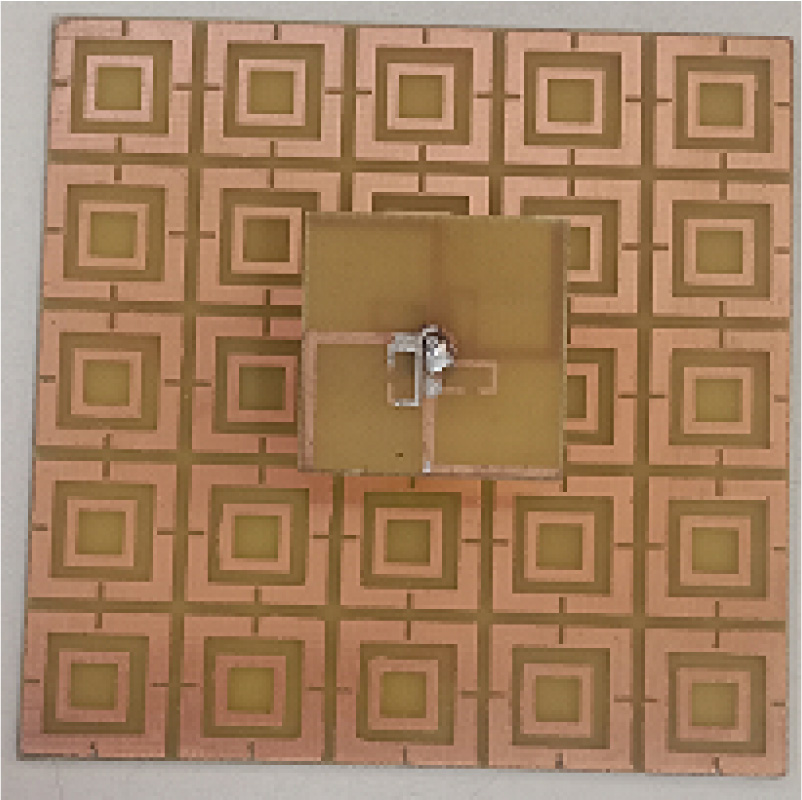
An AMC-Backed Miniaturized Dual-Band Circularly Polarized RFID Reader Antenna for IoT Applications
Deepak Kumar and Naveen Jaglan
This paper presents a 2.45 GHz/5.8 GHz circularly polarized RFID reader antenna based on an Artificial Magnetic Conductor (AMC) for detecting tagged objects in IoT applications. An efficient reader antenna is proposed to increase the interrogation distance and reduce the uncertainty in tag detection. The antenna consists of two dipole pairs printed on both sides of the substrate to operate at 2.45 GHz and 5.8 GHz, connected via feed delay lines in a cross-dipole configuration. The read range is further enhanced by a 5×5 AMC surface placed 0.042λ0 below the printed antenna, where λ0 is the wavelength at the lower resonant frequency. The AMC backing results in a gain of 7.1 dBi at 2.45 GHz and 9.41 dBi at 5.8 GHz, improving the read range of the reader. Impedance bandwidth is also enhanced to 2.25-2.91 GHz for the 2.45 GHz band and 5.1-6.3 GHz for the 5.8 GHz band, reducing tag detection errors. The axial ratio bandwidth of the antenna is 2.18-2.99 GHz at 2.45 GHz and 5.27-5.88 GHz at 5.8 GHz, ensuring circular polarization over the operating bands.
An AMC-backed Miniaturized Dual-band Circularly Polarized RFID Reader Antenna for IoT Applications
2025-11-09
PIER C
Vol. 161, 188-194, 2025
download: 94
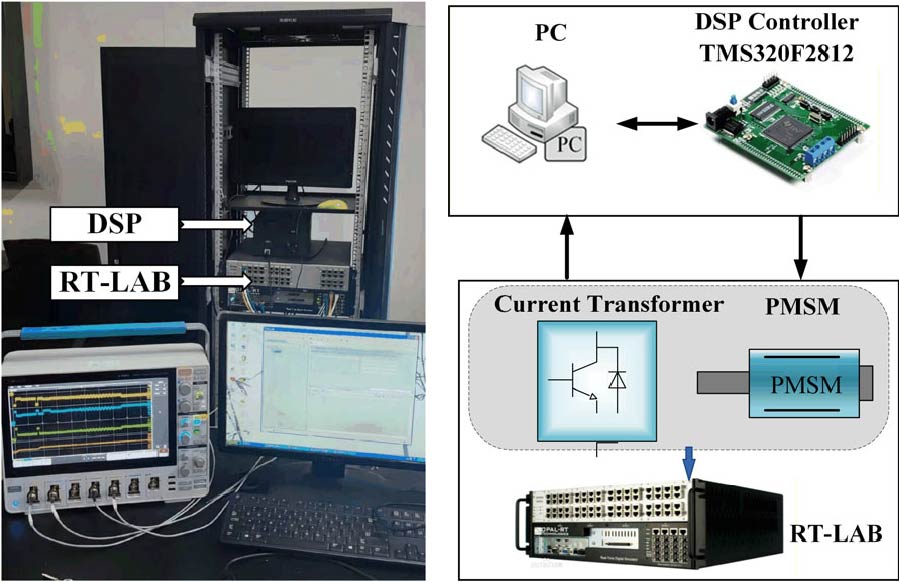
Online Monitoring of Permanent-Magnet Flux in PMSM Based on Improved Adaptive Higher-Order Square-Root Cubature Kalman Flux-Linkage Observer
Junqin Liu, Zhentong Wang, Tianle Li, Feng Deng, Lin Liu, Kaihui Zhao and Xiangfei Li
To enable accurate online observation of permanent-magnet (PM) flux linkage in permanent-magnet synchronous motors (PMSMs), this paper proposes an improved adaptive higher-order square-root cubature kalman filter (IAHSRCKF) flux-linkage observer. Firstly, a nonlinear PMSM model is established to capture complex operating conditions. Secondly, fifth-order cubature integration and an adaptive estimator are embedded into a square-root cubature Kalman framework, yielding an adaptive fifth-order SRCKF observer that tracks PM flux-linkage variations under parameter drift and disturbances. Then, experimental scenarios are created by perturbing key electromagnetic and mechanical parameters and injecting external time-varying disturbances. Finally, simulation and hardware tests benchmark the proposed IAHSRCKF against UKF, CKF, and SRCKF. Results demonstrate that IAHSRCKF achieves the highest flux-estimation accuracy, exhibits low sensitivity to parameter uncertainties, and maintains strong robustness across complex operating conditions, thereby enabling reliable online monitoring of PM flux linkage.
Online Monitoring of Permanent-Magnet Flux in PMSM Based on Improved Adaptive Higher-Order Square-Root Cubature Kalman Flux-Linkage Observer
2025-11-07
PIER C
Vol. 161, 178-187, 2025
download: 140
Compact UWB MIMO Antenna with Minangkabau Roof-Inspired Patch and L-Shaped Ground Strip for Enhanced Bandwidth
Firdaus Firdaus, Rahmadi Kurnia and Ikhwana Elfitri
A compact Ultra-Wideband (UWB) Multiple-Input Multiple-Output (MIMO) antenna with a culturally inspired radiating structure is developed in this study. The radiating element is inspired by the traditional gonjong shape of Minangkabau architecture, which resembles upward-curving buffalo horns, forming a distinctive roof-like patch that enhances the impedance characteristics. A 50-ohm microstrip line is used to excite the patch, with a partial ground plane placed beneath the patch. To improve bandwidth and support low-frequency operation, an L-shaped strip is introduced on the ground plane, and the patch is optimized through edge modification and parametric analysis. The antenna achieves a wide measured impedance bandwidth of 2.2-20 GHz (S11 < -10 dB), fully covering and extending beyond the Federal Communications Commission (FCC)-defined UWB range. High isolation is achieved with S12 consistently below -20 dB across the band. Excellent MIMO performance is demonstrated with an envelope correlation coefficient (ECC) below 0.01, diversity gain (DG) above 9.95 dB, channel capacity loss (CCL) lower than 0.4 bit/s/Hz, and Total Active Reflection Coefficient (TARC) below -10 dB. The antenna also exhibits stable radiation patterns and maintains high efficiency throughout the operating band. With overall dimensions of just 30 × 30 mm2, the developed antenna is more compact than most recent UWB MIMO designs, making it highly suitable for modern wireless communication systems requiring wide bandwidth and reliable multi-antenna performance.
Compact UWB MIMO Antenna with Minangkabau Roof-inspired Patch and L-shaped Ground Strip for Enhanced Bandwidth
2025-11-06
PIER C
Vol. 161, 169-177, 2025
download: 144
Design a Type of Analog Beamforming MIMO System Based on a Rotman Lens with an Ultra-Wideband (UWB) for 5G mmWave Applications
Noureddine Boughaba, Ouarda Barkat and Khaled Issa
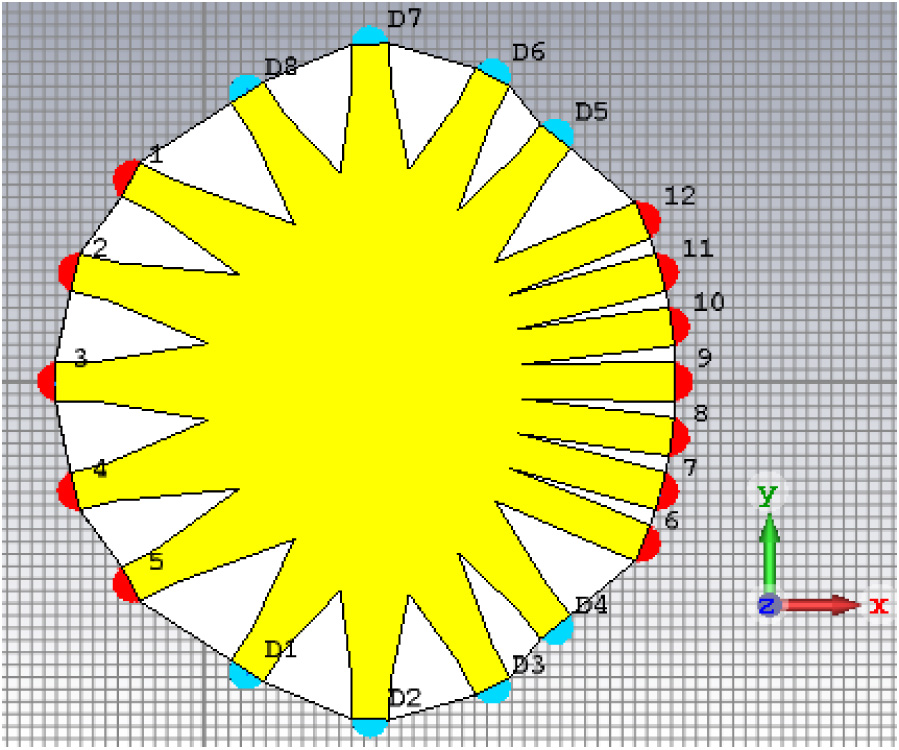
High frequency communication systems are critical for 5G networks, particularly in the millimeter-wave bands, where ultra-wideband (5G-UWB) performance is essential for high data rates and low latency. In this work, we propose, for the first time to the best of our knowledge, an ultra-wideband 5G MIMO beamforming module covering both the 28 and 60 GHz bands. The proposed design is based on a low-cost, low-profile Rotman Lens (RL) implemented on an FR4 substrate with a thickness of 1.6 mm and a dielectric constant of 4.3. The RL features five beam ports and seven array ports, with additional dummy ports introduced to minimize reflections and enhance adjacent beam port isolation across the full 5G-UWB range. Simulation results demonstrate excellent performance, with isolation and mutual coupling maintained below -25 dB between input beam ports and below -15 dB between array ports across the entire bandwidth. The VSWR remains below 2 for all ports. Although this work presents a single RL-based beamformer, it is envisioned as a building block within a larger hybrid MIMO architecture, where multiple lenses can be interconnected to support parallel data streams and spatial multiplexing. This modular approach enables flexible scaling to full MIMO operation while maintaining low cost and compactness. The proposed design is a strong candidate for 5G and mmWave applications, including hybrid beamforming systems, MIMO architectures, radar, and satellite communications. Comparative analysis with recent literature demonstrates its superior bandwidth and isolation performance.
Design a Type of Analog Beamforming MIMO System Based on a Rotman Lens with an Ultra-Wideband (UWB) for 5G mmWave Applications
2025-11-05
PIER C
Vol. 161, 159-168, 2025
download: 115
Miniaturized Ultrawideband Circularly Polarized Antenna with Enhanced Axial Ratio Bandwidth for C-Band Automotive and Satellite Applications
Sanjeev Sharma, Ashish Kumar, Rajeev Kumar, Nitin Kumar Saluja, Zahriladha Zakaria and Ahmed Jamal Abdullah Al-Gburi
Circularly polarized (CP) antennas minimize polarization losses and improve signal reliability in ultra-reliable and low-latency satellite communication. Compact design, wide impedance and axial ratio bandwidth (ARBW) are key requirements for circularly polarized antennas utilized for modern automotive wireless applications. In this work, a miniaturized slotted antenna for C-band automotive-oriented wireless applications is proposed. The antenna achieves a wide measured impedance bandwidth of 69.5% (4.0-8.26 GHz, 4.26 GHz) and exhibits an ARBW of 51% (4.96-8.33 GHz, 3.37 GHz). The overall compact size of 25 × 30 × 1.6 mm3 (0.33λ × 0.40λ × 0.02λ at 4 GHz) further underscores its suitability for integration in space-constrained C-band communication systems. The anticipated design is optimized using rigorous parametric analysis to achieve a wide ARBW from θ = -27˚ to +33˚ which is very beneficial for satellite applications. The fabricated prototype demonstrates a measured peak gain of 4.8 dBi and radiation efficiency ranging from 82% to 92% across the radiating band. Measurement results obtained from the fabricated antenna are validated with simulations and show satisfactory agreement. The anticipated design, when compared with existing literature, is found to outperform other designs in terms of size, ARBW, and impedance bandwidth. The achieved resonance in the proposed design can be utilized for satellite communication, medical and automotive applications (tele-operated driving support, high-definition map collecting and sharing, infrastructure-based teleoperated driving), and other applications in C-band.
Miniaturized Ultrawideband Circularly Polarized Antenna with Enhanced Axial Ratio Bandwidth for C-band Automotive and Satellite Applications
2025-11-04
PIER C
Vol. 161, 150-158, 2025
download: 108
Stability and Homogeneity of Muscle Phantom for Radiation Exposure from 5G Signals
Nur Farah Afiqah Asmadi, Aduwati Sali, Nurul Huda Abd Rahman, Suriati Paiman and Muhammad Zamir Mohyedin
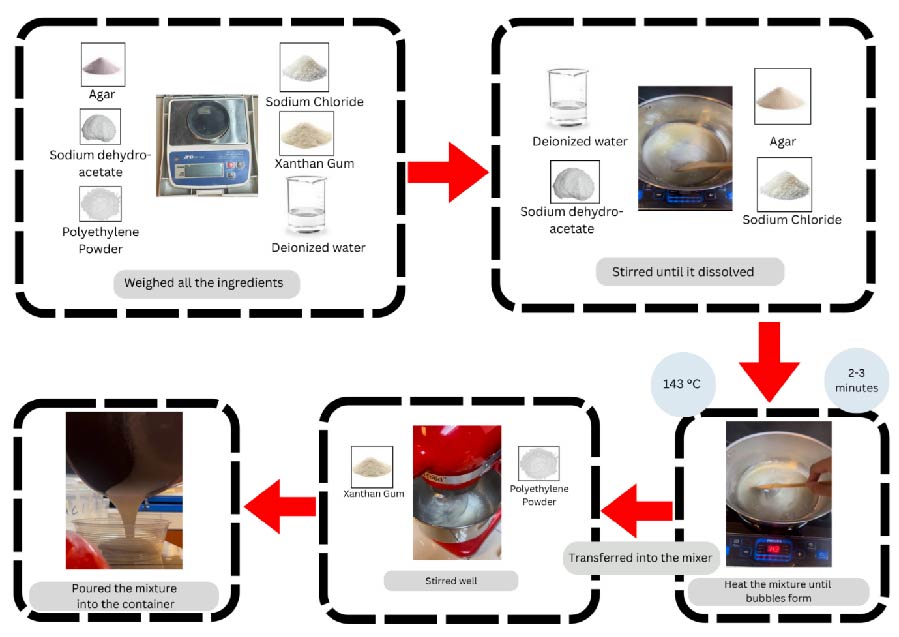
The increasing deployment of 5G wireless technologies has raised the need for accurate, tissue equivalent phantoms to explore electromagnetic (EM) wave interactions with human body organs. This paper investigates stability and homogeneity of a low-cost, easy-to-fabricate human muscle phantom exposed to radiation exposure from 5G signals at frequencies of 700 MHz, 2.4 GHz, 3.5 GHz and 20 GHz. The phantom was formulated using agar, polyethylene powder, sodium chloride, xanthan gum, sodium dehydro-acetate, and deionized water. Its permittivity and conductivity were measured using a vector network analyzer (VNA) over a 45-day period under low (2-5°C) and room temperature (27°C) storage. The results showed that the phantom was most homogenous at 20 GHz with the standard deviation (SD) of 0.51033 and the relative standard deviation (RSD) of 1.67%. For conductivity, the phantom demonstrated good homogeneity. However, it was not aligning to the corresponding real human muscle conductivity. The most homogenous conductivity was observed at 2.4 GHz with the SD and RSD of 0.06194 and 2.31% respectively. In terms of stability, relative permittivity was most stable at 20 GHz under room temperature conditions, with a maximum deviation of 21%. Stability of conductivity performance, on the other hand, was best maintained at 2.4 GHz under room temperature, where the highest observed deviation was 53%. The findings highlight the potential of using low-cost materials to fabricate phantoms with stable electromagnetic properties suitable for wireless exposure studies, although further optimization is needed for accurate conductivity matching.
Stability and Homogeneity of Muscle Phantom for Radiation Exposure from 5G Signals
2025-11-02
PIER C
Vol. 161, 142-149, 2025
download: 56
Design of Notch UWB-MIMO Antennas Based on RMS-ZINC Structure Decoupling Method
Shuming Liu, Jingchang Nan, Yifei Wang, Licong Fan and Jianxin Qi
Based on the current trends in wireless communication systems, a novel high-isolation dual-notch ultra-wideband (UWB) multiple-input multiple-output (MIMO) antenna is proposed, measuring 46 mm × 46 mm × 0.8 mm. The antenna is printed on an RO4350 substrate and consists of two identical antennas placed orthogonally. The antenna unit features a third-order stepped rectangular structure and employs microstrip feeding, incorporating inverted U-shaped and M-shaped grooves etched onto the antenna unit to achieve dual-notch functionality, thereby addressing electromagnetic interference issues in wireless local area networks (WLAN) operating at 5.15-5.85 GHz and 7.25-7.75 GHz. To address the issue of mutual coupling in MIMO antennas, this paper presents an innovative decoupling method known as the RMS-ZINC approach. This technique involves excavating a T-shaped groove on the rear of the dielectric substrate, symmetrically aligned with the diagonal, and filling it with a dielectric material primarily composed of zinc. This material substitution effectively manipulates the coupling current paths, achieving a high isolation level of -20 dB. The experimental results show that the operating bandwidth of the antenna ranges from 2.89 to 10.19 GHz, with a peak gain of approximately 5 dB (7.15 dBi) and a maximum radiation efficiency of up to 92%. The measured results are essentially consistent with the simulated ones, indicating the practical application value of the proposed MIMO antenna with notch functionality.
Design of Notch UWB-MIMO Antennas Based on RMS-ZINC Structure Decoupling Method
2025-11-01
PIER C
Vol. 161, 135-141, 2025
download: 78
A Wideband Circularly Polarized Textile-Based Microstrip Antenna for Wearable Wireless Applications
Sekhar Manepalli, Lalitha Bhavani Konkyana, Sanapala Umamaheswararao, Vysyaraju Lokesh Raju, Chaitanya Kumar Marpu and Kotni Krishnam Raju
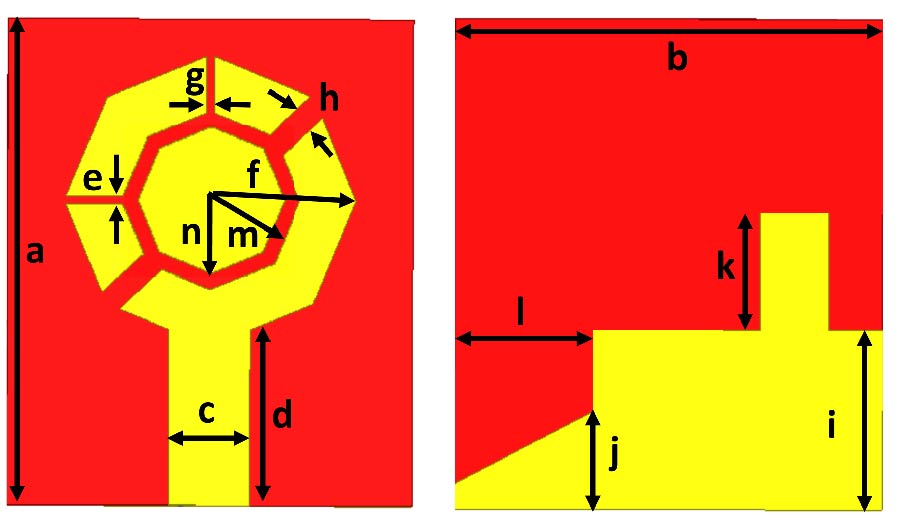
This paper presents the design, fabrication, and analysis of a wideband circularly polarized wearable antenna operating in the frequency range of 2.6 GHz to 4.7 GHz. The antenna is designed on a jeans substrate with dimensions of 25 × 30 × 1.4 mm3, having a dielectric constant of 1.7 and a loss tangent of 0.085. The proposed antenna demonstrates a gain of 2.8-3.4 dB across the operating frequency band and exhibits circular polarization in the frequency range of 3.2 GHz to 3.9 GHz. To achieve wideband performance and circular polarization, the antenna design incorporates an octagonal ring patch with a hybrid slot and stub in the partial ground plane, along with four slots in the ring patch. The antenna is fabricated and its performance is validated through Vector Network Analyzer and anechoic chamber measurements, showing good correlation with simulated results. Specific Absorption Rate (SAR) analysis and on-body simulations are conducted to evaluate its suitability for wearable applications.
A Wideband Circularly Polarized Textile-Based Microstrip Antenna for Wearable Wireless Applications
2025-11-01
PIER C
Vol. 161, 129-134, 2025
download: 68
Joint Optimization-Based Beampattern Synthesis for Elliptical-Arc Conformal Frequency Diverse Array
Wei Xu, Juncheng Ma, Pingping Huang, Weixian Tan and Zhiqi Gao
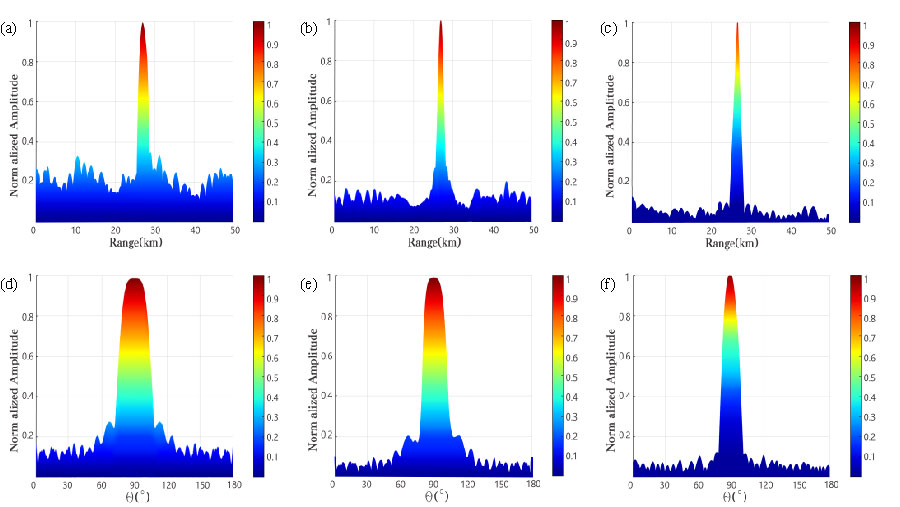
To address the engineering challenges of conformal frequency diverse array (FDA) on complex curved surfaces and beamforming optimization, and leveraging the fact that the surface of a streamlined platform can be approximated by an elliptical arc, an elliptical-arc conformal FDA is taken as a representative example, and a conformal frequency diverse array method based on joint parameter optimization (JO-CFDA) is proposed. First, a polygonal approximation model is employed to achieve conformity between the array and the curved surface; then, the parameter α is introduced to control the non-uniform distribution of inter-element spacing along each edge; finally, the parameter β is used to allocate the frequency-offset exponent in a slope-normalized manner. These two parameters work in concert to jointly optimize beam characteristics in both the spatial layout and frequency-domain distribution. Simulation results demonstrate that the proposed method can significantly reduce sidelobe levels and enhance beam directivity while maintaining mainlobe width and peak gain, thereby validating its effectiveness and superiority.
Joint Optimization-based Beampattern Synthesis for Elliptical-arc Conformal Frequency Diverse Array
2025-10-30
PIER C
Vol. 161, 120-128, 2025
download: 70
Double Bow-Tie Slot Antenna Based on Metamaterial Enhanced Cavity Backed Substrate Integrated Waveguide
Astha Sharma and Reema Budhiraja
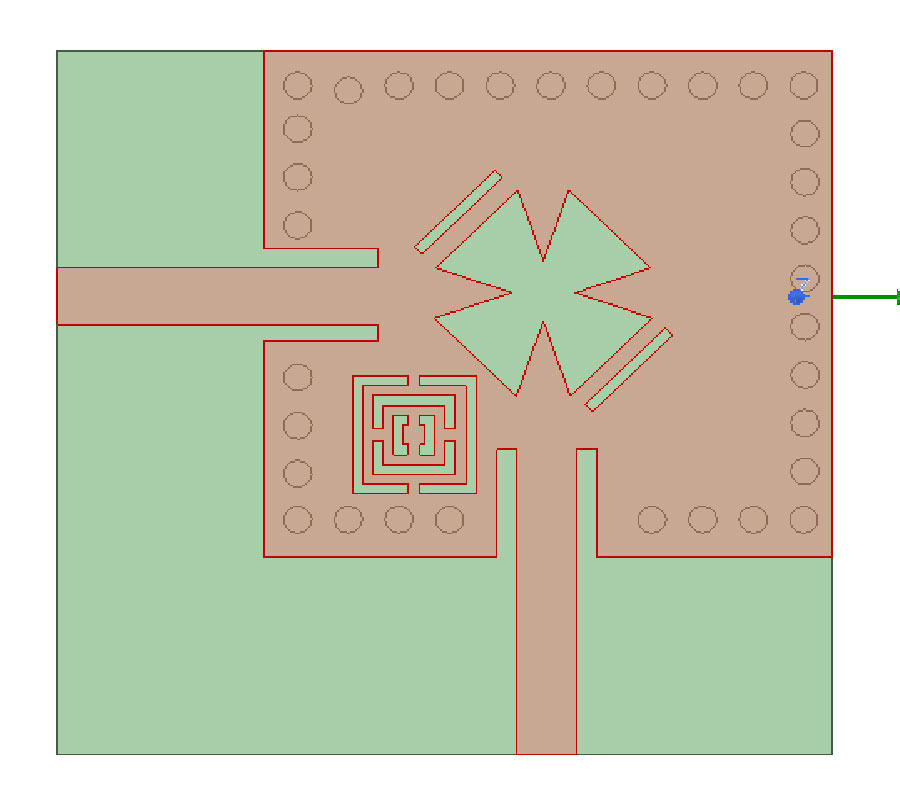
This research delves into the intricate functionality of a fully planar double bow-tie antenna with orthogonal feeding and is innovatively constructed on a substrate-integrated cavity inspired by metamaterial designs. The architecture of the antenna includes Complementary Split Ring Resonators (CSRRs) and a double bow-tie patch, intricately etched onto the metal surfaces positioned on both the top and bottom of the substrate. The antenna is meticulously designed and fine-tuned for superior performance specifically in the K and Ka-band frequencies. The incorporation of the double bow-tie patch in this antenna configuration brings forth several advantageous attributes such as improved impedance matching, exceptional high gain and unidirectional radiation pattern. In a notable feature of this design, the antenna supports multiband operation which is achieved through the strategic integration of slots within the Substrate Integrated Waveguide (SIW) cavity, allowing the antenna to resonate at multiple frequencies. The antenna's superior performance and its ability to function effectively across multiple frequency bands have been rigorously validated through extensive simulation studies and thorough experimental testing.
Double Bow-tie Slot Antenna Based on Metamaterial Enhanced Cavity Backed Substrate Integrated Waveguide
2025-10-30
PIER C
Vol. 161, 105-119, 2025
download: 100
A Low-Profile UWB Monopole Antenna and High-Isolated UWB-MIMO Antenna for Wireless Communications Networks
Ibrahime Hassan Nejdi, Mohamed Marzouk, Mustapha Ait Lafkih, Seddik Bri, Jamal Abdul Nasir, Zahriladha Zakaria and Ahmed Jamal Abdullah Al-Gburi
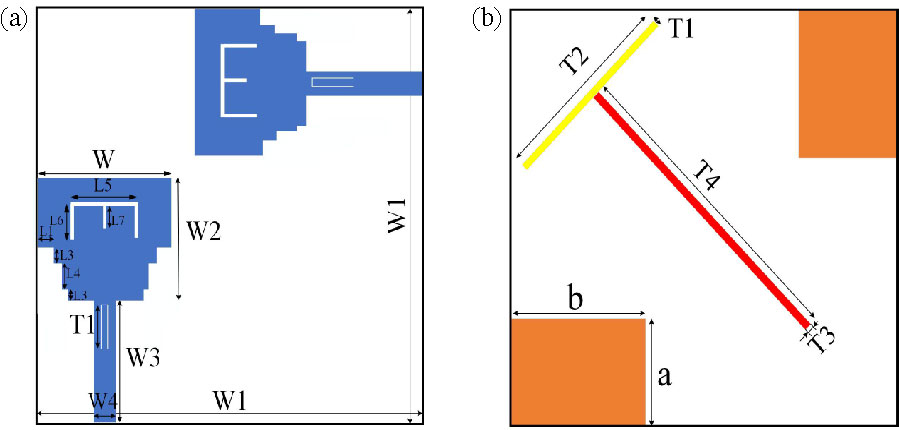
This study proposes a space-efficient ultra-wideband (UWB) monopole antenna engineered for superior gain and performance. The innovative design, modeled and analyzed using HFSS software, involves etching the resonator onto one side of an affordable FR4 substrate. The manufactured antenna features an extended impedance bandwidth, achieved by incorporating ``E'' and ``inverted E'' shaped slots on the patch, an irregular hexagonal substrate structure, and a slotted partial ground plane. Covering a frequency range from 2.5 to 11.1 GHz, the patch achieves a maximum gain exceeding 7.9 dB and an efficiency of 98%. Parametric analyses based on numerical simulations evaluate the impact of design elements, such as slots on the resonator and ground plane, and cuts in the substrate. The excellent match between simulated and measured data verifies the antenna's performance across multi-band environments. The article concludes by introducing a second antenna, designed through the symmetrical integration of four prototypes of the suggested antenna. Mutual coupling between elements is reduced through the use of an orthogonal, four-directional staircase structure, and a defective ground is intentionally left unconnected. This new antenna covers an impedance spectrum from 2.42 to 12 GHz, with a gain of 12.77 dB, an efficiency of up to 98%, and a voltage standing wave ratio (VSWR) ranging between 1 and 2. Overall, the article emphasizes the design, optimization, and application of UWB antennas, highlighting their performance and suitability for various wireless communication scenarios.
A Low-profile UWB Monopole Antenna and High-isolated UWB-MIMO Antenna for Wireless Communications Networks
2025-10-29
PIER C
Vol. 161, 99-104, 2025
download: 80
Long-Medium Range Millimeter-Wave Microstrip Array Based on SIW Feeding Network for Automotive Radar Applications
Yan Sun, Dan Zhang, Jiazi Liu and Zhiqi Li
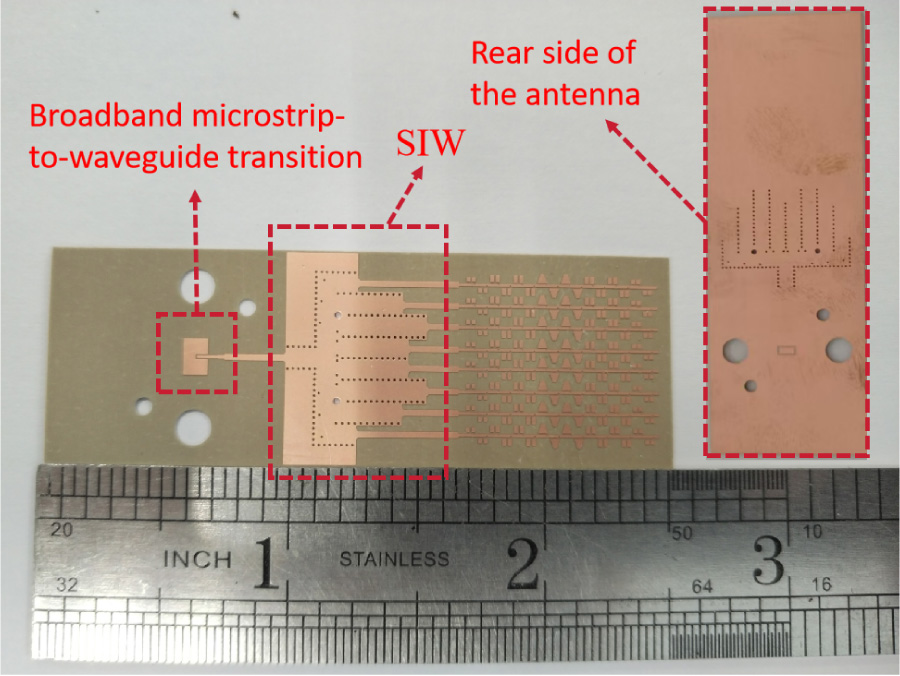
This paper introduces a substrate-integrated waveguide (SIW)-fed broadband antenna array employing proximity-coupled radiating elements for automotive radar applications. The design integrates three key innovations: (1) a periodic staggered arrangement of hybrid rectangular-polygonal patches, (2) combined proximity coupling with reflective slot structures enabling simultaneous broadband impedance matching and sidelobe suppression, and (3) an optimized 8 × 28 planar configuration operating at 77-81 GHz. Measurements of the fabricated prototype demonstrate an 8.86% impedance bandwidth (75.2-82.2 GHz) with dual-beam radiation characteristics - achieving a narrow beam (±5.5°) for long-range detection and a wide beam (±30.4°) for medium-range scenarios. The antenna maintains sidelobe levels below -20 dB, peak gain exceeding 19.8 dBi, and gain fluctuation within 1 dB across the operational band. Notably, the hybrid patch geometry and slot-loading technique yield a flattened radiation pattern with suppressed sidelobes, outperforming conventional mmWave arrays in radiation stability. The compact architecture demonstrates strong potential for next-generation automotive radars requiring high-resolution target discrimination.
Long-medium Range Millimeter-wave Microstrip Array Based on SIW Feeding Network for Automotive Radar Applications
2025-10-28
PIER C
Vol. 161, 88-98, 2025
download: 91
Demagnetization Fault Diagnosis of Permanent Magnet Synchronous Motor Based on IEWT-SSA-ELM
Dehai Chen, Jinpeng Xu, Zhijun Li and Hao Gong
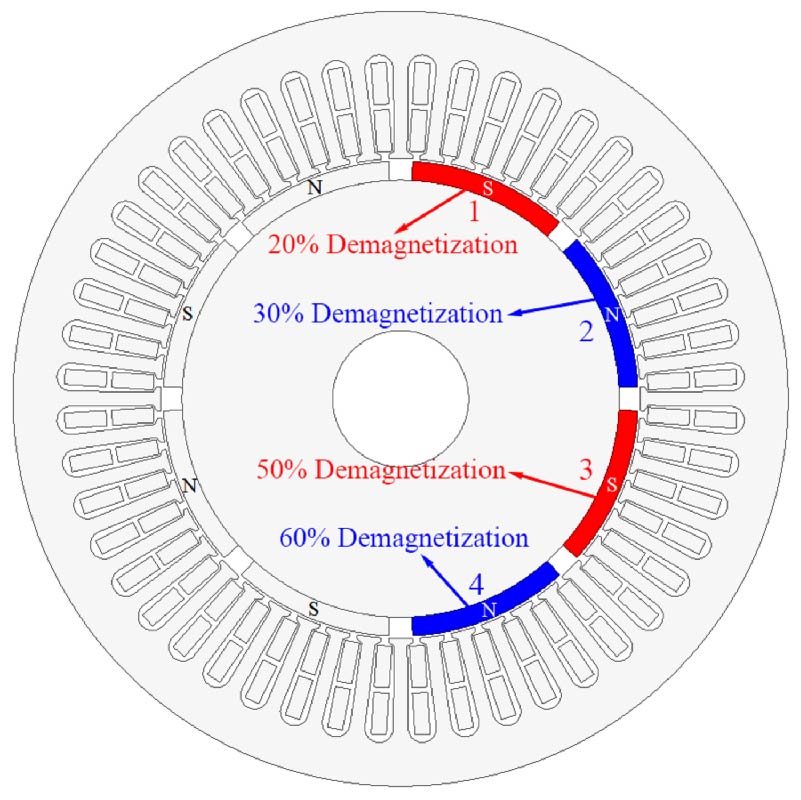
Aiming at the problems of weak distinctiveness and low diagnostic accuracy of permanent magnet synchronous motor (PMSM) demagnetization faults, a local demagnetization fault diagnosis method for PMSM based on Improved Empirical Wavelet Transform (IEWT) combined with Sparrow Search Algorithm (SSA) optimized Extreme Learning Machine (ELM) is proposed. Taking the radial leakage magnetic signal on the motor surface as the research object, the leakage magnetic experimental data under 15 different demagnetization states are extracted. To solve the problem of unreasonable spectrum segmentation in the EWT method, an adaptive decomposition with improved frequency band division is performed according to the special spectrum trend of PMSM leakage magnetic signals. Then, the normalized energy values of each intrinsic mode function (IMF) are calculated to form the corresponding feature vectors, which are input into the ELM model optimized by the SSA algorithm for demagnetization state identification. Experimental results show that the method based on IEWT-SSA-ELM has a significant improvement in fault identification effect compared with the unimproved and unoptimized methods.
Demagnetization Fault Diagnosis of Permanent Magnet Synchronous Motor Based on IEWT-SSA-ELM
2025-10-28
PIER C
Vol. 161, 76-87, 2025
download: 80
Compact Substrate-Integrated Waveguide Bandpass Filter Using Open-Circuited and Short-Circuited Vias and Slots
Qun-Lin Chen and Chun-Long Wang
This paper presents a compact substrate-integrated waveguide (SIW) bandpass filter featuring a simple structure and transmission zeros. The proposed filter utilizes a quarter-wavelength transmission line in conjunction with a short-circuited and open-circuited via structure to achieve a third-order bandpass filter response. The filter achieves a passband from 14.15 GHz to 15.86 GHz with a return loss (|S11|) better than -10 dB, indicating good impedance matching. To enhance out-of-band rejection, single- and double-slot structures are introduced along the quarter-wavelength transmission line of the SIW filter without increasing the overall circuit area. The SIW filter using the single-slot structure generates a transmission zero at 16.5 GHz, albeit with limited suppression. In contrast, the SIW filter using the double-slot structure introduces a deeper transmission zero at the same frequency, substantially improving stopband attenuation while maintaining excellent passband performance. The proposed filter offers high selectivity, compact size, and structural simplicity, making it a strong candidate for high-frequency communication and radar system applications. To validate the design, prototypes of the SIW bandpass filter, including the prototype version, single-slot version, and double-slot version, were fabricated and measured. The measurement results show good agreement with the simulation results.
Compact Substrate-Integrated Waveguide Bandpass Filter Using Open-Circuited and Short-Circuited Vias and Slots
2025-10-28
PIER C
Vol. 161, 66-75, 2025
download: 103
SADEA-Tuned Broadband Circularly Polarized Metasurface-Inspired Monopole Antenna for Next-Generation Wireless Applications
Iltapawar Tirupati Laxman, Harikrishna Paik, Bikash Ranjan Behera and Mohammed H. Alsharif
In this investigation, a broad circularly polarized high-gain SADEA-tuned quasi-TM30-mode excited metasurface antenna at sub-6 GHz 5G band is shown. A linearly polarized (LP) monopole antenna in stage-1 with conventional partial ground is proposed. Then, in stage-2, a stair-cased partial ground plane is transformed to witness circular polarization (CP), an expanded part of stage-1. In stage-3 for next-generation wireless applications, the main objective is to improve the CP gain, impedance (10-dB BW), and axial bandwidths (3-dB BW), which will make it a good candidate for RF energy harvesting systems, a potential feature for next-generation wireless application. In this case, the application of a metasurface layer is an important step, significantly optimized by using AI-tuned SADEA method. The SADEA-tuned metasurface layer at 45 mm right above the λ/4 monopole radiator is integrated as a multi-layered structure. Finally, it is fabricated on a low-cost FR-4 substrate with thickness of 1.6 mm and offers a measured 116.3% 10-dB BW, 20.98% 3-dB BW, CP gain peak > 7.5 dBic, and antenna efficiency > 85% in the desired band of operation. With the introduction of SADEA optimization method not only the complexity was reduced while designing the metasurface layer, but simultaneously to the best of author’s knowledge, this is the first time such type of approach is followed towards the design of circularly polarized metasurface antenna for next-generation wireless applications.
SADEA-tuned Broadband Circularly Polarized Metasurface-inspired Monopole Antenna for Next-generation Wireless Applications
2025-10-27
PIER C
Vol. 161, 56-65, 2025
download: 125
Research on Control of Wireless Power Transfer System Based on Switched Inductor
Zhongjiu Zheng, Yanpeng Ma, Zhilong Wu, Xingfeng Cao, Qiangqiang Zhao and Fuyu Song
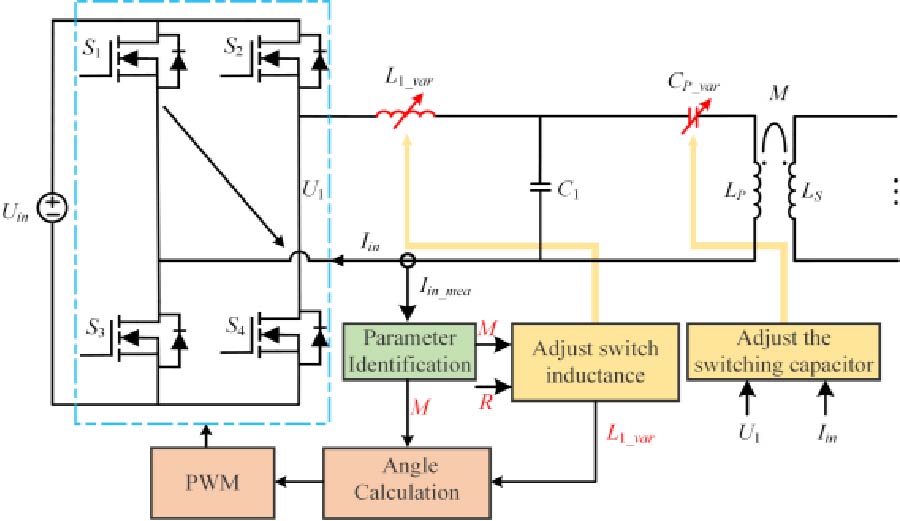
During the vehicle parking process, misalignment between transmitting and receiving coils caused by different parking positions results in variations in the system's mutual inductance. These variations compromise system performance and stability. To address this challenge, this study proposes a control strategy for a wireless power transfer system utilizing switched inductors. First, an efficiency optimization method based on tunable inductors is introduced in detail. This method eliminates the need for bilateral communication or additional hardware. By dynamically adjusting the switched inductor values, the system maintains optimal load conditions across various topologies. Furthermore, switched capacitors are employed to achieve system resonance tuning. Second, a phase-shift control strategy is implemented to ensure efficient system operation while maintaining constant voltage output. Finally, an experimental prototype is constructed to validate the proposed approach. Experimental results demonstrate that the proposed control method achieves a constant output voltage of 24 V with system efficiency exceeding 81%.
Research on Control of Wireless Power Transfer System Based on Switched Inductor
2025-10-25
PIER C
Vol. 161, 43-55, 2025
download: 193
High Efficiency Low Power RF Energy Harvesting System for LTE Band and IoT Applications
Bilal Salman Taha, Zeti Akma Rhazali, Jahariah Binti Sampe, Norun Farihah Abdul Malek, Mohammed Yousif Zeain and Adel M. Alkaseh
The prospective applications of a rectangular microstrip patch antenna (MPA) in energy harvesting at radio frequencies (EH). The study aims to develop a rectenna that can detect and connect low power wireless devices to long-term evolution (LTE) networks by capturing low-power radio frequency (RF) signals radiated by cell towers, since the Kappa 438 antenna substrate with relative permittivity 4.25 has high 9 dB gain and 83% of measured efficiency. For the 2.5 GHz LTE band, stubs technology is being used for impedance matching and to decrease the overall rectenna size. The captured RF signals were altered into a usable DC voltage via a rectifier circuit in the manufactured rectenna, having the option of storing the voltage in a battery or utilizing it to power wearable, portable Internet of Things (IoT) systems and wireless sensors. The rectifier circuit is reduced in size by utilizing the SMD-Schottky diode type SMS7630 segments approach, further reducing the complexity and bulk of the rectenna. The rectenna obtains an efficiency of 88% when the RF input power is tuned to 0 dBm, while the maximum output DC voltage generated is 1.7 V when the radio waves power supply is 10 dBm. The rectenna with high gain and directivity has the capability to operate in low power environments, capturing weak radio frequency signals and working across -10 to 10 dBm power dynamic range. power dynamic range. These outcomes represent new contribution to our work which is relevant to other studies listed in Table 6 and demonstrated notable improvements.
High Efficiency Low Power RF Energy Harvesting System for LTE Band and IoT Applications
2025-10-24
PIER C
Vol. 161, 37-42, 2025
download: 99
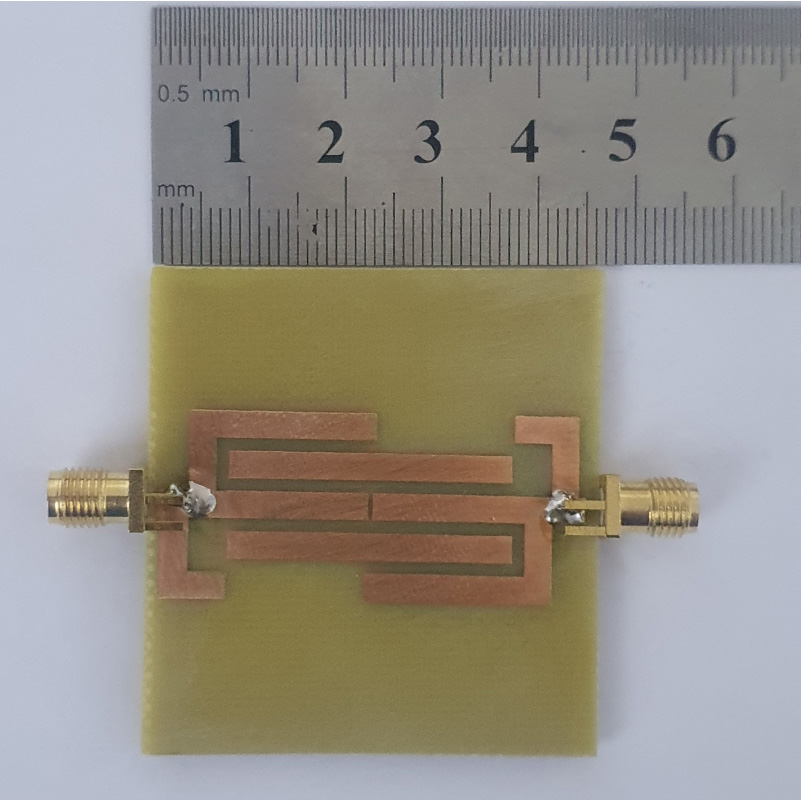
A Miniaturized Balanced Bandpass Filter with Biaxial Symmetry Using C-Section Parallel-Coupled Microstrip Lines
Chuan Shao, Xin Gao, Rong Cai, Xinnai Zhang and Kai Xu
In this paper, a miniaturized balanced bandpass filter characterized by biaxial symmetry is designed and implemented using four C-section parallel-coupled microstrip lines. As two orthogonal symmetric axes are inherently embedded across the filter layout, a natural geometric constraint is imposed and therefore furnishes two independent input/output port states. Owing to its symmetric topology, the developed filter replicates the same differential- and common-mode responses at each of its two independent input/output port pairs. To further enhance the common-mode suppression without compromising the differential-mode performance, a quarter-wavelength open-circuited stub is introduced onto the junction of one of the C-section parallel-coupled microstrip lines. By utilizing this stub, the common-mode suppression bandwidth is effectively broadened. Moreover, highly compact circuit sizes are achieved for the developed balanced filters, which is regarded as essential for their integration into modern miniaturized microwave communication systems. Finally, the feasibility of the proposed concept is verified through the design and fabrication of two prototypes, and good agreement is observed between the simulated and measured results.
A Miniaturized Balanced Bandpass Filter with Biaxial Symmetry Using C-Section Parallel-Coupled Microstrip Lines
2025-10-24
PIER C
Vol. 161, 27-36, 2025
download: 53
Design and Wireless Communication Performance Based on Broadband Millimeter Wave Patch Antenna
Luoyong Xiang and Wen Chen
The advancement of wireless communication has led to continuous innovation in antenna technology to satisfy the growing requirement for wireless communication. However, in wireless communication, antennas still face problems and challenges such as high power consumption and low adaptability. To address these issues, this study introduces magneto electric dipoles to optimize broadband millimeter wave patch antennas and uses metasurface optimization patches to ultimately design broadband dual-polarized millimeter wave metasurface antennas. In comparative tests at different temperatures, the gain of the broadband dual-polarization millimeter-wave meta-surface antenna reached a peak of 10.7 dBi at around 35 GHz at -50 ℃. At 0 ℃ and 50 ℃, the gain reached a peak of 10.2 dBi and 8.5 dBi, respectively. The result shows that the designed antenna has high accuracy, gain, and strong stability in wireless communication, and also has certain anti-interference ability in different environments.
Design and Wireless Communication Performance Based on Broadband Millimeter Wave Patch Antenna
2025-10-23
PIER C
Vol. 161, 12-26, 2025
download: 164
High Selectivity Tri-Coupled Line Bandpass Filter Based on Even- and Odd-Mode Impedance Modeling
Moretadha J. Kadhom
This research introduces a compact and highly selective tri-coupled line microstrip bandpass filter. The design features a narrow capacitive gap positioned at the midline to disrupt symmetry and facilitate bandpass functionality, as predicted through an even- and odd-mode image impedance framework. The split at the midline generates two modal capacitances (Cgg, Cgb), which influence Re (Zi) and, in conjunction with geometric coupling, determine the passband and roll-off characteristics. Closed-form relationships for microstrip design are utilized to compute line widths and electrical lengths. A systematic parametric analysis demonstrates how the gap and interline spacing impact the fractional bandwidth and the steepness of the transition. Additionally, a substrate survey across dielectric constants ranging from 2 to 12.2 quantifies the trade-off between footprint and selectivity, indicating an area reduction of up to approximately 86% at higher dielectric constants. The selectivity is further enhanced by incorporating auxiliary shunt open stubs that introduce transmission zeros near the edges without necessitating additional resonator sections. A prototype fabricated on an FR-4 substrate operating at 2.4 GHz confirms the theoretical model: the measured |S21| exhibits an insertion loss of approximately 0.58 dB, a fractional bandwidth at 3 dB of approximately 37.3%, a shape factor of 1.3, and two prominent TZs near 1.7 GHz and 3.1 GHz with rejection levels of 48-52 dB. Furthermore, the upper stopband maintains |S21| < -35 dB within the frequency range of 3.10 to 3.20 GHz. These findings substantiate that a single TCL section, featuring a central gap and open stubs, can achieve sharp roll-off and low insertion loss while maintaining minimal layout complexity and enabling straightforward tuning on low-cost printed circuit board materials.
High Selectivity Tri-coupled Line Bandpass Filter Based on Even- and Odd-mode Impedance Modeling
2025-10-22
PIER C
Vol. 161, 1-11, 2025
download: 133
Performance Enhanced Star Fractal Antenna with Fractal DGS and Metasurface Integration
Piyush Dalsania and Jagdish M. Rathod
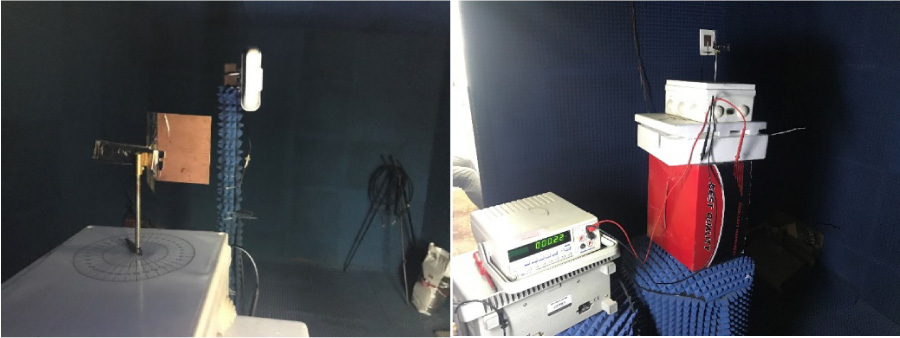
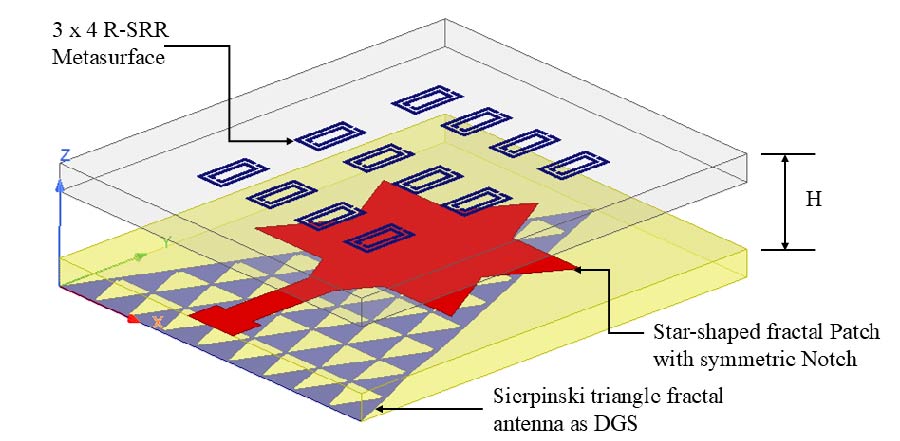
As wireless communication technologies evolve, the demand for more efficient and compact antennas has escalated. Fractal antennas, with their unique self-similar design, offer a promising solution to meet these needs. Traditional antenna designs often face limitations in bandwidth and efficiency, especially in complex environments like urban areas, where high-performance antennas are crucial. This paper proposed a novel star-fractal patch integrated with a Sierpinski triangle fractal defective ground structure. This combination creates a double fractal design, which is further enhanced by adding a rectangular split ring resonator (R-SRR) array as a metasurface superstrate to achieve a reasonable bandwidth with improved gain for C-band wireless applications. This novel antenna structure results in improved impedance matching within the 5.22 GHz to 5.78 GHz operating frequency range. Electromagnetic simulations and anechoic chamber measurements validate the performance parameters of the proposed antenna. A proposed compact fabricated antenna achieved a bandwidth of 10.24% with noteworthy improvements in directivity across the operating frequency range compared to a full ground structure. The measured results align closely with the simulated data, demonstrating the reliability of the design approach. The fractal antenna design demonstrated substantial enhancements in performance parameters, confirming its viability as a superior alternative to conventional antenna designs in enhancing wireless network capabilities. These advancements could enable next-gen wireless and IoT applications by solving challenges in miniaturization, integration, and multi-band operation. Future research aims to enhance capabilities with dynamic reconfigurability, wider and selective frequency coverage of metamaterial inspired fractal antennas.
Performance Enhanced Star Fractal Antenna with Fractal DGS and Metasurface Integration