Vol. 167
Latest Volume
All Volumes
PIERC 167 [2026] PIERC 166 [2026] PIERC 165 [2026] PIERC 164 [2026] PIERC 163 [2026] PIERC 162 [2025] PIERC 161 [2025] PIERC 160 [2025] PIERC 159 [2025] PIERC 158 [2025] PIERC 157 [2025] PIERC 156 [2025] PIERC 155 [2025] PIERC 154 [2025] PIERC 153 [2025] PIERC 152 [2025] PIERC 151 [2025] PIERC 150 [2024] PIERC 149 [2024] PIERC 148 [2024] PIERC 147 [2024] PIERC 146 [2024] PIERC 145 [2024] PIERC 144 [2024] PIERC 143 [2024] PIERC 142 [2024] PIERC 141 [2024] PIERC 140 [2024] PIERC 139 [2024] PIERC 138 [2023] PIERC 137 [2023] PIERC 136 [2023] PIERC 135 [2023] PIERC 134 [2023] PIERC 133 [2023] PIERC 132 [2023] PIERC 131 [2023] PIERC 130 [2023] PIERC 129 [2023] PIERC 128 [2023] PIERC 127 [2022] PIERC 126 [2022] PIERC 125 [2022] PIERC 124 [2022] PIERC 123 [2022] PIERC 122 [2022] PIERC 121 [2022] PIERC 120 [2022] PIERC 119 [2022] PIERC 118 [2022] PIERC 117 [2021] PIERC 116 [2021] PIERC 115 [2021] PIERC 114 [2021] PIERC 113 [2021] PIERC 112 [2021] PIERC 111 [2021] PIERC 110 [2021] PIERC 109 [2021] PIERC 108 [2021] PIERC 107 [2021] PIERC 106 [2020] PIERC 105 [2020] PIERC 104 [2020] PIERC 103 [2020] PIERC 102 [2020] PIERC 101 [2020] PIERC 100 [2020] PIERC 99 [2020] PIERC 98 [2020] PIERC 97 [2019] PIERC 96 [2019] PIERC 95 [2019] PIERC 94 [2019] PIERC 93 [2019] PIERC 92 [2019] PIERC 91 [2019] PIERC 90 [2019] PIERC 89 [2019] PIERC 88 [2018] PIERC 87 [2018] PIERC 86 [2018] PIERC 85 [2018] PIERC 84 [2018] PIERC 83 [2018] PIERC 82 [2018] PIERC 81 [2018] PIERC 80 [2018] PIERC 79 [2017] PIERC 78 [2017] PIERC 77 [2017] PIERC 76 [2017] PIERC 75 [2017] PIERC 74 [2017] PIERC 73 [2017] PIERC 72 [2017] PIERC 71 [2017] PIERC 70 [2016] PIERC 69 [2016] PIERC 68 [2016] PIERC 67 [2016] PIERC 66 [2016] PIERC 65 [2016] PIERC 64 [2016] PIERC 63 [2016] PIERC 62 [2016] PIERC 61 [2016] PIERC 60 [2015] PIERC 59 [2015] PIERC 58 [2015] PIERC 57 [2015] PIERC 56 [2015] PIERC 55 [2014] PIERC 54 [2014] PIERC 53 [2014] PIERC 52 [2014] PIERC 51 [2014] PIERC 50 [2014] PIERC 49 [2014] PIERC 48 [2014] PIERC 47 [2014] PIERC 46 [2014] PIERC 45 [2013] PIERC 44 [2013] PIERC 43 [2013] PIERC 42 [2013] PIERC 41 [2013] PIERC 40 [2013] PIERC 39 [2013] PIERC 38 [2013] PIERC 37 [2013] PIERC 36 [2013] PIERC 35 [2013] PIERC 34 [2013] PIERC 33 [2012] PIERC 32 [2012] PIERC 31 [2012] PIERC 30 [2012] PIERC 29 [2012] PIERC 28 [2012] PIERC 27 [2012] PIERC 26 [2012] PIERC 25 [2012] PIERC 24 [2011] PIERC 23 [2011] PIERC 22 [2011] PIERC 21 [2011] PIERC 20 [2011] PIERC 19 [2011] PIERC 18 [2011] PIERC 17 [2010] PIERC 16 [2010] PIERC 15 [2010] PIERC 14 [2010] PIERC 13 [2010] PIERC 12 [2010] PIERC 11 [2009] PIERC 10 [2009] PIERC 9 [2009] PIERC 8 [2009] PIERC 7 [2009] PIERC 6 [2009] PIERC 5 [2008] PIERC 4 [2008] PIERC 3 [2008] PIERC 2 [2008] PIERC 1 [2008]
2026-03-04 Latest Published
By Qurratul Ayn Yuvaraj Sivasubramanian Kiran Kumar Gurrala
Progress In Electromagnetics Research C, Vol. 167, 4-14, 2026
Abstract
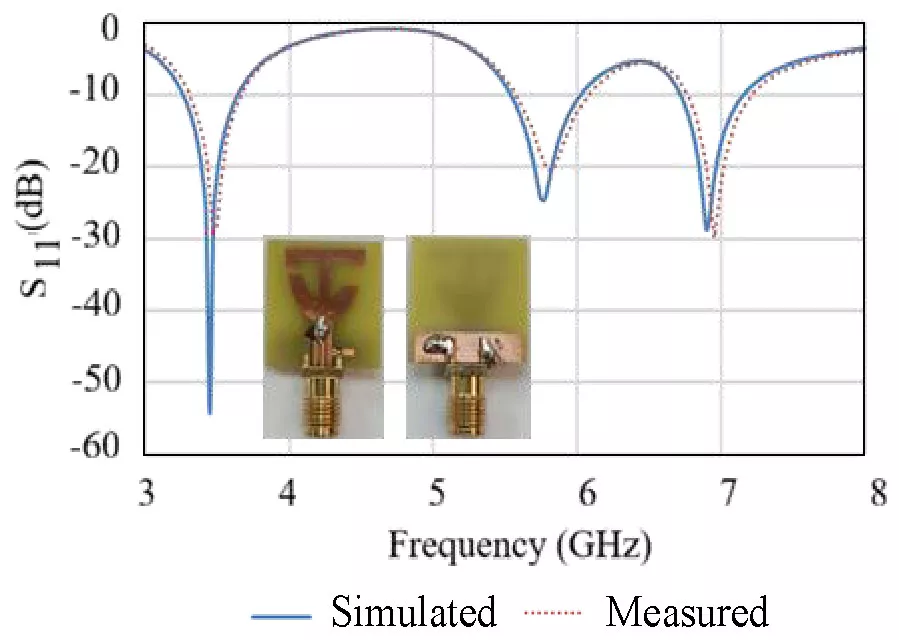
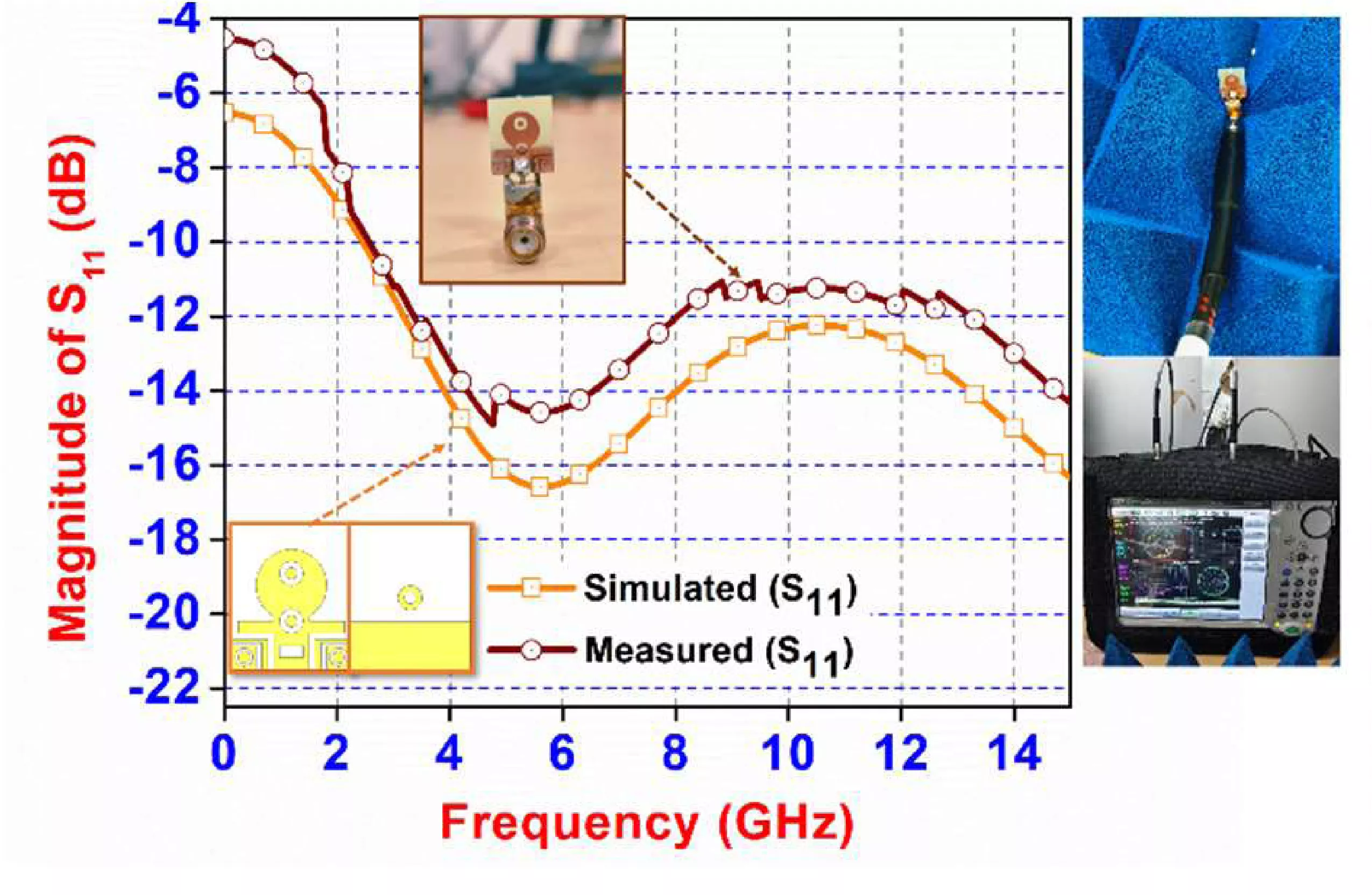
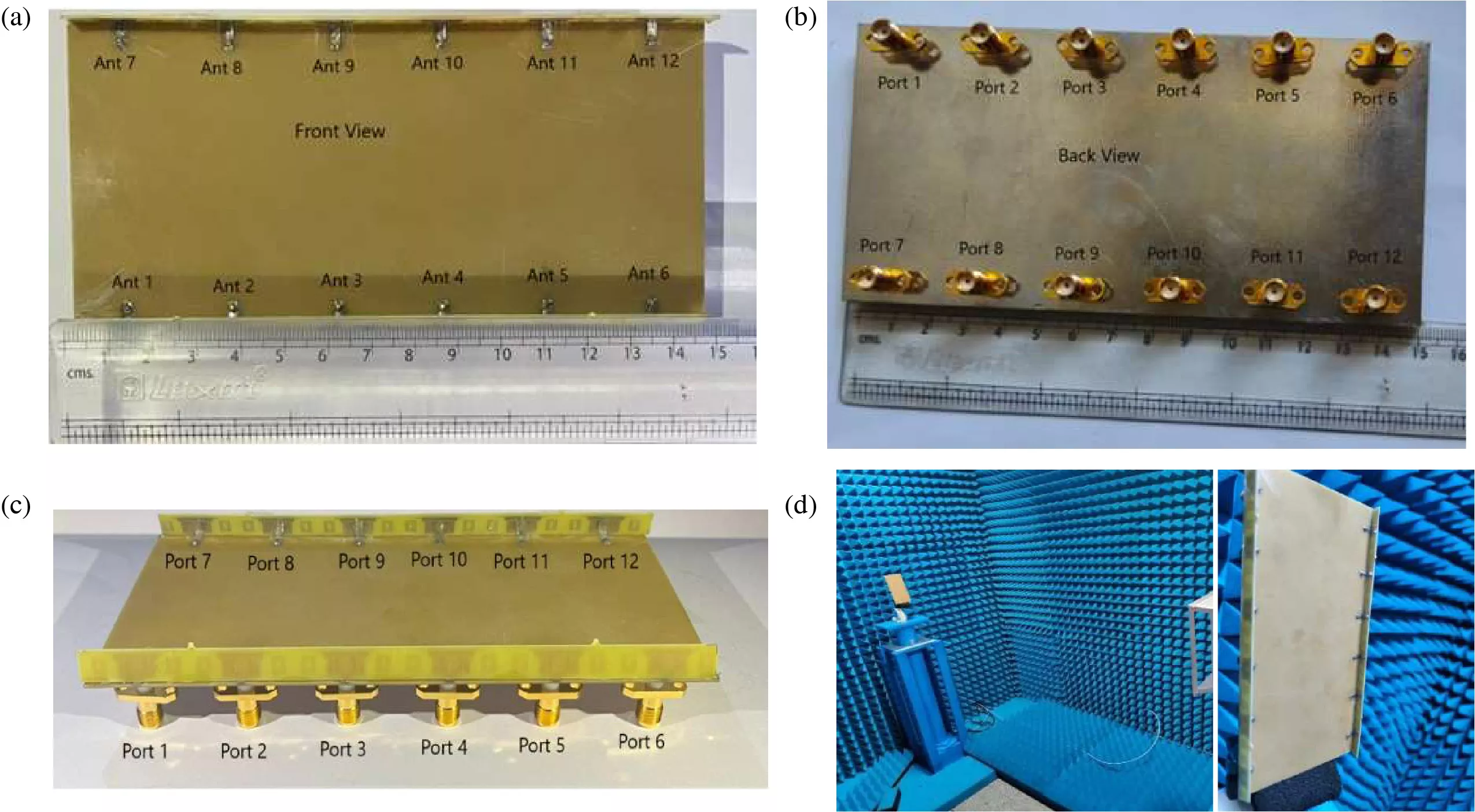
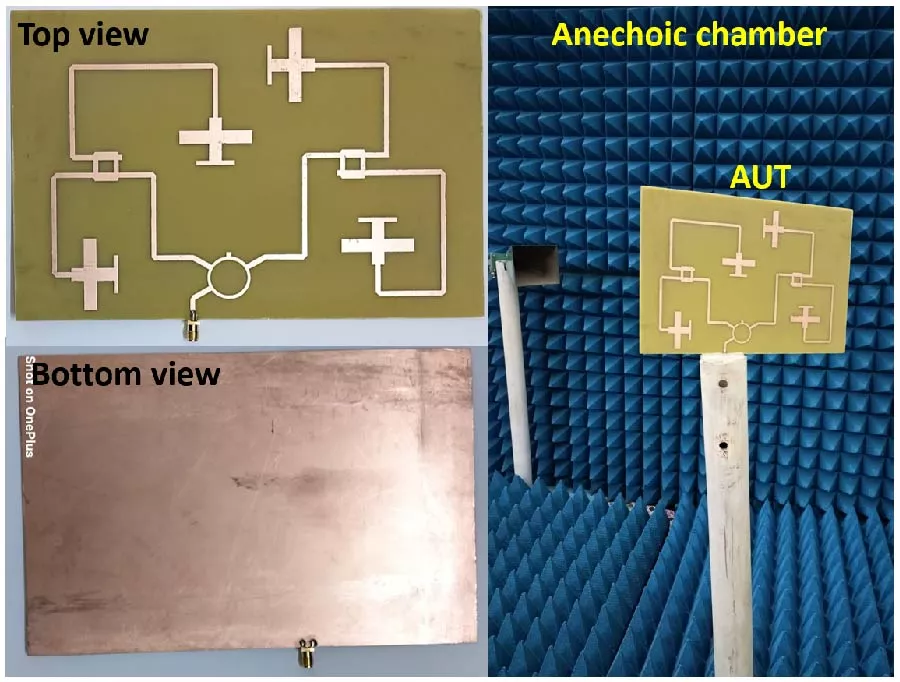
This work presents a dual-band circularly polarized antenna array in which adjacent elements are excited with quadrature phase progression using a cascaded hybrid-coupler feeding network comprising one rat-race coupler and two branch-line couplers. Double-T monopole elements enable dual-band operation, achieving impedance bandwidths of 300 MHz (2.4-2.7 GHz) and 975 MHz (5.025-6 GHz) with corresponding axial-ratio bandwidths of 110 MHz and 525 MHz. The array provides peak gains of 9.19 dB and 9.49 dB with simulated radiation efficiencies of 90% and 87% in the respective bands. The array yields peak realized gains of 9.19 dBic and 9.49 dBic with simulated total efficiencies of 90% and 87% in the corresponding bands. Unlike sequential rotation or multilayer CP arrays, the proposed single-layer planar hybrid-coupler network ensures frequency-stable dual band circular polarization. An analytical formulation of the array factor and axial ratio sensitivity is provided to clarify the CP synthesis mechanism and its suitability for compact vehicular platforms.
2026-03-04
PIER C
Vol. 167, 4-14, 2026
download: 23
High Gain Circularly Polarized Dual-Band Antenna Array Using Hybrid Couplers
Qurratul Ayn, Yuvaraj Sivasubramanian and Kiran Kumar Gurrala
This work presents a dual-band circularly polarized antenna array in which adjacent elements are excited with quadrature phase progression using a cascaded hybrid-coupler feeding network comprising one rat-race coupler and two branch-line couplers. Double-T monopole elements enable dual-band operation, achieving impedance bandwidths of 300 MHz (2.4-2.7 GHz) and 975 MHz (5.025-6 GHz) with corresponding axial-ratio bandwidths of 110 MHz and 525 MHz. The array provides peak gains of 9.19 dB and 9.49 dB with simulated radiation efficiencies of 90% and 87% in the respective bands. The array yields peak realized gains of 9.19 dBic and 9.49 dBic with simulated total efficiencies of 90% and 87% in the corresponding bands. Unlike sequential rotation or multilayer CP arrays, the proposed single-layer planar hybrid-coupler network ensures frequency-stable dual band circular polarization. An analytical formulation of the array factor and axial ratio sensitivity is provided to clarify the CP synthesis mechanism and its suitability for compact vehicular platforms.
High Gain Circularly Polarized Dual-band Antenna Array Using Hybrid Couplers
2026-03-04
PIER C
Vol. 167, 1-3, 2026
download: 31
Phase Noise Experimental Characterization of CRLH Distributed Oscillators
Walter Ciccognani, Antonio Serino, Giancarlo Bartolucci, Lucio Scucchia and Stefan Simion
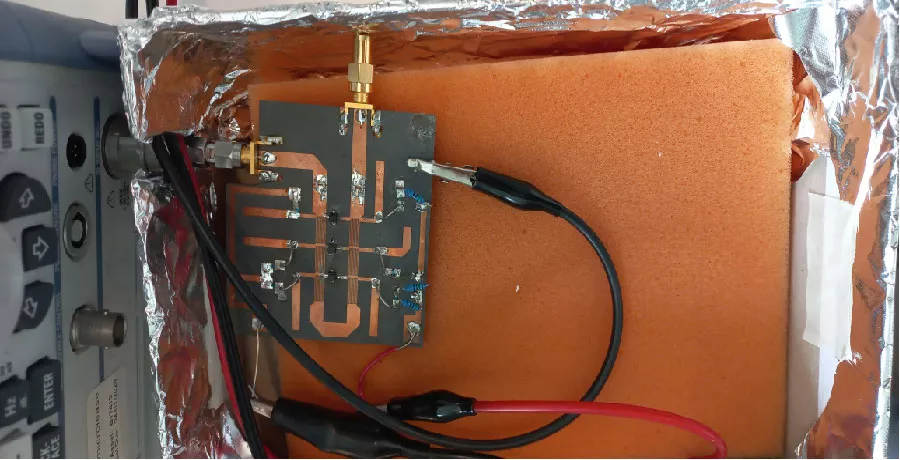
The phase noise levels of the output signals provided by two CRLH (Composite Right-/Left-Handed) distributed oscillator configurations are measured and compared. The first CRLH oscillator configuration provides two output signals, drain-line and gate-line output signals, available at the ends of the drain-line and gate-line that are not used for connecting the oscillator feedback. The second CRLH oscillator configuration is obtained by adding a Wilkinson power combiner to the first configuration that sums the drain-line and gate-line output signals for a single-output signal, a combined output signal. The experimental results show that the best performance in terms of output power and spectral purity can be obtained for the single-output CRLH oscillator.
Phase Noise Experimental Characterization of CRLH Distributed Oscillators