Vol. 160
Latest Volume
All Volumes
PIERC 162 [2025] PIERC 161 [2025] PIERC 160 [2025] PIERC 159 [2025] PIERC 158 [2025] PIERC 157 [2025] PIERC 156 [2025] PIERC 155 [2025] PIERC 154 [2025] PIERC 153 [2025] PIERC 152 [2025] PIERC 151 [2025] PIERC 150 [2024] PIERC 149 [2024] PIERC 148 [2024] PIERC 147 [2024] PIERC 146 [2024] PIERC 145 [2024] PIERC 144 [2024] PIERC 143 [2024] PIERC 142 [2024] PIERC 141 [2024] PIERC 140 [2024] PIERC 139 [2024] PIERC 138 [2023] PIERC 137 [2023] PIERC 136 [2023] PIERC 135 [2023] PIERC 134 [2023] PIERC 133 [2023] PIERC 132 [2023] PIERC 131 [2023] PIERC 130 [2023] PIERC 129 [2023] PIERC 128 [2023] PIERC 127 [2022] PIERC 126 [2022] PIERC 125 [2022] PIERC 124 [2022] PIERC 123 [2022] PIERC 122 [2022] PIERC 121 [2022] PIERC 120 [2022] PIERC 119 [2022] PIERC 118 [2022] PIERC 117 [2021] PIERC 116 [2021] PIERC 115 [2021] PIERC 114 [2021] PIERC 113 [2021] PIERC 112 [2021] PIERC 111 [2021] PIERC 110 [2021] PIERC 109 [2021] PIERC 108 [2021] PIERC 107 [2021] PIERC 106 [2020] PIERC 105 [2020] PIERC 104 [2020] PIERC 103 [2020] PIERC 102 [2020] PIERC 101 [2020] PIERC 100 [2020] PIERC 99 [2020] PIERC 98 [2020] PIERC 97 [2019] PIERC 96 [2019] PIERC 95 [2019] PIERC 94 [2019] PIERC 93 [2019] PIERC 92 [2019] PIERC 91 [2019] PIERC 90 [2019] PIERC 89 [2019] PIERC 88 [2018] PIERC 87 [2018] PIERC 86 [2018] PIERC 85 [2018] PIERC 84 [2018] PIERC 83 [2018] PIERC 82 [2018] PIERC 81 [2018] PIERC 80 [2018] PIERC 79 [2017] PIERC 78 [2017] PIERC 77 [2017] PIERC 76 [2017] PIERC 75 [2017] PIERC 74 [2017] PIERC 73 [2017] PIERC 72 [2017] PIERC 71 [2017] PIERC 70 [2016] PIERC 69 [2016] PIERC 68 [2016] PIERC 67 [2016] PIERC 66 [2016] PIERC 65 [2016] PIERC 64 [2016] PIERC 63 [2016] PIERC 62 [2016] PIERC 61 [2016] PIERC 60 [2015] PIERC 59 [2015] PIERC 58 [2015] PIERC 57 [2015] PIERC 56 [2015] PIERC 55 [2014] PIERC 54 [2014] PIERC 53 [2014] PIERC 52 [2014] PIERC 51 [2014] PIERC 50 [2014] PIERC 49 [2014] PIERC 48 [2014] PIERC 47 [2014] PIERC 46 [2014] PIERC 45 [2013] PIERC 44 [2013] PIERC 43 [2013] PIERC 42 [2013] PIERC 41 [2013] PIERC 40 [2013] PIERC 39 [2013] PIERC 38 [2013] PIERC 37 [2013] PIERC 36 [2013] PIERC 35 [2013] PIERC 34 [2013] PIERC 33 [2012] PIERC 32 [2012] PIERC 31 [2012] PIERC 30 [2012] PIERC 29 [2012] PIERC 28 [2012] PIERC 27 [2012] PIERC 26 [2012] PIERC 25 [2012] PIERC 24 [2011] PIERC 23 [2011] PIERC 22 [2011] PIERC 21 [2011] PIERC 20 [2011] PIERC 19 [2011] PIERC 18 [2011] PIERC 17 [2010] PIERC 16 [2010] PIERC 15 [2010] PIERC 14 [2010] PIERC 13 [2010] PIERC 12 [2010] PIERC 11 [2009] PIERC 10 [2009] PIERC 9 [2009] PIERC 8 [2009] PIERC 7 [2009] PIERC 6 [2009] PIERC 5 [2008] PIERC 4 [2008] PIERC 3 [2008] PIERC 2 [2008] PIERC 1 [2008]
2025-10-22
PIER C
Vol. 160, 275-281, 2025
download: 99
A Compact Wideband Circularly Polarized RFID Reader Antenna with a Coupling Inner Ring
Qiaomei Zhang, Wenchao Zhang and Jiade Yuan
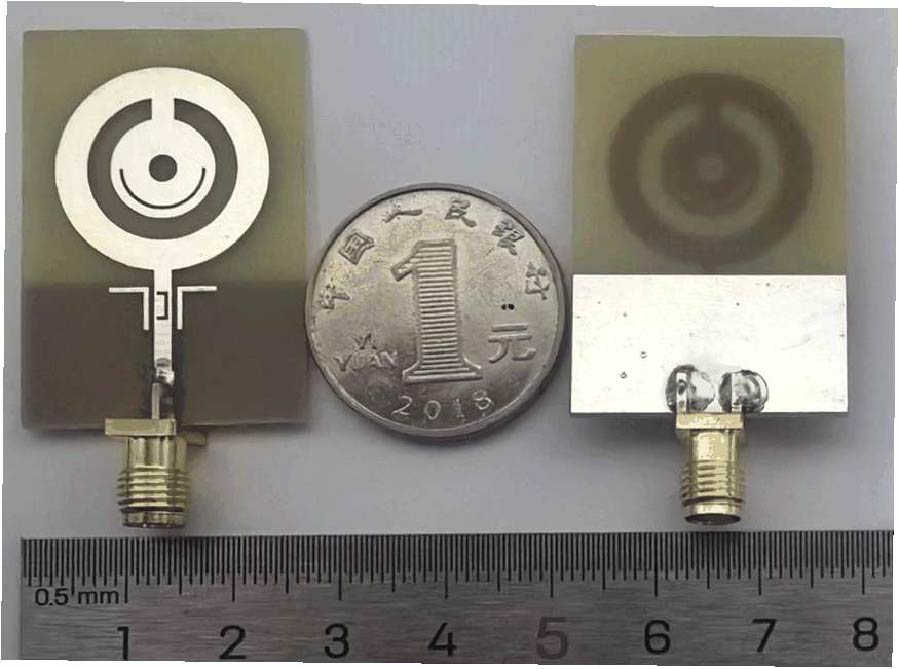
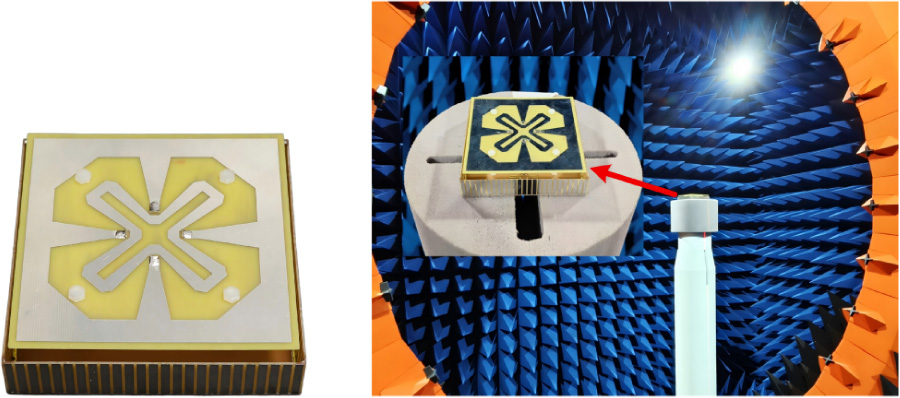
A compact wideband circularly polarized radio frequency identification (RFID) reader antenna with a coupling inner ring is proposed. The antenna consists of a radiating patch, a feeding network, and vertical fences along the sidewalls. The radiating patch incorporates both an outer ring and a coupling inner ring, which significantly broadens the gain bandwidth. Meanwhile, the sidewall-loaded vertical fences effectively extend the surface current path, enabling directional radiation. The overall antenna size is 100 mm × 100 mm × 24.6 mm. Measured results show a -10 dB impedance bandwidth of 663-1191 MHz, a 3 dB axial ratio bandwidth of 710-1085 MHz, a 4.5 dBic gain bandwidth of 885-1150 MHz and a maximum gain of 6.36 dBic. Featuring a compact structure, wide impedance bandwidth, broad axial ratio bandwidth, and enhanced gain performance, the proposed antenna is well suited for ultra high frequency (UHF) RFID applications, particularly in space-constrained environments or in scenarios where tag antennas are susceptible to frequency deviations.
A Compact Wideband Circularly Polarized RFID Reader Antenna with a Coupling Inner Ring
2025-10-22
PIER C
Vol. 160, 263-274, 2025
download: 84
Investigation of Rectangular Dielectric Resonator MIMO Antenna with Modes for 5G-Millimeter-Wave Applications
Garima Sharma and Mithilesh Kumar
A four-port cross-shaped RDRA multiple-input-multiple-output antenna is proposed for 5G millimeter-wave applications. The present investigation targeted the 5G n257 band (26.5-29.5 GHz) with resonance exactly at 28.5 GHz. The proposed DR MIMO antenna is constructed over roger RT duroid 5880 laminates with the floor area 10.4×10.4×0.254 mm3 with the compact DRA of dimension 7.6×7.6×1.5 mm3. Each element of the DRA is fed by conformal fed microstrip line that generates TE21∂, TE41∂, TE11∂, TM14∂ and TM41∂ modes. The symmetricity of the structure is maintained by locating four arms of the DRA at a separation of 90°, that generates omnidirectional radiation pattern and offers good radiation diversity. The proposed antenna offers 14% impedance bandwidth with below -15 dB isolation. Following the thorough simulation procedure, it has been verified that the compact MIMO DRA operates exactly at 28.5 GHz. To validate design, a four-port single element DRA operating at 28.5 GHz was simulated in CST studio suite, fabricated via ceramic material and then measured in anechoic chamber. The proposed antenna shows the peak gain of 8.4 dBi with 74% radiation efficiency. Both simulation and measurement observations are used to examine the MIMO parameters. The Envelope correlation coefficient is reported as 0.0125 and Diversity gain is reported as 9.8 in approximately all the cases. The Total Active Reflection Coefficient is found to be 18% at 28.5 GHz in measurement and 18.5% at 28.5 GHz in simulation.
Investigation of Rectangular Dielectric Resonator MIMO Antenna with Modes for 5G-Millimeter-Wave Applications
2025-10-18
PIER C
Vol. 160, 254-262, 2025
download: 83
Calculation of Equivalent Series Resistance of an Annular Receiving Coil with an Embedded Magnetic Core
Ruichen Qian, Chenzhi Lu, Zhixin Li, Xinyu Li, Kewei Zhu and Jinyang Gao
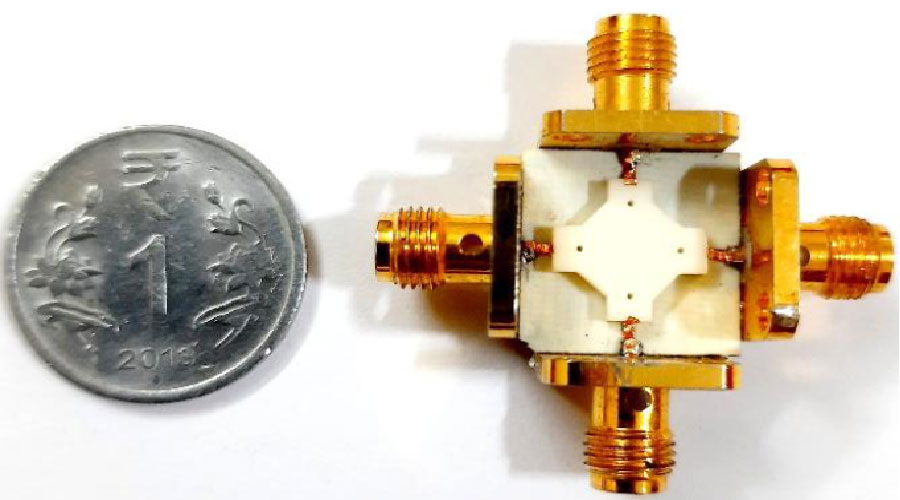
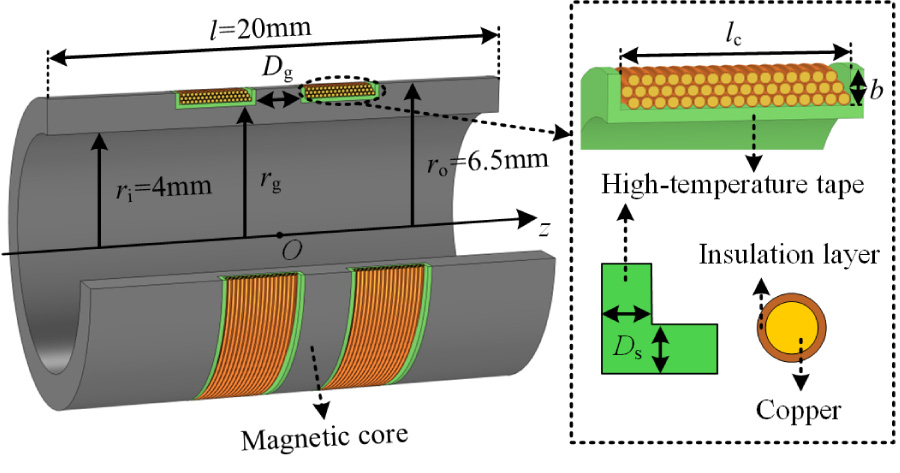
The annular micro receiving coil (RC) holds promise in the wireless power supply for capsule endoscopy (CE). The equivalent series resistance (RSR) of the RC plays a critical role in energy transmission efficiency. Calculating the RSR is challenging because RC typically incorporates an embedded magnetic core. To overcome this challenge, this paper employs Dowell's method and the Bessel's method respectively to calculate RSR. The analyzed RC consists of an annular core with two grooves and dual windings positioned within the grooves. The influence of the magnetic core on the RSR is equivalently considered through the winding skin effect and core losses. We compared the simulated, calculated, and measured values of the RSR, and found that: the error of Dowell's method becomes smaller when the groove spacing Dg > 4 mm, but fails to capture the influence of Dg on the RSR. Conversely, Bessel's method effectively captures the influence of Dg but exhibits larger errors (2.09%~26.52%). Based on this finding, we propose a novel Bessel-modified Dowell's (BMD) method by integrating the framework of Dowell's method with a proximity-effect correction term from Bessel's method, which reduces the maximum calculation error to within 13.72%, facilitating rapid optimization of annular coils with embedded magnetic cores.
Calculation of Equivalent Series Resistance of an Annular Receiving Coil with an Embedded Magnetic Core
2025-10-18
PIER C
Vol. 160, 244-253, 2025
download: 90
Fast Voltage Stabilization Control of Dual Three Phase Permanent Magnet DC Power Generation System for Flywheel Energy Storage
Xinjian Jiang, Zhijian Ling, Fuwang Li, Zhenghui Zhao and Zhiru Li
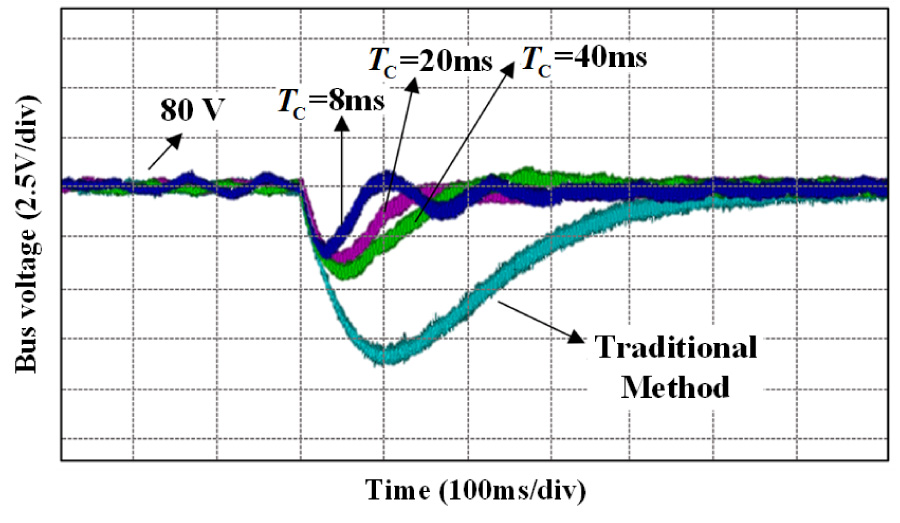
This paper proposes a fast voltage regulation control method based on direct power calculation. To suppress the issues of long bus voltage recovery time and large voltage fluctuation in dual three-phase permanent magnet generator, firstly, in the voltage outer loop, the fast adjusting component of the inner loop power reference is derived through a direct power calculation method. This approach enhances the dynamic response of the bus voltage. Secondly, to mitigate control errors induced by system losses, a capacitor power compensation method is introduced to generate an error compensation component for the power reference, thereby improving the voltage control accuracy. Finally, the feasibility and effectiveness of the proposed control strategy are validated through both software simulations and experimental tests. In comparison with conventional methods, the proposed strategy provides stronger disturbance rejection and a faster dynamic response, enabling high-performance DC bus voltage control for dual three-phase permanent magnet generator systems.
Fast Voltage Stabilization Control of Dual Three Phase Permanent Magnet DC Power Generation System for Flywheel Energy Storage
2025-10-17
PIER C
Vol. 160, 235-243, 2025
download: 85
A Deadbeat Predictive Disturbance Suppression Model for Permanent Magnet Synchronous Motor Flux Weakening Control
Han Liu, Yang Yu, Xin Wang, Zhixin Liu and Zehua Gong
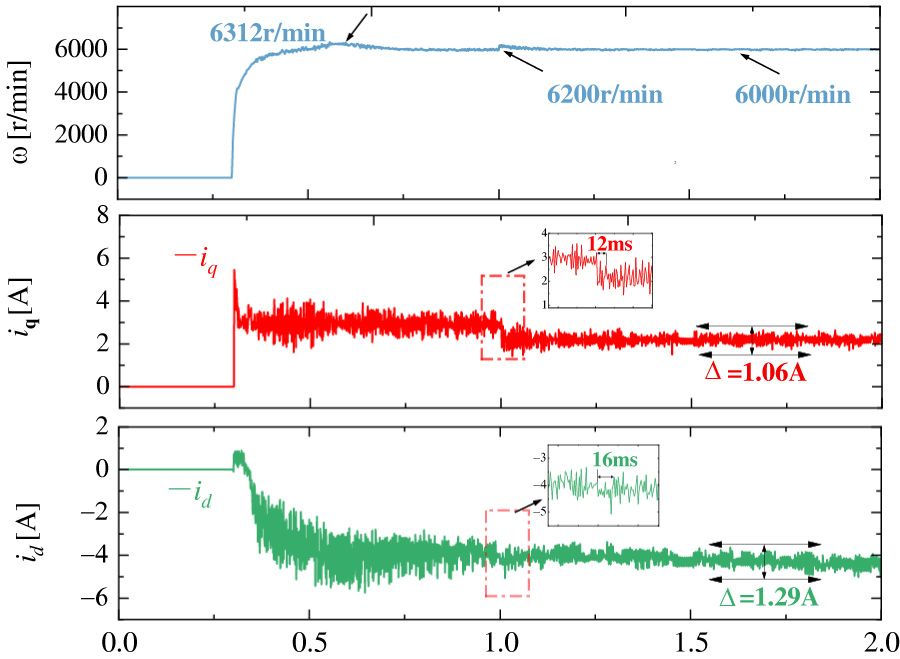
To enhance robustness and dynamic performance of permanent magnet synchronous motor (PMSM) drives at high speeds, a deadbeat predictive current control method based on a predictive disturbance suppression model (DPCC-PDSM) is proposed. First, the mathematical model of the PMSM and the principle of traditional deadbeat predictive current control (DPCC) are presented. Second, to estimate and compensate disturbance effects caused by external uncertainties, a predictive disturbance suppression model is designed by integrating the recursive least squares (RLS) algorithm with an extended state observer (ESO). Furthermore, leading angle flux weakening control strategy is incorporated into the predictive control framework to overcome voltage and current limitations in high-speed operation. Finally, the stability and effectiveness of the proposed method are validated through experiments. The results demonstrate that the DPCC-PDSM significantly improves robustness and ensures stable and reliable performance of PMSM drives in high-speed flux weakening operation.
A Deadbeat Predictive Disturbance Suppression Model for Permanent Magnet Synchronous Motor Flux Weakening Control
2025-10-17
PIER C
Vol. 160, 225-234, 2025
download: 201
Machine Learning Assisted Monopole Antenna Optimization Using EONNC and SFIS Algorithm for Wearable Applications
Rajendran Ramasamy, Samidoss Chinnapparaj, Vellaichamy Rajavel, Venkatesh Pandi Ravichandran, Abbas Ali Farithkhan and Amanulla Yasmin Jenifer
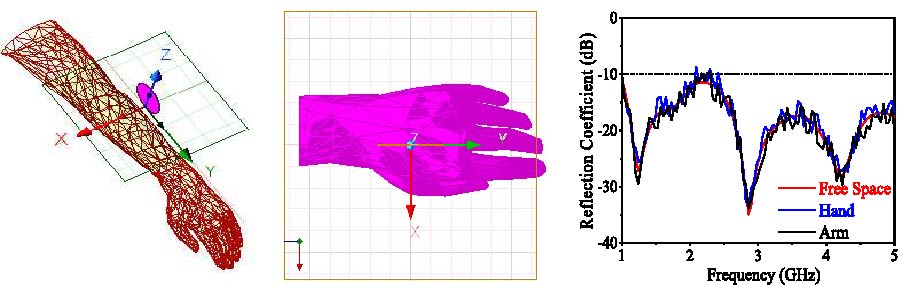
This paper examines the optimisation of antenna parameters for wire monopole, vertical trapezoidal monopole, and circular disc monopole antennas with the Enhanced Optimizable Neural Network Classifier (EONNC) and Sugeno Fuzzy Inference System (SFIS). This study includes both quantitative and conventional antenna design techniques, offering comprehensive insights into antenna optimisation tactics. An advanced antenna selection algorithm identifies the ideal antenna by a comprehensive examination of performance metrics with the EONNC, hence reinforcing the rigour of our research process. The geometric parameters of the antennas are delineated, with SFIS proficiently ascertaining the appropriate dimensions. The EONNC categorises antennas into three classifications, whereas the SFIS determines optimal parameters for estimating antenna size. Accuracy measures assess the EONNC performance, whereas the SFIS performance is measured using the Mean Squared Error (MSE) and Mean Absolute Percentage Error (MAPE). Our suggested technique demonstrates remarkable precision in parameter prediction and antenna classification, with a mean absolute percentage error (MAPE) of less than 4% and an accuracy exceeding 99.3%. The research examines the circular disc monopole antenna due to limitations in simulation duration for SAR measurements, resulting in SAR values of 0.978 W/kg for arm measurements and 0.985 W/kg for hand measurements. The proposed techniques are very relevant to actual antenna designs, especially for wearable applications.
Machine Learning Assisted Monopole Antenna Optimization Using EONNC and SFIS Algorithm for Wearable Applications
2025-10-10
PIER C
Vol. 160, 219-224, 2025
download: 78
Doublet-Based Tunable Bandstop Filters with Wide Frequency Tuning Range and Constant Bandwidth
Qi Zheng, Pengyu Yu, Yuhua Cheng and Pengde Wu
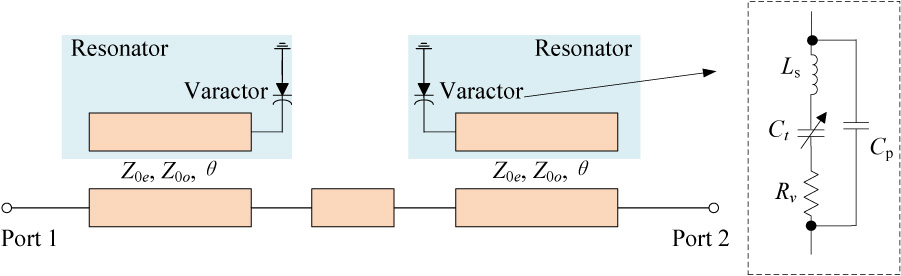
This paper introduces a novel method for designing a wideband tunable bandstop filter (BSF) with constant absolute bandwidth (ABW). The design uses a doublet configuration, where two varactor-tuned resonators are symmetrically coupled to a main transmission line. To maintain constant ABW during frequency tuning, a coupling scheme is proposed where coupling strength decreases as the frequency increases, eliminating the need for additional circuits. Theoretical analysis and closed-form equations are provided for designing the BSF with a wide tuning range. A BSF prototype is designed and tested, demonstrating a 10-dB ABW of approximately 190 MHz across a continuous stopband tuning range from 3.3 to 5.1 GHz, with a fractional tuning range of 42.9%.
Doublet-based Tunable Bandstop Filters with Wide Frequency Tuning Range and Constant Bandwidth
2025-10-07
PIER C
Vol. 160, 208-218, 2025
download: 130
Advances in Smart MIMO Antenna Technologies: A Comprehensive Review of Multipath Mitigation and Design Innovations
Emiliano J. Novas Rivera and Dibin Mary George
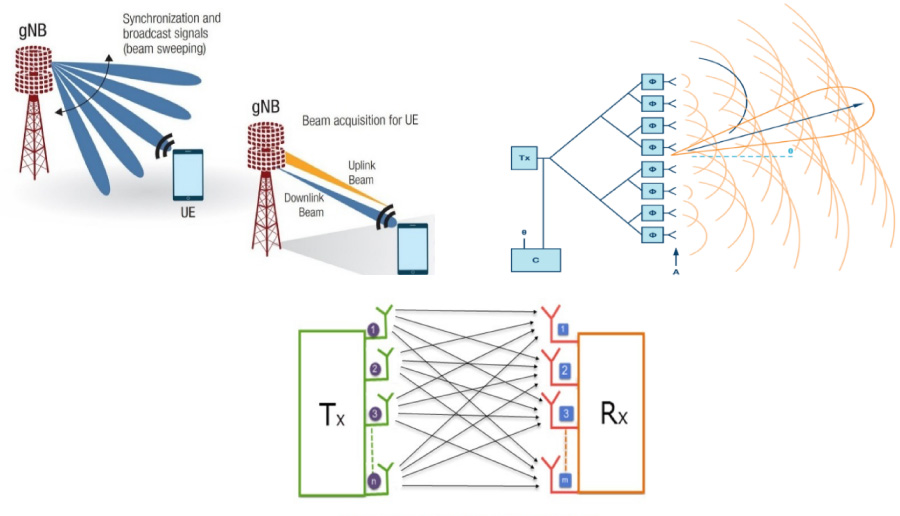
Smart antennas provide a unique and viable solution to the problem of multipath effects on signal propagation, particularly in the millimetre wave band. Multiple-Input Multiple-Output (MIMO) technology has certain advantages that can prove instrumental in not just eliminating multipath but turning it into an advantage and using it to improve communication link quality. With the use of MIMO and its unique beamforming capabilities, path loss can be significantly reduced, and more efficient use of the communications frequency spectrum can be achieved. MIMO antenna technology consists of a smart antenna array with multiple transmitting inputs and multiple receiving outputs. In this review, we compare some of the latest developments in MIMO technology. It focuses on design techniques, performance parameters, and novel developments. Recent developments include improvements in UWB, multi-band, and smart wear.
Advances in Smart MIMO Antenna Technologies: A Comprehensive Review of Multipath Mitigation and Design Innovations
2025-10-07
PIER C
Vol. 160, 196-207, 2025
download: 148
SOSANet: Multi-Scale Attention for Robust Rebar Quantity Classification in Complex EMI Scenarios
Jiale Chen, Ronghua Zhang, Yuxiang Liu, Tongyan Liu, Anan Dai and Zishu Hu
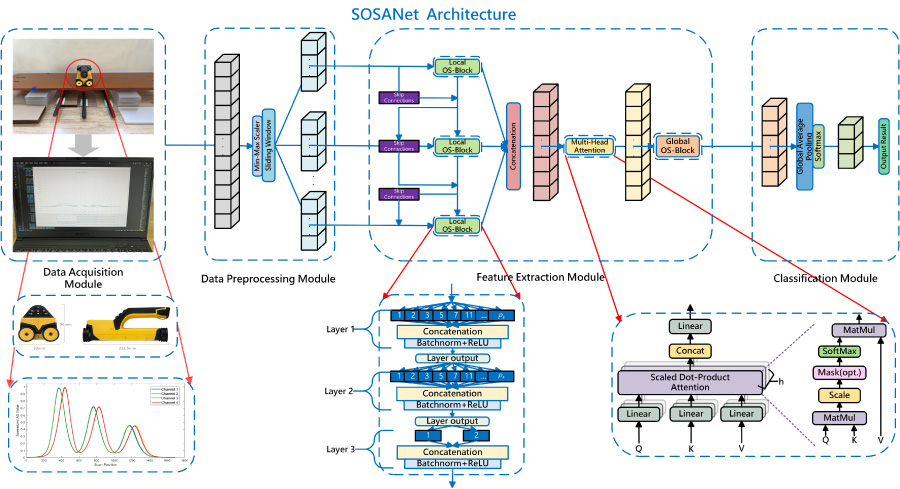
Electromagnetic induction (EMI) is a crucial non-destructive testing (NDT) technique for reinforced concrete structures, particularly for detecting and evaluating rebar distribution. However, the presence of multiple factors - including electromagnetic coupling effects from dense rebar arrangements, nonlinear waveform distortion due to rebar height differences, and environmental interference - renders traditional feature extraction methods inadequate for accurately reconstructing the rebar distribution parameters within the concrete cover. To address these challenges, a Sliding Omni-Scale Attention Network (SOSANet) is proposed in this paper. Initially, adaptive sliding window segmentation processes variable-length signals, preventing information distortion from signal truncation or padding. Subsequently, a dual-scale OS-Block architecture is constructed, wherein local small-scale OS-Blocks perform multi-scale feature extraction on the signals within each window. Furthermore, a multi-head attention mechanism and a global large-scale OS-Block are employed to model cross-window feature correlations, enhancing the discrimination of signal aliasing features induced by electromagnetic coupling among rebars. To address complex working conditions, a dataset of 1,740 samples comprising varying rebar quantities, cover thicknesses, spacings, and height differences was constructed. An interval random truncation strategy was employed to simulate scenarios involving incomplete signals. Five-fold cross-validation demonstrated that SOSANet achieves an F1-score of 99.34% for rebar quantity classification under complex working conditions, significantly outperforming 1D-CNN, Transformer, and other mainstream methods. Moreover, SOSANet maintains a high robustness with an F1-score of 99.03% under signal occlusion conditions.
SOSANet: Multi-Scale Attention for Robust Rebar Quantity Classification in Complex EMI Scenarios
2025-10-06
PIER C
Vol. 160, 183-195, 2025
download: 145
Photovoltaic Power Prediction Model Based on k-Shape-NGO-CNN-BiLSTM with Secondary Decomposition
Zhongan Yu, Faneng Wu, Long Chen, Siqi Zhu and Junjie Zhang
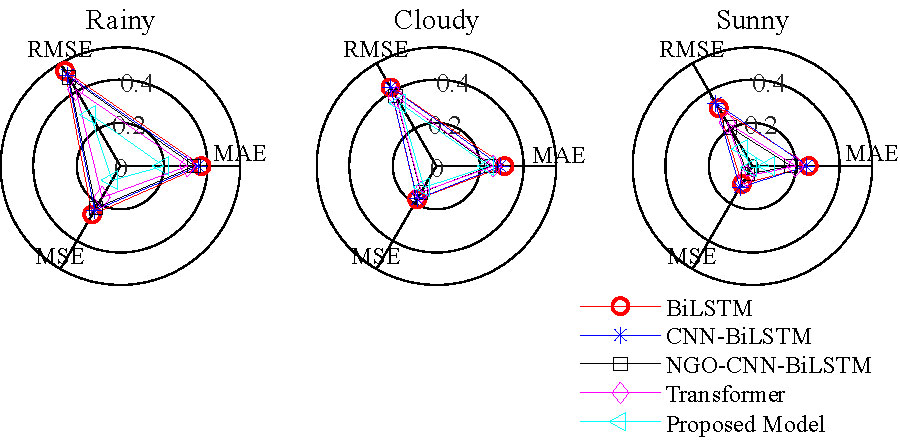
With the development of the photovoltaic industry, accurate power prediction is critical to grid stability. To address photovoltaic power's high sensitivity to meteorological conditions, nonlinearity, and non-stationarity, this paper develops a prediction model that integrates multi-scale features and intelligent optimization. First, correlation coefficients are used to screen key weather factors, and K-shape clustering is applied to classify operational scenarios into sunny, cloudy, and rainy types. For the power data of each scenario, multi-scale features are extracted via Complete Ensemble Empirical Mode Decomposition with Adaptive Noise (CEEMDAN), sample entropy secondary clustering, and Variational Mode Decomposition (VMD)-based deep decomposition. After fusing these features with weather factors, the integrated data is input into a Convolutional Neural Network-Bidirectional Long Short-Term Memory Network (CNN-BiLSTM), with hyperparameters optimized using the Northern Goshawk Optimization (NGO) algorithm. Verification with actual datasets indicates that this model outperforms traditional counterparts. Specifically, compared with the traditional BiLSTM model, its Mean Absolute Error (MAE) is reduced by 70.8%, 20.7%, and 47.0% under sunny, cloudy, and rainy scenarios, respectively - providing effective support for efficient dispatching and stable operation of photovoltaic power grids.
Photovoltaic Power Prediction Model Based on K-shape-NGO-CNN-BiLSTM with Secondary Decomposition
2025-10-02
PIER C
Vol. 160, 175-182, 2025
download: 103
SAR Aircraft Detection Network Based on Multi-Branch Collaborative Calibration and Feature Enhancement
Zengyuan Guo, Wei Xu, Pingping Huang, Weixian Tan and Zhiqi Gao
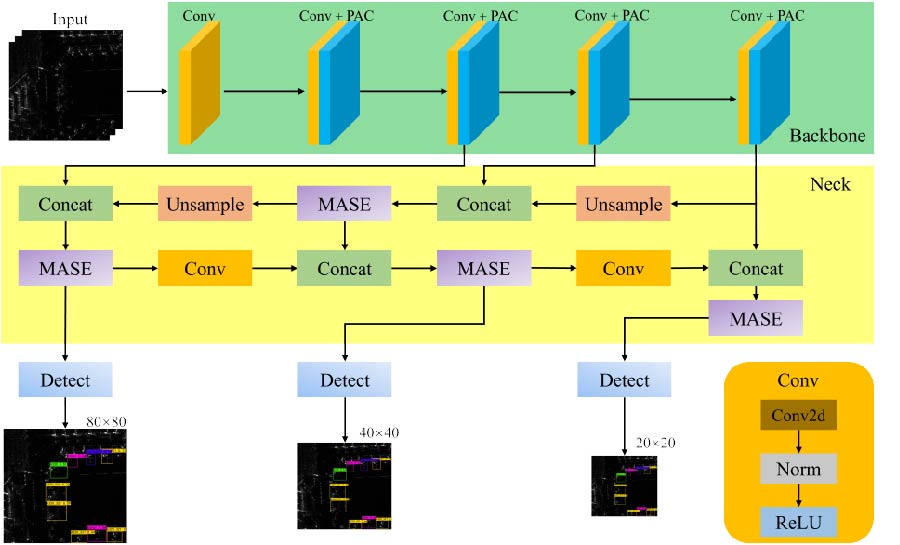
Aircraft target detection in synthetic aperture radar (SAR) images faces numerous challenges, primarily including weak contrast, diverse morphologies, and faint signals, which are even more pronounced in complex backgrounds. Meanwhile, practical deployment environments are constrained by limited computational resources and energy consumption, making it essential to balance detection accuracy with model lightweight design. To address this, this paper proposes a lightweight detection network that integrates multi-branch feature enhancement. First, a Parallel Aggregation and Calibration (PAC) module is designed to achieve collaborative modeling of local and global information through multi-scale dilated convolutions; second, a Moment Channel Attention (MCA) module based on higher-order statistical features is introduced to enhance the model's sensitivity to weak signals and target boundaries; finally, during the network fusion stage, the branch calibration connections in the PAC module are removed, and a frequency-domain-driven Efficient Discriminative Frequency domain-based FFN (EDFFN) module is incorporated to improve detailed representation of low-contrast and blurred targets. Experimental results on the SAR-Aircraft-1.0 dataset demonstrate that the proposed method achieves 93.94% mAP, while reducing model parameters by 56% and computational complexity by 36% compared to YOLOv12s, effectively balancing performance and lightweight requirements.
SAR Aircraft Detection Network Based on Multi-branch Collaborative Calibration and Feature Enhancement
2025-09-30
PIER C
Vol. 160, 169-174, 2025
download: 81
Exploitation of Scattering of VHF Electromagnetic Waves from Jet Engine Exhaust Plasma Formations to Improve Detection Low RCS Aircrafts
Thomas N. Chatziathanasiou, Athanasios Douklias and Nikolaos Uzunoglu
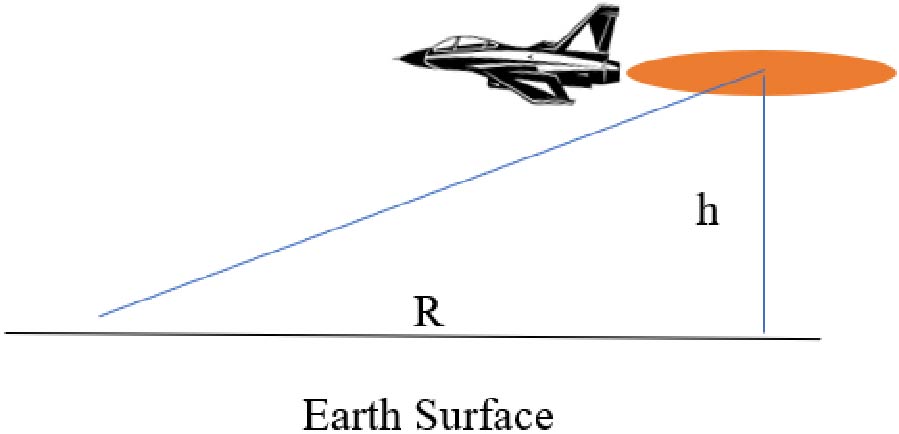
The feasibility of utilization of VHF radars, radiating at lower and just above the plasma frequency of the gas formation exhausts of jet engine aircrafts, is investigated as a means to propose anti-stealth detection method. In the first step, the scattering of electromagnetic waves by a plasma sphere is studied, and comparison with Physical Optics (P.O.) Radar Cross Section (RCS) computations is done. This shows the possibility of using P.O. to compute the RCS under the assumption of jet engine exhaust plume structured modelled as multilayer prolate spheroid. Also, in case of radiation frequencies just above the plasma resonance, under the condition of weak scattering - refractive index being close to unity - the Rayleigh-Gans approximation is used to compute the RCS. Furthermore, computations based on this model shows the possibility to enhance the RCS of aircrafts by combining the ``specular'' reflection of part of the exhaust with plasma resonance frequency being higher than the radar frequency and also the part of exhaust having plasma frequency just below the radar radiation frequency. The numerical results show promising mechanisms to compete to improve the detectability of aircrafts with RCS as low as 0,001 m2.
Exploitation of Scattering of VHF Electromagnetic Waves from Jet Engine Exhaust Plasma Formations to Improve Detection Low RCS Aircrafts
2025-09-30
PIER C
Vol. 160, 161-168, 2025
download: 71
Comparison Study on the Protection Characteristics of Non-Gap Line Arresters Against Lightning and Switching Transients in High-Voltage Power System
Tongwei Guo, Tao Liang, Wei Shen, Sen Wang, Jie Guo and Yan-Zhao Xie
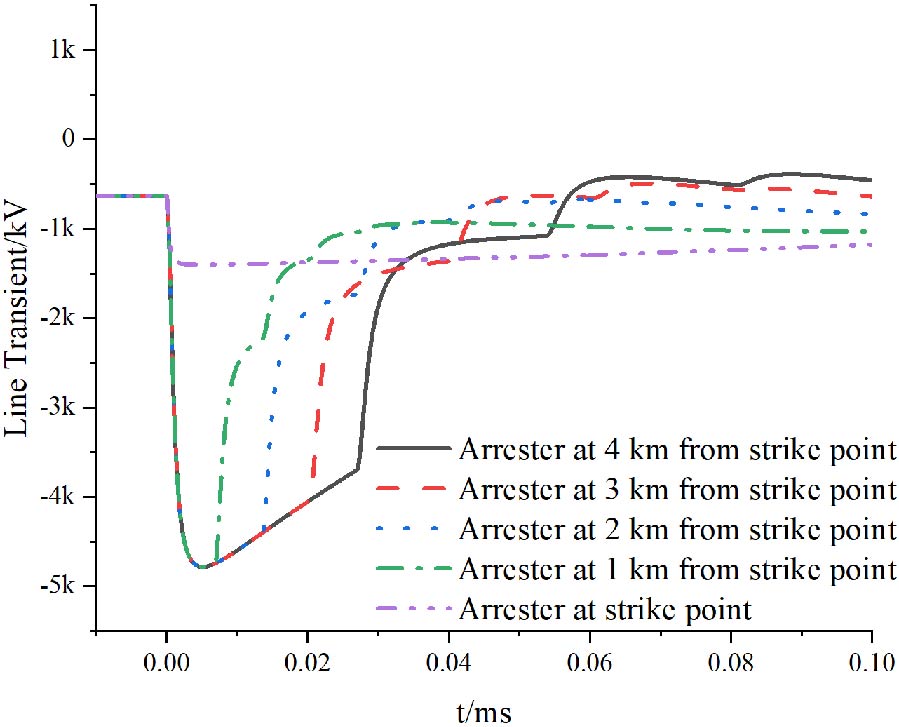
In ultra-high-voltage alternating current (HVAC) transmission systems, switching and lightning transients pose major challenges to insulation coordination. Non-gap line arresters (NGLAs) offer a promising distributed protection solution, capable of suppressing both types of transients when installed along the transmission corridor. However, the differences in protection performance under varying configurations and installation strategies remain insufficiently understood. This paper establishes a 750 kV, 400 km transmission line model using an ATP-EMTP and MATLAB co-simulation framework to investigate the transient suppression performance of NGLAs with different rated voltages and installation positions. Simulation results show that for switching transients, effective suppression of the 2% statistical overvoltage level below 1.8 p.u. can be achieved when NGLA is installed around an optimal position. Meanwhile, energy absorption of all arresters remains well below the 6 MJ thermal design threshold, confirming both suppression effectiveness and thermal stability. On the other hand, lightning transients exhibit strong spatial locality. NGLA can effectively reduce the lightning transient peak at positions close to lighting strike point. Even slight spatial offsets (1-5 km) drastically reduce its effectiveness in limiting peak voltage. Under typical lightning currents of 30-40 kA, the maximum energy absorbed by arresters remains below 2.2 MJ, demonstrating robust energy endurance. This study highlights the fundamental differences in propagation and protection mechanisms between switching and lightning transients, and underscores the need for differentiated arrester deployment strategies. The findings provide theoretical insight and engineering guidance for optimized NGLA configuration and insulation coordination in HVAC systems.
Comparison Study on the Protection Characteristics of Non-gap Line Arresters against Lightning and Switching Transients in High-voltage Power System
2025-09-29
PIER C
Vol. 160, 154-160, 2025
download: 102
Design of Multi-Resonator Coupled Duplexer Based on Electromagnetic Coupling Path Separation
Mingxin Liu, Jialin Zhang, Yan Zhang, Qunjie Zhang and Lin Fu
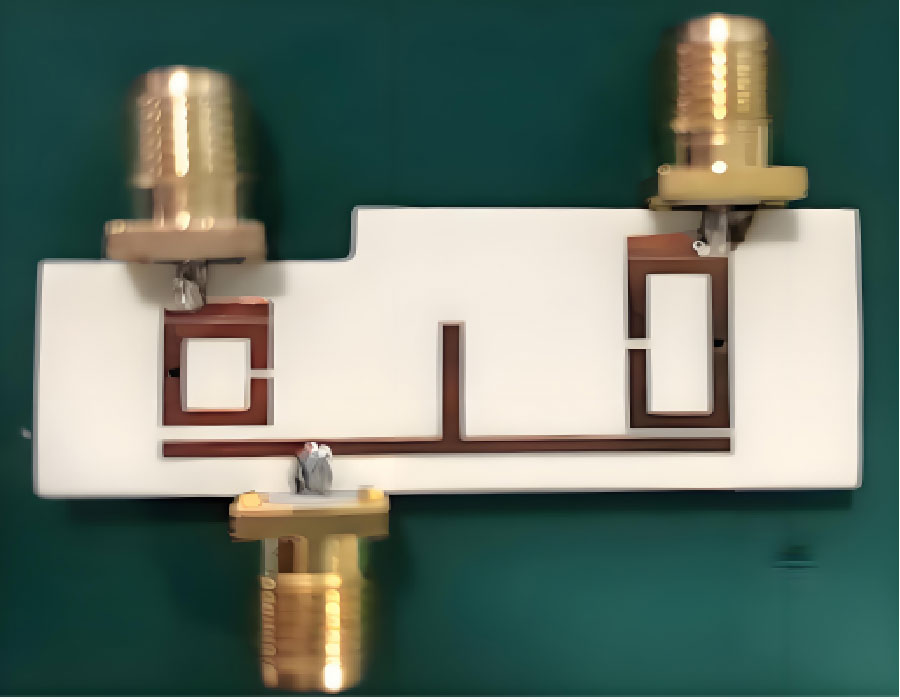
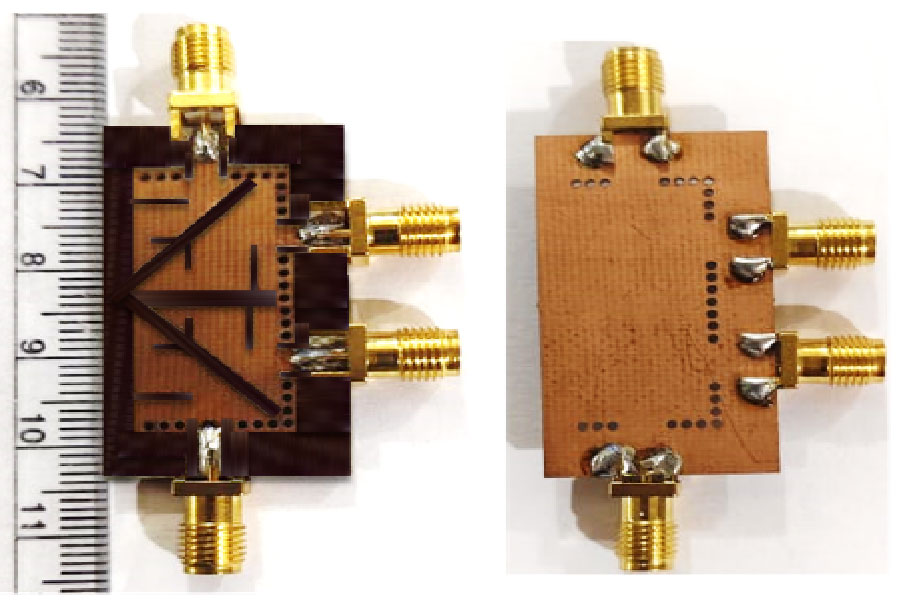
In RF front-end circuits, the miniaturization and high-performance integration of duplexer remain critical challenges for 5G communication and IoT devices. A microstrip duplexer design scheme is proposed based on electric and magnetic coupling path separation and dual-mode characteristics. Through the collaborative design of second-order uniform impedance resonators and dual-mode T-shaped resonators, the design achieves signal separation for dual frequency bands at 2.4 GHz and 3.6 GHz. The design forms the electric coupling path via edge-gap coupling of rectangular split-ring resonators, and realizes magnetic coupling path through vias. By independently regulating electric and magnetic coupling strengths, eight transmission zeros are introduced on both sides of the dual passbands, significantly enhancing out-of-band suppression and port isolation. The simulation results show that the passband insertion loss is less than or equal to 1.9 dB. Due to machining tolerances, the measured center frequencies shift to 2.04 and 3.48 GHz, while the out-of-band rejection remains better than 39 dB, validating the engineering adaptability of the design. This scheme achieves high-performance integration of RF front-ends in a compact architecture through the coordinated regulation of multiple transmission zeros and coupling path separation technology, providing a solution for wireless communication devices.
Design of Multi-resonator Coupled Duplexer Based on Electromagnetic Coupling Path Separation
2025-09-28
PIER C
Vol. 160, 143-153, 2025
download: 141
Magnetostrictive Vibration Behavior of an Amorphous Alloy Transformer Featuring a Three-Dimensional Coil Core
Romaric Kammeugue Noubissi, Daosheng Liu and Boxue Du
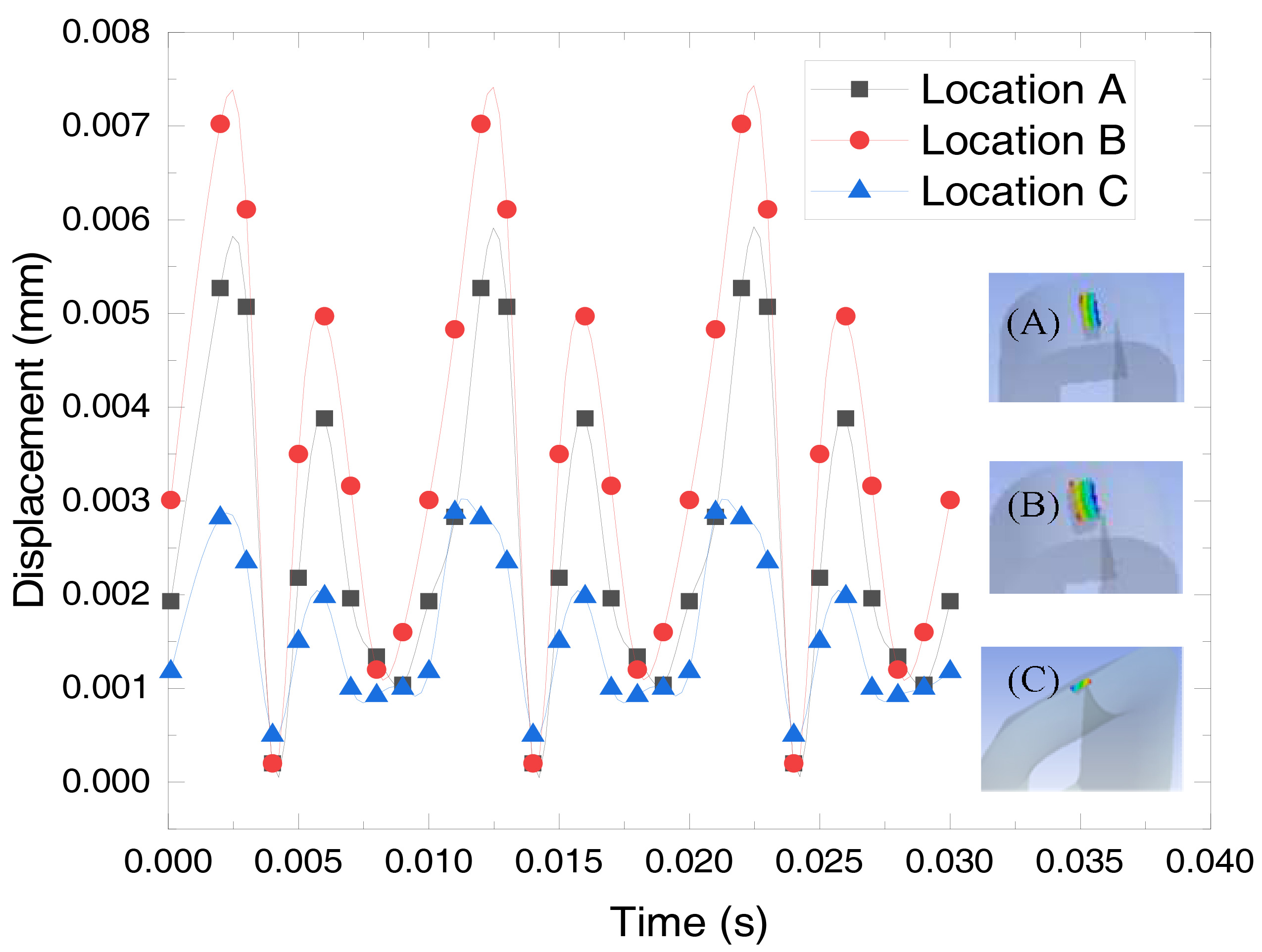
The novel amorphous alloy transformer featuring a closed three-dimensional coil core (CTDCC) represents an innovative approach to transformer structure. In contrast to the conventional three-phase five-column transformer equipped with a planar coil core (PCC), the CTDCC configuration displays a completely equal magnetic circuit, leading to improved short-circuit tolerance. Nevertheless, the design and manufacturing process of the core faces a notable engineering obstacle due to the amplified magnetostrictive coefficient of the amorphous alloy, resulting in vibration noise. In order to address this issue, a magnetic-mechanical coupling mathematical model is developed in this research to analyze the magnetostrictive effect of the amorphous alloy CTDCC. Three-dimensional finite element analysis (FEA) is utilized to compute the magnetic flux distribution and quivering dislocation dissipation of the CTDCC. Furthermore, a validation experiment is carried out on a 30 kVA amorphous alloy CTDCC model to confirm the precision of the model. Moreover, the CTDCC structure has been proven to effectively minimize surface vibrations compared to the PCC model. Additionally, it unveils the governing frequency law of vibration movement at various locations within the CTDCC structure. This revelation serves as a fundamental basis for developing strategies to mitigate vibrations and control noise during the CTDCC design.
Magnetostrictive Vibration Behavior of an Amorphous Alloy Transformer Featuring a Three-dimensional Coil Core
2025-09-27
PIER C
Vol. 160, 133-142, 2025
download: 161
A Miniaturized Highly Isolated Two Port Triple Band-Notched UWB MIMO Antenna Verified by Characteristic Mode Analysis
Haritha Thotakura, Rajesh Gogineni, Kosuri Srinivasa Rao, Chunduri Kiran Kumar, Ramesh Babu Sadineni and Sunitha Mandava
This article presents a compact highly isolated two-port ultra-wideband (UWB) multiple-input multiple-output (MIMO) antenna with triple band suppression features. The antenna measures 25 × 39 mm2 and comprises two orthogonally arranged microstrip-fed square radiators to achieve high inter-element isolation. A T-shaped and L-shaped stubs were incorporated into the ground plane to enhance isolation and broaden the impedance bandwidth. Triple band notches targeting Satellite C-band downlink (3.6-4.6 GHz), WLAN (4.9-5.5 GHz), and Wi-Fi 6E (6.1-6.7 GHz) are realized using three U-shaped slots introduced on each radiating element. The antenna's operation is analyzed through Characteristic Mode Analysis (CMA) by evaluating modal significance, characteristic angle, modal currents and mode patterns. MIMO performance is validated using key diversity metrics, including envelope correlation coefficient (ECC), diversity gain (DG), total active reflection coefficient (TARC), channel capacity loss (CCL), multiplexing efficiency (ME), and group delay. Results demonstrate an impedance bandwidth exceeding 2.9-10.6 GHz UWB range, with 90% radiation efficiency, peak gain of 6.2 dBi, ECC below 0.02, and mutual coupling under -20 dB. These outcomes confirm the efficacy of the proposed antenna in achieving compactness and high performance for UWB MIMO applications.
A Miniaturized Highly Isolated Two Port Triple Band-notched UWB MIMO Antenna Verified by Characteristic Mode Analysis
2025-09-26
PIER C
Vol. 160, 120-132, 2025
download: 108
Radar Maneuvering Target Detection and Motion Parameter Estimation Based on KT-SPCFCRD
Aihua Li, Wei Liu, Yuhang Wang, Hao Wang, Wenwen Xu and Jianyin Cao
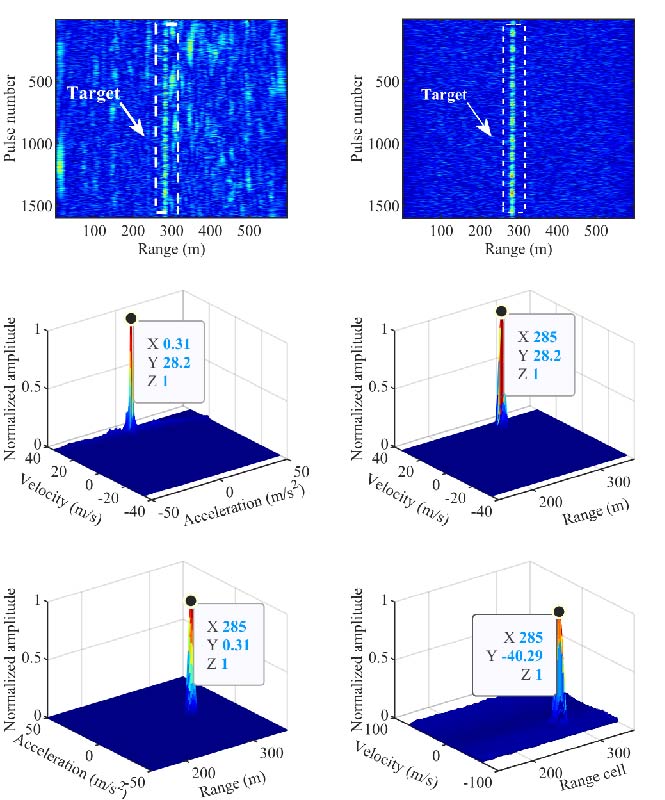
Long-time coherent integration (LTCI) is an effective method for maneuvering target detection, as it accumulates signal energy over a long observation period, thereby enhancing the signal-to-noise ratio (SNR). However, as the observation duration increases, range migration (RM) and Doppler frequency migration (DFM) occur, which degrade the integration performance. To this end, a scaling factor is first introduced into the parameterized centroid frequency–chirp rate distribution (PCFCRD) algorithm, thereby yielding the scaled PCFCRD (SPCFCRD), which enables flexible adjustment of the chirp rate estimation range and resolution. Furthermore, SPCFCRD is combined with the keystone transform (KT) to form the proposed KT-SPCFCRD algorithm. The RM caused by unambiguous velocity is first corrected by KT, after which the residual RM and DFM are further compensated by SPCFCRD to achieve coherent integration. The effectiveness of the proposed algorithm is validated through simulations and real-data analysis. Compared with several representative algorithms, KT-SPCFCRD achieves superior detection performance while maintaining a balanced computational cost.
Radar Maneuvering Target Detection and Motion Parameter Estimation Based on KT-SPCFCRD
2025-09-26
PIER C
Vol. 160, 113-119, 2025
download: 82
Study on Development of Rod-Electrode-Type Microwave Plasma Source at Atmospheric Pressure
Hidenori Sekiguchi
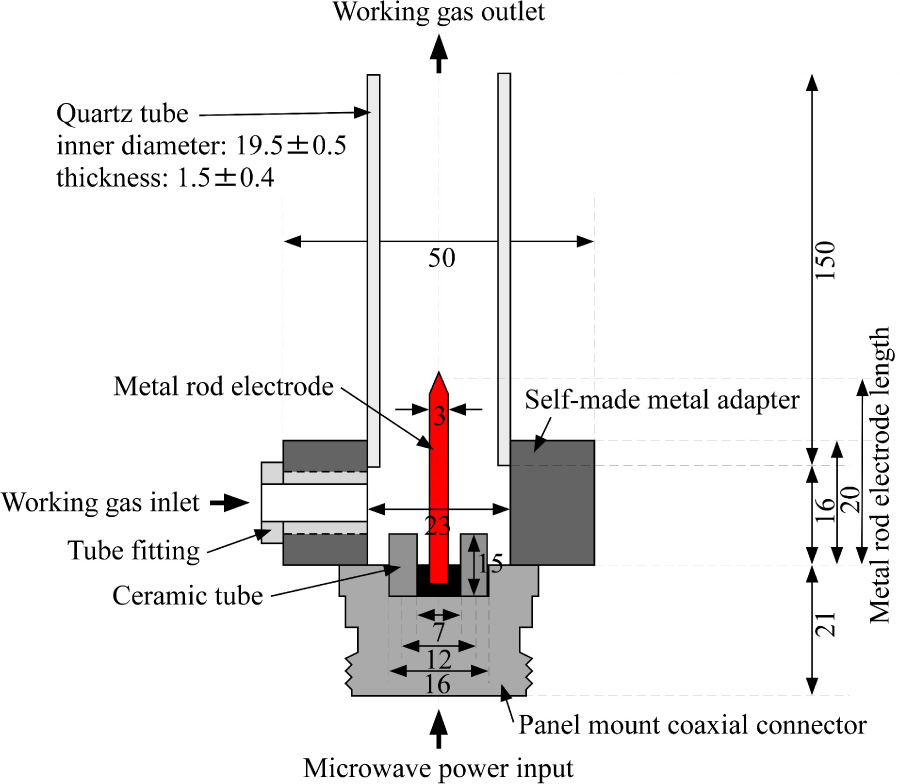
This paper presents a newly developed rod-electrode-type microwave plasma source (MPS), which is mainly composed of a panel mount coaxial connector, a self-made metal adapter with an inlet and outlet of working gas, a quartz tube as a flow path of working gas, and a metal rod-electrode. Microwave energy can be then supplied directly to the working gas from the sharp tip of the metal rod-electrode through the panel mount coaxial connector. To verify the validity of the rod-electrode-type MPS, a reasonable microwave power supply system is built to transmit the microwave power from a magnetron to the panel mount coaxial connector. The experiments demonstrate that the rod-electrode-type MPS can convert by autoignition argon (Ar) into plasma at atmospheric pressure. Moreover, the Ar plasma can be changed to dry air (Air) plasma or nitrogen (N2) plasma by gradually replacing Ar with Air or N2. The experimental results show that the rod-electrode-type MPS is potentially an available tool for gas processing at atmospheric pressure.
Study on Development of Rod-electrode-type Microwave Plasma Source at Atmospheric Pressure
2025-09-25
PIER C
Vol. 160, 104-112, 2025
download: 147
A Monopole Antenna for 5G Sub-6 GHz and WLAN (Wi-Fi 5 and Wi-Fi 6) Band Applications
Zhengting Zhang, Han Lin, Chenlu Li and Xiaoyan Wei
In this paper, a novel monopole broadband dual-band antenna design for wireless communication systems is proposed, with its fabrication and experimental validation presented. To significantly enhance impedance matching performance, the antenna employs a T-shaped feed slot resonant structure integrated with symmetric L-shaped radiating patches. It covers critical Sub-6 GHz bands (N41/N77/N78/N79) along with Wi-Fi 5 and Wi-Fi 6 spectrums. Notably, the N41 band, as a core 5G frequency band, possesses advantages such as wide bandwidth, strong penetration capability, and flexible deployment, rendering it ideal for urban coverage and high-speed transmission. Experimental results demonstrate that the antenna achieves a -10 dB impedance bandwidth spanning 2.43-2.72 GHz and 3.31-7.32 GHz, with a peak gain of 5.48 dB under omnidirectional radiation characteristics. Its compact design is suitable for miniaturized terminal devices, exhibiting high practical value in 5G Sub-6 GHz and multi-band wireless communication applications.
A Monopole Antenna for 5G Sub-6 GHz and WLAN (Wi-Fi 5 and Wi-Fi 6) Band Applications
2025-09-25
PIER C
Vol. 160, 94-103, 2025
download: 97
Design and Optimization of the PMDCM with Concave Slots Halbach Array Magnetic Ring
Chengcheng Zeng and Quanfeng Li
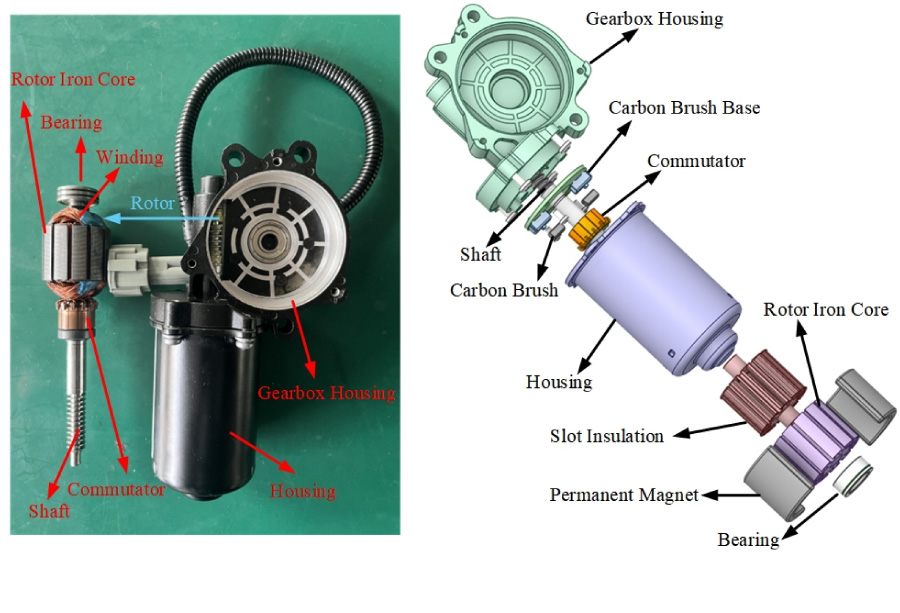
The permanent magnet brushed DC motor (PMDCM) features a simple structure and reliable performance, making it widely used in home appliances and automotive applications. To further optimize the output torque quality of the PMDCM, this paper proposes a concave-slot Halbach array magnet ring (CSHAMR) structure. First, a finite element model was established to analyze the electromagnetic characteristics of the motor. By comparing with the traditional Halbach array magnetic ring (THAMR), the superiority of the proposed structure for application in brushed motors was verified. Secondly, by defining the magnitude of the no-load back electromotive force (EMF) generated by a single-sided conductor within the interval ``γ'' , the optimization level of the CSHAMR structure for commutation performance was evaluated. The influence of concave slot parameters on motor commutation performance under different values was analyzed. Finally, a parametric model of the CSHAMR was established, and multi-objective optimization of the motor was performed based on the particle swarm optimization (PSO) algorithm. The results demonstrate that CSHAMR can effectively reduce torque ripple and cogging torque in PMDCM motors while improving motor commutation performance.
Design and Optimization of the PMDCM with Concave Slots Halbach Array Magnetic Ring
2025-09-23
PIER C
Vol. 160, 84-93, 2025
download: 181
Efficiency Analysis of a Flux Switching Permanent Magnet Machine with Low Iron Loss Non-Oriented Electrical Steel Materials and Rotor Structure
Zhongxian Chen, Lei Huang, Mingjie Wang and Hongxing Zheng
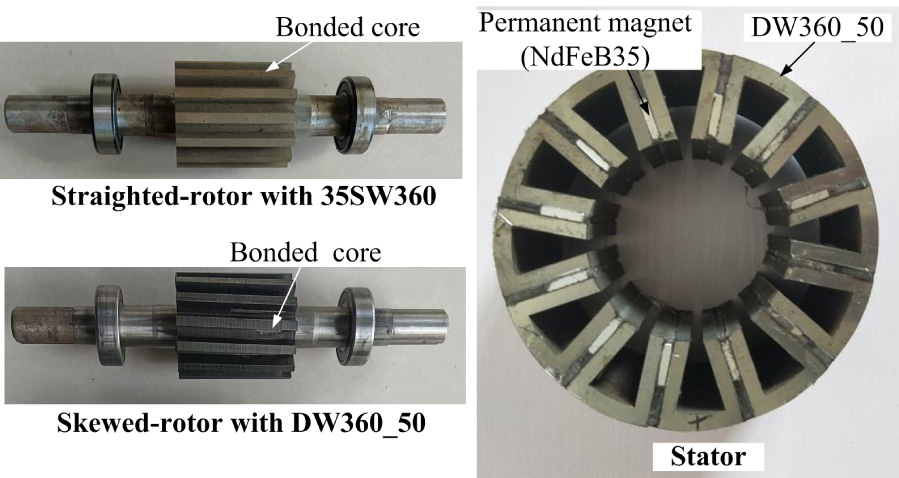
This study presents a structure design methodology to analyze the operational efficiency of a flux switching permanent magnet machine utilizing non-oriented electrical steel materials. First, iron losses of non-oriented electrical steel materials assembled by bonding and welding stacking methods ware tested, and the comparison results demonstrated that the bonded stator core exhibited lower iron losses than the welded stator counterpart. Then, the proposed non-oriented electrical steel material 35SW360 was implemented in the straighted-rotor core of flux switching permanent magnet machine, and the simulation results shown that both the amplitudes and harmonics of induced electromotive force with 35SW360 was almost identical to the standard non-oriented electrical steel material DW360_50. Finally, prototype flux switching permanent magnet machine with straighted-rotor and skewed-rotor including above two non-oriented electrical steel materials was manufactured and tested. Both the simulation analysis and hardware test results revealed that the flux switching permanent magnet machine with skewed-rotor achieved higher efficiency than the straighted-rotor design. Consequently, the proposed non-oriented electrical steel material 35SW360 and skewed-rotor design illustrate a potential solution for efficiency improvement of flux switching permanent magnet machine.
Efficiency Analysis of a Flux Switching Permanent Magnet Machine with Low Iron Loss Non-oriented Electrical Steel Materials and Rotor Structure
2025-09-22
PIER C
Vol. 160, 72-83, 2025
download: 100
Effect of Electron Beam Irradiation on Differently Treated Carbon Fiber-Filled Acrylonitrile Butadiene Styrene for EMI Shielding
Adel M. Alkaseh, Mohd Edeerozey Abd Manaf, Zurina Shamsudin, Mohammed Iqbal Shueb, Mohammed Yousif Zeain, Bilal Salman Taha, Muhammad Inam Abbasi and Adam Wong Yoon Khang
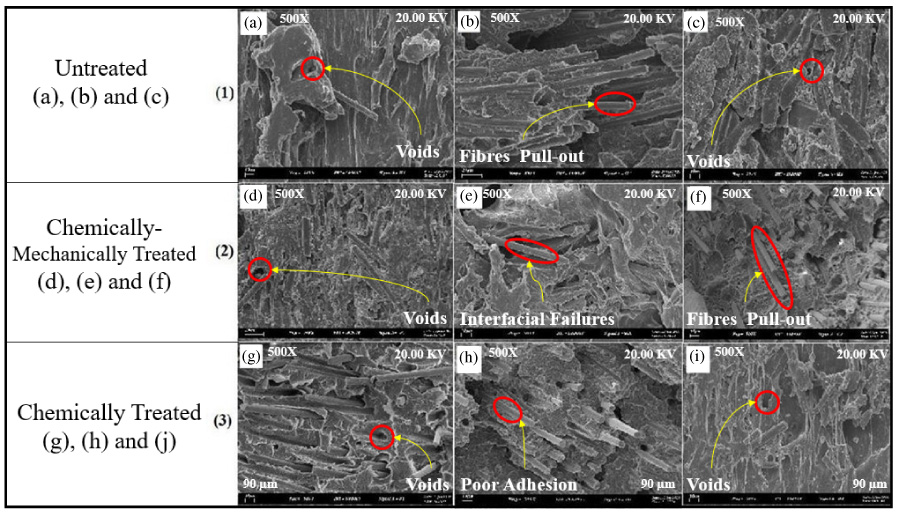
The burgeoning reliance on electronic devices in sectors such as aerospace systems and consumer electronics necessitates robust electromagnetic interference (EMI) shielding. Current challenges often involve balancing material performance with sustainability and cost-effectiveness. This study addresses these needs by exploring the use of recycled carbon fiber (rCF) in acrylonitrile butadiene styrene (ABS) composites for enhanced EMI shielding, contributing to more sustainable material development. We investigated the impact of different rCF treatments (untreated, chemically treated, and chemically-mechanically treated) on the mechanical properties (tensile strength, stiffness, flexibility) and EMI shielding effectiveness of these composites. Furthermore, the role of electron beam (EB) irradiation at 200 kGy in creating cross-linked structures to boost conductivity and shielding performance was thoroughly examined. Fabricated via melt compounding, the composites' electrical conductivity and EMI shielding capabilities were the main focus. Results show that the EB-irradiated composite with 30 wt.% chemically treated rCF achieved a peak electrical conductivity of 1.34 × 10⁻⁸ S/m and an impressive shielding effectiveness of 46.13 dB. These findings offer crucial insights for developing high-performance, cost-efficient, and potentially sustainable rCF-filled ABS composites for advanced EMI shielding applications.
Effect of Electron Beam Irradiation on Differently Treated Carbon Fiber-filled Acrylonitrile Butadiene Styrene for EMI Shielding
2025-09-22
PIER C
Vol. 160, 65-71, 2025
download: 115
Research on Electromagnetic Scattering Characteristics of Complex Bodies Loaded with Metasurfaces
Linghui Qi, Fan Ding, Xiaofeng Zhou, Cicheng Wang, Yang Fu, Ruonan Zhao, Junyu Liang and Helin Yang
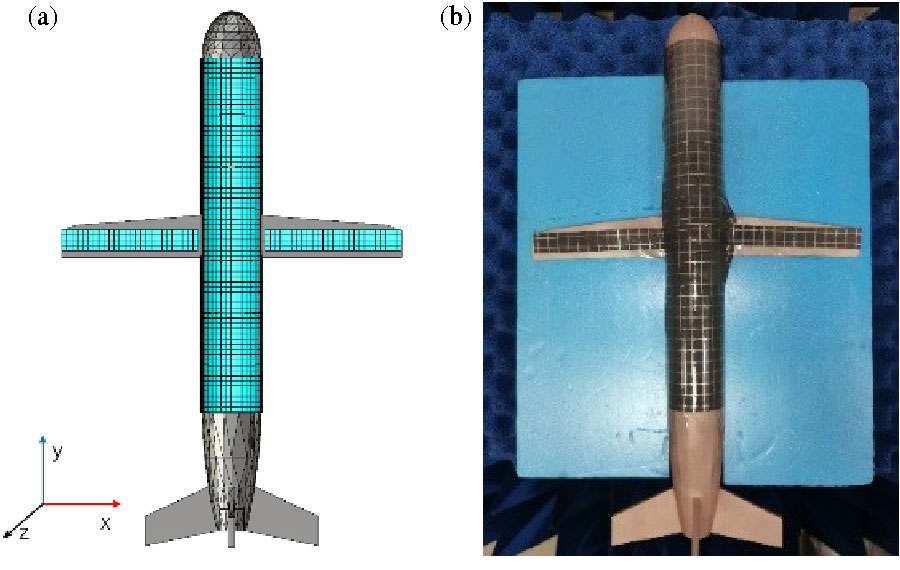
This paper presents the design of an absorptive metasurface suitable for complex-shaped targets, achieving precise control over electromagnetic waves, which has been experimentally validated. The metasurface, with a design thickness of only 0.27 mm, maintains sufficient absorption properties under appropriate curvature conditions to ensure the stealth characteristics of the coated target. Through simulation and experimental validation, this study demonstrates the metasurface's strong resonance characteristics near 11.26 GHz and a reduction of approximately 3 dB in far-field radar cross section (RCS) simulation. The experimental test results are almost consistent with the simulation results, confirming the metasurface's effectiveness in reducing the RCS of actual complex models. The research findings provide strong technical support for the radar stealth research of targets.
Research on Electromagnetic Scattering Characteristics of Complex Bodies Loaded with Metasurfaces
2025-09-22
PIER C
Vol. 160, 56-64, 2025
download: 178
Novel Designs of Quadrature 3-DB Impedance-Transforming Transdirectional Couplers Based on Double-Shielded Coupled Lines
Aleksandr N. Sychev, Sergey A. Artishchev, Natalia S. Trufanova and Nickolay Y. Rudyi
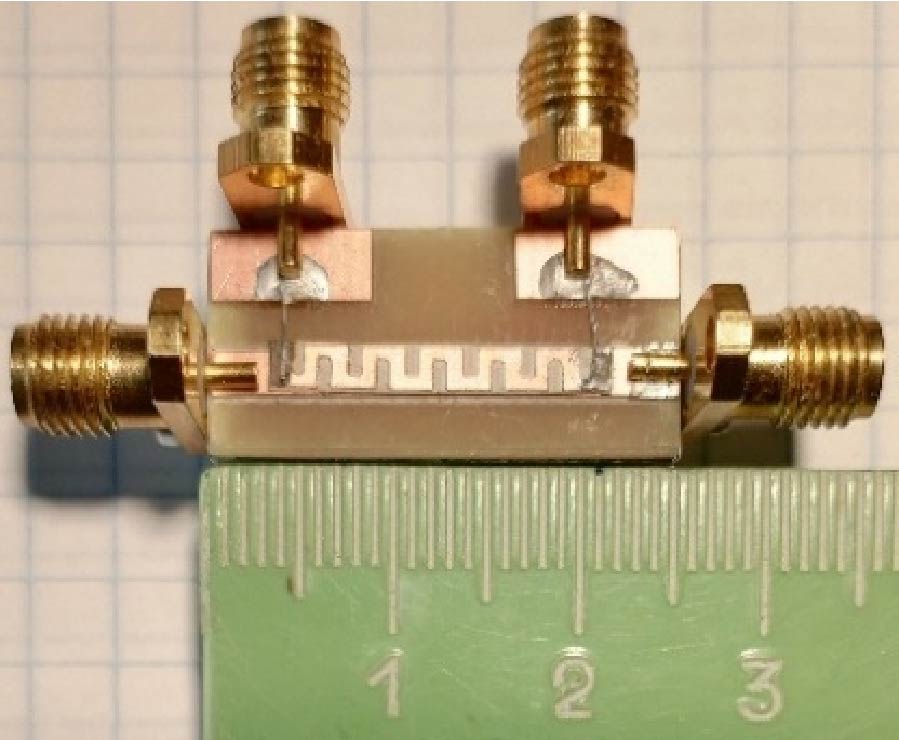
Quadrature 3-dB impedance-transforming transdirectional (TRD) couplers based on double-shielded coupled lines are analyzed and synthesized; design relationships are also presented. To verify proposed concept two couplers implemented with high-permittivity (higher than 10) dielectrics are designed, fabricated, and measured. The first TRD coupler features a suspended ceramic bar, and the second one features a meandering layout of the upper line on a high-permittivity dielectric overlay. Comparison of the proposed solutions with known ones shows that novel coupler designs have advantages in small dimensions and an extended bandwidth of operating frequency (about 1.5-2 times). The simulated results are in good agreement with the measurement data.
Novel Designs of Quadrature 3-dB Impedance-transforming Transdirectional Couplers Based on Double-shielded Coupled Lines
2025-09-21
PIER C
Vol. 160, 48-55, 2025
download: 137
Improving the Performance of a Wireless Power Transfer with Misalignment Using Magnetic Resonators Coil and Metamaterial Slabs
Noor Fadhel Habib, Mohammad Sajjad Bayati and Nasr Alkhafaji
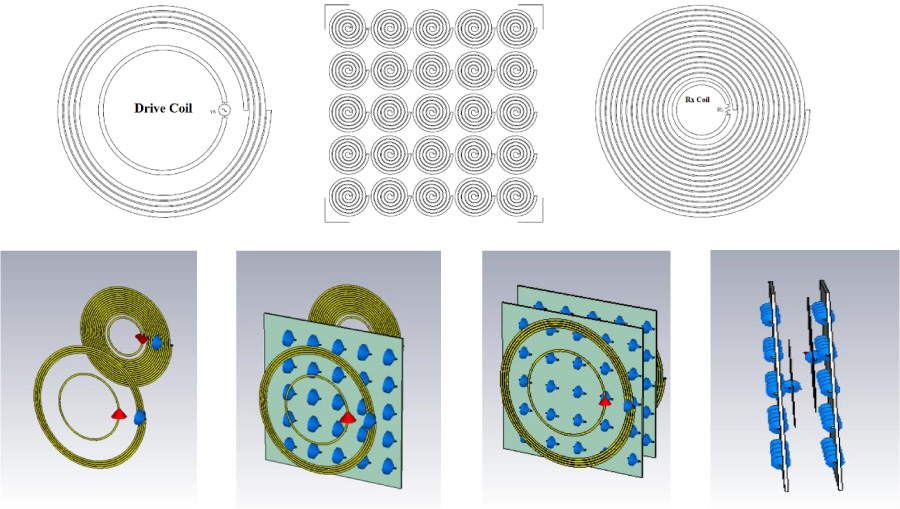
The misalignment between the transmitter and receiver coils in the wireless power transfer WPT systems causes a reduction in the power transfer efficiency (PTE). This manuscript presents a numerical and experimental study of a WPT with different sequences that compensate for the misalignment effects of WPT systems. Circular loops were used for the transmitter's source coil and the receiver's load coil. Then, a magnetic resonator coil has been added to the transmitter and receiver circular loops. The transmitter coil (Tx) has 4 turns and is connected to a 67 pF capacitor, and the receiver coil (Rx) has 14 turns and is connected to a 9 pF capacitor, which resonates at 13 MHz. The planner 5 × 5 spiral rings array of the metamaterial (MTM) was designed. The MTM unit cell has 5 turns and is loaded with an external 100 pF capacitor. Four scenarios are studied. The first one is the Tx and Rx coils in misalignment without MTMs, and the second one is by inserting the MTM plate in the middle space. Then, double plates are used in the middle, and finally, MTM plates are located behind the coils directly. The transmission coefficient S21 is enhanced by -7 dB when the MTM plate is placed in the middle space between coils. Adding another layer of MTM results in an increase in coupling between coils and enhances the S21 by -1 dB from the previous value. The PTE is improved from 32% to 63% in the instance of misalignment when MTM plates are behind coils. Finally, measurements are achieved and show acceptable agreement with the simulated results. This work could be helpful in biomedical implants where the locations of Tx and Rx coils are frequently changed.
Improving the Performance of a Wireless Power Transfer with Misalignment Using Magnetic Resonators Coil and Metamaterial Slabs
2025-09-21
PIER C
Vol. 160, 39-47, 2025
download: 111
Robust and Flexible Synthesis of Equi-Ripple Multiband Filtering Functions in the Pole-Zero Form
Sai Peng, Jiyuan Fan, Ping Zhao, Nan Shen, Jinzhu Zhou and Qingqiang Wu
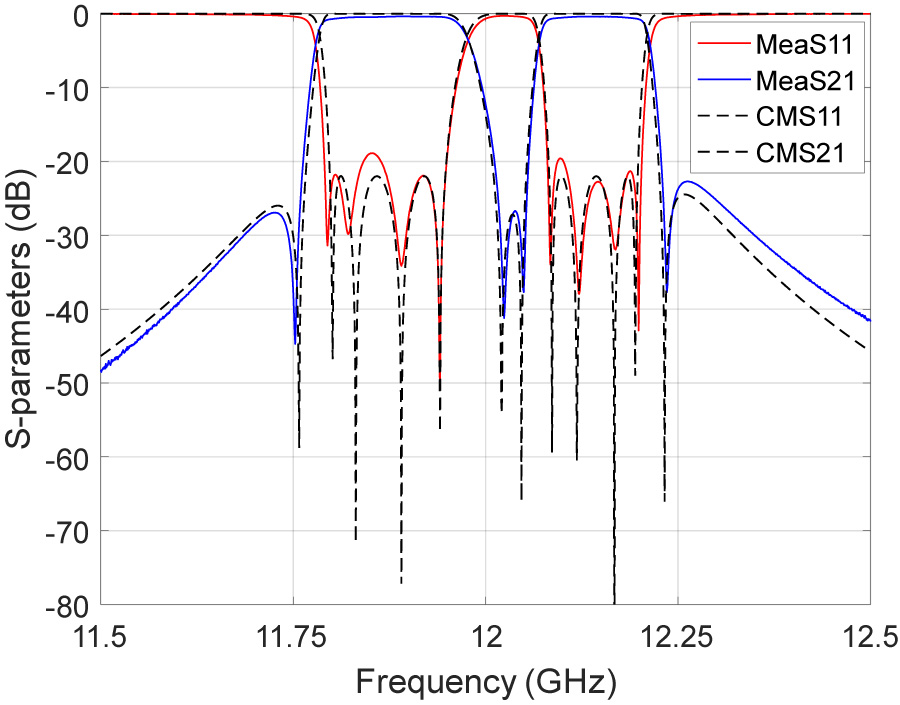
This paper presents a numerical iterative approach to synthesizing multiband filtering functions that can realize equi-ripple in-band responses and enforce the same return loss (RL) level across all passbands. By iteratively updating the reflection zeros (RZs) and some additional transmission zeros (TZs), the multiband filtering function can be constructed to give an equi-ripple characteristic and ensure the same RL levels in all passbands. The advantages of the proposed method include that equal RL level in all passbands can be enforced, and the numerical stability is improved over existing methods. The proposed method can be used to synthesize symmetric or asymmetric multiband filter (MBF) responses with an arbitrary number of passbands. Two synthesis examples are provided. The first example is a tri-band filter (TBF) with an RL level of 23 dB. Its passband frequency ranges are (-1, -0.7), (-0.15, 0.15), (0.7, 1) rad/s, in the normalized frequency domain, and the numbers of poles in the three passbands are 5, 4, and 5, respectively. In the second example, a dual-band waveguide filter (DBF) with four poles in each passband is synthesized and designed. The frequency ranges of the two passbands are (11.8, 11.95), (12.085, 12.2) GHz. Both simulated and measured RL levels of the filter are 22 dB. The measured insertion loss 0.73 dB in the lower passband and 0.75 dB in the upper passband. The simulated and measured results are in excellent agreement with the theoretical response, thus verifying the proposed synthesis method.
Robust and Flexible Synthesis of Equi-ripple Multiband Filtering Functions in the Pole-zero Form
2025-09-20
PIER C
Vol. 160, 29-38, 2025
download: 97
Active Sampling Strategies for Non-Embedded EMC Uncertainty Simulation
Jinjun Bai, Jiasheng Wang, Xiangrui Ji, Yujia Song and Haichuan Cao
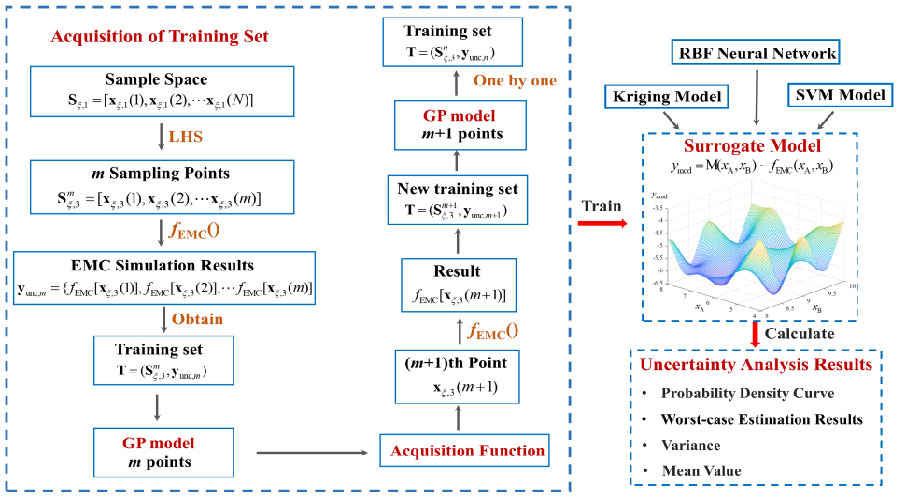
Non-embedded uncertainty analysis methods are widely used in the field of electromagnetic compatibility (EMC). Their essence is to construct a surrogate model to simulate the actual electromagnetic simulation process and obtain the desired uncertainty simulation results through exhaustive sampling. However, when performing complex electromagnetic compatibility simulations, non-embedded uncertainty analysis methods face an inherent problem. This problem arises from the excessive number of deterministic simulations, which leads to computational inefficiency. In this paper, an active sampling strategy based on Bayesian optimization is proposed. By selecting the locations of deterministic simulation sampling points in a more reasonable manner, the overall number of sampling points required for the uncertainty simulation can be minimized, thereby improving the computational efficiency. Finally, the effectiveness of the sampling strategy proposed in this paper was verified using a typical parallel cable crosstalk example and a lightning electromagnetic pulse electromagnetic interference simulation example.
Active Sampling Strategies for Non-embedded EMC Uncertainty Simulation
2025-09-17
PIER C
Vol. 160, 20-28, 2025
download: 137
Compact Self-Quadplexing EMSIW Antenna with Small Frequency Ratio for C-Band Applications
Shaik Mahaboob Subani, Satya Nagakishore Bhavanam, Vasujadevi Midasala and Mallarapu Gopi Krishna
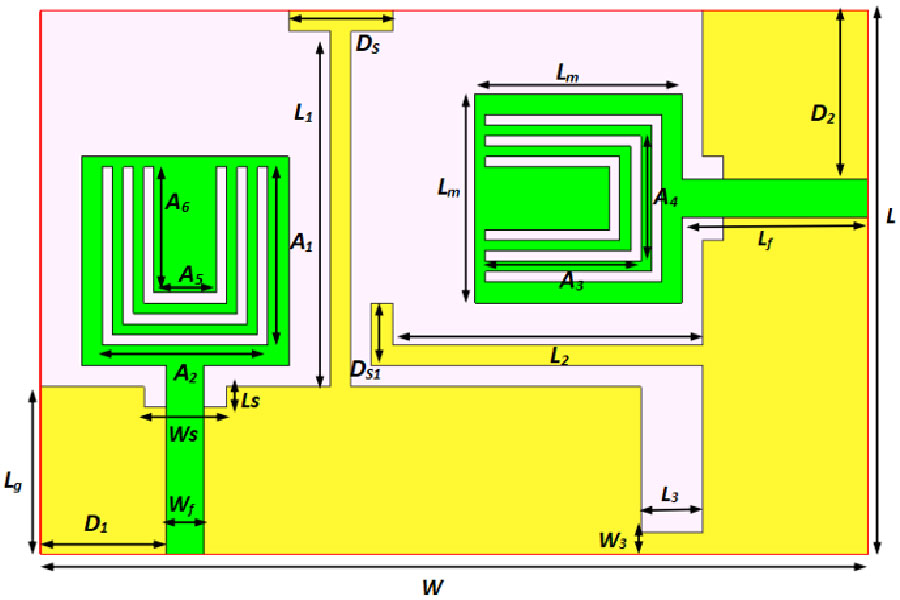
In this paper, a highly compact half mode substrate integrated waveguide (HMSIW)-based self-quadplexing antenna is proposed, employing four quarter-mode SIW (QMSIW) radiating elements integrated with longitudinal slots. The antenna operates at four closely spaced resonant frequencies 3.68 GHz, 3.83 GHz, 4.04 GHz, and 4.17 GHz achieved by precisely tuning the slot dimensions. A minimum port isolation of 26 dB is maintained between any two ports, ensuring minimal mutual coupling. The proposed design exhibits a compact footprint of only 0.05λ02, where λ0 is the free-space wavelength at the lowest resonant frequency. The simulated and measured gains exceed 5.5 dBi across all four bands, with a radiation efficiency of approximately 85%. Owing to its compact size, high isolation, and efficient radiation performance, the proposed antenna is well-suited for the upper S-band (3.1-3.9 GHz) and lower C-band (4.0-4.2 GHz) which are widely allocated for fixed-satellite service (FSS) communications applications.
Compact Self-quadplexing EMSIW Antenna with Small Frequency Ratio for C-band Applications
2025-09-15
PIER C
Vol. 160, 9-19, 2025
download: 367
A Compact 4-Ports UWB MIMO Antenna with WiMAX and WLAN Band Rejection Characteristics
Maher M. El Tayeb, Deena Abd El Hamid Salem, Ali Raafat Mahmoud, Imran Mohd Ibrahim, Ahmed Jamal Abdullah Al-Gburi and Mohamed Hassan M. Mahmoud
This study introduces a compact four-port UWB MIMO antenna featuring dual-band rejection capabilities aimed at suppressing interference from coexisting wireless services, specifically WiMAX at 3.5 GHz and WLAN at 5.5 GHz. The antenna employs an inverted C-slot etched into the radiator to achieve the WiMAX notch, while EBG structures are integrated to enable suppression of the WLAN band at 5.5 GHz. Fabricated on a low-cost FR4 substrate with dimensions 52 × 52 × 1.5 mm3r = 4.5), the proposed design achieves high port isolation exceeding 15 dB across the 3.1-10.6 GHz UWB range. Simulated results show an operational bandwidth from 3 to 11 GHz, extending beyond 12 GHz in measurements, without the need for additional filters or decoupling structures. The antenna exhibits quasi-omnidirectional radiation patterns with a peak gain of 7.2 dBi and significant gain suppression at the notch frequencies (-1.5 dBi at 3.5 GHz and -1.2 dBi at 5.5 GHz). It maintains a VSWR below 2 across the UWB and achieves radiation efficiency above 90% outside the notched bands. The envelope correlation coefficient remains below 0.005, enabling a high diversity gain approaching 10 dB. The EBG structures effectively reduce mutual coupling, allowing a compact element spacing of just 2 mm (approximately λ/12.5 at 12 GHz). Both simulation and measurement results validate the proposed design's suitability for mitigating co-channel interference in UWB-MIMO applications, including satellite communications in the S/C/X bands and high-speed wireless systems.
A Compact 4-ports UWB MIMO Antenna with WiMAX and WLAN Band Rejection Characteristics
2025-09-15
PIER C
Vol. 160, 1-8, 2025
download: 201
Compact High-Isolation Four-Port MIMO Antenna for 5G Sub-6 GHz Applications
Aziz Dkiouak, Alia Zakriti, Mostafa Hefnawi, Saad Chakkor and Khalid El Khadiri
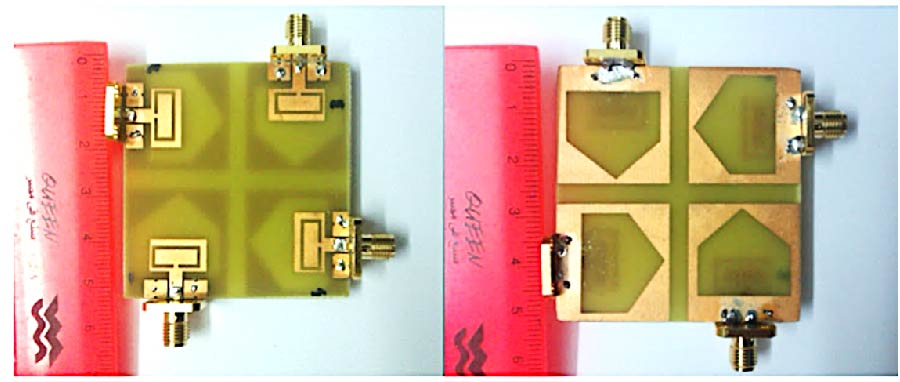
This paper presents the design and implementation of a compact 4-port antenna element with high isolation for 5G sub-6 GHz applications. Four V-shaped patch elements are arranged orthogonally on a 1.58 mm thick FR4 substrate to mitigate mutual coupling in the proposed structure. A defected ground plane method is utilized to further enhance and optimize the characteristics of the antenna at the operating frequency. The antenna operates in the 3.15-4.1 GHz frequency range, providing a 950 MHz impedance bandwidth at -10 dB, making it suitable for mobile terminals within the 5G sub-6 GHz band. The orthogonal polarization results in isolation levels below -18.1 dB, making the antenna ideal for 5G handset communications. This high isolation is reflected in an envelope correlation coefficient (ECC) of less than 0.04, while the diversity performance is verified by a total active reflection coefficient (TARC) of less than -10 dB. The channel capacity loss (CCL) of the four-port antenna element is calculated to be below 0.1 bps/Hz at 3.5 GHz. The MIMO antenna was fabricated, and its measured performance closely matches the simulated results, confirming that the proposed MIMO antenna is well-suited for future sub-6 GHz cellular communications.
Compact High-isolation Four-port MIMO Antenna for 5G Sub-6 GHz Applications