Vol. 166
Latest Volume
All Volumes
PIERC 167 [2026] PIERC 166 [2026] PIERC 165 [2026] PIERC 164 [2026] PIERC 163 [2026] PIERC 162 [2025] PIERC 161 [2025] PIERC 160 [2025] PIERC 159 [2025] PIERC 158 [2025] PIERC 157 [2025] PIERC 156 [2025] PIERC 155 [2025] PIERC 154 [2025] PIERC 153 [2025] PIERC 152 [2025] PIERC 151 [2025] PIERC 150 [2024] PIERC 149 [2024] PIERC 148 [2024] PIERC 147 [2024] PIERC 146 [2024] PIERC 145 [2024] PIERC 144 [2024] PIERC 143 [2024] PIERC 142 [2024] PIERC 141 [2024] PIERC 140 [2024] PIERC 139 [2024] PIERC 138 [2023] PIERC 137 [2023] PIERC 136 [2023] PIERC 135 [2023] PIERC 134 [2023] PIERC 133 [2023] PIERC 132 [2023] PIERC 131 [2023] PIERC 130 [2023] PIERC 129 [2023] PIERC 128 [2023] PIERC 127 [2022] PIERC 126 [2022] PIERC 125 [2022] PIERC 124 [2022] PIERC 123 [2022] PIERC 122 [2022] PIERC 121 [2022] PIERC 120 [2022] PIERC 119 [2022] PIERC 118 [2022] PIERC 117 [2021] PIERC 116 [2021] PIERC 115 [2021] PIERC 114 [2021] PIERC 113 [2021] PIERC 112 [2021] PIERC 111 [2021] PIERC 110 [2021] PIERC 109 [2021] PIERC 108 [2021] PIERC 107 [2021] PIERC 106 [2020] PIERC 105 [2020] PIERC 104 [2020] PIERC 103 [2020] PIERC 102 [2020] PIERC 101 [2020] PIERC 100 [2020] PIERC 99 [2020] PIERC 98 [2020] PIERC 97 [2019] PIERC 96 [2019] PIERC 95 [2019] PIERC 94 [2019] PIERC 93 [2019] PIERC 92 [2019] PIERC 91 [2019] PIERC 90 [2019] PIERC 89 [2019] PIERC 88 [2018] PIERC 87 [2018] PIERC 86 [2018] PIERC 85 [2018] PIERC 84 [2018] PIERC 83 [2018] PIERC 82 [2018] PIERC 81 [2018] PIERC 80 [2018] PIERC 79 [2017] PIERC 78 [2017] PIERC 77 [2017] PIERC 76 [2017] PIERC 75 [2017] PIERC 74 [2017] PIERC 73 [2017] PIERC 72 [2017] PIERC 71 [2017] PIERC 70 [2016] PIERC 69 [2016] PIERC 68 [2016] PIERC 67 [2016] PIERC 66 [2016] PIERC 65 [2016] PIERC 64 [2016] PIERC 63 [2016] PIERC 62 [2016] PIERC 61 [2016] PIERC 60 [2015] PIERC 59 [2015] PIERC 58 [2015] PIERC 57 [2015] PIERC 56 [2015] PIERC 55 [2014] PIERC 54 [2014] PIERC 53 [2014] PIERC 52 [2014] PIERC 51 [2014] PIERC 50 [2014] PIERC 49 [2014] PIERC 48 [2014] PIERC 47 [2014] PIERC 46 [2014] PIERC 45 [2013] PIERC 44 [2013] PIERC 43 [2013] PIERC 42 [2013] PIERC 41 [2013] PIERC 40 [2013] PIERC 39 [2013] PIERC 38 [2013] PIERC 37 [2013] PIERC 36 [2013] PIERC 35 [2013] PIERC 34 [2013] PIERC 33 [2012] PIERC 32 [2012] PIERC 31 [2012] PIERC 30 [2012] PIERC 29 [2012] PIERC 28 [2012] PIERC 27 [2012] PIERC 26 [2012] PIERC 25 [2012] PIERC 24 [2011] PIERC 23 [2011] PIERC 22 [2011] PIERC 21 [2011] PIERC 20 [2011] PIERC 19 [2011] PIERC 18 [2011] PIERC 17 [2010] PIERC 16 [2010] PIERC 15 [2010] PIERC 14 [2010] PIERC 13 [2010] PIERC 12 [2010] PIERC 11 [2009] PIERC 10 [2009] PIERC 9 [2009] PIERC 8 [2009] PIERC 7 [2009] PIERC 6 [2009] PIERC 5 [2008] PIERC 4 [2008] PIERC 3 [2008] PIERC 2 [2008] PIERC 1 [2008]
2026-03-03 Latest Published
By Hongyun Guo Tao Tang Xiangyan Zhao Melad M. Olaimat Wei Hu
Progress In Electromagnetics Research C, Vol. 166, 278-284, 2026
Abstract
This paper presents a compact two-layer diplexer based on a vertically stacked architecture with hybrid filtering, in which a dual-band bandpass power divider (PD) is integrated with low-pass (LPF) and high-pass filters (HPF). The design utilizes a double-layer dielectric substrate: the upper layer integrates a dual-band bandpass filter (BPF) and a Wilkinson PD, while the lower layer incorporates low-pass and high-pass filtering sections. Metallized vias and impedance-matching networks are employed to enable tight inter-layer coupling and ensure excellent electrical performance within a miniaturized footprint. The results indicate that the proposed diplexer achieves insertion losses below 4 dB and 4.5 dB in the two passbands (3.4-3.8 GHz and 4.7-5.0 GHz), respectively (including the inherent 3 dB loss of the power divider), input return losses exceeding 13 dB and 11 dB, respectively, approximately 45 dB out-of-band rejection at ±400 MHz from the passband edges, and inter-port isolation better than 30 dB. These characteristics satisfy the stringent requirements for multi-band co-site operation in 5G base stations and terminal devices.
2026-03-03
PIER C
Vol. 166, 278-284, 2026
download: 235
A Compact Two-Layer Diplexer with High Isolation Using a Hybrid Filtering Approach for 5G Co-Site Applications
Hongyun Guo, Tao Tang, Xiangyan Zhao, Melad M. Olaimat and Wei Hu
This paper presents a compact two-layer diplexer based on a vertically stacked architecture with hybrid filtering, in which a dual-band bandpass power divider (PD) is integrated with low-pass (LPF) and high-pass filters (HPF). The design utilizes a double-layer dielectric substrate: the upper layer integrates a dual-band bandpass filter (BPF) and a Wilkinson PD, while the lower layer incorporates low-pass and high-pass filtering sections. Metallized vias and impedance-matching networks are employed to enable tight inter-layer coupling and ensure excellent electrical performance within a miniaturized footprint. The results indicate that the proposed diplexer achieves insertion losses below 4 dB and 4.5 dB in the two passbands (3.4-3.8 GHz and 4.7-5.0 GHz), respectively (including the inherent 3 dB loss of the power divider), input return losses exceeding 13 dB and 11 dB, respectively, approximately 45 dB out-of-band rejection at ±400 MHz from the passband edges, and inter-port isolation better than 30 dB. These characteristics satisfy the stringent requirements for multi-band co-site operation in 5G base stations and terminal devices.
A Compact Two-Layer Diplexer with High Isolation Using a Hybrid Filtering Approach for 5G Co-Site Applications
2026-03-02
PIER C
Vol. 166, 267-277, 2026
download: 94
A Wideband Dual-CP Antenna with Low-Profile Based on Distributed Coupling for Coal Mine Communication
Lei Li, Xiaomeng Wang, Yuting Jia, Yanting Wang, Hongyu Zhang and Jingchang Nan
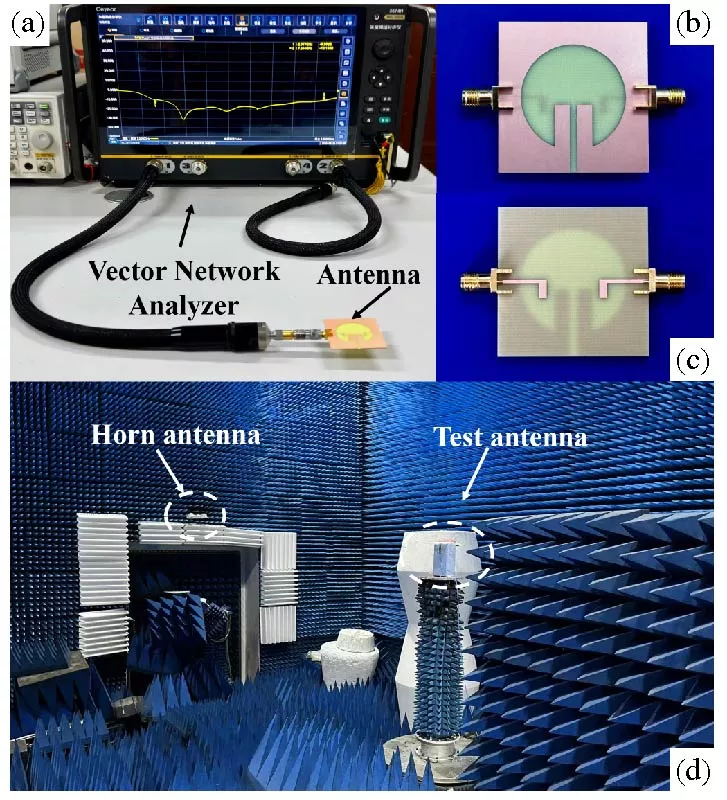
This study presents a wideband dual-circularly polarized (dual-CP) antenna based on a distributed electromagnetic coupling mechanism. The antenna employed a circular slot structure fed by dual L-shaped microstrip lines. By introducing a rectangular protrusion on the ground plane and splitting it with a narrow slit, multiple parallel radiating paths were formed, establishing a distributed coupling mechanism. This mechanism introduces multiple resonant points to extend the impedance bandwidth (IBW) and generates multiple orthogonal components to enhance the axial ratio bandwidth (ARBW). The dual-port, left-right symmetric configuration enables dual-CP operation. The narrow slit decouples the shared current paths between the feeding structures, further enhancing the port isolation. Owing to its single-layer structure, the fabricated antenna achieves a low profile of only 0.011λ0. Measured results show an IBW of 87.8% (2.98-7.65 GHz) and an ARBW of 66.9% (2.72-5.47 GHz). The proposed antenna achieves a wide bandwidth and low profile simultaneously, featuring a simple and easy-to-manufacture structure. Its operating band meets the requirements for coal mine communication systems.
A Wideband Dual-CP Antenna with Low-Profile Based on Distributed Coupling for Coal Mine Communication
2026-03-02
PIER C
Vol. 166, 257-266, 2026
download: 123
Fault-Tolerant Direct Torque Control with Harmonic Suppression for Dual Three-Phase Synrms Using a Five-Leg Inverter
Ye Yuan, Yu Nan, Fan Yang, Yizhou Hua, Shusheng Li, Weiping Niu, Zhenzhen Kong, Xifeng Wang and Sichao Chen
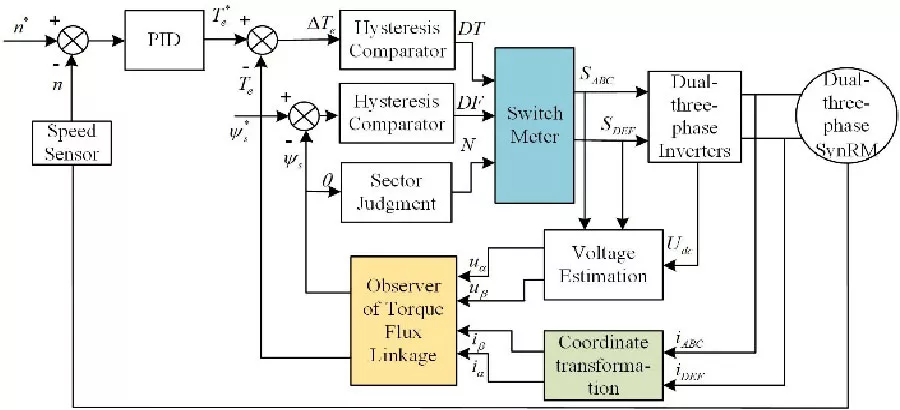
High reliability and stability are essential for drive systems in intelligent inspection robots used in the power industry. To meet this requirement, this study investigates dual three-phase synchronous reluctance motors and proposes a five-leg fault-tolerant drive strategy based on direct-torque control (DTC). Unlike conventional dimension-reduction coordinate transformation methods that require isolating the faulty phase, which often leads to degraded system performance, the proposed approach introduces a bridge-arm sharing technique. By electrically coupling the faulty phase with a healthy phase, the spatial voltage vector distribution was reconstructed, enabling the reutilization of the faulty phase windings. Under single-phase fault conditions, the method effectively synthesizes the missing voltage vectors, preserves a circular flux linkage trajectory in the α-β subspace, suppresses 5th and 7th harmonics, and improves the current waveform quality. Simulation results verify that the strategy delivers superior harmonic suppression, reduced torque ripple, and enhanced system reliability, offering a novel technical pathway for fault-tolerant control of multiphase motors with strong potential for engineering applications.
Fault-Tolerant Direct Torque Control with Harmonic Suppression for Dual Three-Phase SynRMs Using a Five-Leg Inverter
2026-03-01
PIER C
Vol. 166, 244-256, 2026
download: 223
On the Performance of CRLH Antenna Loaded with AMC Reflector for Direct Antenna Modulation Process
Yahiea Alnaiemy, Mariam Qutaiba Abdalrazak, Zainab Salam and Taha Ahmed Elwi
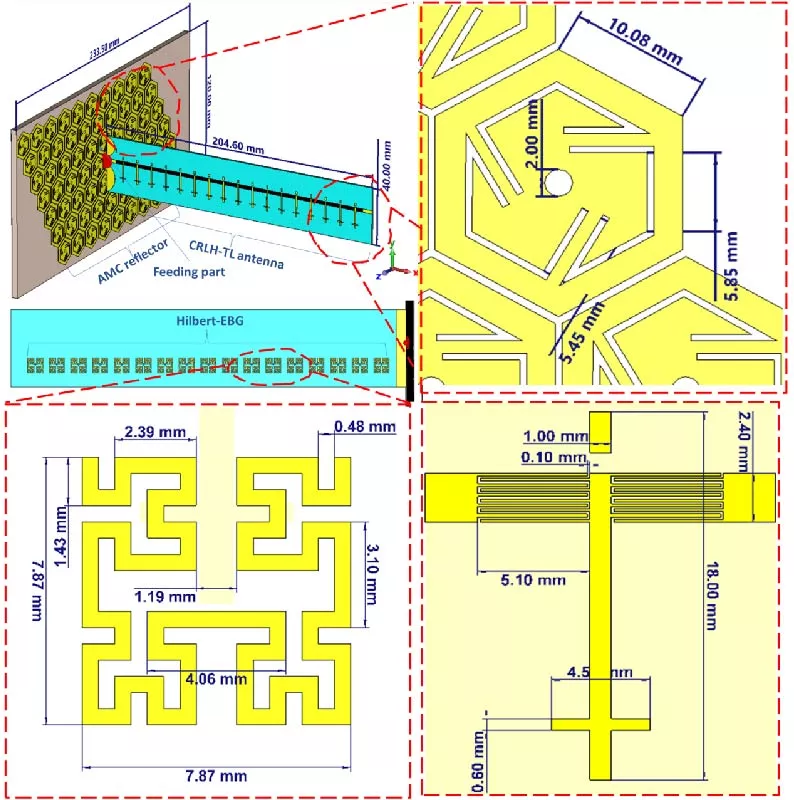
This paper introduces an innovative antenna design for direct antenna modulation (DAM) applications in the 5G sub-6 GHz band. The antenna has a composite right/left-handed (CRLH) structure, an electromagnetic bandgap (EBG) made of Hilbert inclusions, and an artificial magnetic conductor (AMC) reflector. The AMC reflector reflects light with no phase shift at the design frequency, boosting forward gain to a maximum of 20 dBi at 5.59 GHz and reducing back lobes. One important new idea is to use integrated light-dependent resistors (LDRs) for photonic reconfiguration. This lets one change the antenna's impedance and resonant characteristics in real time. Changing the LDR states dynamically changes the antenna's gain in real time. For example, at 5.5 GHz, it can go from 10.11 dBi to 19.85 dBi. This makes it possible to do direct amplitude modulation without any outside modulators. Experimental results validate the effective implementation of DAM, demonstrating quantifiable alterations in channel capacity and bit error rate (BER) associated with varying antenna gain states. The suggested system shows a practical, adaptable antenna solution for modern adaptive communication systems.
On the Performance of CRLH Antenna Loaded with AMC Reflector for Direct Antenna Modulation Process
2026-02-28
PIER C
Vol. 166, 235-243, 2026
download: 135
A Semi-Analytical Method for Calculation of Electromagnetic Fields in Horizontal Multilayered Media with Full Anisotropy
Guibo Chen and Ye Zhang
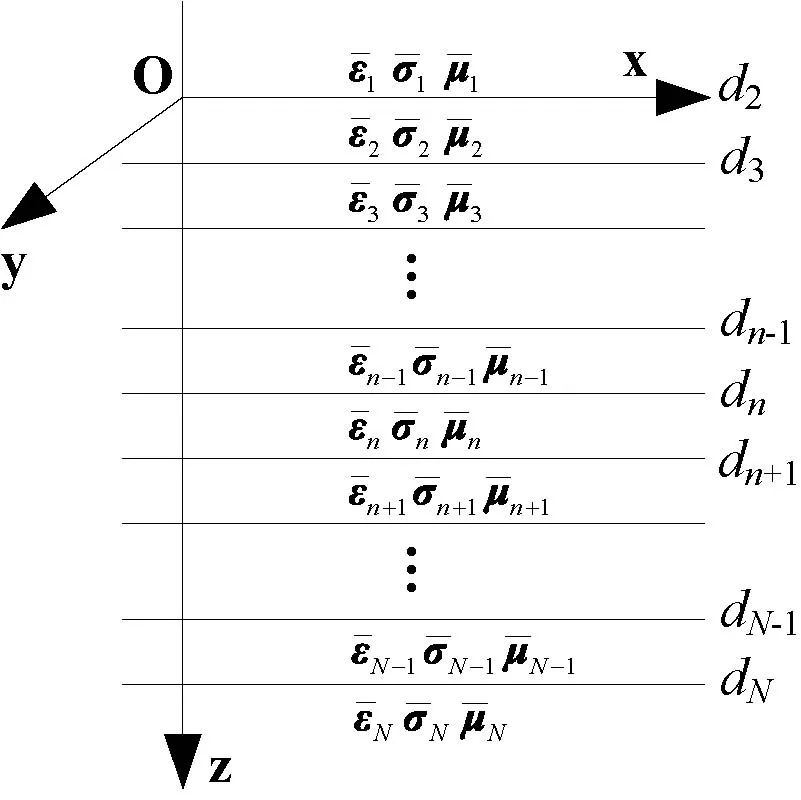
In this paper, a semi-analytical method for the calculation of electromagnetic(EM) fields in horizontal multilayered media(HMLM) with full anisotropy is presented. First, the governing equation was obtained by plane wave decomposition to Maxwell's equations, and the EM fields in the wavenumber domain (WD) were solved by means of eigensystems. Subsequently, a more intuitive derivation of the spectral-domain propagation matrix method based on existing literature was employed for calculating WD's EM fields in the HMLM. Finally, the EM fields in the spatial domain (SD) were obtained by 2-D inverse Fourier transform. To accelerate the evaluation of SD's EM fields, 2-D infinite integrals were transformed into semi-infinite integrals including sine(cosine) functions by Euler's formula, and fast sine(cosine) transforms based on digital filters were introduced. It has been shown that the proposed semi-analytical method can be effectively used to calculate the EM fields in HMLM with full anisotropy through comparison with the existing numerical algorithm.
A Semi-analytical Method for Calculation of Electromagnetic Fields in Horizontal Multilayered Media with Full Anisotropy
2026-02-28
PIER C
Vol. 166, 227-234, 2026
download: 118
Modified Inverted F-Shaped Microstrip Patch Antenna with Circular and Rectangular Slots and Partial Ground for Internet of Things (IoT) Applications
Md. Arifuzzaman and Md. Masud Rana
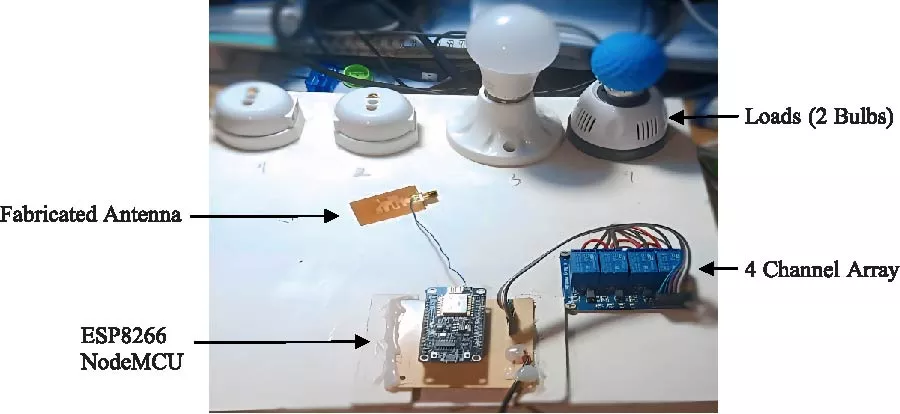
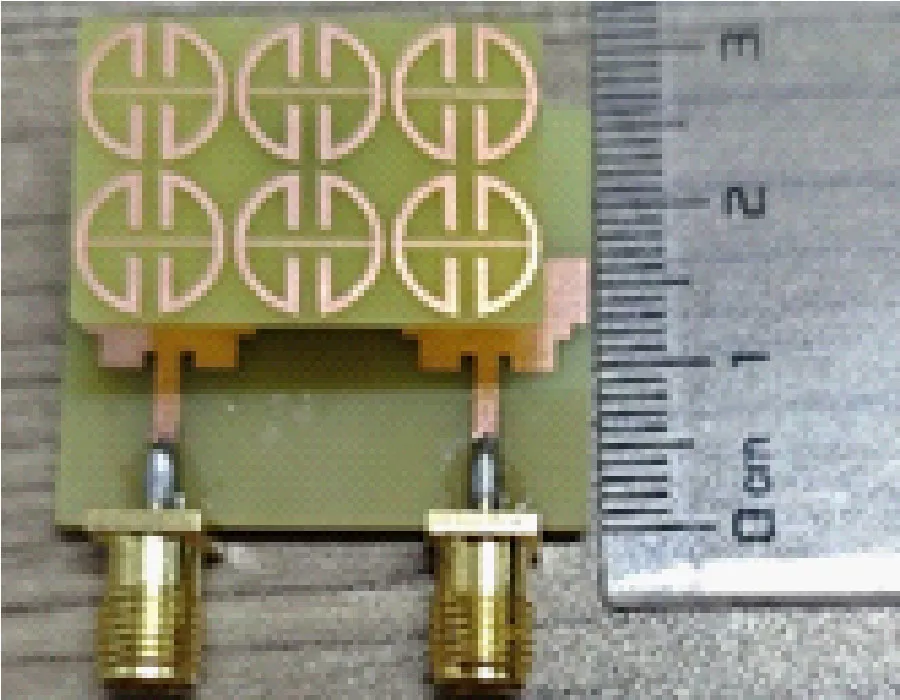
This paper presents an inverted F-shaped antenna with 40 × 25 × 1.6 mm3 dimensions designed for IoT applications. It can operate in the 2.45 GHz ISM (Industrial, Scientific, and Medical) band. This antenna was constructed on an FR-4 substrate, making it well-suited for wireless applications. The antenna consisted of a reverse F-shaped radiating structure with rectangular and circular slots to obtain enhanced bandwidth and suitable return loss. The proposed antenna achieved a simulated reflection coefficient of -19.17 dB at 2.45 GHz, with a bandwidth of 23.26 %. It also showed an acceptable radiation efficiency of 83.84% and a maximum gain of 3.40 dB.. This provided a bidirectional pattern of radiation which proves its quality in IoT applications. The antenna exhibited a slight difference between the simulation and measurement results, verifying its effectiveness. Moreover, the designed antenna is implemented in a home automation system to verify its validity in IoT application, and the results are highly significant.
Modified Inverted F-Shaped Microstrip Patch Antenna with Circular and Rectangular Slots and Partial Ground for Internet of Things (IoT) Applications
2026-02-28
PIER C
Vol. 166, 217-226, 2026
download: 89
A Cross-Connected T-Type Asymmetrical Multilevel Inverter with Reduce Components Counts for Renewable Energy Applications
Vinay Pathak, Kishor Thakre and Prateek Nigam
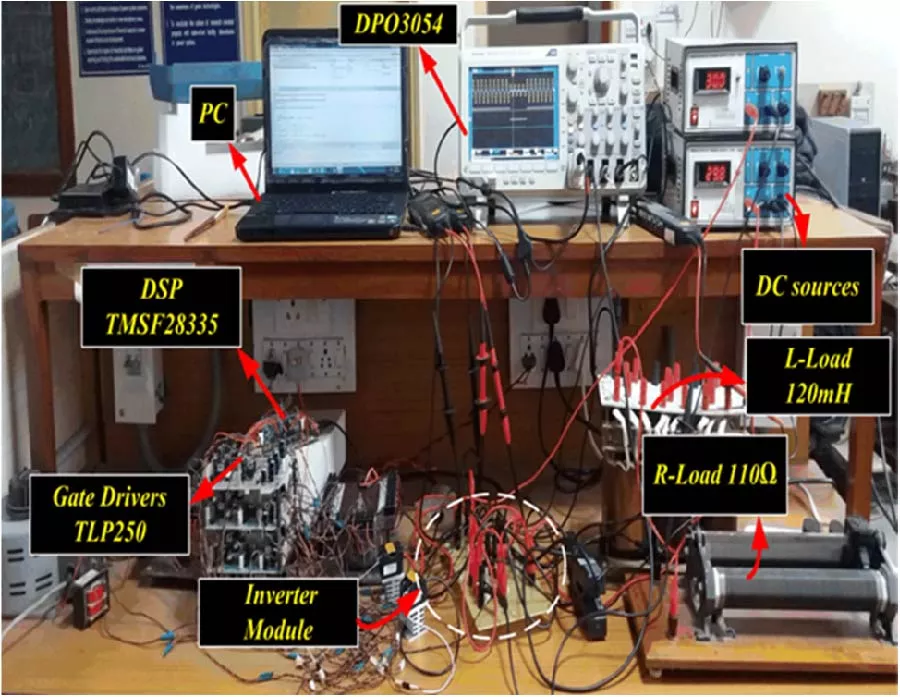
This study offers a reduced device count (RDC) asymmetrical cross-connected seventeen-level T-type (CT-type) inverter. The proposed approach contains eight power switches, four self-voltage balancing capacitors and two direct current (DC) sources. The recommended architecture reduces the necessity to generate negative half-cycle for an H-bridge, hence minimizing the voltage stress across the switches. The capacitor and DC sources are cascaded with the switches to produce desired number of levels. Because of its substantial autonomy and high voltage balancing capability, this design is particularly beneficial to the integration of renewable energy sources into the grid. Pulse width modulation based on the level-shifted approach provides gate driver signals for the inverter circuit. A comparative analysis is undertaken to validate the efficacy of the suggested topology, which is differentiated from previously published topologies based on the number of DC sources, capacitor count, switches, drivers, and total standing voltage. Finally, the viability of the proposed topology is investigated by the simulated results and is further verified by a laboratory prototype. The total harmonic distortion (THD) of the voltage and current is obtained as 7.2% and 1.3% respectively.
A Cross-Connected T-Type Asymmetrical Multilevel Inverter with Reduce Components Counts for Renewable Energy Applications
2026-02-27
PIER C
Vol. 166, 209-216, 2026
download: 91
Development of a Non-Contact Microwave Sensor System Specifically for the Detection of Honey Adulteration with Syrup
Pornpimon Chaisaeng, Anekchai Rasrikul and Prapan Leekul
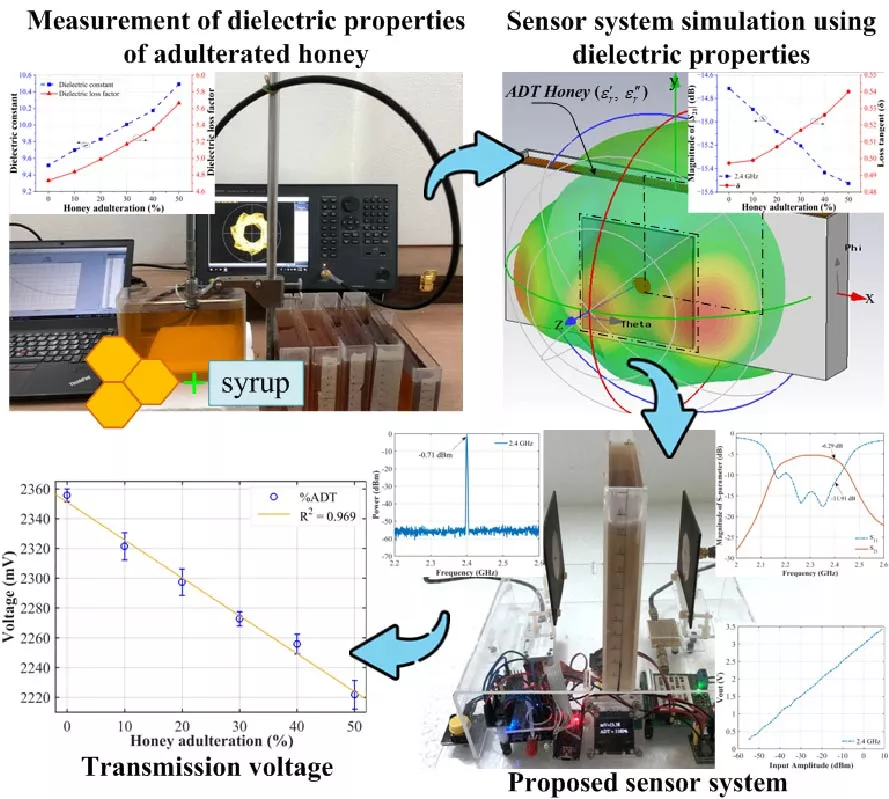
This article presents microwave detection and analysis of honey adulteration. A study of the differences between pure and adulterated honey based on dielectric properties in the frequency range of 2 to 12 GHz was performed. A honey adulteration determination system using a free-space method with microwaves was developed. The transmitting section was responsible for generating a 2.4 GHz frequency signal using a high-frequency signal generator and radiating the signal power through a prototype transmitting antenna that propagated through the honey sample to the receiving antenna. All 72 honey samples were tested and categorized into six levels of adulteration. The average transmission power (S21) at adulteration levels of pure honey, 10%, 20%, and 50% was found to be 2.356, 2.321, 2.297, and 2.222 mV, respectively, with a coefficient of determination R2 of 0.969. The sensitivity of the detection was 0.027 mV/10% adulteration. The decision-making system was used to test the measurement of 144 honey samples. The sensor system achieved an accuracy of 95.83%, indicating that the non-contact microwave-based method for detecting honey adulteration is effective.
Development of a Non-contact Microwave Sensor System Specifically for the Detection of Honey Adulteration with Syrup
2026-02-27
PIER C
Vol. 166, 201-208, 2026
download: 164
Flexible Circular Ring Slot Antenna with AMC Structure for Wearable Applications
Said A. Abushamleh
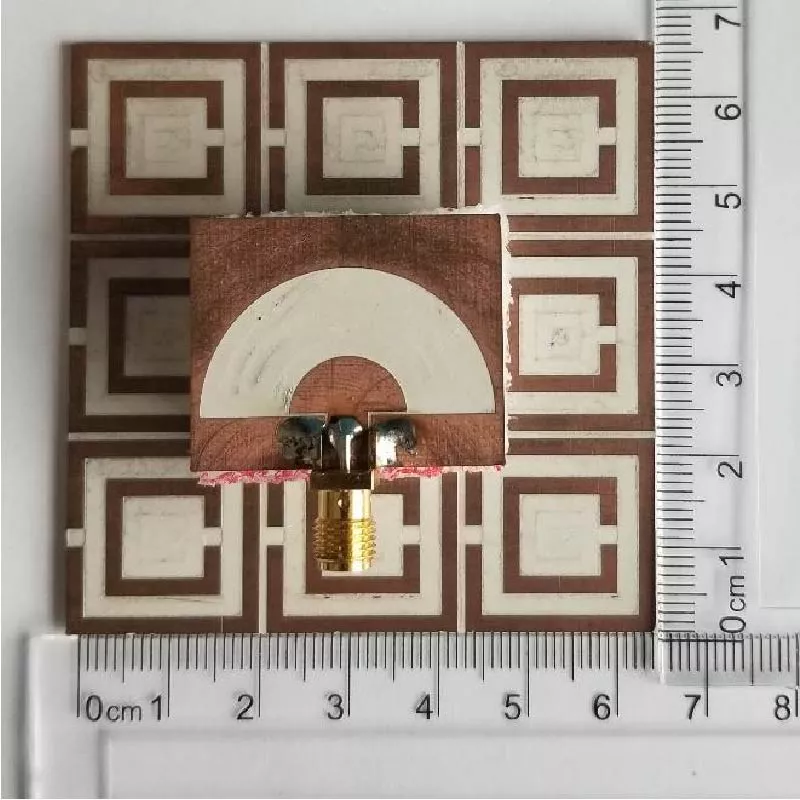
A flexible semicircular ring slot antenna with an artificial magnetic conductor (AMC) structure for wireless body area network application is proposed in this paper. The AMC structure is an array of the double split ring resonator (DSRR) unit cells. According to the analysis of the DSRR unit cell, the volume of the AMC element is miniaturized for applications such as wearable technology. The measured impedance bandwidth of the proposed antenna is observed to be 2.34-2.61 GHz, which covers the 2.4 GHz Industrial Scientific Medical (ISM) band. The simulated half-power beamwidths are 81.1° and 70.1° in the E-plane and H-plane, respectively, and the front-to-back ratios are 17.51 dB in both the E-plane and H-plane. The calculated specific absorption rates (SARs) taken over the volume containing a mass of 1 g of tissue (U.S. standard) and 10 g of tissue (E.U. standard) are both less than the limitations. In conclusion, it is proper to use the proposed flexible antenna in wearable applications.
Flexible Circular Ring Slot Antenna with AMC Structure for Wearable Applications
2026-02-26
PIER C
Vol. 166, 195-200, 2026
download: 110
Two-Way Array Radar with Only Two-Elements Receiving Array and Improved Performance
Jafar Ramadhan Mohammed
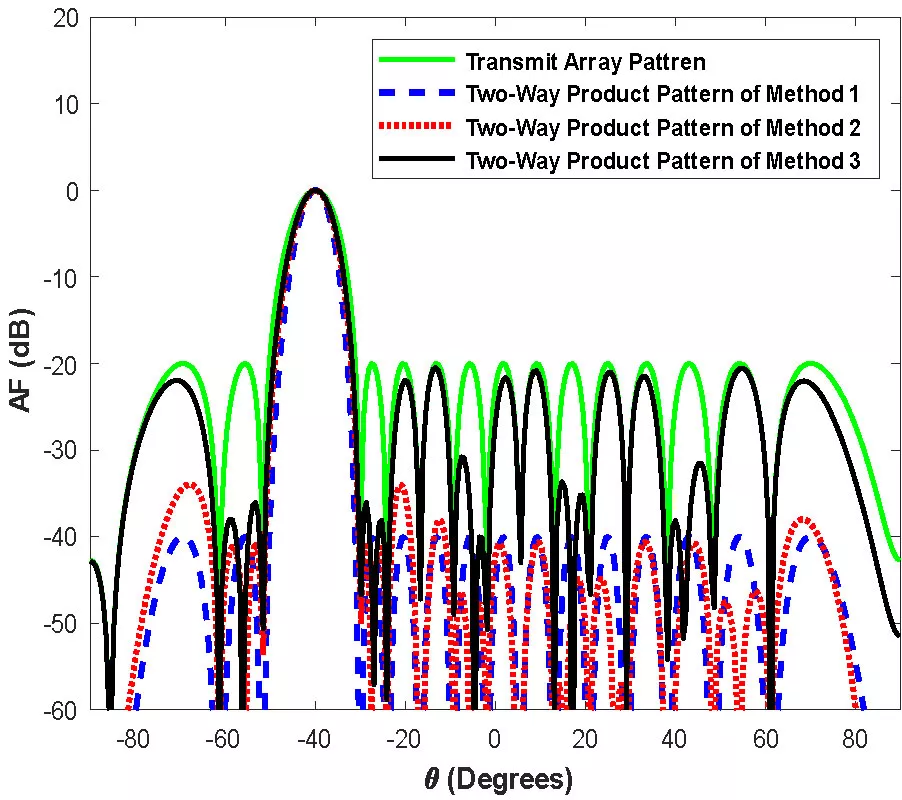
Two-way array factor is the product of array factors of transmitting array and receiving array in a radar antenna system. One of the major disadvantages of antenna arrays is undesirable high sidelobes near the main beam which causes ground clutter and interference in the radar system. Furthermore, increasing the number of array elements in transmitting/receiving modules results in a high complexity, cost, size, and weight. In this paper, a two-way radar structure with a receiving array that has only two elements is proposed to solve these aforementioned problems. Noticeably, all the existing receiving arrays have a number of elements that are much greater than two elements, and it is usually equal to or less than the number of transmitting array elements. Thus, this is the first time to produce such an extremely simple receiving array structure that has capability to provide low sidelobes and improved directivity in the resultant two-way array pattern. To demonstrate the flexibility and generality of the proposed two-way array structure, it is applied to the uniform array and non-uniform excitation array such as Dolph-Chebyshev as well as to electronic scanned arrays. Simulation results confirm the effectiveness and superiority of the proposed two-way structure where the highest sidelobe level reached -26.47 dB; the directivity was 25.96 dB; and the complexity of the receiving array was significantly reduced to only 12.5% when two separate non-existing elements were deployed and it was completely eliminated when two existing elements from the transmitting array were reused.
Two-Way Array Radar with Only Two-Elements Receiving Array and Improved Performance
2026-02-26
PIER C
Vol. 166, 186-194, 2026
download: 142
Compact Ultra-Wideband MIMO Antenna with High Isolation Based on Metamaterials with Mirror Symmetry
Xuemei Zheng, Shengbang Ma and Linfei Yue
This paper presents a low-coupling ultra-wideband (UWB) antenna based on a metamaterial structure. The proposed metamaterial exhibits single-negative characteristics with a negative permittivity (ε) in the 3.3-4 GHz and 6.4-10.1 GHz bands, effectively reducing inter-element coupling. Through simulation and experimental measurement, the antenna is demonstrated to operate from 3.1 to 11.4 GHz, achieving an absolute bandwidth of 11.31 GHz and a relative bandwidth of 114.5% (S11 < -10 dB). By integrating the metamaterial to suppress inter-element coupling, the antenna maintains low mutual coupling across the entire operating band (S21 < -20  dB), with an envelope correlation coefficient (ECC) below 0.0045 and a radiation efficiency ranging from 70% to 95%. These outstanding performance metrics render the antenna well-suited for indoor high-precision positioning scenarios, providing stable and high-speed data transmission capabilities.
Compact Ultra-Wideband MIMO Antenna with High Isolation Based on Metamaterials with Mirror Symmetry
2026-02-23
PIER C
Vol. 166, 176-185, 2026
download: 256
Optimizing Sensorless Control in PMSM Based on the TOGIFO-X Flux Observer Algorithm
Jianwei Liang, Shuxin Pan, Jie Yue, Jiaming Tian and Jingxuan Sun
Flux observers have been extensively employed in the sensorless control of permanent magnet synchronous motors (PMSMs). Traditional flux observers are susceptible to DC offset and high-order harmonics during flux estimation. To address this issue, this paper proposes an improved third-order generalized integrator (TOGIFO-X), which combines a third-order generalized integrator with a low-pass filter. First, the relationship between the flux observation error and rotor position error is established. Then, through rigorous mathematical derivation and Bode-plot analysis, the proposed TOGIFO-X was compared with three conventional flux observers, demonstrating its capability to effectively eliminate both the DC component and high-order harmonic components in the estimated rotor flux without introducing any adverse effects on the amplitude or phase of the fundamental wave. Finally, the effectiveness of the improved third-order generalized integrator is verified via simulations and a 0.75  kW surface-mounted PMSM (SPMSM) experimental platform. The experimental results indicate that TOGIFO-X significantly enhances the reduction in flux estimation error and the elimination of DC bias, thereby contributing to improved position estimation accuracy and advances in sensorless control technology.
Optimizing Sensorless Control in PMSM Based on the TOGIFO-X Flux Observer Algorithm
2026-02-22
PIER C
Vol. 166, 169-175, 2026
download: 112
A 50 pA-Input-Bias-Current 134 dB-Open-Loop-Gain Operational Amplifier with a New CMFB and Base Current Compensation Circuit
Ting Hong, Wenchang Li, Jian Liu and Tianyi Zhang
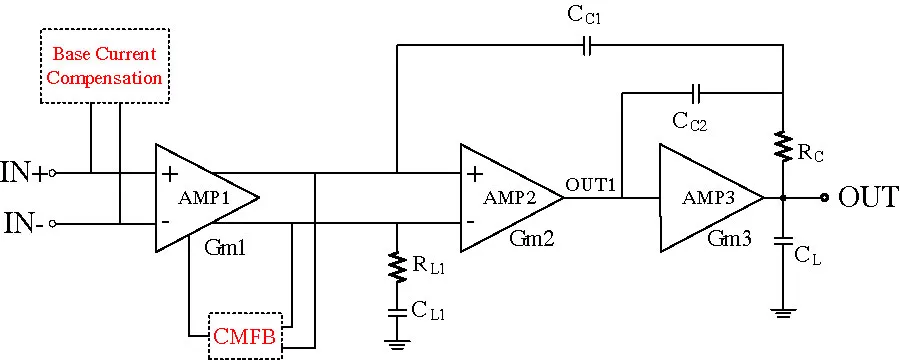
In the design of a precision operational amplifier (OPA), cancellation of the input bias current is a challenging issue, which is primarily limited by the current mirror mismatch and the low β value of the PNP transistors. This article proposes a new base current compensation design, which enables zero input-bias-current theoretically. The input stage of the circuit is an active load differential pair with a new common-mode feedback (CMFB) circuit based on the current reuse technique, which can provide a stable common-mode voltage for the amplifier without additional power consumption and area occupation. The proposed OPA is designed in a bipolar process with a core area of 2.85 mm × 1.5 mm. Simulation results show that this OPA achieves a 134 dB open-loop-gain, 50 pA input-bias-current @25˚C, and a low supply current of 0.9 mA, which suggests a concise architecture of the OPA for low offset, low noise, low input bias current, and high gain.
A 50 pA-Input-Bias-Current 134 dB-Open-Loop-Gain Operational Amplifier with a New CMFB and Base Current Compensation Circuit
2026-02-19
PIER C
Vol. 166, 155-168, 2026
download: 142
Design and Analysis of a Dual-Polarized Wideband Inverted Dipole Bowtie Base Station Antenna for 5G Applications
Saranya Matta and Sambhudutta Nanda
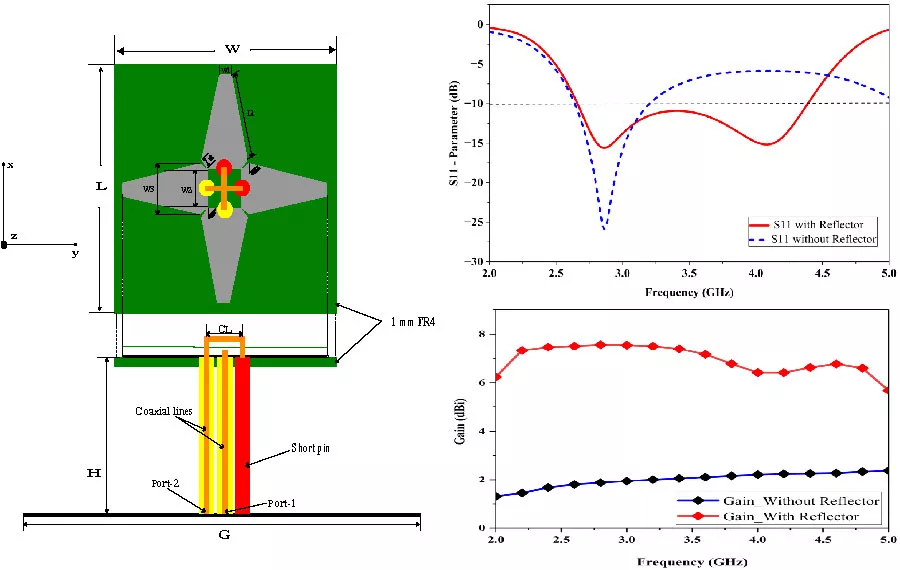
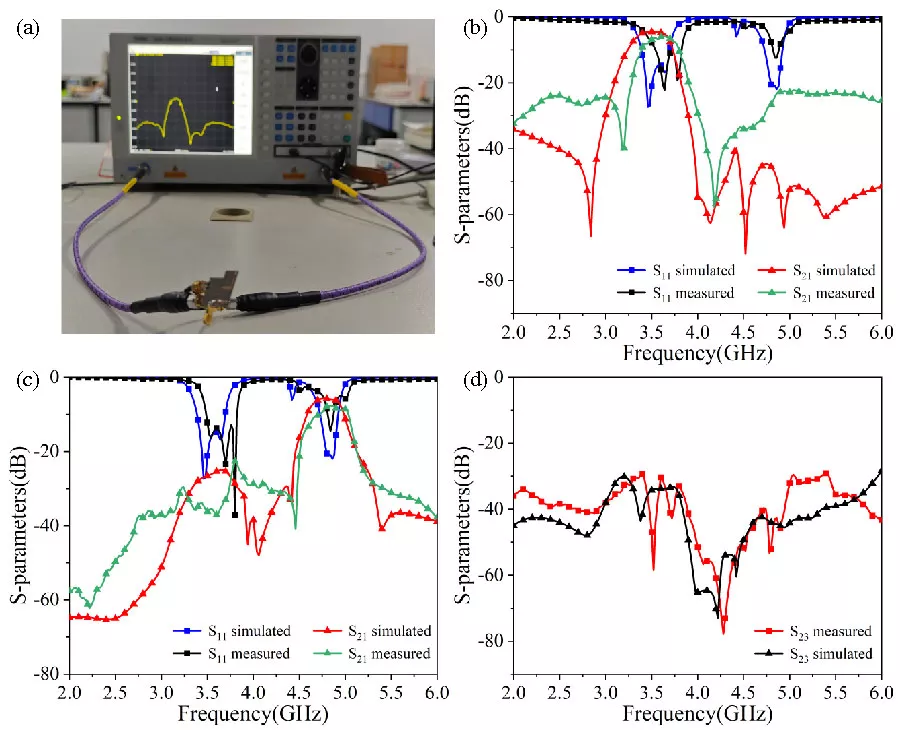
The manuscript presents the design and validation of an inverted bowtie dual-polarized antenna for 5G base station applications. The paper initiates with a comprehensive examination of antenna design, divided into two distinct phases: the evolving stage and the final stage. In the evolving stage, the antenna consists of two pairs of planar inverted bowtie dipoles, which are oriented perpendicularly to one another along their central axes. A balanced feed configuration has been effectively devised to facilitate optimal feeding to the bowtie antennas. The antenna, which is in an evolving stage of development, is engineered to operate at frequencies of 2.8 GHz on port 1 and 3.2 GHz on port 2. It features dual-polarization characteristics. The system ensures an isolation level exceeding 24 dB throughout the entire operational frequency range between the two ports. Additionally, it demonstrates an exceptional radiation efficiency of over 97% at the resonant frequencies. The maximum gain of this evolving stage antenna is 2.3 dBi. A 100 mm × 100 mm square ground plane has been integrated into the suggested antenna design in the final stage of design. Implemented on an FR4 substrate, the suggested antenna has a broad impedance bandwidth appropriate for 5G base-station services. This design has significantly improved gain, isolation, and radiation efficiency, as well as a broad-band resonant frequency range. The antenna proposed in the final stage is designed to operate within a frequency range of 2.66 GHz to 4.4 GHz, demonstrating wide-band characteristics. The design has been meticulously manufactured and calibrated to operate at a central frequency of 3.5 GHz. A -10 dB reflection coefficient with a wide band of 49.5% (which spans from 2.66 GHz to 4.4 GHz) is obtained from the measurements. Antenna-C, the suggested antenna discussed in this article, has a wide bandwidth of 1720 MHz for port 1, which spans the frequency range from 2.66 GHz to 4.4 GHz, and a wide bandwidth of 1710 MHz for port 2, which spans the frequency range from 2.91 GHz to 4.62 GHz. The isolation observed between the two ports has reached a maximum of -39.7 dB. Additionally, this optimization ensures a consistent level above -35 dB is maintained across the entire bandwidth. The results obtained from the proposed antenna, which incorporates a reflector, indicate that cross-polarization remains below -25 dB throughout the operating bandwidth. Furthermore, the front-to-back ratio is found to exceed 22 dB. The antenna design achieves a maximum gain of 7.5 dBi while consistently maintaining a gain greater than 6.3 dBi across the wide frequency range. The antenna dimensions at the lowest functional frequency of 2.66 GHz are 0.372λ0 × 0.355λ0, facilitating its extension into an array component.
Design and Analysis of a Dual-Polarized Wideband Inverted Dipole Bowtie Base Station Antenna for 5G Applications
2026-02-19
PIER C
Vol. 166, 145-154, 2026
download: 130
Quantitative Durability Prediction of Photovoltaic Roof Waterproof Performance Using a Heterogeneous Cumulative Grey Model
Zhi Li, Zhongliang Yao, Yongtong Li, Wenxuan Cui and Yixuan Li
Building Integrated Photovoltaics (BIPV) technology has emerged as a significant trend in building low-carbon and energy-efficient structures. Exposure to rainwater erosion and immersion can cause its waterproofing failure, significantly shorten the service life of the roof, and considerably lower indoor comfort. To address this, we developed a construction method for waterproofing details of photovoltaic roofs with embedded bolts. This approach optimized the joint design, enhanced the continuity of the waterproofed layer, and improved the building efficiency. We propose a Multivariate Heterogeneous Accumulation Grey Model to quantify the performance and long-term degradation of PV roof waterproofing, which can fully exploit factors such as temperature change and water flow. The application of the new model for quantitative prediction not only demonstrates the effectiveness of the new process improvements, but also provides a novel theoretical tool for future research. Prediction results indicate that the total exudate volume under the new process is less than 2,000 mL (only 1/6 that of the control group). The experiments demonstrate that key waterproofing details with embedded bolts are superior to those of traditional methods in terms of impermeability and durability. The results provide a scientific and technical solution for improving the waterproofness of photovoltaic roofs.
Quantitative Durability Prediction of Photovoltaic Roof Waterproof Performance Using a Heterogeneous Cumulative Grey Model
2026-02-19
PIER C
Vol. 166, 136-144, 2026
download: 180
Design of Directional Circularly-Polarized Dielectric Resonator Antenna with Different Radiating Angles
Qiheng Huang and Kwok Leung
A directional circularly polarized dielectric resonator antenna for different main-beam angles is designed using the Particle Swarm Optimization (PSO) method. It is a single-feed, single-layer structure. For demonstration, the main-beam angle θ is designed at 30° and a 5G frequency of 5.8 GHz. To verify our design, a prototype is fabricated using 3D-printing technology. Its reflection coefficient, radiation pattern, realized gain, and total antenna efficiency are measured. Measured results show good agreement with simulated ones. The prototype has a -10 dB impedance bandwidth of 37.24% (4.84-7 GHz), a 3-dB axial ratio bandwidth of 15.52% (5.3-6.2 GHz), a peak gain of 5.87 dBi, and a peak total antenna efficiency of 96%. It has a low profile of 0.2λ0, where λ0 is the free-space wavelength at 5.8 GHz.
Design of Directional Circularly-polarized Dielectric Resonator Antenna with Different Radiating Angles
2026-02-19
PIER C
Vol. 166, 126-135, 2026
download: 123
Adaptive Sliding Mode and Fuzzy Observer-Based Optimal Control for Electromagnetic Performance of Permanent Magnet Synchronous Motors
Dehai Chen, Dunlin Liang, Ruilong Liu and Xin Huang
To enhance the electromagnetic transient performance and torque dynamic response quality of permanent magnet synchronous motor vector control systems, this study proposes a novel adaptive sliding mode control strategy based on a state-dependent nonlinear approach law. This method first replaces the sign function in traditional sliding mode control with a sigmoid function, mechanistically achieving continuous construction of quasi-sliding mode dynamics and effectively eliminating high-frequency chattering in control signals. Building upon this foundation, the electromagnetic-mechanical state variables are dynamically incorporated into the approach law design to construct a state-dependent nonlinear approach law. This enables the controller to adaptively adjust based on the motor's operational state, thereby achieving dynamic optimization control of electromagnetic torque and speed without relying on precise models. Furthermore, a global fast terminal sliding surface is introduced to achieve rapid convergence of system states within finite time. For composite disturbances such as load transients, flux fluctuations, and unmodeled dynamics, a fuzzy logic-based gain adaptive mechanism for extended state observers is designed. This dynamically adjusts observer bandwidth to enable real-time, precise observation and feedforward compensation for total disturbances. Experimental results demonstrate that the proposed method exhibits significant advantages in improving torque dynamic response, enhancing steady-state accuracy, and strengthening system disturbance rejection capabilities, providing an effective solution for high-performance permanent magnet synchronous motor drive control.
Adaptive Sliding Mode and Fuzzy Observer-Based Optimal Control for Electromagnetic Performance of Permanent Magnet Synchronous Motors
2026-02-14
PIER C
Vol. 166, 113-125, 2026
download: 314
Sensorless Control of PMSM Based on a Novel Nonlinear Sliding Mode Observer with Phase-Locked Loop
Kun Wang, Zhonggen Wang and Wenyan Nie
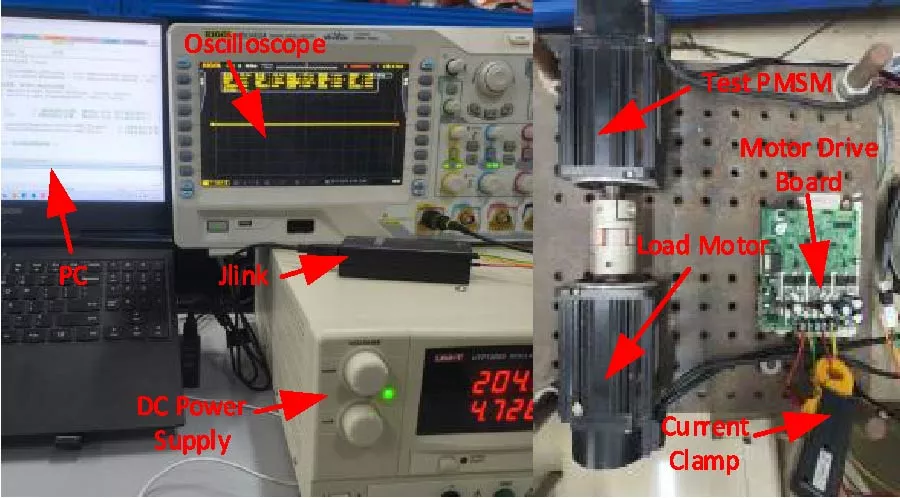
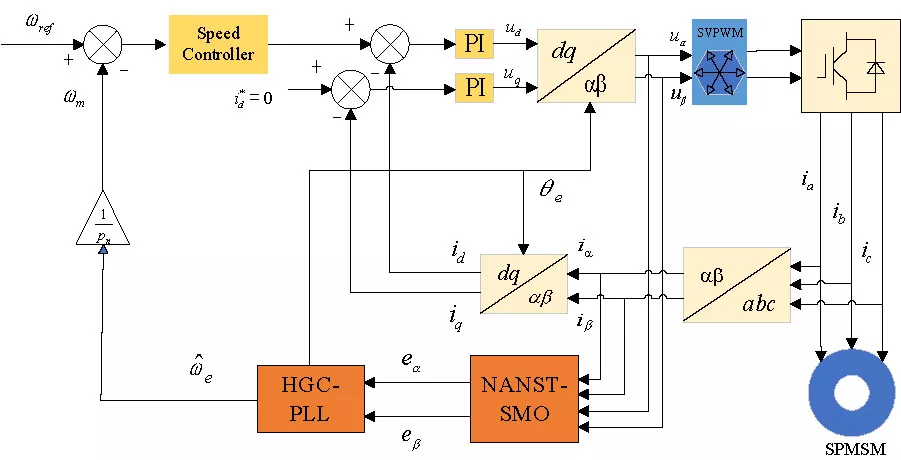
To improve the position detection accuracy of sensorless control for permanent magnet synchronous motors (PMSM) and address issues such as significant chattering amplitude in traditional Sliding Mode Observers (SMOs), a Novel Adaptive Nonlinear Super-Twisting Sliding Mode Observer (NANSTSMO) combined with a Higher-order Gain Compensation Phase-Locked Loop (HGCPLL) is designed in this study. First, a multimodal nonlinear function is designed to replace the sign switching function, and this multimodal nonlinear function is then integrated with both the NANSTSMO and the HGCPLL. Second, a compensation mechanism is introduced to precisely estimate the rotor position. Finally, simulations are conducted using MATLAB/Simulink, and a motor test platform is constructed. Compared with the traditional sliding mode control and referenced sliding mode control strategies, the proposed method demonstrates superior effectiveness.
Sensorless Control of PMSM Based on a Novel Nonlinear Sliding Mode Observer with Phase-Locked Loop
2026-02-13
PIER C
Vol. 166, 106-112, 2026
download: 138
Design and Analysis of a Symmetric CPW-Fed Slot Ring Antenna with Uniform Gaps for Multi-Band ISM, WiMAX, Satellite Applications
Ravi Kumar Maddumala, Kollipara Radha, Udara Yedukondalu, Vasudha Vijayasri Bolisetty and Kottapadikal Vinodan Vineetha
In this study, we describe a circular ring slot antenna with three circular holes, which is supplied by a CPW-fed split ring resonator metamaterial. This proposed antenna covers sophisticated satellite communication applications for wireless devices, including 5G, military, and aerial radar, and resonates between 2.4 GHz and 10.4 GHz, with a center frequency of 3.542 GHz and an S11 of -37.7 dB, and a center frequency of 7.5 GHz and an S11 of -30.4 dB, respectively. The produced antenna satisfactorily validates the specified antenna metrics. The suggested antenna is built on an affordable FR4 substrate and has physical dimensions of 38 × 38 × 1.6 mm3. The proposed simulated design antenna is validated by the measured data. The results show a good correlation between the measured data and the simulation. The operational impedance range of the proposed antenna is less than -10 dB. The circular ring slot antenna has proven to be remarkably capable of reaching multiband frequencies of 3.54 GHz and 7.5 GHz. The proposed antenna may have an effect on radiation characteristics and gain, resulting in a good contender. Each component of the circle-shaped ring slot antenna design is essential to achieving the important and encouraging results.
Design and Analysis of a Symmetric CPW-Fed Slot Ring Antenna with Uniform Gaps for Multi-Band ISM, WiMAX, Satellite Applications
2026-02-13
PIER C
Vol. 166, 97-105, 2026
download: 193
A Miniaturized Wideband PIFA Antenna for Medical Implant Systems
Amina Abbas, Farid Bouttout, Asma Djellid, Youcef Braham Chaouche, Ismail Ben Mabrouk and Amjad Iqbal
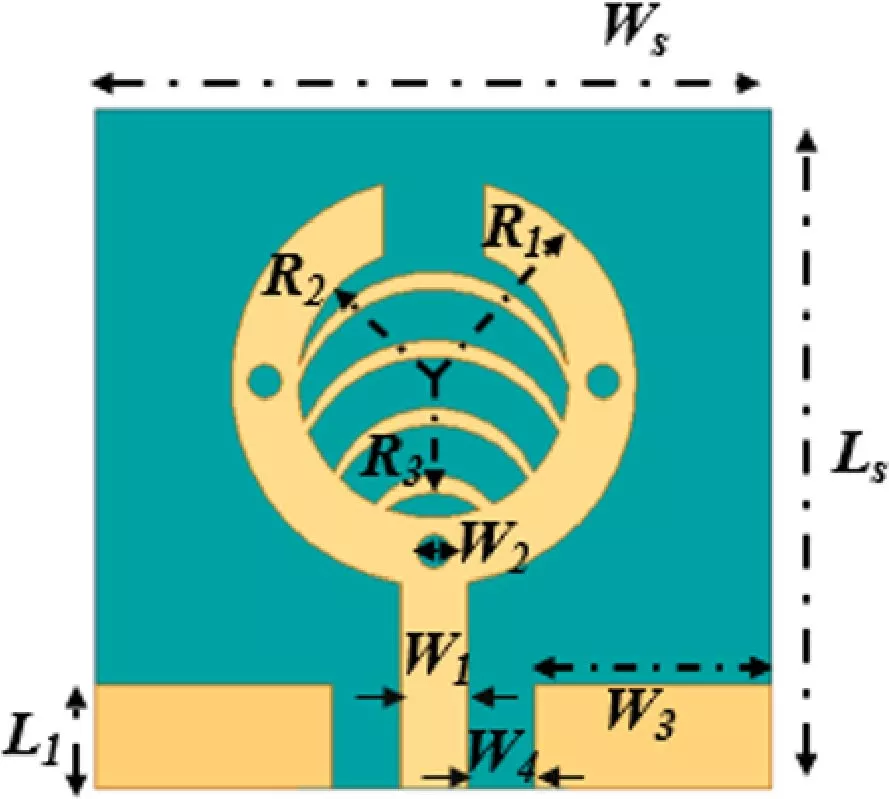
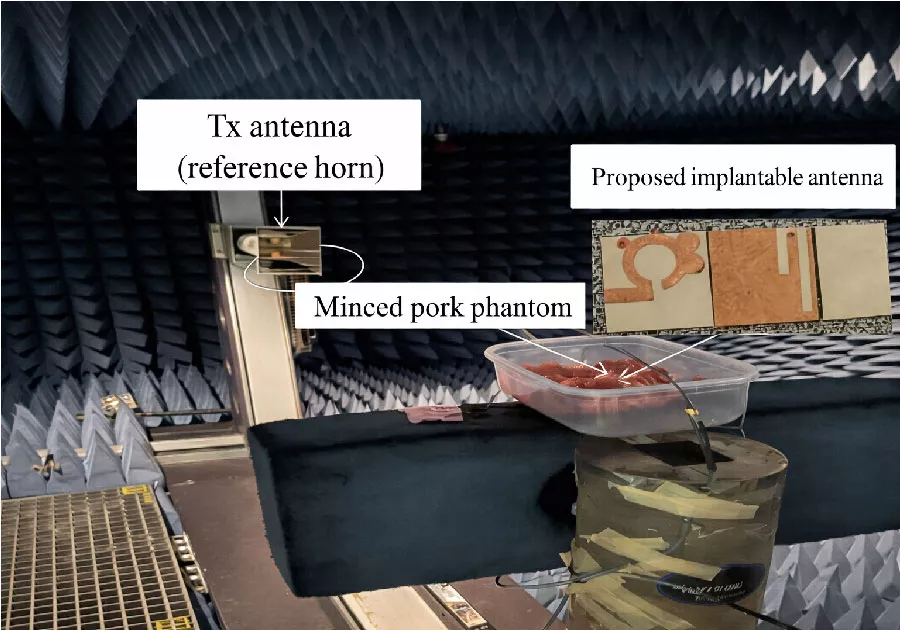
This article presents a miniaturized wideband planar inverted-F antenna (PIFA) for deep biomedical implant applications at 915 MHz. Compactness and wide impedance bandwidth are achieved using a shorting pin, a circular radiating patch, and open-ended slots etched in the ground plane. The antenna occupies an ultra-small volume of 63.5 mm3 and is designed and analyzed inside a four-layer cylindrical human tissue phantom. Simulated and measured results show stable impedance matching over the ISM band, with a measured -10 dB bandwidth of 481 MHz (44.02%) and a peak realized gain of -28 dBi. Specific absorption rate (SAR) analysis confirms compliance with IEEE safety limits. In-vitro measurements using minced pork exhibit close agreement with simulations, validating the antenna's performance and suitability for reliable deep biomedical implant communication systems.
A Miniaturized Wideband PIFA Antenna for Medical Implant Systems
2026-02-12
PIER C
Vol. 166, 89-96, 2026
download: 323
A Low Sidelobe Dual-Beam Sparse Reflectarray Antenna with Combination of Transmissive and Reflective Elements
Wei Luo, Mingli Xie, Liu Luo and Yuqi Yang
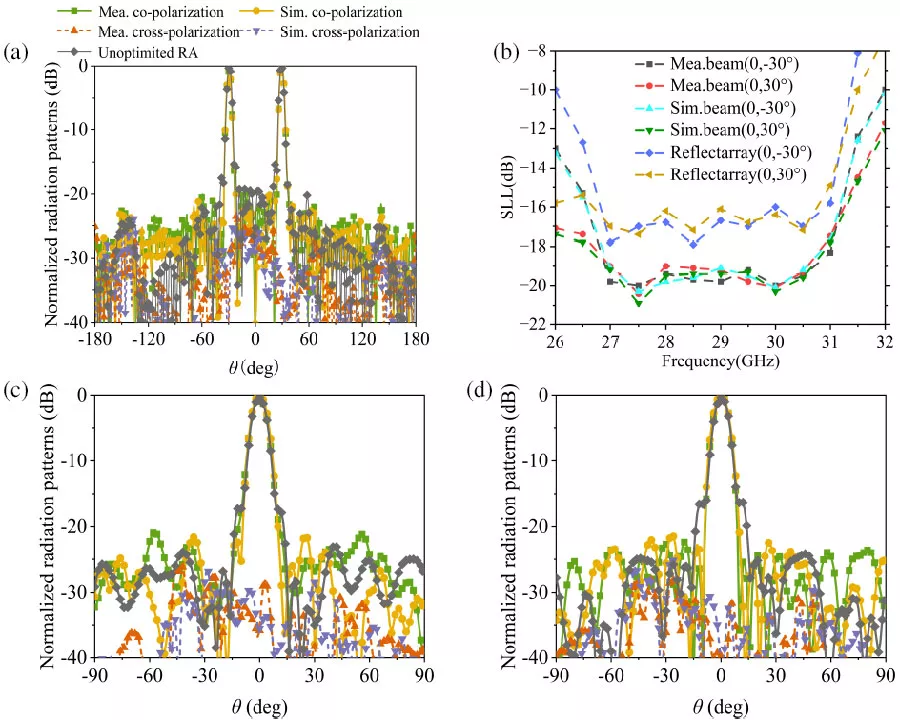
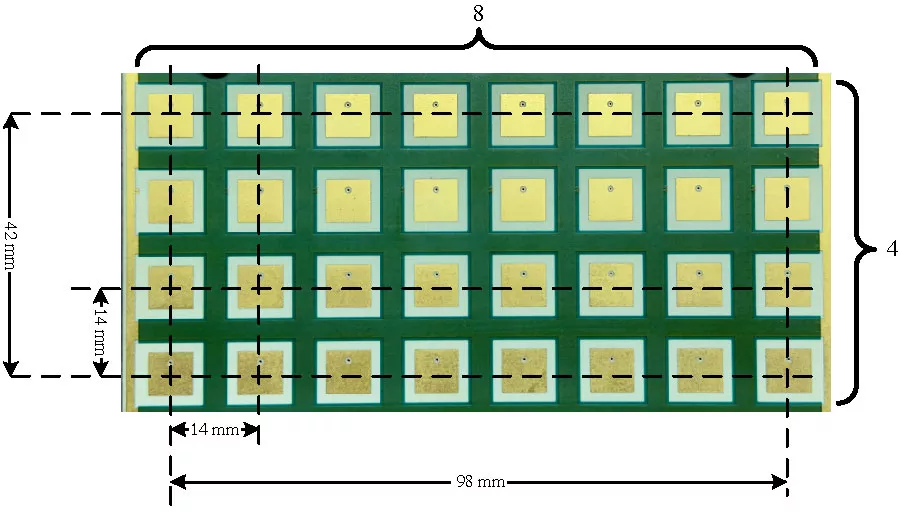
A low sidelobe dual-beam reflectarray antenna is proposed based on the sparse array principle. The reflected dual beams achieve high gain through optimized phase compensation, in which the transmissive elements act as dummy elements to suppress sidelobes. A global search optimization technique based on genetic algorithm (GA) is adopted to improve the arrangement of transmissive and reflection elements. Since all the reflective and transmissive elements operating in the same wide frequency band are non-uniformly distributed on the aperture, both the backward radiation and cross polarization levels are effectively suppressed. The measurement results show that the sidelobe level of the dual-beams is less than -19 dB. The peak gain and peak aperture efficiency of the designed antenna are 26.0 dBi and 38.9%, respectively. The 3-dB gain bandwidth is 13.8%. The front to back ratio at 30 GHz is 27 dB. This dual-beam antenna has the advantages of high gain, low sidelobes, and wide beam radiation range, which make it suitable for millimeter-wave multi-target radar detection systems.
A Low Sidelobe Dual-Beam Sparse Reflectarray Antenna with Combination of Transmissive and Reflective Elements
2026-02-11
PIER C
Vol. 166, 76-88, 2026
download: 184
An Experimental Validation of Amplitude Only Genetic Algorithm Techniques for Side Lobe Level Optimization and Beam Shaping in 6G Massive MIMO Systems
Neev B. Patel, Rizwan Habibbhai Alad, Kosha Shah, Yashvi Mojidra and Purvang D. Dalal
Traditional side-lobe suppression techniques such as Chebyshev and Taylor tapering provide limited adaptability to hardware constraints and fixed array geometries. Existing Genetic Algorithm applications predominantly focus on planar arrays with variable spacing, leaving linear arrays with fixed element spacing underexplored. This work presents a genetic algorithm-based amplitude tapering framework for optimizing side-lobe levels in 8­element linear phased arrays with fixed 0.48λ spacing. The approach incorporates hardware quantization constraints and validates performance through experimental implementation. Experimental validation uses the Analog Devices CN0566 Phaser kit operating at 10.25 GHz (centre frequency) with 0.5 dB gain resolution and 2.8125˚ phase quantization. Genetic algorithm parameters including population size, mutation rate, and fitness function were held constant while the convergence rate and side-lobe suppression are evaluated. This research work demonstrates practical genetic algorithm implementation for linear phased array optimization under real-world hardware constraints, providing design guidelines for X-­band radar and communication systems.
An Experimental Validation of Amplitude Only Genetic Algorithm Techniques for Side Lobe Level Optimization and Beam Shaping in 6G Massive MIMO Systems
2026-02-11
PIER C
Vol. 166, 68-75, 2026
download: 180
Wideband GCPW-Fed Coplanar Vivaldi Antenna with Low Cross-Polarization
Yiqing Gao, Zhao Bai, Hongcheng Zhou, Changhai Hu, Zhongming Yan and Yu Wang
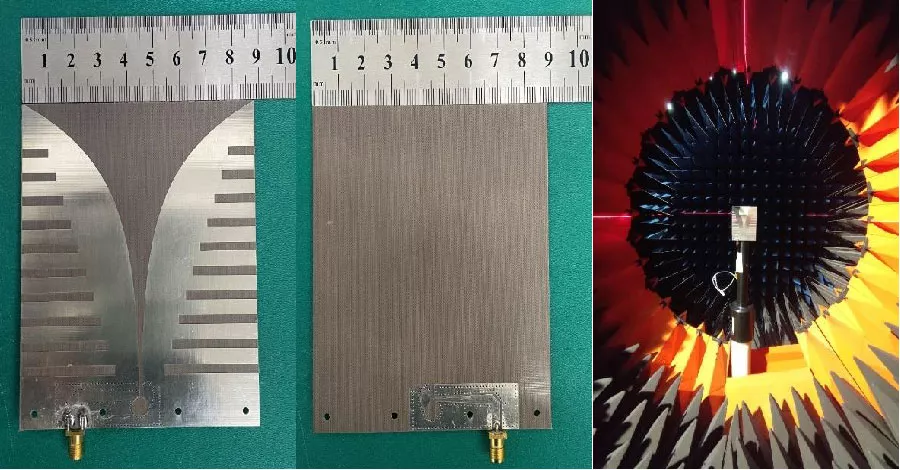
The traditional microstrip-fed Vivaldi antenna has the disadvantage of a high cross-polarization level owing to the nonparallelism between the electric field and the antenna plane. Based on the balanced E-field distribution property of the grounded coplanar waveguide (GCPW) structure, this paper proposes a planar ultrawideband Vivaldi antenna with low cross-polarization. The measured results confirm that an enhanced impedance bandwidth of 159.54% is achieved in the range of 2.01-17.86 GHz (|S11| < -10 dB) with a 4-6 dB improvement in cross-polarization over traditional Vivaldi antenna. In addition, the proposed antenna has a maximum gain of 9.9 dBi within the size of 88.2 mm × 107.3 mm × 1 mm. Owing to the advantages of ultra-wideband, low cross-polarization ratio, stable radiation patterns and high gain, the proposed method can be widely applied in UWB communication and multifunctional integrated RF systems.
Wideband GCPW-Fed Coplanar Vivaldi Antenna with Low Cross-Polarization
2026-02-11
PIER C
Vol. 166, 57-67, 2026
download: 110
Lower Cost Variable-Leakage-Flux Reverse-Salient-Pole Permanent Magnet Motor by Reducing Rare-Earth Permanent Magnet Usage
Xiping Liu, Hongzhan Hu, Qianli Jia, Zhangqi Liu and Zhiguo Zhu
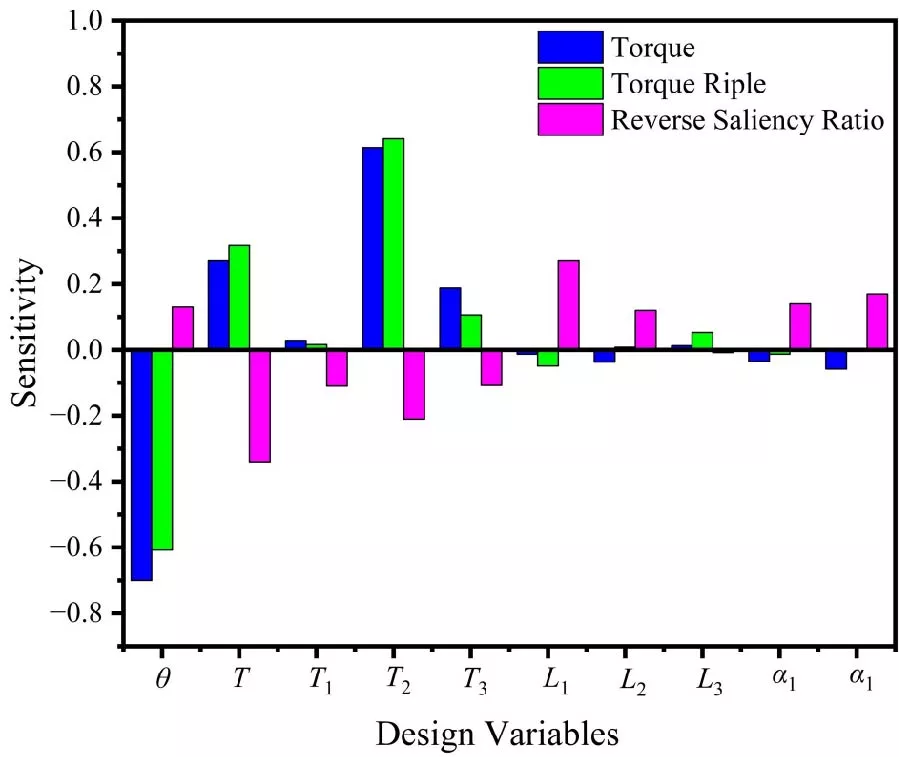
This paper proposes a novel less-rare-earth variable-leakage-flux reverse-salient-pole motor (LRE-VLF-RSPM). The proposed motor achieves the reverse-salient-pole and variable-leakage-flux characteristics by reasonably arranging three layers of arc-shaped flux barriers between adjacent magnetic poles. Furthermore, it incorporates ferrite magnets to reduce the usage of rare-earth permanent magnets by one-third while maintaining torque output, thereby fulfilling the less-rare-earth objective. First, the paper introduces the rotor topology and operational principle. Subsequently, it employs two-dimensional finite element analysis (FEA) to compare the electromagnetic performance - including torque, flux-weakening capability, constant power speed range (CPSR), and high-efficiency region proportion - among a conventional V-type synchronous motor (CTVSM), a variable-leakage-flux reverse-salient-pole motor (VLF-RSPM), and the LRE-VLF-RSPM. The final results demonstrate that the proposed motor reduces rare-earth usage by one-third compared to the benchmark motor and exhibits superior flux-weakening capability, a wide constant power speed range, and a large high-efficiency region. These findings verify the effectiveness and feasibility of the proposed motor.
Lower Cost Variable-Leakage-Flux Reverse-Salient-Pole Permanent Magnet Motor by Reducing Rare-Earth Permanent Magnet Usage
2026-02-10
PIER C
Vol. 166, 52-56, 2026
download: 107
Wide-Passband Miniaturized Filter with Higher-Order Mode Suppression Using QMSIW and Microstrip Resonators
Jingyv Wang, Haiyan Zeng, Mengling Su, Xuan'an Chen, Lishan Huang, Jinming Ou and Xiaohei Yan
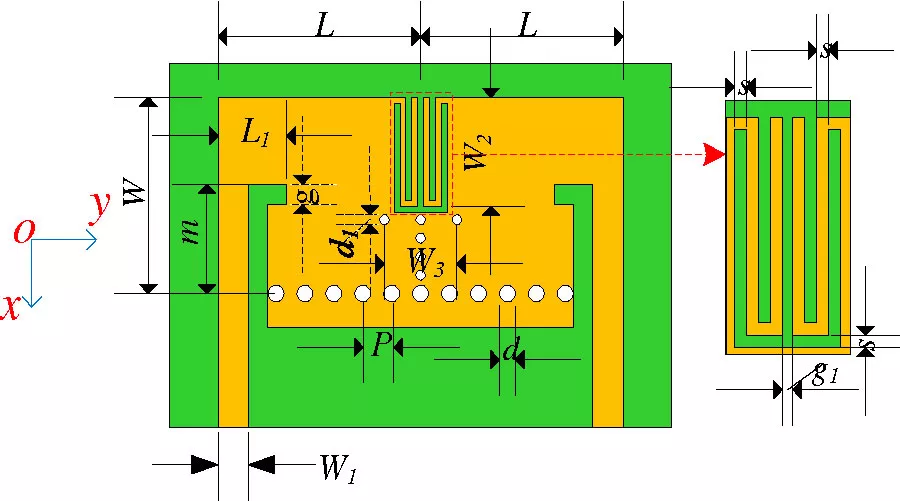
This paper presents a wide-passband, miniaturized filter based on quarter-mode substrate-integrated waveguide (QMSIW) resonant cavities and microstrip resonators. The filter employs two QMSIW resonant cavities, which effectively reduce its size. Moreover, the higher-order modes TE120, TE210, and TE220 cannot propagate within these cavities. The addition of two microstrip resonators at the coupling iris between the QMSIW cavities enables a fourth-order filter response using only two resonant cavities. High selectivity is achieved through cross-coupling, which introduces two transmission zeros (TZs). The filter was fabricated and measured, showing good agreement with the simulation results. Compared with other substrate-integrated waveguide (SIW) filters, the proposed filter offers advantages in compactness, passband bandwidth, and higher-order mode suppression.
Wide-Passband Miniaturized Filter with Higher-Order Mode Suppression Using QMSIW and Microstrip Resonators
2026-02-10
PIER C
Vol. 166, 41-51, 2026
download: 149
High-Gain Dual Band MIMO Antenna Using Metamaterial Surface for Bluetooth, Wi-Fi and 5G Applications
Nilesh Lakade, Shankar D. Nawale, Anjali Rochkari, Mahadu Trimukhe and Rajiv Kumar Gupta
In this paper, an elliptical monopole antenna is operated in fundamental mode by reducing the electromagnetic coupling (EMC) between higher-order modes. The electromagnetic coupling is decreased by decreasing the width of the radiating element and ground-plane dimensions, and increasing the gap between the radiating element and ground plane. The ellipse is sliced from the top, as there is little surface current on the top portion of a monopole. The symmetrical portion of this sliced elliptical monopole is selectively etched with little effect on impedance variation. Dual-band characteristics are obtained over 2.3-2.7 GHz (Wi-Fi and Bluetooth bands) and 5.4-5.9 GHz (WLAN band), as well as over 2.3-2.7 GHz (Wi-Fi and Bluetooth bands) and 5.13-5.71 GHz (WLAN band), depending on the etching amount. A rectangular strip is added to the etched monopole to operate over 2.3-2.7 GHz (Wi-Fi, Bluetooth bands) and 3.3-3.9 GHz (5G band). To enhance the gain of a compact dual-band antenna, a reflecting metamaterial surface consisting of an array of square patches is designed and placed below the structure. A high-gain dual-band MIMO antenna is designed by placing four elements orthogonally above the centre of four edges of the metamaterial surface. S11 < -10 dB, isolation > 18 dB and 22 dB, and antenna gain of 7.5 dBi and 7.4 dBi are obtained over 2.35-2.7 GHz and 3.3-3.6 GHz, respectively. The structure is fabricated. The measurement results validate the simulation ones.
High-gain Dual Band MIMO Antenna Using Metamaterial Surface for Bluetooth, Wi-Fi and 5G Applications
2026-02-09
PIER C
Vol. 166, 27-40, 2026
download: 178
Photovoltaic Power Prediction Model Based on Fuzzy Entropy Clustering and Self-Attention Mechanism Combined with ICEEMDAN-WOA-CNN-BiLSTM
Zhongan Yu, Faneng Wu, Zhiwei Huang, Zihao Deng and Feng Zhang
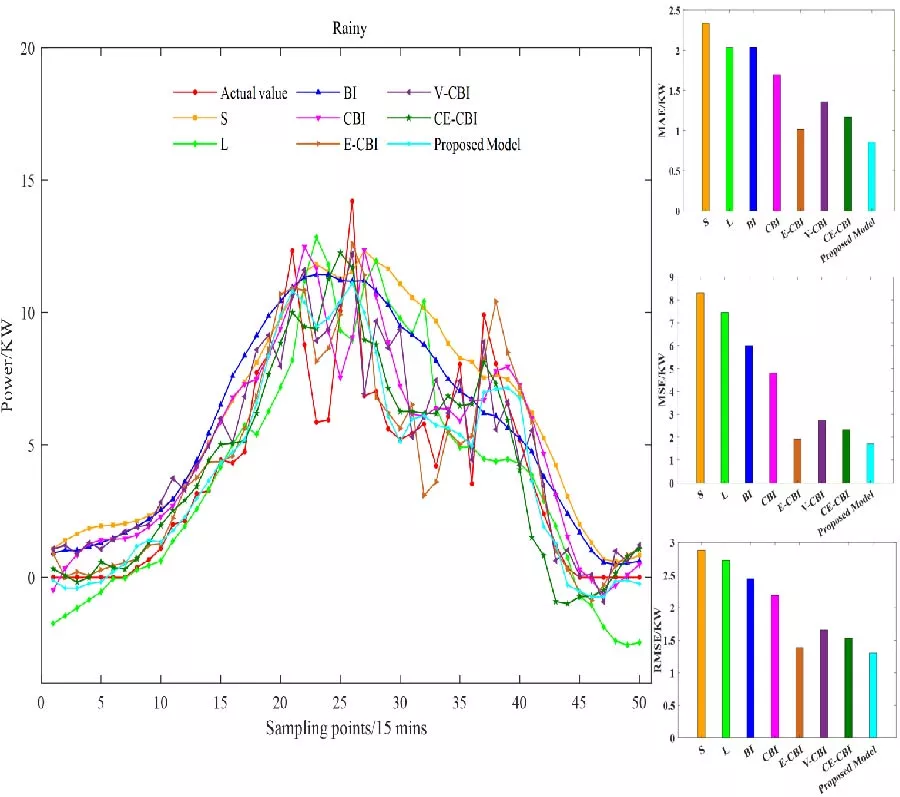
To address the randomness and nonlinearity of photovoltaic (PV) power caused by meteorological factors, this paper proposes an ICEEMDAN-WOA-CNN-BiLSTM prediction model integrated with fuzzy entropy clustering and a self-attention mechanism. First, the original PV power sequence is decomposed into multiple multi-scale intrinsic mode function (IMF) components and residuals via the Improved Complete Ensemble Empirical Mode Decomposition with Adaptive Noise (ICEEMDAN). Subsequently, components with similar complexity are merged using fuzzy entropy clustering to simplify the calculations. Then, the Whale Optimization Algorithm (WOA) is adopted to optimize the hyperparameters of the CNN-BiLSTM model, and the self-attention mechanism is integrated into the model to enhance the weights of key features. Comparative experiments demonstrate that the proposed model significantly outperforms single and traditional hybrid models in terms of Mean Absolute Error (MAE), Root Mean Square Error (RMSE), and Coefficient of Determination (R2). This can effectively improve the accuracy of short-term PV power prediction and provide support for power station dispatching and power grid stability.
Photovoltaic Power Prediction Model Based on Fuzzy Entropy Clustering and Self-Attention Mechanism Combined with ICEEMDAN-WOA-CNN-BiLSTM
2026-02-09
PIER C
Vol. 166, 19-26, 2026
download: 122
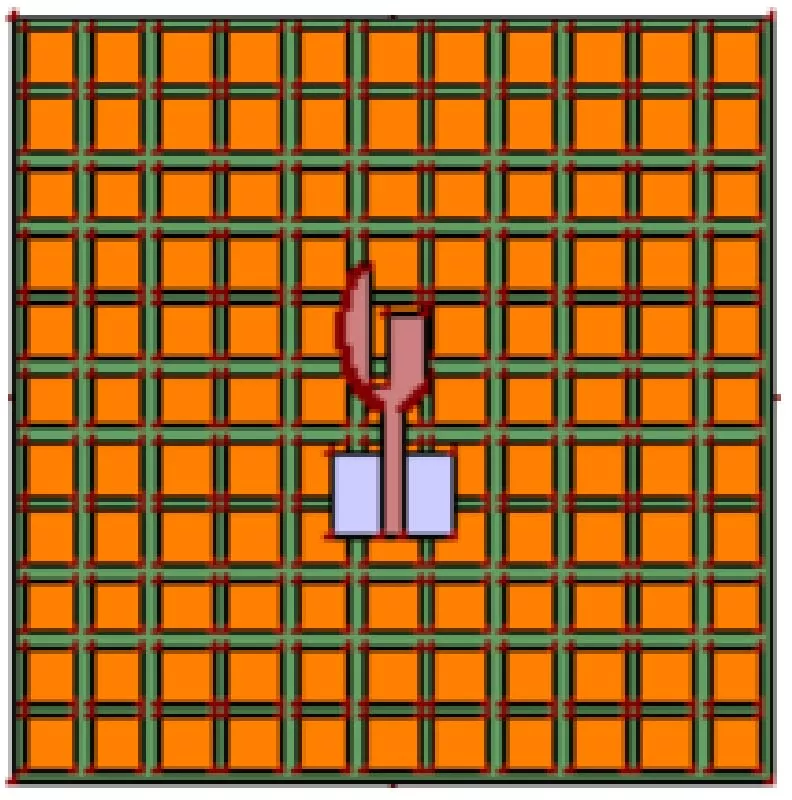
A Miniaturized Highly Isolated Quad-Port Penta-Band-Notched UWB MIMO Antenna Based on EBG Structures
Koritala Nagavardhani, Pullagura Rajesh Kumar and Veera Malleswara Rao
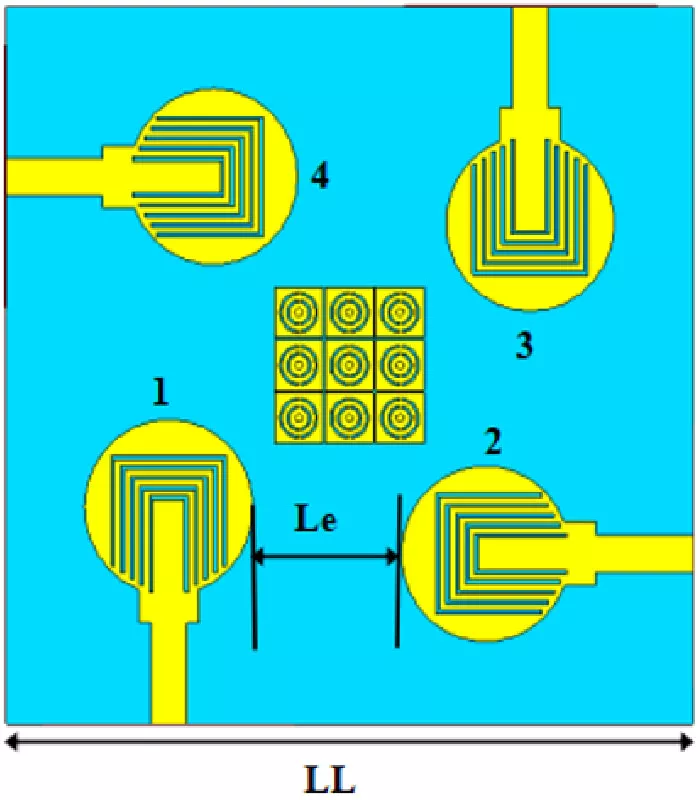
This paper presents a miniaturized quad-port ultrawideband (UWB) MIMO antenna that integrates band-notch functionality and exhibits high isolation. The design employed four circular monopole radiators positioned on a modified defected ground structure (DGS), and periodic electromagnetic bandgap (EBG). These EBG components are an advanced variation of traditional mushroom-type structures that incorporate grid-shaped top patches, a metallic ground plane, and multiple vias connecting both layers. Located at the center of the substrate, the EBG network effectively reduces the electromagnetic coupling between adjacent radiating elements. To achieve multi-band rejection, five inverted U-shaped slots are etched into each monopole, enabling selective suppression of unwanted frequencies at 3.36-3.56 GHz, 3.72-3.92 GHz, 4.11-4.32 GHz, 4.59-4.83 GHz, and 5.22-5.50 GHz, corresponding to WiMAX, C-band, Wi-Fi, INSAT, and WLAN systems. Experimental validation confirms that the antenna attains -10 dB impedance bandwidth extending from 3.0 to 14.0 GHz, with inter-element isolation above -22.5 dB, gain of 6.2 dB, and radiation efficiency reaching 79.2%.
A Miniaturized Highly Isolated Quad-Port Penta-Band-Notched UWB MIMO Antenna Based on EBG Structures
2026-02-09
PIER C
Vol. 166, 9-18, 2026
download: 141
Broadband Array Aperture Fill Time Correction Algorithm Based on Low-Complexity Variable Fractional Delay Filter
Yufan Wang, Mingwei Shen, Zixuan Wang and Guodong Han
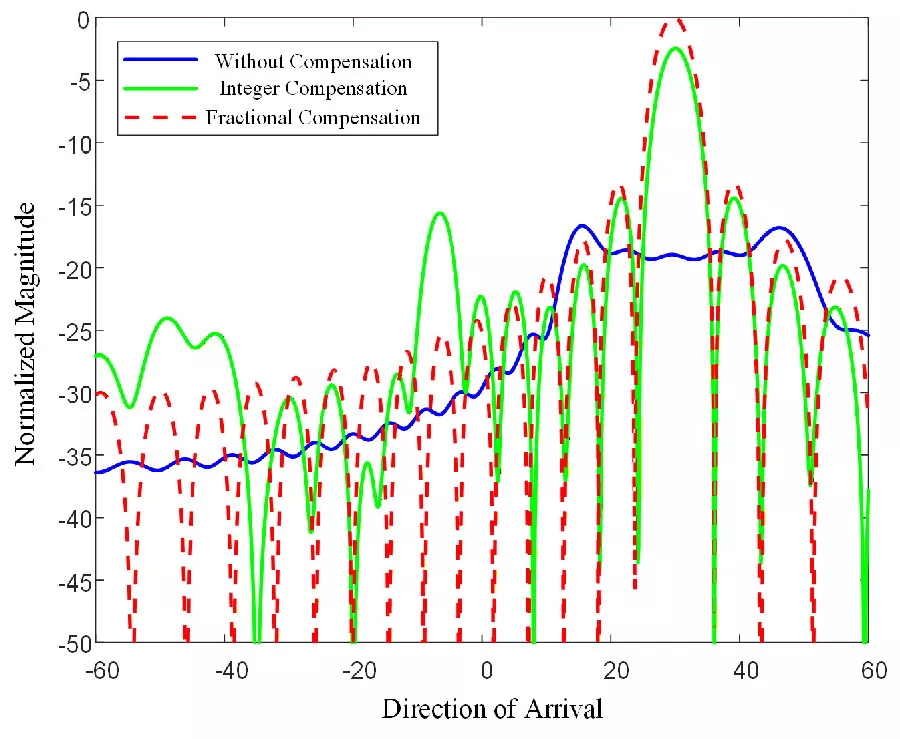
To address the aperture fill time problem in broadband arrays, this paper proposes an efficient delay compensation algorithm based on a variable fractional delay (VFD) filter with high numerical stability. A low-complexity Newton structure is introduced into the VFD Lagrange interpolation algorithm; in addition, the numerical stability is significantly enhanced by centrally offsetting the element delay parameters and avoiding the explicit inversion of the transformation matrix. Subsequently, the robust Newton-VFD is applied to the implementation of the broadband array aperture fill time correction algorithm. The algorithm utilizes a cascaded architecture consisting of coarse integer-delay compensation and fine fractional-delay correction via the Newton-VFD. Simulation results demonstrate that the proposed low-complexity Newton-VFD significantly reduces hardware complexity while maintaining excellent magnitude-frequency characteristics, which enables efficient and high-precision correction of broadband array aperture fill time.
Broadband Array Aperture Fill Time Correction Algorithm Based on Low-Complexity Variable Fractional Delay Filter
2026-02-09
PIER C
Vol. 166, 1-8, 2026
download: 172
A Design Approach of High-Efficiency Filtering Power Amplifiers Using Harmonic-Tuned Network and Terminated Coupled-Line Structures
Lang Ran, Bin Wang, Yongxin Wang and Shihao Chen
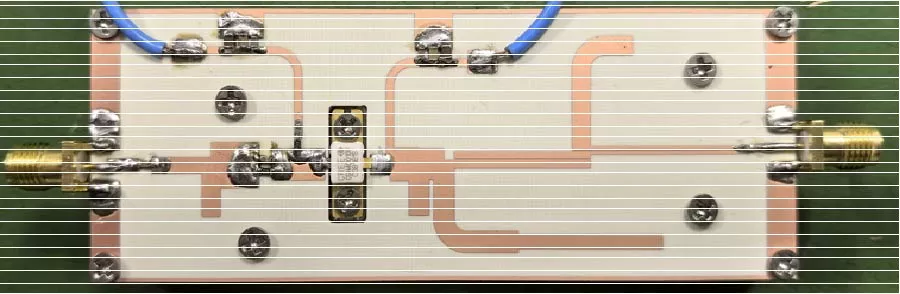
A design approach using a harmonic-tuned network (HTN) and terminated coupled-line structures (TCLSs) for high-efficiency filtering power amplifiers (FPA) is proposed in this paper, effectively addressing the efficiency degradation caused by the integration of filtering structures in conventional FPA designs. The proposed approach enables compact circuitry while providing bandpass filtering characteristics. Bandpass filtering is realized through the cascaded TCLSs, while the incorporation of open-circuit and short-circuit branches introduces additional transmission zeros and poles, significantly improving frequency selectivity. In addition, HTN enables precise control of the harmonic impedance, effectively improving the efficiency of the power amplifier (PA). Based on this approach, an FPA operating in the 2.3-2.6 GHz band is designed and implemented. Experimental results show that the FPA achieves a output power (Pout) of 40.8-41.3 dBm, a drain efficiency (DE) of 67.2-72.2%, a gain of 12.8-13.3 dB, and stopband suppression greater than 39 dB on both sides of the passband. These results verify the effectiveness of the proposed design in enhancing PA efficiency and enabling circuit miniaturization, while also providing a feasible design approach for FPA development.
A Design Approach of High-Efficiency Filtering Power Amplifiers Using Harmonic-Tuned Network and Terminated Coupled-Line Structures