Vol. 159
Latest Volume
All Volumes
PIERC 162 [2025] PIERC 161 [2025] PIERC 160 [2025] PIERC 159 [2025] PIERC 158 [2025] PIERC 157 [2025] PIERC 156 [2025] PIERC 155 [2025] PIERC 154 [2025] PIERC 153 [2025] PIERC 152 [2025] PIERC 151 [2025] PIERC 150 [2024] PIERC 149 [2024] PIERC 148 [2024] PIERC 147 [2024] PIERC 146 [2024] PIERC 145 [2024] PIERC 144 [2024] PIERC 143 [2024] PIERC 142 [2024] PIERC 141 [2024] PIERC 140 [2024] PIERC 139 [2024] PIERC 138 [2023] PIERC 137 [2023] PIERC 136 [2023] PIERC 135 [2023] PIERC 134 [2023] PIERC 133 [2023] PIERC 132 [2023] PIERC 131 [2023] PIERC 130 [2023] PIERC 129 [2023] PIERC 128 [2023] PIERC 127 [2022] PIERC 126 [2022] PIERC 125 [2022] PIERC 124 [2022] PIERC 123 [2022] PIERC 122 [2022] PIERC 121 [2022] PIERC 120 [2022] PIERC 119 [2022] PIERC 118 [2022] PIERC 117 [2021] PIERC 116 [2021] PIERC 115 [2021] PIERC 114 [2021] PIERC 113 [2021] PIERC 112 [2021] PIERC 111 [2021] PIERC 110 [2021] PIERC 109 [2021] PIERC 108 [2021] PIERC 107 [2021] PIERC 106 [2020] PIERC 105 [2020] PIERC 104 [2020] PIERC 103 [2020] PIERC 102 [2020] PIERC 101 [2020] PIERC 100 [2020] PIERC 99 [2020] PIERC 98 [2020] PIERC 97 [2019] PIERC 96 [2019] PIERC 95 [2019] PIERC 94 [2019] PIERC 93 [2019] PIERC 92 [2019] PIERC 91 [2019] PIERC 90 [2019] PIERC 89 [2019] PIERC 88 [2018] PIERC 87 [2018] PIERC 86 [2018] PIERC 85 [2018] PIERC 84 [2018] PIERC 83 [2018] PIERC 82 [2018] PIERC 81 [2018] PIERC 80 [2018] PIERC 79 [2017] PIERC 78 [2017] PIERC 77 [2017] PIERC 76 [2017] PIERC 75 [2017] PIERC 74 [2017] PIERC 73 [2017] PIERC 72 [2017] PIERC 71 [2017] PIERC 70 [2016] PIERC 69 [2016] PIERC 68 [2016] PIERC 67 [2016] PIERC 66 [2016] PIERC 65 [2016] PIERC 64 [2016] PIERC 63 [2016] PIERC 62 [2016] PIERC 61 [2016] PIERC 60 [2015] PIERC 59 [2015] PIERC 58 [2015] PIERC 57 [2015] PIERC 56 [2015] PIERC 55 [2014] PIERC 54 [2014] PIERC 53 [2014] PIERC 52 [2014] PIERC 51 [2014] PIERC 50 [2014] PIERC 49 [2014] PIERC 48 [2014] PIERC 47 [2014] PIERC 46 [2014] PIERC 45 [2013] PIERC 44 [2013] PIERC 43 [2013] PIERC 42 [2013] PIERC 41 [2013] PIERC 40 [2013] PIERC 39 [2013] PIERC 38 [2013] PIERC 37 [2013] PIERC 36 [2013] PIERC 35 [2013] PIERC 34 [2013] PIERC 33 [2012] PIERC 32 [2012] PIERC 31 [2012] PIERC 30 [2012] PIERC 29 [2012] PIERC 28 [2012] PIERC 27 [2012] PIERC 26 [2012] PIERC 25 [2012] PIERC 24 [2011] PIERC 23 [2011] PIERC 22 [2011] PIERC 21 [2011] PIERC 20 [2011] PIERC 19 [2011] PIERC 18 [2011] PIERC 17 [2010] PIERC 16 [2010] PIERC 15 [2010] PIERC 14 [2010] PIERC 13 [2010] PIERC 12 [2010] PIERC 11 [2009] PIERC 10 [2009] PIERC 9 [2009] PIERC 8 [2009] PIERC 7 [2009] PIERC 6 [2009] PIERC 5 [2008] PIERC 4 [2008] PIERC 3 [2008] PIERC 2 [2008] PIERC 1 [2008]
2025-09-15
PIER C
Vol. 159, 273-280, 2025
download: 445
Deep-Learning-Driven Ultra-Broadband X-Band Reflectarray Antenna via Physics-Guided Synthesis
Mohammadjavad Zakeri and Sajjad Sadeghi
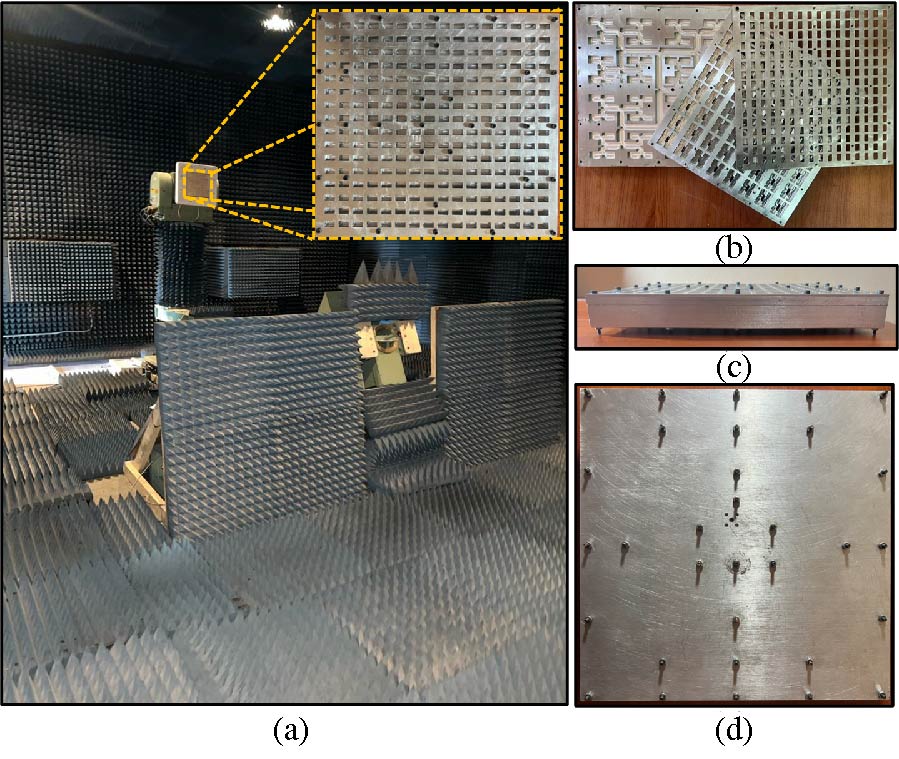
We present an eight-page in-depth study of a single-layer broadband reflectarray antenna operating over the 8 GHz to 12 GHz X-band. The array employs a dual-ring hex-slit unit cell and a physics-informed deep-learning (DL) surrogate model that reduces geometry optimisation time by ×120 compared with brute-force sweeps. The 30 cm × 30 cm prototype comprises 273 passive elements, delivers a 530° reflection-phase span, 27 dB peak gain, 56% aperture efficiency and 34.6 dB cross-polar discrimination. A residual network trained on 5000 HFSS datapoints predicts reflection phase with 0.9° MAE, whereas its inverse sibling outputs element radii in 10 ms. CST full-wave simulations and a preliminary S-parameter measurement corroborate the synthesis accuracy to within 0.25 dB. Comprehensive parametric, angular-stability and computational analyses provide guidance for extending DL-assisted reflectarrays to higher frequencies and reconfigurable architectures.
Deep-learning-driven Ultra-broadband X-band Reflectarray Antenna via Physics-guided Synthesis
2025-09-13
PIER C
Vol. 159, 261-272, 2025
download: 127
Deep Learning Assisted Microwave Sensor for Dielectric Material Classification
Sherine Ismail Abd El‑Rahman, Hany Mahmoud Zamel and Shimaa Ahmed Megahed Soliman
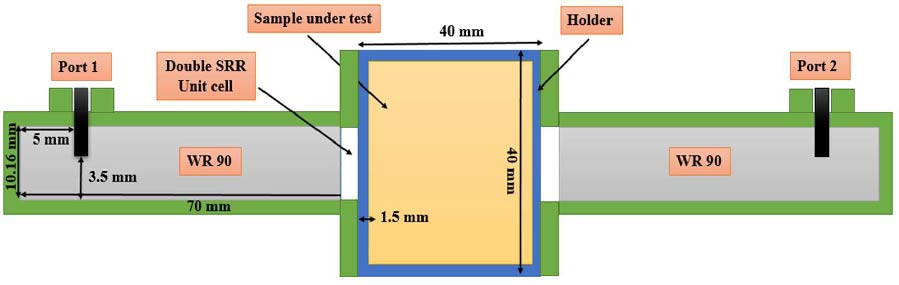
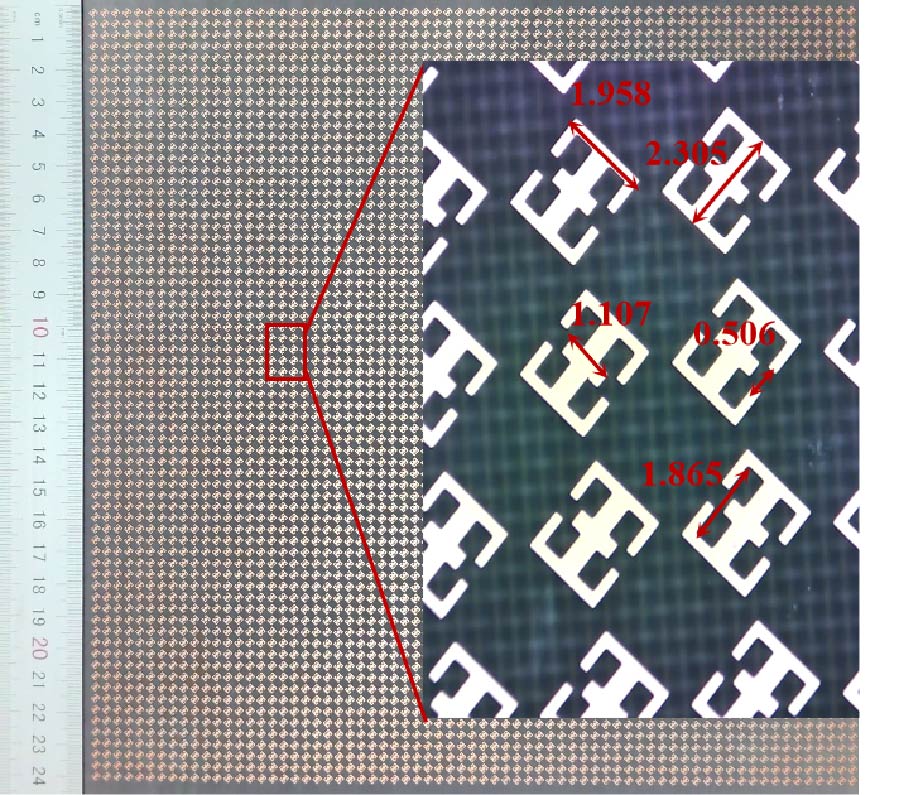
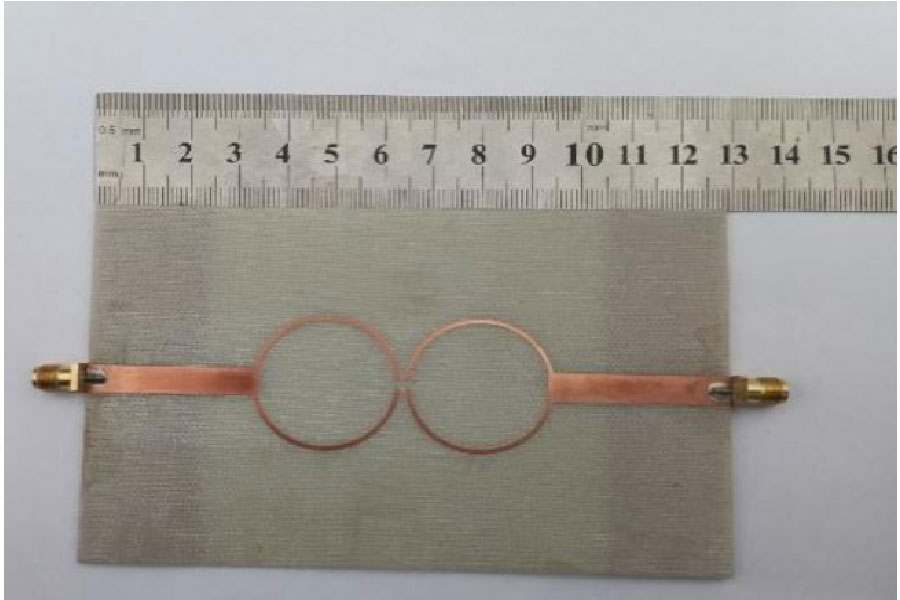
This paper introduces a deep learning assisted sensor for material classification based on two adjacent split-ring resonators unit cell sensor. This sensor operates in the frequency range from 7 GHz to 8 GHz. The sensor is designed to differentiate between different dielectric materials based on their reflection and transmission properties. A dielectric container is used to hold different samples. Reflection and transmission coefficients for different materials are used for classification between different dielectric materials. These materials are also characterized by using Dielectric Assessment Kite (DAK) for verification with the proposed method. The Dual Split Ring Resonator (DSRR) unit cell enhanced resonance characteristics facilitate the classification process for distinguishing different dielectric materials. The measured results of the proposed sensor exhibit a broad detection range, accurately identifying various samples based on their unique resonant frequency responses. The proposed sensor finds utility in industrial applications, identifying and categorizing various different dielectric materials. In addition, the proposed design is used to measure a mixture of two different materials with different volume mixing ratios. The measured samples are used to train a convolution neural network to predict the mixing ratio from the measured S-parameters. The combination of this sensor and the trained model is found to be an efficient tool that determines the mixing ratios of different samples in a fast way. This concept can also be useful to be applied on other types of sensors and other sensing parameters.
Deep Learning Assisted Microwave Sensor for Dielectric Material Classification
2025-09-12
PIER C
Vol. 159, 251-260, 2025
download: 125
A Novel Conformal Fork-Shaped Antenna for X-Band Wireless Communications
Chilakampalli Anjani, Usha Devi Yalavarthi and Boddapati Taraka Phani Madhav
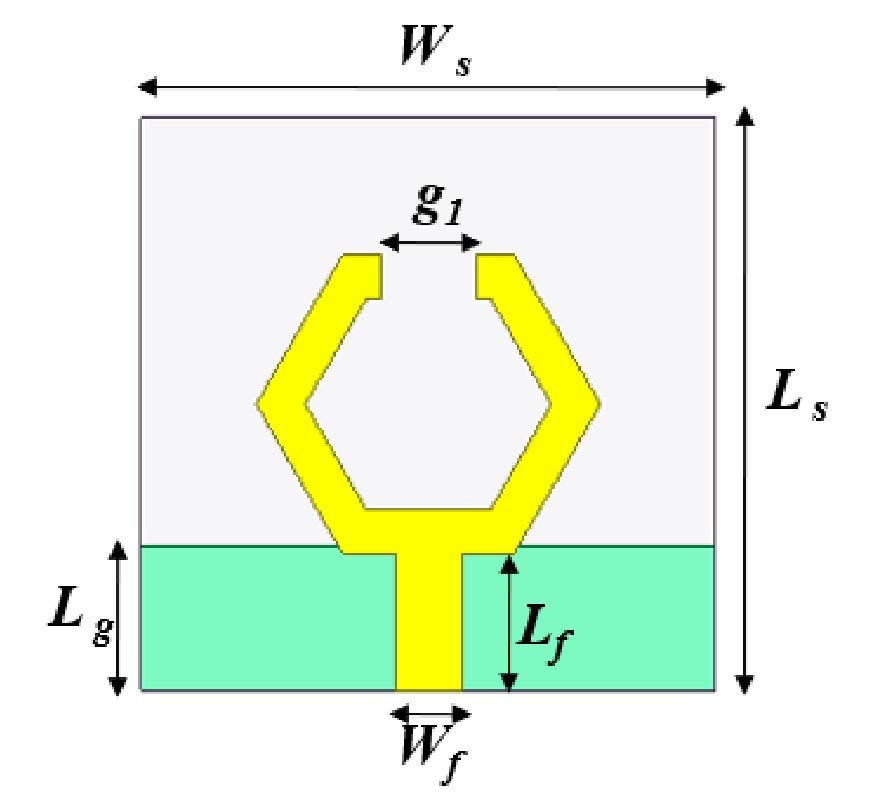
This paper proposes a novel and compact conformal fork-shaped microstrip patch antenna operating at 10.2 GHz for X-band wireless communications. It features a fork shaped unique radiating structure optimized for impedance matching, bandwidth enhancement, and compactness. Parametric studies confirmed optimal performance at feed width 3.5 mm and thickness 0.4 mm. An operating band from 9.31 to 11.88 GHz for S11 <= -10 dB with a bandwidth of 2.57 GHz is attained. It exhibits a peak gain of 5.6 dB at 10.2 GHz with radiation efficiency 88.29%. To validate its suitability for flexible and modern wireless applications, conformal models are developed, and their performance is analyzed for metrics like operating band, radiation patterns, peak gain, and radiation efficiency. It is prototyped on a Rogers RT Duroid 5880 substrate, and experimental validation demonstrates strong correlation between simulated and measured characteristics.
A Novel Conformal Fork-shaped Antenna for X-band Wireless Communications
2025-09-11
PIER C
Vol. 159, 243-250, 2025
download: 101
An Efficient Center-Fed Dynamic Seawater Antenna
Xin Zhang, Lihua Li and Mingxuan Hu
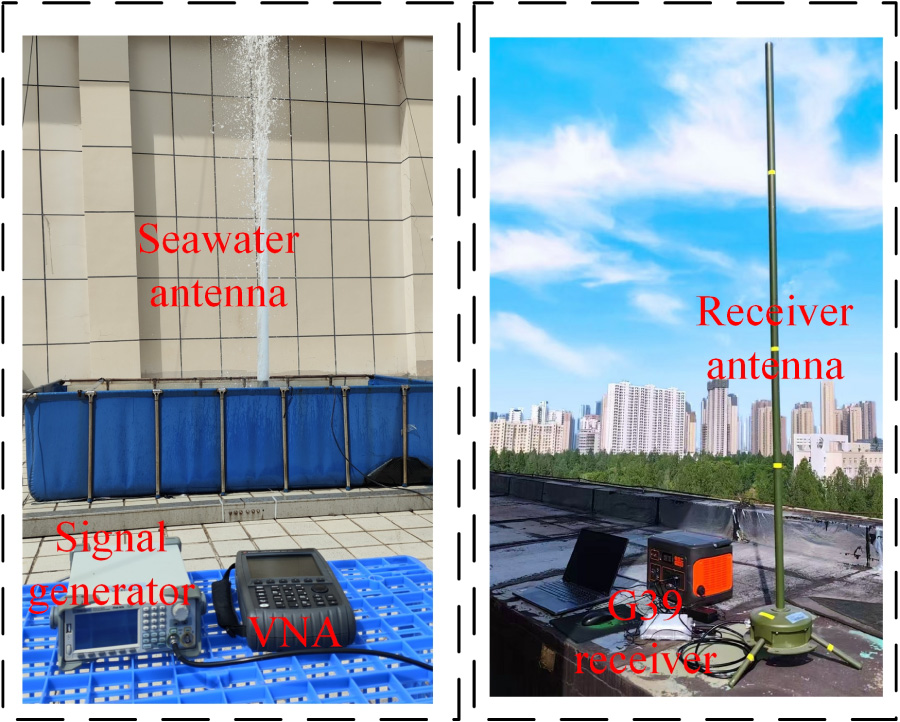
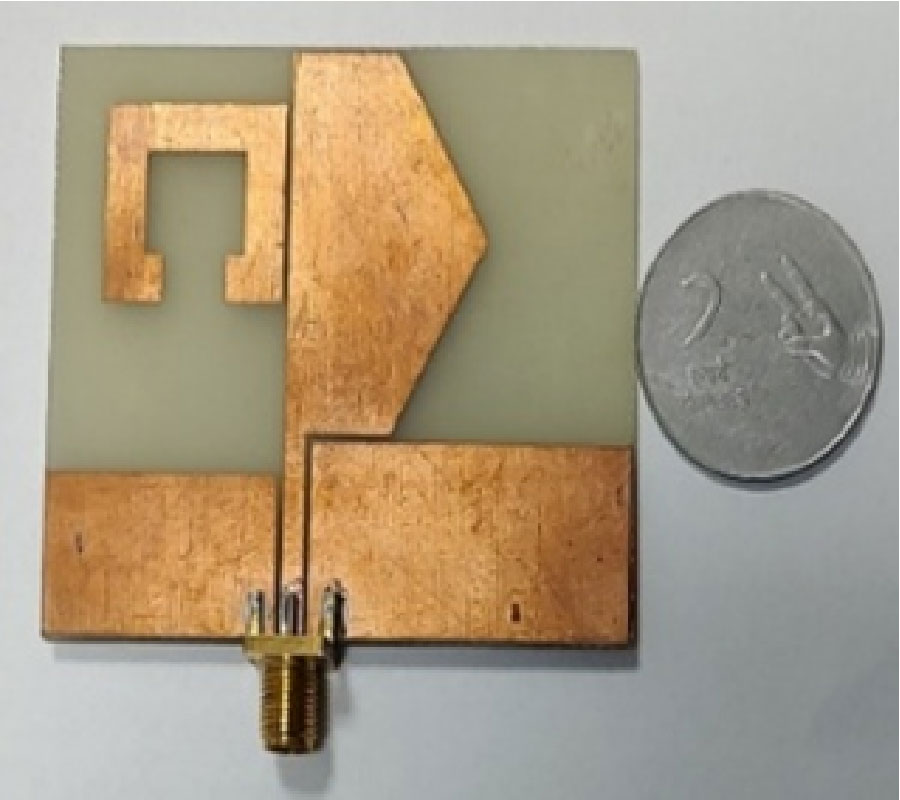
In this paper, a high-efficiency, center-fed dynamic seawater monopole antenna is proposed. The antenna's radiation efficiency increases by raising the feed point position, adding a metal tube above the feed point, and reducing the inner diameter of the water pipe below the feed point. Concurrently, the effects of the feeding position, the length of the metal pipe and the inner diameter of the water supply pipe on the current distribution are analyzed by theoretical modeling. FEKO electromagnetic simulation software is applied to simulate and analyze metal tubes with different lengths and water supply side pipes with different inner diameters. The simulation results indicate that the antenna attains optimal performance when being configured with a water supply pipe of 1 cm inner diameter and a 30 cm metal tube, achieving a maximum gain of 0.93 dBi and a peak radiation efficiency of 52%. Based on the simulation data, a simplified center-fed dynamic seawater antenna prototype is designed and fabricated. Experimental validation confirms that the seawater serves as the primary radiating element. The measured radiation characteristic curves exhibit consistent trends with the simulated results.
An Efficient Center-fed Dynamic Seawater Antenna
2025-09-10
PIER C
Vol. 159, 235-242, 2025
download: 121
Broadband Efficient Reflective Linear Polarization Converter
Bianmei Zhang and Xiaoming Liu
A broadband efficient reflective linear polarization converter has been developed using a metasurface. The converter consists of a U-shaped array integrated with cross dipoles. The U-shaped unit facilitates cross-polarization conversion, while the cross dipole serves to broaden the operational bandwidth. It has been demonstrated that the proposed converter can transform an incident linearly polarized wave into its orthogonally polarized reflected wave across a broadband frequency range of 18.94-51.03 GHz with a conversion efficiency exceeding 90%. The efficiency remains above 90% even as the incident angle increases to 45°, within the frequency ranges of 19.18-20.19 GHz, 26.01-30.93 GHz, and 48.8-49.77 GHz. The strong electric and magnetic responses at multi-resonances reveal the broadband polarization conversion mechanism. A prototype was fabricated to verify the performance. Measured results exhibit good consistency with the simulated ones.
Broadband Efficient Reflective Linear Polarization Converter
2025-09-09
PIER C
Vol. 159, 227-234, 2025
download: 120
Compact CPW Fed Semi-Hexagonal Broadband CP Antenna for IoT Applications
Sasmita Kumari Nayak and Sanjeev Kumar Mishra
In this paper, a novel, compact, broadband circularly polarized (CP) semi-hexagonal monopole antenna is proposed. The antenna integrates a rectangular open loop and nonuniform asymmetric ground planes. The proposed design is fabricated on a 1.6 mm thick FR4 substrate with overall dimensions of 0.83λc × 0.70λc × 0.021λc at the center frequency fc = 3.935 GHz. It achieves an impedance bandwidth of 4.51 GHz (1.68-6.19 GHz, 114.63%) and an axial ratio bandwidth of 2.6 GHz (2.3-4.9 GHz, 72.3%). The antenna offers realized gains of 1.4 dBi and 0.5 dBi, with corresponding efficiencies of 64% and 51% at 2.4 GHz and 3.5 GHz, respectively. It exhibits right-handed circular polarization (RHCP) across the ISM and WiMAX frequency bands. Furthermore, the antenna's performance is validated in a realistic environment using an Arduino-based wireless voltage monitoring system, demonstrating reliable data transmission with minimal loss. These results confirm the antenna's suitability for IoT applications requiring stable and efficient wireless communication.
Compact CPW Fed Semi-hexagonal Broadband CP Antenna for IoT Applications
2025-09-08
PIER C
Vol. 159, 218-226, 2025
download: 113
Multi-Mechanism Fusion Based 1D U-Net Models for Antenna Forward and Inverse Design
Ximin Yang, Jingchang Nan and Minghuan Wang
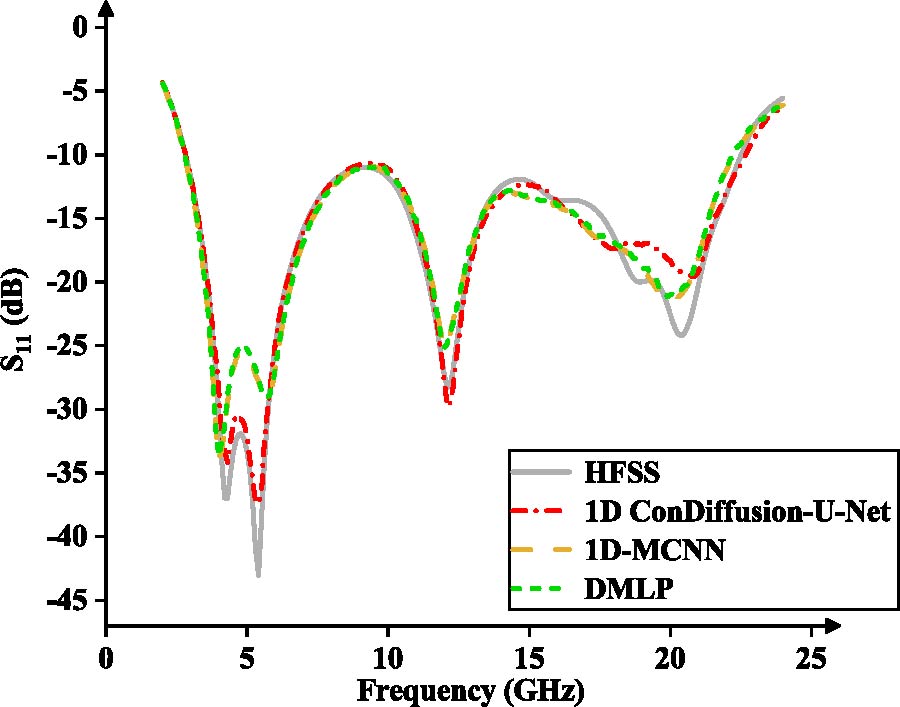
This study investigates the relation between the physical parameters and the scattering parameter (S11) curves of antennas, and proposes two deep-neural-network-based frameworks respectively for antenna forward and inverse designs, improving the design efficiency compared to the conventional electromagnetic (EM) simulation approaches. In this study, a one-dimensional (1D) U-Net is utilized as the backbone of the two models and is enhanced with multiple mechanisms - the diffusion mechanism, channel attention, and spatial attention. Therefore, the models more effectively capture the sequential features of data. In the forward design, the model quickly predicts the S11 curves from given physical parameters with an accuracy improvement of at least 63% RMSE and 70% MAE compared to the improved one-dimensional convolutional neural network (1D-MCNN) and deep multi-layer perceptron (DMLP), thus realizing the surrogate model of conventional methods to some extent. In the inverse design, another model directly infers the physical parameters corresponding to the target S11 curves with an accuracy improvement of at least 21% RMSE and 38% MAE compared to the baseline models (1D U-Net and MLP), thereby eliminating the iterative process of traditional methods and accelerating the antenna design. The experimental results demonstrate the significant advantages of the proposed deep neural network frameworks in terms of accuracy and efficiency for both forward and inverse designs of antennas, offering a powerful alternative to conventional electromagnetic simulation-based approaches.
Multi-mechanism Fusion Based 1D U-Net Models for Antenna Forward and Inverse Design
2025-09-08
PIER C
Vol. 159, 210-217, 2025
download: 69
A High Selectivity and Steep Stopband Suppression Tunable Low-Pass Filter Using Series-Parallel Capacitive Compensation and Split-Ring Stepped-Impedance DGS
Wei Tang and Hao-Ran Zhu
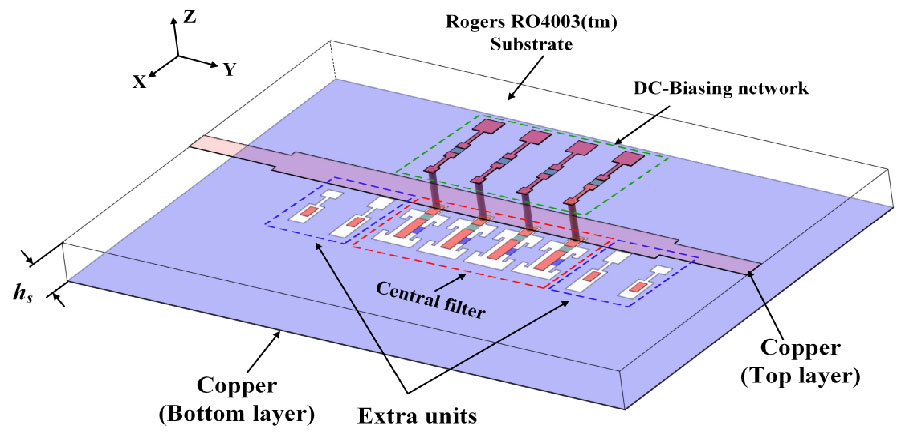
This paper presents a varactor-tuned low-pass filter (LPF) with high sharpness-factor and steep stopband suppression at different tunable frequencies using defected ground structure (DGS). By periodic loading four series-parallel capacitive compensation DGS units with high quality factor Q and the varactor diodes in shunt, a central filter is formed. To suppress the spurious passband and improve the rejection of stopband, four extra units in the form of split-ring stepped-impedance DGSs also with high Q factor were introduced and loaded at both ends of the central filter. The prototype of the proposed LPF is designed, fabricated and measured. Simulation and measurement results exhibit a good agreement. The measured results demonstrate a continuous tuning range of 12-13.5 GHz for the cut-off frequency, with an insertion loss in the passband better than 0.8 dB and a sharpness factor less than 1.08 across the entire range. The stopband rejection level is better than 30 dB and can be extended up to 40 GHz.
A High Selectivity and Steep Stopband Suppression Tunable Low-pass Filter Using Series-parallel Capacitive Compensation and Split-ring Stepped-impedance DGS
2025-09-08
PIER C
Vol. 159, 202-209, 2025
download: 163
A Miniaturized CPW-Fed Flexible Antenna Sensor for Implantable Breast Tumour Detection with Wireless Powering
Samuelraj Chrysolite, Suresh Dhanu Shree and Guruvayurappan Venika
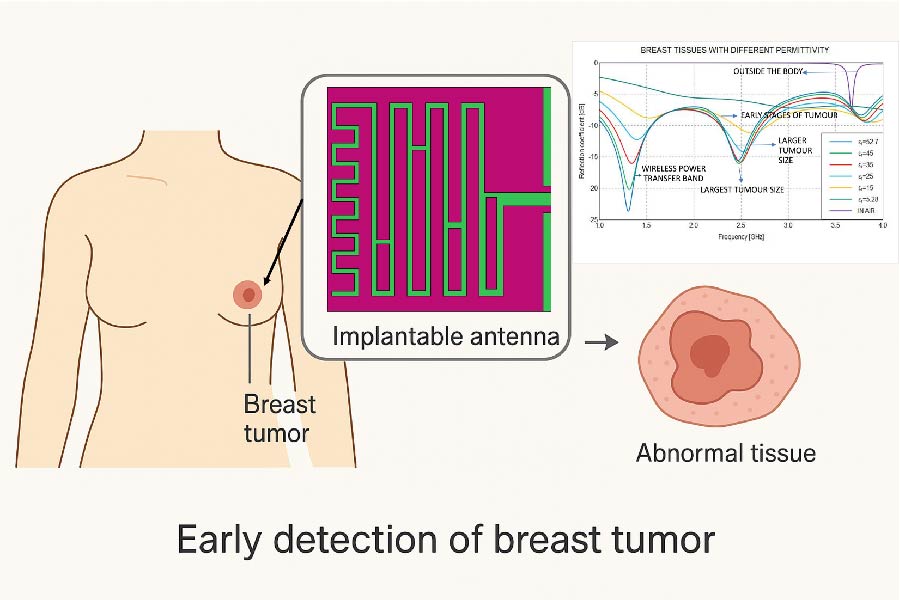
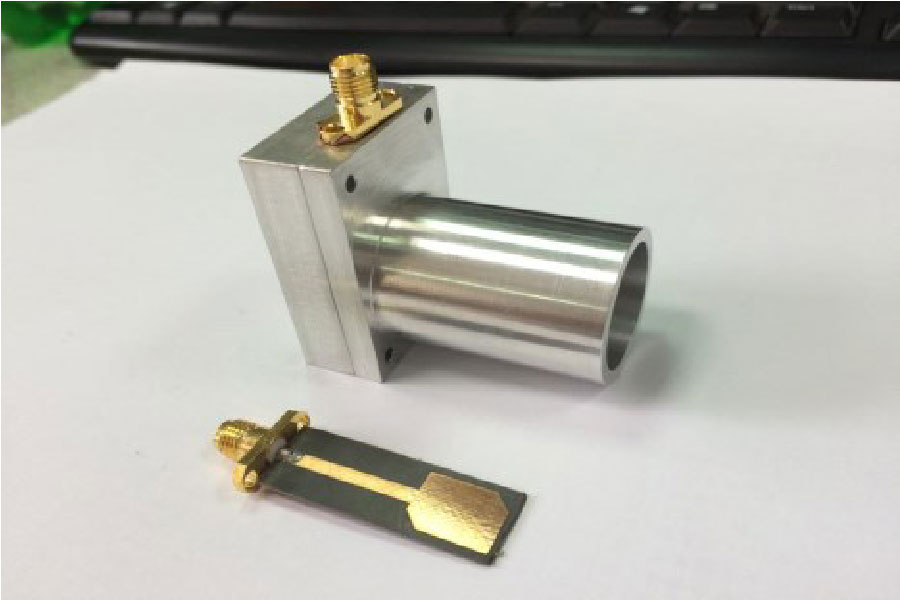
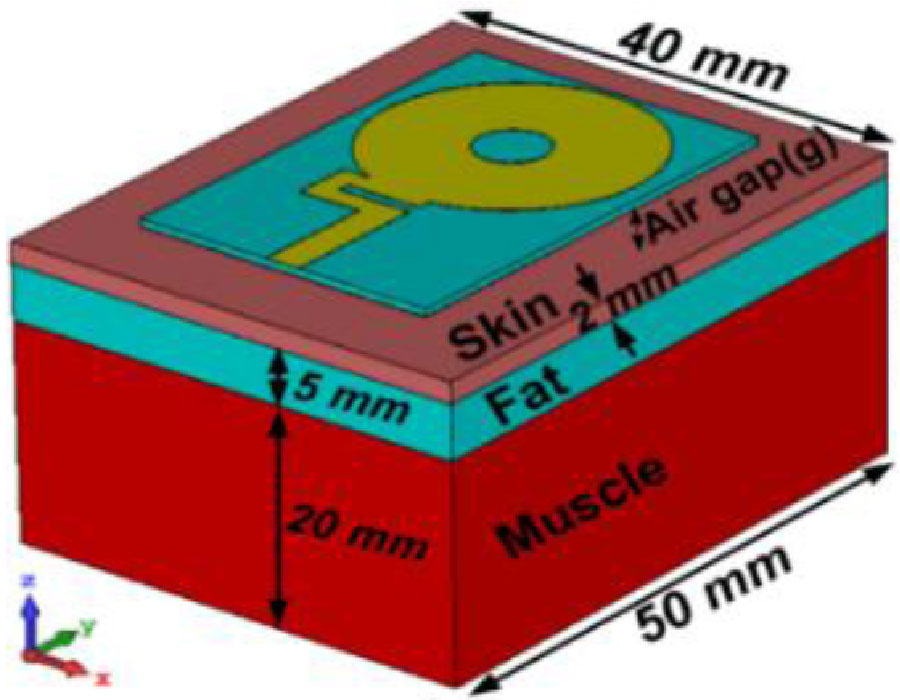
Early detection of breast tumour is crucial for reducing the likelihood of mastectomy. To monitor the dielectric changes in breast tissue caused by the formation of tumorous cells, a novel biocompatible implantable antenna sensor is proposed. This flexible implant, measuring just 5 mm × 5 mm × 0.25 mm, operates in the ISM band at 2.45 GHz for real-time breast tumour detection. It is wirelessly powered via Wireless Power Transfer (WPT) operating in the mid-band range of 1.2-1.4 GHz. The antenna achieves an ultra-compact volume of 12.5 mm3 through closed-loop structures and meandered strips that enhance radiation efficiency. Inside abnormal breast tissue with a relative permittivity (εr) of 52.7, the antenna demonstrates a reflection coefficient of -17 dB and offers a -10 dB bandwidth of 330 MHz. The sensor is activated when the tissue permittivity rises above 15, achieving a maximum gain of -10 dBi. The antenna has been fabricated, and the simulated results have been validated in-vivo. This design enables proactive detection of tumour cell formation within breast tissue, allowing treatment before it spreads. It is particularly suitable for individuals with a genetic predisposition to breast tumour, offering continuous monitoring for early intervention.
A Miniaturized CPW-fed Flexible Antenna Sensor for Implantable Breast Tumour Detection with Wireless Powering
2025-09-07
PIER C
Vol. 159, 193-201, 2025
download: 193
A Non-Destructive Technique for Asphalt Compaction Measurement Using Dual-Ring Resonator Sensor
Mohammed K. Abbas, Raaed Thaaban Hammed, Ali J. Salim and Aduwati Sali
Traditional ways of measuring compaction of asphalt, which involve destructive coring, are labor-intensive, time-consuming, and cause permanent damage to the road. This paper presents a non-destructive alternative using a dual-ring resonator sensor (DRRS) integrated with a Vector Network Analyzer (VNA) to evaluate asphalt compaction. The sensor design takes advantage of the electric field that forms between the first and second rings. This field can penetrate the asphalt layer to a depth of up to 50 mm and responds to changes in compaction levels. By putting asphalt samples of different densities on the sensor and measuring scattering parameters (S-parameters), changes in the resonant frequency are shown. These shifts were correlated with asphalt's physical properties through empirical equations. The results showed that the resonant frequency and the reflection coefficient (S11) were -25.5 dB and 1.38 GHz, respectively, at a 75% compaction level. The frequency changed to 1.17 GHz at 100% compaction, and S11 was -17.6 dB. Increasing the compaction of asphalt makes the air gaps in the material smaller, which makes its permittivity higher. Calibration was performed to mitigate the influence of temperature on permittivity measurements, thereby improving compaction. Overall, this method provides a fast, precise, and non-destructive way to check the quality of asphalt, significantly enhancing road construction and maintenance processes.
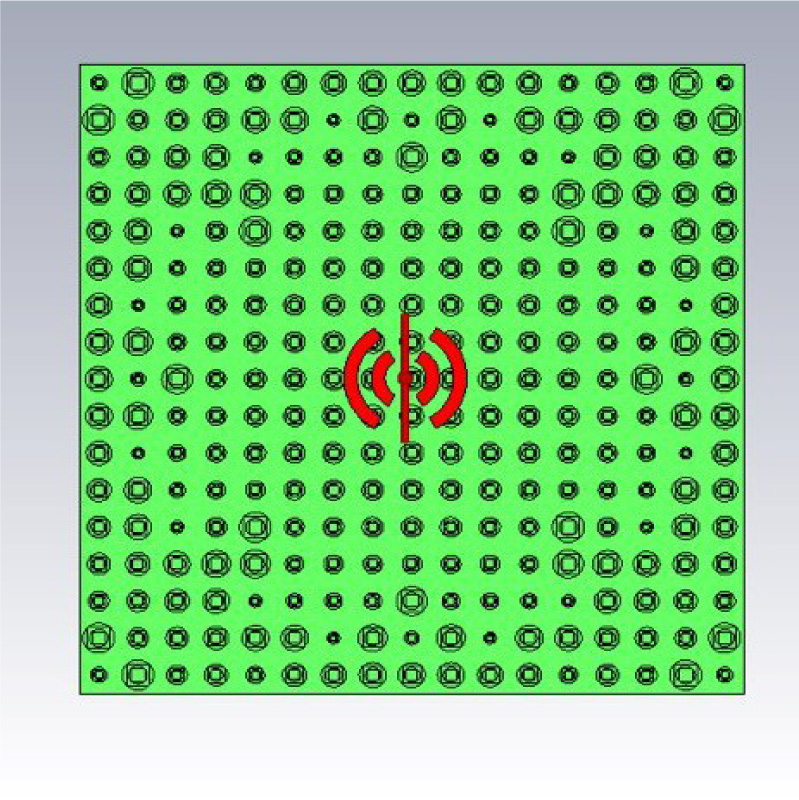
A Non-destructive Technique for Asphalt Compaction Measurement Using Dual-ring Resonator Sensor
2025-09-06
PIER C
Vol. 159, 182-192, 2025
download: 134
Analysis of a Novel Flux Switching Consequent Pole Pseudo-Direct-Drive Machine in Multi-Physics Field
Kunwei Hong, Zhangwu Huang and Libing Jing
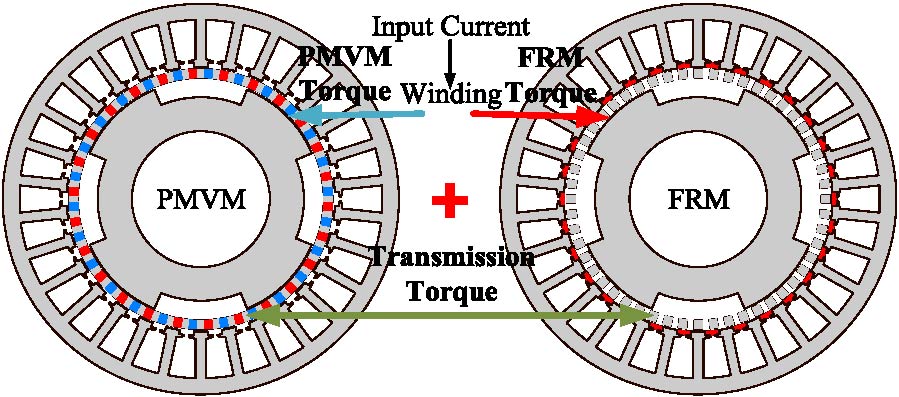
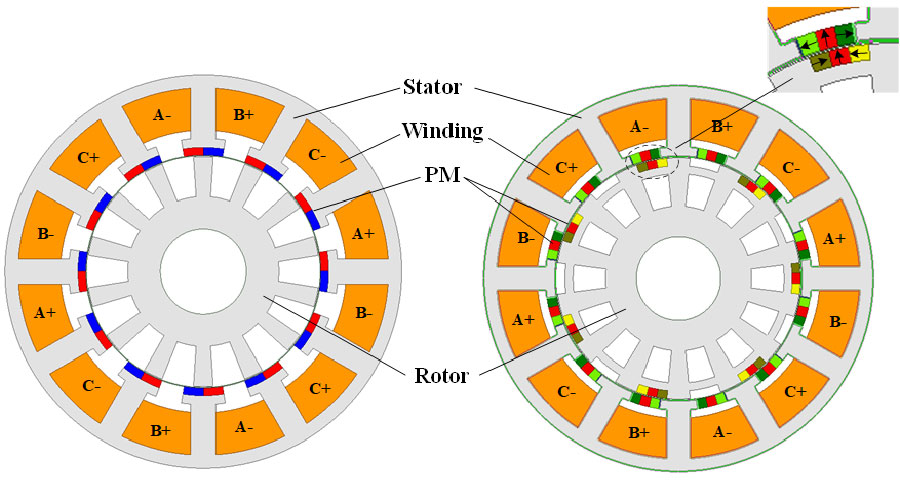
Pseudo-direct-drive (PDD) machine is a new type of permanent magnet machine with high torque density and efficiency. PDD with consequent poles can reduce the influence of outer PM on electromagnetic torque, but it has the disadvantage of high eddy current loss which will limit the range of speed. By transferring PMs from high-speed rotor to low-speed rotor, the eddy current loss in PMs is reduced, and the high-speed rotor is more robust. In this paper, a flux-switching consequent pole PDD (CP-PDD) machine is built. After optimization through a multi-objective genetic algorithm, the superiority of the proposed machine to regular CP-PDD is demonstrated by comparing it through the finite element method. The output torque of the proposed machine is greatly affected by the direct drive torque. A prototype is built and tested to verify the proposed machine. Results show that the proposed machine is more suitable for high-speed operation due to the reduction of loss and robustness of the high-speed rotor. The working temperature of the proposed machine is analyzed, and there is almost no irreversible demagnetization.
Analysis of a Novel Flux Switching Consequent Pole Pseudo-direct-drive Machine in Multi-physics Field
2025-09-05
PIER C
Vol. 159, 169-181, 2025
download: 128
Magnetic Density Analysis and Performance Optimization of Hybrid Excitation Starter Generator
Hui Zhu, Wenjing Hu, Wei Wang, Shiqiang Liu, Xia Zhang, Jiewen Li and Xingxu Jin
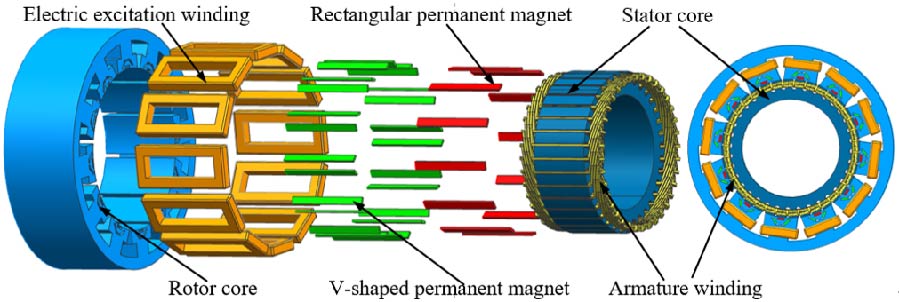
Hybrid excitation starter generator (HESG) has an increased number of magnetic potential sources, leading to issues such as complex magnetic circuits, numerous structural parameters, and low space utilization. These factors cause traditional analysis methods to have long cycles and low accuracy. In this paper, a new type of salient pole electromagnetic and permanent magnet composite pole HESG is proposed, and an analysis method combining hierarchical optimization and Taguchi method to analyze the influence of different structural parameters of composite pole rotor on the HESG performance is proposed. Response surface method was used to simulate the stator groove with multiple objectives, analyze the electromagnetic characteristics of HESG, complete the performance optimization, prototype, and conduct experiments. The results show that the amplitude of the air gap magnetic density base of HESG is increased by 7.4%; the distortion rate is reduced by 10.6%; the output voltage is increased to 127.68 V; the output performance and magnetization ability are significantly improved; and the overall performance of the HESG is improved.
Magnetic Density Analysis and Performance Optimization of Hybrid Excitation Starter Generator
2025-09-04
PIER C
Vol. 159, 159-168, 2025
download: 140
A Four Port Super-Wideband MIMO Antenna with Improved Inter-Port Isolation and Dual-Band Interference Suppression Capability
Chanprit Kaur, Raghvenda Kumar Singh and Kiran Kumar Verma
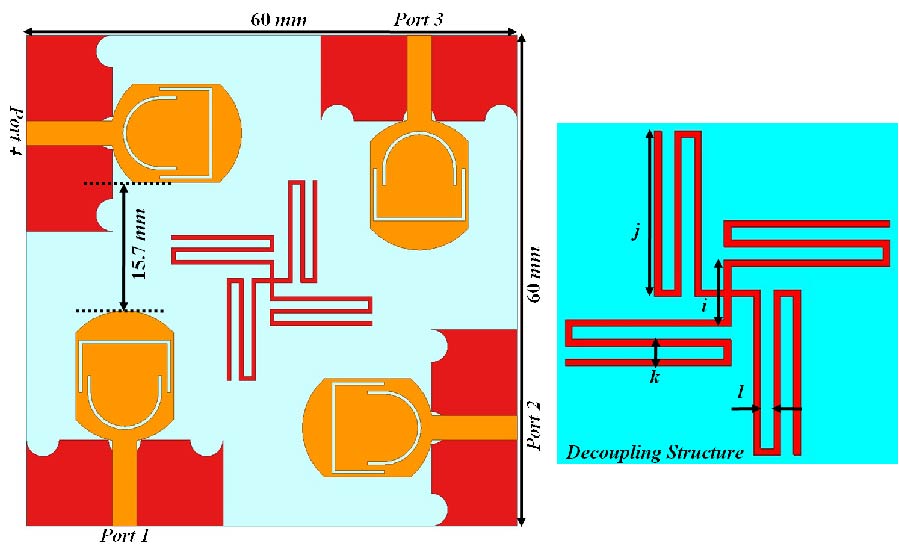
In this paper, a 4-port multiple input multiple output (MIMO) antenna with dual-notched bands and high interference rejection features is presented for ultra-wideband and beyond. The total volume of the intended antenna, computed at 2.63 GHz, is 0.52λ × 0.52λ × 0.014λ. The basic radiating element consists of a spatula-shaped patch etched with a U and an inverted U-shaped slots printed on the top of a dielectric substrate, which is backed by defected partial ground plane. With the goal of achieving good polarization diversity and high isolation, four identical basic elements are arranged in orthogonal way to form the MIMO configuration. The inter-element isolation has been improved by a swastik-shaped decoupling structure with its arms extended in the form of meander-lines. As a result, the isolation between diagonal and orthogonal elements is better than 20 dB and 25 dB, respectively with envelope correlation coefficient < 0.012 and diversity gain > 9.94 dB. The suggested antenna attains an impedance bandwidth of 2.63-18.44 GHz with ability to shield interferences from 3.38-3.90 GHz and 4.65-6.45 GHz, specifically targeting frequencies associated with WLAN/ISM and Wi-MAX/LTE bands, respectively. Moreover, it exhibits maximum radiation efficiency and gain of 97.88% and 5.94 dBi, respectively in the working band.
A Four Port Super-wideband MIMO Antenna with Improved Inter-port Isolation and Dual-band Interference Suppression Capability
2025-09-04
PIER C
Vol. 159, 154-158, 2025
download: 134
A Substrate Integrated Half-Coaxial Line (SIHCL) and Its Application in Low-Pass Filter with Low Crosstalk
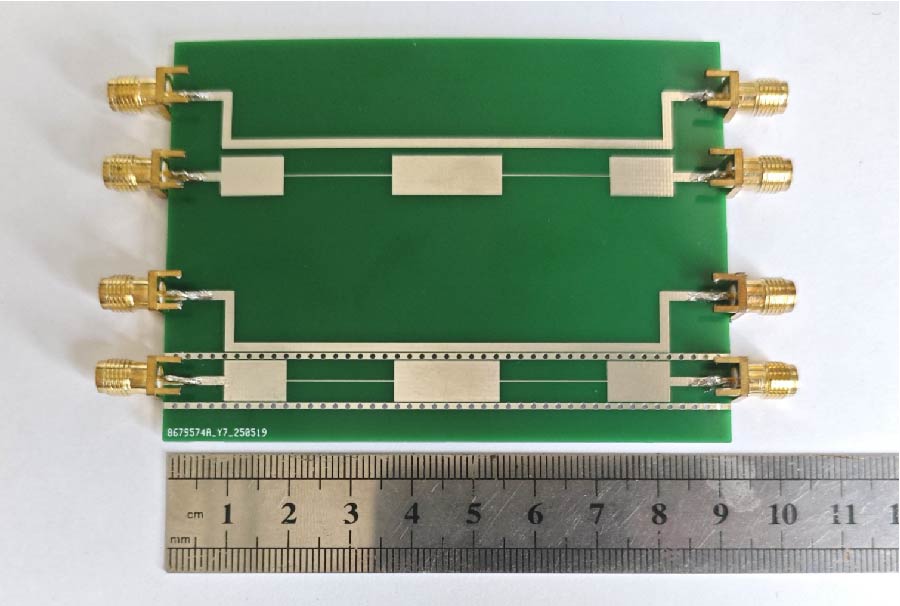
Yufan Chi, Yang-Qing Xu, Qing-Cheng Zhang, Wen-Xuan Shen, Yan He, Yan-Yan Kong and Lin Li
To achieve compact size and high electromagnetic shielding performance in RF systems, a substrate integrated half-coaxial line (SIHCL) structure is proposed. A new approximate synthesis method for the SIHCL is proposed using the equivalent capacitor. Subsequently, two fifth-order Chebyshev low-pass filters (LPFs) with a 0.1 dB ripple factor were designed and fabricated: the first implemented in the SIHCL structure and the second in microstrip technology. A comparison of the measured S-parameters between these two low-pass filters demonstrates that both near-end and far-end crosstalk is suppressed for the proposed SIHCL LPF, which is significant for high-speed and high-density integrated systems.
A Substrate Integrated Half-Coaxial Line (SIHCL) and Its Application in Low-pass Filter with Low Crosstalk
2025-09-03
PIER C
Vol. 159, 143-153, 2025
download: 148
A Class of Asymmetric Microstrip Hybrid Couplers with Enhanced Bandwidth and Isolation Using Multi Section Phase Shifters for Modern Microwave Systems
Shubham Tirmanwar and Debapratim Ghosh
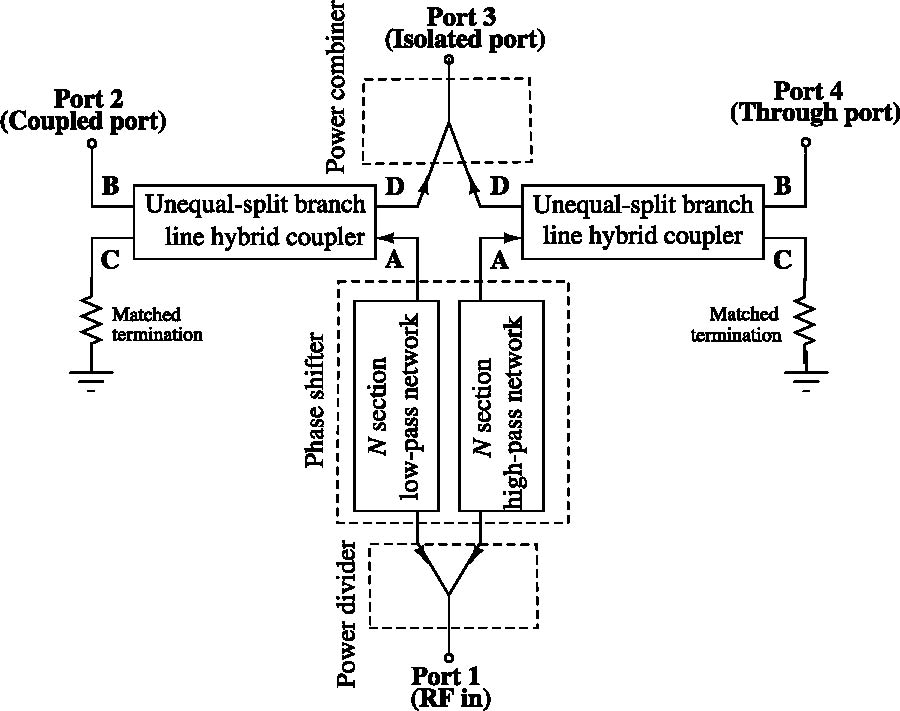
This paper presents a class of wideband hybrid couplers with enhanced isolation, based on an N-section phase shift filter network integrated into an unequal-split, multi-section branch-line hybrid architecture. The key innovation lies in the incorporation of the N-section phase shift network, which significantly enhances the fractional bandwidth with each increase in section and isolation performance compared to conventional designs. A detailed design methodology applicable for any N is developed and validated through the fabrication and testing of two microstrip prototypes for N = 3 and N = 4 at a center frequency of 1 GHz. Both simulated and measured results confirm consistent tight coupling, insertion loss better than 6 dB, and isolation exceeding 15 dB across all prototypes. Furthermore, N = 3 and N = 4 hybrids shows peak isolation of 87.4 dB, 96.8 dB in simulation and 66.5 dB, 72.7 dB in measurement respectively, at the center frequency of 1 GHz. Notably, the designs demonstrate a progressive improvement in the fractional bandwidth, achieving 73.68% and 91.89% for N = 3 and N = 4, respectively. This scalable and frequency-flexible design approach makes the proposed class of hybrid couplers highly suitable for modern microwave systems such as vector network analyzer (VNA) test set, applications in radar, communication receivers, and phased array antennas.
A Class of Asymmetric Microstrip Hybrid Couplers with Enhanced Bandwidth and Isolation Using Multi Section Phase Shifters for Modern Microwave Systems
2025-09-02
PIER C
Vol. 159, 132-142, 2025
download: 105
Injection Damage Analysis of PHEMT Low-Noise Amplifier Circuit Under Electromagnetic Pulse
Shaqi Tian, Fan Wu, Ruiqi Su, Ying Li and Yuan'an Liu
The low-noise amplifier(LNA) is the most vulnerable device in the front-door coupling path of the wireless communication link. When the electromagnetic pulse(EMP) is injected into the LNA circuit, it first generates the electromagnetic response with peripheral components, and then is transmitted further. This affects the pulse value transmitted to the internal semiconductor device and its degree of damage. The pseudomorphic high electron mobility transistor(pHEMT) type transistors are widely used in modern RF circuits because of their good stability and wide frequency characteristics. However, the frequency-selective characteristics of the front-end system exacerbate the electromagnetic coupling damage of the LNA circuit in some frequency bands. Therefore, in this paper, the vulnerable frequency points of the pHEMT LNA circuit under repetitive pulses are analyzed by injection experiment. It is found that both in-band and out-of-band lead to permanent damage to the LNA. For the more vulnerable 3 GHz frequency point, the electromagnetic response under injection withstand and absorption conditions was measured, determining that the gate external resistance offset follows a power-law relationship with the input power. Furthermore, the energy threshold was obtained, which assesses the energy that, after electromagnetic loss by an external 100 Ω resistor, is transmitted to the gate input and causes permanent damage to the LNA transistor. The breakdown damage mechanism of the gate-source of the LNA transistor is verified by failure analysis.
Injection Damage Analysis of pHEMT Low-noise Amplifier Circuit under Electromagnetic Pulse
2025-08-31
PIER C
Vol. 159, 124-131, 2025
download: 166
Compact Multi-Port Millimeter-Wave MIMO Antenna with 360° Radiation Coverage
Jingchang Nan, Licong Fan, Shuming Liu and Yifei Wang
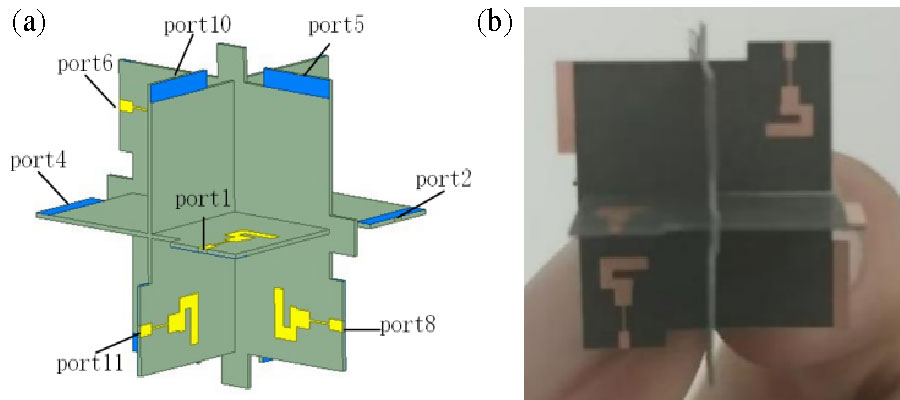
In order to meet antenna requirements for vehicular communication, a compact multiport MIMO antenna design is proposed for the n261 frequency band in 5G millimeter-wave communication. The 3D size of the antenna is 16 × 16 × 17 mm3. By optimizing the radiation patches and layout, a four-port MIMO antenna is developed, with adjacent antenna elements positioned on both sides of the dielectric substrate to minimize coupling between antenna units. Additionally, optimization is performed to achieve 360° radiation coverage for the multiport MIMO antenna. The simulation and measurement results show that the proposed antenna covers the n261 frequency band with an operational bandwidth. The overall isolation between ports of the multiport MIMO antenna is also relatively high. The 12-port MIMO antenna operates in the frequency range of 27.08 to 28.70 GHz, with a gain of 6.25 dBi, and its radiation pattern demonstrates diversity, providing complete 360 ° coverage in both elevation and azimuth planes. Therefore, the proposed antenna not only has a compact size and simple structure but also supports radiation propagation across multiple planes, reducing multipath propagation losses and enhancing communication quality and reliability. It satisfies the requirements of vehicular communication for 5G millimeter wave MIMO antennas.
Compact Multi-port Millimeter-wave MIMO Antenna with 360° Radiation Coverage
2025-08-31
PIER C
Vol. 159, 111-123, 2025
download: 147
Enhancement and Optimization of High-Power Ku-Band Metallic Waveguide Radar Array Antenna: Large Efficiency, Wide Band and Low Side Lobe Level
Ibrahim Samy Mohamed and Mahmoud Abdalla
In this paper the design of a cavity-backed slot antenna array with wideband operation and low sidelobe levels is introduced. A High gain metallic antenna array is designed using rectangular waveguides in both the feeding network and cavity-back slots, where a 16×16 array antenna is built with 8×8 subarrays. The antenna is fabricated using direct laser sintering (DLS) and computer numerical control (CNC) milling technology on both sides of each layer to guarantee no field leakage between antenna layers. For the sake of achieving a wide bandwidth in such array, a 1-to-64-way corporate feeding network is used to distribute the power in the lower feeding layer to excite the coupling apertures beneath the subarrays. The excited power coefficients through the array aperture are tapered using quasi-Taylor synthesis, with an even phase so the modified uneven power waveguide-splitter is designed to taper the field amplitudes within the feeding network till reaching the radiating slots. The array achieved a 14% bandwidth, a gain of more than 31.25 dBi over 1.85 GHz, sidelobe levels higher than 23 dB, and cross-polarization levels better than -40 dB, according to measured data.
Enhancement and Optimization of High-power Ku-band Metallic Waveguide Radar Array Antenna: Large Efficiency, Wide Band and Low Side Lobe Level
2025-08-29
PIER C
Vol. 159, 103-110, 2025
download: 183
Compact Arrow-Shaped Half-Mode Substrate Integrated Waveguide (SIW) Self-Diplexed Antenna for X/Ku-Bands
Bhim Sain Singla, Ashish Kumar, Mohammad S. Zidan, Zahriladha Zakaria and Ahmed Jamal Abdullah Al-Gburi
This article presents a compact, triple-band half mode substrate integrated waveguide (HMSIW) based self-multiplexing antenna (SMA) designed for various X-/Ku- band applications. The proposed SMA comprises a compact HMSIW with slots of unequal widths excited with three different ports resembling the anatomy of an arrow. These three slots are driven by a 50 Ω microstrip line feed, facilitating radiations at 10.82, 12.28, and 13.95 GHz with good isolation between the ports. Independent functioning at three different frequency bands is made possible by the remarkable versatility of the proposed SMA design method. With the isolation of nearly 20 dB between ports and gains of 3.97, 4.62, and 7.55 dBi at ports resonating at three distinct frequencies, the SMA-HMSIW element's total arrangement allows for a small antenna size of 0.44λg2 at the lowest frequency of operation. The proposed SMA structure has been fabricated, and the results are measured which show good agreement with simulated ones.
Compact Arrow-shaped Half-mode Substrate Integrated Waveguide (SIW) Self-diplexed Antenna for X/Ku-bands
2025-08-29
PIER C
Vol. 159, 91-102, 2025
download: 154
A MIMO Ultra-Wideband Antenna with High Isolation and Triple Notches
Rongjiaxu Tu, Han Lin and Zhonggen Wang
This paper proposes a four-port ultra-wideband (UWB) MIMO antenna with high isolation and three notch bands. A cross-shaped decoupling structure (CSDS) is synergistically integrated with an improved L-shaped ground plane to achieve high port isolation. Composite resonant slots (CRSs) are introduced on the radiating patch, and two L-shaped slots are etched on the feed line to suppress interferences from WiMAX (3.19 GHz), C-band (4.45 GHz), and X-band (7.95 GHz). Simulation and measurement results verify that the Voltage Standing Wave Ratio (VSWR) at the center frequencies of the notched bands is greater than 6.8, 8.1, and 4.3, respectively. In the operating frequency band of 2.7-12 GHz (excluding the notched bands), the isolation is > 24.3 dB, envelope correlation coefficient (ECC) < 0.0045, diversity gain (DG) > 9.9990 dB, total active reflection coefficient (TARC) < -10 dB, and channel capacity loss (CCL) < 0.4 bps/Hz. It fully meets the requirements of high-performance MIMO systems for channel independence and transmission efficiency. Compared with similar studies, this work has significant advantages in core indicators such as bandwidth, number of notched bands, and isolation, providing new ideas for the design of UWB-MIMO systems in complex electromagnetic environments.
A MIMO Ultra-wideband Antenna with High Isolation and Triple Notches
2025-08-26
PIER C
Vol. 159, 79-90, 2025
download: 158
Bandpass Type Negative Group Delay Design of CMOS RC-Network Integrated Circuit
Long Wang, Mathieu Guerin, Sonia Moussa, Ali Hamada Damien Fakra, Fayrouz Haddad, Fayu Wan, Lagouge Tartibu, Wenceslas Rahajandraibe and Blaise Ravelo
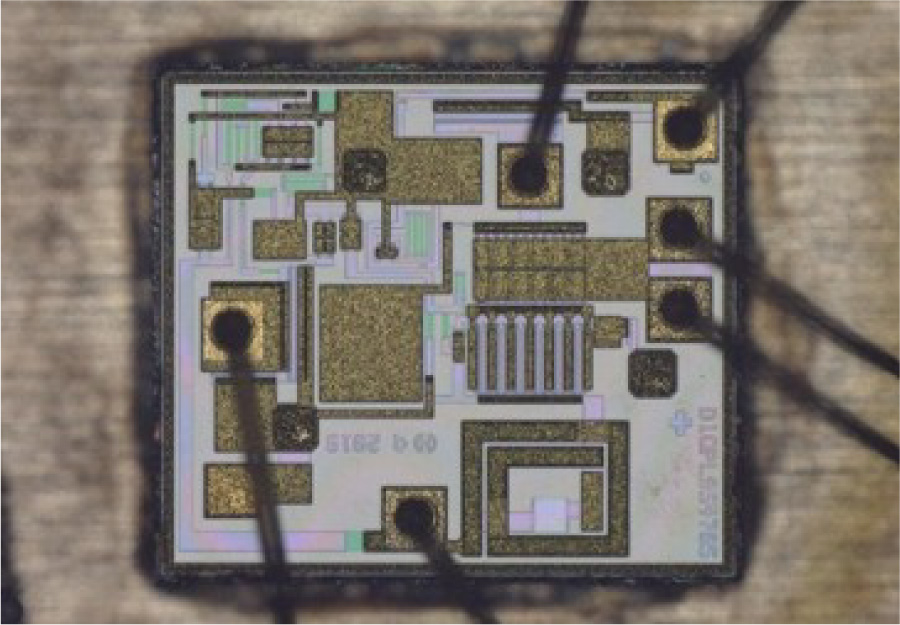
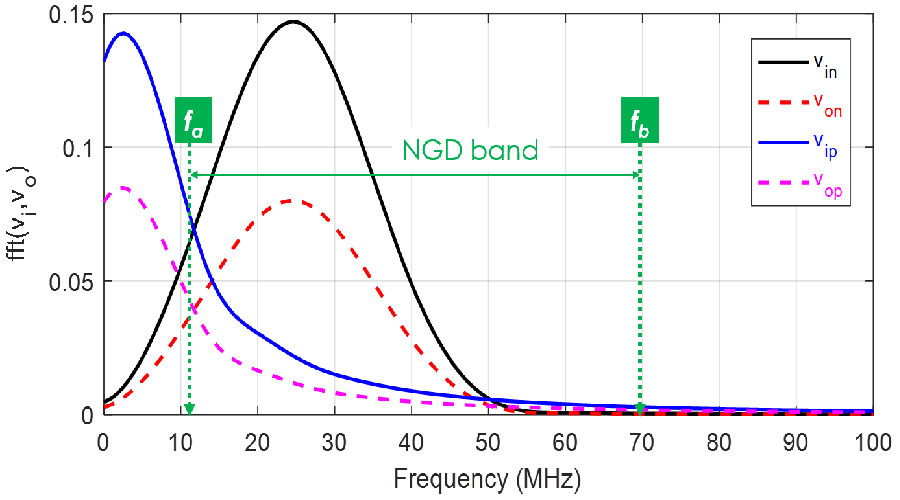
Nowadays, microelectronic integrated circuit (IC) design constitutes the biggest challenge of negative group delay (NGD) electronic engineering research. Bandpass (BP) type NGD circuits are generally designed with resonant and not-integrable inductive large size network-based topology. However, BP-NGD circuit integrability is delimited by the inductor design. A design solution for fully resistive-capacitive (RC) network-based BP-type IC in 130-nm CMOS technology is the purpose of the present research work. The theory expressing the design equations of RC-network based BP-NGD circuit is developed. The design feasibility is verified with a proof-of-concept (POC) represented by a 130-nm CMOS RC-network passive IC with 0.68 mm × 0.72 mm physical size simulated by Cadence®. The obtained results of S-parameters confirm the BP-NGD behavior of the CMOS IC POC with 21.9-MHz NGD center frequency and -0.99-ns NGD value over 68-MHz NGD bandwidth. The BP-NGD characterization results are in excellent agreement with the theoretical model. The robustness of 130-nm CMOS BP-NGD RC passive IC is explored by 2000 trials Monte Carlo statistical analysis with respect to the uncertainty of component parameters.
Bandpass Type Negative Group Delay Design of CMOS RC-network Integrated Circuit
2025-08-26
PIER C
Vol. 159, 70-78, 2025
download: 161
Design and Analysis of a Novel Dual-PM Flux-Reversal Machine with Halbach Array
Yeming Zhu, Longxiang Han, Mingji Yin, Yuhui Huang and Libing Jing
Flux-reversing machines (FRMs) have the advantages of high torque density and wide speed range. However, their disadvantage is the low utilization rate of permanent magnets (PMs). To enhance PM utilization, a novel dual-PM FRM (DPFRM) with Halbach arrays is proposed in this paper. Halbach arrays are applied to both the stator interlayer and half of the rotor teeth, forming a consequent-pole structure together with iron cores. This layout significantly reduces the number of rotor magnets used. With the use of Halbach arrays, this design effectively reduces magnetic flux leakage. It also achieves higher torque density under low current conditions, demonstrating enhanced electromagnetic performance. To achieve better overall performance, both the conventional FRM and the proposed DPFRM are globally optimized. Their no-load and load performances are evaluated through finite element analysis (FEA). The analysis verifies that the DPFRM achieves higher back electromotive force (Back-EMF) and torque density, and also exhibits lower torque ripple. Therefore, the proposed design significantly improves PM utilization, effectively mitigating the primary limitation of conventional FRMs.
Design and Analysis of a Novel Dual-PM Flux-reversal Machine with Halbach Array
2025-08-25
PIER C
Vol. 159, 65-69, 2025
download: 160
Innovative Design of a Miniaturized Wideband Port-Multiplexing Microstrip Circuit
Run-Lin Zhang, Tao Fang and Tao Tang
This paper presents a miniaturized broadband port-reuse microstrip circuit to address the challenges of bulky volume, excessive insertion loss, and parameter deviation superposition caused by discrete port design and discrete circuit design in the interconnection between active phased array antennas and T/R components. Based on an integrated design methodology, the circuit achieves bandpass filtering, bidirectional power coupling output, DC power supply port functionality, and RF/DC isolation through a single-port interconnection. Experimental results demonstrate that the implemented circuit in Ku-band exhibits 13.5-15.18 GHz bandpass filtering characteristics, bidirectional signal power monitoring capability, 0-12 V/2.5 A DC power supply functionality, and effective RF/DC signal isolation. The measured results align well with theoretical predictions. This architecture demonstrates exceptional adaptability and seamless integration capability, showing significant potential for large-scale deployment in various transceiver architectures such as satellite communication systems.
Innovative Design of a Miniaturized Wideband Port-multiplexing Microstrip Circuit
2025-08-24
PIER C
Vol. 159, 56-64, 2025
download: 140
Torque Ripple Reduction of the Anti-Disturbance Sliding Mode Deadbeat Control for Switched Reluctance Motors
Shining Lin, Aide Xu, Xiong Su and Lidong Dong
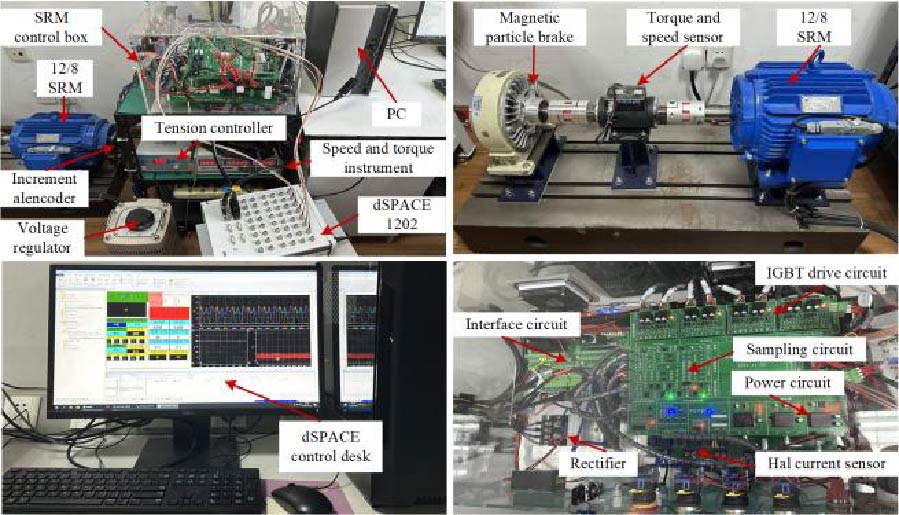
To improve the current and torque regulation performance of the traditional deadbeat predictive current control (DPCC) for switched reluctance motors under model parameter mismatch, this article proposes an improved DPCC method based on the sliding mode strategy. First, a dedicated torque-current converter is formulated to achieve precise transformation of electromagnetic torque into corresponding q-axis current references. Second, a unified anti-disturbance sliding mode control compensation scheme is introduced into both the torque-current converter and the deadbeat controller to mitigate the negative effects of model parameter mismatch on current and torque control. This integration achieves indirect torque control through phase current modulation, effectively reducing torque ripple. Furthermore, the stability of the controller under model parameter mismatch conditions is rigorously demonstrated through Lyapunov stability analysis. Finally, the effectiveness of the proposed control method is demonstrated through simulation results, and its significant superiority in current control performance and torque ripple suppression is shown.
Torque Ripple Reduction of the Anti-disturbance Sliding Mode Deadbeat Control for Switched Reluctance Motors
2025-08-24
PIER C
Vol. 159, 48-55, 2025
download: 156
1-Bit Reconfigurable Reflectarray for Short-Range Wireless Systems
Juwanto, Said Attamimi, Umaisaroh and Mudrik Alaydrus
This paper presents the design, simulation, and experimental validation of a 1-bit reconfigurable reflectarray. Each unit cell is equipped with a single PIN diode, enabling binary phase control (0˚ and 180˚) for dynamic beam steering. The reflectarray employs a compact and cost-effective architecture, with digitally reconfigurable elements that allow real-time control of the reflected wavefront. The integration of PIN diodes ensures fast switching and low power consumption while maintaining good reflection efficiency and phase performance. Without limiting the applicability of the method, a reflectarray antenna consisting of 9×9 element array operating at 5.8 GHz was designed. Full-wave electromagnetic simulations and measurements demonstrate beam steering capability up to ±15˚, with minimal gain degradation and acceptable side-lobe levels. The proposed reflectarray design is a promising solution for low-complexity, reconfigurable antenna systems in applications such as wireless communications, radar, and IoT systems operating in the 5.8 GHz ISM band.
1-bit Reconfigurable Reflectarray for Short-range Wireless Systems
2025-08-22
PIER C
Vol. 159, 38-47, 2025
download: 111
Compact MSL-Fed CWG Polarizer Using Corner-Truncated Patch
Ir-Ving Tseng and Chun-Long Wang
In this paper, a compact microstrip line (MSL)-to-circular waveguide (CWG) transition using a rectangular patch is introduced. As the rectangular patch is placed 2.68 mm (0.043 λg) away from the short-circuited plane of the CWG, the transition is very compact. By truncating the rectangular patch of the compact MSL-to-CWG transition, a compact MSL-fed CWG polarizer using the corner-truncated patch is proposed. The proposed polarizer has a compact size and a phase difference of -90.97° at 9.65 GHz. The axial ratio is within ±1 dB from 8.5 GHz to 10 GHz. The reflection coefficient is smaller than -10 dB from 9.03 GHz to 10.5 GHz. In addition, as the corner-truncated patch is adopted, the proposed polarizer does not require a complex manufacturing process on the waveguide. Moreover, as the microstrip line feeds the polarizer, it can be easily integrated with other planar circuits. To verify the simulation results, the MSL-fed CWG polarizer using the corner-truncated patch is fabricated and measured. The simulation and measurement results are in good agreement.
Compact MSL-fed CWG Polarizer Using Corner-truncated Patch
2025-08-22
PIER C
Vol. 159, 27-37, 2025
download: 239
A Compact UWB Wearable Textile Antenna with Machine Learning Approach for IoT Applications
Khemchandra Anuragi and Pinku Ranjan
This article presents a compact and flexible ultra-wideband (UWB) antenna with a defected ground structure (DGS) for IoT applications. The antenna is fabricated on a 0.7 mm thick jeans substrate to ensure high flexibility and take advantage of its universal availability. Machine learning techniques are applied to optimize the antenna's performance. A ring-shaped patch with DGS and C-type stubs is used to achieve a large bandwidth and reduce size. The total dimension of the proposed flexible antenna is 38 × 26 × 1.7 mm3. The primary aim of this article is to design a flexible UWB antenna with a remarkable impedance bandwidth of 131.45%, which covers frequencies from 2.56 GHz to 12.38 GHz. It operates at 3, 8, and 11.32 GHz frequencies with 99%, 98.30%, and 96.71% radiation efficiencies, respectively. The realized gain is 2.51, 3.70, and 5.46 dBi at frequencies 3, 8, and 11.32 GHz, respectively, with a peak gain of 5.46 dBi at 11.32 GHz. Specific absorption rate (SAR) values were tested using a human phantom and met FCC limits, confirming suitability for wearable and flexible IoT applications. The design was optimized using machine learning (ML), with KNN performing best, achieving 99.5% accuracy in S-parameter prediction. The measured and simulated results are correlated with each other for flat and bent antennas.
A Compact UWB Wearable Textile Antenna with Machine Learning Approach for IoT Applications
2025-08-21
PIER C
Vol. 159, 17-26, 2025
download: 144
Modal Analysis of Underground Cables in Stratified Frequency-Dependent Soils Using a Derivative-Free Iterative Method
Yahia Serbouti and Abderrahman Maaouni
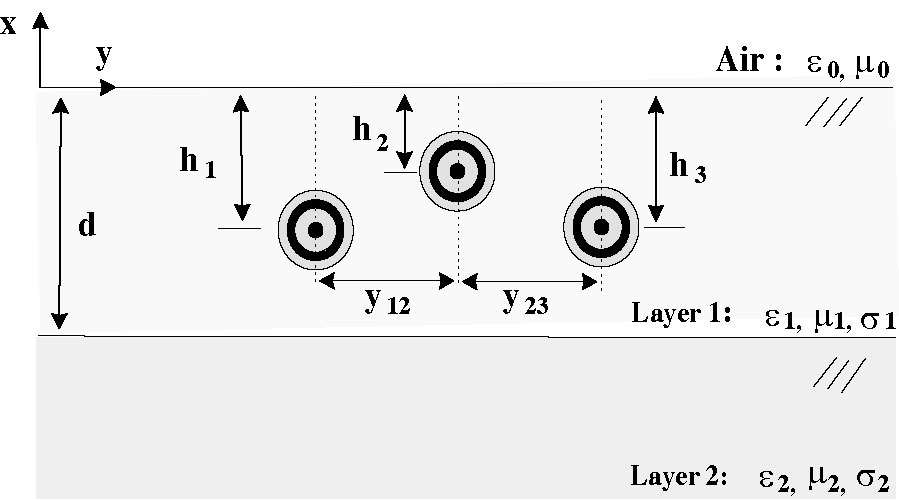
This paper examines the impact of soil stratification and the frequency dependence (FD) of the Earth's electrical parameters on the transient response of underground cable systems, accounting for both earth-return admittance and impedance. A derivative-free iterative approach is proposed to overcome issues of discontinuous modal transformation matrices that occur at certain frequencies when using conventional diagonalization algorithms. This method ensures smooth and continuous eigenvector tracking. Transient voltages and currents along cables are computed using a modal-domain-based transmission line model combined with Numerical Inverse Laplace Transform (NILT). Simulation results validate the proposed method's accuracy and stability, and highlight the significant influence of the stratified frequency-dependent (SFD) ground under various operating conditions. Finally, a reduced equivalent model of the three-phase underground system is established to facilitate further analysis.
Modal Analysis of Underground Cables in Stratified Frequency-dependent Soils Using a Derivative-free Iterative Method
2025-08-21
PIER C
Vol. 159, 10-16, 2025
download: 216
Minkowski Island Fractal Monopole Antenna with CPW-Feed for Wide-Band Wireless Systems
Vanilakshmi Venugopal, Rohith K. Raj, Aswin Shiju, Janardhanan Linesh and Thomaskutty Mathew
This paper presents a CPW-fed Minkowski island fractal monopole antenna with wideband characteristics. The Minkowski island fractal geometry is applied on the radiating patch of the monopole antenna to make it compact and enhance bandwidth performance. The measured return loss values indicate a fractional bandwidth of 114% from 2 GHz to 7.3 GHz. The simple structure and wideband characteristics make this antenna suitable for various wireless communication applications, including WLAN, Wi-Fi, Wi-Max, 5G, and sub-6 GHz band services.
Minkowski Island Fractal Monopole Antenna with CPW-feed for Wide-band Wireless Systems
2025-08-20
PIER C
Vol. 159, 1-9, 2025
download: 325
Snail-Like Golden Spiral Triboelectric Nanogenerator for All-Directional Wave Energy Harvesting
Yuxuan Tong, Xin Zhou, Xiaobing Niu and Xinhua Ye
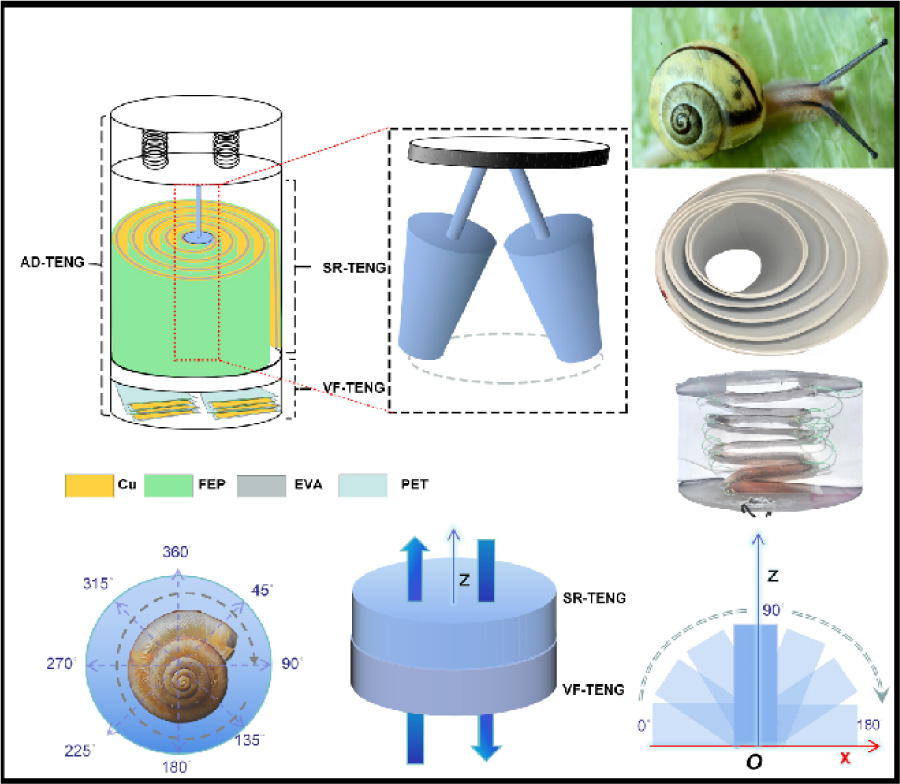
In recent years, harvesting abundant, clean and renewable wave energy from the ocean has become one of the most promising ways to obtain electricity. However, the multi-directional nature of waves and the low frequency of the movement pose a current challenge. We designed and fabricated an all-directional triboelectric nanogenerator (AD-TENG) with a biomimetic snail golden spiral. It consists of an electric energy collector in the vertical direction and another in the horizontal direction, and mainly operates through the contact separation method. The AD-TENG converted mechanical energy into electrical energy with the swinging of the pendulum and folding movements. The spiral structure of AD-TENG can harvest energy in all horizontal directions, and the wiring is simple, requiring only two positive and negative wires. In a water wave environment, the AD-TENG charged a capacitor of 100 μF to a voltage of 3 V in 2 min, lighting up 150 LED bulbs. The experiment measured the peak-to-peak voltage (Vpp) from 15 different angles and calculated the error ``e'' as 4.6%. The multi-degree-of-freedom energy harvesting and adaptability to various water wave motions of the AD-TENG offer great potential for the development of self-powered marine sensors.
Snail-like Golden Spiral Triboelectric Nanogenerator for All-directional Wave Energy Harvesting