Design of Fork-Shaped Antenna for IoT
Applications
Bharti Masram,
Sachin S. Khade,
Parth Fate,
Deepanshu Pise,
Parchiti Gaikwad,
Prabhakar Domaji Dorge,
Samruddhi Bute,
Nita Nimbarte and
Mohit Vaidya
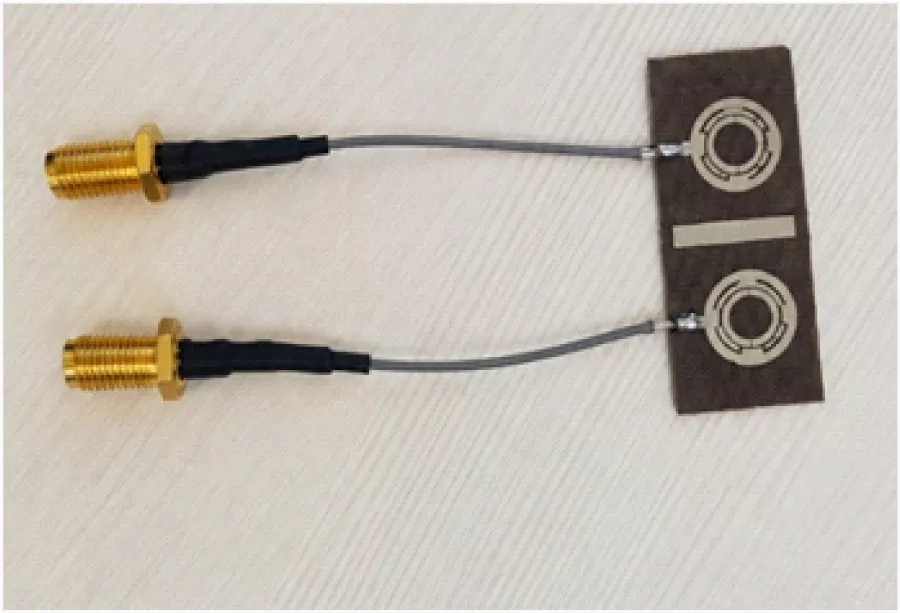
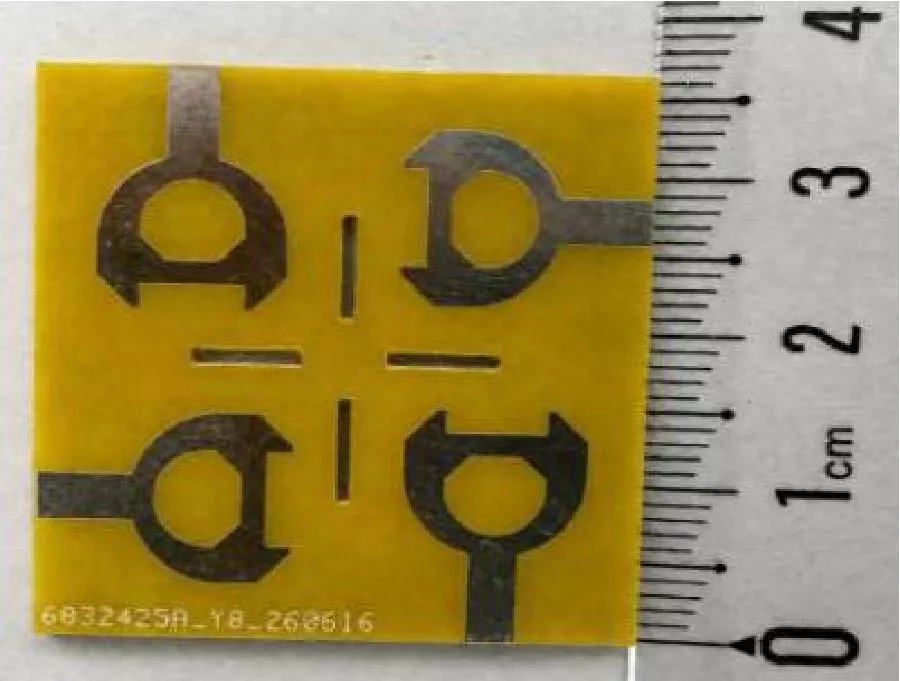
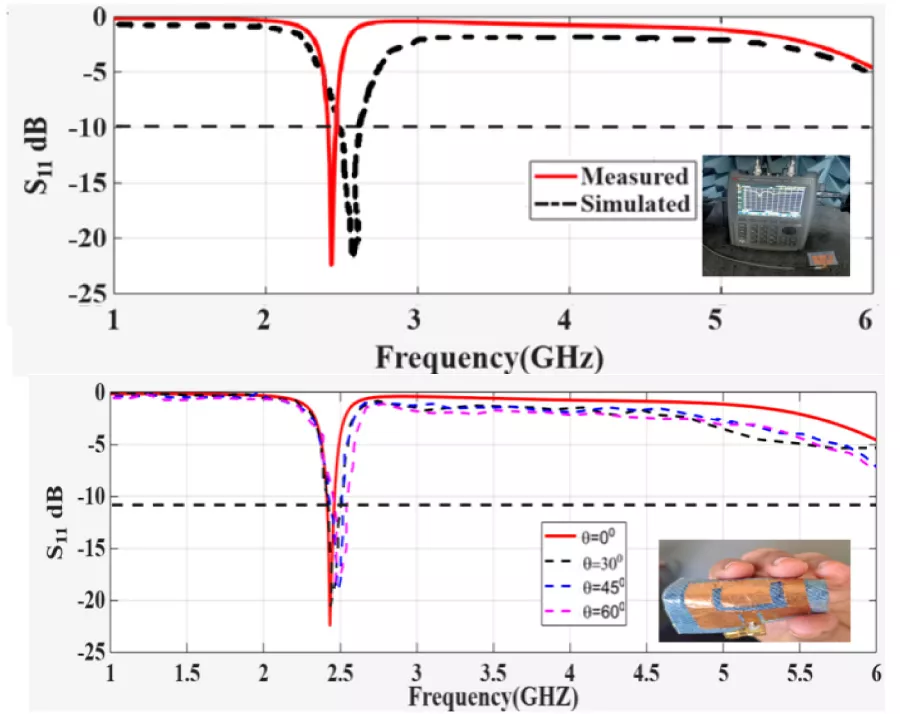
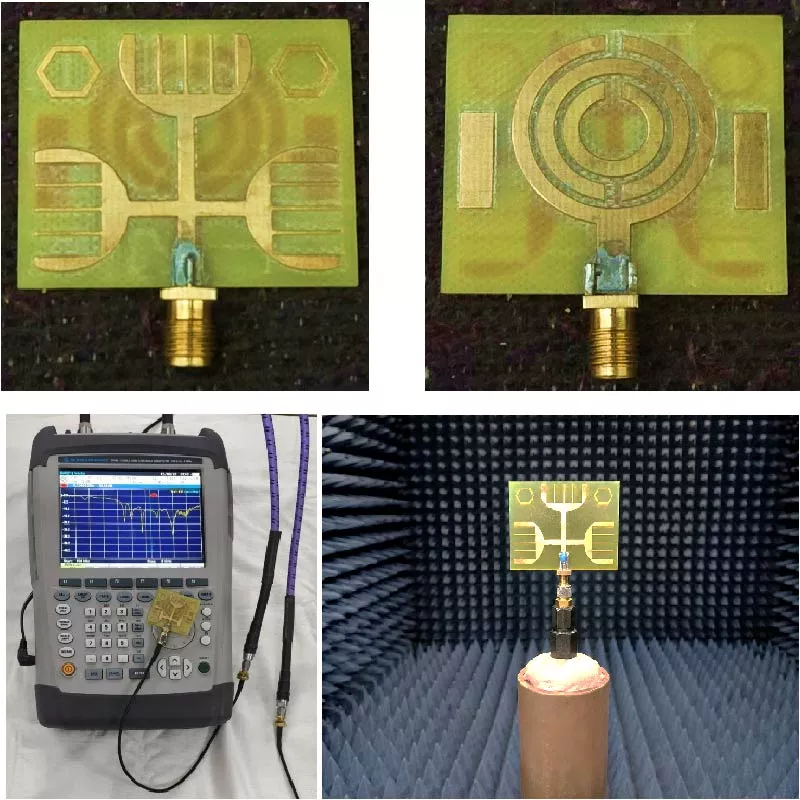
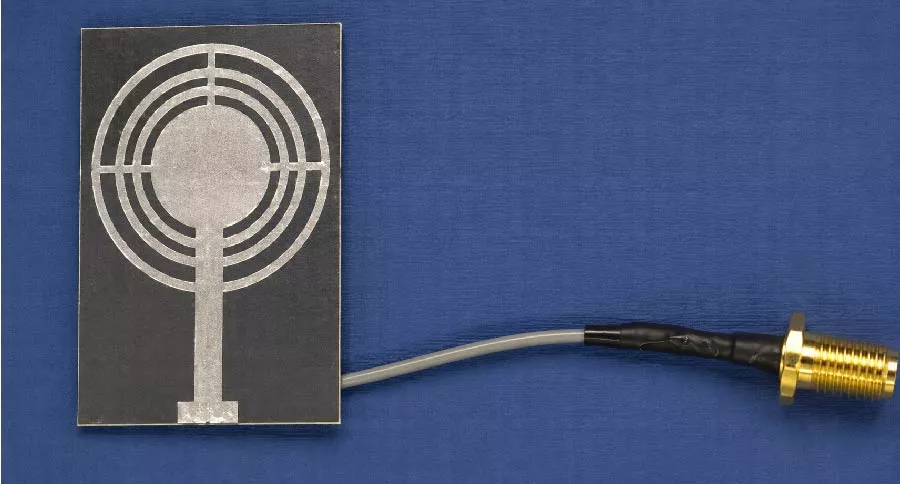
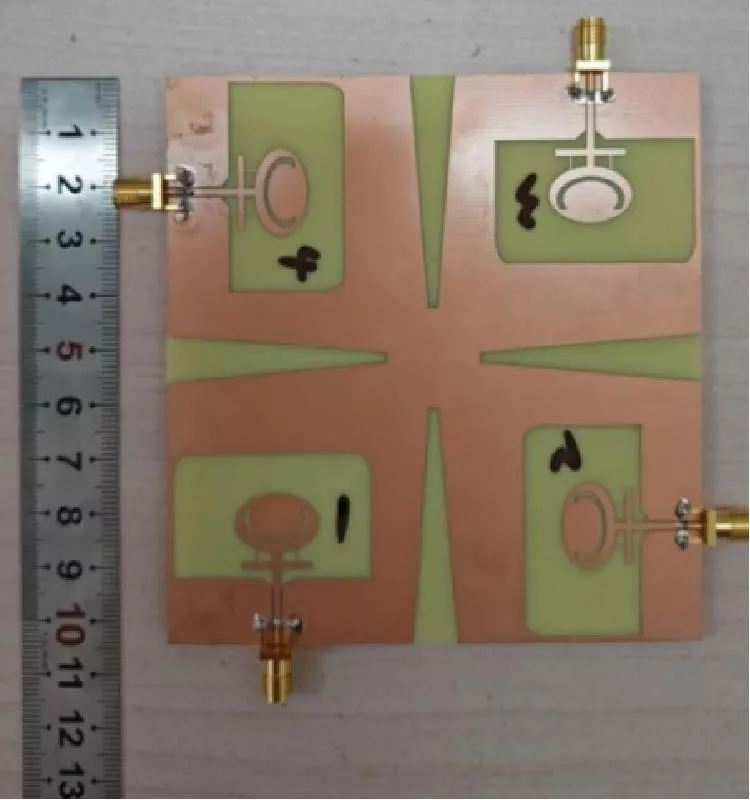
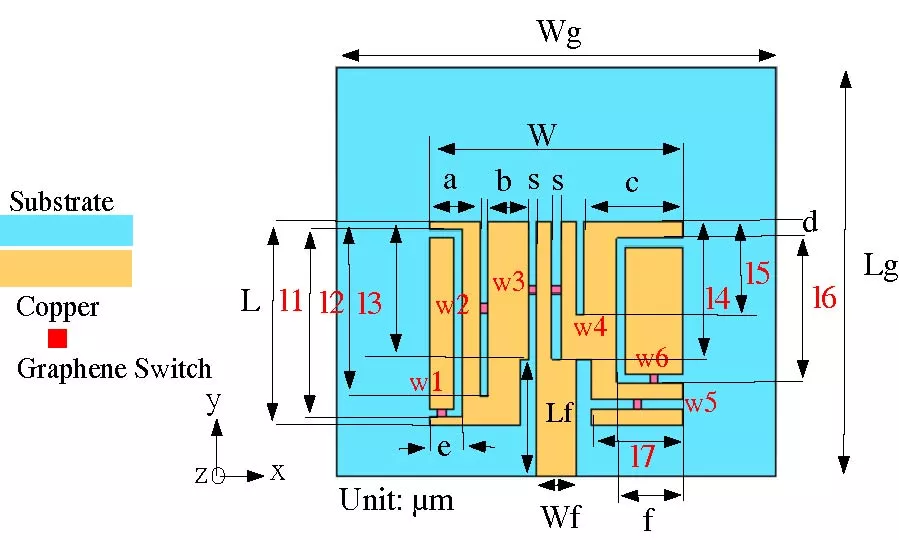
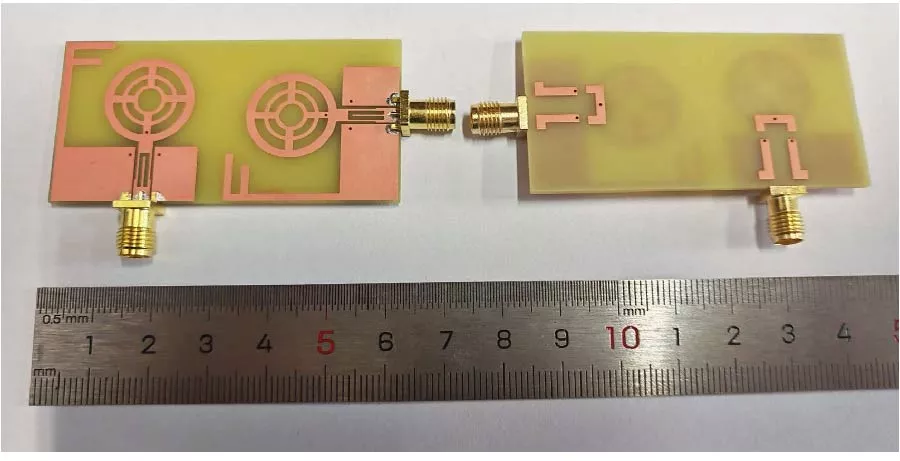
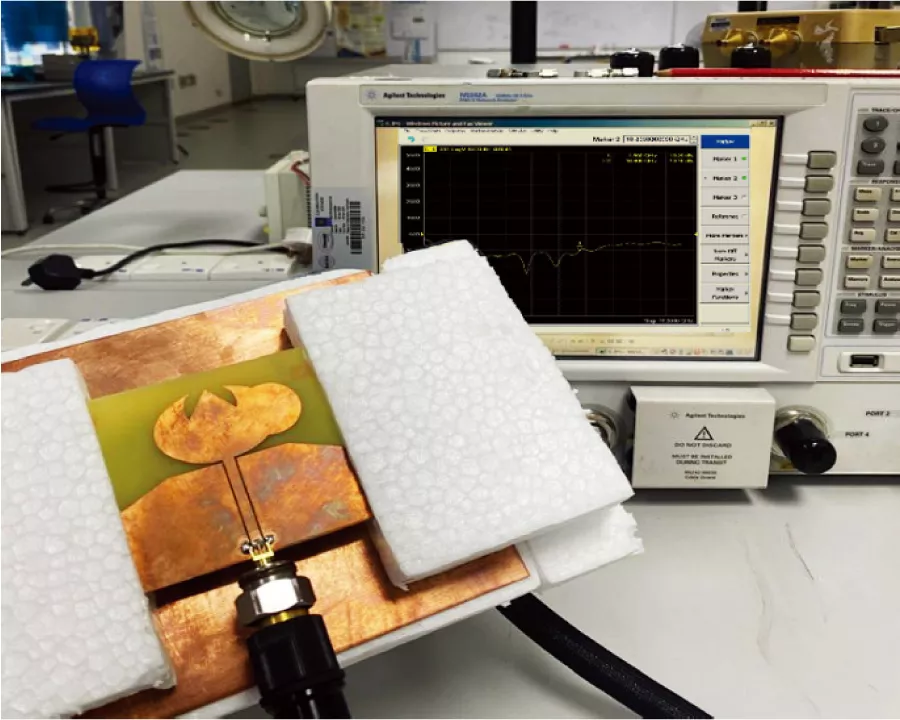
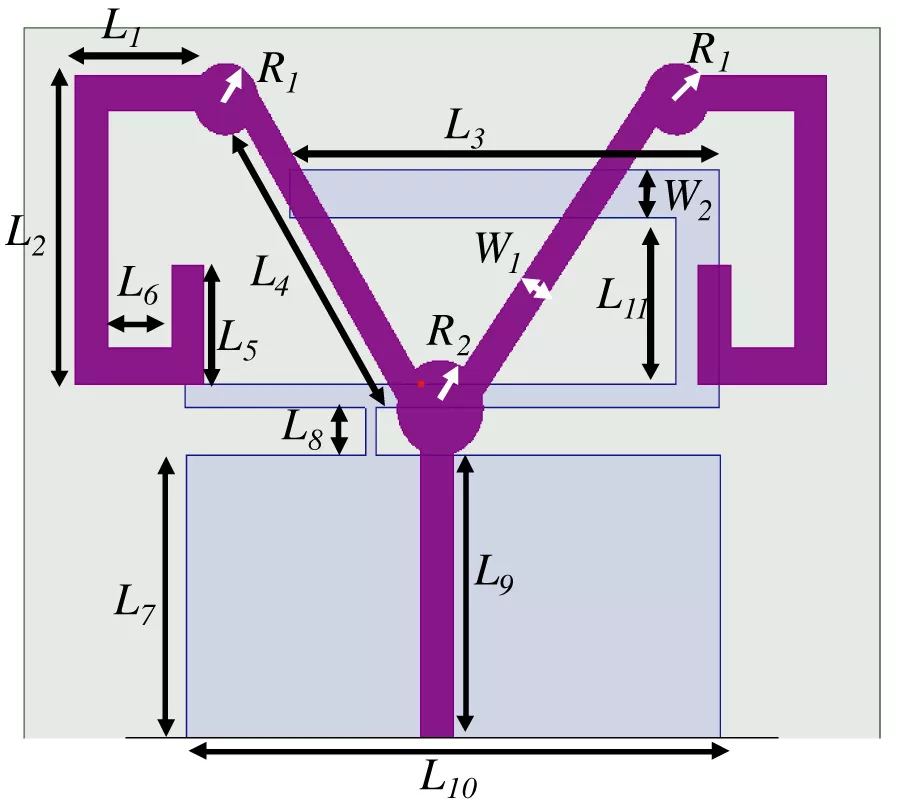
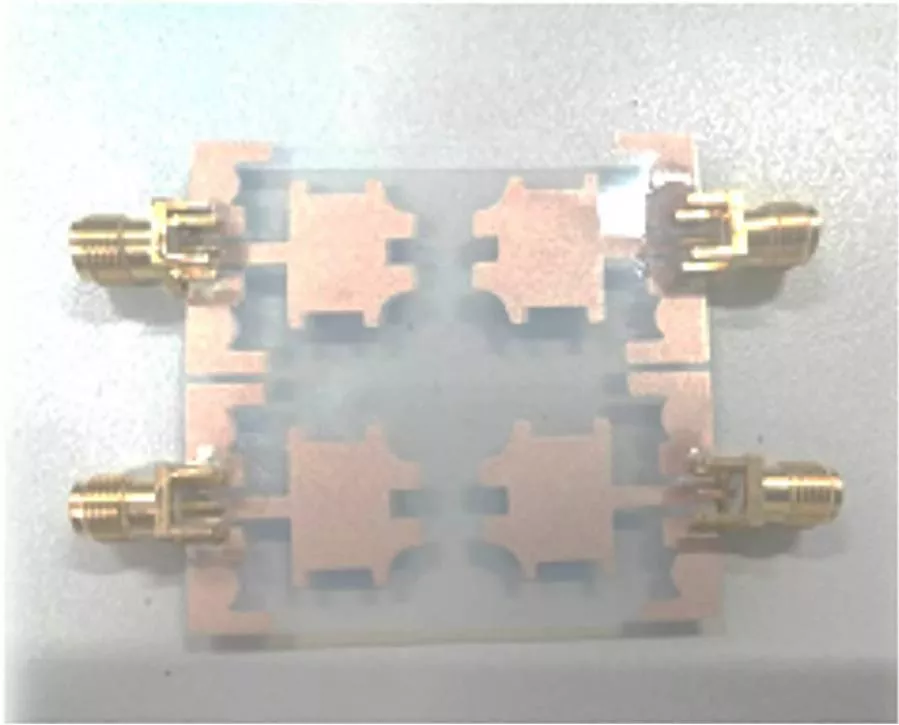
This research develops an innovative, compact, and efficient antenna for IoT devices that guarantees reliable wireless communication across various frequency bands. We propose a new three-element, fork-shaped multiband antenna design for multiband operation and higher isolation between the radiating elements. Split-Ring Resonators (SRRs) are implemented to enhance the antenna's electromagnetic performance and isolation between the radiating elements. The antenna design is realized using an FR-4 substrate with dimensions of 40×35×1.6 mm3. Simulation results show the presence of five resonance frequencies: 3.17 (3.13-3.20), 3.74 (3.62-4.2), 4.90 (4.4-5.91), 5.39, and 6.84 (6.11-7.23), 7.91 (7.76-8.06) GHz with reflection coefficients -10.78, -20.21, -18.04, -16.49, and -26.27 dB, respectively. Using resonating elements enhances electromagnetic field confinement and provides isolation between the radiating elements. The fabricated prototype shows good agreement between simulated and measured results. The maximum gain of the proposed antenna is 3.79 dB, and the radiation efficiency ranges from 66% to 94%. These findings confirm that the proposed antenna, owing to its compact dimensions, multiband characteristics, and favorable electromagnetic performance, is a promising candidate for IoT-based wireless communication applications.