Vol. 172
Latest Volume
All Volumes
PIERC 173 [2026] PIERC 172 [2026] PIERC 171 [2026] PIERC 170 [2026] PIERC 169 [2026] PIERC 168 [2026] PIERC 167 [2026] PIERC 166 [2026] PIERC 165 [2026] PIERC 164 [2026] PIERC 163 [2026] PIERC 162 [2025] PIERC 161 [2025] PIERC 160 [2025] PIERC 159 [2025] PIERC 158 [2025] PIERC 157 [2025] PIERC 156 [2025] PIERC 155 [2025] PIERC 154 [2025] PIERC 153 [2025] PIERC 152 [2025] PIERC 151 [2025] PIERC 150 [2024] PIERC 149 [2024] PIERC 148 [2024] PIERC 147 [2024] PIERC 146 [2024] PIERC 145 [2024] PIERC 144 [2024] PIERC 143 [2024] PIERC 142 [2024] PIERC 141 [2024] PIERC 140 [2024] PIERC 139 [2024] PIERC 138 [2023] PIERC 137 [2023] PIERC 136 [2023] PIERC 135 [2023] PIERC 134 [2023] PIERC 133 [2023] PIERC 132 [2023] PIERC 131 [2023] PIERC 130 [2023] PIERC 129 [2023] PIERC 128 [2023] PIERC 127 [2022] PIERC 126 [2022] PIERC 125 [2022] PIERC 124 [2022] PIERC 123 [2022] PIERC 122 [2022] PIERC 121 [2022] PIERC 120 [2022] PIERC 119 [2022] PIERC 118 [2022] PIERC 117 [2021] PIERC 116 [2021] PIERC 115 [2021] PIERC 114 [2021] PIERC 113 [2021] PIERC 112 [2021] PIERC 111 [2021] PIERC 110 [2021] PIERC 109 [2021] PIERC 108 [2021] PIERC 107 [2021] PIERC 106 [2020] PIERC 105 [2020] PIERC 104 [2020] PIERC 103 [2020] PIERC 102 [2020] PIERC 101 [2020] PIERC 100 [2020] PIERC 99 [2020] PIERC 98 [2020] PIERC 97 [2019] PIERC 96 [2019] PIERC 95 [2019] PIERC 94 [2019] PIERC 93 [2019] PIERC 92 [2019] PIERC 91 [2019] PIERC 90 [2019] PIERC 89 [2019] PIERC 88 [2018] PIERC 87 [2018] PIERC 86 [2018] PIERC 85 [2018] PIERC 84 [2018] PIERC 83 [2018] PIERC 82 [2018] PIERC 81 [2018] PIERC 80 [2018] PIERC 79 [2017] PIERC 78 [2017] PIERC 77 [2017] PIERC 76 [2017] PIERC 75 [2017] PIERC 74 [2017] PIERC 73 [2017] PIERC 72 [2017] PIERC 71 [2017] PIERC 70 [2016] PIERC 69 [2016] PIERC 68 [2016] PIERC 67 [2016] PIERC 66 [2016] PIERC 65 [2016] PIERC 64 [2016] PIERC 63 [2016] PIERC 62 [2016] PIERC 61 [2016] PIERC 60 [2015] PIERC 59 [2015] PIERC 58 [2015] PIERC 57 [2015] PIERC 56 [2015] PIERC 55 [2014] PIERC 54 [2014] PIERC 53 [2014] PIERC 52 [2014] PIERC 51 [2014] PIERC 50 [2014] PIERC 49 [2014] PIERC 48 [2014] PIERC 47 [2014] PIERC 46 [2014] PIERC 45 [2013] PIERC 44 [2013] PIERC 43 [2013] PIERC 42 [2013] PIERC 41 [2013] PIERC 40 [2013] PIERC 39 [2013] PIERC 38 [2013] PIERC 37 [2013] PIERC 36 [2013] PIERC 35 [2013] PIERC 34 [2013] PIERC 33 [2012] PIERC 32 [2012] PIERC 31 [2012] PIERC 30 [2012] PIERC 29 [2012] PIERC 28 [2012] PIERC 27 [2012] PIERC 26 [2012] PIERC 25 [2012] PIERC 24 [2011] PIERC 23 [2011] PIERC 22 [2011] PIERC 21 [2011] PIERC 20 [2011] PIERC 19 [2011] PIERC 18 [2011] PIERC 17 [2010] PIERC 16 [2010] PIERC 15 [2010] PIERC 14 [2010] PIERC 13 [2010] PIERC 12 [2010] PIERC 11 [2009] PIERC 10 [2009] PIERC 9 [2009] PIERC 8 [2009] PIERC 7 [2009] PIERC 6 [2009] PIERC 5 [2008] PIERC 4 [2008] PIERC 3 [2008] PIERC 2 [2008] PIERC 1 [2008]
2026-08-25 Latest Published
By Zihang Xie Jianxun Mo Ziqiang Liu Shijie Fang Zibo Wang Wenbiao Li Mingrui Chen
Progress In Electromagnetics Research C, Vol. 172, 520-532, 2026
Abstract
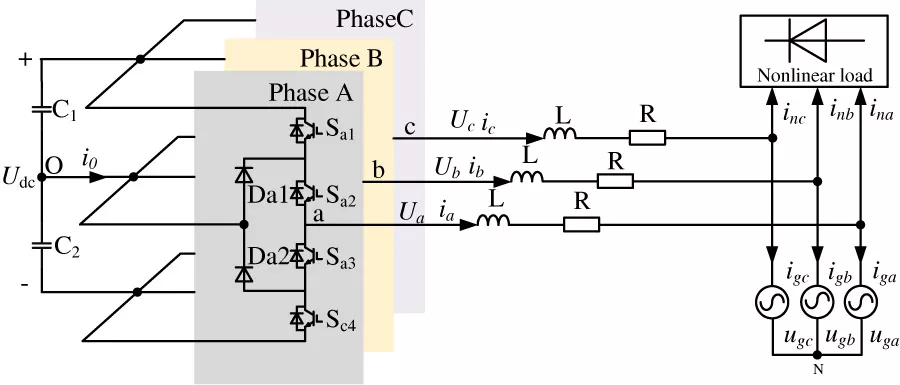
Conventional multi loop control of diode clamped active power filters suffers from response conflicts and slow regulation due to strong coupling among DC voltage, neutral point potential, and reactive power. This paper proposes a single agent deep deterministic policy gradient (DDPG) framework for multi objective cooperative control. Unlike generic DRL applications, our design retains the current PI inner loop for hardware safety. At the same time, a single agent replaces the three outer loops (voltage, neutral point, and reactive power) to eliminate cascade coupling. A composite reward function based on the L2 norm - rather than linear weighting - quadratically penalizes large errors, forcing the agent to prioritize the most severe deviations and resolve multi objective conflicts optimally. Simulations show that the proposed strategy reduces grid side current THD from 6.7% to 1.09%, cuts midpoint balancing and DC bus settling times by 50% and 66.67% respectively, achieves zero overshoot and zero steady state error, and exhibits strong robustness under voltage sags and load surges. This work offers a customized, low tuning effort intelligent solution for power quality control in complex grids.
2026-08-25
PIER C
Vol. 172, 520-532, 2026
download: 34
Multi-Objective Cooperative Control of a Three-Level NPC Active Power Filter Based on Single-Agent DDPG
Zihang Xie, Jianxun Mo, Ziqiang Liu, Shijie Fang, Zibo Wang, Wenbiao Li and Mingrui Chen
Conventional multi loop control of diode clamped active power filters suffers from response conflicts and slow regulation due to strong coupling among DC voltage, neutral point potential, and reactive power. This paper proposes a single agent deep deterministic policy gradient (DDPG) framework for multi objective cooperative control. Unlike generic DRL applications, our design retains the current PI inner loop for hardware safety. At the same time, a single agent replaces the three outer loops (voltage, neutral point, and reactive power) to eliminate cascade coupling. A composite reward function based on the L2 norm - rather than linear weighting - quadratically penalizes large errors, forcing the agent to prioritize the most severe deviations and resolve multi objective conflicts optimally. Simulations show that the proposed strategy reduces grid side current THD from 6.7% to 1.09%, cuts midpoint balancing and DC bus settling times by 50% and 66.67% respectively, achieves zero overshoot and zero steady state error, and exhibits strong robustness under voltage sags and load surges. This work offers a customized, low tuning effort intelligent solution for power quality control in complex grids.
Multi-Objective Cooperative Control of a Three-Level NPC Active Power Filter Based on Single-Agent DDPG
2026-08-25
PIER C
Vol. 172, 513-519, 2026
download: 17
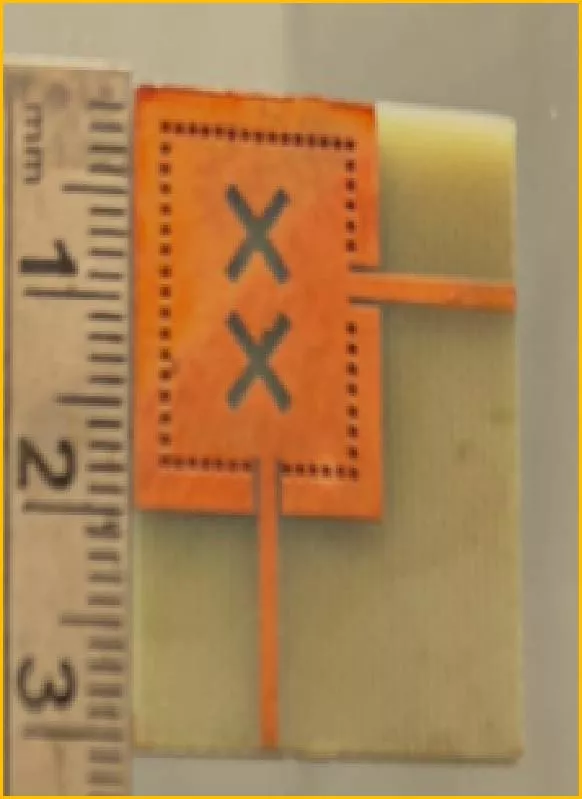
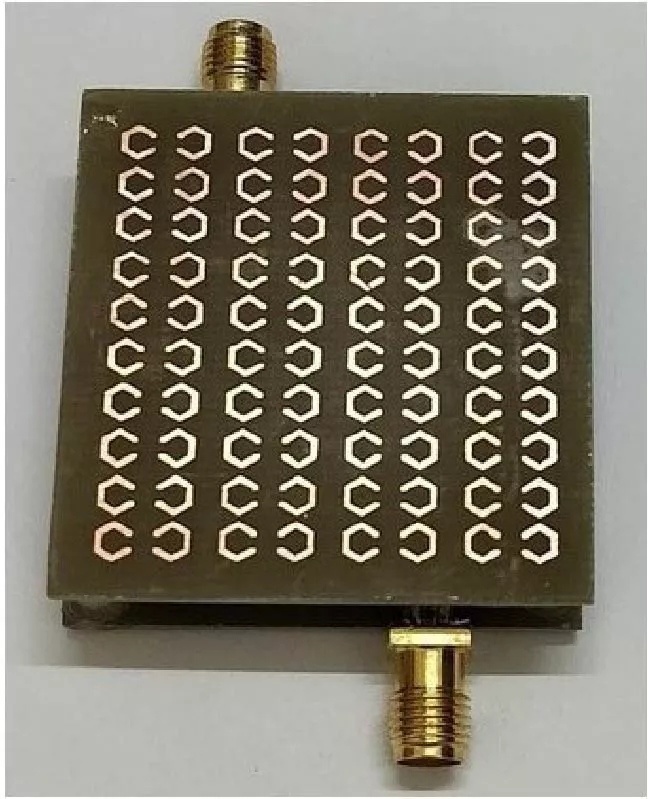
Multi-Band Cavity Backed SIW Based X-Shaped Slot Antenna for Ku and K Bands
Reema Budhiraja, Astha Sharma, Sparsh Birla and Manan Arora
In this manuscript, a well-designed multiband cavity-backed X-shaped slot antenna is presented using substrate-integrated waveguide (SIW) technology. Its performance is optimized for the K and Ku bands to suit various advanced communication scenarios. Including an X-shaped slot in this design leads to significant advantages, such as better impedance matching, broadside radiation pattern, and multiband operation. In addition, it shows decent gain values of 6.89 dB at 15.02 GHz, 6.91 dB at 15.90 GHz, and 7.12 dB at frequency 19.58 GHz. This is accomplished by the innovative application of X slots on the substrate integrated waveguide (SIW) cavity. Simulated and experimental results validate multiband antenna operation and exceptional performance, highlighting its potentially high suitability for state-of-the-art millimeter-wave applications, such as satellite communications and radar systems. This compact structure, along with the proposed antenna performance metrics, confirms its feasibility for future wireless communication systems. This progress enables further developments in SIW-based antenna technology.
Multi-Band Cavity Backed SIW Based X-Shaped Slot Antenna for Ku and K Bands
2026-08-24
PIER C
Vol. 172, 507-512, 2026
download: 30
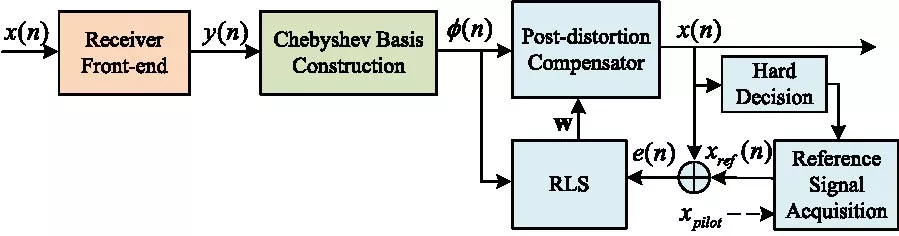
Chebyshev Polynomial-Based Adaptive Post-Distorter for Nonlinear Receiver Compensation
Chongchong Chen, Hongmin Lu, Fulin Wu and Yangzhen Qin
Receiver nonlinearity degrades signal quality in modern wireless systems. This paper proposes an adaptive post-distorter using Chebyshev polynomials as basis functions to improve numerical stability and convergence speed. Unlike conventional or distributionmatched bases, the Chebyshev basis ensures a well-conditioned input correlation matrix regardless of signal distribution. This property, together with the minimax approximation, enables the RLS algorithm to converge within a few pilot symbols - an order of magnitude faster than the power-series basis. Experiments on a real wideband receiver with OFDM and WCDMA signals show significant ACPR improvements over the power-series and Legendre bases. The proposed approach exhibits robust performance, fast convergence, and broad applicability.
Chebyshev Polynomial-Based Adaptive Post-Distorter for Nonlinear Receiver Compensation
2026-08-23
PIER C
Vol. 172, 495-506, 2026
download: 26
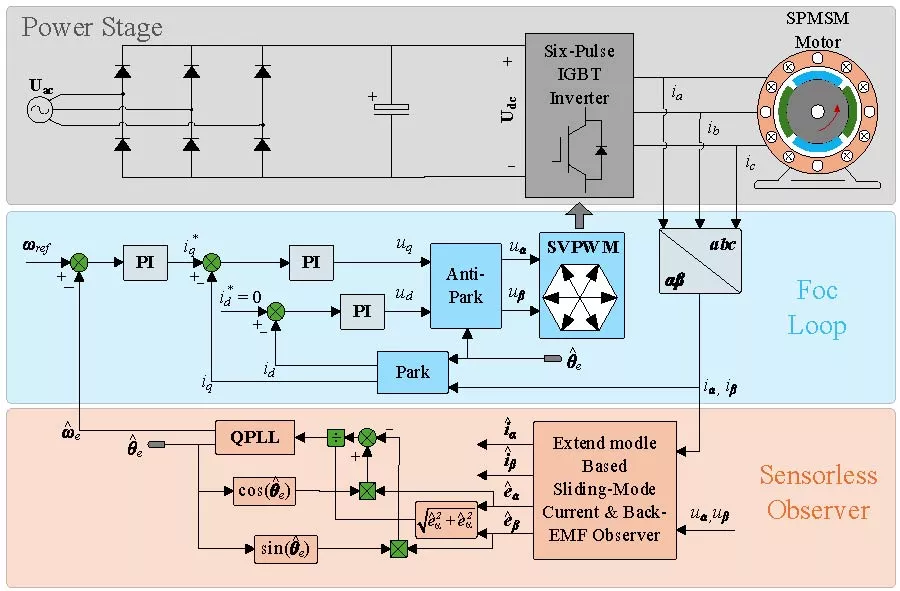
Gain-Adaptive Terminal Higher-Order Sliding Mode Observer with Super-Twisting Algorithm for Sensorless Control of SPMSM
Wenshuai Du, Zhonggen Wang and Wenyan Nie
To overcome bandwidth-accuracy trade-offs in sensorless surface-mounted permanent magnet synchronous motor (SPMSM) drives, this study addresses the limitations of traditional observers. Conventional first-order sliding-mode observer (SMO) inherently exhibits high-frequency chattering due to discontinuous switching functions. To smooth the estimated back-EMF, a low-pass filter (LPF) is typically appended as a remedy; however, this filtering induces speed-dependent phase lag during medium- and high-speed operations, whereas its impact at low speeds is negligible. Although conventional higher-order model-based SMO (HOSMO) can better attenuate chattering, a lower cutoff frequency inherently compromises dynamic tracking precision due to increased phase lag. To overcome these challenges, the proposed scheme substitutes filter-dependent laws with a second-order super-twisting algorithm (STA), ensuring continuity of the control signal and zero phase lag. Furthermore, a state-dependent adaptive tuning mechanism based on a continuous nonlinear barrier function was developed. This adaptive law dynamically boosts observer gains to suppress transient perturbations and contracts them at a steady state to minimize chattering. Comprehensive simulations and experimental verifications demonstrated that the proposed gain-adaptive super-twisting higher-order SMO (GAST-HOTSMO) significantly reduced harmonic distortion, restricted estimation errors, and accelerated dynamic recovery compared to conventional methods.
Gain-Adaptive Terminal Higher-Order Sliding Mode Observer with Super-Twisting Algorithm for Sensorless Control of SPMSM
2026-08-23
PIER C
Vol. 172, 480-494, 2026
download: 44
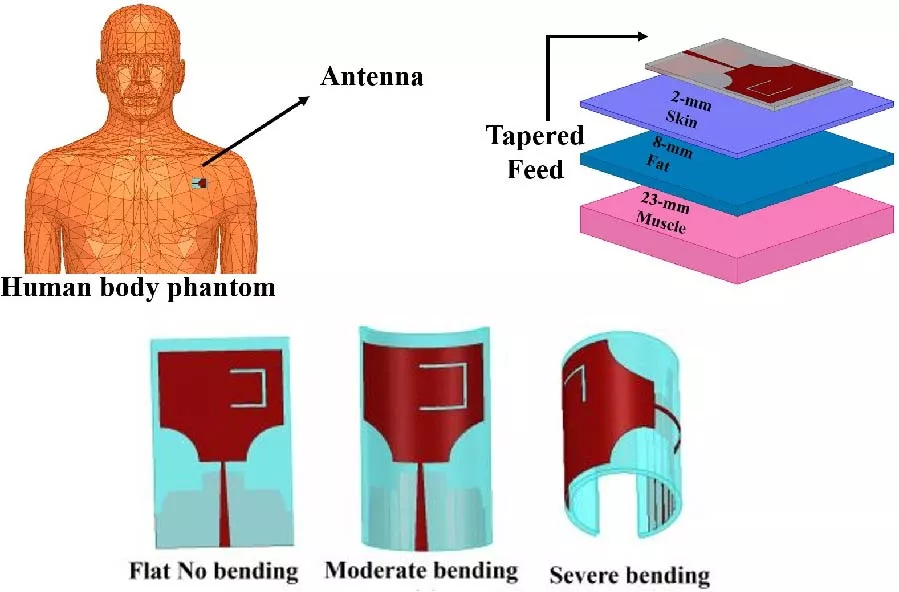
Flexible Conformal Textile-Based ETSRP Wearable Antenna for Wireless and Biomedical Applications
Yarram Uma Maheswari and Bappadittya Roy
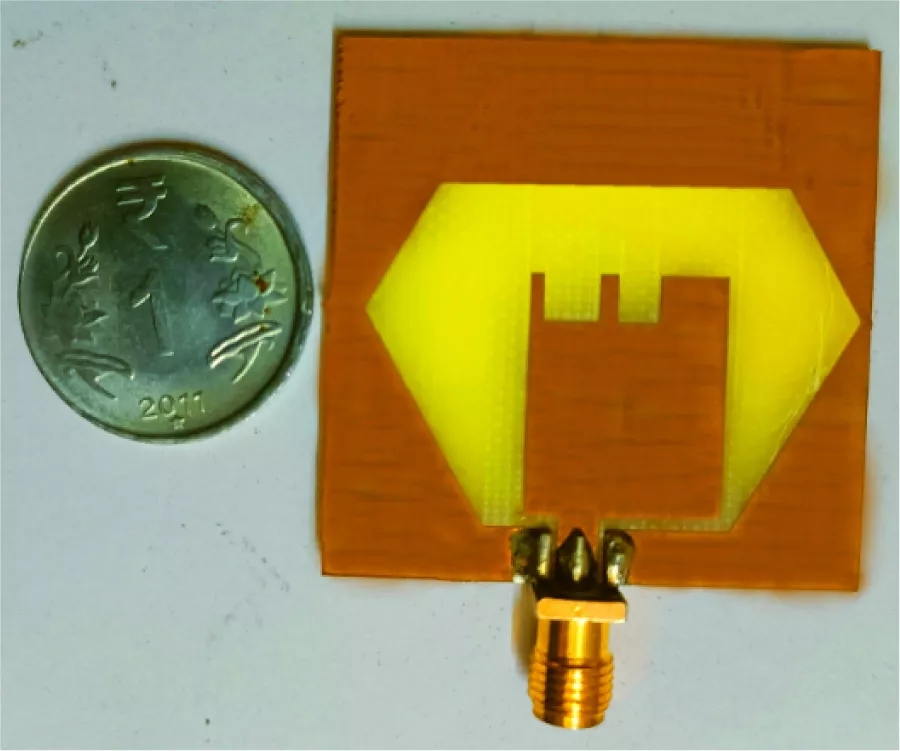
This paper presents a low-profile, flexible, and wideband conformal wearable antenna for biomedical and wireless applications, including Internet of Things (IoT). The proposed antenna is based on an edge-truncated and slotted rectangular patch structure (ETSRP) developed on a jeans textile substrate, with compact overall dimensions of 0.163×0.269×0.0063. The antenna offers peak gain of 6.3 dBi with an impedance bandwidth of 2.32 GHz to 8.84 GHz, corresponding to a fractional bandwidth of 116.5%, with a reflection coefficient (S11) of -42.4 dB in the ISM bands. The antenna's performance was evaluated using a human phantom and showed minor frequency detuning across different placement conditions. The specific absorption rate (SAR) was evaluated at 2.45 GHz and 5.8 GHz, with values of 0.7 W/kg and 0.8 W/kg, respectively, which are within accepted safety limits. The measured results were in good agreement with the simulated results in terms of impedance bandwidth, gain, and resonance characteristics. The proposed textile antenna offers wideband operation, low SAR, and compact size, making it suitable for wearable biomedical devices and IoT-based on-body communication systems.
Flexible Conformal Textile-Based ETSRP Wearable Antenna for Wireless and Biomedical Applications
2026-08-23
PIER C
Vol. 172, 468-479, 2026
download: 49
A Medium to High-Speed Sensorless Control Strategy for SRMs Based on Dual-Stage Resonant Filter and Feedforward Phase-Locked Loop
Zheng Zhang, Zebin Yang, Xiaodong Sun and Chao Sun
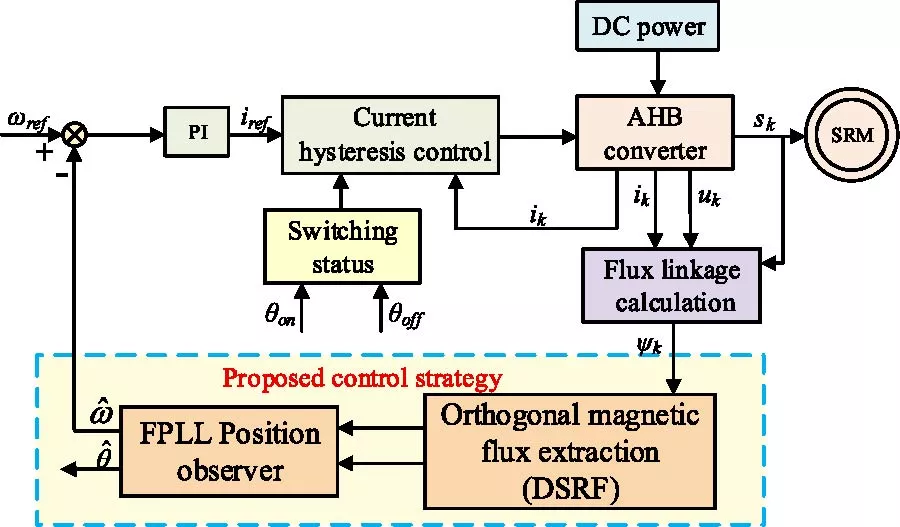
To reduce the cost and improve the accuracy of position estimation for switched reluctance motors (SRMs) at medium to-high speeds, this study proposes a sensorless control strategy based on a dual-stage resonant filter (DSRF) and a feedforward phase-locked loop (FPLL). First, to address issues of weak dc-offset suppression and high-frequency harmonics in the second-order generalized integrator (SOGI) when processing nonlinear flux linkage, a DSRF with ideal band-pass characteristics is proposed. This filter effectively suppresses the dc-offset and higher-order harmonics. Second, the proposed FPLL introduces a feedforward compensation path related to the speed derivative. By adding zeros to broaden the system bandwidth, the dynamic response is accelerated. The tracking accuracy and response speed of the position observer are also enhanced under variable-speed and sudden-load conditions. Finally, the effectiveness of the proposed strategy was verified on a six-phase 12/10 SRM experimental platform. The experimental results show that the proposed sensorless control strategy achieves a fast and highly accurate estimation of the rotor position and speed at medium to-high speeds, particularly during dynamic processes, thereby enhancing system reliability and dynamic performance.
A Medium to High-Speed Sensorless Control Strategy for SRMs Based on Dual-Stage Resonant Filter and Feedforward Phase-Locked Loop
2026-08-22
PIER C
Vol. 172, 458-467, 2026
download: 35
A Miniaturized High-Efficiency Harmonic-Tuned Class-F Power Oscillator
Guangshuang Yu, Taijun Liu and Jingchang Nan
To address the requirements for compact size and low cost of RF signal sources, a novel design method for high-efficiency Class-F power oscillators is proposed. The key contribution of this method is the integrated design of the harmonic-tuning and impedance-matching networks. An asymmetric π-type harmonic tuning network is proposed to simultaneously realize harmonic termination for high-efficiency Class-F operation and fundamental load impedance matching, thereby significantly reducing circuit footprint. The amplifier's output was coupled to a feedback network via a capacitor and returned to the amplifier through a frequency-selective network, enabling a stable self-excited oscillation. To verify the design, a power oscillator is implemented using a low-cost LDMOS transistor and an FR4 substrate. The experimental results show that the fabricated oscillator operates at 918\,MHz with a direct current-to-radio-frequency (DC-RF) efficiency of 68.20% and a maximum output power of 42.90 dBm. Additionally, a low phase noise of -130 dBc/Hz at 1 MHz offset is achieved, robustly validating the effectiveness of this approach.
A Miniaturized High-Efficiency Harmonic-Tuned Class-F Power Oscillator
2026-08-21
PIER C
Vol. 172, 448-457, 2026
download: 37
Cross-Entropy Based Optimization for LPDA Antenna Miniaturization
Sudeepa Herath, Jeevani Windhya Jayasinghe, Disala N. Uduwawala and Fabien Ferrero
This paper presents the design and experimental validation of a miniaturized Printed Log-Periodic Dipole Array (PLPDA) antenna operating within the 1.3-6.0 GHz frequency range. The objective of this work was to reduce the antenna's overall footprint while preserving its wideband performance. A sequential miniaturization strategy was adopted, employing m-segment fractal geometry for lateral size reduction and Cross-Entropy (CE) optimization for axial compaction. The reference PLPDA, measuring 255 mm × 116 mm, was progressively refined to a final size of 217 mm × 88 mm, achieving an overall footprint reduction of approximately 34%. The simulated and measured results confirmed excellent impedance matching, with S11 remaining below -10 dB across the entire operating band and an average gain exceeding 7 dB. These results validate that the proposed CE-optimized m-segment PLPDA successfully achieves substantial miniaturization without degrading bandwidth or radiation performance. The presented approach offers a practical framework for developing compact, high-performance wideband antennas.
Cross-Entropy Based Optimization for LPDA Antenna Miniaturization
2026-08-21
PIER C
Vol. 172, 434-447, 2026
download: 43
Research on Model-Free Direct Speed Control of PMSM Based on Second-Order Ultra-Local Model
Yanan Zhou, Lin Li, Xinxin Zheng, Tong Liu and Yao He
This paper proposes a model-free direct speed control (MFDC) method based on a second-order ultra-local model to address the speed loop bandwidth issue and difficulty of further improving the dynamic response performance in the speed control of a traditional cascaded permanent magnet synchronous motor drive system. The speed control method based on an accurate mathematical model has poor robustness to unknown disturbances, such as parameter uncertainty and inverter nonlinearity. This method eliminates the double closed-loop cascade structure of the traditional speed outer loop and q-axis current inner loop. By establishing a second-order ultra-local model of the surface-mounted permanent magnet synchronous motor ( SMPMSM ) drive system considering parameter uncertainty and inverter nonlinearity, the mechanical speed of the motor was directly related to the inverter's output voltage, and a model-free direct speed controller integrating speed control and torque current control functions was designed. Simultaneously, a model-free current controller based on the first-order current ultra-local model is used to realize the independent adjustment of the d-axis stator current. In addition, a virtual q-axis current ultra-local model torque limitation method for direct speed control is proposed to realize an effective constraint of electromagnetic torque without a cascade structure. Experimental results demonstrate that the proposed method provides enhanced load-disturbance rejection, particularly under medium- and high-speed conditions. At 500 r/min, load-step speed fluctuation is reduced from 3.6152% to 2.0638%, and recovery time is shortened from 0.0288 s to 0.0080 s. Under the rated-speed step condition, the speed overshoot is reduced from 2.8028% to 2.2136%.
Research on Model-Free Direct Speed Control of PMSM Based on Second-Order Ultra-Local Model
2026-08-20
PIER C
Vol. 172, 422-433, 2026
download: 47
Radar-Informed MSG-Transformer for Action Recognition with Sparse mmWave Radar Point Clouds
Su Liu, Jianguo Liu, Fei Gao, Jietao Cheng and Jun Tang
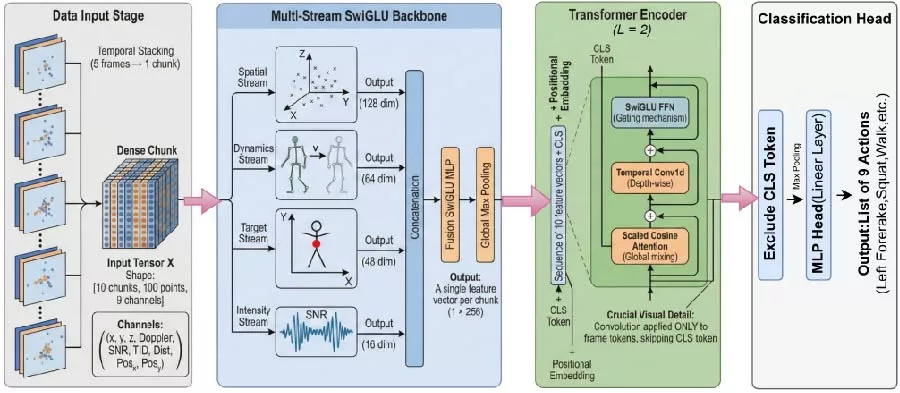
Millimeter-wave (mmWave) radar supports non-contact action sensing without optical imagery, but its sparse point clouds vary with multipath, aspect angle, and detection quality. We address within-protocol recognition with a radar-informed Multi-Stream Gated Transformer (MSG-Transformer). Separate streams encode target-centered geometry, Doppler velocity, radar-reported SNR, and tracker-estimated horizontal-centroid context prior to temporal fusion. Raw trials are split before frame stacking, and augmentation perturbs only centered coordinates, leaving measured Doppler and SNR unchanged. On 820 archived trials from eight anonymized participant identifiers and nine action categories, MSG-Transformer achieved 97.67% development-set macro recall with 1.03 million parameters and a 3.92 MiB FP32 footprint. This single-split result is not subject-independent or cross-environment evidence.
Radar-Informed MSG-Transformer for Action Recognition with Sparse mmWave Radar Point Clouds
2026-08-20
PIER C
Vol. 172, 416-421, 2026
download: 46
Design and Implementation of a Triple-Band Bandstop Filter with Controllable Bandwidth and Stopband Rejection
Chuan Shao, Xin Gao, Baotong Gou, Rong Cai, Xinnai Zhang and Kai Xu
In this article, a triple-band bandstop filter employing coupled tri-section stepped-impedance resonators is proposed. The characteristic impedances of individual stepped-impedance sections are judiciously adjusted to independently allocate the three stopband frequencies. Subsequently, the coupling coefficients between adjacent resonators are meticulously tuned to simultaneously regulate the bandwidth of each stopband and the corresponding suppression level within the rejection bands. Moreover, out-of-band insertion and return losses are optimized by properly selecting the characteristic impedance of half-wavelength transmission lines interconnecting resonators. To experimentally validate the aforementioned design methodology, a triple-band bandstop filter with stopband center frequencies of 1.2 GHz, 3 GHz, and 4.8 GHz is designed, simulated, fabricated, and measured. The measured responses are found in excellent agreement with simulated results, thereby conclusively substantiating the proposed design concept.
Design and Implementation of a Triple-Band Bandstop Filter with Controllable Bandwidth and Stopband Rejection
2026-08-19
PIER C
Vol. 172, 405-415, 2026
download: 55
A Novel Funnel-Shaped High-Isolation MIMO Antenna for UWB Applications
Shanhua Yao, Yuting Wang, Zhonggen Wang and Han Lin
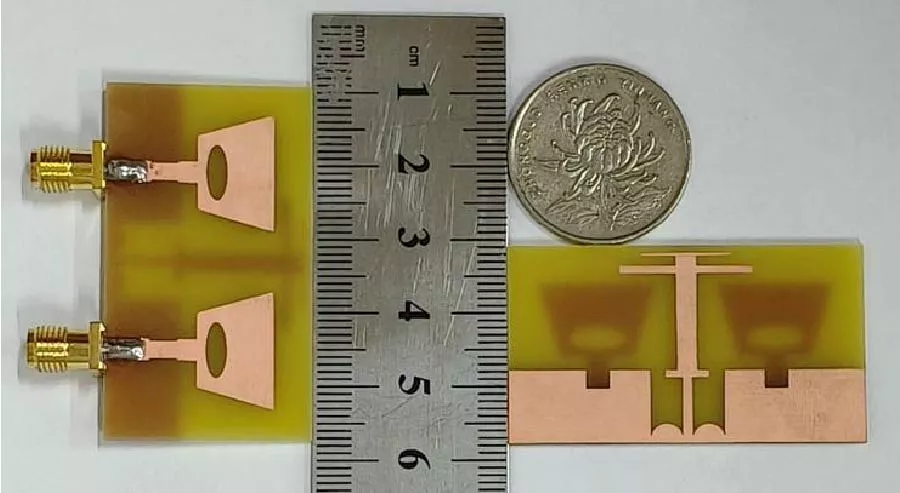
This paper presents a compact, funnel-shaped, MIMO antenna for ultra-wideband (UWB) applications. The antenna element consists of a top funnel-shaped patch and a bottom rectangular ground plane. By using an elliptical slot on the patch and a slit at the center of the ground plane, impedance matching is effectively improved, and bandwidth is significantly expanded. Meanwhile, by etching a slot at the center of the ground plane and introducing semicircular and T-shaped parasitic stubs, the mutual coupling between the antenna elements is successfully suppressed. The overall dimension of the antenna is 48 × 27 × 1.6 mm3. The simulated and measured results exhibit excellent agreement, demonstrating that the antenna achieves a continuous impedance bandwidth covering 3.16-16.48 GHz, which corresponds to a fractional bandwidth of 135.64%. Across the entire operating band, the port isolation exceeds 20 dB; the radiation efficiency ranges from 73.4% to 92.6%; the envelope correlation coefficient (ECC) is below 0.0025; and the diversity gain (DG) is better than 9.9982 dB. Combining ultra-wide bandwidth, high isolation, and extremely low channel correlation, the proposed antenna provides a reliable solution for high-performance UWB-MIMO communication systems.
A Novel Funnel-Shaped High-Isolation MIMO Antenna for UWB Applications
2026-08-19
PIER C
Vol. 172, 392-404, 2026
download: 71
An Asymmetric Dual-Band Doherty Power Amplifier Based on Dual-π-Shaped Phase Compensation Lines
Mingming Gao, Bo Li, Hao Meng and Jiawei Wang
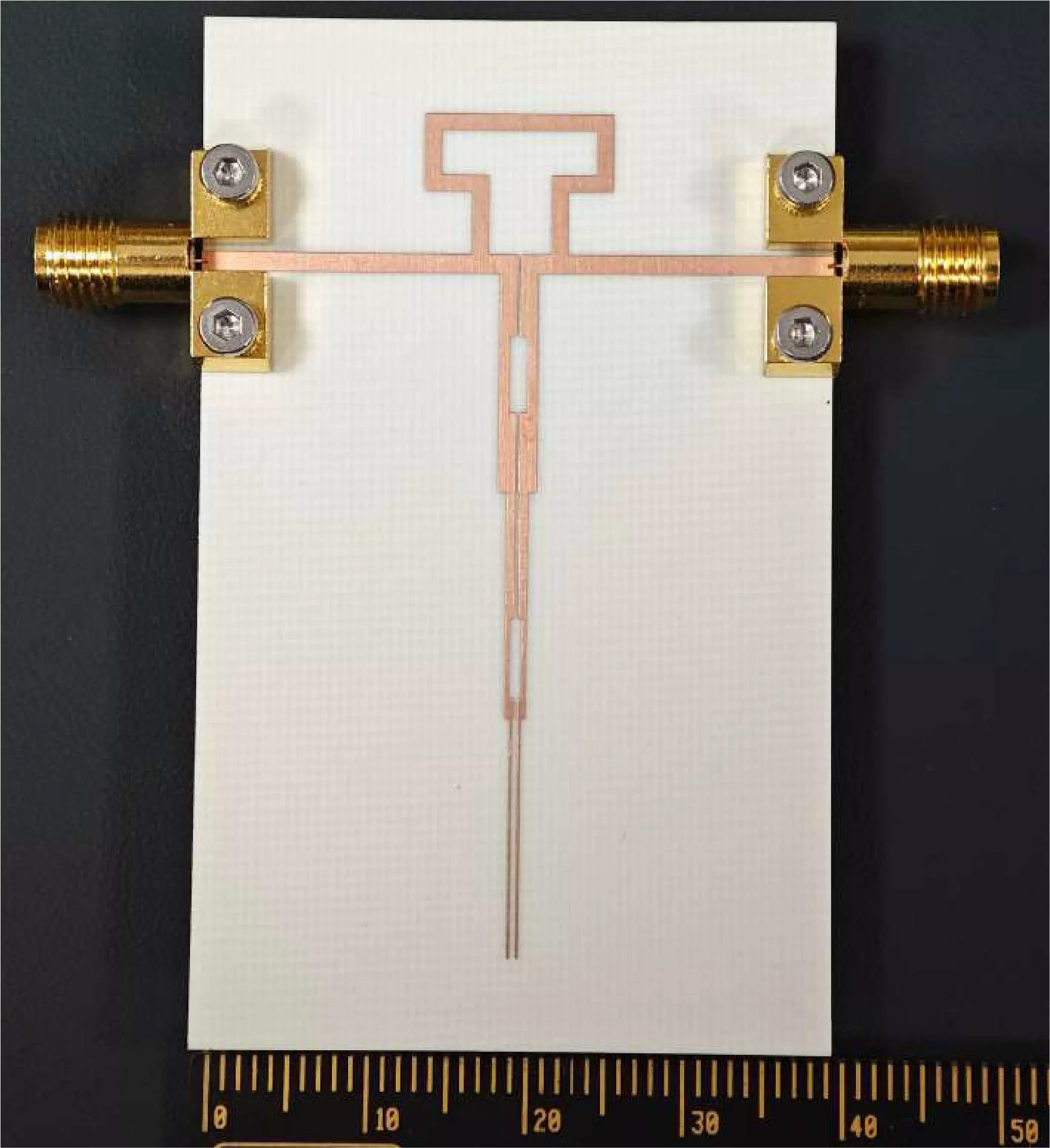
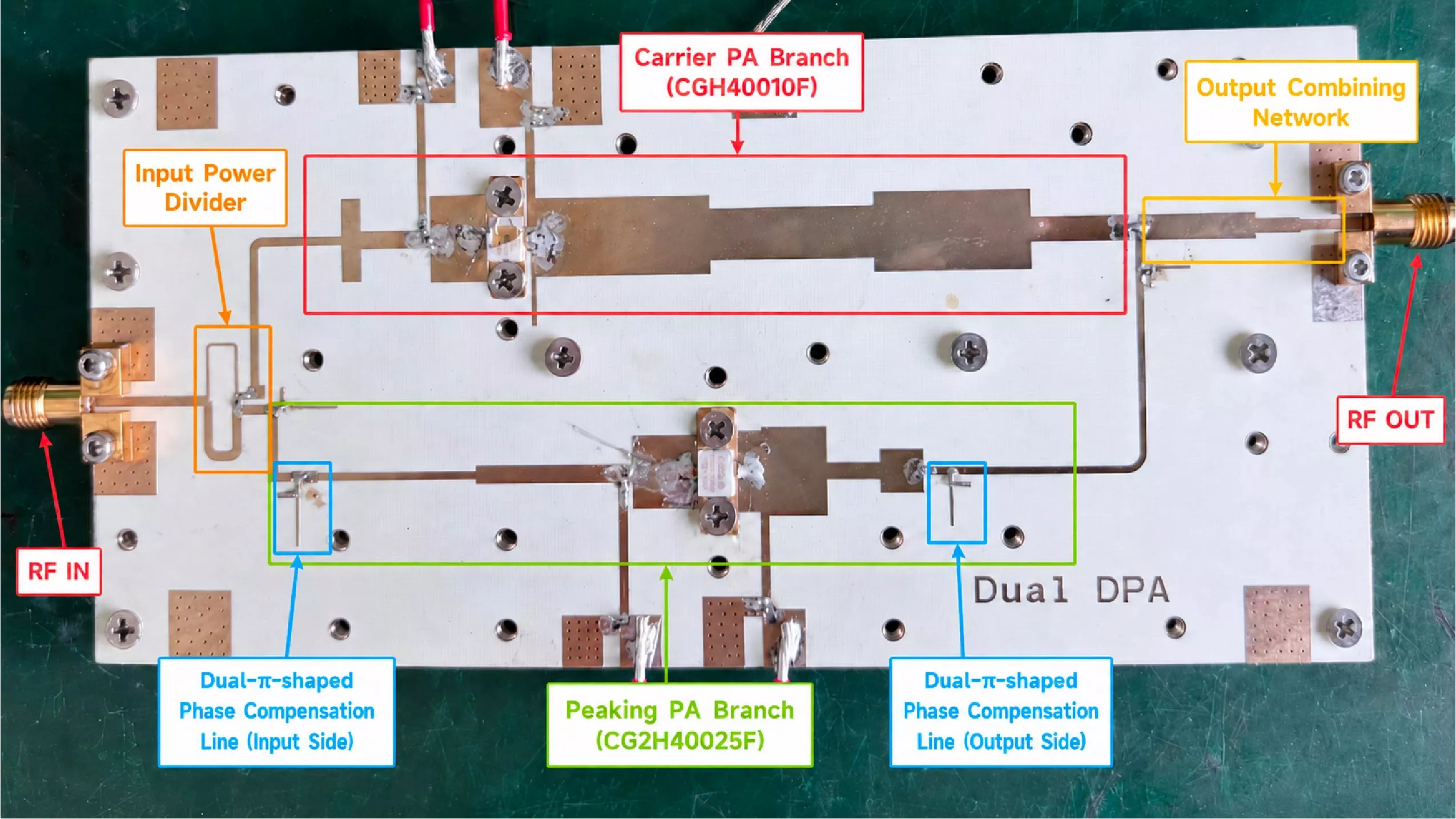
This paper presents an asymmetric dual-band Doherty power amplifier employing a dual-π-shaped phase-compensation network. To realize effective load modulation at two operating frequencies, dual-band phase compensation lines are introduced at both the input and output of the peaking amplifier. Each compensation line is implemented with a dual-π-shaped dual-band structure, which provides the required phase shift and impedance transformation at the two target frequencies, thereby satisfying the phase relationship required for dual-band Doherty load modulation. Meanwhile, transistors with different power levels are used in the carrier and peaking amplifier branches to form an asymmetric Doherty configuration, improving power-combining capability and efficiency in the output power back-off region. Simulation and measurement results show that the designed power amplifier achieves an output power of 47 dBm, a gain higher than 10 dB, and drain efficiencies of 70% and 65% at 2.6 GHz and 3.5 GHz, respectively. At 9-dB output power back-off, the drain efficiencies reach 60% and 54% at the two frequencies, respectively. These results verify that the proposed dual-π-shaped phase compensation method can effectively realize dual-band load modulation in an asymmetric Doherty power amplifier. Compared with conventional dual-band Doherty configurations, the proposed architecture offers improved dual-band load modulation characteristics and is promising for future multiband wireless communication systems.
An Asymmetric Dual-Band Doherty Power Amplifier Based on Dual-π-Shaped Phase Compensation Lines
2026-08-18
PIER C
Vol. 172, 379-391, 2026
download: 48
Design of Ultra-Compact Multi-Band Antennas with Circular Polarization for Next-Generation Imd Applications
Vivek Gupta and Rajeev Kumar
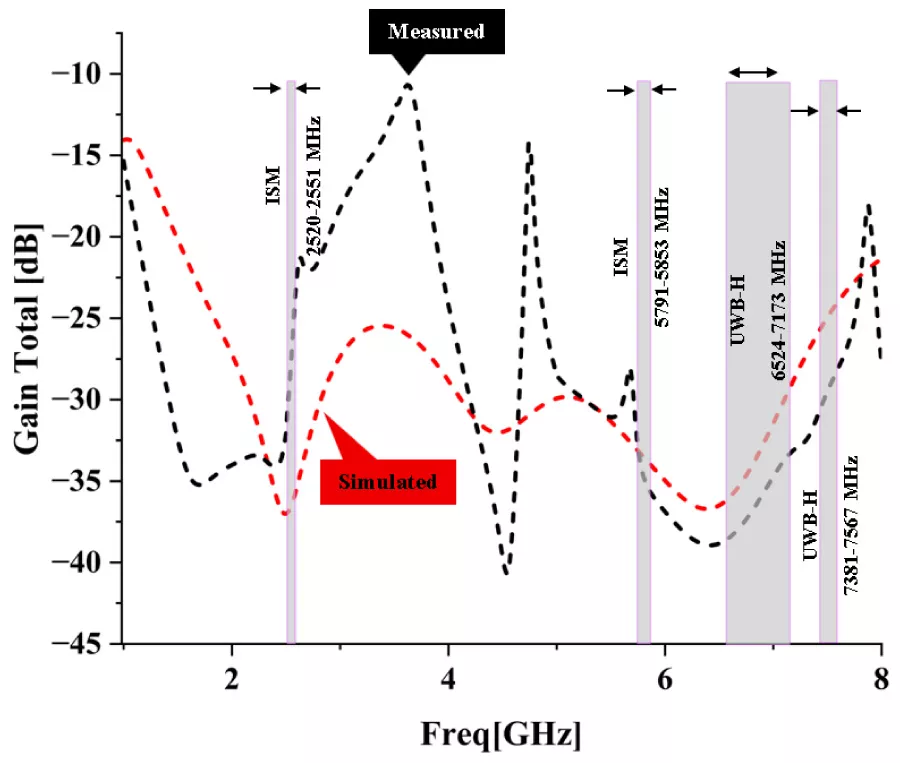
This work presents the design and analysis of an ultra-compact multiband circularly polarised microstrip antenna for next-generation implantable medical device (IMD) applications. The antenna is constructed using a Rogers RT/Duroid 3010 substrate, characterised by a relative permittivity (εr) of 10.1 and a thickness of 0.635 mm. It features ultra-compact dimensions of 15 × 15 × 0.669 mm3. The design allows for multiband operation at frequencies of 2.5 GHz, 5.8 GHz, 6.8 GHz, and 7.5 GHz. This is done by using U-shaped and rectangular slots, circular perturbations, and a modified ground structure. This configuration ensures a reflection coefficient that remains below -10 dB across both the ISM and UWB-H bands. The proposed design achieves a size reduction of approximately 25-40% compared to existing implantable antennas, while accommodating four operating bands, in contrast to conventional single- or dual-band designs. It provides enhanced bandwidth up to 9.54% in the UWB-H region. Circular polarisation is realised at higher frequencies (7.4-7.6 GHz) with an axial ratio below 3 dB, ensuring orientation-independent communication. The gain ranges from -32.2 dB to -23 dB, consistent with implantable antenna performance in lossy tissues. Performance is validated through full-wave simulations and experimental testing using a three-layer (skin-fat-muscle) tissue model. The maximum specific absorption rate (SAR) is 1.489 W/kg, averaged over 1 gram of tissue, at an input power of 1 W, adhering to IEEE safety standards. Overall, this design successfully balances miniaturisation, multiband operation, polarisation performance, and safety, thereby making it suitable for dependable biomedical telemetry applications.
Design of Ultra-compact Multi-band Antennas with Circular Polarization for Next-generation IMD Applications
2026-08-18
PIER C
Vol. 172, 371-378, 2026
download: 42
A Stable Multi-Band Bandpass Negative Group Delay Circuit with Ultra-Low Insertion Loss
Zhiyang Feng, Aixia Yuan, Junzheng Liu, Yuwei Meng and Hongjun Zhang
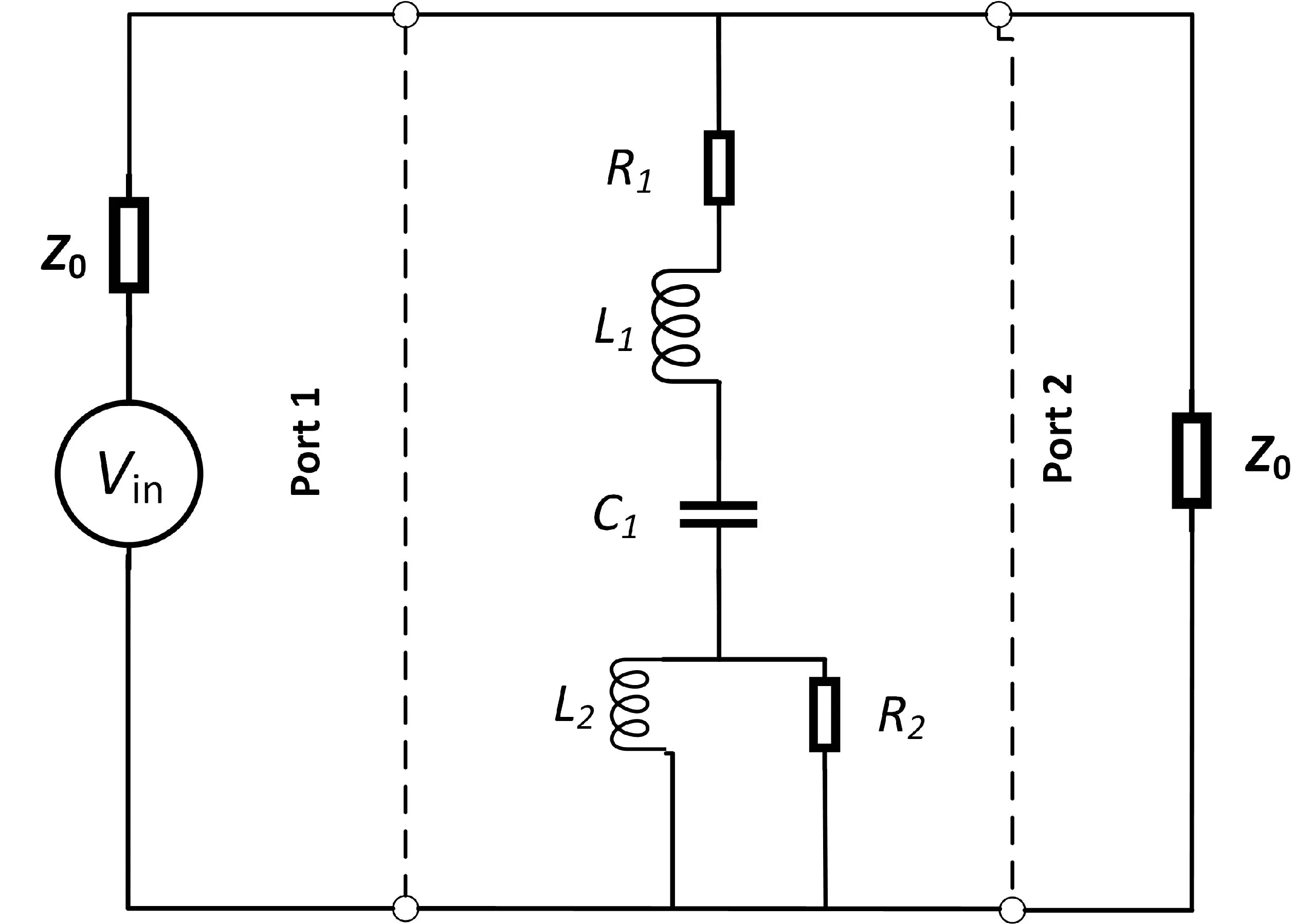
Negative group delay (NGD) circuits are important for signal delay compensation in RF and microwave systems. However, realizing multiple NGD passbands with low insertion loss and compact size remains challenging. This paper proposes a compact lumped-element tri-band bandpass NGD circuit for low-frequency RF applications. The proposed circuit consists of three parallel resonant branches. Theoretical modeling, parameter analysis, circuit simulation, and experimental measurements are carried out to investigate the NGD characteristics. The fabricated prototype exhibits NGD responses at 46 MHz, 90 MHz, and 146 MHz. The measured group delays are -3.35 ns, -2.13 ns, and -1.41 ns, respectively, while the corresponding insertion losses are 1.807 dB, 1.638 dB, and 1.495 dB. The fractional NGD bandwidths reach 36.96%, 18.88%, and 12.90%. The proposed lumped-element topology provides compact size, low insertion loss, and tri-band NGD performance, making it suitable for low-frequency RF delay compensation and multi-band signal-processing applications.
A Stable Multi-Band Bandpass Negative Group Delay Circuit with Ultra-Low Insertion Loss
2026-08-17
PIER C
Vol. 172, 360-370, 2026
download: 96
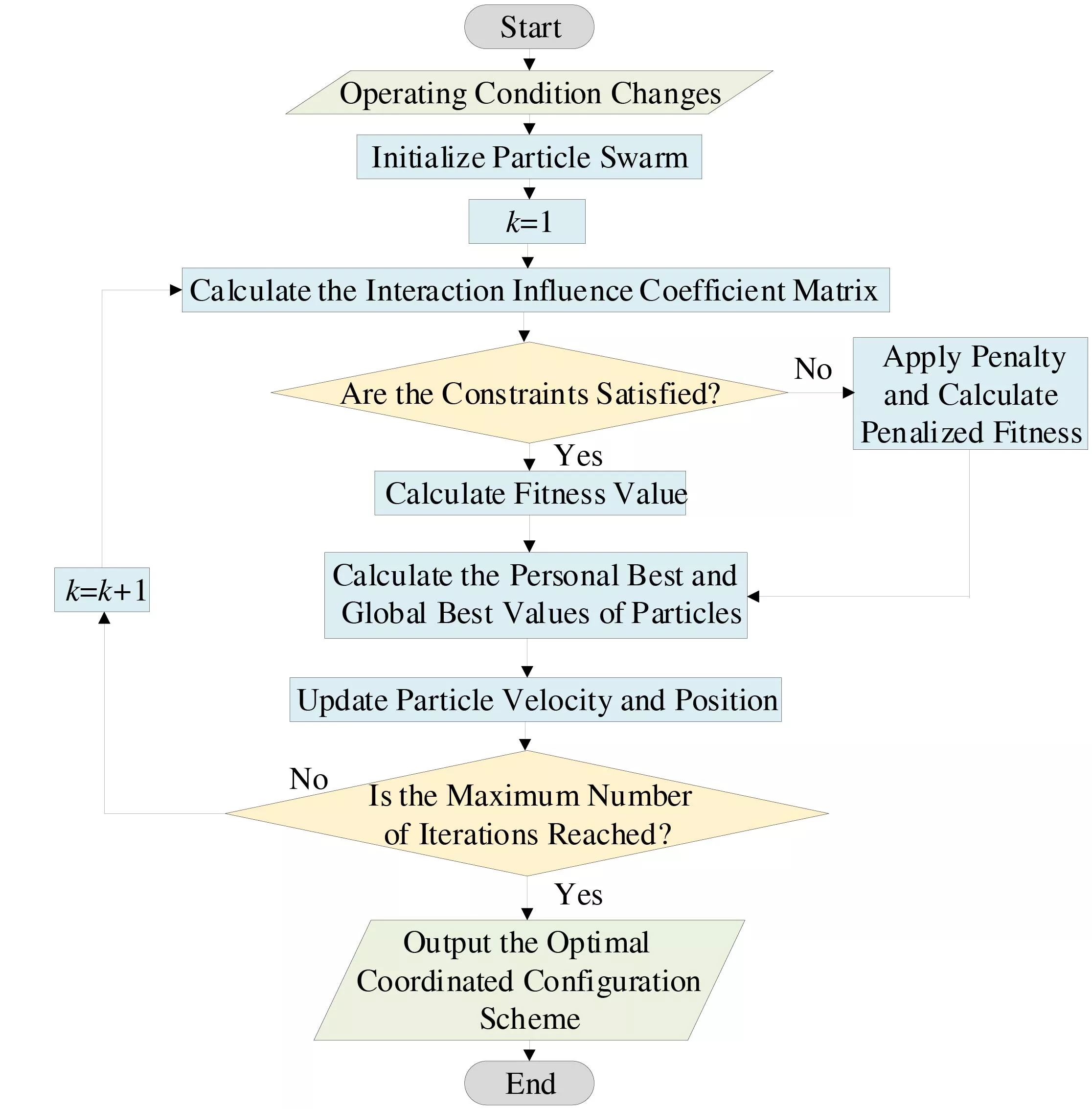
Electromagnetic Performance Optimization of PMSM Based on Improved PSO and Super-Twisting Active Disturbance Rejection Control
Dehai Chen and Ruilong Liu
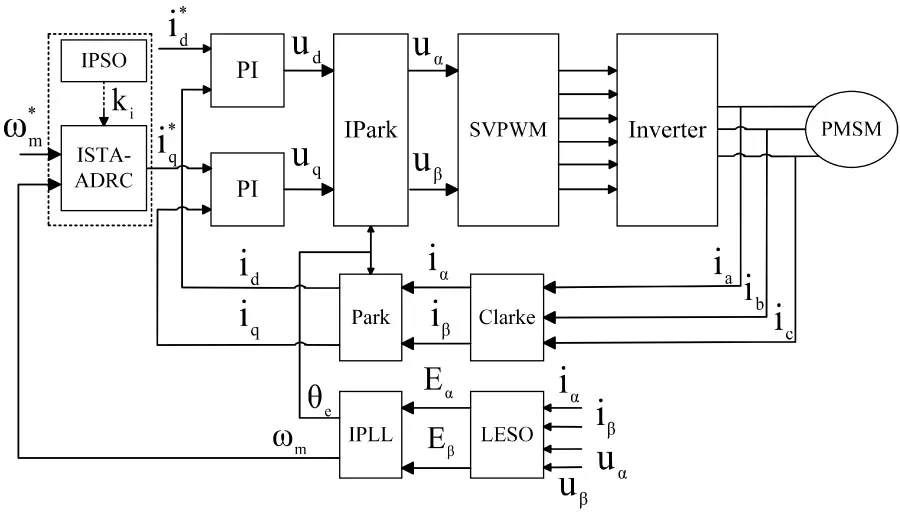
To improve the electromagnetic operating stability and dynamic response of a permanent magnet synchronous motor (PMSM) speed control system under load disturbances and speed variations, an improved particle swarm optimization-based super-twisting active disturbance rejection control (IPSO-ISTA-ADRC) method is proposed. Focusing on the speed control loop, high-order power terms are introduced into the super-twisting control law within the ADRC framework to accelerate error convergence. A dynamic boundary-layer function is employed to smooth the switching terms and reduce chattering. In addition, a sigmoid function is incorporated into the extended state observer to improve disturbance estimation and compensation, while an improved particle swarm optimization algorithm is used to optimize the controller parameters. The proposed method is further applied to a sensorless PMSM speed control system to evaluate its control performance under sensorless operating conditions. Simulation results show that, compared with PI, LADRC, and boundary-layer-based STA-ADRC, the proposed method effectively suppresses speed overshoot and fluctuations and shortens the recovery time under no-load startup, load disturbance, and speed variation conditions, thereby achieving improved disturbance rejection, faster dynamic response, and enhanced robustness.
Electromagnetic Performance Optimization of PMSM Based on Improved PSO and Super-Twisting Active Disturbance Rejection Control
2026-08-17
PIER C
Vol. 172, 350-359, 2026
download: 42
Spaceborne MIMO SAR Maneuvering Target Imaging Based on Joint Radial Acceleration Estimation and Signal Reconstruction
Yingjia Li and Kunyu Gao
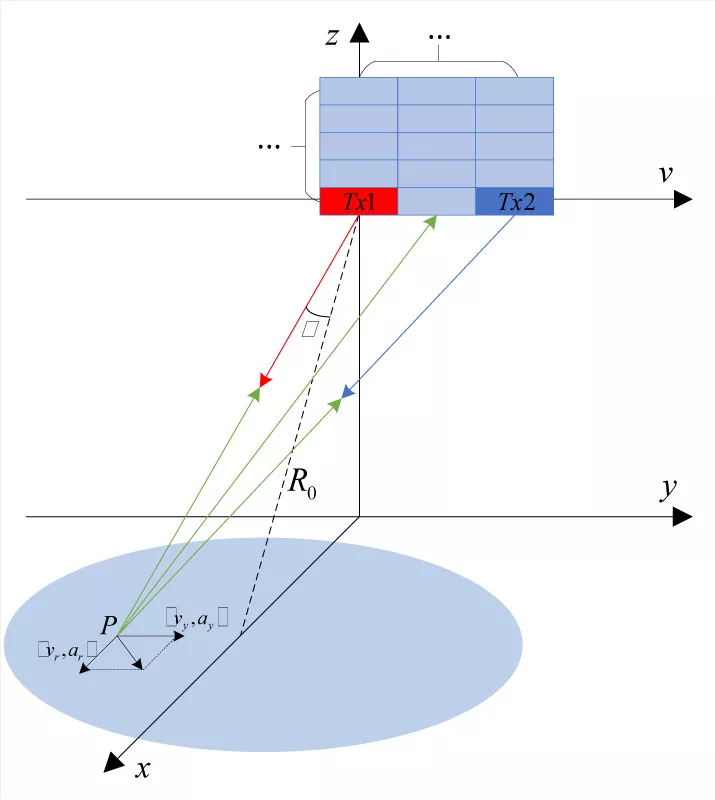
In spaceborne multi-input multi-output synthetic aperture radar (MIMO SAR) ground moving target indication (GMTI), the unknown radial acceleration of a target induces severe Doppler spectral broadening, while mismatched conventional reconstruction filters lead to significant image defocusing. To address these challenges, this paper proposes a novel focused imaging method that seamlessly integrates radial acceleration estimation with reconstruction filter design. This method first adaptively suppresses static background clutter by utilizing the extended multi-channel clutter suppression interferometer (M-CSI) technique. On this basis, the frequency-domain cross-correlation characteristics of time-domain sub-aperture signals recovered via inverse reconstruction filtering are exploited to estimate the target radial acceleration deeply buried in residual clutter. Furthermore, a ratio factor resistant to amplitude interference is constructed to search for the radial velocity. Finally, a reconstruction filter for maneuvering targets is designed using the obtained motion parameters, completing the unambiguous recovery of the original Doppler spectrum and pulse compression focusing. Simulation results demonstrate that the proposed method can estimate the target maneuvering parameters, thereby thoroughly resolving the defocusing and artifact issues.
Spaceborne MIMO SAR Maneuvering Target Imaging Based on Joint Radial Acceleration Estimation and Signal Reconstruction
2026-08-14
PIER C
Vol. 172, 336-349, 2026
download: 71
Compact Self-Decoupled Six-Port MIMO Antenna with High Isolation for 5G mmWave Applications
Malini Soman, Pardeep Kumar, Manish Sharma, Seema and Kishore Ajay Kumar Ayyala
Compact multi-port antennas are essential for future 5G millimetre-wave systems because they support high-speed communication, stable signal quality, and multiple data channels within limited device space. This study presents a compact, planar, six-port MIMO antenna for 38-40 GHz 5G millimetre-wave applications. The antenna is designed on a low-loss Rogers RT5880 substrate with an overall size of 40 × 40 × 0.543 mm3. The design follows an S-parameter-guided approach, beginning with a single radiating element and extending to the final six-port MIMO configuration. The proposed structure maintains a simple planar geometry without using decoupling networks, electromagnetic bandgap cells, frequency-selective surfaces, metasurfaces, dielectric lenses, or external reflectors. Simulated and measured results show good impedance matching across 38-40 GHz, with reflection coefficients below -10 dB and resonance near 39.3-39.5 GHz. Inter-port isolation is mostly better than 20 dB, while the measured gain reaches approximately 8.28 dBi near resonance. The antenna also achieves an extremely low ECC of 5 × 10⁻⁴, a diversity gain close to 10 dB, an acceptable TARC, and a balanced MEG. Such results validate its applicability to compact 5G user equipment, small-cell systems, and high-density wireless platforms.
Compact Self-Decoupled Six-Port MIMO Antenna with High Isolation for 5G mmWave Applications
2026-08-13
PIER C
Vol. 172, 324-335, 2026
download: 73
Effects of Cylindrical and Conical Conformal Bending on a Flexible Cylindrical Dielectric Resonator Antenna for X-Band Applications
Amera Anjum and Jagadish Chandra Mudiganti
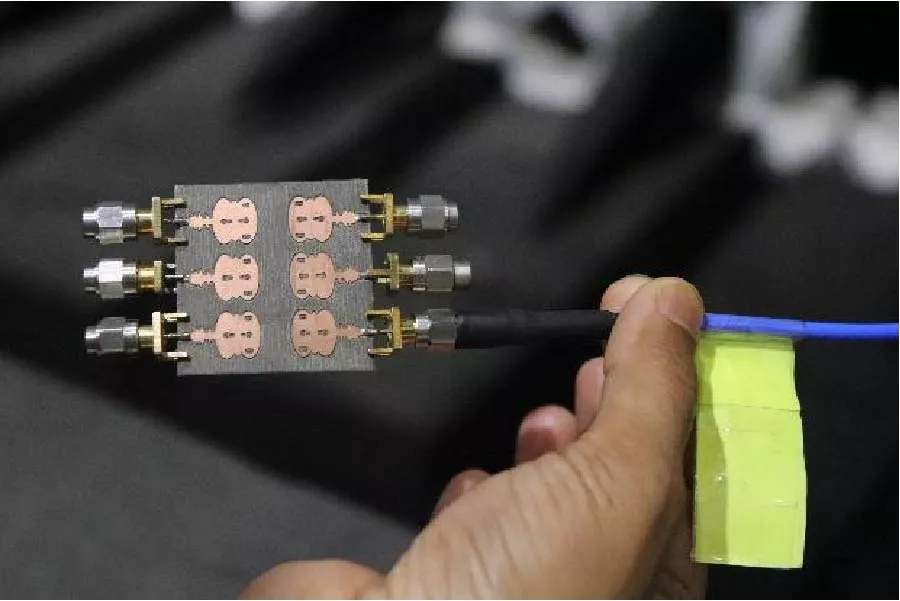
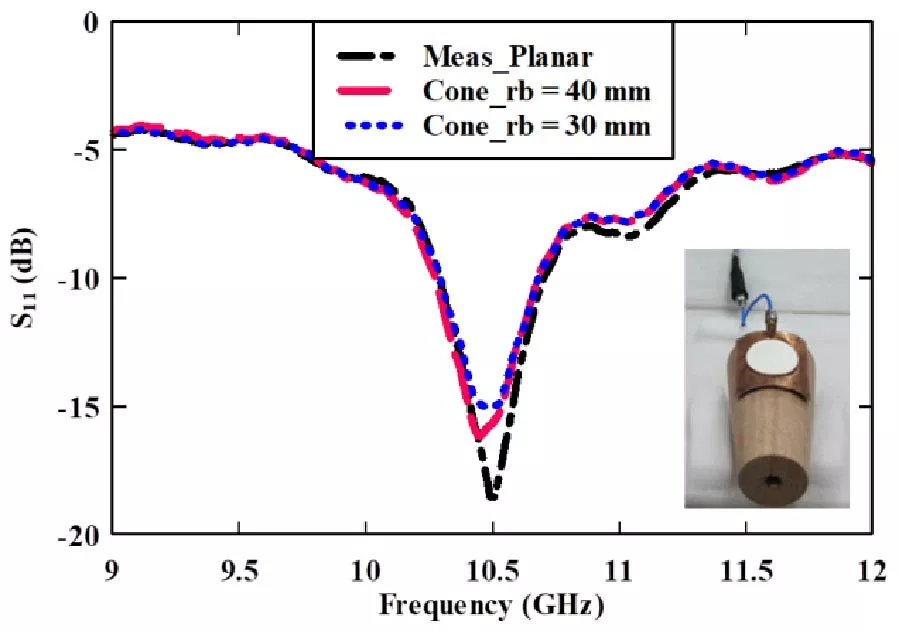
Growing demand for conformal, on-body communication systems has driven the development of compact, mechanically flexible, and conformal antennas. However, the reported literature on flexible dielectric resonator antennas with systematic conformal analysis is limited. This research gap has motivated the present investigations. The study aims to assess the comprehensive conformal analysis of a flexible cylindrical dielectric resonator antenna (CDRA) designed for X-band (operating near 10 GHz). The proposed antenna is bent over cylindrical and conical surfaces with radii of 40 mm and 30 mm, respectively. The conformal configurations are analyzed to evaluate performance and subsequently validated through experiments. The planar antenna resonates at 10.5 GHz, with a measured gain of approximately 5.2 dBi and a bandwidth of 450 MHz (10.27-10.72 GHz). The simulated results showed a downward frequency shift for both cylindrical and conical bending environments compared to the planar configuration. At the same time, the prototype measurements demonstrated an upward shift in the frequency of cylindrical bending of the antenna with increasing curvature, due to material-dependent properties. In contrast, the antenna undergoes non-uniform geometric deformation and strain-dependent permittivity behavior during conical bending. This leads to a downward shift in frequency and significant variations in radiation characteristics. Despite deformations, a stable broadside radiation performance and practically viable gain levels were achieved, with an overall bandwidth of 10.26-11.2 GHz. In addition, a specific absorption rate (SAR) analysis confirms the antenna's compliance with general public exposure safety limits, with a maximum SAR peak of 1.26 W/kg for 10 g averaged mass, in accordance with safety standards. The conformal analyses, along with the SAR validation for compact (less than 2 mm) and fully flexible CDRA, substantiate the novelty of the present study. Hence, the proposed antenna maintains a reliable performance under various bending conditions, highlighting its suitability for flexible, conformal, and wearable X-band applications.
Effects of Cylindrical and Conical Conformal Bending on a Flexible Cylindrical Dielectric Resonator Antenna for X-band Applications
2026-08-12
PIER C
Vol. 172, 312-323, 2026
download: 83
A Dual Broadband Eight-Element MIMO Antenna with R-Shaped Slot Loaded Patch and Grid-Shaped Modified Ground Plane for Sub-6 GHz 5G Applications
Sunera G. Kargathara, Shobhitkumar Kiritkumar Patel and Sudipta Das
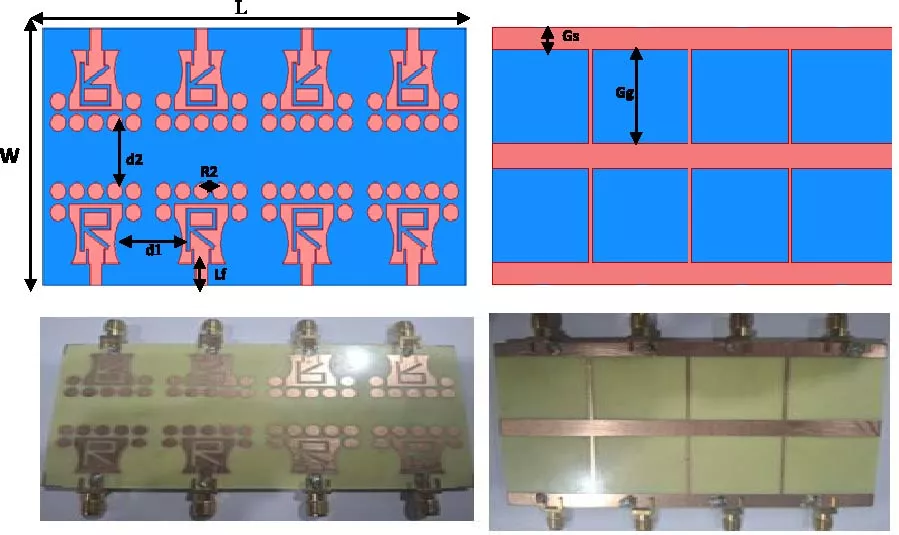
A miniature-sized dual-broadband eight-element Multiple-Input Multiple-Output (MIMO) antenna with R-shaped radiators in the sub-6 GHz band for 5G applications is presented in this research article. The proposed novel MIMO configuration includes 4 × 2 antennas mounted on a 60 × 112 mm2 substrate with each radiator measuring 28 × 28 mm2. Modified Ground Structure (MGS) is employed to enhance impedance matching and reduce the effect of electromagnetic interaction between closely placed radiators. The MGS and optimal R-shape design enable this MIMO antenna to work at dual frequencies. Two resonances at frequencies of 1.8 GHz (1.67-2.03 GHz) and 4.4 GHz (4.15-4.75 GHz) are observed in both simulations and measurements, and the maximum reflection coefficient is recorded at -28 dB, which implies that excellent impedance matching is achieved for the designed eight-port radiator. This antenna design offers isolation better than 15 dB in both operating frequency bands (1.67-2.03 GHz and 4.15-4.75 GHz), with a maximum isolation of about 40 dB at certain frequencies. Moreover, it is found that the proposed antenna has good diversity parameters with Envelope Correlation Coefficient (ECC) less than 0.01 and Diversity Gain (DG) around 10 dB. The results show that this novel antenna is capable of providing a suitable balance among small size, strong isolation, stability of radiation, and enhanced diversity performance, thereby becoming an excellent choice for sub-6 GHz 4G/LTE cellular communications and 5G applications.
A Dual Broadband Eight-Element MIMO Antenna with R-Shaped Slot Loaded Patch and Grid-Shaped Modified Ground Plane for Sub-6 GHz 5G Applications
2026-08-11
PIER C
Vol. 172, 301-311, 2026
download: 64
An Eight-Port MIMO Antenna with Broadband Self-Decoupling for 5G Applications
Xinxin Wang, Zhonggen Wang, Wenyan Nie, Shunqi Liu and Quan Sun
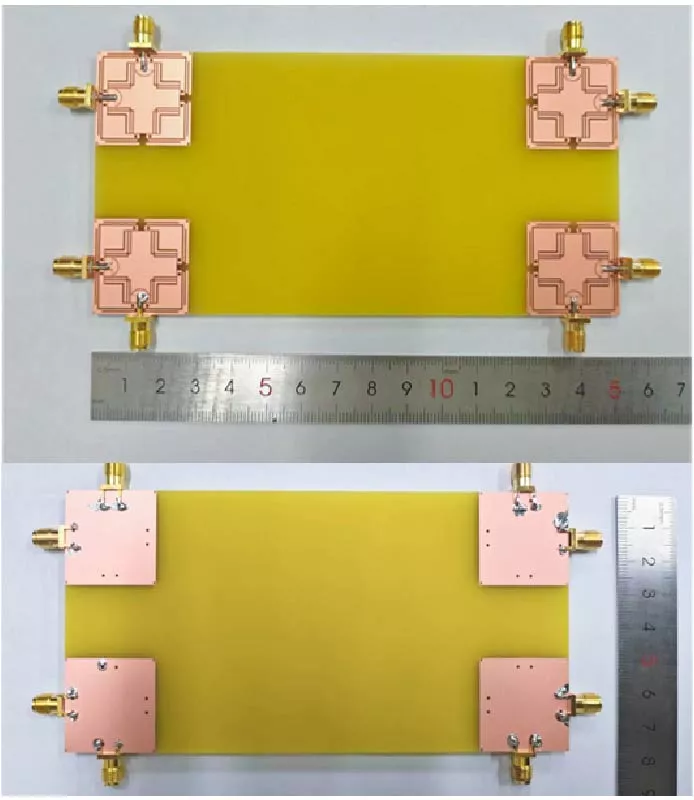
This paper proposes a polarization-orthogonal self-decoupling wideband shared-radiator Multiple-Input Multiple-Output (MIMO) antenna for 5G mobile terminals. The antenna is fabricated on an FR4 dielectric substrate with a relative permittivity of 4.4 and a loss tangent of 0.02, and integrates a cross-shaped radiation patch, L-shaped slots and metallized shorting vias into a 27 mm × 27 mm standard-sized substrate, and generates polarization-orthogonal modes through dual-port excitation, with an electrical size of 0.35λ0 × 0.35λ0 × 0.021λ0 at the center frequency of 3.9 GHz, which effectively suppresses the mutual coupling between ports. To fully demonstrate the wideband characteristics and self-decoupling advantages of this shared radiator, four identical antenna element pairs are arranged at the four corners of the smartphone rear cover, constructing an 8×8 MIMO antenna system operating in the 3.5-4.3 GHz frequency band. Simulated and measured results show that the proposed 8 × 8 MIMO system achieves an isolation better than 15 dB and an envelope correlation coefficient (ECC) less than 0.06. Featuring wideband operation and a passive self-decoupling structure, this antenna provides a promising design solution for 5G smartphone antennas.
An Eight-Port MIMO Antenna with Broadband Self-Decoupling for 5G Applications
2026-08-12
PIER C
Vol. 172, 286-300, 2026
download: 78
Comparative Performance Evaluation of OOK, DPSK, and Optical OFDM in an EDFA-Assisted 8-Channel WDM-FSO System
Tejas Patel, Shailesh Khant and Atul Patel
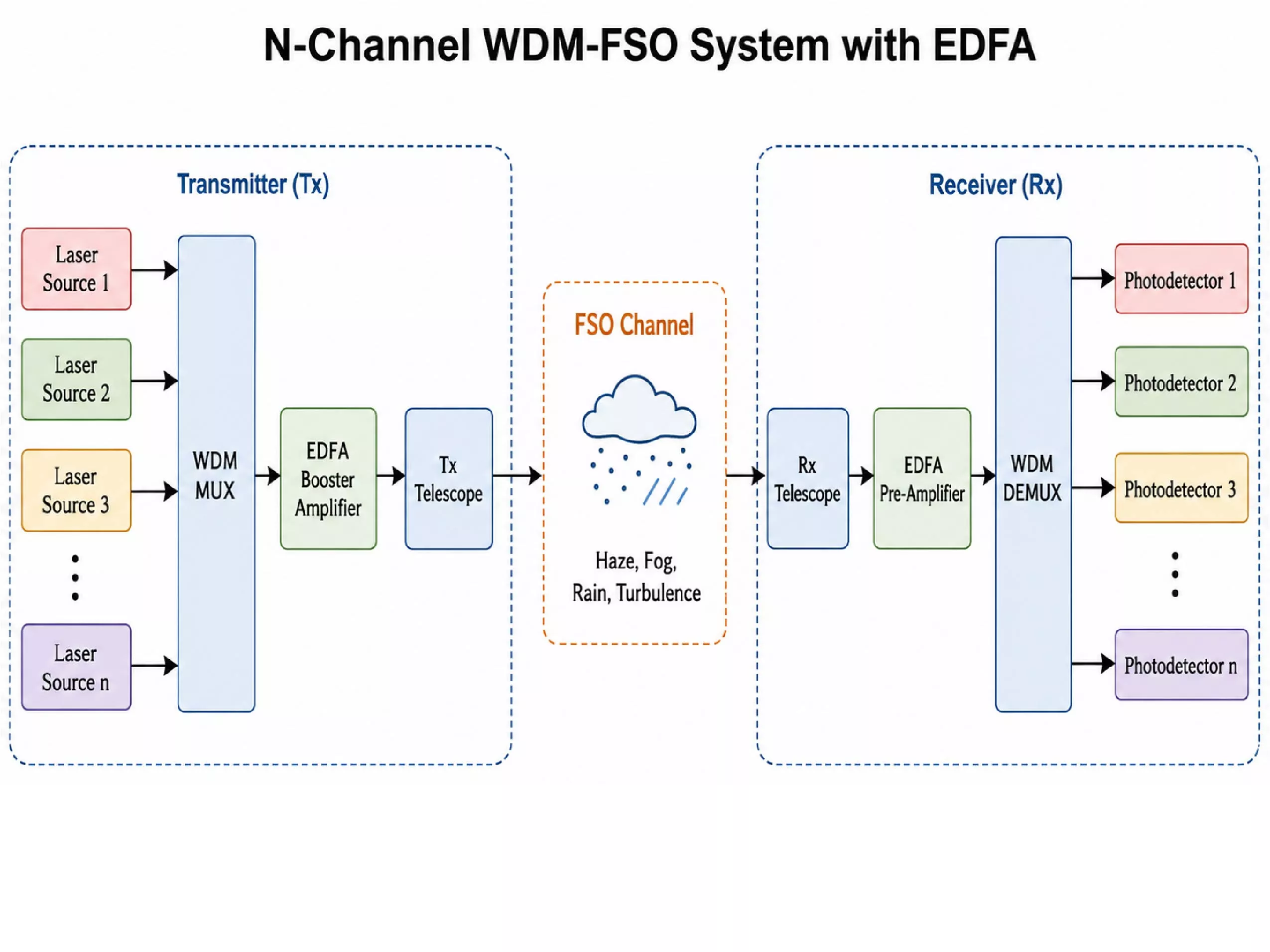
Free Space Optical (FSO) communication is a high-capacity optical wireless technology for terrestrial backhaul, interbuilding connectivity, and rapidly deployable networks, but fog attenuation, turbulence, and beam-divergence-induced spreading degrade link reliability. This paper evaluates an impairment-aware erbium-doped fiber amplifier (EDFA)-assisted 8-channel, wavelength division multiplexing free-space optical (WDM-FSO) system using On-Off Keying (OOK), Differential Phase Shift Keying (DPSK), and Optical Orthogonal Frequency Division Multiplexing (Optical OFDM). The system uses eight C-band wavelengths from 1552 nm to 1566 nm with 2 nm spacing, each carrying 10 Gbps, and employs a fixed 20 dB EDFA gain for attenuation compensation. Beer-Lambert propagation loss, the Kim visibility-based fog model, log-normal and Gamma-Gamma turbulence models, beam-divergence-induced geometric spreading, WDM filter isolation, laser launch-power fluctuation, and receiver-side DSP-assisted normalization are considered. RSoft OptSim simulations are performed over 1-8 km link distances and 50-500 m visibility. Performance is evaluated using bit error rate (BER), Q-factor, and signal-to-noise ratio (SNR). Under the specified simulation assumptions, Optical OFDM achieves the best performance among the compared schemes, with 1.0 × 10⁻⁹ BER at 10 Gbps and 1.2 × 10⁻⁶ BER, 4.72 Q-factor, and 17.0 dB SNR at 8 km.
Comparative Performance Evaluation of OOK, DPSK, and Optical OFDM in an EDFA-Assisted 8-Channel WDM-FSO System
2026-08-11
PIER C
Vol. 172, 275-285, 2026
download: 51
Accounting for a Single Reflected Path in Antenna Array Field Focusing
Denis Iuzvik and Maksim Stepanov
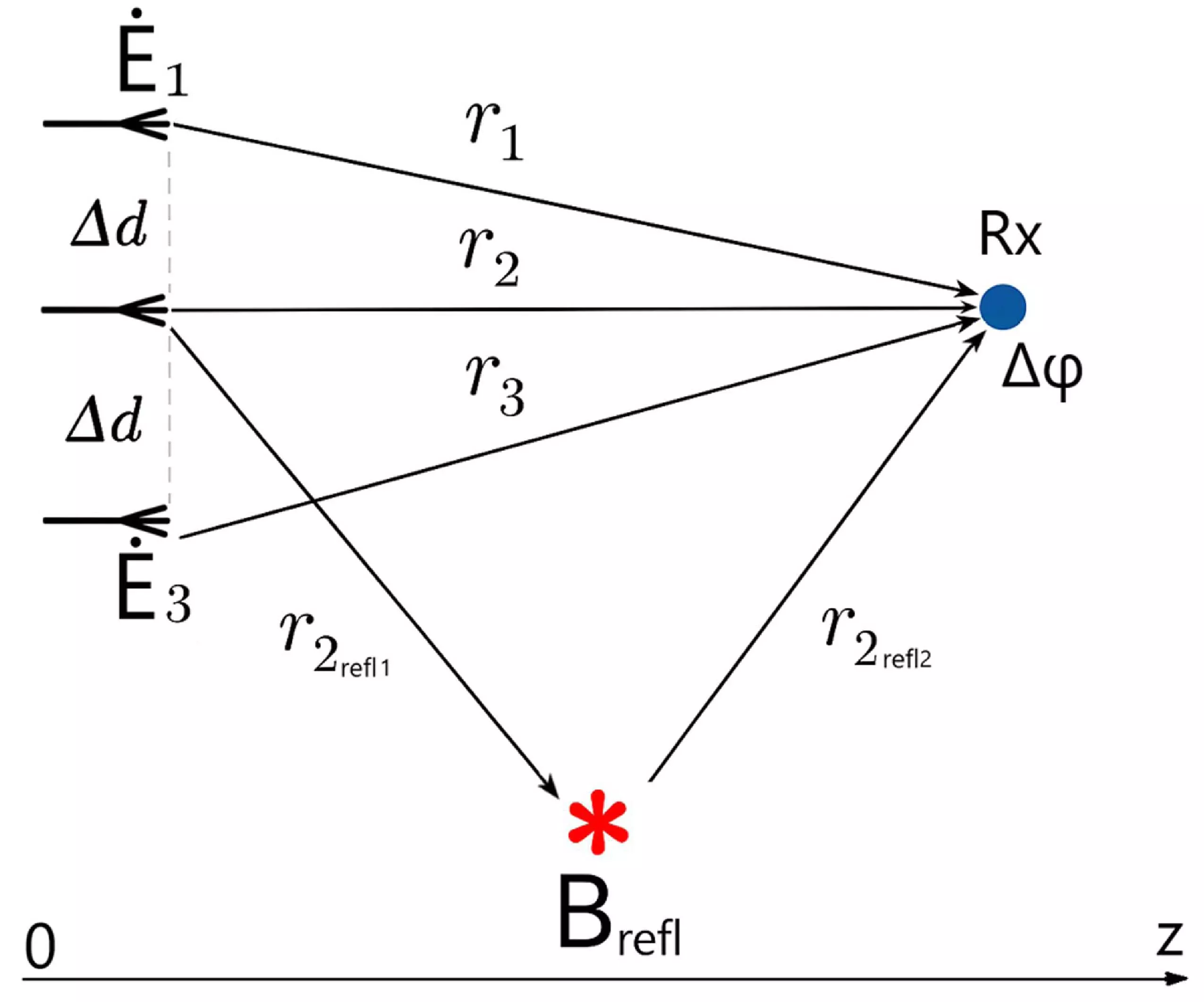
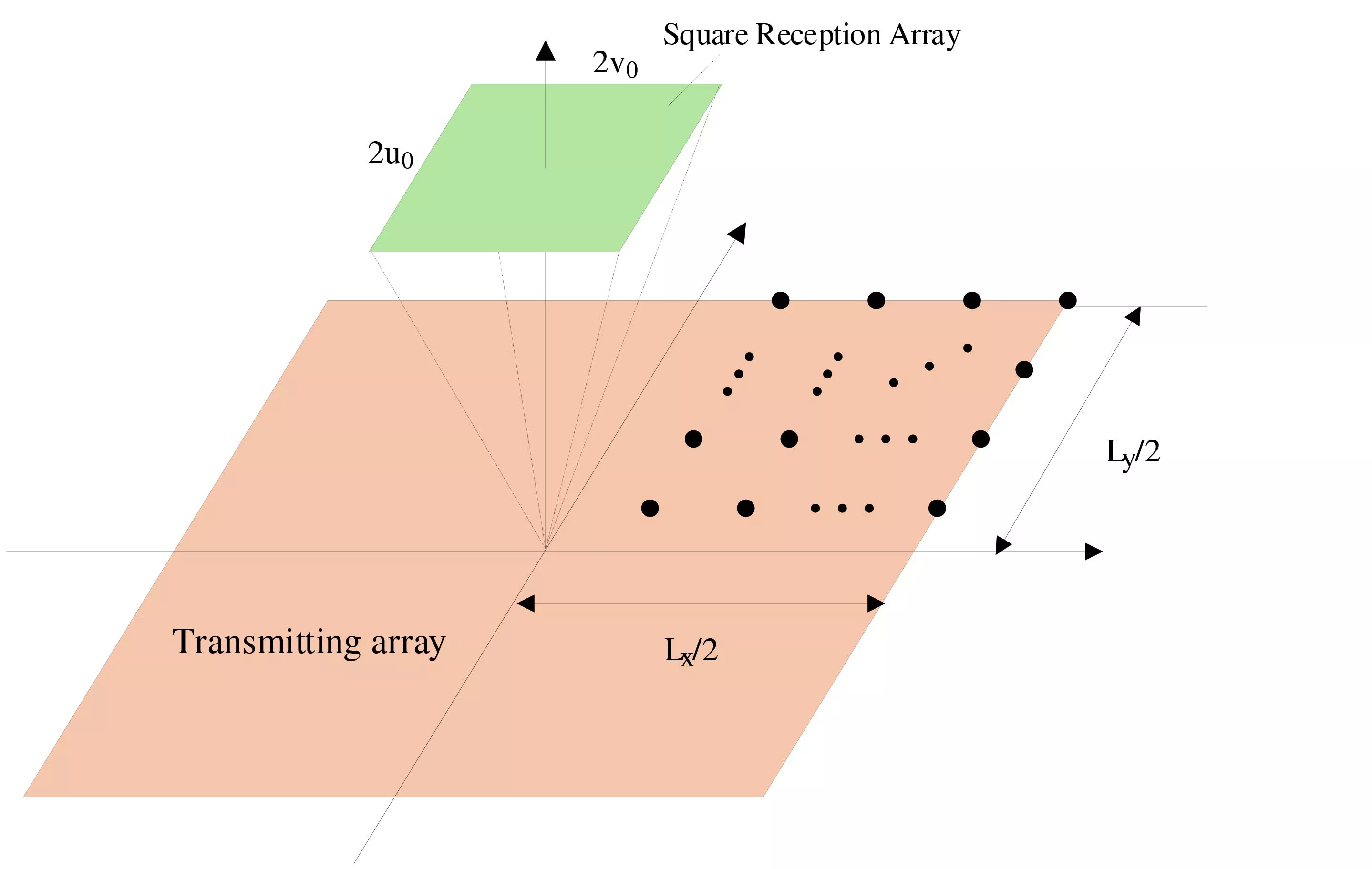
A low-complexity first-order model was developed and verified to account for a single reflected propagation path in the complex transmission-coefficient matrix used for electromagnetic-field focusing by an antenna array. Electrodynamic and mathematical modeling was performed for a system comprising a transmitter, a receiving point, and an ideal specular reflector represented as a scattering point. The reflected-path contribution was incorporated directly into the transmission coefficients used to calculate the complex excitations of antenna-array radiators. The approach was evaluated using a three-element antenna array by comparing field focusing without a reflector, with an uncompensated reflector, and with reflector-aware excitation parameters. Changes in reflector position altered phase difference between direct and reflected waves, resulting in constructive or destructive interference at the receiving point. Taking the reflected path into account modified the calculated amplitudes and initial phases of the array excitations and partially compensated for reflector-induced field distortion. In the considered case, the normalized field amplitude after compensation differed by approximately 3% from the no-reflector case and increased by about 49% relative to the uncompensated case. The mathematical and electrodynamic results were in qualitative agreement. These findings demonstrate that including a reflected path in a transmission-coefficient matrix can improve near-field focusing accuracy in the presence of a reflector.
Accounting for a Single Reflected Path in Antenna Array Field Focusing
2026-08-11
PIER C
Vol. 172, 262-274, 2026
download: 78
Advanced Computational Framework for Terahertz Inverse Imaging in Stratified Biomedical Media: A Physics-Informed FDTD Model with Dielectric Gradient Reconstruction
Khushi D. Thakkar, Rizwan Habibbhai Alad and Purvang D. Dalal
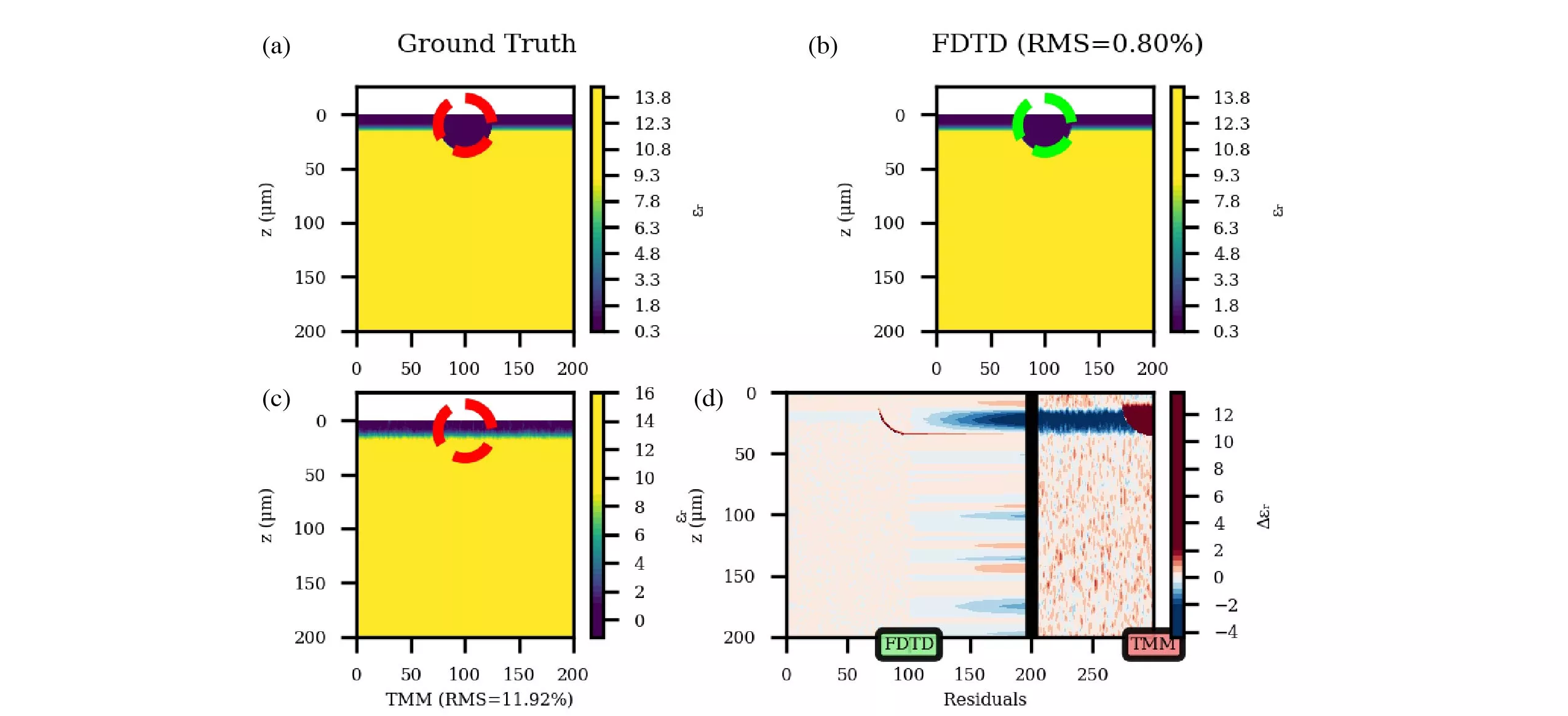
Terahertz Time-Domain Spectroscopy (THz-TDS) enables noninvasive skin hydration monitoring, but existing techniques rely on one-dimensional fitting, which cannot resolve lateral heterogeneity. This paper presents a physics-informed twodimensional finite-difference time-domain (2D-FDTD) forward modeling framework coupled with an adjoint-based optimization algorithm to reconstruct spatially resolved permittivity maps of hydrated skin. The forward model employs a Dual-Debye dielectric dispersion formulation with relaxation times τ1 = 8.3 ps (free water) and τ2 = 0.3 ps (bound water), capturing the frequency-dependent response in the range εr = 6.34-8.71 corresponding to physiological hydration fractions φ = 0.20-0.70. An adjointbased gradient descent algorithm with total variation (TV) regularization recovers the 2D permittivity distribution from reflected THz-TDS signals, achieving 0.03% root-mean-square (RMS) reconstruction error at the 30th iteration. Frequencydomain decomposition of the absorption coefficient is validated against synthetic hydrogel phantom data, confirming that bound water contributes 82 ± 4% of total absorption at 0.5 THz. The framework distinguishes healthy skin, psoriasis, and chronic wound edema with p < 10-17 statistical significance. To the best of the authors' knowledge, this constitutes an early demonstration of a 2D physics-informed inverse imaging framework demonstrated on both depth-resolved gradient phantoms and laterally heterogeneous pore phantoms of the 6-9 permittivity band with sub-percent accuracy in the THz biomedical domain; experimental validation of in-vivo tissue remains a critical next step.
Advanced Computational Framework for Terahertz Inverse Imaging in Stratified Biomedical Media: A  Physics-Informed FDTD Model with Dielectric Gradient Reconstruction
2026-08-10
PIER C
Vol. 172, 252-261, 2026
download: 58
Design and Characteristic Analysis of Radial Four-Pole Three-Degree-of-Freedom Hybrid Magnetic Bearing with Axial Auxiliary Electric Excitation
Xiaoting Ye, Xianhai Yu, Zirui Chen and Tao Zhang
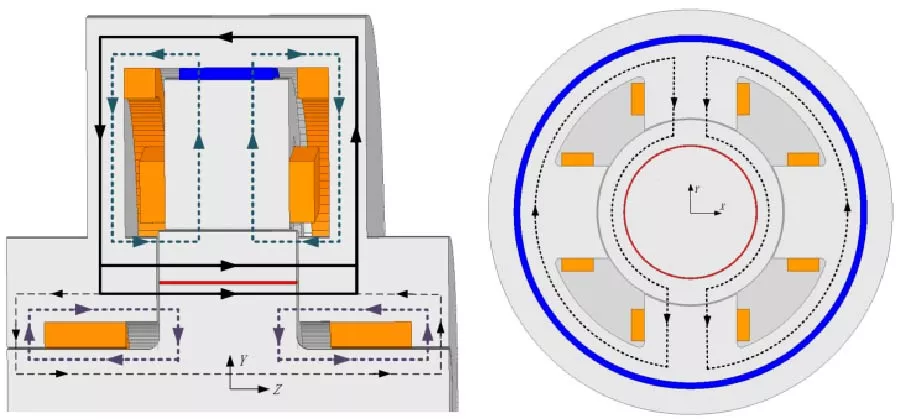
This study presents a novel three-degree-of-freedom (3-DOF) axial-enhanced hybrid magnetic bearing (AEHMB), which introduces an axial auxiliary electric excitation to break the inherent proportional constraint between radial and axial maximum suspension forces in conventional 3-DOF HMBs. This configuration enables independent design of radial and axial bearing performance, satisfying diverse application demands of transmission systems while effectively enhancing the axial load-bearing capability. This study first elaborates the structural topology of the proposed 3-DOF AEHMB, along with its primary bias magnetic circuit and axial compensation bias magnetic circuit. Mathematical models for the axial and radial suspension forces are subsequently established based on equivalent magnetic circuit analysis. Based on the maximum design requirements of the radial and axial suspension forces, key structural parameters were optimized and determined. Finally, the finite element method was adopted to validate the rationality of the magnetic circuit configuration and suspension working mechanism through systematic calculations of the air-gap bias flux density, control flux density, force-current characteristics, and force-displacement characteristics. Simulation results verified the feasibility of the proposed structure, accuracy of the magnetic circuit design method and mathematical models, and reliability of the overall design scheme for the 3-DOF AEHMB.
Design and Characteristic Analysis of Radial Four-Pole Three-Degree-of-Freedom Hybrid Magnetic Bearing with Axial Auxiliary Electric Excitation
2026-08-10
PIER C
Vol. 172, 242-251, 2026
download: 67
Design of an Ultra-Wideband LDMOS High-Efficiency Power Amplifier with Integrated Filtering Matching
Wenjin Liu, Jiawei Wang, Jingchang Nan, Tianyi Li, Bo Li and Jesur Turxun
The rapid evolution of wireless communication networks is driving the rapid development of communication systems toward greater integration, wider bandwidth, and higher efficiency. To satisfy the design requirements of broadband, high-efficiency power amplifiers, this study proposes an implementation scheme that integrates filtering, matching, and harmonic-control technologies. In this innovative method, high-order matching networks are converted into low-order passive networks that integrate the parasitic output capacitance and package inductance of transistors, thereby achieving a more compact area. In addition, a dual-stub microstrip line cascaded topology is introduced to suppress the second harmonic. The test results demonstrate that the power amplifier achieves a gain of more than 16.5 dB in the 100-900 MHz frequency band, maintains a drain efficiency of over 55%, with a peak drain efficiency of up to 75% under saturated operation, delivers a saturated output power of 40.5-42 dBm, achieves a second harmonic suppression of up to 61 dBc, and has a relative bandwidth of 160%. This design realizes high-efficiency power transmission performance and demonstrates excellent potential for engineering applications in communication systems.
Design of an Ultra-Wideband LDMOS High-Efficiency Power Amplifier with Integrated Filtering Matching
2026-08-10
PIER C
Vol. 172, 231-241, 2026
download: 71
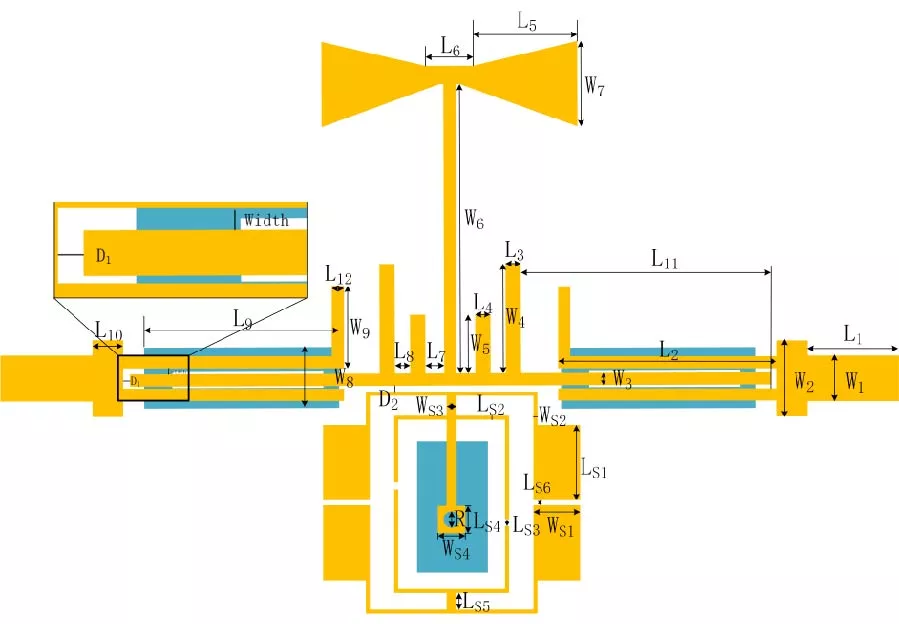
A Quad-Notch Ultra-Wideband Filter Based on a Bowtie T-Shaped Resonator
Mingming Gao, Ke Li and Maoyuan Wei
To suppress multiple narrowband interferences in ultra-wideband (UWB) communication systems while maintaining a compact size and wide passband response, a quad-notch ultra-wideband filter based on a bowtie T-shaped resonator is proposed and investigated. The proposed filter employs an improved stepped-impedance resonator (SIR) with multi-branch loading and an annular defected ground structure (DGS) to enhance bandwidth extension, passband flatness, and frequency selectivity. A novel quasi-closed-loop C-shaped resonator with an additional coupling path is introduced to generate an extra controllable resonant mode, providing enhanced flexibility for independent notch-band tuning. Combined with an asymmetric open-circuited branch, four independently adjustable notch bands are achieved within the UWB passband. The resonance characteristics of the proposed multimode structure are analyzed using even-odd mode theory, providing an effective approach for mode-frequency control. Experimental results demonstrate that the fabricated filter achieves a wide passband from 2.71 to 11.5 GHz with a fractional bandwidth of 124%, along with four sharp rejection bands centered at 5.91, 6.75, 7.29, and 8.08 GHz. The maximum attenuation reaches 34.55 dB, while the filter maintains a compact size of 23 mm × 29.74 mm with excellent passband flatness and out-of-band suppression. The proposed quad-notch UWB filter provides an effective solution for interference-resistant wireless communication systems.
A Quad-Notch Ultra-Wideband Filter Based on a Bowtie T-Shaped Resonator
2026-08-09
PIER C
Vol. 172, 223-230, 2026
download: 65
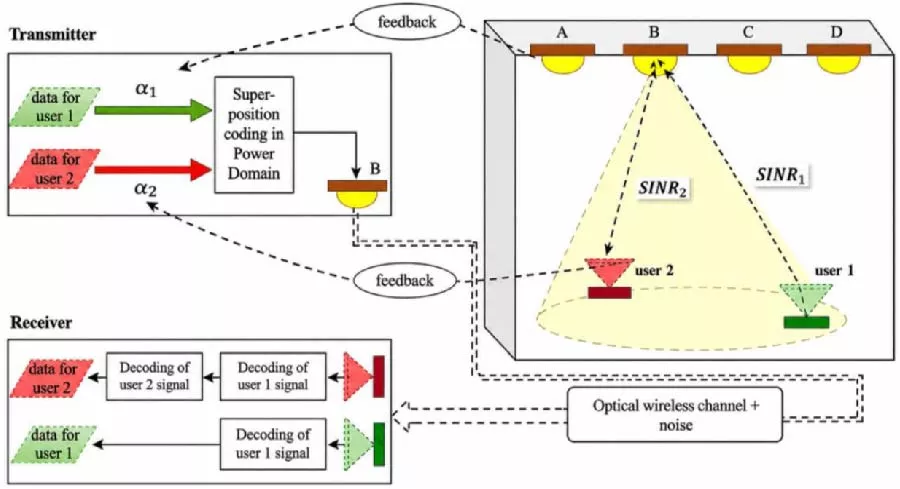
Capacity Improvement in Indoor VLC-NOMA Networks
Abdullah Hasan Chilmeran and Safwan Hafeedh Younus
Visible Light Communication (VLC) combined with Non-Orthogonal Multiple Access (NOMA) is a promising technology for meeting the high-capacity demands of future 6G indoor networks. Most existing VLC-NOMA user pairing schemes rely solely on the direct-link channel gain for user ordering and ignore wall reflections that introduce spatially nonuniform interference, thereby degrading successive interference cancellation (SIC) performance. To overcome these limitations, a user ranking based on the user's effective signal-to-interference-plus-noise ratio (SINR) from both direct and indirect links is proposed, and users are paired into independent pairs with balanced SINR separation through a SINR-based user pairing framework. The proposed framework reduces interference accumulation by isolating users into independent NOMA pairs, thereby improving scalability and throughput. The results of the MATLAB simulation demonstrate that the proposed scheme achieves a throughput of 710 Mbps for eight users, which is 274% higher than the 190 Mbps achieved by conventional NOMA. The proposed framework achieves 320 Mbps under imperfect SIC conditions, whereas conventional NOMA achieves 74 Mbps, demonstrating the robustness of the proposed framework under practical receiver impairments.
Capacity Improvement in Indoor VLC-NOMA Networks
2026-08-08
PIER C
Vol. 172, 215-222, 2026
download: 175
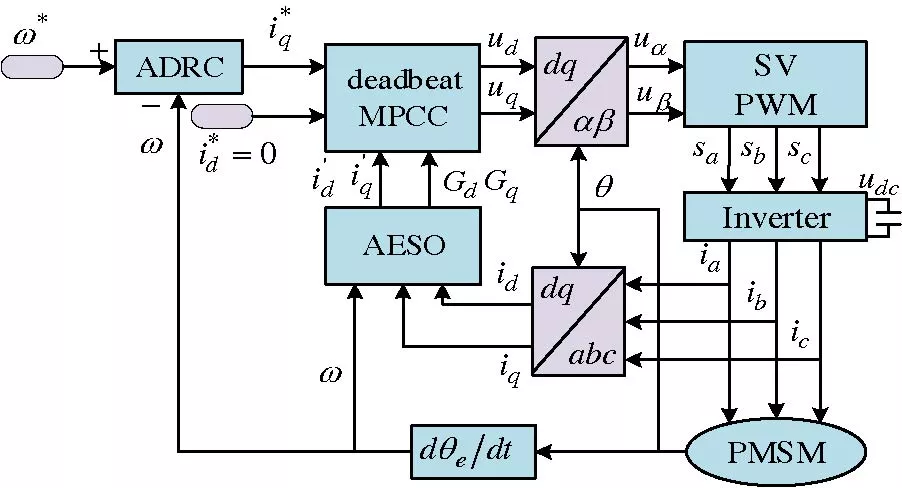
Disturbance Observer-Based Deadbeat Model Predictive Current Control for Permanent Magnet Synchronous Motor
Qing Lu, Linfeng Lv, Wan Chen and Tao Zhang
To address the issues of weak disturbance-rejection capability and poor parameter robustness in traditional model predictive control, a deadbeat model predictive current-control strategy with an improved disturbance observer is proposed. First, an active disturbance rejec-tion controller is designed to replace the PI control, achieving both fast response and overshoot-free per-formance during speed tracking. Then, the influence of parameter disturbances on motor control performance in conventional model predictive control is analyzed, and a disturbance observer with adaptively adjustable gain is designed. The parameter mismatch disturbances can be compensated. Therefore, the current ripple can be significantly suppressed,and the robustness of the system parameters can be enhanced. Finally, the performance of the proposed method was demonstrated through simulations and experiments.
Disturbance Observer-based Deadbeat Model Predictive Current Control for Permanent Magnet Synchronous Motor
2026-08-08
PIER C
Vol. 172, 206-214, 2026
download: 56
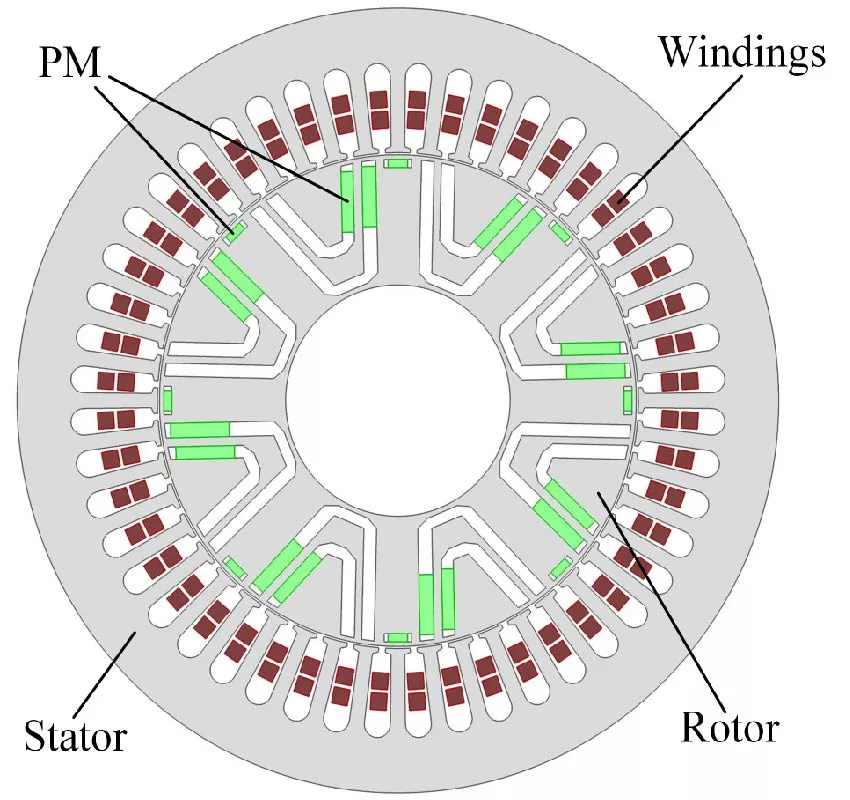
Torque Enhancement of Ferrite PM-Assisted Synchronous Reluctance Motor with Asymmetric Flux Barriers Based on Flux Linkage Phase Shift
Chaozhi Huang, Fangrong Wang, Wen Kuang and Long Chen
In conventional permanent magnet-assisted synchronous reluctance motors (PMaSynRMs), the peak current angles of permanent magnet (PM) and reluctance torques are theoretically separated by 45 electrical degrees, which prevents full superposition of the two torque components and limits torque density improvement. This paper proposes a novel asymmetric rotor topology based on the principle of magnetic flux linkage phase-shifting (MFS). The proposed topology reconfigures the rotor magnetic circuit by shifting a bar-shaped PM to the junction center between two adjacent reluctance segments and removing the PMs on one side of the U-shaped flux barriers (so that magnets are only placed on one side of the pole). This forces a controllable shift of the effective electromagnetic d-axis. A unified torque mathematical model incorporating the current angle β and the magnetic axis shift angle γ is established, revealing the regulation mechanism of flux linkage phase shift on the phase characteristics of torque components. Taking a 4 kW, 8-pole ferrite PMaSynRM as the research object, a multi-objective optimization is carried out using the Kriging surrogate model and the Non-dominated Sorting Genetic Algorithm III (NSGA-III). Finite element simulation results show that the effective d-axis of the optimized motor shifts by 45 electrical degrees, achieving nearly full peak alignment of PM torque and reluctance torque at the same current angle. With a 7.8% reduction in ferrite PM usage, the utilized PM torque increases from 13.88 N·m to 16.82 N·m (an increase of 21.2%); the total output torque rises from 38.67 N·m to 40.32 N·m (an increase of 4.27%); torque ripple decreases from 9.15% to 6.09%; and efficiency remains stable. Furthermore, under a direct-axis demagnetization condition with twice the rated current, the proposed asymmetric topology exhibits no local demagnetization, demonstrating better demagnetization resistance than the conventional symmetric motor. This study provides an effective approach for high torque density design of low-cost ferrite electric drive systems.
Torque Enhancement of Ferrite PM-Assisted Synchronous Reluctance Motor with Asymmetric Flux Barriers Based on Flux Linkage Phase Shift
2026-08-05
PIER C
Vol. 172, 195-205, 2026
download: 88
Compact Dual-Port MIMO Microstrip Patch Antenna with SRR Superstrate and Hybrid Defected Ground Structure for Multiband C/X-Band Applications
Arun Raj Velraj, Benny Hinn Margoschis Johnson and Merlise Rajan
This paper presents the design, simulation, fabrication, and comprehensive measurement of a compact dual-port multiple-input multiple-output (MIMO) microstrip patch antenna integrating a split-ring resonator (SRR) superstrate with a hybrid defected ground structure (DGS) for multiband C/X-band satellite uplink and radar applications. The antenna is implemented on an FR-4 substrate (εr = 4.4, tanδ = 0.02, h = 1.6 mm) with a compact footprint of 40 × 40 mm2. A 10 × 8 array of SRR unit cells positioned at 7 mm air gap above the radiating patches serves as a periodic frequency-selective superstrate to enhance gain via Fabry-Perot cavity resonance and suppress surface waves. Hybrid H-shaped and dumbbell-shaped DGS slots etched on the ground plane provide high isolation between ports by disrupting ground current paths and introducing bandstop characteristics. The simulated antenna resonates at 7.20, 8.62, and 10.66 GHz with return loss below -10 dB and isolation better than -15 dB in the operating bands. The fabricated prototype was tested using a vector network analyzer, and the measured $S$-parameters show good agreement with the simulations, with small shifts due to fabrication tolerances, SMA soldering, FR-4 dielectric variation, and air-gap alignment. Radiation patterns and gain are reported from HFSS simulation, whereas S-parameters are experimentally validated.
Compact Dual-Port MIMO Microstrip Patch Antenna with SRR Superstrate and Hybrid Defected Ground Structure for Multiband C/X-Band Applications
2026-08-05
PIER C
Vol. 172, 183-194, 2026
download: 267
Coordinated Control of Common Mode Voltage Suppression and Neutral Point Voltage Balance for NPC Three-Level Inverters
Dingdou Wen, Zijie Yan, Dengliang Xia, Li Yang and Yuanyuan Xiao
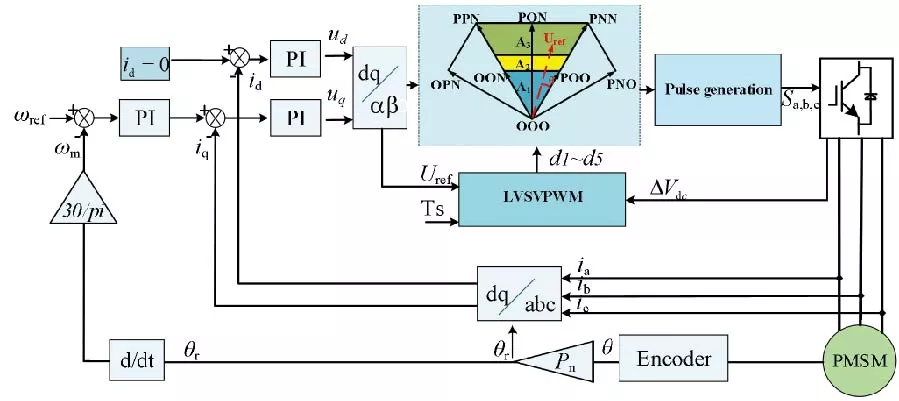
To address high common-mode voltage (CMV) and neutral-point voltage (NPV) imbalance issues in practical neutral-point-clamped (NPC) three-level inverters, a logic virtual space vector pulse width modulation (LVSVPWM) strategy is proposed. Based on the conventional virtual space vector pulse width modulation (VSVPWM), the proposed method first eliminates vectors with large CMV and redivides small sectors to reduce sector switching, limiting the CMV to ±Vdc/6. Second, it uses a logical judgment for the initial variable duty-cycle distribution to reduce the number of switching actions. Then, it redistributes the duty cycles according to NPV balancing requirements to achieve NPV balance. Finally, experiments validate the accuracy and effectiveness of the proposed strategy.
Coordinated Control of Common Mode Voltage Suppression and Neutral Point Voltage Balance for NPC Three-Level Inverters
2026-08-04
PIER C
Vol. 172, 174-182, 2026
download: 62
A Compact CPW-Fed Slotted Patch Antenna with Defective Ground for Wideband RF Energy Harvesting
Vijetha Rajappa, Kadsur Mudalagiriyappa Sudharshan and Sandeep Kumar Amera
A compact wideband antenna suitable for RF energy harvesting applications is presented in this paper. The proposed antenna consists of a slotted rectangular radiating patch excited by a coplanar waveguide (CPW) feed and implemented on an FR4 substrate with overall dimensions of 40 × 40 × 1.6 mm3. A wide impedance bandwidth is achieved through the combined use of a hybrid hexagonal defective ground structure (DGS) and multi-slot loading of the radiating patch, where the patch is embedded within the slotted ground plane to achieve size reduction and enhanced impedance matching. The antenna exhibits a measured impedance bandwidth of 3.61 GHz (|S11| ≤ -10 dB) ranging from 2.18 GHz to 5.79 GHz, covering the Wi-Fi and sub-6 GHz 5G frequency bands. Stable radiation characteristics are observed across the operating band, with a figure-of-eight radiation pattern, a peak gain of 3.67 dB at 3 GHz, and a minimum gain of 2.73 dB at 5 GHz. The antenna exhibits radiation efficiency greater than 95% throughout the operating band, with a maximum value approaching 98%. The antenna is designed and optimized using ANSYS HFSS and experimentally validated through Vector Network Analyzer and anechoic chamber measurements, showing good agreement between simulated and measured results. Owing to its wide bandwidth, compact size, and stable radiation performance, the proposed antenna is well-suited for wideband RF energy harvesting, with future integration into a rectenna system.
A Compact CPW-Fed Slotted Patch Antenna with Defective Ground for Wideband RF Energy Harvesting
2026-08-04
PIER C
Vol. 172, 166-173, 2026
download: 89
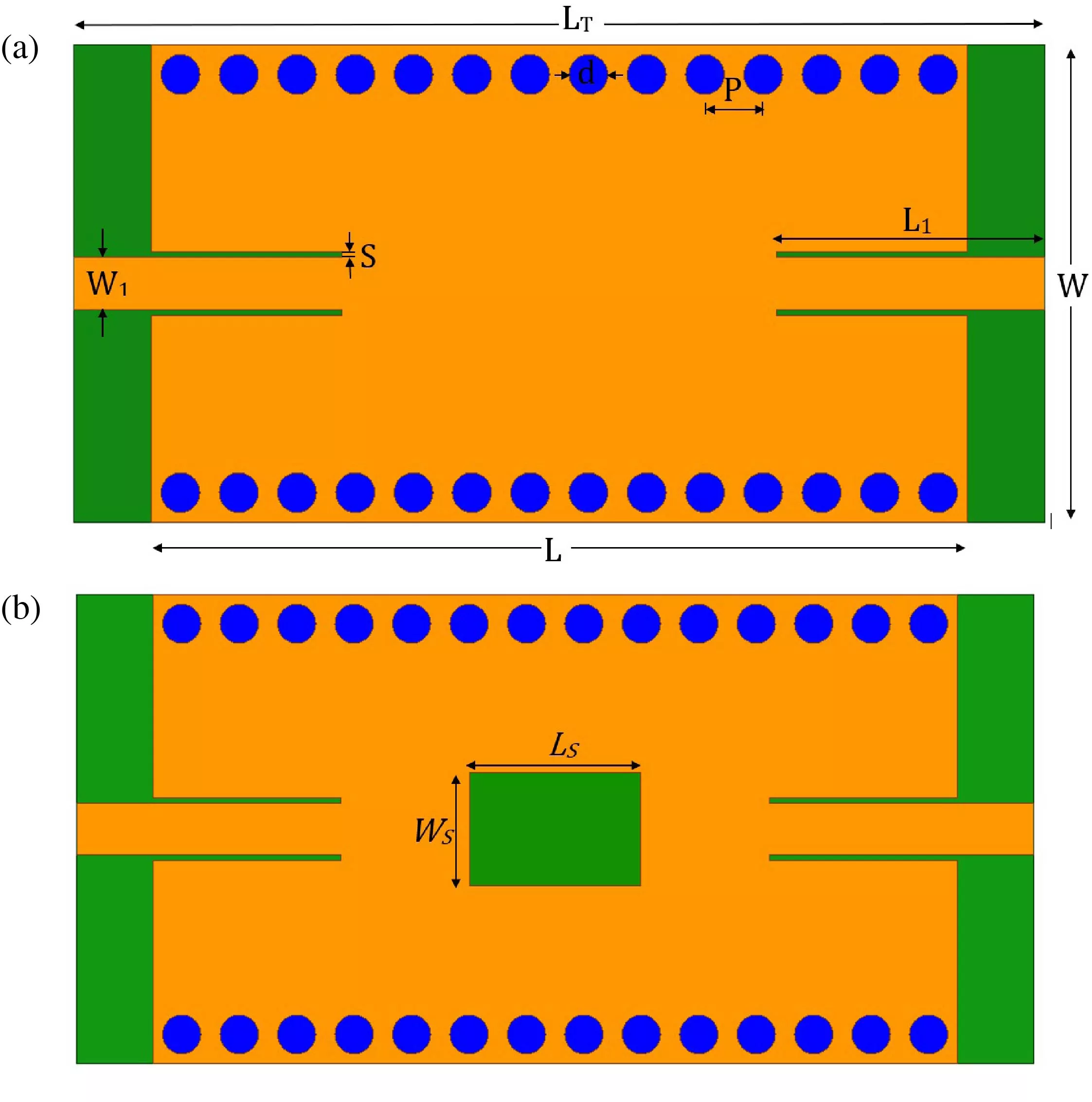
A Novel SIW Bandpass Filter Employing Inset and Rectangular-Slot Defects in the Ground Plane
Natesan Ramya and Boopathi Rani Rajasekar
This manuscript investigates the design and implementation of a Substrate Integrated Waveguide (SIW) bandpass filter using an inset feed as a defect and a rectangular slot defect in the ground plane. In this research, the feed line is also used as a defect by replicating the inset feed line on the ground. The inset-feed structure on both conducting layers improves filter performance and reduces size. To further enhance the filter's passband characteristics, a simple rectangular slot is introduced in the ground plane. This Defected Ground Structure (DGS) modifies the current distribution and improves the impedance bandwidth. The proposed filter operating at a center frequency of 10.5 GHz with a bandwidth of 500 MHz and offering a return loss better than 30 dB is designed, fabricated, and experimentally validated. The measured results show good agreement with simulations. The filter exhibits good performance, featuring appropriateness for single-channel satellite communication applications.
A Novel SIW Bandpass Filter Employing Inset and Rectangular-Slot Defects in the Ground Plane
2026-08-03
PIER C
Vol. 172, 156-165, 2026
download: 68
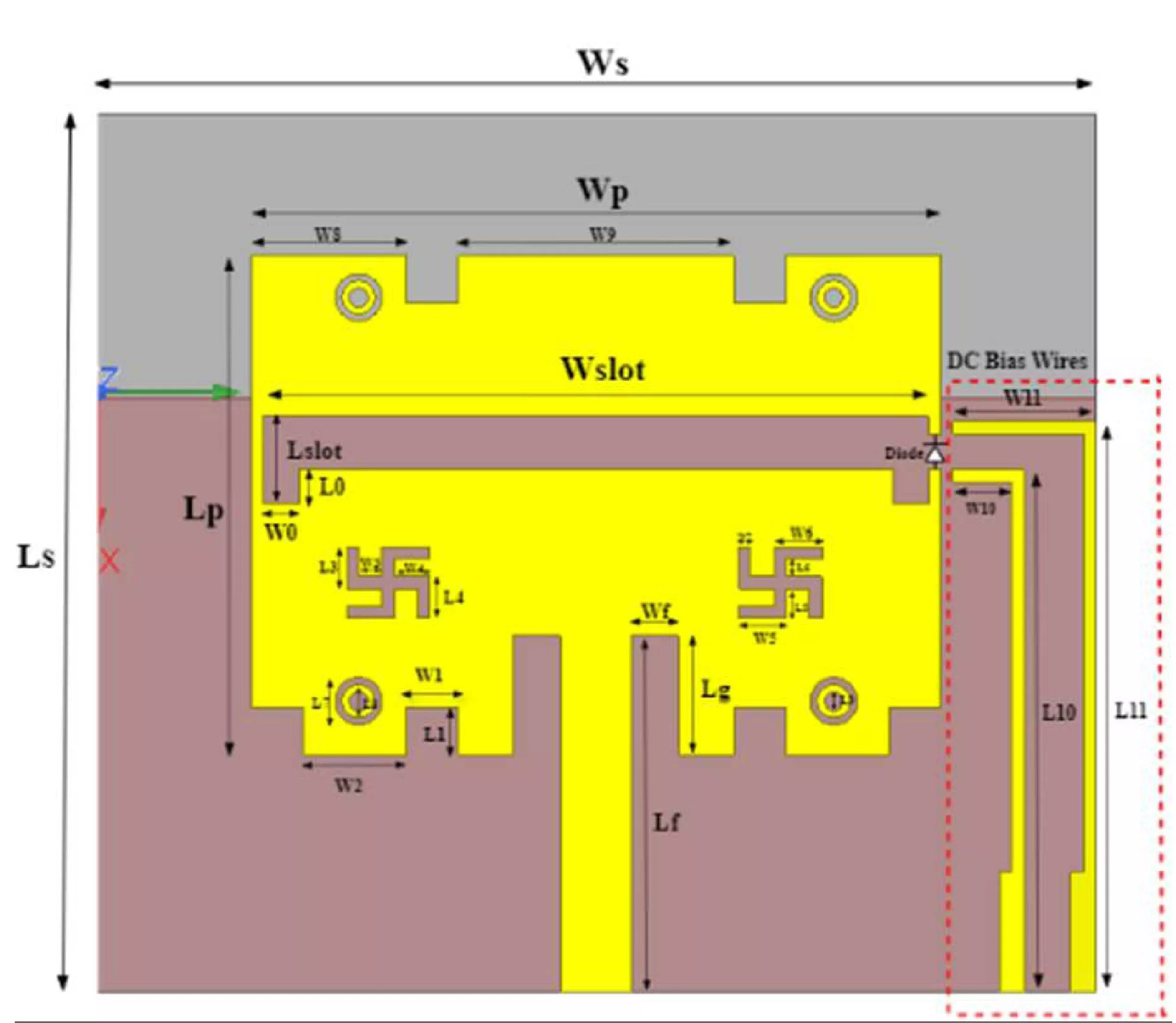
A Dual-Band Reconfigurable Active Antenna for IoT-Enabled Health Monitoring Systems
Ramar Ahila Priyadharshini, Ganesan Prema, Nellaiappan Ramanan and Venkatesan Sathyan
In this study, a dual-band active antenna integrated with an IoT healthcare monitoring system for measuring body temperature, heart rate, and SpO2 is presented. A MAX30100 sensor and NodeMCU ESP32-CAM enable data acquisition and cloud-based monitoring through Ubidots. The antenna, fabricated on a Rogers Duroid RO3003TM substrate (37 × 42 × 1.52 mm3), operates at 2.4 GHz and 5.8 GHz using an inverted U-shaped slot and a PIN diode for frequency reconfiguration. Received Signal Strength Indicator (RSSI) measurements showed improved signal strength from -35 to -40 dBm compared to -40 to -45 dBm for the on-board antenna. Experimental evaluation on three volunteers aged 21, 36, and 55 years demonstrated reliable physiological monitoring, with heart rate values of 84-90 BPM and temperature readings of 30-36°C. The results validate the suitability of the proposed antenna for reliable IoT-based healthcare applications.
A Dual-Band Reconfigurable Active Antenna for IoT-Enabled Health Monitoring Systems
2026-08-03
PIER C
Vol. 172, 146-155, 2026
download: 60
Design of Compact Ultra-Wideband Filter with Triple Notch Bands Based on Cross-Shaped Anti-Shorted Coupled Lines
Haihang Xu, Yubo Liu, Lirong Qian, Cui-Ping Li, Dan Li, Honglang Li and Litian Wang
In this paper, a compact ultra-wideband (UWB) bandpass filter (BPF) with triple-notch bands (TNBs) is proposed and demonstrated. We present a cross-shaped anti-shorted coupled-line structure employing a single coupled multi-mode resonator (MMR), whose resonant characteristics and intrinsic transmission zeros are investigated by employing the even-odd mode analysis method. In addition, the three notch bands are generated from the resonator's intrinsic transmission zeros without requiring any additional notch circuits. At the same time, their center frequencies can be quasi-independently controlled by properly adjusting the microstrip electrical lengths. For demonstration, the proposed filter is designed, fabricated, and measured. Simulated and measured results are in good agreement. The measured results agree well with theoretical predictions, which exhibit superior performance, such as triple-notch bands, high skirt selectivity, an ultra-wide passband from 2.8 to 12.5 GHz with a fractional bandwidth of 138%, a compact size of only 7.7 mm × 9.2 mm, and effective notched-band suppression levels.
Design of Compact Ultra-Wideband Filter with Triple Notch Bands Based on Cross-Shaped Anti-Shorted Coupled Lines
2026-08-03
PIER C
Vol. 172, 135-145, 2026
download: 63
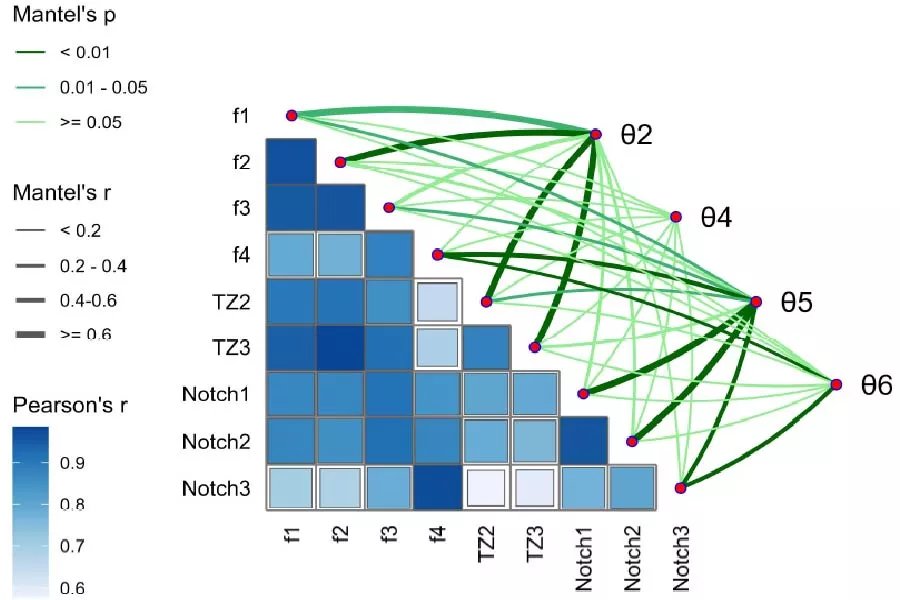
Optimal Configuration of ac Filters in Hybrid Multi-Infeed HVDC Systems Based on Sensitivity Analysis
Wenxing Sun, Lihua Liu, Weixi He, Xueliang Liu, Jiawen Lai and Junju Lai
To address the challenges of coordinating local reactive power compensation with cross-station harmonic interaction suppression in hybrid multi-infeed HVDC (HMIDC) systems, this study proposes an optimal AC filter configuration method based on sensitivity analysis. A harmonic impedance equivalent model was established for a hybrid three-infeed HVDC system, and a comprehensive harmonic interaction index was constructed based on harmonic current interaction influence coefficients. Normalized sensitivity analysis was then performed on the AC filter impedance, receiving-end AC system impedance, and tie-line impedance at the 11th and 13th harmonics. The results indicate that the AC filter impedance serves as the dominant adjustable factor. On this basis, a discrete optimization model was developed, with the number of DT11/24 and DT13/36 double-tuned filter groups in service as decision variables. In addition, this model considers equipment limits, minimum filtering requirements, reactive power compensation, and harmonic voltage constraints. Case study results show that the optimized configuration reduces the overall harmonic coupling among HVDC infeed systems; in particular, the interaction strength from the second conventional HVDC link to the modular multilevel converter-based high-voltage direct current (MMC-HVDC) link at the 13th harmonic decreases by approximately 32%. The proposed method provides a practical reference for coordinated AC filter switching in HMIDC.
Optimal Configuration of AC Filters in Hybrid Multi-Infeed HVDC Systems Based on Sensitivity Analysis
2026-08-03
PIER C
Vol. 172, 126-134, 2026
download: 91
A Low-Profile Flexible UWB Wearable Antenna Loaded with Patch Slots and Defected Ground Structure for Wireless Body Area Networks
Md. Ariful Islam, Md. Masud Rana, Amrito Paul, Abdul Kayum Muhammad Zakir Hossain and Noor Badariah Asan
This study introduces a compact, low-profile ultra-wideband (UWB) wearable antenna designed for wireless body area network (WBAN) applications. The antenna incorporates a rectangular patch on a flexible jeans substrate, incorporating one patch slot, four identical edge slots, and a defected ground structure (DGS) with a compact dimensions of 23 mm × 30 mm × 1.5 mm. These slots and DGS enable the UWB operation with an excellent bandwidth while maintaining a good balance among the key performance parameters such as efficiency, gain, and SAR, which is the main contribution of this study. The antenna performance was analyzed using a four-layer human body phantom model that includes skin, fat, muscle, and bone layers. It operates across the frequency range of 2.82-11.25 GHz, covering the UWB range for wearable devices, and achieves a peak gain of 3.79 dBi, an average gain of 2.36 dBi, a peak efficiency of 63.36%, and an average efficiency of 52.88%. In addition, the obtained SAR values are 0.549 W/kg and 0.391 W/kg at 5 GHz, and 0.0727 W/kg and 1.97 W/kg at 9 GHz for 1 g and 10 g tissue standards, respectively, complying with SAR regulatory standards. Moreover, bending analysis validated its stable performance under various angles and deformation conditions. The fabrication and on-body testing of the proposed antenna exhibited a bandwidth of 1.38-12 GHz, demonstrating compliance with simulations. Finally, a human body temperature monitoring prototype was developed, which validates its suitability for wearable WBAN applications.
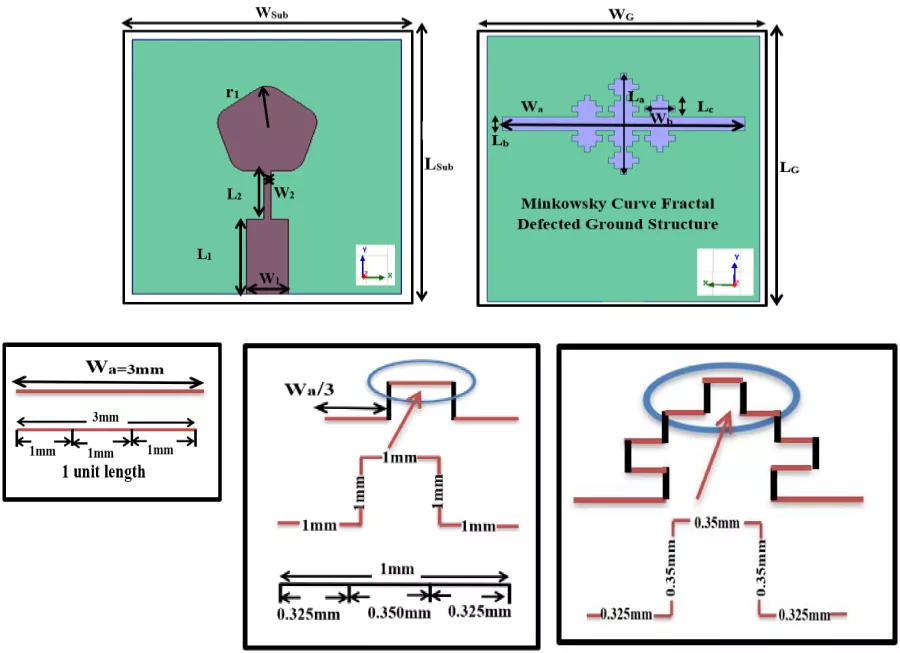
A Low-Profile Flexible UWB Wearable Antenna Loaded with Patch Slots and Defected Ground Structure for Wireless Body Area Networks
2026-08-03
PIER C
Vol. 172, 115-125, 2026
download: 75
Broadband SIW Slot Antenna Based on Split Magnetic-Electric Dipole Multimode Coupling
Mingming Gao, Bowen Tao, Ruize Huang, Xuan Du and Shibo Sun
To realize a compact and low-profile Ka-band SIW antenna with continuous wideband operation, a wideband SIW slot antenna based on split Magnetic-electric dipole multi-mode coupling is proposed. The central design idea is to transfer electromagnetic energy from the lower SIW cavity to the upper radiating layer through aperture coupling and to merge two adjacent resonant modes generated by the electric- and magnetic-dipole components. The antenna employs a dual-layer configuration. The lower layer consists of an SIW feeding cavity and a coupling slot, and the upper layer incorporates split arc-shaped patches, a central coupling patch, metallized vias, and a cross-shaped perturbation structure. The split patches mainly generate the high-frequency electric-dipole mode, while the central coupling patch and metallized vias introduce an adjacent lower-frequency magnetic-dipole mode. The cross-shaped perturbation structure further optimizes the impedance transition between the two modes. The simulated results show that the antenna achieves an impedance bandwidth of 26.35-29.20 GHz for |S11| < -10 dB and a peak realized gain of approximately 8.15 dBi at 28 GHz. The fabricated prototype exhibits a measured impedance bandwidth of approximately 26.8-29.1 GHz. In addition, the simulated multifrequency radiation patterns and efficiency results demonstrate relatively stable broadside radiation characteristics within the operating band. The proposed antenna provides a compact and readily integrated solution for Ka-band millimeter-wave communication systems.
Broadband SIW Slot Antenna Based on Split Magnetic-Electric Dipole Multimode Coupling
2026-08-01
PIER C
Vol. 172, 103-114, 2026
download: 100
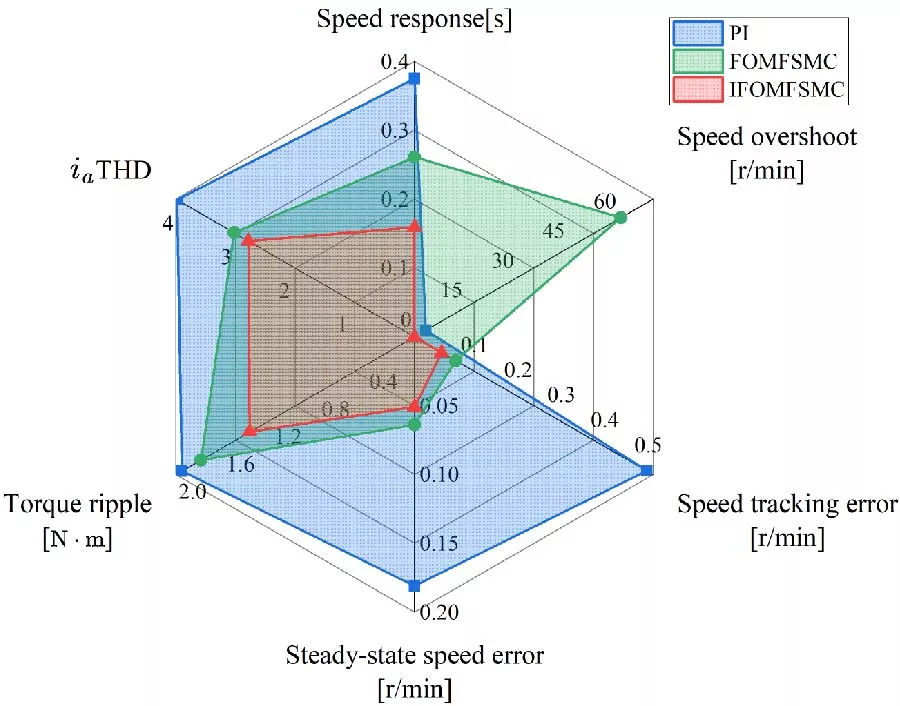
Improved Full-Order Model-Free Sliding Mode Control for PMSM Considering Complex Time-Varying Disturbances
Xingkai Huang, Xiangfei Li, Kaihui Zhao, Meiyun Luo and Lihua Zou
To address the problems of low speed control accuracy and performance degradation caused by time-varying disturbances in conventional control methods for high-precision speed regulation of permanent magnet synchronous motors (PMSMs), an improved full-order model-free sliding mode control (IFOMFSMC) method based on full-order sliding mode control (FOSMC) is proposed. First, a novel ultra-local model under parameter perturbations is established. Based on this model, the IFOMFSMC is designed by combining a second-order full-order sliding mode surface with an improved double-power reaching law, which improves the speed control accuracy of the PMSM. Subsequently, a full-order extended sliding mode disturbance observer (FOESMDO) is developed by incorporating FOSMC into the extended disturbance observer. The FOESMDO estimates unknown disturbances more accurately, thereby compensating the IFOMFSMC and enhancing system robustness under complex time-varying disturbances. Finally, simulation results confirm accurate speed tracking with the proposed method. Under complex time-varying disturbance conditions, compared with the conventional control method, the IFOMFSMC improves speed response and tracking performance by 57.6% and 88.2%, respectively, while reducing steady-state speed error and torque ripple by 71.8% and 29.2%. The proposed method effectively enhances steady-state and dynamic performance as well as disturbance-rejection capability.
Improved Full-Order Model-Free Sliding Mode Control for PMSM Considering Complex Time-Varying Disturbances
2026-08-01
PIER C
Vol. 172, 89-102, 2026
download: 114
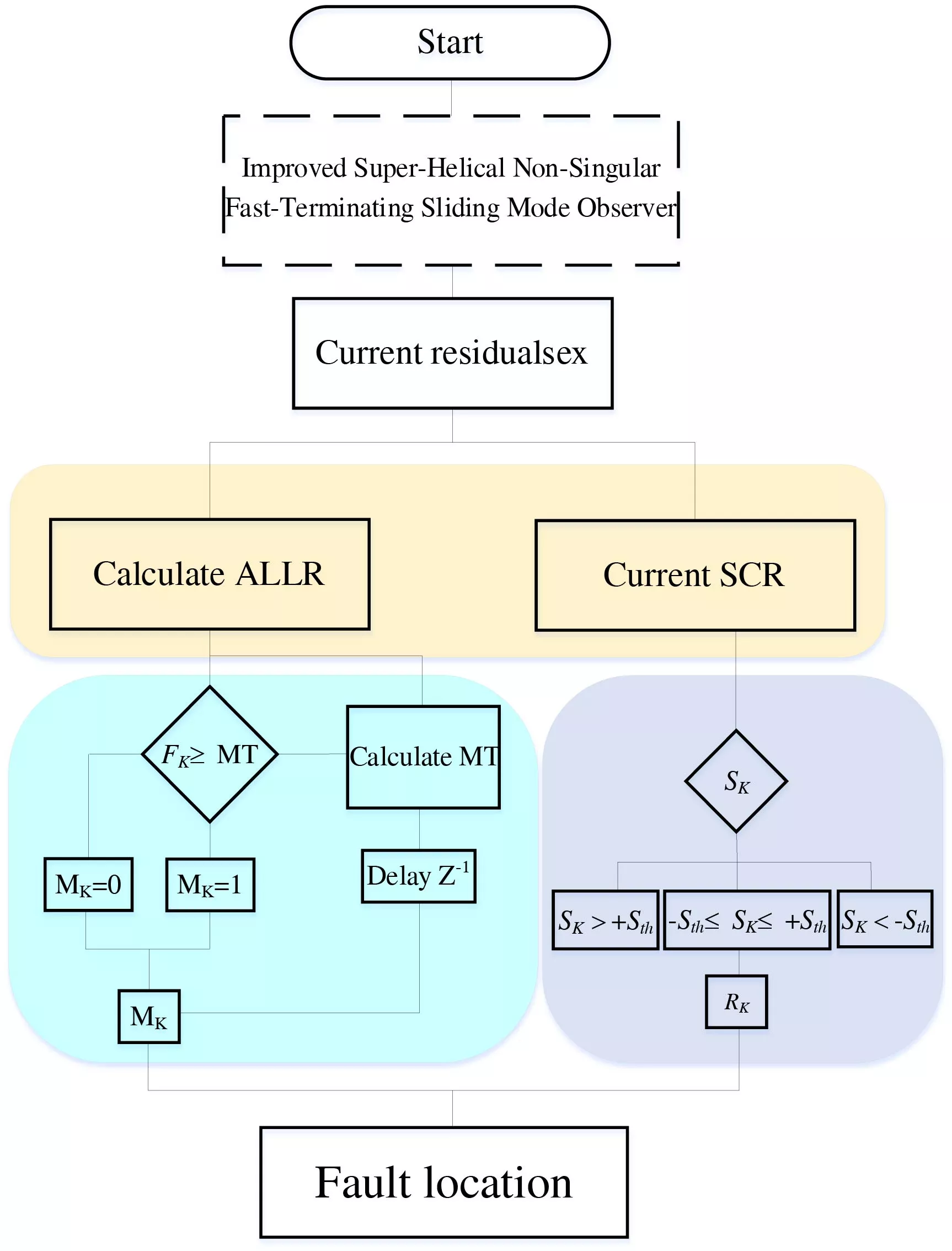
Open-Circuit Fault Diagnosis of Quasi-Z-Source Inverter Systems Based on IST-NFTSMO and ALLR-SCR Hybrid Features
Yang Zhang, Moutao Li, Shaoziyi Wu, Jiahao Zhang and Qianghui Xiao
The open-circuit fault diagnosis of switches in quasi-Z-source inverters (qZSI) is challenging. Existing methods struggle to simultaneously achieve high robustness and low computational complexity without additional sensors. In this study, an open-circuit fault diagnosis method based on an improved super-twisting non-singular fast terminal sliding-mode observer (IST-NFTSMO) and hybrid features is proposed. The stator currents were estimated in real time by the IST-NFTSMO, and residuals were generated accordingly. By analyzing differences in the statistical distributions of residuals between healthy and faulty conditions, two features were extracted: average log-likelihood ratio (ALLR) and signed cumulative ratio (SCR). The ALLR is used for rapid fault detection, whereas the SCR is used for accurate localization of faulty switches. The proposed method was implemented entirely based on existing current sensors. No additional voltage sensors were required. Moreover, the diagnostic thresholds are adaptively adjusted according to variations in speed and load. The experimental results demonstrate that both single-switch and dual-switch open-circuit faults can be diagnosed rapidly and accurately. Compared with conventional methods, higher robustness and lower computational complexity were achieved.
Open-Circuit Fault Diagnosis of Quasi-Z-Source Inverter Systems Based on IST-NFTSMO and ALLR-SCR Hybrid Features
2026-07-31
PIER C
Vol. 172, 79-88, 2026
download: 107
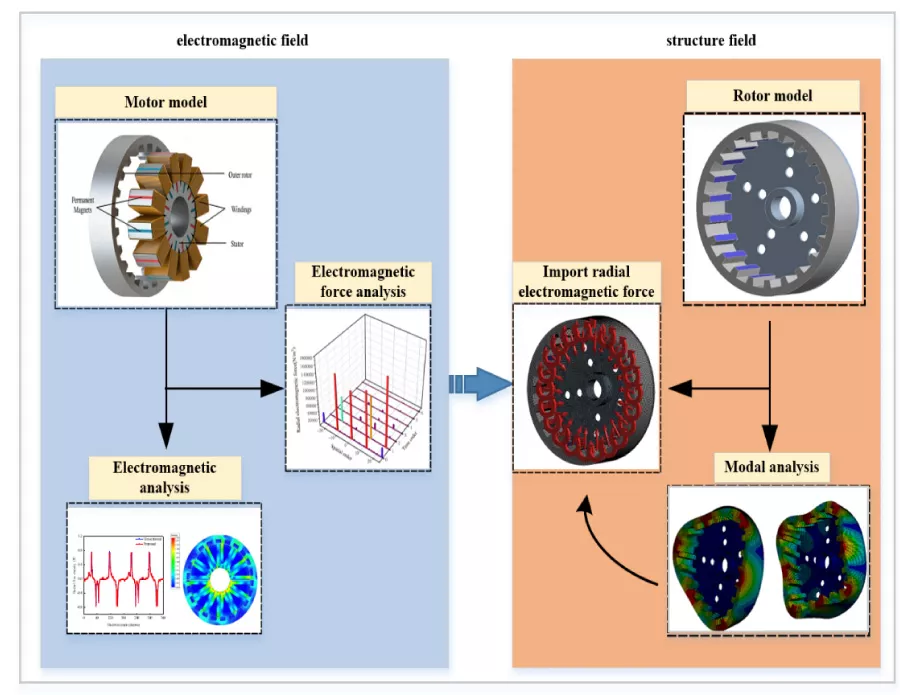
Research on Vibration Suppression of Flux-Switching Permanent Magnet Machine
Libing Jing, Longxiang Han, Yeming Zhu, Mingji Yin, Yuhui Huang and Zeyu Min
To address vibration and noise issues in outer-rotor flux-switching permanent-magnet (OR-FSPM) machines for high-precision applications, radially magnetized PMs are placed between regular tangentially magnetized PMs, forming a U-shaped structure. An air-gap magnetic barrier is introduced between the two types of PMs to achieve magnetic isolation. Then, the spatiotemporal distribution of radial electromagnetic force density (EFD) waves is derived based on the magnetomotive force permeance model. Modal and harmonic response analyses are then conducted for both the conventional and proposed U-shaped machine topologies using electromagnetic-structural field simulations to reveal vibrational characteristics. The results demonstrate that the proposed U-shaped topology effectively suppresses second-order resonance while maintaining superior electromagnetic performance.
Research on Vibration Suppression of Flux-Switching Permanent Magnet Machine
2025-07-30
PIER C
Vol. 172, 68-78, 2026
download: 112
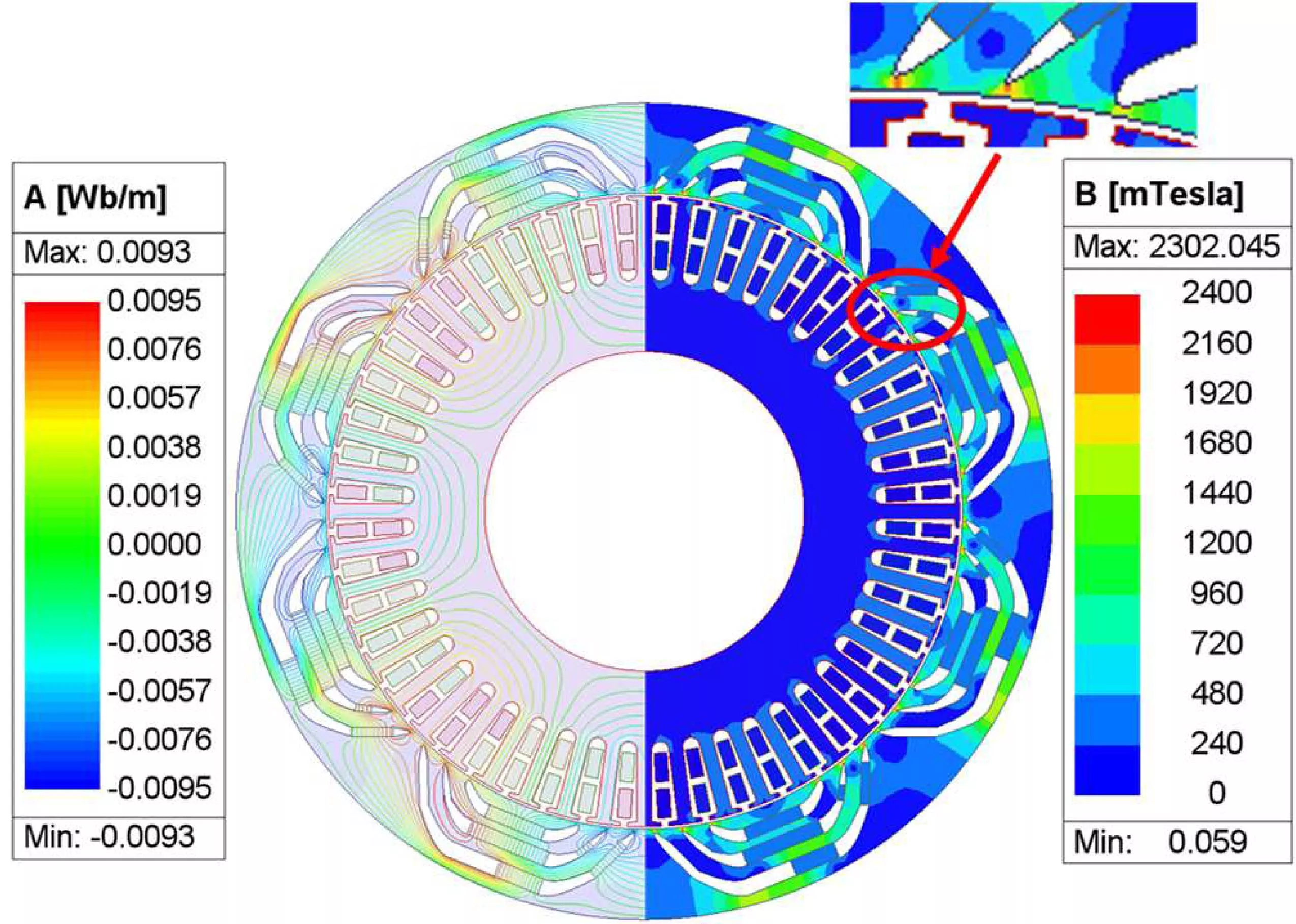
Torque Ripple Suppression for a Novel Asymmetric External Rotor Permanent Ferrite-Assisted Synchronous Reluctance Motor
Chaozhi Huang, Wen Kuang, Fangrong Wang, Ji Zhang and Zhihong Liu
To address the problems of flux barriers' excessive torque ripple and complicated multi-parameter optimization in conventional permanent magnet-assisted synchronous reluctance motors (PMa-SynRMs), this paper proposes a novel asymmetric external-rotor ferrite-assisted synchronous reluctance motor (AERFa-SynRM). By adopting an asymmetric magnet shifting arrangement, the magnetic circuit configuration is optimized, which improves air-gap flux density and permanent magnet torque without increasing material and manufacturing costs. The magnetic circuit characteristics and torque generation mechanism of symmetric and asymmetric rotor structures are compared and analyzed by establishing mathematical and electromagnetic models. Taking key rotor geometric parameters as design variables and average torque, torque ripple, and efficiency as multi-objective optimization indices, a BP-Kriging hybrid surrogate model is constructed, and the NSGA-II algorithm is adopted for global parameter optimization. The finite element simulation results demonstrate that the proposed asymmetric rotor structure can effectively enhance air-gap flux density and no-load back-EMF performance. After multi-objective optimization, the average torque and motor efficiency are greatly improved, while the torque ripple is sharply reduced. The asymmetric angle adjustment realizes the peak-valley mutual cancellation between permanent magnet torque and reluctance torque, which fundamentally suppresses electromagnetic torque ripple. The proposed topology and collaborative optimization strategy provide an effective solution for the performance improvement and torque ripple reduction of low-cost ferrite PMa-SynRMs.
Torque Ripple Suppression for a Novel Asymmetric External Rotor Permanent Ferrite-Assisted Synchronous Reluctance Motor
2026-07-29
PIER C
Vol. 172, 58-67, 2026
download: 75
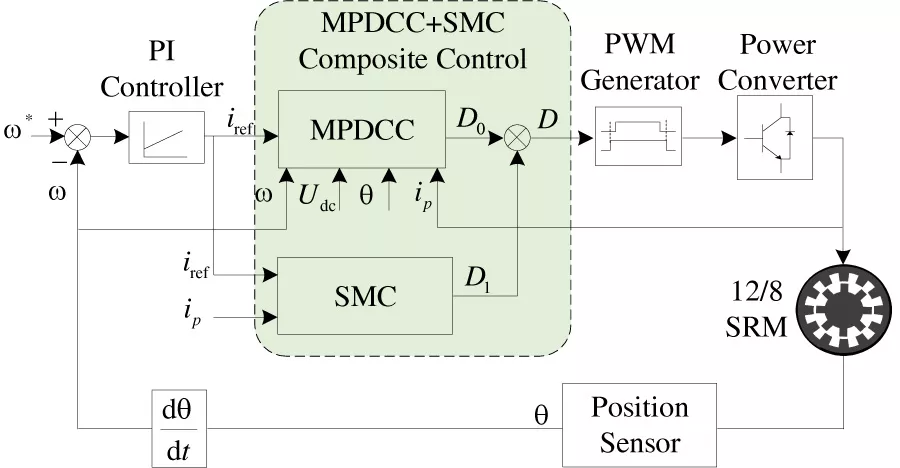
Model Predictive Duty Cycle Control for Switched Reluctance Motors Based on Sliding Mode Compensation
Huiying Yu, Aide Xu and Wanping Zhao
In fixed switching frequency pulse-width modulation (PWM) drive systems for switched reluctance motors (SRMs), the duty cycle directly affects current-tracking precision and torque output performance. To address the slow dynamic response of conventional PI control and the model dependence and limited robustness of conventional model predictive duty-cycle control (MPDCC), this study proposes a robust duty-cycle control strategy based on double-power sliding mode compensation. This strategy constructs a duty-cycle generation mechanism by combining model predictive feedforward with sliding-mode compensation. It utilizes MPDCC to generate a base duty cycle, whereas a double-power sliding mode generates a compensation duty cycle to correct deviations. Simulated and experimental results demonstrate that the proposed strategy generates accurate PWM duty cycles, keeps the current tracking error bounded within a small quasi-sliding-mode band, and improves current-tracking accuracy and torque-ripple suppression under parameter-mismatch conditions, validating the robustness of the system against parameter mismatches.
Model Predictive Duty Cycle Control for Switched Reluctance Motors Based on Sliding Mode Compensation
2026-07-29
PIER C
Vol. 172, 46-57, 2026
download: 67
A Data-Driven Framework for the Efficient Design of Dual-Notched UWB Antennas via Surrogate-Assisted Nutcracker Optimization
Huawei Zhuang, Zijian Zhang, Fei Wang, Haonan Tian, Xiaoyang Liu and Fanmin Kong
The design of ultra-wideband (UWB) band-notched antennas is highly sensitive to geometric dimensions. Consequently, traditional metaheuristic algorithms incur prohibitive computational costs from massive full-wave electromagnetic (EM) simulations. An efficient co-design framework, termed the Surrogate-Assisted Nutcracker Optimization Algorithm with Gaussian Process (SANOA-GP), is proposed. By leveraging a GP surrogate for epistemic uncertainty quantification with a lower confidence bound (LCB) prescreening strategy, SANOA-GP balances exploration and exploitation, overcoming high-dimensional multimodal traps. Moreover, intelligent early stopping is achieved through a performance-driven dual-termination criterion with a progressive reward mechanism. Sobol global sensitivity analysis is incorporated to quantitatively evaluate geometric influences, enhancing black-box interpretability and verifying the independent tunability of the dual notches. Measurement results confirm that the optimized antenna achieves precise and deep notches (S11 > -5 dB) at the 5G N79 and X-band frequencies. Remarkably, SANOA-GP converges with an average of only 69.3 full-wave EM simulations. Compared to surrogate-free algorithms, it reduces computational time by over 50%, while still ensuring high optimization accuracy and physical reliability. The proposed framework offers an efficient and reliable paradigm for the automated design of complex radio frequency (RF) and microwave components.
A Data-Driven Framework for the Efficient Design of Dual-Notched UWB Antennas via Surrogate-Assisted Nutcracker Optimization
2026-07-29
PIER C
Vol. 172, 38-45, 2026
download: 78
Multi-Region Efficiency Optimization of Hybrid Electric Vehicle Traction Motors Considering Driving Cycles
Zhijia Jin, Xinyu Gao, Guanghua Li and Kaikai Diao
The conventional optimization of permanent magnet synchronous motors (PMSMs) for hybrid electric vehicles (HEVs) often neglects the dynamic nature of real-world driving cycles, resulting in suboptimal overall energy efficiency. To address this issue, this study proposes a multi-region efficiency optimization strategy that fully integrates actual driving cycles. First, motor operating points were extracted from the WLTC and CLTC standard driving cycles and identified as key operating regions via cluster analysis. A variance-based sensitivity analysis is then employed to quantify the contribution of each rotor parameter, thereby reducing the optimization dimension. The NSGA-III algorithm, coupled with finite element analysis (FEA), performs multi-objective optimization, targeting average efficiency and permanent magnet cost. A new method that comprehensively considers the average efficiency of both the cluster centers and boundaries of the operating points was proposed as an optimization objective. The results show that the optimal candidate improves the average efficiency to 96.77\%. Depending on the practical requirements, different candidate points are ultimately selected by balancing efficiency, cost, and driving comfort.
Multi-Region Efficiency Optimization of Hybrid Electric Vehicle Traction Motors Considering Driving Cycles
2026-07-28
PIER C
Vol. 172, 30-37, 2026
download: 63
A Novel Subarray Division Optimization Algorithm for Sparse Arrays in Microwave Wireless Power Transmission
Jie Wang and Jianxiong Li
To improve beam collection efficiency (BCE) while suppressing sidelobes and limiting implementation complexity in microwave wireless power transmission (MWPT) transmitting arrays with a small number of subarrays, this paper proposes an axially symmetric sparse planar array (SDASPA) model and a one-step subarray-division algorithm named RT-DWCFPSO-SD. The proposed model exploits axial symmetry to reduce search dimension and facilitate a simplified feeding structure. The proposed algorithm jointly optimizes element positions, element excitations, and subarray boundary parameters by combining a constriction factor, dynamic inertia weight, and ring topology. Numerical simulations on an 8 × 8 array with an aperture of 4.5λ × 4.5λ show that, when the array is divided into three subarrays, the proposed method achieves a BCE of 93.42% and a CSL of -13.19 dB. These results indicate that the proposed method is a promising design tool for MWPT transmitting arrays under limited subarray-division conditions.
A Novel Subarray Division Optimization Algorithm for Sparse Arrays in Microwave Wireless Power Transmission
2026-07-28
PIER C
Vol. 172, 18-29, 2026
download: 107
Performance and Complexity Analysis of Group-Connected Beyond-Diagonal RIS in Multi-User MIMO System
Huda A. Al-Tayyar, Omar M. Ali, Reyam H. Ali and Ali H. Saeed
Reconfigurable Intelligent Surfaces (RIS) have become a trend recently and represent a revolutionary development in wireless communications. Although RIS is utilized to enhance spectrum efficiency, particularly in Multi-User Multi Input Multi Output (MU-MIMO) environments, the conventional diagonal RIS(D-RIS) architecture represents a significant limitation. Beyond-diagonal RIS designs, such as fully-connected (FC-BD-RIS) and group-connected (GC-BD-RIS), are effective in controlling scattering and performance due to their use of reflective RIS elements. This research analyzes in detail the simulation of FC-BD-RIS, GC-BD-RIS, D-RIS and baseline NO-RIS architectures assuming a real communication environment. The results show that the FC-BD-RIS architecture achieves the best performance and highest rate under all operational conditions, while the GC-BD-RIS architecture showed balanced and efficient performance relative to the computational complexity compared to the FC-BD-RIS. Ultimately, the behavior of per-user rate has demonstrated the ability of beyond-diagonal BD-RIS architectures to suppress interference and achieve fairness within MU-MIMO scenarios. Based on the results of this work, GC-BD-RIS is the most practical and suitable for future large-scale 6G applications. This work draws attention to the trade-off among design, optimization, and achievement of RIS-enabled MU-MIMO systems.
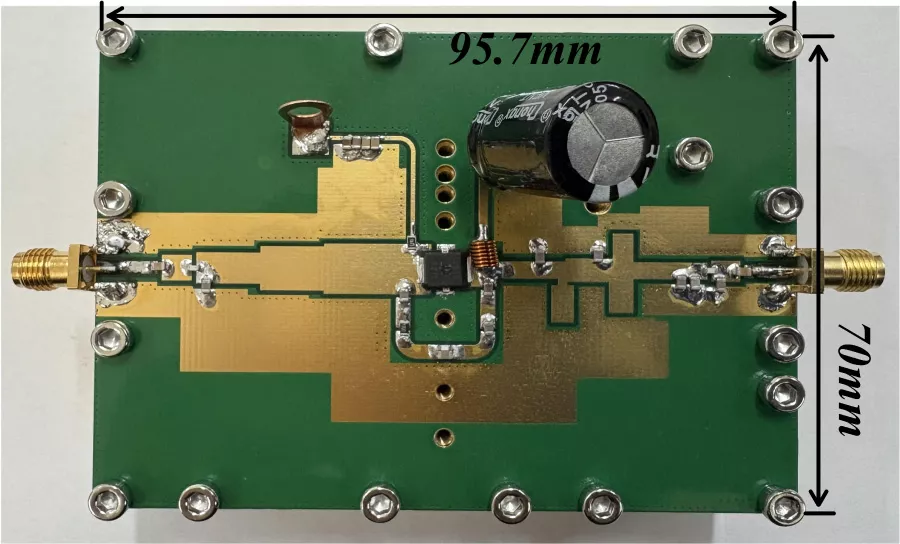
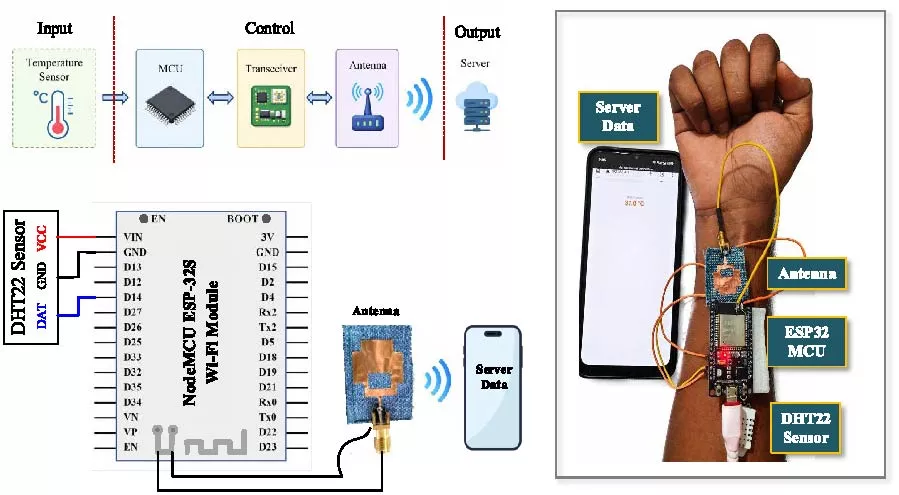
Performance and Complexity Analysis of Group-Connected Beyond-Diagonal RIS in Multi-User MIMO System
2026-07-25
PIER C
Vol. 172, 7-17, 2026
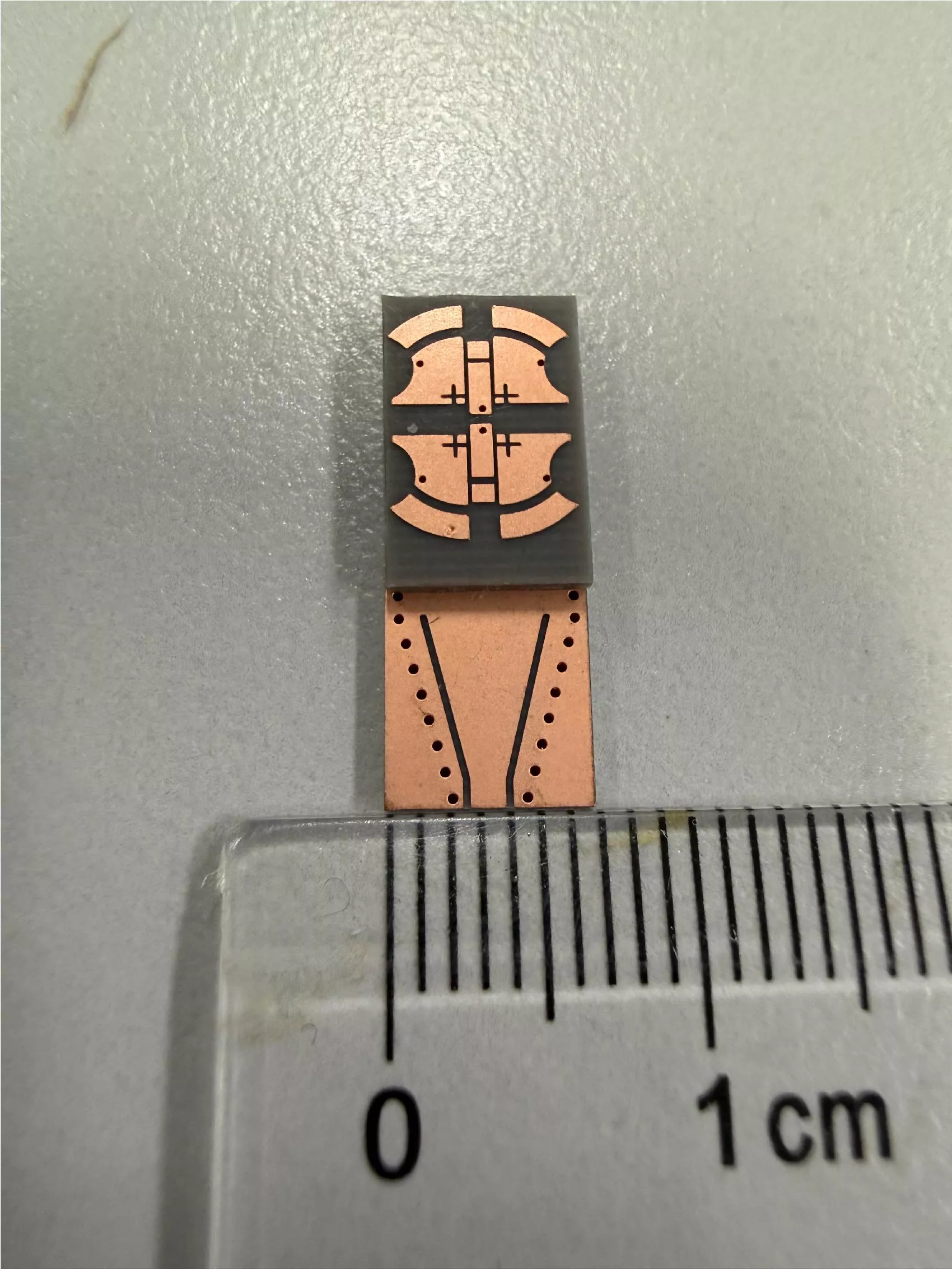
download: 127
A Miniaturized 5.8 GHz WLAN Pentagonal Microstrip Antenna with Fractal DGS and FSS Reflector for Gain Enhancement
Nagari Naveen Kumar and Dupakuntla Vishnu Vardhan
In this article, a Miniaturized Pentagonal Antenna (MPA) with a Minkowski Curve, Fractal Defected Ground Structure (MCF-DGS) and Frequency Selective Surface (FSS) is proposed for 5.725-5.875 GHz WLAN application. The performance of a λ/4 transmission line-fed pentagonal patch antenna is examined using an iterated MCF-DGS etched on the ground plane. In the beginning, a fundamental antenna (Antenna-1) is designed and measured at 13.2 GHz with a S11 of -32.45 dB. After that, the resonant frequency of the fundamental MPA has been reduced from 13.2 GHz to 5.8 GHz by employing MCF-DGS (Antenna-2) with 56% miniaturization. The S11 of MCF-DGS measured for single-band frequency 5.8 GHz is -33.36 dB. The performance attributes of an MPA with improved efficiency, peak directivity, and peak gain via MCF-DGS and FSS (Antenna-3) are also analysed. The proposed antenna of 15 × 16 mm2 (or 0.29λ0 × 0.30λ0 mm2) with a height of h1 = 1.6 mm is designed, produced, and tested on a substrate of FR4 epoxy. The peak gain and peak directivity at 5.8 GHz are elevated from 1.74 to 7.40 dBi and 3.53 to 7.95 dBi by using an FSS composed of FR4, with a thickness of h2 = 1.6 mm, situated under the MPA at a height of h3 = 8.5 mm. The prototype model's test results are validated by the predicted outcomes of the proposed model.
A Miniaturized 5.8 GHz WLAN Pentagonal Microstrip Antenna with Fractal DGS and FSS Reflector for Gain Enhancement
2026-07-24
PIER C
Vol. 172, 1-6, 2026
download: 75
Cylindrical Conformal Electrically Small Antenna with Quasi-Isotropic Radiation Pattern for Mine Gob Communication
Qiushou Liu, Kunshan Mo, Jin Wu, Lin Peng and Rui Fang
Wireless communication nodes in the underground mine gob area are often disturbed by different orientations; therefore, antennas with quasi-isotropic radiation are critical for reliable wireless communication. To address this challenge, a compact, cylindrical, conformal, quasi-isotropic antenna operating in the VHF band is proposed. The design integrates a shorted-patch structure with orthogonal dipole radiation, formed by a shorting post and patch aperture, to realize nearly isotropic Radiation. A capacitive-coupling feed is employed to enhance impedance matching, yielding an impedance bandwidth of about 1.02 MHz (S11 < -10 dB) at 170 MHz. The fabricated prototype, with dimensions of 120 mm × 120 mm × 110 mm (0.068λ0 × 0.068λ0 × 0.063λ0), was validated through full-wave simulations and experimental testing. The two results show excellent agreement, demonstrating a measured maximum-minimum gain variation of only 2.74 dB, confirming the antenna's good quasi-isotropic characteristics. Owing to its compact volume, stable matching, and consistent omnidirectional coverage, the proposed antenna is a good candidate for underground mine gob area communication nodes.
Cylindrical Conformal Electrically Small Antenna with Quasi-Isotropic Radiation Pattern for Mine Gob Communication