Vol. 185
Latest Volume
All Volumes
PIER 185 [2026] PIER 184 [2025] PIER 183 [2025] PIER 182 [2025] PIER 181 [2024] PIER 180 [2024] PIER 179 [2024] PIER 178 [2023] PIER 177 [2023] PIER 176 [2023] PIER 175 [2022] PIER 174 [2022] PIER 173 [2022] PIER 172 [2021] PIER 171 [2021] PIER 170 [2021] PIER 169 [2020] PIER 168 [2020] PIER 167 [2020] PIER 166 [2019] PIER 165 [2019] PIER 164 [2019] PIER 163 [2018] PIER 162 [2018] PIER 161 [2018] PIER 160 [2017] PIER 159 [2017] PIER 158 [2017] PIER 157 [2016] PIER 156 [2016] PIER 155 [2016] PIER 154 [2015] PIER 153 [2015] PIER 152 [2015] PIER 151 [2015] PIER 150 [2015] PIER 149 [2014] PIER 148 [2014] PIER 147 [2014] PIER 146 [2014] PIER 145 [2014] PIER 144 [2014] PIER 143 [2013] PIER 142 [2013] PIER 141 [2013] PIER 140 [2013] PIER 139 [2013] PIER 138 [2013] PIER 137 [2013] PIER 136 [2013] PIER 135 [2013] PIER 134 [2013] PIER 133 [2013] PIER 132 [2012] PIER 131 [2012] PIER 130 [2012] PIER 129 [2012] PIER 128 [2012] PIER 127 [2012] PIER 126 [2012] PIER 125 [2012] PIER 124 [2012] PIER 123 [2012] PIER 122 [2012] PIER 121 [2011] PIER 120 [2011] PIER 119 [2011] PIER 118 [2011] PIER 117 [2011] PIER 116 [2011] PIER 115 [2011] PIER 114 [2011] PIER 113 [2011] PIER 112 [2011] PIER 111 [2011] PIER 110 [2010] PIER 109 [2010] PIER 108 [2010] PIER 107 [2010] PIER 106 [2010] PIER 105 [2010] PIER 104 [2010] PIER 103 [2010] PIER 102 [2010] PIER 101 [2010] PIER 100 [2010] PIER 99 [2009] PIER 98 [2009] PIER 97 [2009] PIER 96 [2009] PIER 95 [2009] PIER 94 [2009] PIER 93 [2009] PIER 92 [2009] PIER 91 [2009] PIER 90 [2009] PIER 89 [2009] PIER 88 [2008] PIER 87 [2008] PIER 86 [2008] PIER 85 [2008] PIER 84 [2008] PIER 83 [2008] PIER 82 [2008] PIER 81 [2008] PIER 80 [2008] PIER 79 [2008] PIER 78 [2008] PIER 77 [2007] PIER 76 [2007] PIER 75 [2007] PIER 74 [2007] PIER 73 [2007] PIER 72 [2007] PIER 71 [2007] PIER 70 [2007] PIER 69 [2007] PIER 68 [2007] PIER 67 [2007] PIER 66 [2006] PIER 65 [2006] PIER 64 [2006] PIER 63 [2006] PIER 62 [2006] PIER 61 [2006] PIER 60 [2006] PIER 59 [2006] PIER 58 [2006] PIER 57 [2006] PIER 56 [2006] PIER 55 [2005] PIER 54 [2005] PIER 53 [2005] PIER 52 [2005] PIER 51 [2005] PIER 50 [2005] PIER 49 [2004] PIER 48 [2004] PIER 47 [2004] PIER 46 [2004] PIER 45 [2004] PIER 44 [2004] PIER 43 [2003] PIER 42 [2003] PIER 41 [2003] PIER 40 [2003] PIER 39 [2003] PIER 38 [2002] PIER 37 [2002] PIER 36 [2002] PIER 35 [2002] PIER 34 [2001] PIER 33 [2001] PIER 32 [2001] PIER 31 [2001] PIER 30 [2001] PIER 29 [2000] PIER 28 [2000] PIER 27 [2000] PIER 26 [2000] PIER 25 [2000] PIER 24 [1999] PIER 23 [1999] PIER 22 [1999] PIER 21 [1999] PIER 20 [1998] PIER 19 [1998] PIER 18 [1998] PIER 17 [1997] PIER 16 [1997] PIER 15 [1997] PIER 14 [1996] PIER 13 [1996] PIER 12 [1996] PIER 11 [1995] PIER 10 [1995] PIER 09 [1994] PIER 08 [1994] PIER 07 [1993] PIER 06 [1992] PIER 05 [1991] PIER 04 [1991] PIER 03 [1990] PIER 02 [1990] PIER 01 [1989]
2026-05-01 Latest Published
By Yanfeng Zhao Jiajun He Cong Liu Xiaoyuan Hao Xizhi Li Wei Wu Quan Xu Xueqian Zhang Jiaguang Han
Progress In Electromagnetics Research, Vol. 185, 87-96, 2026
Abstract
Free-space electromagnetic waves can be coupled into on-chip propagating surface waves (SWs), a process that holds great promise for receiver front-ends in wireless communication systems. However, it has traditionally faced challenges in coupling efficiency and in controlling the on-chip wavefront of SWs. To address these challenges, we design and experimentally demonstrate SW couplers operating in the terahertz regime based on metal-insulator-metal resonators. Our devices achieve not only broadband and highly efficient coupling, with an efficiency exceeding 60% over a 20 GHz bandwidth, but also enable directional steering of the excited SWs to designated on-chip ports. In this way, mode conversion and onchip routing functionalities are seamlessly integrated into a single compact component. Based on this design, we fabricated devices and implemented corresponding terahertz wireless communication links, successfully demonstrating 16-QAM data transmission in both single-link and dual-link configurations.
2026-05-01
PIER
Vol. 185, 87-96, 2026
download: 58
Surface Wave Couplers for Terahertz Wireless Communication Receiver Front Ends
Yanfeng Zhao, Jiajun He, Cong Liu, Xiaoyuan Hao, Xizhi Li, Wei Wu, Quan Xu, Xueqian Zhang and Jiaguang Han
Free-space electromagnetic waves can be coupled into on-chip propagating surface waves (SWs), a process that holds great promise for receiver front-ends in wireless communication systems. However, it has traditionally faced challenges in coupling efficiency and in controlling the on-chip wavefront of SWs. To address these challenges, we design and experimentally demonstrate SW couplers operating in the terahertz regime based on metal-insulator-metal resonators. Our devices achieve not only broadband and highly efficient coupling, with an efficiency exceeding 60% over a 20 GHz bandwidth, but also enable directional steering of the excited SWs to designated on-chip ports. In this way, mode conversion and onchip routing functionalities are seamlessly integrated into a single compact component. Based on this design, we fabricated devices and implemented corresponding terahertz wireless communication links, successfully demonstrating 16-QAM data transmission in both single-link and dual-link configurations.
Surface Wave Couplers for Terahertz Wireless Communication Receiver Front Ends
2026-04-30
PIER
Vol. 185, 49-56, 2026
download: 41
Fixed-Condition Spoof Plasmonic Parametric Amplifier for Multi-Carrier Signals
Wenyi Cui, Yue Cen and Jingjing Zhang
To achieve synchronous and uniform amplification of dense multi-carrier signals, this paper proposes a multi-frequency nondegenerate parametric amplifier (PA) based on a nonlinear spoof surface plasmon polariton (SSPP) waveguide. By engineering the dispersion characteristics of a varactor-diode-loaded waveguide, we realize an SSPP platform that exhibits minimized phase mismatch for three distinct signal-idler pairs under a constant pump frequency (13.348 GHz) and a fixed bias voltage. Experimental results show that the amplifier delivers highly uniform gains exceeding 20 dB for three closely spaced carriers at 6.363, 6.489, and 6.549 GHz, effectively emulating a three-frequency-shift keying (3FSK) signal. This work demonstrates a fixed-condition amplification scheme that requires no dynamic tuning, offering a promising solution for amplifying densely spaced carriers in integrated communication systems.
Fixed-Condition Spoof Plasmonic Parametric Amplifier for Multi-Carrier Signals
2026-04-13
PIER
Vol. 185, 17-48, 2026
download: 159
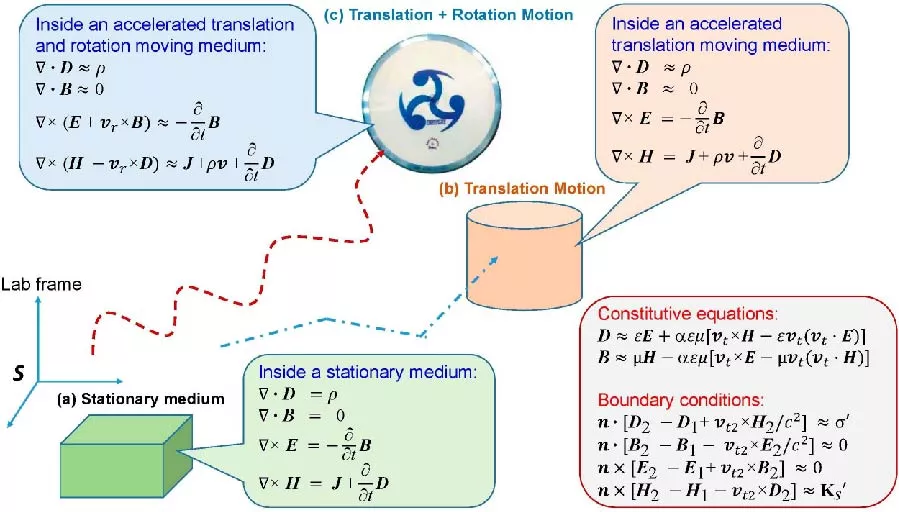
Microwave Wire Media: Theory and Main Physical Effects
Denis Sakhno, Constantin Simovski and Pavel A. Belov
We present a review of homogenization models of microwave wire media with different geometries. We begin with a simple (uniaxial) wire medium and then consider more complex types of wire media - double, triple, and interlaced wire media - which remain underexplored. We discuss boundary problems with wire media and the most important physical effects revealed using the reviewed homogenization models.
Microwave Wire Media: Theory and Main Physical Effects
Photonics and Modern Optics
Fellow Article
2026-01-05
PIER
Vol. 185, 1-16, 2026
download: 1039
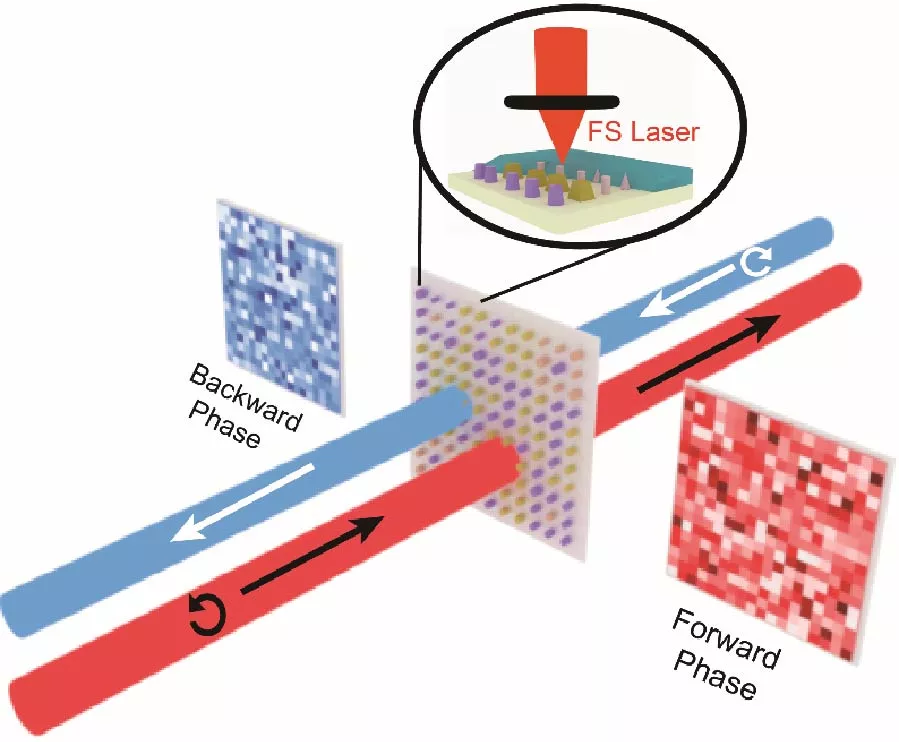
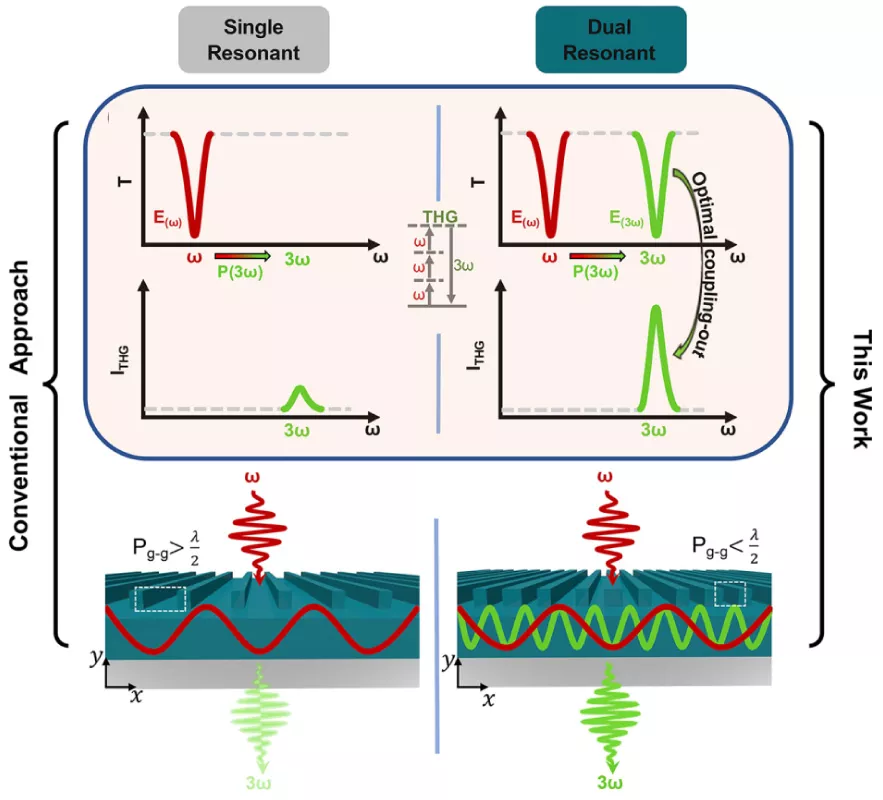
Progress in Structured Light with Nonlinear Optics
Sachleen Singh and Andrew Forbes
The control of all of light's degrees of freedom and its harnessing for applications is captured by the emergent field of structured light. The modern toolkit includes external modulation of light with devices such as metasurfaces and spatial light modulators, their intra-cavity insertion for structured light directly at the source, and their deployment to engineer quantum structured light at the single photon and entangled state regimes. Historically, this control has involved linear optical elements, with nonlinear optics only recently coming to the fore. This has opened unprecedented functionality while revealing new paradigms for nonlinear optics beyond plane waves. In this review we look at the recent progress in structured light with nonlinear optics, covering the fundamentals and the powerful applications they are facilitating in both the classical and quantum domains.
Progress in Structured Light with Nonlinear Optics
Regular Papers
2026-05-01
PIER
Vol. 185, 57-86, 2026
download: 23
Acoustic Computation: from Effective Medium Theory to Biomedical Ultrasound Imaging (Invited Paper)
Erqian Dong, Sichao Qu, Xiaochuan Wu, Helios Y. Li and Nicholas Xuanlai Fang
This paper reviews recent advances in acoustic computation and modeling, specifically bridging effective medium theory (EMT) and biomedical ultrasound imaging. To achieve this, we examine how EMT provides the physical foundation for wave-based imaging through homogenized parameters, focusing on image reconstruction across diverse systems ranging from single pulse-receivers to multi-input and multi-output (MIMO) tomography. Furthermore, we highlight cross-disciplinary insights from computational optics, such as the transport of intensity equation and ptychography, while addressing acoustic-specific challenges like aberration correction and wave interference. In light of these challenges, emerging solutions are discussed, including ultrasound matrix imaging (UMI) via transfer matrix methods, inverse-designed matching layers, and hardware-accelerated approaches like the Krimholtz-Leedom-Matthaei (KLM) electro-acoustic model for ultrafast imaging. Ultimately, by integrating physical understanding of effective media with advanced computational algorithms, these developments provide a robust framework for the future of high-resolution 3D ultrasonography and acoustic holography.
Acoustic Computation: From Effective Medium Theory to Biomedical Ultrasound Imaging (Invited Paper)