Vol. 186
Latest Volume
All Volumes
PIER 186 [2026] PIER 185 [2026] PIER 184 [2025] PIER 183 [2025] PIER 182 [2025] PIER 181 [2024] PIER 180 [2024] PIER 179 [2024] PIER 178 [2023] PIER 177 [2023] PIER 176 [2023] PIER 175 [2022] PIER 174 [2022] PIER 173 [2022] PIER 172 [2021] PIER 171 [2021] PIER 170 [2021] PIER 169 [2020] PIER 168 [2020] PIER 167 [2020] PIER 166 [2019] PIER 165 [2019] PIER 164 [2019] PIER 163 [2018] PIER 162 [2018] PIER 161 [2018] PIER 160 [2017] PIER 159 [2017] PIER 158 [2017] PIER 157 [2016] PIER 156 [2016] PIER 155 [2016] PIER 154 [2015] PIER 153 [2015] PIER 152 [2015] PIER 151 [2015] PIER 150 [2015] PIER 149 [2014] PIER 148 [2014] PIER 147 [2014] PIER 146 [2014] PIER 145 [2014] PIER 144 [2014] PIER 143 [2013] PIER 142 [2013] PIER 141 [2013] PIER 140 [2013] PIER 139 [2013] PIER 138 [2013] PIER 137 [2013] PIER 136 [2013] PIER 135 [2013] PIER 134 [2013] PIER 133 [2013] PIER 132 [2012] PIER 131 [2012] PIER 130 [2012] PIER 129 [2012] PIER 128 [2012] PIER 127 [2012] PIER 126 [2012] PIER 125 [2012] PIER 124 [2012] PIER 123 [2012] PIER 122 [2012] PIER 121 [2011] PIER 120 [2011] PIER 119 [2011] PIER 118 [2011] PIER 117 [2011] PIER 116 [2011] PIER 115 [2011] PIER 114 [2011] PIER 113 [2011] PIER 112 [2011] PIER 111 [2011] PIER 110 [2010] PIER 109 [2010] PIER 108 [2010] PIER 107 [2010] PIER 106 [2010] PIER 105 [2010] PIER 104 [2010] PIER 103 [2010] PIER 102 [2010] PIER 101 [2010] PIER 100 [2010] PIER 99 [2009] PIER 98 [2009] PIER 97 [2009] PIER 96 [2009] PIER 95 [2009] PIER 94 [2009] PIER 93 [2009] PIER 92 [2009] PIER 91 [2009] PIER 90 [2009] PIER 89 [2009] PIER 88 [2008] PIER 87 [2008] PIER 86 [2008] PIER 85 [2008] PIER 84 [2008] PIER 83 [2008] PIER 82 [2008] PIER 81 [2008] PIER 80 [2008] PIER 79 [2008] PIER 78 [2008] PIER 77 [2007] PIER 76 [2007] PIER 75 [2007] PIER 74 [2007] PIER 73 [2007] PIER 72 [2007] PIER 71 [2007] PIER 70 [2007] PIER 69 [2007] PIER 68 [2007] PIER 67 [2007] PIER 66 [2006] PIER 65 [2006] PIER 64 [2006] PIER 63 [2006] PIER 62 [2006] PIER 61 [2006] PIER 60 [2006] PIER 59 [2006] PIER 58 [2006] PIER 57 [2006] PIER 56 [2006] PIER 55 [2005] PIER 54 [2005] PIER 53 [2005] PIER 52 [2005] PIER 51 [2005] PIER 50 [2005] PIER 49 [2004] PIER 48 [2004] PIER 47 [2004] PIER 46 [2004] PIER 45 [2004] PIER 44 [2004] PIER 43 [2003] PIER 42 [2003] PIER 41 [2003] PIER 40 [2003] PIER 39 [2003] PIER 38 [2002] PIER 37 [2002] PIER 36 [2002] PIER 35 [2002] PIER 34 [2001] PIER 33 [2001] PIER 32 [2001] PIER 31 [2001] PIER 30 [2001] PIER 29 [2000] PIER 28 [2000] PIER 27 [2000] PIER 26 [2000] PIER 25 [2000] PIER 24 [1999] PIER 23 [1999] PIER 22 [1999] PIER 21 [1999] PIER 20 [1998] PIER 19 [1998] PIER 18 [1998] PIER 17 [1997] PIER 16 [1997] PIER 15 [1997] PIER 14 [1996] PIER 13 [1996] PIER 12 [1996] PIER 11 [1995] PIER 10 [1995] PIER 09 [1994] PIER 08 [1994] PIER 07 [1993] PIER 06 [1992] PIER 05 [1991] PIER 04 [1991] PIER 03 [1990] PIER 02 [1990] PIER 01 [1989]
2026-09-07 Fellow Article Latest Published
By William Fraser Pavel Cheben Jens H. Schmid Jianhao Zhang Radovan Korček Shurui Wang Martin Vachon Rubin Ma Daniel Benedikovič Thalia Dominguez Bucio Valerio Vitali Frederic Y. Gardes Winnie N. Ye
Progress In Electromagnetics Research, Vol. 186, 40-51, 2026
Abstract
Silicon nitride (Si3N4) has emerged as a compelling platform for visible-light, quantum-photonic, and nonlinear-optical applications because of its broad transparency window, low propagation loss, and negligible two-photon absorption. However, the moderate refractive index of Si3N4 poses a challenge for efficient fiber-to-chip coupling using grating couplers. Although advantageous for wafer-scale testing and flexible layouts, Si3N4 grating couplers suffer from low grating strength, which limits their coupling efficiency. Here, we experimentally demonstrate high-efficiency grating couplers on a hybrid amorphous-silicon/silicon-nitride (a-Si/Si3N4) platform. Uniform devices are presented for TE and TM polarizations in both the O- and C-bands, while apodized-focalizing designs are demonstrated for both polarizations in the O-band and for TE polarization in the C-band. The fabricated devices achieved record coupling efficiencies of -1.6 dB and -1.2 dB in the O-band for TE and TM polarization, respectively, and -1.3 dB and -2.9 dB in the C-band for TE and TM polarization, respectively. The measured peak wavelengths deviated from their nominal values, primarily because of variations in the refractive index of the fabricated Si3N4 and the grating duty cycles relative to their design values. These shifts are well reproduced by simulations incorporating fabrication biases and can be compensated for by adjusting grating parameters or the fiber coupling angle. To the best of our knowledge, these are the highest coupling efficiencies demonstrated to date for silicon nitride grating couplers in the O-band for both polarizations and in the C-band for TM polarization. For TE polarization in the C-band, fabrication deviations shifted the peak coupling wavelength to 1512 nm, resulting in the highest efficiency reported to date for a silicon nitride grating coupler operating in the S-band. These results demonstrate a practical approach for achieving low-loss fiber-to-chip coupling in Si3N4 photonic integrated circuits, addressing a longstanding challenge in the platform and supporting the development of scalable systems for datacom, telecom, nonlinear photonics, and quantum technologies.
2026-09-02
PIER
Vol. 186, 24-39, 2026
download: 881
Metaheuristic-Driven Intelligent Generation of Multidimensional False Targets Using Time-Modulated Metasurfaces
Haoran Han, Jiwei Zhao, Wei Deng, Weilu Lin, Peixuan Zhu, Huan Lu, Fanyi Tang, Kai Wang, Rongrong Zhu, Bin Zheng and Hongsheng Chen
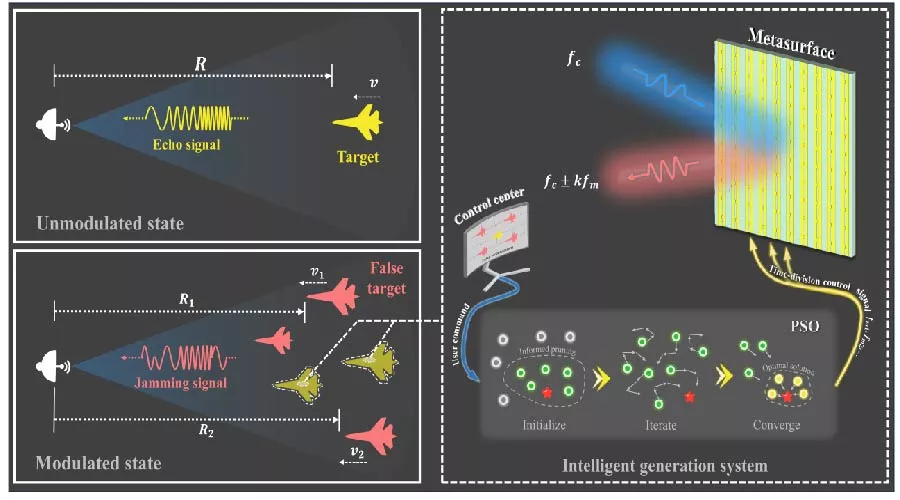
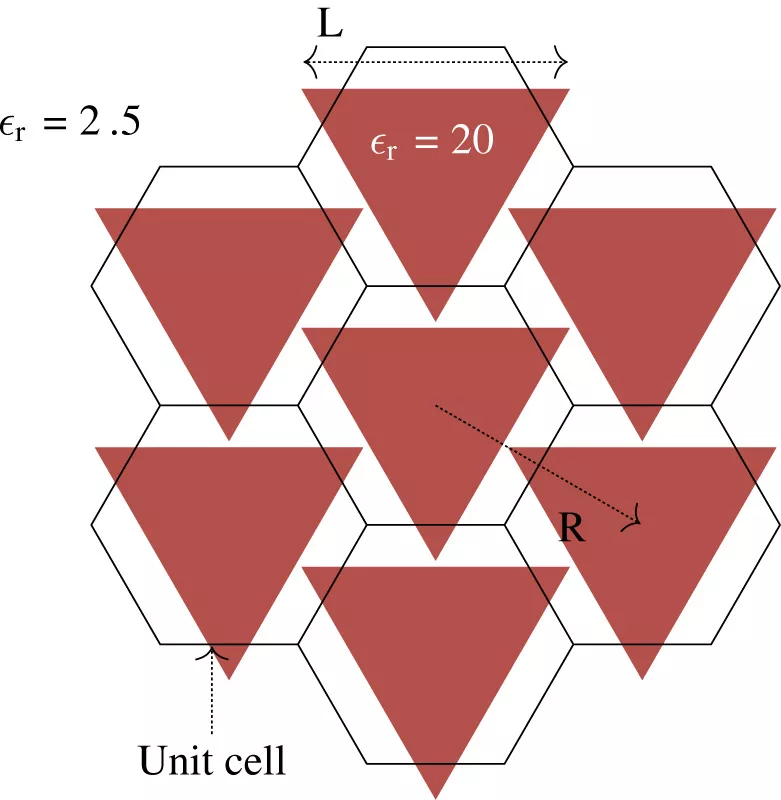
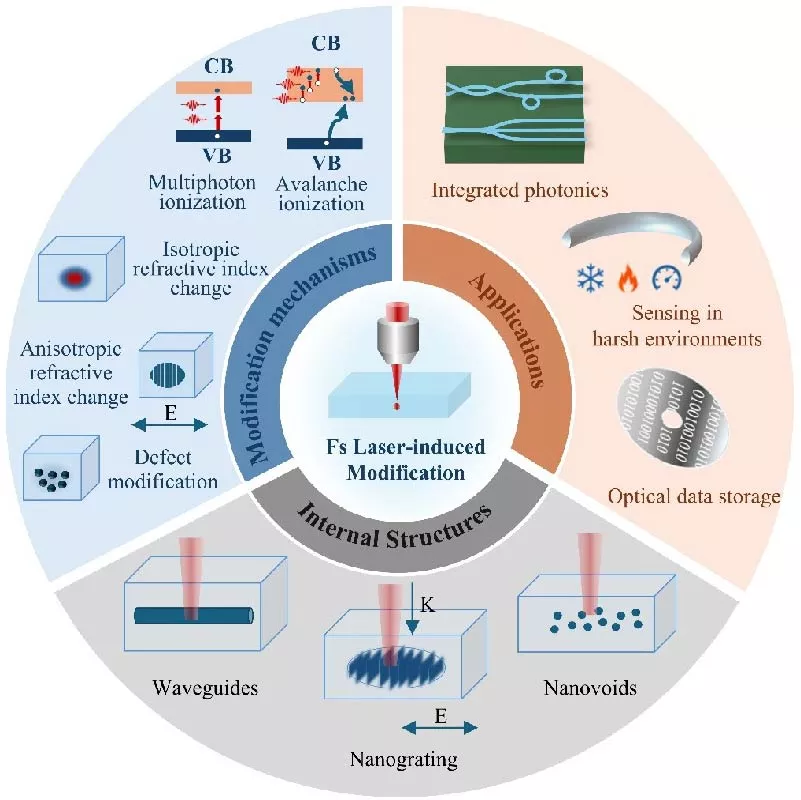
Time-modulated metasurfaces (TMMs) enable low-observable and reconfigurable radar deception, but existing approaches remain limited in synthesizing complex range-velocity (R-V) false-target clusters because of forward-designed modulation schemes and single-platform operation. This paper presents a task-oriented framework for multidimensional false-target synthesis against frequency-modulated continuous-wave (FMCW) radars. An analytical model explicitly connects TMM temporal modulation with the FMCW R-V estimation chain. Intra-frame modulation reshapes the echo spectrum to generate programmable range offsets, while inter-frame control modifies the slow-time response to generate programmable velocity offsets. The modulation-sequence design is then formulated as a combinatorial inverse-design problem and solved using Physics-Informed Initialization-Assisted Particle Swarm Optimization (PIIA-PSO), which exploits analytical R-V relations to construct a physically informative initial population, thereby reducing ineffective early-stage exploration and improving convergence efficiency toward high-quality realizable solutions. The framework is further extended to distributed multi-platform cooperation to increase spatial degrees of freedom and enable coherent energy aggregation. Results show range and velocity errors below 10% for single-platform synthesis and improve the overall SSIM by 7-10 percentage points under distributed configurations, demonstrating enhanced synthesis fidelity, flexibility, and scalability.
Metaheuristic-Driven Intelligent Generation of Multidimensional False Targets Using Time-Modulated Metasurfaces
Metamaterials, Metasurfaces, and Plasmonics
2026-08-05
PIER
Vol. 186, 1-10, 2026
download: 449
Revisiting Ghost Waves with Transformation Optics (Invited Paper)
Shanshan Jie, Wen Xiao and Huanyang Chen
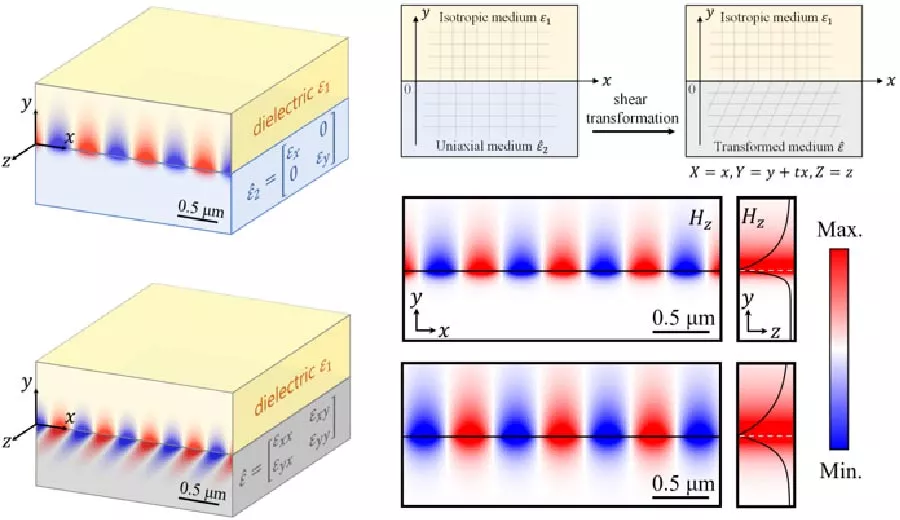
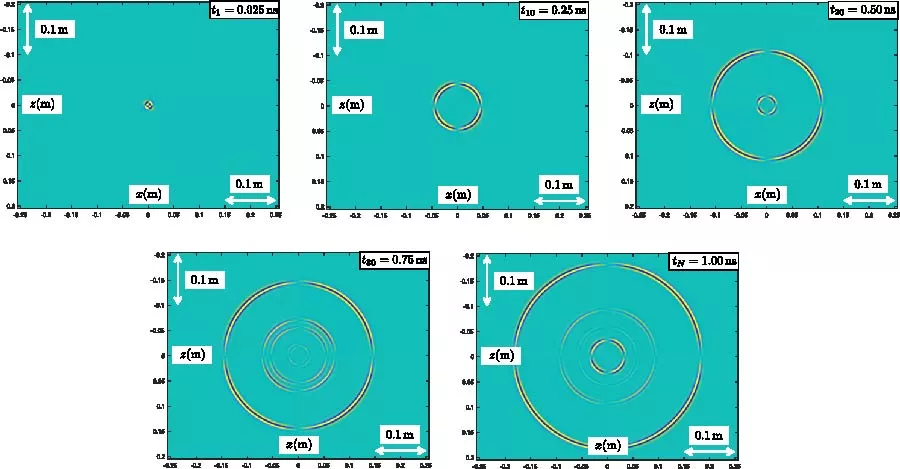
Ghost surface polaritons (GSPs) in anisotropic materials exhibit an unusual bi-state nature with a complex-valued out-of-plane wavevector, providing unique opportunities for nanoscale light manipulation. However, the exploration and application of GSPs have been limited by the scarcity of natural crystals. Here, we revisit GSPs from the perspective of transformation optics. By introducing a shift parameter, we establish a mapping between material tensors and ghost modes, demonstrating the existence of GSPs at various transformed uniaxial interfaces. It is further shown that the wavefront can be modulated via shift parameters, enabling precise control of GSP propagation. Our study provides new insight into GSPs and establishes a versatile framework for their flexible manipulation.
Revisiting Ghost Waves with Transformation Optics (Invited Paper)
Photonics and Modern Optics
Fellow Article
2026-09-07
PIER
Vol. 186, 40-51, 2026
download: 117
High-Efficiency Amorphous-Silicon/Silicon-Nitride Grating Couplers for O- and C-Band Photonic Integrated Circuits (Invited Paper)
William Fraser, Pavel Cheben, Jens H. Schmid, Jianhao Zhang, Radovan Korček, Shurui Wang, Martin Vachon, Rubin Ma, Daniel Benedikovič, Thalia Dominguez Bucio, Valerio Vitali, Frederic Y. Gardes and Winnie N. Ye
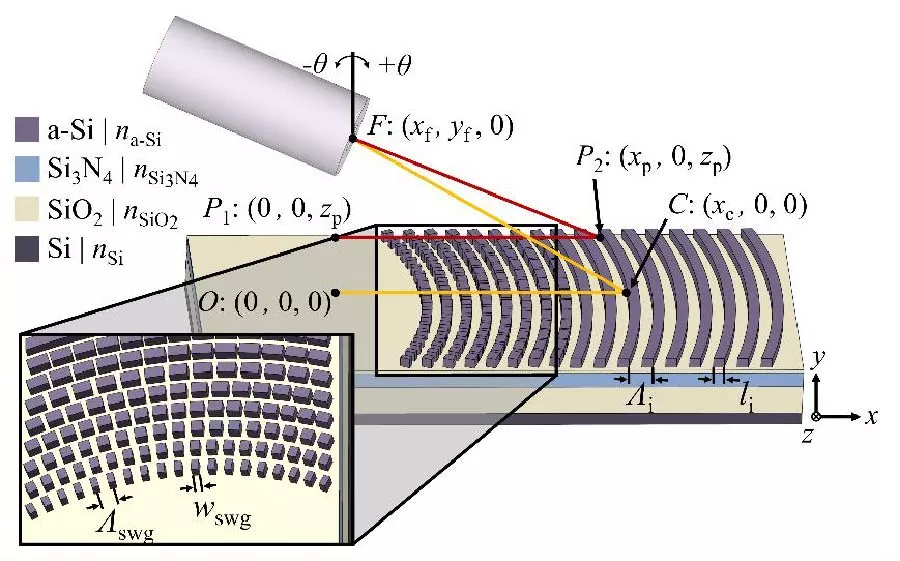
Silicon nitride (Si3N4) has emerged as a compelling platform for visible-light, quantum-photonic, and nonlinear-optical applications because of its broad transparency window, low propagation loss, and negligible two-photon absorption. However, the moderate refractive index of Si3N4 poses a challenge for efficient fiber-to-chip coupling using grating couplers. Although advantageous for wafer-scale testing and flexible layouts, Si3N4 grating couplers suffer from low grating strength, which limits their coupling efficiency. Here, we experimentally demonstrate high-efficiency grating couplers on a hybrid amorphous-silicon/silicon-nitride (a-Si/Si3N4) platform. Uniform devices are presented for TE and TM polarizations in both the O- and C-bands, while apodized-focalizing designs are demonstrated for both polarizations in the O-band and for TE polarization in the C-band. The fabricated devices achieved record coupling efficiencies of -1.6 dB and -1.2 dB in the O-band for TE and TM polarization, respectively, and -1.3 dB and -2.9 dB in the C-band for TE and TM polarization, respectively. The measured peak wavelengths deviated from their nominal values, primarily because of variations in the refractive index of the fabricated Si3N4 and the grating duty cycles relative to their design values. These shifts are well reproduced by simulations incorporating fabrication biases and can be compensated for by adjusting grating parameters or the fiber coupling angle. To the best of our knowledge, these are the highest coupling efficiencies demonstrated to date for silicon nitride grating couplers in the O-band for both polarizations and in the C-band for TM polarization. For TE polarization in the C-band, fabrication deviations shifted the peak coupling wavelength to 1512 nm, resulting in the highest efficiency reported to date for a silicon nitride grating coupler operating in the S-band. These results demonstrate a practical approach for achieving low-loss fiber-to-chip coupling in Si3N4 photonic integrated circuits, addressing a longstanding challenge in the platform and supporting the development of scalable systems for datacom, telecom, nonlinear photonics, and quantum technologies.
High-Efficiency Amorphous-Silicon/Silicon-Nitride Grating Couplers for O- and C-Band Photonic Integrated Circuits (Invited paper)
Regular Papers
2026-08-06
PIER
Vol. 186, 11-23, 2026
download: 565
Green's Matrix and Propagator Matrix for Three-Dimensional Electromagnetic Wave Propagation and Scattering in a Time-Variant Material
Kees Wapenaar and Evert C. Slob
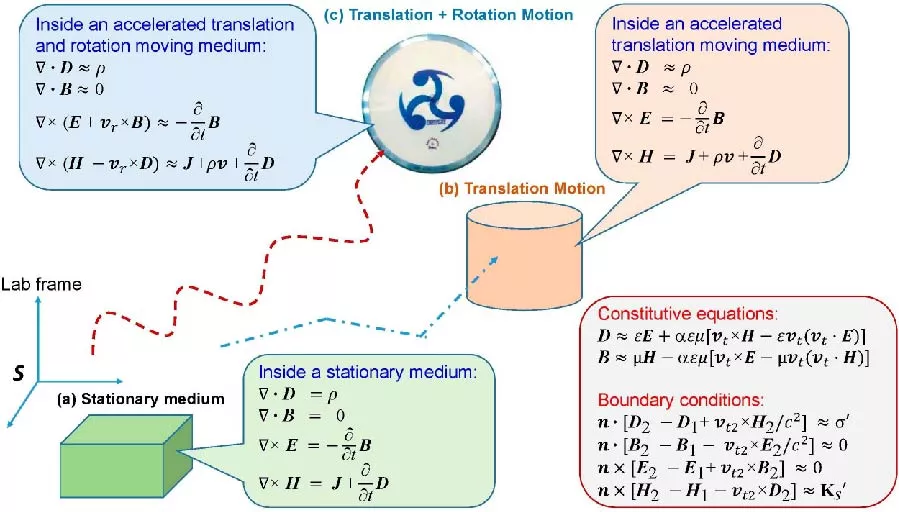
Electromagnetic wave propagation and scattering in materials with time-variant parameters is subject of an active field of research. The theory is usually restricted to transverse-electric or transverse-magnetic modes in one- or two-dimensional settings. Here we discuss the theory of three-dimensional, multi-component electromagnetic waves in a homogeneous, time-variant material. We present 3 × 3 causal and acausal Green's matrices and a 6 × 6 propagator matrix. We derive a number of fundamental properties such as conservation of momentum density for a piecewise continuous, time-variant material, symmetry properties of the propagator matrix, and a relation between the causal and acausal Green's matrices. These properties are used in derivation of a general wave-field representation (the counterpart of the Kirchhoff integral for a time-invariant material) and an expression for Green's function retrieval with space-correlations (the counterpart of Green's function retrieval with time-correlations in a time-invariant material).
Green's Matrix and Propagator Matrix for Three-Dimensional Electromagnetic Wave Propagation and Scattering in a Time-Variant Material